Patong Beach Layover: Bangla Road, Phuket
Part of the full Phuket in One Day: Old Phuket Town
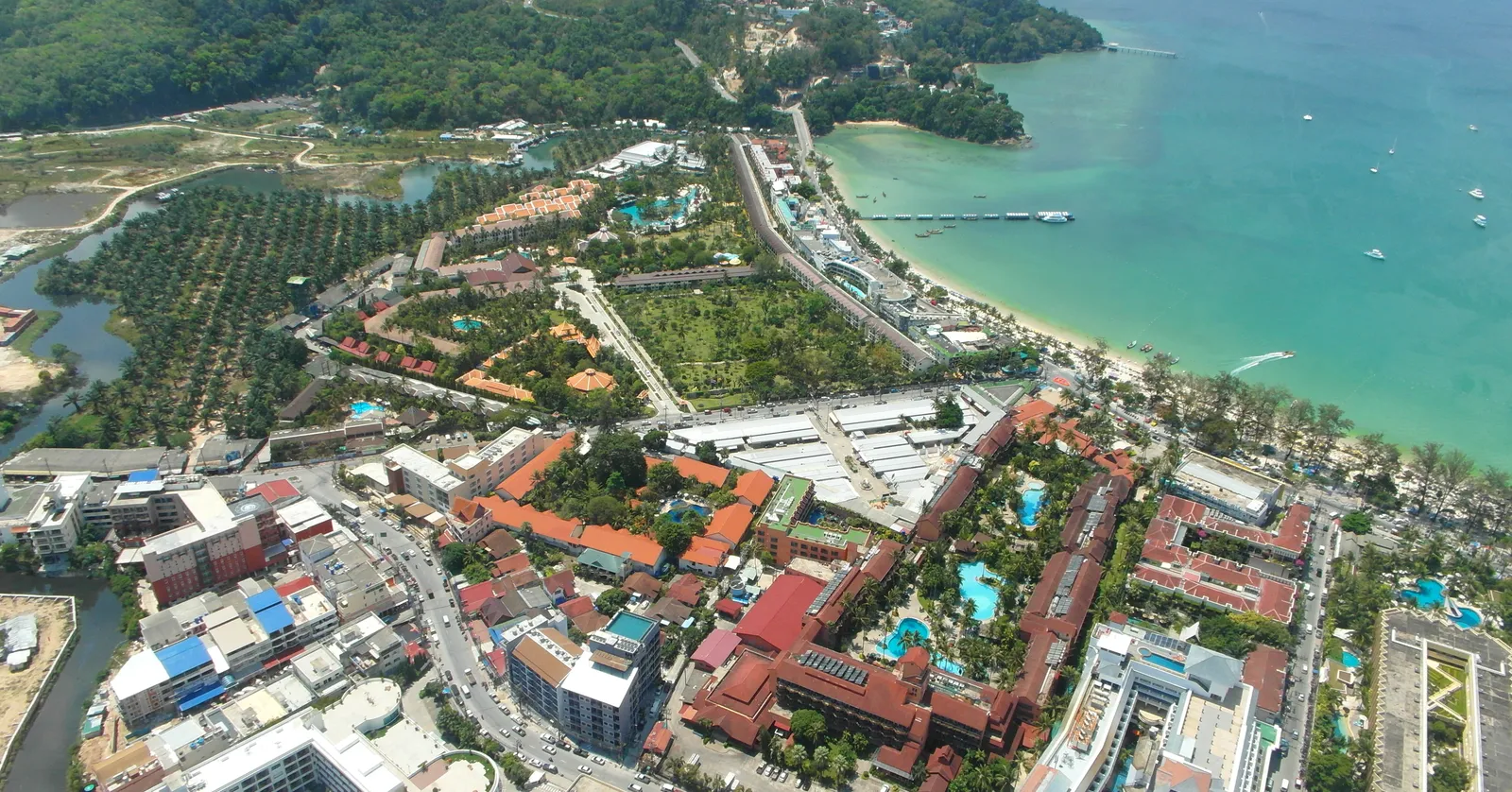
Bangla Road runs 400 metres inland from the beach road at Patong, on Phuket’s west coast, and closes to traffic at six every night; Patong Beach itself is three kilometres of lifeguarded sand, and a long-tail boat from its southern end reaches the cove at Freedom Beach in about fifteen minutes.
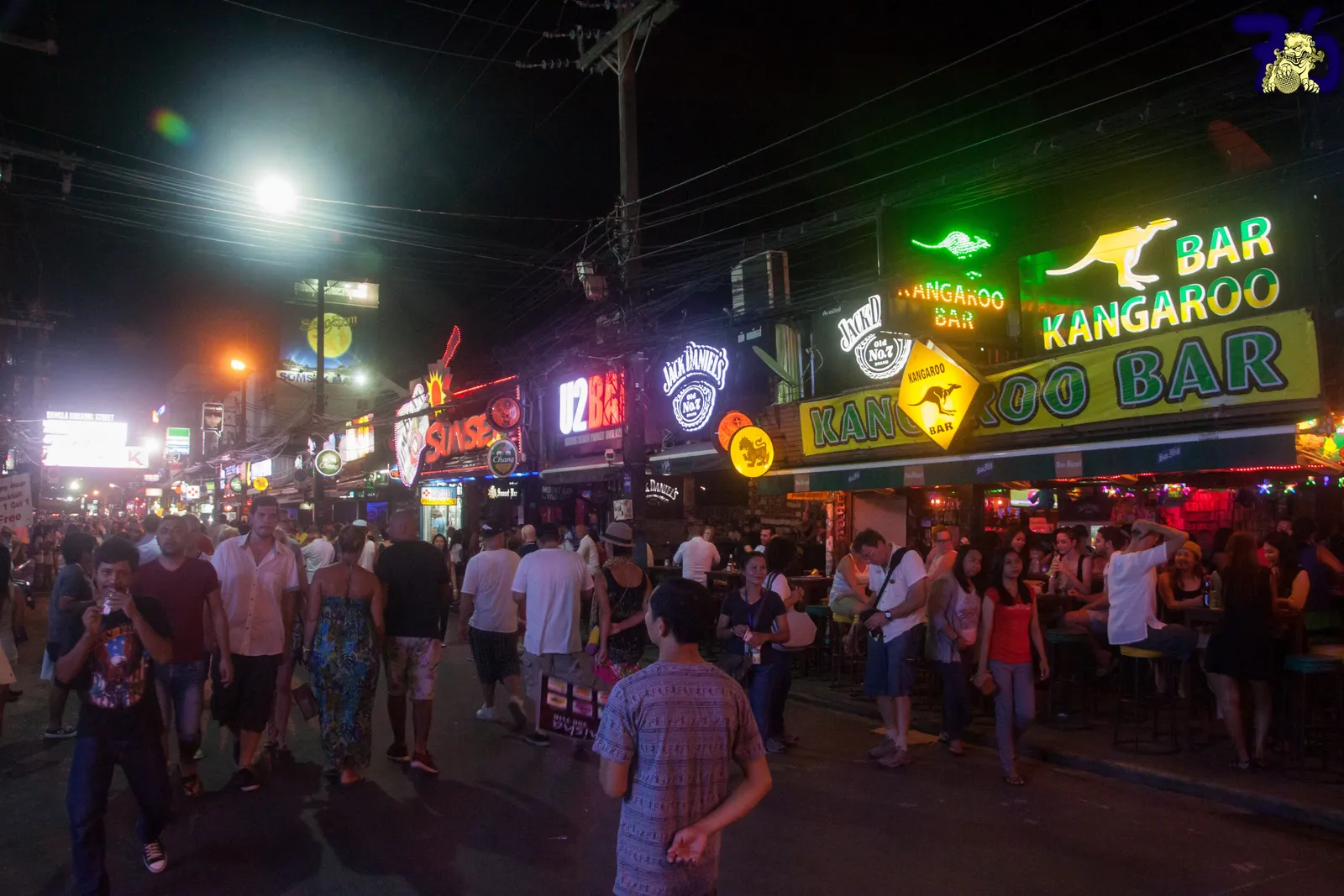
Bangla Road closes to traffic at six
Barriers go across both ends of the street at 18:00, every night of the year, and what was a road full of scooters becomes 400 metres of bar fronts, neon and sound systems competing with each other. It fills slowly, peaks somewhere between ten and one, and most of it shuts between two and three. Walking down it costs nothing and nobody expects you to stop.
Two things near here are worth fixing in advance rather than leaving to chance. The boxing stadium on Sai Nam Yen Road, a couple of minutes off Bangla, runs Muay Thai cards most nights of the week, and seats are sold by row through a tours and activities platform, from the back of the stand to ringside. At the southern end of Patong, the cabaret theatre that has been running its costumed revue since October 1991 sells tiered seating for its evening shows the same way; the later performances are the ones that fit a night flight.
Patong’s pavements are narrow, frequently blocked by parked scooters and A-boards, and the crowd on Bangla after nine moves at whatever pace the crowd moves at, so a suitcase is a poor companion for all of it.
Patong Beach, three kilometres of lifeguarded sand
The bay is a clean curve between two headlands, deep enough that the water shelves gently and shallow enough that most of it is chest-high a long way out. Deck chairs and umbrellas are rented along almost the whole strip, parasailing boats work the middle of it, and the northern end near Kalim is where the trees come closest to the water and the crowd thins. What matters more than any of that is the flags: from May to October the monsoon puts real surf and rip currents on this coast, red flags go up most days, and Patong accounts for a large share of the island’s water incidents, mostly because more people are in the sea here than on any other beach. November to April is the calm half of the year.
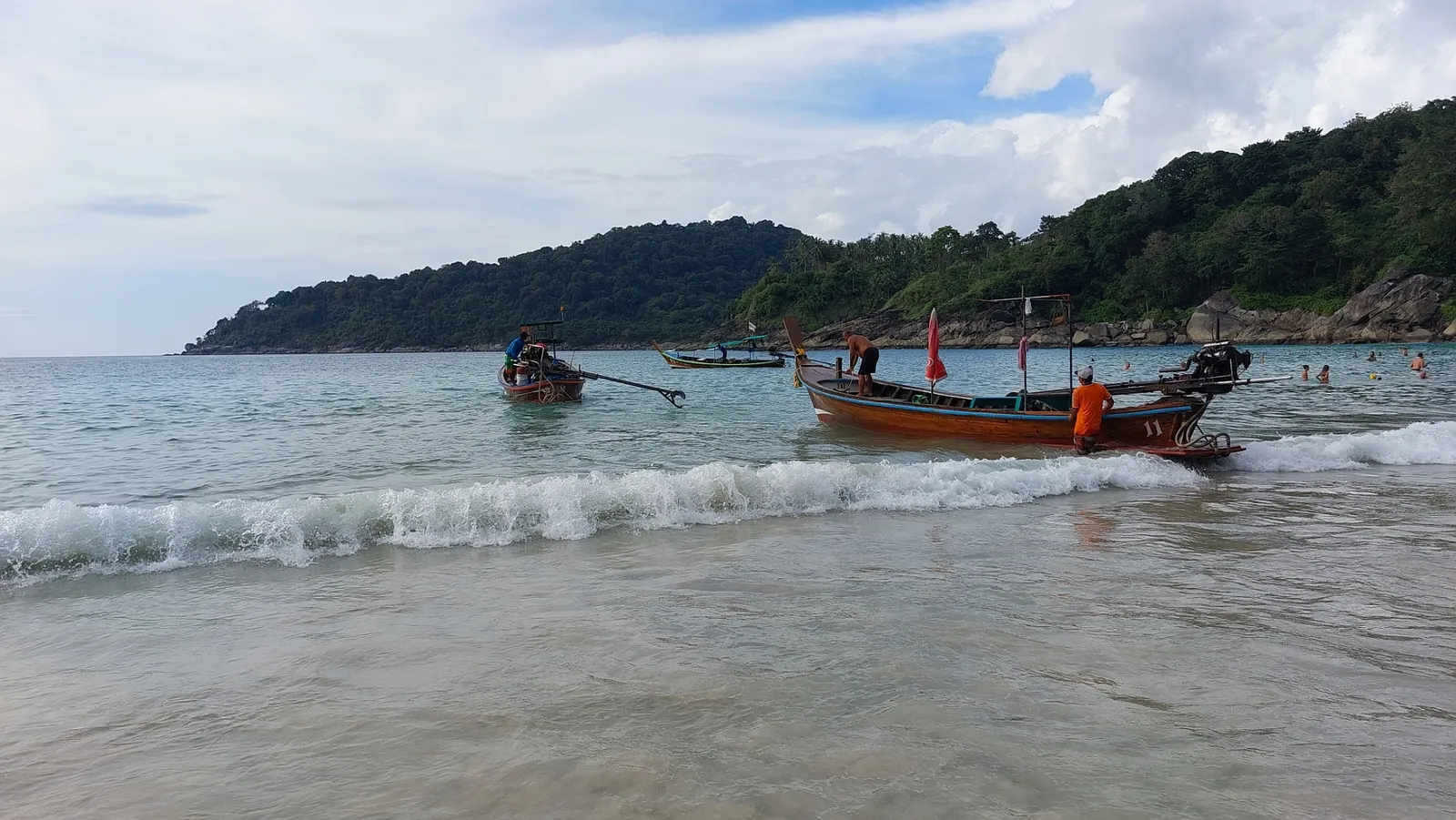
Freedom Beach, reachable only by boat or a jungle track
No road reaches Freedom Beach. Long-tail boats leave from the southern end of Patong Beach, near the bridge by the big hotel, and the crossing takes ten to twenty minutes; expect to pay somewhere between 1,000 and 2,000 baht for the round trip, which is per boat rather than per person and splits well among a few people. There is no pier at the other end, so you step off into the water and wade the last few metres. What you get for that is a short strip of pale sand under steep jungle, with the only development being a couple of drink shacks. The alternative is a steep walking track down from the road above, which charges 200 baht at the top.
The coastal bus is 100 baht, a taxi is eight times that
The west-coast service between Patong and Phuket International Airport (HKT) charges a flat 100 baht whatever distance you ride, and takes roughly an hour to an hour and three-quarters depending on how the coast road is moving. Its weak point is the end of the day: published timetables disagree sharply about the last departure, so it is a service to plan around in daylight and to verify on the operator’s own live tracking before trusting it with a flight. The alternatives are a metered taxi at 700 to 800 baht plus the 100-baht airport surcharge, or a fixed-price car at 800 to 1,000, both around 50 to 60 minutes. Anyone who would rather spend the day among shophouses than on sand should be heading for the old town instead, which is a bus ride in the opposite direction.
Whichever way you go back, the bag is the part that decides how much of Bangla you actually see, so it is worth leaving it somewhere before the barriers go up rather than after.
Frequently asked questions
What should I do during a layover near Patong Beach in Phuket?
Bangla Road is the reason most people come and it only makes sense after dark: 400 metres of bars running inland from the beach road, closed to traffic from six every night. The two ticketed things worth planning around both sit within a few minutes of it, a Muay Thai card at the boxing stadium on Sai Nam Yen Road and the cabaret at the southern end of Patong, and both want booking rather than turning up. In daylight the beach itself is three kilometres of sand with lifeguards on it, and a long-tail boat from the southern end runs across to Freedom Beach in ten to twenty minutes. Five hours is enough for the beach and one evening fixture; less than that and the coast road eats most of it.
Is it safe to swim at Patong Beach?
It depends entirely on the month. Between November and April the sea here is usually calm and the beach is lifeguarded. From May to October the monsoon pushes surf onto this coast and rip currents form, the red flags go up on most days, and Patong accounts for a large share of the island's water incidents, mostly because more people are in the sea here than on any other beach. Red flag means do not swim, not swim carefully, and the flags are not decorative.
What is there to do in Patong without spending much?
Walking the beach costs nothing and so does walking Bangla Road, which is free to enter at any hour. A deck chair and umbrella on the sand runs a few hundred baht for the day, and you can skip it by sitting under the trees at the northern end instead. The Banzaan fresh market on Sai Kor Road behind the big mall is open 06:00 to 20:00 and is where the cooked seafood costs a fraction of what the beach road charges; banzaan is simply the Hokkien word for a fresh market. The coastal bus in and out is a flat 100 baht against 800 or so for a taxi.
How late do the bars on Bangla Road stay open?
The barriers close the street at six in the evening and the first bars are serving well before that, but almost nothing happens until nine. The stretch fills between ten and one, and most venues call it somewhere between two and three in the morning; a handful of the clubs off the side sois run later. If your flight is a late one rather than an overnight, the useful hours here are roughly eight to eleven, which is also when it is possible to walk the full 400 metres without shuffling.