Bangkok Layover Near Hua Lamphong Station
Part of the full Bangkok Layover Guide: The Grand Palace, BKK
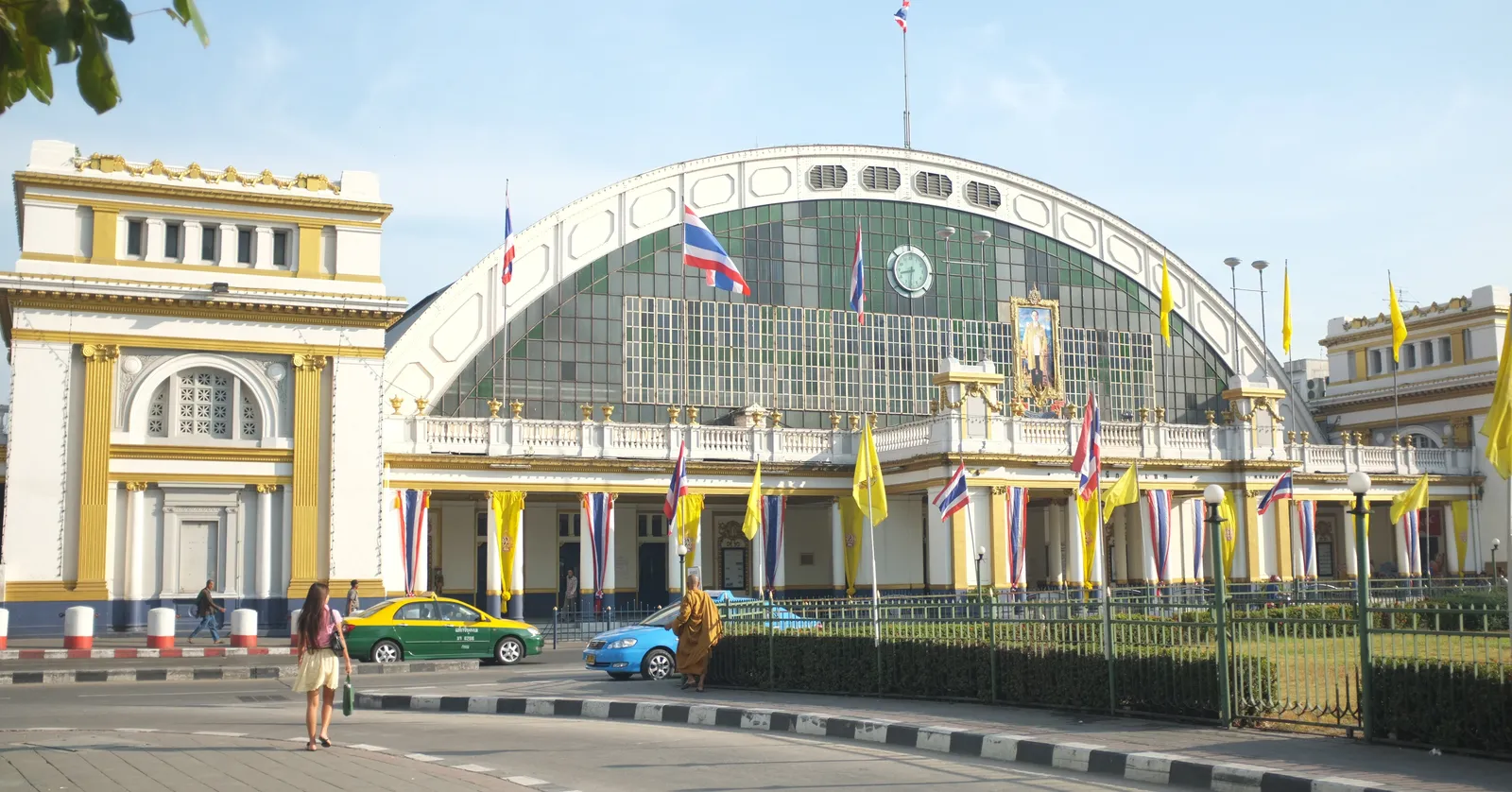
Bangkok’s Hua Lamphong station sits at the eastern end of Chinatown, within a twenty-minute walk of Wat Traimit’s solid gold Buddha, the food stalls of Yaowarat Road and the old Chinese courtyard houses of Talat Noi.
Yaowarat Road’s pavement kitchens after dark
A mile of Chinese and Thai neon comes on over Yaowarat around dusk, and underneath it the pavement kitchens start work: charcoal grills wheeled out of shophouse fronts, guay jab noodle soup, oyster omelettes, dim sum steamers stacked four high on the kerb. Daytime here is a different street entirely, gold dealers and dried-goods wholesalers, so the timing of your gap decides which Chinatown you get. A guided eating walk sold through a tours and activities platform meets outside the metro entrance at this station, which makes it about as convenient as a tour gets if the alternative is deciding between a hundred stalls in a language you cannot read.
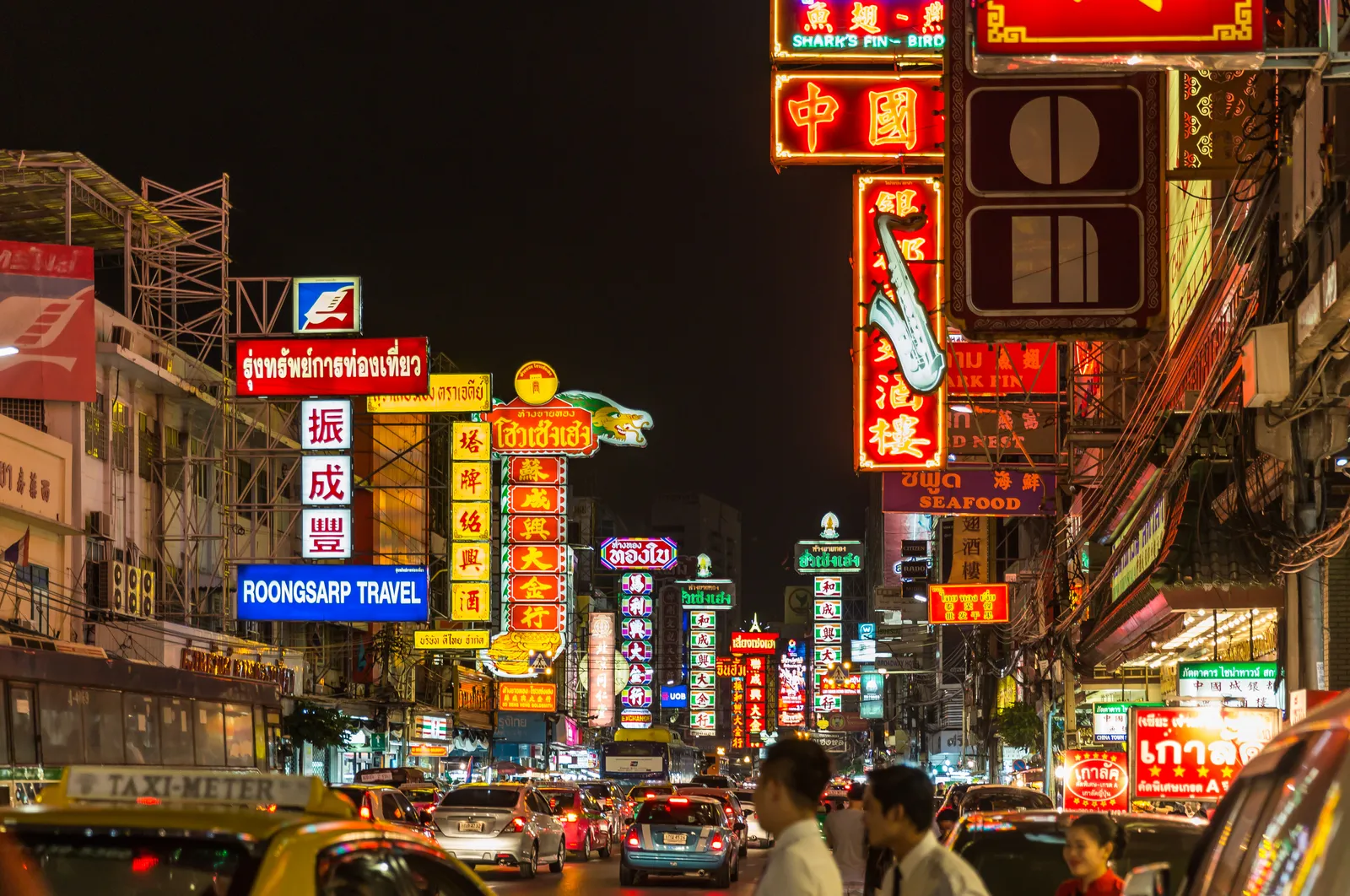
Once the stalls are out, the usable pavement on Yaowarat narrows to about a person wide in stretches, which is the practical argument for arriving here without a suitcase rather than any question of etiquette.
Five and a half tonnes of solid gold at Wat Traimit
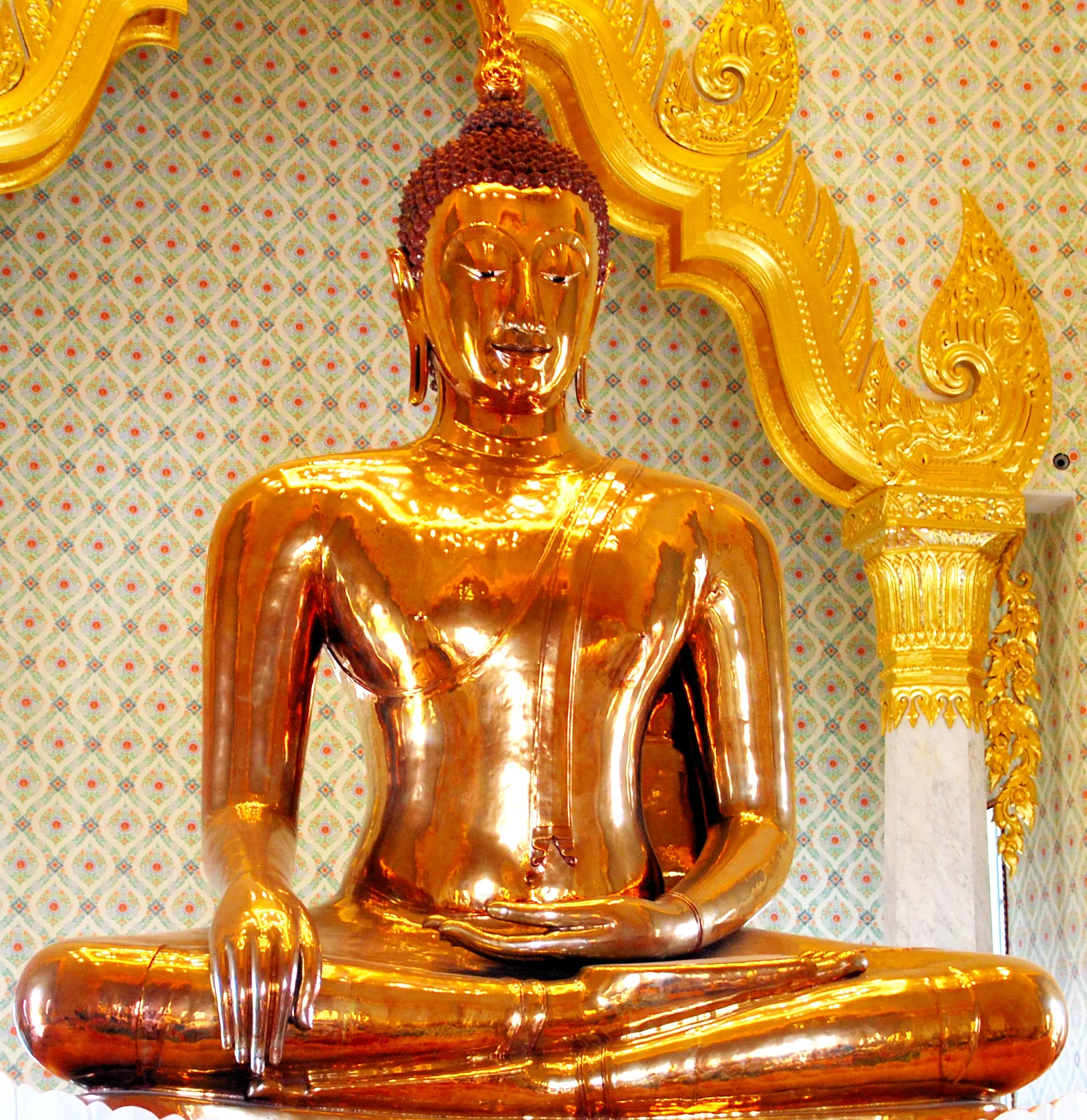
Workmen moving a large plaster Buddha into a new hall in 1955 dropped it, the casing cracked, and what came out from under it was three metres of solid gold weighing five and a half tonnes, cast in the Sukhothai style and plastered over at some point when concealment mattered more than display. It now sits at the top of Yaowarat Road in a white and gold hall built for it. Forty baht gets you in to the statue; a hundred more opens the museum below, which covers how the figure was found and how the Chinese community around it came to be here. The gates close at 17:00, and shoulders and knees have to be covered, with wraps for hire at the door.
So Heng Tai, a Chinese courtyard house with a diving pool in it
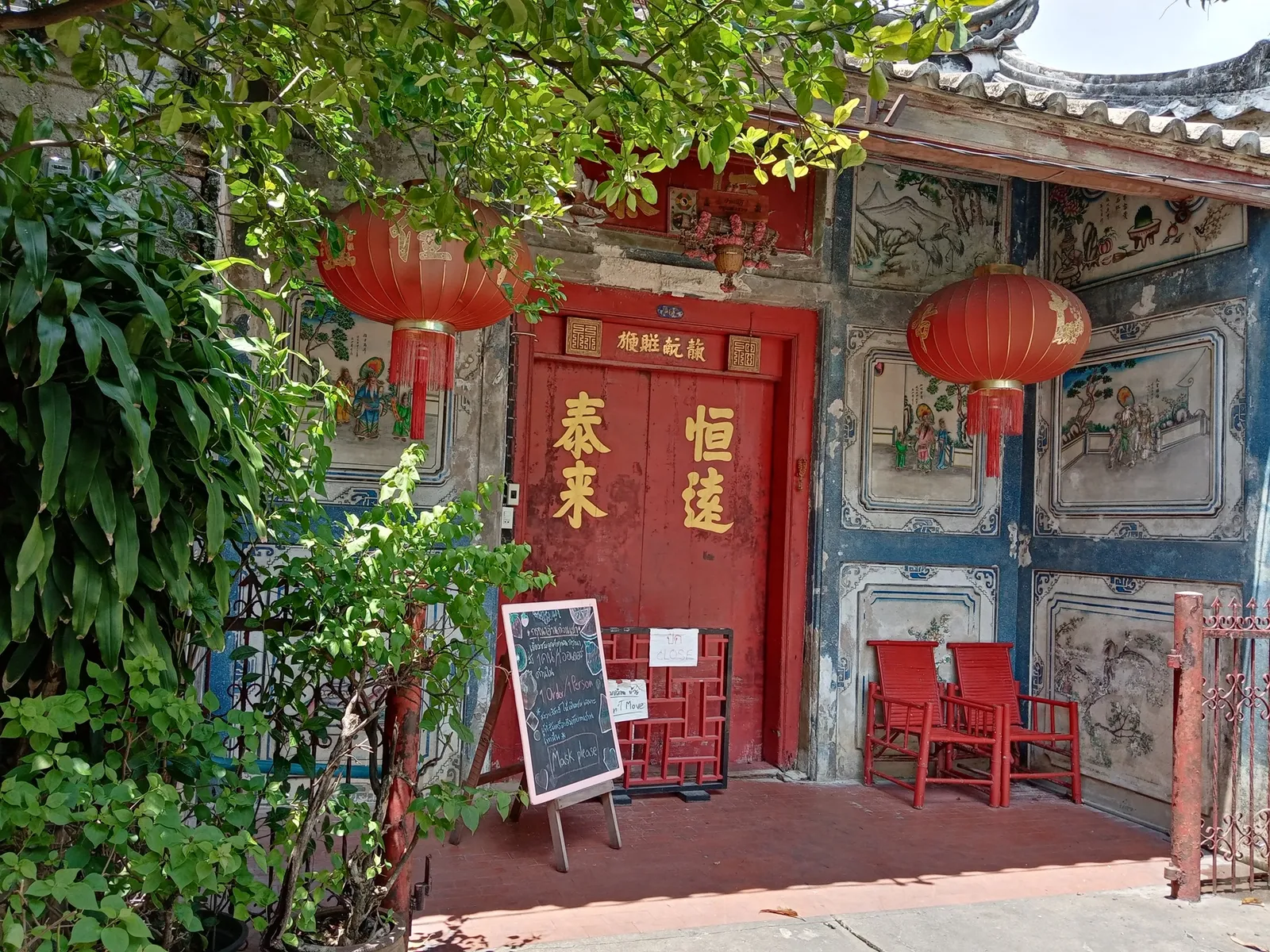
Phra Aphaiwanit, a Hokkien Chinese merchant who farmed the tax on birds’ nests and ended up in the Thai nobility, built this house in the lanes of Talat Noi in the nineteenth century, and his descendants still own it. Timber cloisters run round all four sides of an open courtyard, with lacquered wood, red doors and carved stone stairs, and in 2004 the family put a scuba diving pool in the middle of the courtyard, which is how you can now be taught to dive inside a two-hundred-year-old Chinese mansion. It runs as a café for anyone who just wants to sit and look at it. Open 09:00 to 18:00 and closed on Mondays.
Mario Tamagno’s 1916 train shed
Six years of construction ended in a station that opened on 25 June 1916 with an Italian Neo-Renaissance front by Mario Tamagno, from Turin, working with Annibale Rigotti, wrapped around a semicircular iron shed with decorated wooden roofs and stained glass along its flanks. For a century it was where every long-distance train in Thailand began. That job moved north in January 2023 and what runs here now are the ordinary and commuter services, which means the concourse is quieter than it has been in decades and easier to actually look at.
The metro platforms sit under the station’s own concourse
A passage inside the building drops to the underground line, which has run from here since 2004, and it goes north to Phetchaburi, where a 166-metre covered skywalk crosses to Makkasan and the Airport Rail Link’s City Line takes over for Suvarnabhumi Airport (BKK): 35 baht, a little over twenty minutes, trains every ten to fifteen minutes until midnight. Allow about an hour door to door and more if you leave during the evening rush, which in this part of the city is also when Yaowarat is at its best. The temples and the river in the old royal quarter are three metro stops west of here if the gap is long enough for both.
Frequently asked questions
What should I do during a layover near Hua Lamphong Station in Bangkok?
Walk west into Chinatown. Wat Traimit stands at the top of Yaowarat Road with a 3-metre Buddha of 5.5 tonnes of solid gold inside, 40 baht and open until 17:00. Yaowarat itself is the eating: the pavement kitchens set up through the late afternoon and run into the night under a mile of neon. South of the road, the lanes of Talat Noi hold a 19th-century Chinese courtyard house with a scuba pool in the middle of it, closed on Mondays. All three are inside a twenty-minute walk of the station.
What time do the Yaowarat food stalls open?
Most of the pavement kitchens set up from late afternoon and hit their stride between about 19:00 and midnight, so a daytime gap here gets you the gold shops, the dried-goods markets and Wat Traimit rather than the food the street is known for. If your window lands in the evening and you would rather not guess between a hundred stalls, a short private walk through a tours and activities platform covers the back lanes in about two hours.
Do long-distance trains still leave from Hua Lamphong?
No. Fifty-two intercity services moved to Krung Thep Aphiwat Central Terminal on 19 January 2023. What is left here are the ordinary and commuter trains on the northern, north-eastern and southern lines, plus every service on the eastern line, which still terminates at this station. The metro runs underneath and connects by a passage inside the building.
Is Chinatown a good place to walk with a large group?
The temples and the markets are, but Yaowarat's own pavements are not. Once the evening stalls are set up, the walkable strip narrows to roughly single file in places and the crowd moves at one speed, so a group of six wanting to stay together is better off agreeing a meeting point at Wat Traimit or the station than trying to hold a line through the food stretch.