Bangkok Layover Near Siam Station
Part of the full Bangkok Layover Guide: The Grand Palace, BKK
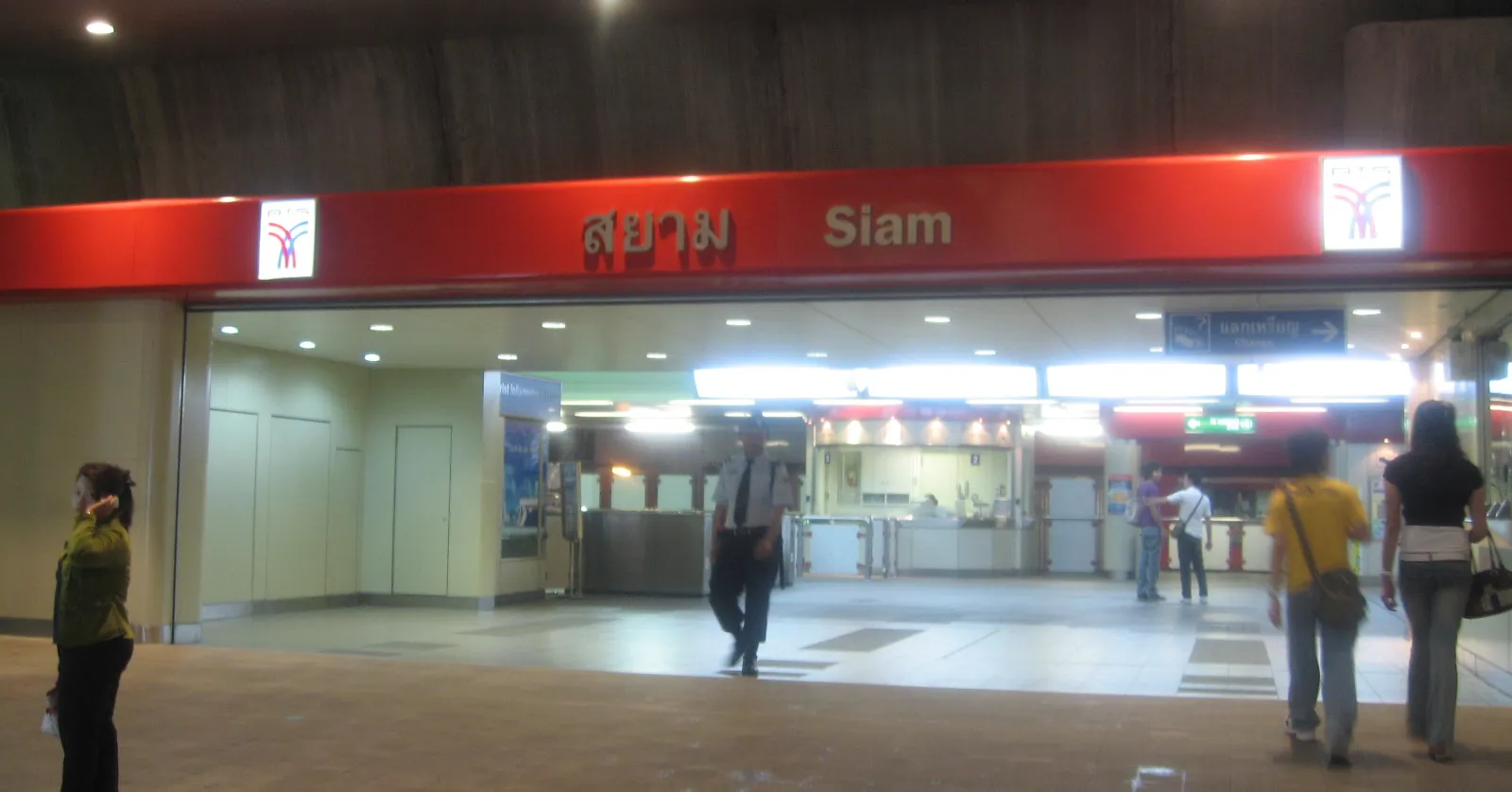
Bangkok’s Siam station sits at the middle of an elevated walkway that runs over the traffic to the Erawan Shrine, with Jim Thompson’s six teak houses one stop west and nine free floors of galleries at the Bangkok Art and Culture Centre at the same interchange.
The elevated walkway over Ratchaprasong
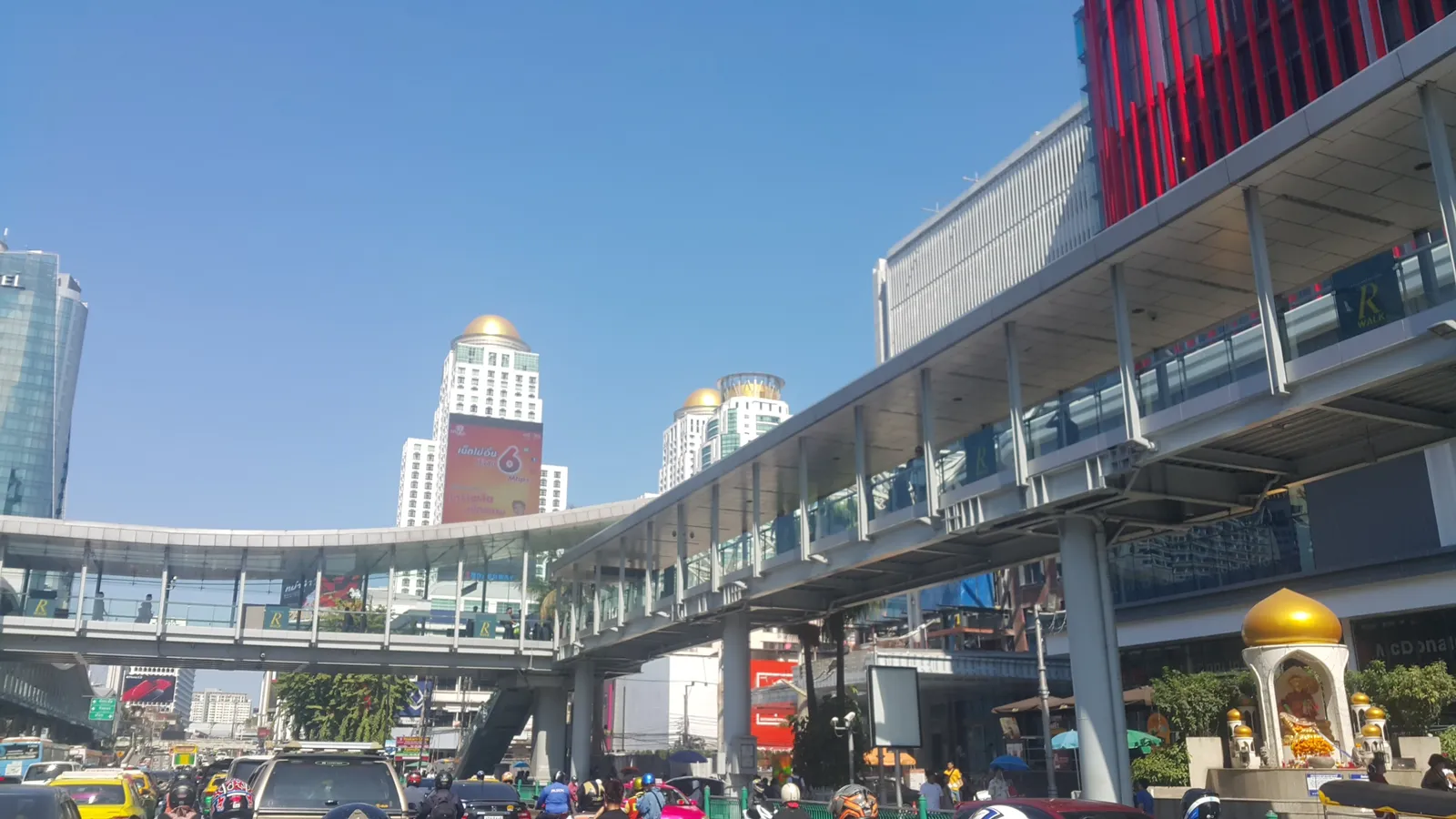
Bangkok built a covered footbridge along Rama I and Ratchadamri roads at first-floor level, and it now runs unbroken for most of the way from this station east to Chit Lom, threading in and out of the shopping centres on both sides. That is the practical reason to spend a short gap here rather than anywhere else in the city: you can cross a kilometre of central Bangkok without a pavement, a pedestrian crossing or a minute of direct sun. Two ticketed attractions hang off it: an aquarium in the basement of the Siam Paragon centre, where entry is sold ahead through a tours and activities platform, and a wax museum in the centre across the road.
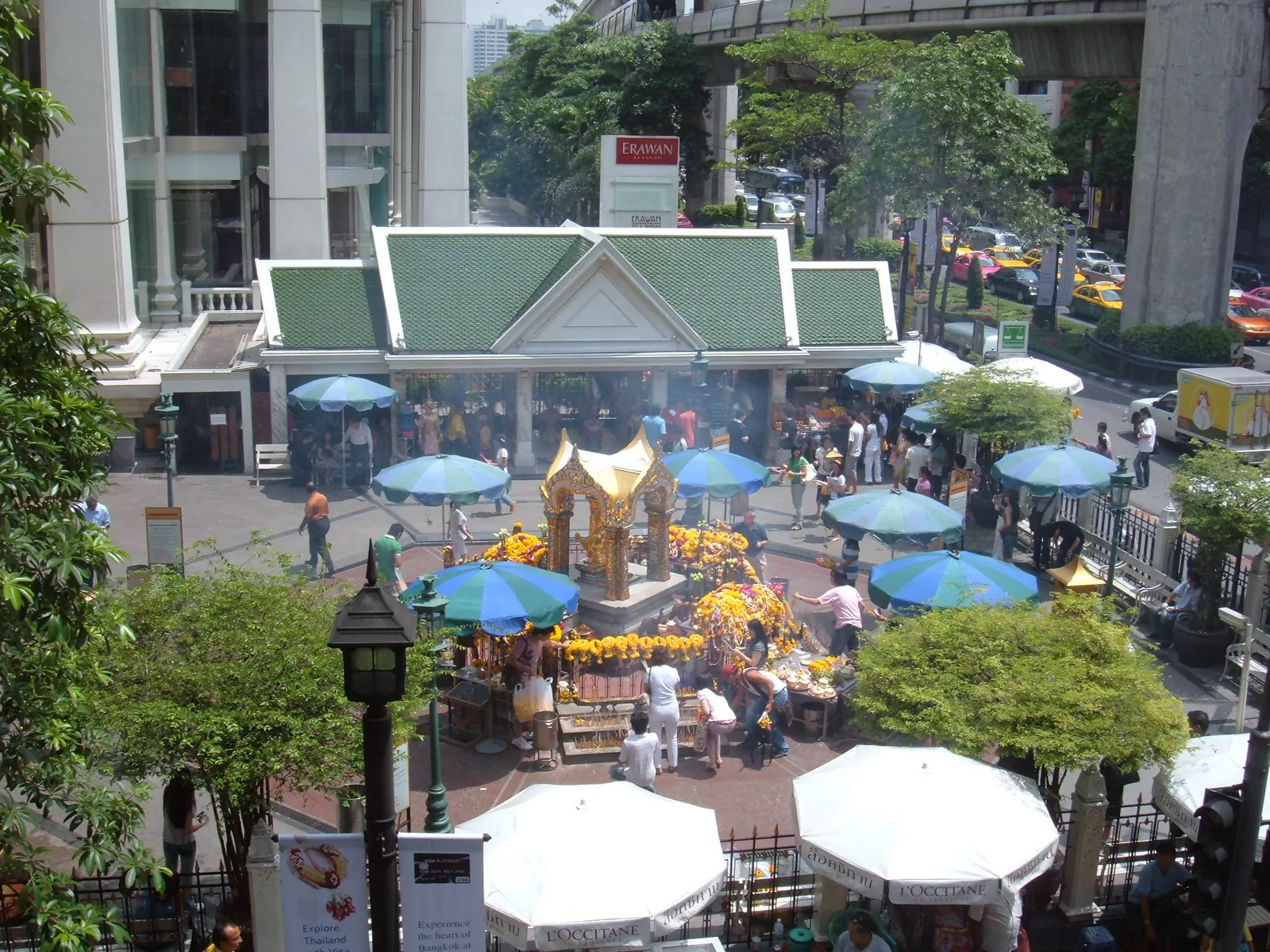
The Erawan Shrine and its hired dancers
The hotel on the Ratchaprasong corner ran into a string of accidents while it was being built, which were blamed on the foundation stone having been laid on the wrong date, and in 1956 a shrine went up on the pavement outside to settle the matter. Inside it is a four-faced Phra Phrom, the Thai form of Brahma, and the corner around it stays thick with marigold garlands, incense and carved teak elephants at every hour of the day. Worshippers whose prayers are answered pay the resident dance troupe to perform, so there is usually a group in costume working through a routine to a small live orchestra. The walkway passes directly overhead, and it costs nothing to stand and watch from either level.
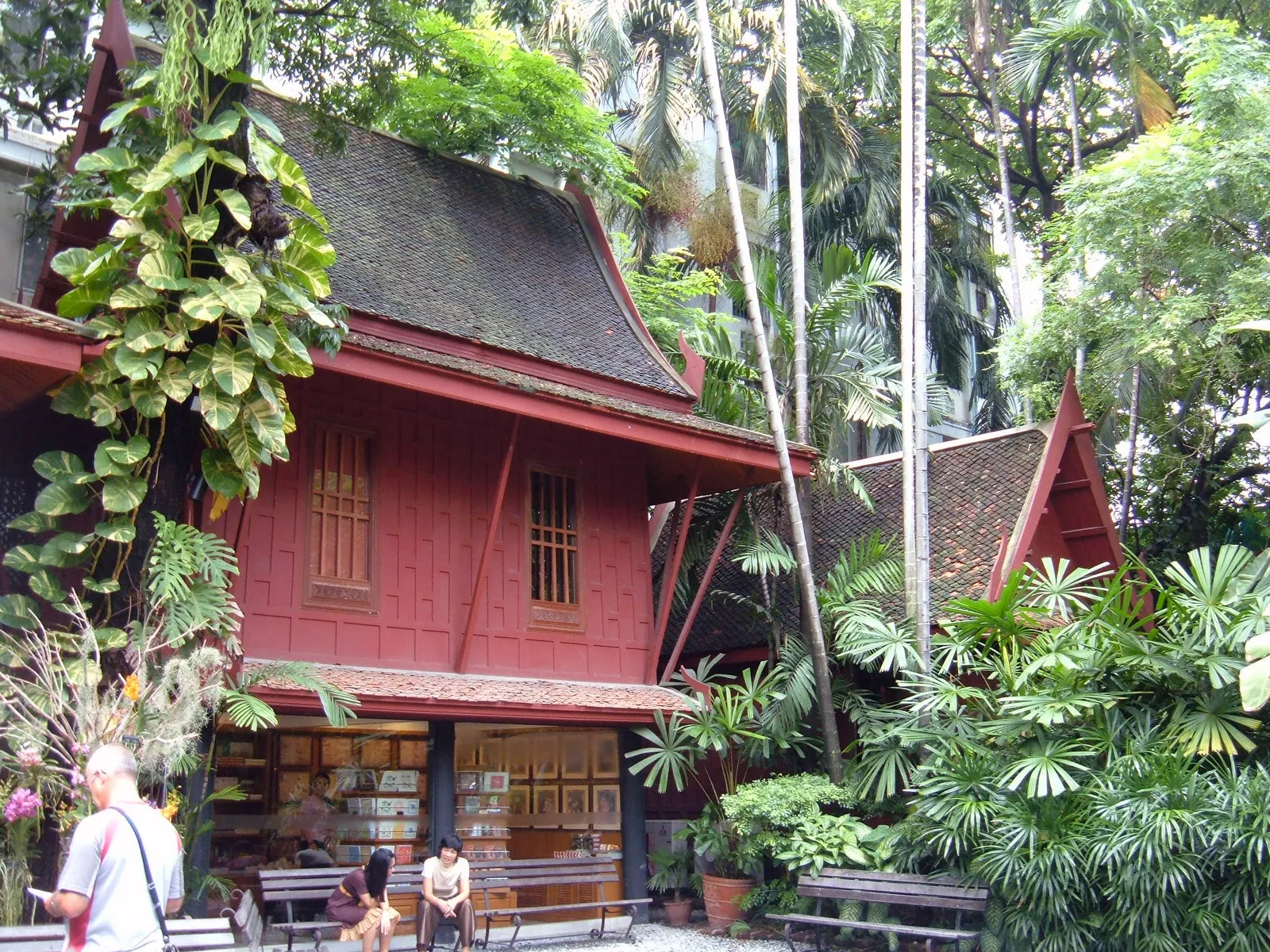
Jim Thompson’s six teak houses
An American architect turned silk trader had six traditional Thai houses taken apart in Ayutthaya and Bangkrua, barged down to a plot beside a canal in Pathum Wan, and reassembled into one dwelling in 1958 and 1959. Jim Thompson had founded the Thai Silk Company in 1948 and built the export trade that came after it; in 1967 he walked out for an afternoon in the Cameron Highlands in Malaysia and was never found. The house has been a museum ever since, and the main rooms can only be seen on a guided tour, included in the 250-baht ticket, with the last one leaving at 17:00. His collection of Southeast Asian sculpture and Thai painting is still in the rooms it was arranged for.
The gaps in the walkway are the part to plan around: the last few hundred metres to the house are ordinary pavement, in full sun, at whatever temperature Bangkok is running that afternoon, which is a longer walk with a suitcase than without one.
Nine floors of free galleries at the Bangkok Art and Culture Centre
A white drum of a building stands on the Pathumwan intersection with its galleries stacked around a spiral atrium, connected straight into the station walkway so you never touch the street. It shows contemporary Thai art, photography and design across nine floors, with the upper levels given over to the main exhibitions and the lower ones to bookshops, small galleries and cafés. Admission is free, apart from the occasional ticketed show. It opens Tuesday to Sunday from 10:00 to 20:00 and closes on Mondays, which is later than almost anything else worth doing in central Bangkok.
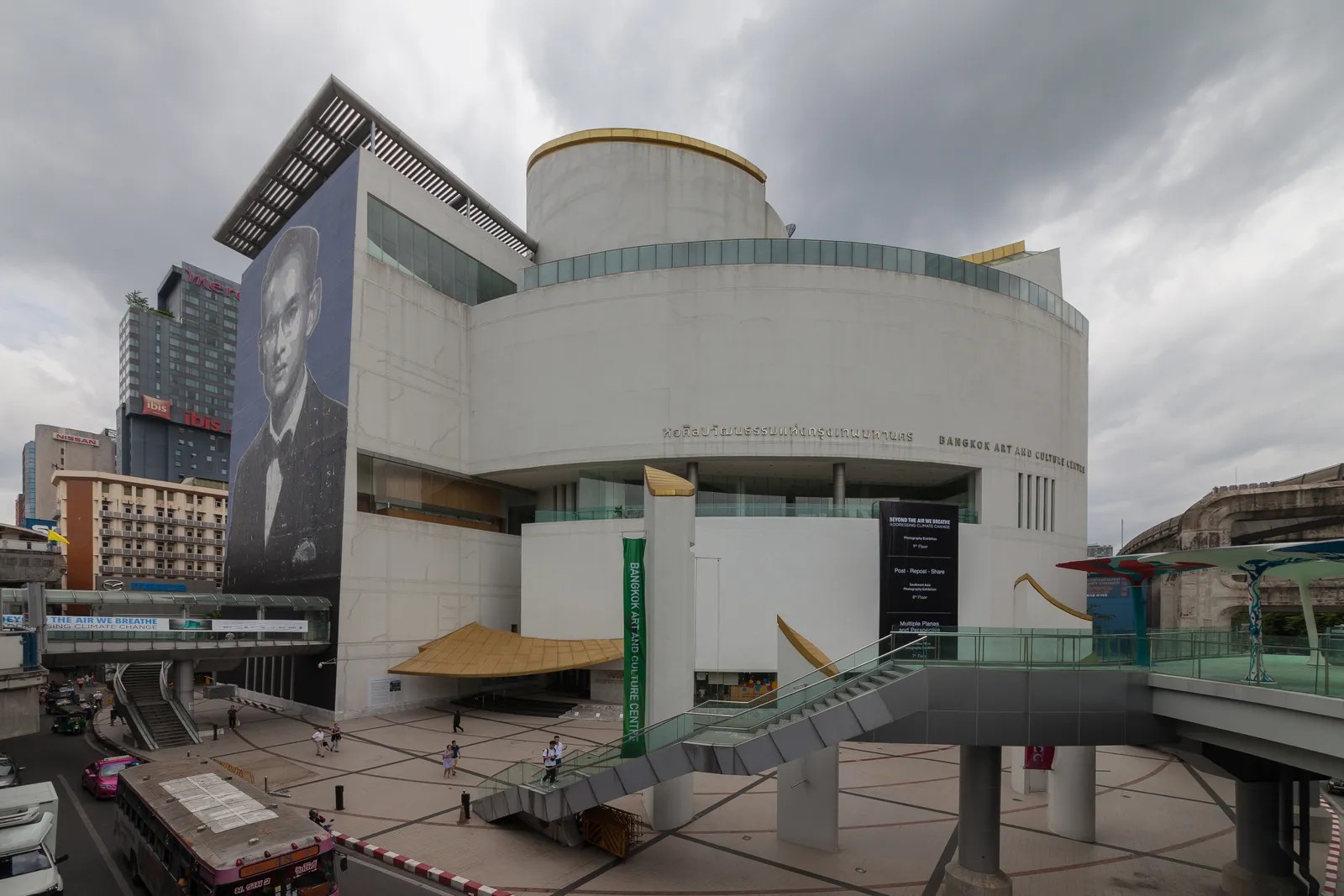
One change between Siam and the airport
Getting out to Suvarnabhumi Airport (BKK) from here means the elevated line east to Phaya Thai and then the Airport Rail Link’s City Line, which covers the eight stations to the airport in about 26 minutes for 45 baht, every ten to fifteen minutes between 05:30 and midnight. Reckon on fifty minutes to an hour door to door, plus the walk between the two sets of platforms at Phaya Thai, and add the evening peak if you are leaving between five and seven. Going the other way, the Grand Palace and Wat Pho are one change and about forty minutes west, which is worth it above five hours and not below.
Frequently asked questions
What should I do during a layover near Siam Station in Bangkok?
Jim Thompson's compound of six teak houses is one stop west and a short walk, 250 baht and guided only, with the last tour at 17:00. The Bangkok Art and Culture Centre is at the same station, nine floors of galleries around a spiral atrium and free to walk into, closed Mondays. The Erawan Shrine, four-faced and heaped with marigolds, is one stop east and free at any hour. The elevated walkway links most of it, which is the reason this corner of the city works in the rain or the middle of the afternoon.
What is there to do near Siam without spending anything?
More than most parts of Bangkok. The Bangkok Art and Culture Centre charges nothing for its permanent floors, the Erawan Shrine charges nothing at all, and the elevated walkway between Siam and Chit Lom is air-conditioned in stretches where it runs through the shopping centres. Between them that is a couple of hours of shade, art and street life without a ticket, which is not true of the temple itinerary on the river.
Is Jim Thompson House worth it on a short layover?
Only if you have at least two hours clear, because the main house cannot be walked around alone: entry is by guided tour, they run through the day, and the last one leaves at 17:00. The tour is included in the 250-baht ticket and takes about 45 minutes through six Thai houses that Thompson had dismantled in Ayutthaya and Bangkrua and rebuilt here in 1958 and 1959. The garden and the shop are open to anyone who turns up.
Can visitors go into the Erawan Shrine?
Yes. It is an active shrine rather than a monument, open at the pavement with no gate and no ticket, and nobody minds visitors standing at the rail. Stalls at the edge sell incense, candles and marigold garlands for anyone who wants to make an offering, and the dance troupe performs whenever a worshipper pays for it rather than to a timetable. Shoulders and knees covered is the courtesy here, the same as at the temples.