Copenhagen Layover: Nyhavn and Tivoli From CPH
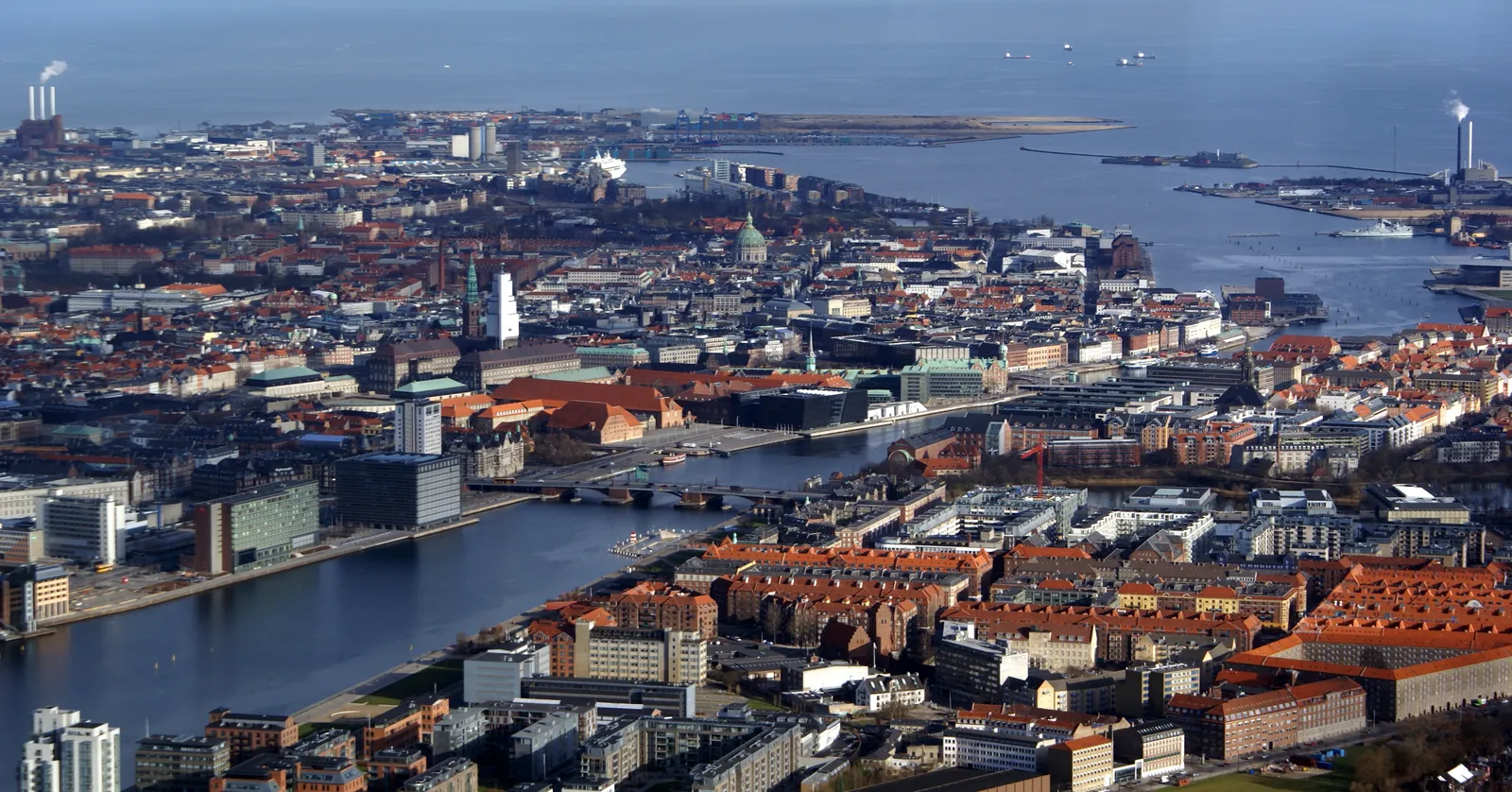
Nyhavn’s painted canal front, Tivoli Gardens and Christiansborg’s 106-metre tower are all within about two kilometres of each other in central Copenhagen, and the tower is free to ride up by lift.
Nyhavn’s painted houses along a 17th-century canal
Nyhavn is a short canal cut inland from Copenhagen’s inner harbour, dug between 1670 and 1675 by Danish soldiers and Swedish prisoners of war taken in the war that had just finished, so ships could unload in the middle of the city rather than out in the harbour. It has no gate and no opening hours.
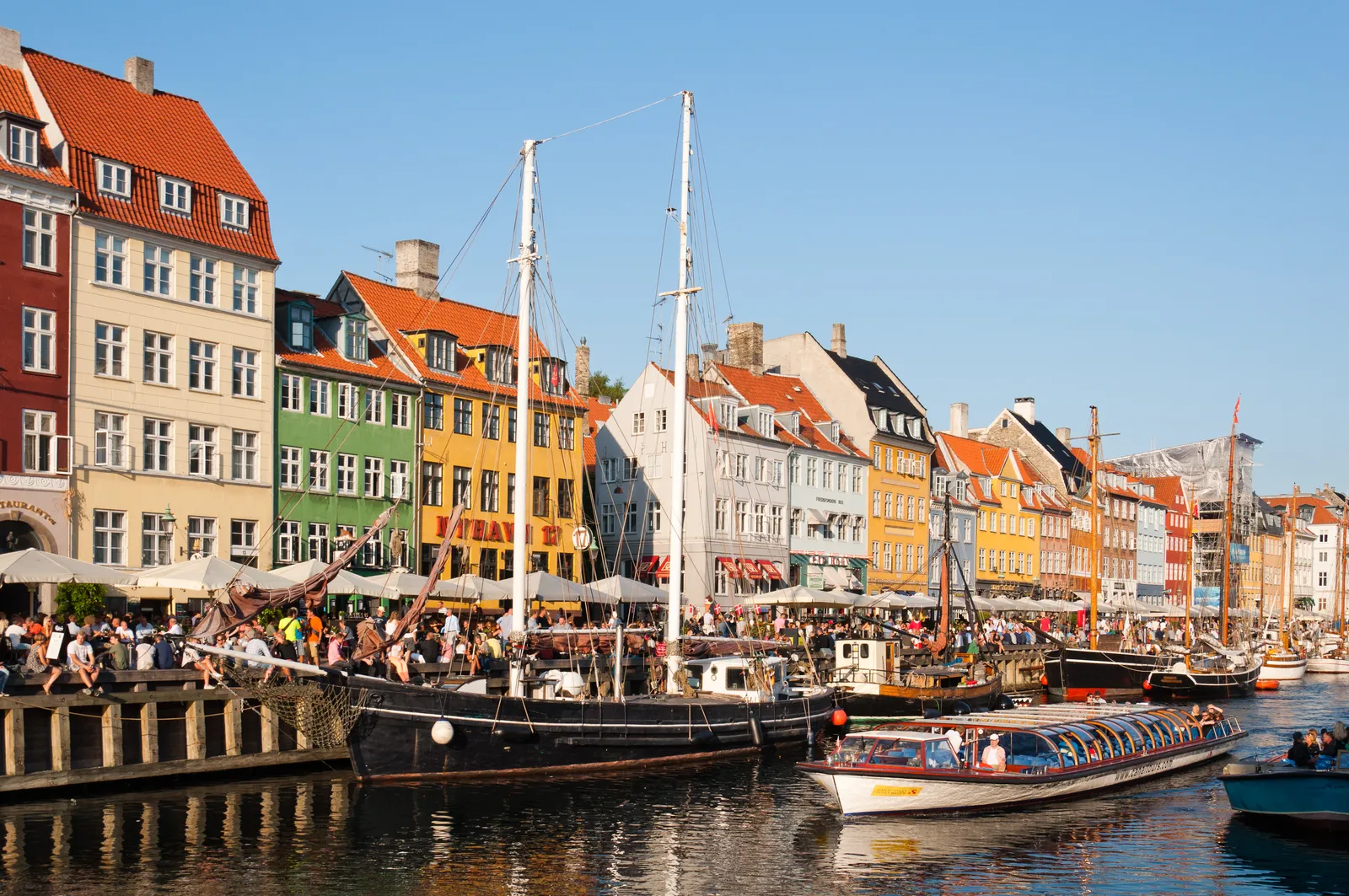
The north side carries the row the city puts on its postcards: merchants’ houses from the 17th and early 18th centuries in flat blocks of ochre, red, blue and white, the oldest at number 9 from 1681 and barely altered since. Hans Christian Andersen used three of those doors across forty years. He was at number 20 from 1834, and wrote there the first fairy tales he published, the thin booklet that appeared in May 1835 with The Tinderbox and The Princess and the Pea in it. He took rooms at 67 from 1845 to 1864, and at 18 for the last four years of his life.
Wooden ships are tied along the quay on the same side, most of them privately owned rather than museum pieces, among them the two-masted schooner Mira of 1898. Sightseeing boats leave from the harbour end of the canal and run about an hour through the inner harbour and the older canals around Slotsholmen, the small island the parliament sits on, whose warehouse and palace fronts face the water rather than the street; a seat booked in advance saves queueing on the quay in high summer.
Tivoli Gardens still runs a wooden rollercoaster from 1914
Rutschebanen opened on 12 June 1914 and is a side-friction wooden coaster, which means it has no under-track safety wheel and cannot simply be left to run at its own speed. A brakeman rides on the train, sitting in the middle of it and working a lever to hold the speed down on the drops, which is how the ride has been run since it opened.
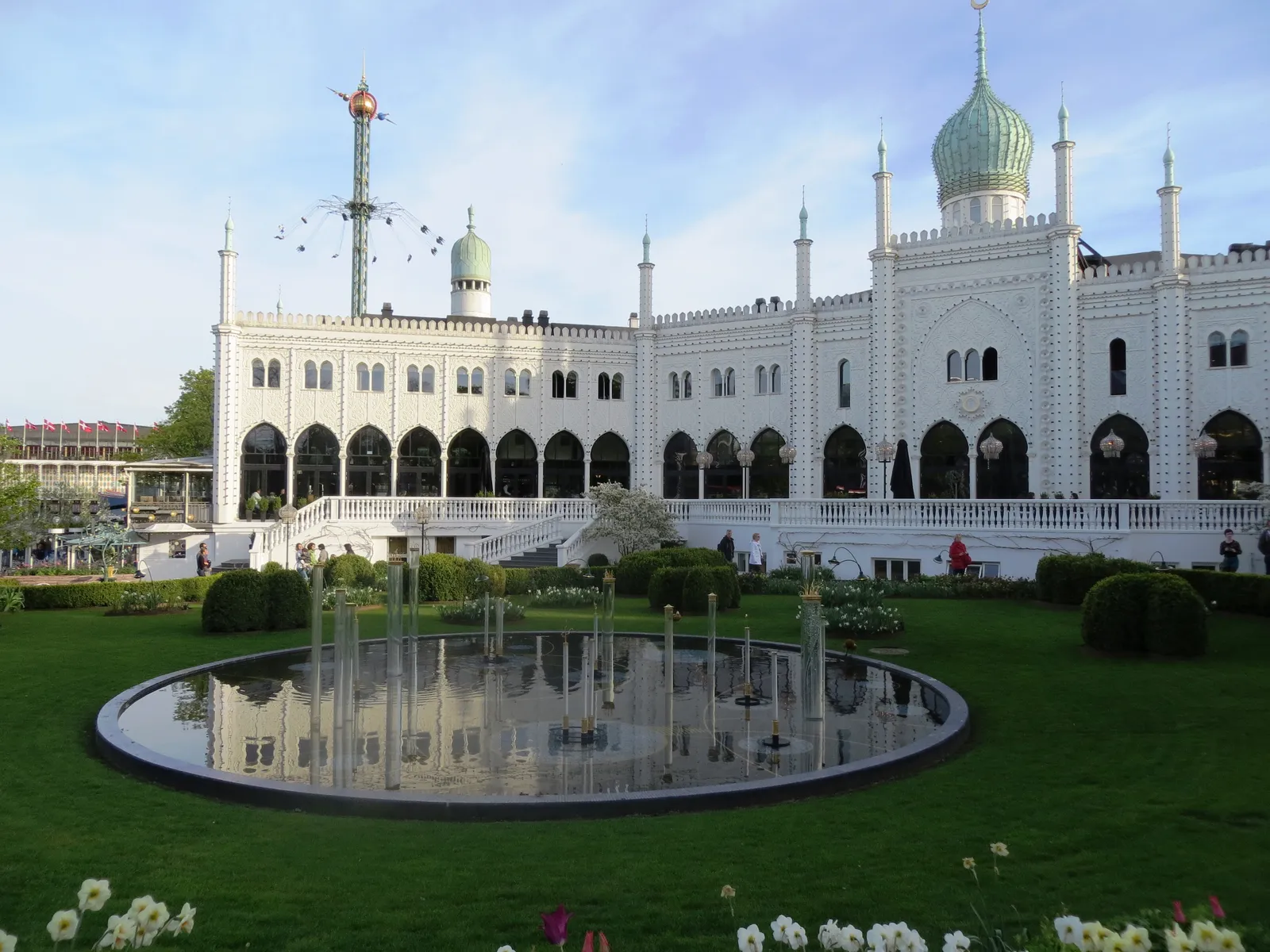
The garden itself opened on 15 August 1843, on ground that had been part of the city’s fortifications, after Georg Carstensen talked Christian VIII into a five-year charter on the argument that people enjoying themselves do not think about politics. What survives from the decades after that is the reason to walk in even if you never ride anything: the Pantomime Theatre of 1874 with its mechanical peacock-tail curtain, the Moorish Nimb building, the lake, and about four kilometres of flower beds replanted several times a year.
Entry starts at around 150 kroner and costs more on the busiest dates, with rides charged separately from admission. Buying the entry ticket ahead matters less for the price than for the gate, since Tivoli asks you to reserve a time slot once you have one. The seasons matter more: the garden shuts entirely between them, so late February and early November can find the gates locked.
The free lift up Christiansborg’s tower
Christiansborg sits on Slotsholmen, a small island in the middle of Copenhagen ringed by canals, and puts the Danish parliament, the supreme court and the prime minister’s office in one building. The current palace is the third on the site; the two before it burned down.
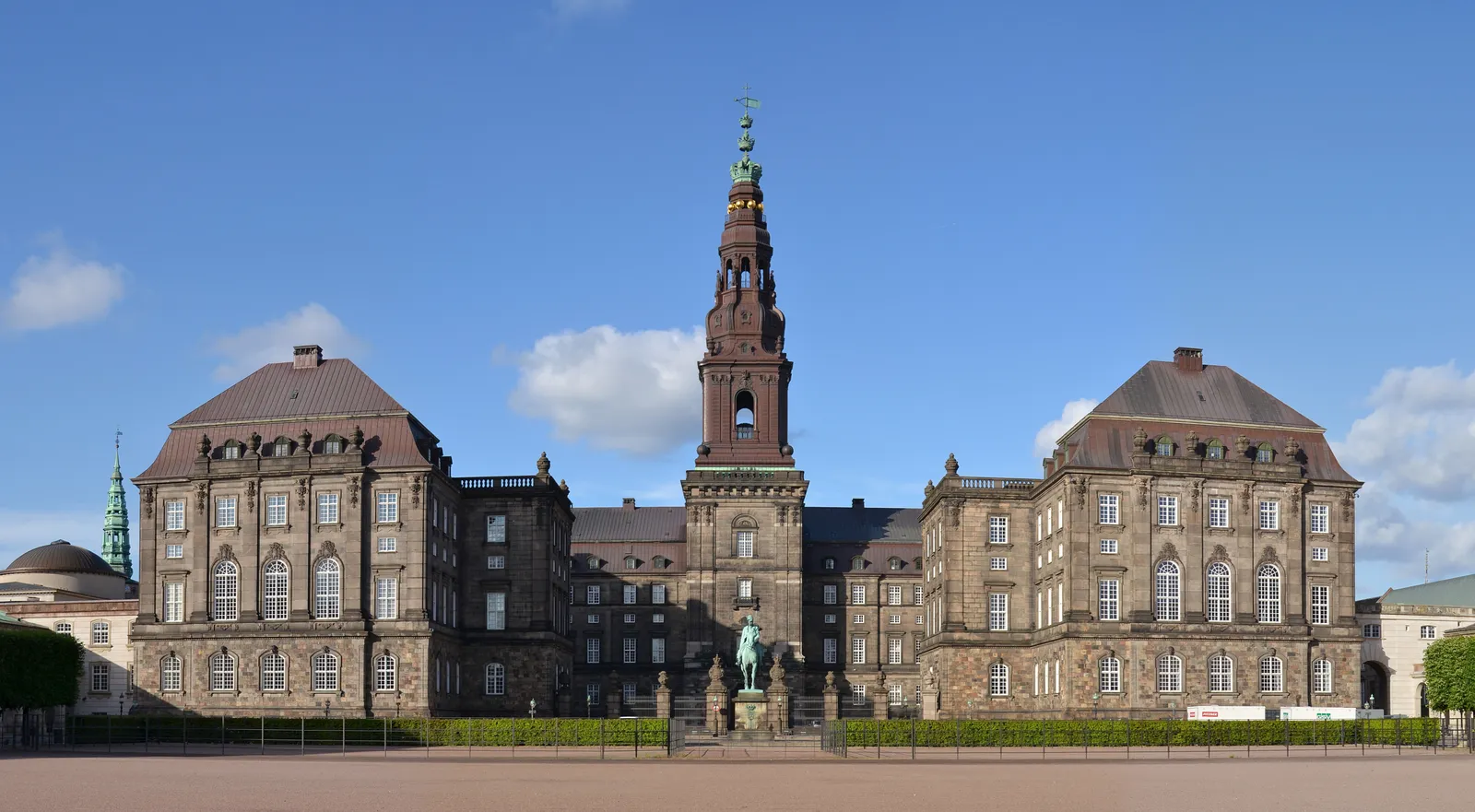
The tower over the middle of it is 106 metres, which makes it the tallest in Copenhagen by about forty centimetres over the one on the city hall, and it has been open to anyone since 2014 at no charge. The entrance is the King’s Gate in the centre of the palace front, reached from either the Palace Square or the inner courtyard, and a lift runs the whole way to the top; the stairs are not open to the public. Hours are 11am to 9pm Tuesday to Saturday and 11am to 5.30pm on Sunday, closed Mondays, and the palace can shut parts of itself at short notice for a state occasion.
Underneath, the Royal Reception Rooms, the medieval ruins beneath the courtyard and the royal stables are ticketed and can be seen on a single admission if the tower leaves you wanting the inside of the building too. One lift serves the whole tower and the platform at the top holds only a few people at a time, so a suitcase in either takes up a person’s worth of room.
The spiral ramp inside the Round Tower
Købmagergade runs north off Strøget at Amagertorv, and about two hundred metres up it the street widens around a fat brick cylinder with a green dome on top. Christian IV had it built between 1637 and 1642 as an astronomical observatory for the university, attached to a church and a library in the same complex, and it is 34.8 metres tall.
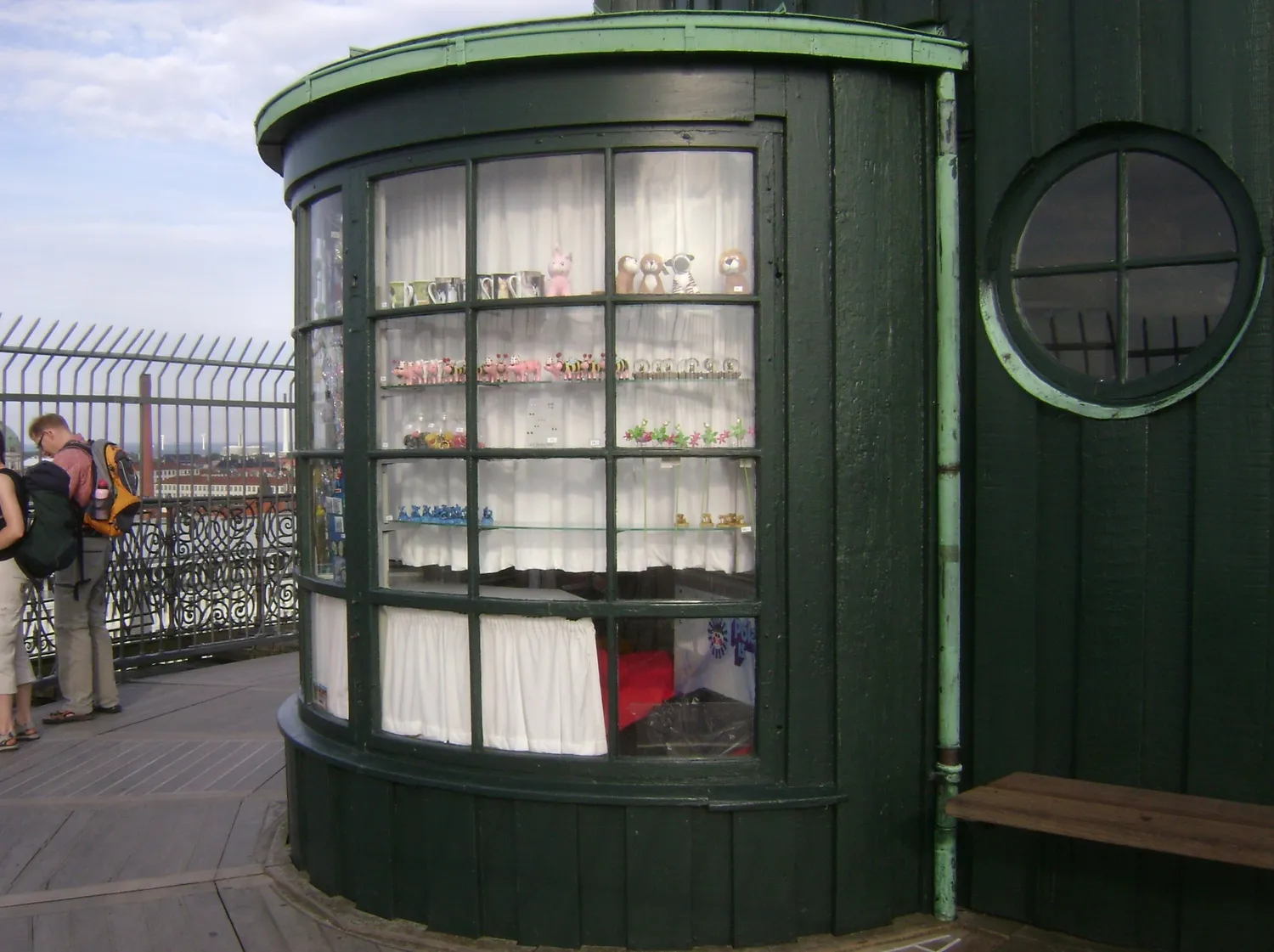
There is no staircase up it. A ramp of 210 metres winds seven and a half turns around the inside of the wall instead, rising a little under four metres per turn, built that way so instruments could be carted up without being carried. A short flight of steps at the end lifts you onto the viewing platform, which is the only part of the climb with stairs in it. Peter the Great rode a horse up the ramp in 1716, with Catherine following in a carriage behind him, and the story has stuck to the building ever since. Admission is 60 kroner, 40 for students and free under 18. It opens daily at 10am and closes at 8pm from April through September, at 6pm through the winter, with two evenings a week held open later in the winter half of the year.
The gilded rebus set into the facade outside is worth thirty seconds before you go in: a rearranged sentence in gold and Hebrew asking that learning and justice be led into Christian IV’s heart, with the king’s monogram and the date 1642 worked into it. The observatory in the dome is a 1928 reconstruction, and when it is running, astronomers staff it on winter evenings if the sky is clear. Its refracting telescope and copper roof came out for restoration at the end of 2025, and the hatches are due to open again from October 2026; the ramp, the platform and the view are unaffected either way.
Rosenborg Castle and the crown regalia in its basement
Rosenborg stands at the north end of the King’s Garden, a red brick and sandstone house with three green copper spires that Christian IV built between 1606 and 1624 as a summer residence and then kept extending. It stopped being lived in around 1710 and opened to the public as a museum in 1838, which is why the interiors read as a sequence of rooms left alone rather than restored.
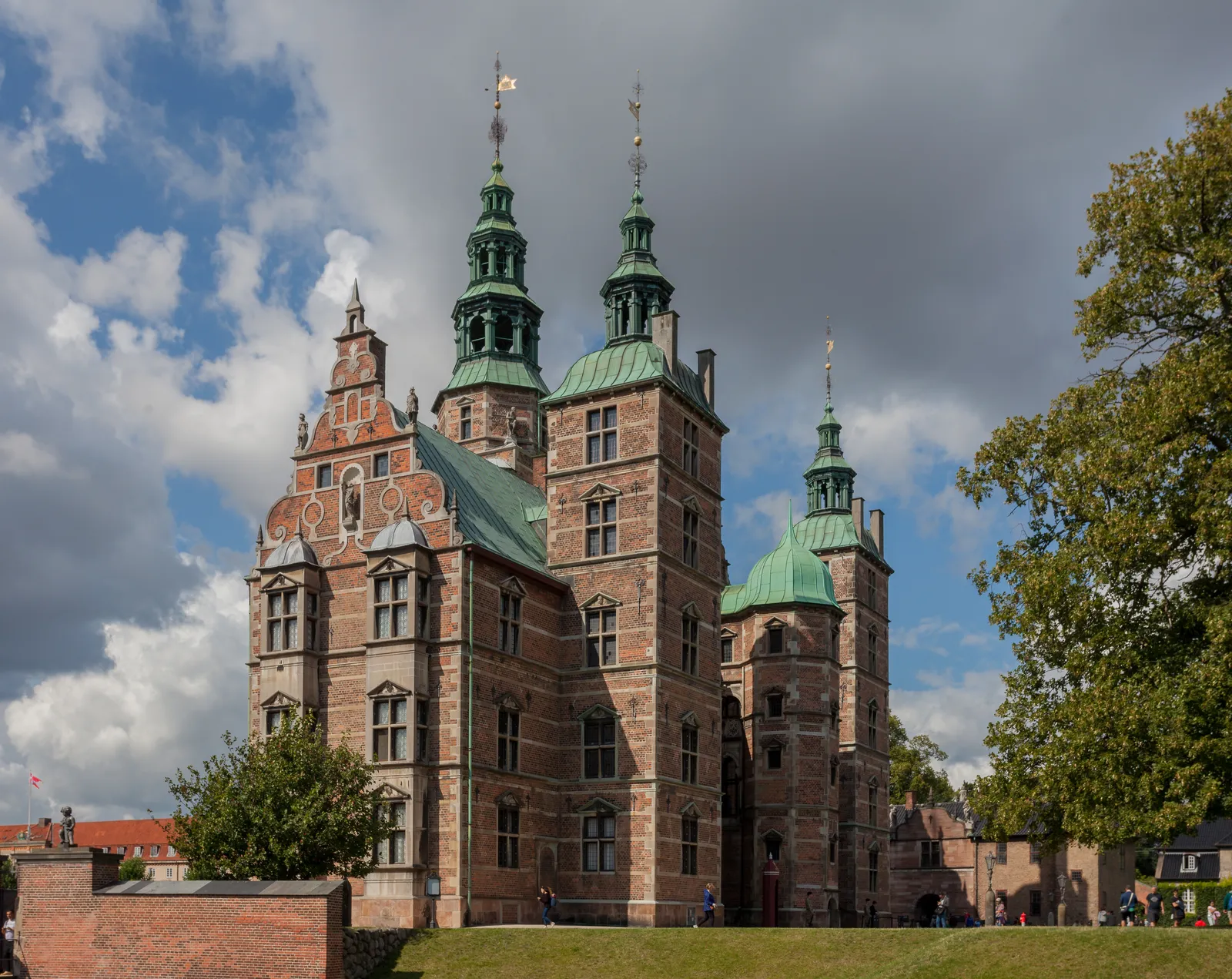
The Treasury is in the basement and holds the Danish crown regalia: Christian IV’s crown, the later absolutist crown, the coronation carpet, the throne chair, and four sets of jewels the reigning monarch still wears. Admission is 140 kroner with under-18s free, and the castle opens 10am to 5pm most of the year, from 9am between late June and the end of August, with Mondays closed in the run-up to Christmas.
The garden around it costs nothing and is a different proposition from the castle. Christian IV bought the land in 1606 to grow fruit and vegetables for the royal household, laid it out in straight avenues and clipped hedges, and it was opened to the public in 1710 after the court moved out. It is twelve hectares, and it opens at 7am daily and closes at 10pm, which puts it in reach at hours when the ticketed places on this list are all shut.
The Church of Our Saviour’s external spiral staircase
The church stands on Sankt Annæ Gade in Christianshavn, on the Amager side of the harbour, and from the ground it is a plain brick box under a black roof. The spire on top of it is the reason to cross the water.
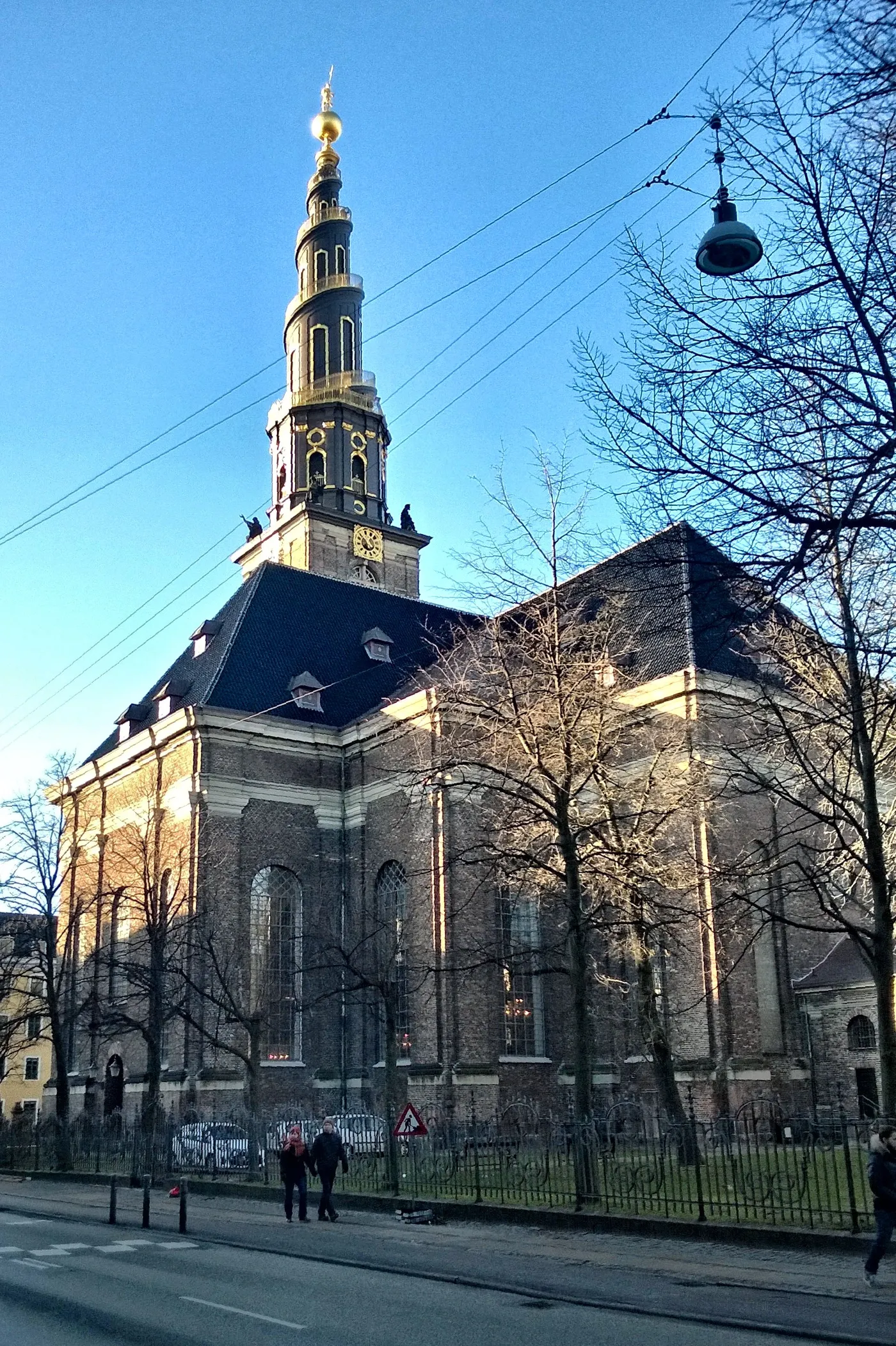
Four hundred steps go up it. The first two hundred and fifty are inside, through narrow wooden passages and past the bells; the last hundred and fifty are outside, on a staircase that corkscrews around the spire behind a gilded handrail and gets narrower as it climbs, ending just under a golden globe at 86 metres.
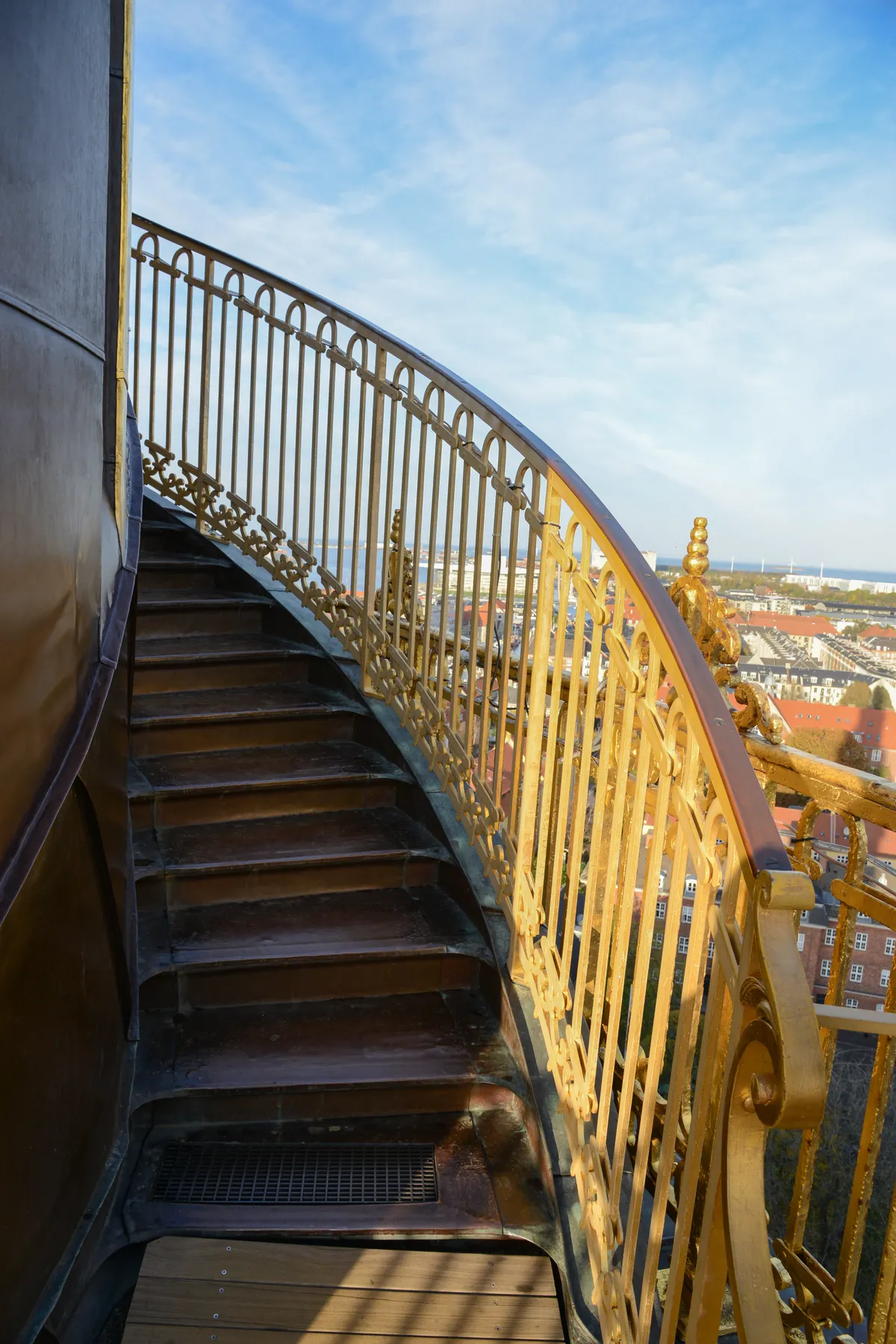
The tower is open daily from 9am to 8pm and closed for all of January, and it shuts at no notice in rain, snow or strong wind, because the copper treads are slippery wet and have to dry before anyone goes back up. Tickets are 70 kroner, 53 for students and over-65s, 20 for children under 15, and numbers are capped by how narrow the stair is. The church below is free and open to visitors daily from 11am to 3.30pm.
Getting across to Christianshavn is worth doing by water rather than by metro if the timing works. The harbour buses are ordinary public transport rather than a tour: scheduled boats charging a bus fare, running the length of the inner harbour from the south of the city up to Refshaleøen and calling at nine piers, among them the Royal Library, Nyhavn and Islands Brygge. A two-zone ticket at 24 kroner covers it, which is a fraction of a sightseeing cruise for most of the same water; the catch is that tickets are not sold on board, so buy before you step on.
The metro to the airport runs all night
The M2, the yellow metro line, links the city centre with Copenhagen Airport’s own station at Terminal 3. Kongens Nytorv, at the top of Nyhavn, is 13 minutes out; Nørreport is a couple of minutes further. It is driverless and runs 24 hours a day, every two to four minutes through the daytime, every eight minutes on Friday and Saturday nights and every twenty minutes on other nights. The fare is three zones, 30 kroner in 2026, the same ticket the trains and buses take.
Mainline trains cover the same route from the same station and reach Copenhagen Central Station in about 13 minutes, every ten minutes or so through the day, on that identical three-zone ticket. Which one you want depends on where you finish rather than on speed: the metro drops you at Terminal 3 and so does the train, but the metro serves Kongens Nytorv and Nørreport while the train serves the main station. Arriving at the airport, the platforms are in Terminal 3 and the walk from Terminal 2 arrivals takes two or three minutes, so the honest door-to-door figure from the centre is around 25 minutes rather than 13. Allow about 90 minutes from anywhere in this guide to collecting the bag, riding out and clearing security.
Copenhagen Central Station is also where the long-distance trains leave from, which matters if you are stringing rail legs rather than flying both ways. Since May 2026 there has been a direct daytime service south to Berlin and on to Prague, around seven hours to the first of them, usually twice a day.
Everything in this guide sits within about two kilometres of Kongens Nytorv except the walk across to Christianshavn, and the whole loop is flat. Leaving the suitcase near the centre rather than towing it up a 210-metre ramp on Købmagergade and around the outside of a spire in Christianshavn is what makes the towers worth attempting at all, and it puts the bag back within a quarter of an hour of the airport platform when the time comes.
Frequently asked questions
What should I do during a layover in Copenhagen?
Nyhavn is the obvious first target: a canal dug in the 1670s, lined on its north side with painted merchants' houses and moored wooden ships, free and open at any hour. Christiansborg's tower is about fifteen minutes' walk southwest along the canals, 106 metres up, and costs nothing to ride. With four hours or more, the Round Tower's spiral ramp and Rosenborg Castle's crown jewels sit a few minutes apart north of Strøget, and the Church of Our Saviour's outdoor staircase is across the harbour in Christianshavn. Tivoli is the one stop worth settling before you land, because it shuts completely between its seasons; everything else here can be decided on the day.
Is there a view over Copenhagen that involves no stairs?
Christiansborg's tower. A lift runs from the entrance at the King's Gate to the top, the stairs are not open to the public at all, and there is no admission charge. Space at the top is limited and a queue builds at the entrance, so it is worth going up early rather than late in the afternoon. The Round Tower is the near miss: its 210-metre ramp climbs 7.5 turns with no steps in it, but a short staircase still separates the top of the ramp from the viewing platform.
Is Tivoli Gardens open all year?
No, and the gaps are real closures rather than reduced hours. It runs in seasons: a summer season from late March to late September (27 March to 20 September in 2026), a Halloween month through October, Christmas from mid-November until just after New Year, and a short winter week in February. Arrive in early November or late February and the whole garden can be dark behind its fence. Entry starts at around 150 kroner and costs more on busy dates, and rides are charged on top of it rather than included.
Which ticket covers the metro, the harbour boats and the ride out to the airport?
One ticket covers all three. Copenhagen prices public transport by how many zones you cross, not by mode, so the same fare works on the metro, the S-trains and regional trains, the buses and the harbour buses. The two-zone minimum is 24 kroner in 2026 and covers most hops inside the centre, while the centre out to Copenhagen Airport is three zones at 30 kroner, valid for transfers within the zones you paid for. Tickets are not sold on board the harbour boats, so buy from the app or a machine before you step on.
Why does the tower at the Church of Our Saviour close without warning?
Rain, snow and strong wind. The last 150 of its 400 steps run around the outside of the spire on copper treads that turn slippery when wet, so the tower closes in bad weather and stays closed until the steps dry out. It also shuts for the whole of January. Tickets are 70 kroner, 53 for students and over-65s and 20 for children under 15, and the stair is narrow enough that numbers are capped, so a slot booked ahead is worth having on a fixed schedule. The church underneath is free and open daily from 11am to 3.30pm.