Copenhagen Central Station Layover: City Hall
Part of the full Copenhagen Layover: Nyhavn and Tivoli From CPH
Copenhagen Central Station puts the City Hall tower, the Glyptotek’s domed palm house and the old meatpacking halls of Kødbyen inside a ten-minute walk, and the Glyptotek’s permanent collection costs nothing on Tuesdays.
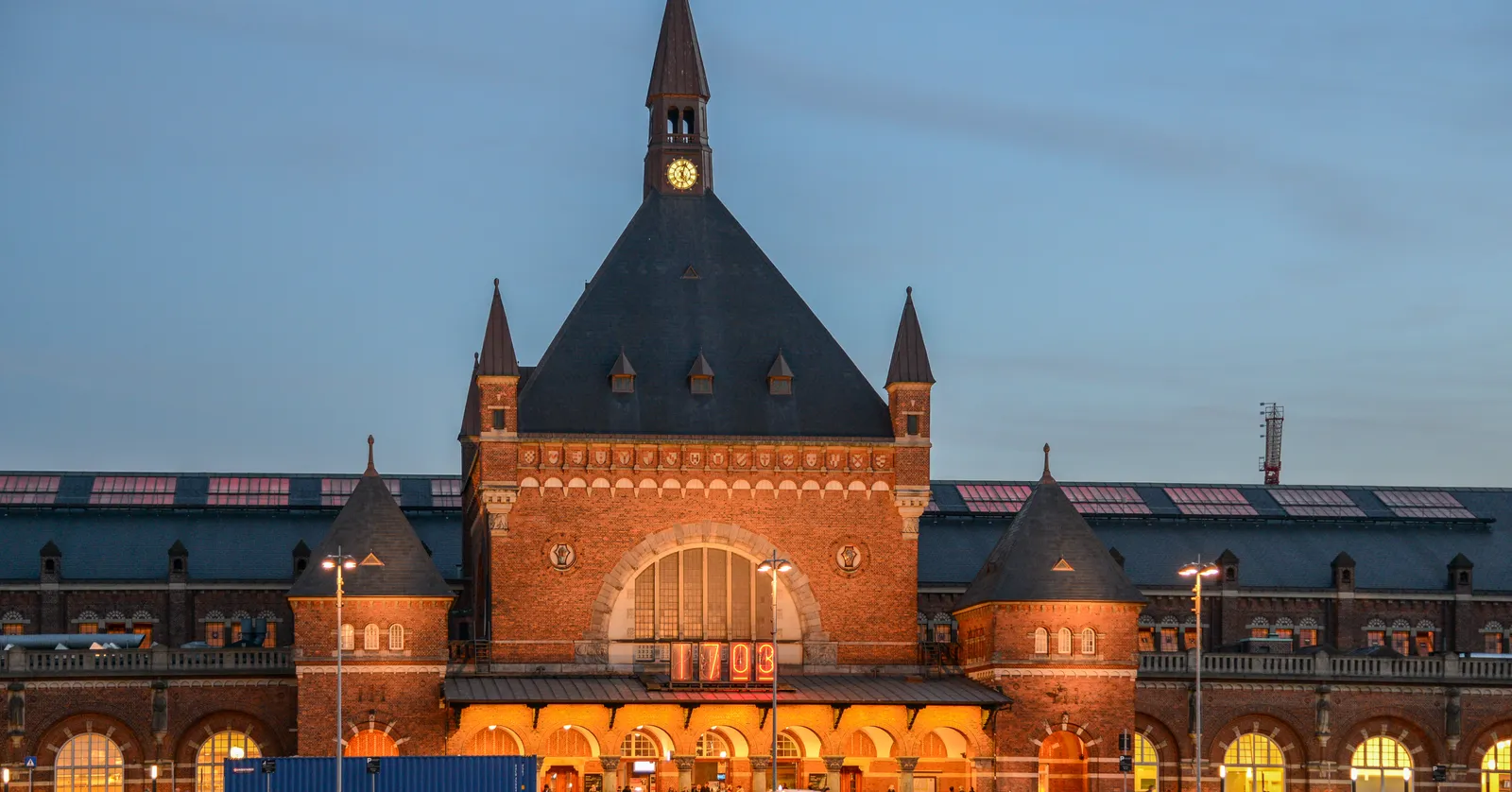
Copenhagen Central Station’s hall is roofed in wooden arches
Heinrich Wenck was head architect of the Danish State Railways from 1894 to 1921, and this is the building he is remembered for. It opened on 1 December 1911 in brick, slate and granite, and he designed down to the level of the tiles, the chandeliers, the wrought-iron signs and the stained glass, which carries the coats of arms of Danish towns along the hall.
The roof is the part worth looking up at. Where most stations of that date reached for iron, Wenck spanned both the departure and arrival halls, and six more arches over the platforms, in laminated wood. The platforms themselves sit below the hall, uncovered and below street level, which is why every move here involves a set of stairs in one direction or the other.
More than 100,000 people pass through daily, which makes this the second-busiest station in Denmark after Nørreport, and it is where the international services leave from: Stockholm, Hamburg, Berlin, Prague.
The 300 steps up Copenhagen City Hall’s tower
City Hall Square is five minutes north of the station along Vesterbrogade, and the red brick building filling its eastern side is Martin Nyrop’s town hall, built between 1892 and 1905 after he won the competition for it. The tower on its corner is 105.6 metres, which puts it 40 centimetres below Christiansborg’s and makes it the second-highest thing you can get to the top of in the city.
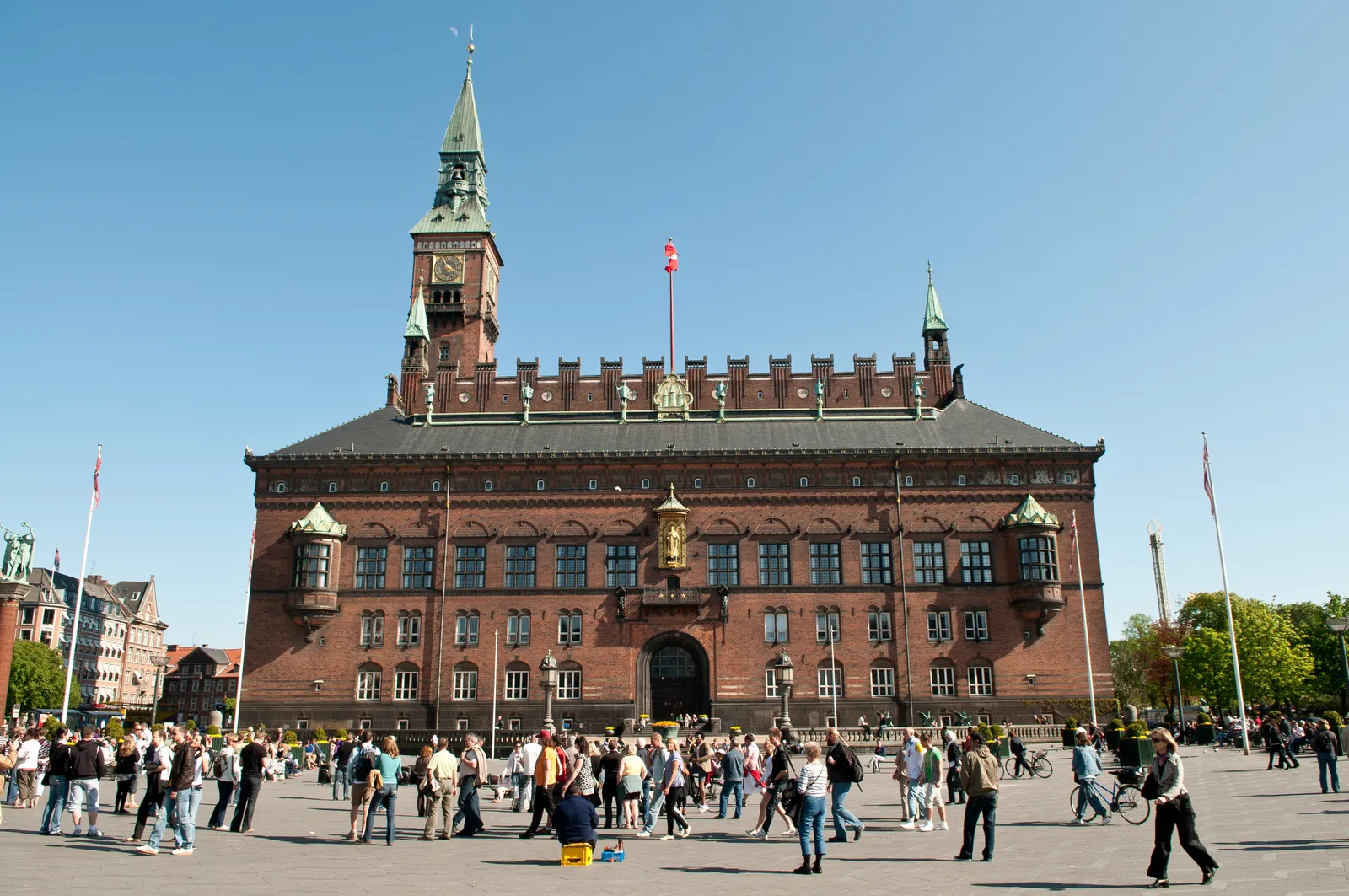
Getting up it is a fixed appointment rather than a turnstile: a 30-minute guided climb for 40 kroner, at 11am and 2pm Monday to Friday and noon on Saturday, roughly 300 steps and no lift. Holding a place in advance is worth it purely because there are so few slots in a week. What you get at the top is Tivoli laid out directly below and the inner city beyond it.
Downstairs, the main hall is open on weekdays and free to walk into, and Jens Olsen’s World Clock stands in a glass case in its own room off it: an astronomical clock of twelve movements and 15,448 parts, started by Frederik IX in December 1955, tracking eclipses, stellar positions and a perpetual calendar. Its fastest gear turns once every ten seconds and its slowest once every 25,753 years, the length of one wobble of the Earth’s axis. The tower stair has nowhere to leave a bag along it and is single-file for most of its length.
The palm house at the centre of the Glyptotek museum
Carl Jacobsen, who ran the Carlsberg brewery his father founded, gave his sculpture collection to the city and the state in 1888, and the museum built to hold it opened on 1 May 1897 on old fortification ground behind Tivoli. He complained at the time that it was too far from the centre. It is eight minutes’ walk from the station.
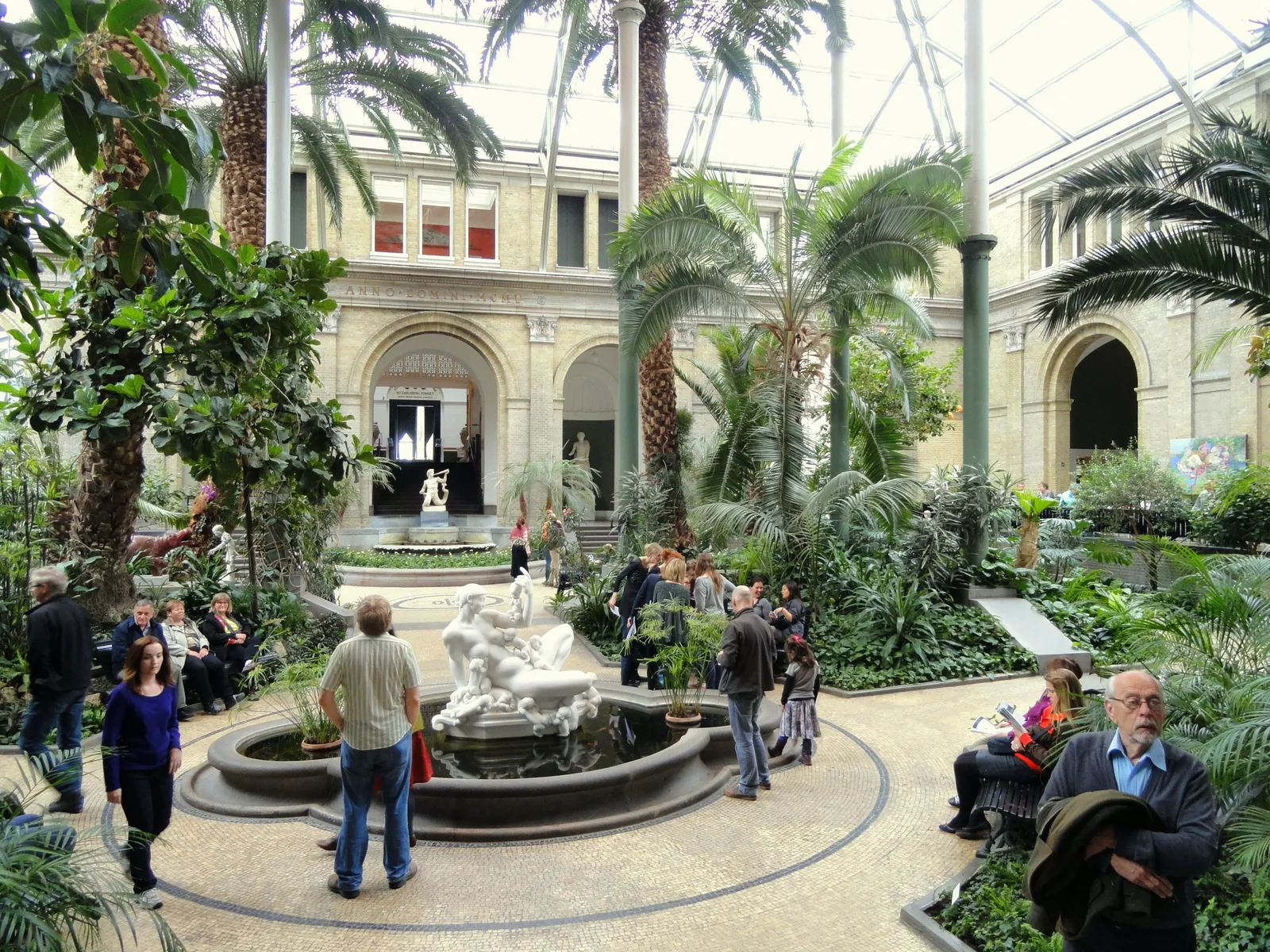
The Winter Garden joins the two wings: mosaic floors, full-height palms, a fountain in the middle, all under a dome framed in copper and wrought iron. It is heated, it is quiet, and the café tables in it are under cover, which is what it is for in a Danish February. Around it are more than 1,900 Egyptian objects going back to 3000 BCE, mummies in a basement gallery lit like a crypt, a wall of French 19th-century bronzes, and more than 40 paintings by Gauguin, who was married to a Dane and lived in the city for a time.
Entry is 115 kroner, 85 for students under 27, free under 18, and free for everyone on Tuesdays apart from the temporary exhibitions. It opens 10am to 5pm, until 9pm on Thursdays, and closes on Mondays.
The old meatpacking halls at Kødbyen
Halmtorvet runs southwest from behind the station into Vesterbro, and the quarter on its far side was Copenhagen’s municipal slaughterhouse. The brown half, nearest the station, dates from 1883 and includes Øksnehallen of 1901, built as a cattle market with room for 1,600 animals and now an exhibition hall. The white half opened in April 1934, in the flat concrete and steel-framed glass of the period, and was a showpiece of how meat was supposed to be handled.
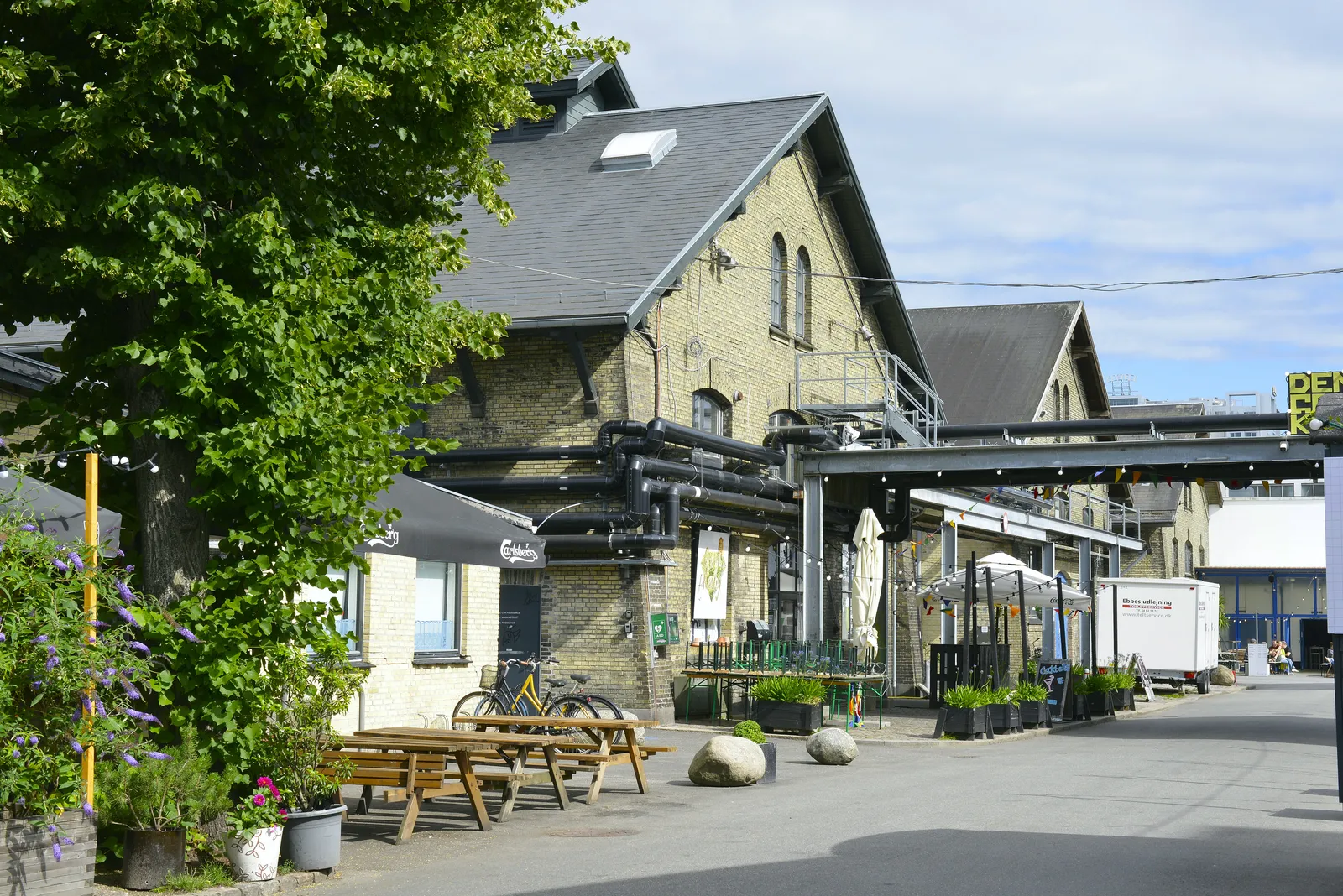
Both halves are listed, and both are on the national list of twenty-five industrial monuments, so the sheds have kept their tiling, their sliding doors and their overhead pipe runs while galleries, bars and kitchens moved in around the wholesalers that still work here. Nothing costs anything to walk past. It is a fifteen-minute round trip from the station concourse, and it looks nothing like the canal-and-palace circuit in the main Copenhagen guide.
Copenhagen Central Station reaches the airport in 13 minutes
Trains for Copenhagen Airport, Kastrup go from the station’s own platforms rather than a separate terminal, every ten minutes or so through the day, on a three-zone ticket at 30 kroner that the metro and the buses take too. Add two or three minutes at the far end for the walk from the Terminal 3 platforms into Terminal 2, and the real figure from the concourse to the check-in desks is nearer 20 minutes than 13.
The M3 metro line runs underneath the station 24 hours a day, reached by a pedestrian tunnel from the main hall, and it is the fallback once the direct trains thin out overnight: one change at Kongens Nytorv onto the M2 gets you to the airport with a wait of fifteen to twenty minutes at worst. Between about 2.15am and 4.30am on weeknights the main hall itself is shut for cleaning, and the platforms are reached from the Tietgensgade bridge on the south side instead.
Two hours is enough for the tower, the Glyptotek and a walk through the meat halls, if the tower slot happens to land right. If it does not, the honest answer is to spend the time further in and follow the canals instead.
Frequently asked questions
What is there to look at inside Copenhagen Central Station itself?
The building, mostly. Heinrich Wenck finished it in 1911 and detailed the whole thing himself, so the main hall has custom tilework, wrought-iron signage, chandeliers and a run of stained glass carrying the coats of arms of Danish towns, under a roof of laminated wooden arches rather than the iron most stations of that date used. It takes ten minutes to walk the length of it and look up, and it costs nothing. City Hall Square is five minutes out of the north end if that fills the time you have.
Which museum near Copenhagen Central Station is free, and on which day?
The Ny Carlsberg Glyptotek, on Tuesdays, about eight minutes' walk east past Tivoli. The permanent collection, the Egyptian rooms, the Rodin bronzes, the Gauguins and the Winter Garden, is free to everyone that day; temporary exhibitions still cost 60 kroner. Any other day, adult entry is 115 kroner, 85 for students under 27 and free under 18. It is closed on Mondays, so a Monday layover here is a walk rather than a museum.
Is there a lift up Copenhagen City Hall's tower?
No. It is about 300 steps from the pavement to the balcony, with no lift anywhere on the route, so the tower is out if stairs are a problem. The rest of the building is not: the main hall at street level is flat, free and open on weekdays, and Jens Olsen's World Clock is on the ground floor beside it for 60 kroner. The Glyptotek, a few minutes away, has lifts throughout.
How late can you leave Copenhagen Central Station and still reach the airport?
Direct trains to Copenhagen Airport run every ten minutes or so through the day and thin out to roughly hourly in the small hours, which makes them an awkward thing to plan a flight around after about midnight. The metro is the answer then: the M3 runs from underneath the station 24 hours a day, and one change at Kongens Nytorv onto the M2 puts you at Terminal 3 with no gap in service, every fifteen to twenty minutes through the night. One three-zone ticket at 30 kroner covers either route. Note that the main hall itself is shut between about 2.15am and 4.30am on weeknights for cleaning, when the platforms are reached from the Tietgensgade bridge instead.