Copenhagen Airport Layover: Dragør's Old Town
Part of the full Copenhagen Layover: Nyhavn and Tivoli From CPH
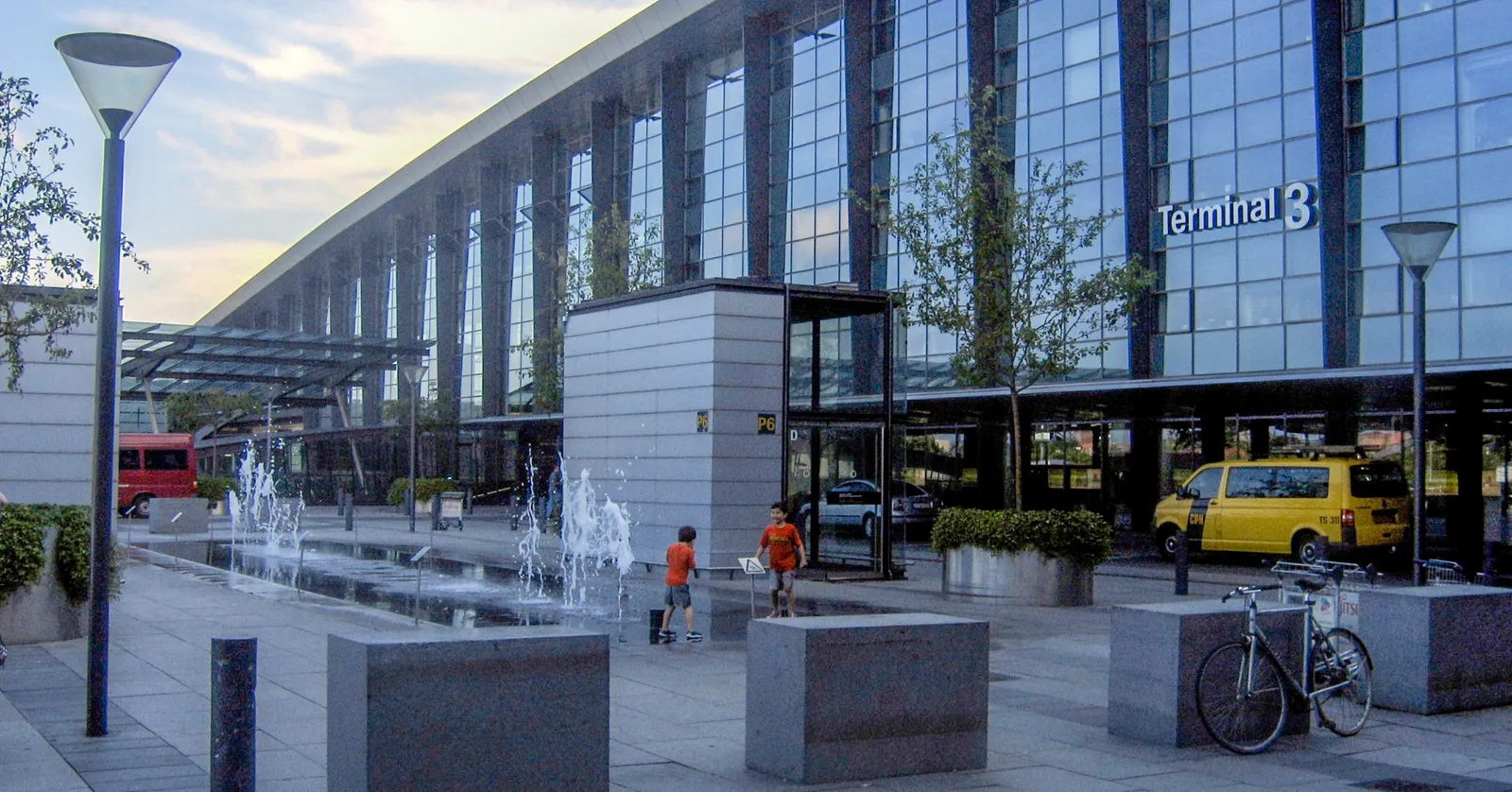
Copenhagen Airport is one metro stop from Denmark’s national aquarium at Kastrup, about fifteen minutes by bus from Dragør’s cobbled old town, and three stops from a sheltered beach lagoon, none of which needs a trip into the city.
Den Blå Planet, an aquarium built in the shape of a whirlpool
Kastrup is the first stop north of the airport on the metro, and 600 metres from that station is a building by 3XN that only really makes sense from the air: arms of aluminium shingle spiralling out from a single centre, laid out as a whirlpool, which is more or less how it reads from a departing aircraft.
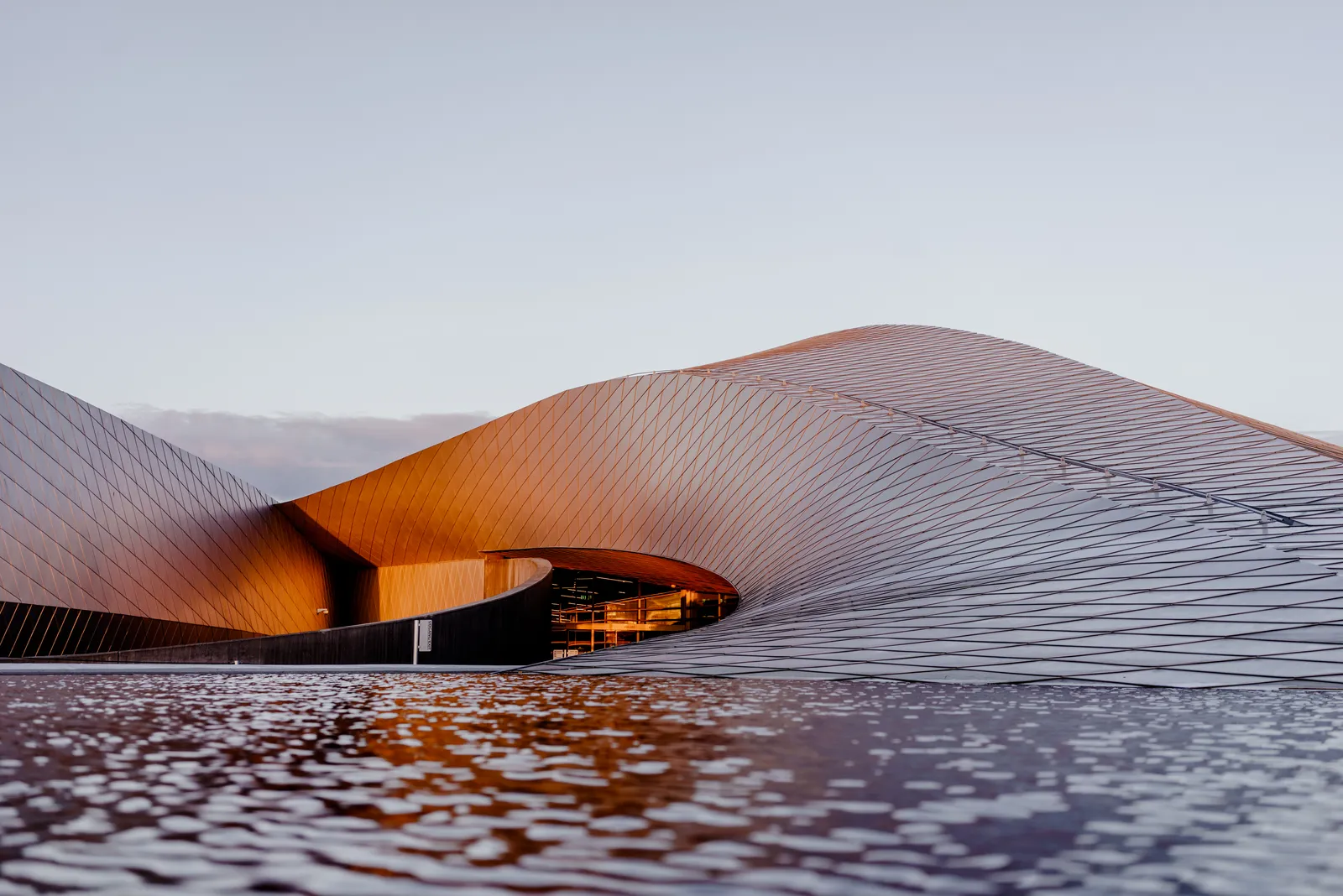
It opened in March 2013 and holds roughly seven million litres of water in 53 exhibits, about 20,000 animals across 450 species, split between a rainforest section, the African great lakes, cold water, warm ocean and a room on evolution. The centrepiece is a four-million-litre ocean tank with hammerhead sharks and rays in it and a 16-metre tunnel running underneath. Entry is 249 kroner at the door, 219 online, and it is sold as a one-hour arrival slot rather than an open ticket, so fixing the slot before you land is what makes this work against a connection. It is open every day of the year, 10am to 5pm, and until 9pm on Mondays.
Dragør’s 76 listed houses on the Amager coast
Dragør sits on the southeastern corner of Amager, twelve kilometres from central Copenhagen and about fifteen minutes on the bus from the airport, and it was a wealthy skipper town through the age of tall ships. What that money built is still standing: 76 listed buildings inside a few blocks, low houses in yellow and cream lime-wash under red pantiles, on cobbled lanes laid out too narrow for a car to be comfortable in.
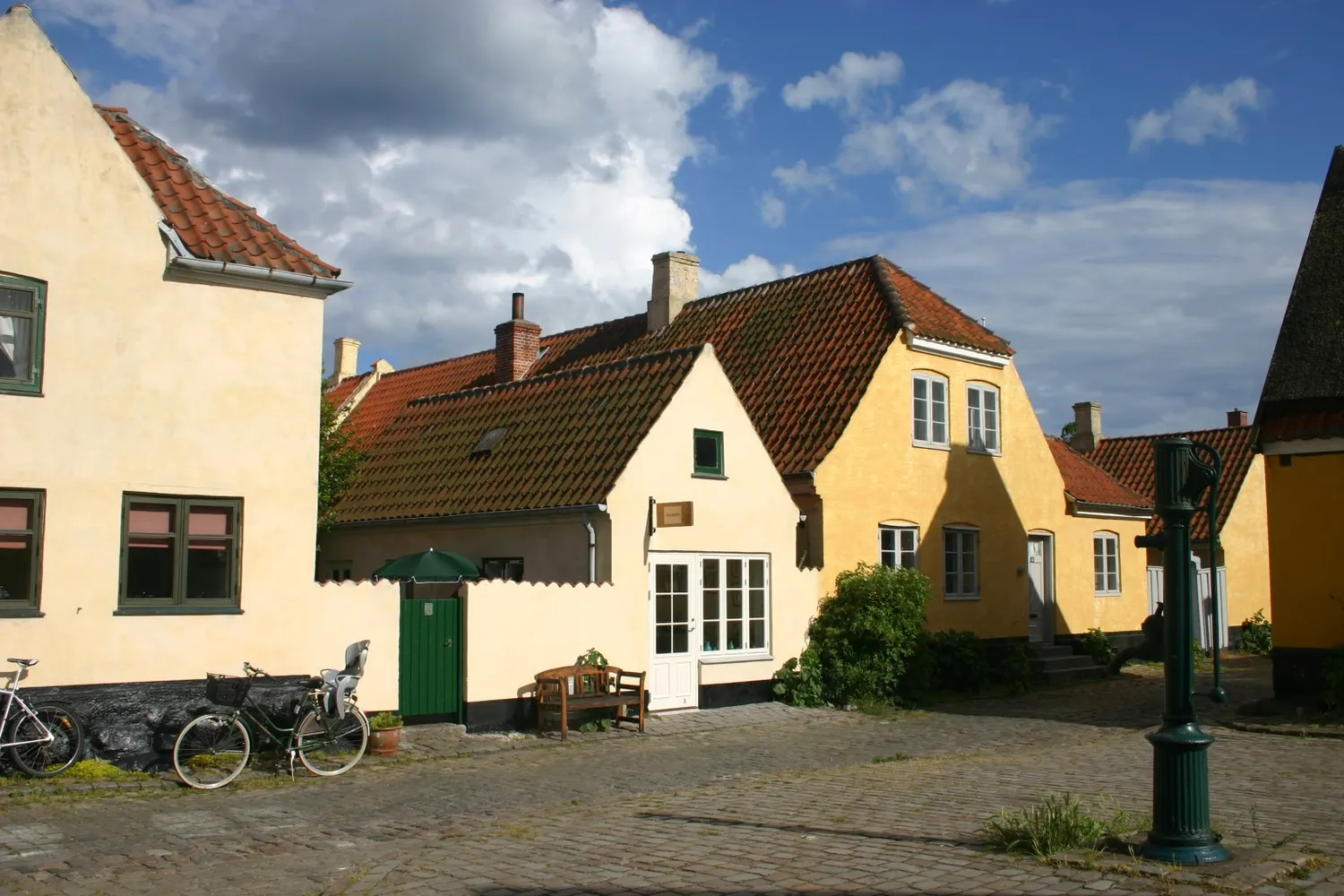
The old town and the harbour together sit on Denmark’s UNESCO tentative list as a piece of 18th and 19th-century maritime heritage, and the harbour is still a working one, with fishing boats tied up along the quay and the old harbour warehouse standing behind them. There is nothing to buy a ticket for, which is the point of it on a connection: no queue, no timed entry, and no way to be caught out by a closing time. Bus 35 leaves from outside Terminal 3, runs every half hour from about 4.45am to just after midnight, and puts you down at Dragør Stationsplads a few minutes’ walk from the first of the lanes.
The two-kilometre lagoon at Amager Strandpark
Amager Strandpark runs along the east coast of the island, three metro stops from the airport, and has been a public beach since 1934. In 2005 the city dropped a two-kilometre artificial island offshore and connected it at both ends, which turned the water between island and shore into a lagoon: shallow, flat, and out of the Øresund’s currents.
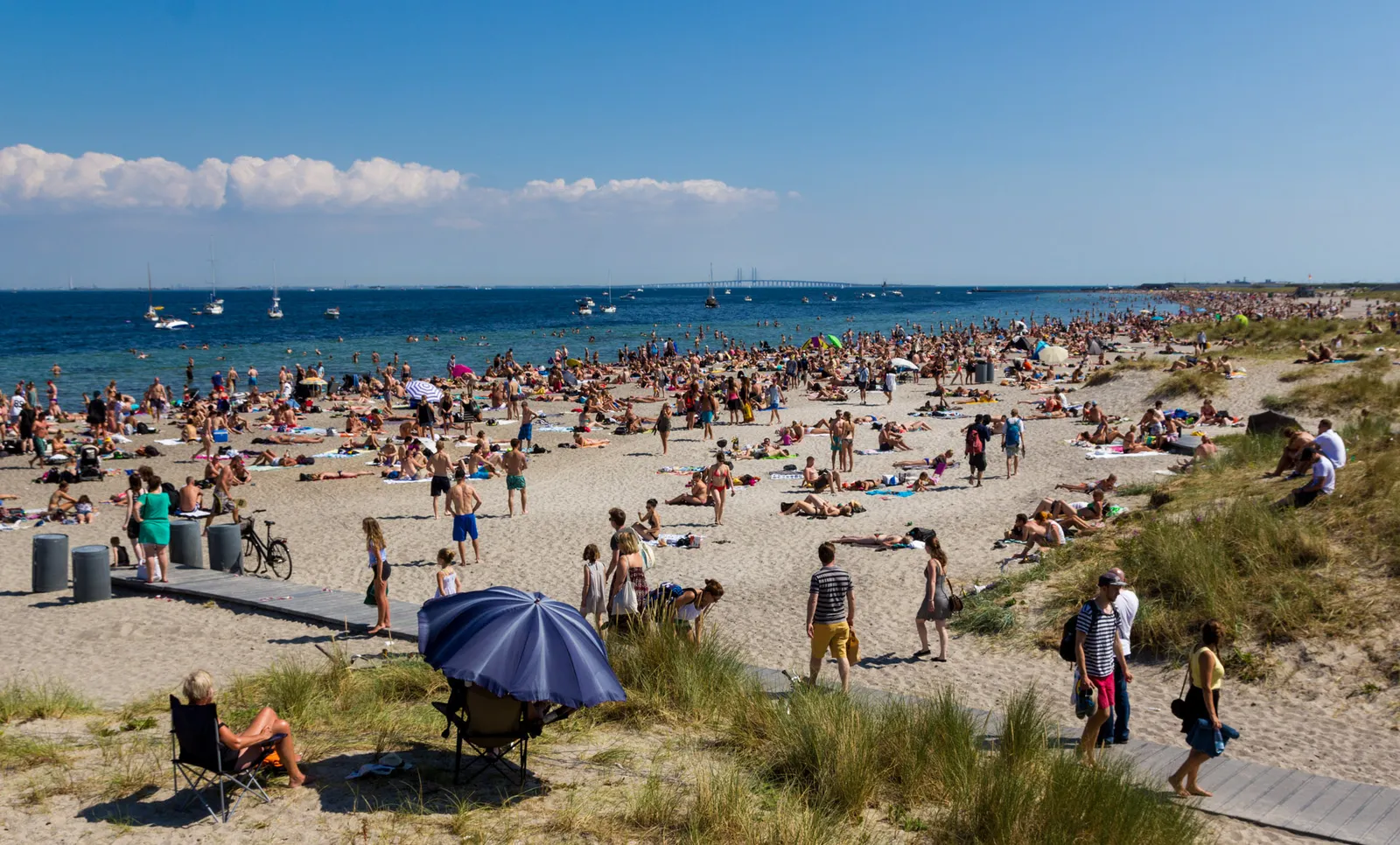
There are 4.6 kilometres of sand in total, dunes planted along the back of it, and views across to the Swedish coast and the wind turbines standing off Middelgrunden. It costs nothing and never closes. It is also a summer proposition and nothing else: between October and April this is a windy walk beside cold grey water, which is worth knowing before you build a January connection around it.
The airport’s lockers are in car park P4
Copenhagen Airport’s left luggage is not in a terminal. It is on the ground floor of parking facility P4, in the Kiss and Fly area directly opposite the Terminal 2 entrance, which is a short walk outside rather than something you will pass on the way to arrivals.
Three sizes are available. The small one is 36 by 44 by 57 centimetres, 60 kroner for four hours or 80 for twenty-four; the large is 46 by 60 by 82 centimetres at 80 and 100; and there is a ski and golf locker at 32 by 186 by 57 for 100 and 120. Nothing stays longer than 72 hours, and the locks take a chip-and-PIN Visa or Mastercard rather than cash, which is the detail that catches people out. A large hold bag will not fit the small locker, so the practical minimum for one checked suitcase is 80 kroner for a four-hour window.
Dragør and back fits inside three hours
Reckoning backwards from the gate is what decides all of this. Fifteen minutes out on the bus, an hour walking the lanes and the harbour, fifteen minutes back and then the security queue again puts a Dragør trip at about two and a half hours door to door, and the aquarium at roughly three once the walk from Kastrup station is in it. Amager Strandpark is the loosest of the three, since the metro runs every few minutes and you decide when to turn around.
Below three hours, none of it is worth the re-screening, and the honest answer is to stay inside. Above five, the calculation changes entirely: the metro reaches Kongens Nytorv in 13 minutes, and the main Copenhagen guide covers what that opens up, starting with Nyhavn at the top of the escalators.
Frequently asked questions
Can you leave Copenhagen Airport during a layover?
Yes, if your connection is long enough to absorb clearing security again on the way back in. The metro and rail platforms are landside in Terminal 3, so stepping out is a matter of walking through arrivals rather than arranging anything. Arriving from outside the Schengen area you pass border control first, and re-entry means a fresh trip through the security queue, so treat anything under about three hours as not worth it.
Where are Copenhagen Airport's luggage lockers, and what do they cost?
On the ground floor of parking facility P4, in the Kiss and Fly area directly opposite the Terminal 2 entrance, rather than anywhere inside the terminals themselves. A small locker measuring 36 by 44 by 57 centimetres is 60 kroner for four hours or 80 for a full day; a large one at 46 by 60 by 82 centimetres is 80 and 100; a ski and golf locker at 32 by 186 by 57 is 100 and 120. The maximum stay is 72 hours, and payment is by chip-and-PIN Visa or Mastercard.
Is Dragør reachable from the airport and back in two hours?
Comfortably. The bus takes about fifteen minutes from the airport to Dragør Stationsplads and runs every half hour from around 4.45am until just after midnight, and the old town starts a few minutes' walk from where it stops. An hour on the ground is enough for the lanes, the harbour and a coffee. Sunday is no different from any other day there, since nothing on that walk has opening hours.
Is the aquarium worth it on a short layover?
If you have three hours or more, yes. It is 600 metres from the metro station one stop up the line, tickets are timed to a one-hour entry slot, and most people spend an hour and a half to two hours inside. Adult entry is 249 kroner at the door and 219 booked online, children 3 to 11 are 131 and 116, and under-3s are free. It opens at 10am every day of the year, closing at 5pm and at 9pm on Mondays, which makes it the reliable option in January when the beach is not one.