Refshaleøen Layover: Copenhagen's Shipyard
Part of the full Copenhagen Layover: Nyhavn and Tivoli From CPH
Refshaleøen is a shut-down shipyard on the northern edge of Copenhagen’s harbour, now holding a container street-food market, an art hall in the old welding shed and a ski slope on a power station roof, and the boat out to it takes an ordinary bus ticket.
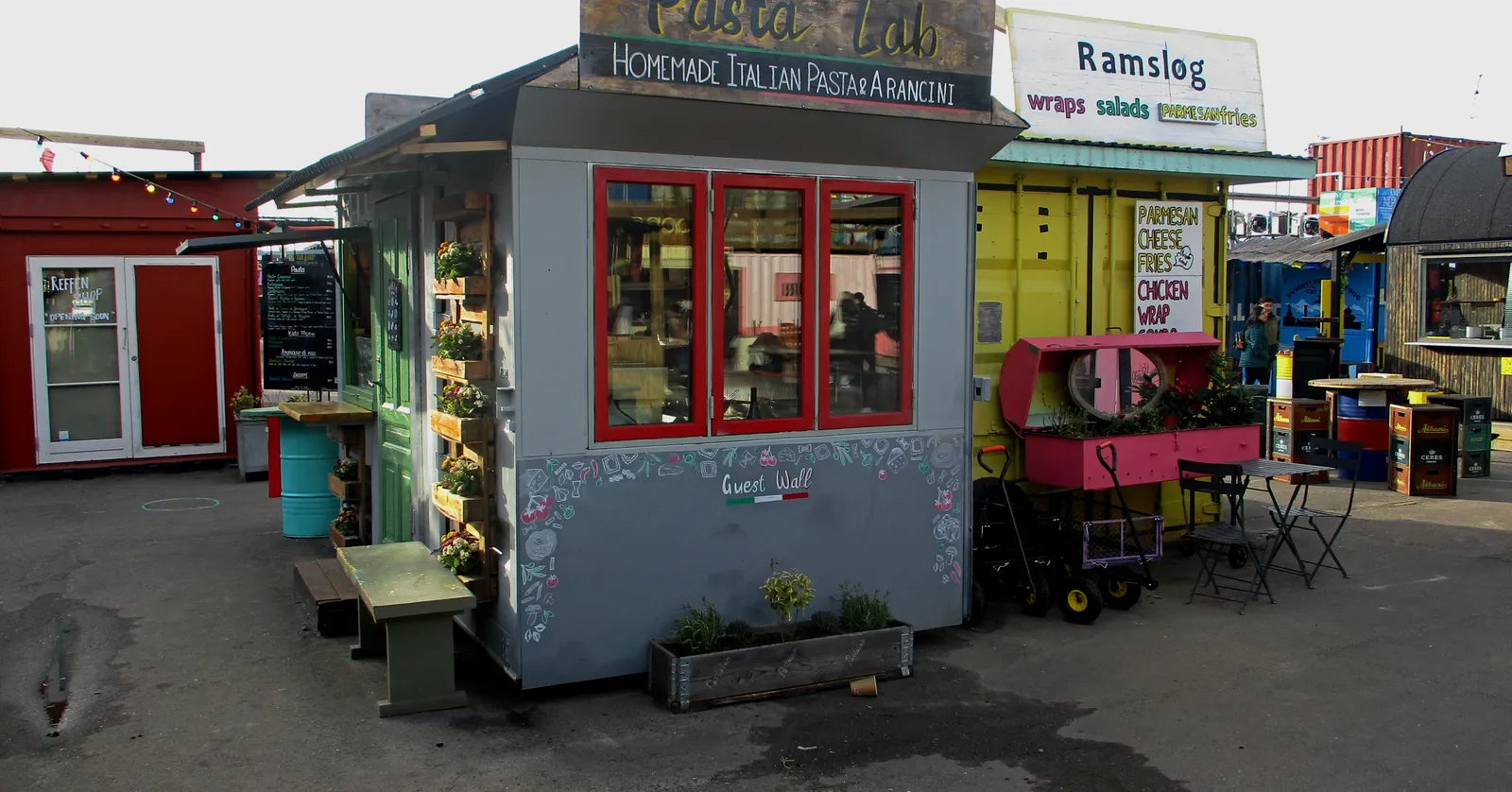
Reffen’s container stalls on the old shipyard concrete
Reffen opened in May 2018 on ground that had spent a century as heavy industry, and it did not bother pretending otherwise. The whole market is built from repurposed shipping containers set out on the yard’s concrete: about 35 food stalls, ten bars, four workshops and a brewery, with picnic benches between them and the harbour immediately beyond.
The food is the reason people make the trip, and the prices are noticeably below what the same meal costs inside the tourist ring around the canals. The catch is the calendar. Reffen runs a season from around April to October and then closes for the winter, and out of season the island reverts to what it is underneath, which is a quiet industrial estate.
The ski slope on the roof of the Amager Bakke power station
Amager Bakke is a waste-to-energy plant a couple of kilometres south of Refshaleøen along the same industrial shore, and Bjarke Ingels had the idea of putting a ski slope on it back in 2002. It is there now: four runs of artificial surface down the roof, two green, one green-blue and one red-black, open year-round because none of it depends on snow.
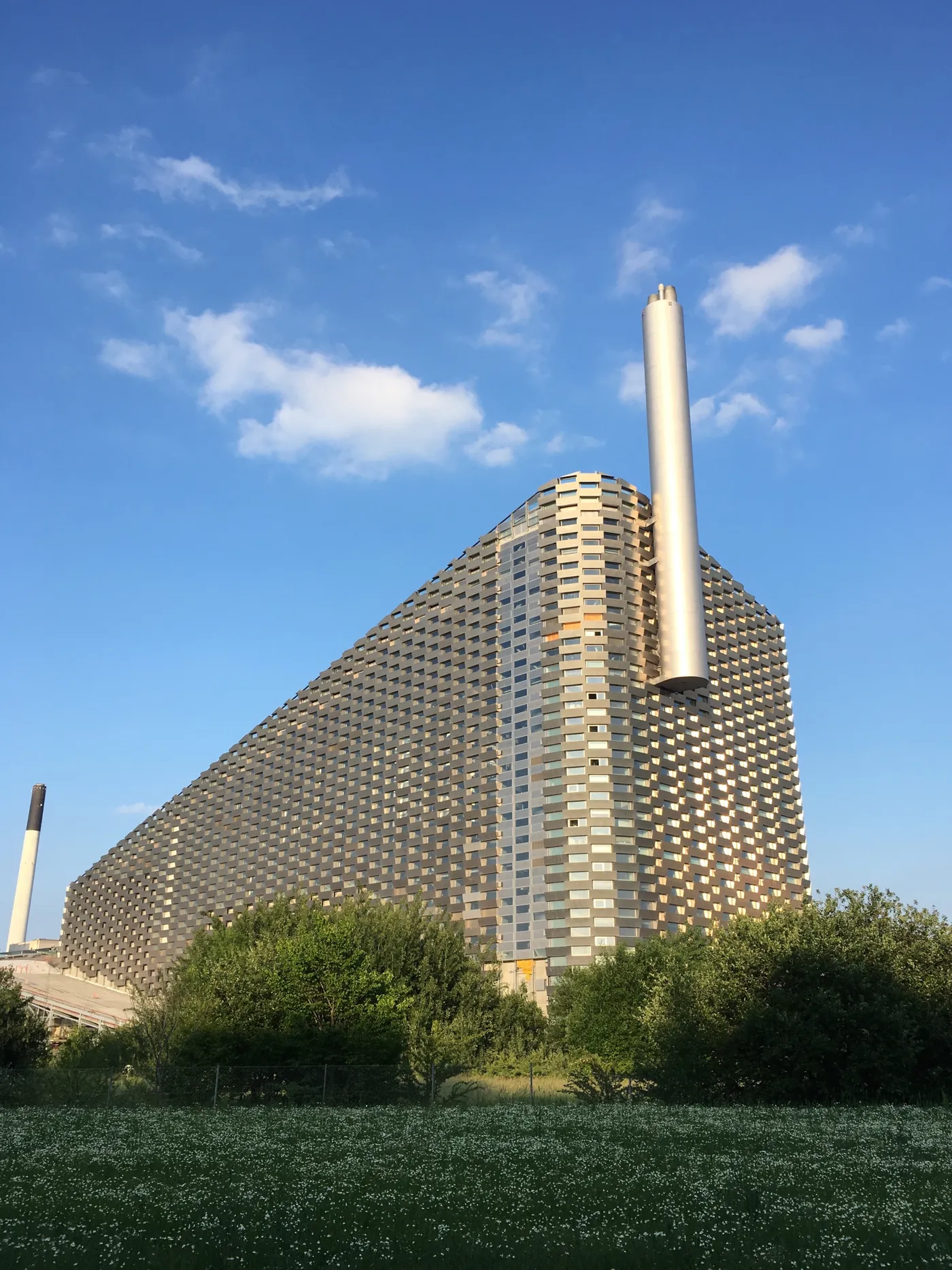
You do not have to ski to use it. A tree-lined path climbs the roof alongside the runs to a viewing platform at the top, looking back over the harbour, the wind turbines offshore and the Swedish coast, and walking it costs nothing during the plant’s opening hours. An 85-metre climbing wall runs up one flank of the building, ticketed separately. The chimney beside it puts out steam rather than smoke, which is the part of the design people photograph and then ask about.
What is left of the Burmeister and Wain yard
Burmeister and Wain built ships on this island for more than a century, employed something like 8,000 people at its peak, and went bankrupt in 1996. Nothing was demolished afterwards. The sheds, the slipways, the crane tracks and the quay walls are all still standing, and the island’s name is painted across the gable of one of the big halls facing the water.
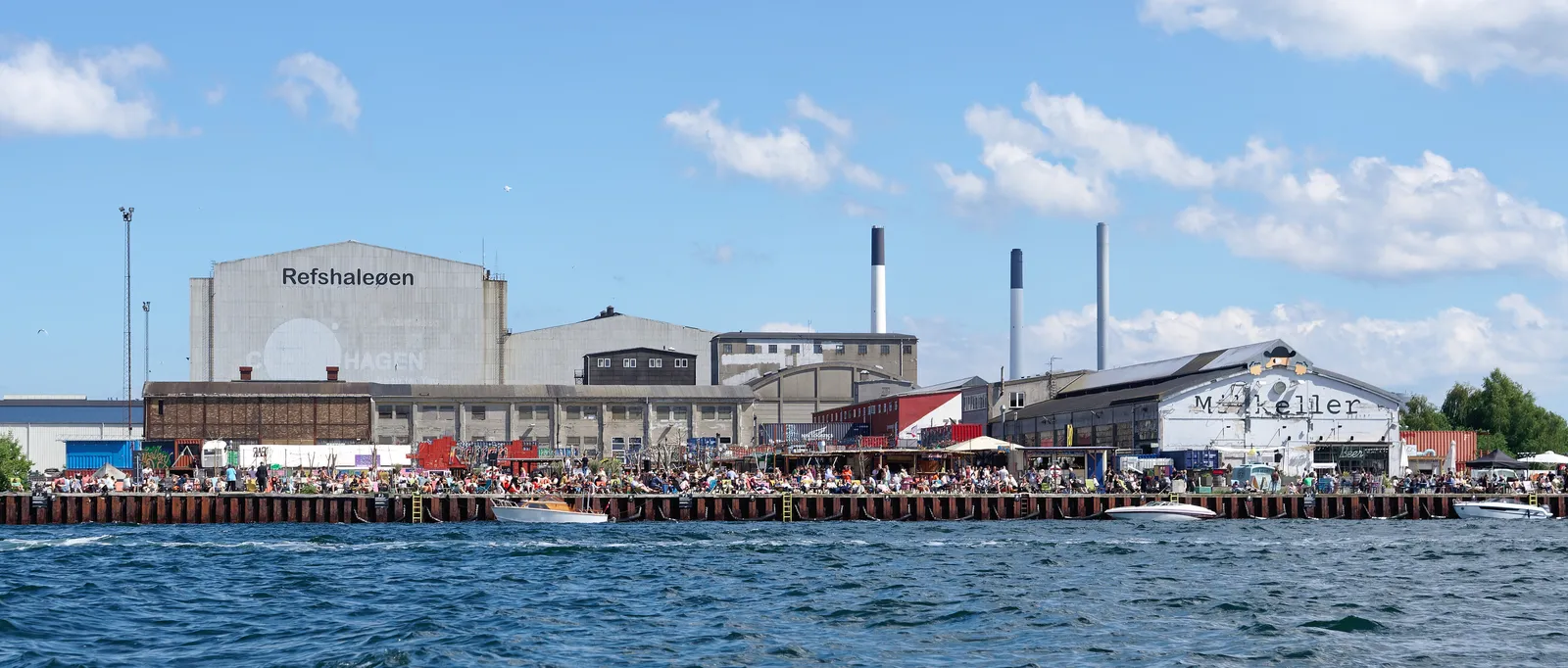
What has moved in since is a strange mixture: an art hall, a climbing centre, a couple of restaurants with international reputations, workshops, a flea market in the summer. Copenhagen Contemporary took over the Burmeister and Wain welding hall and fills it with installation art at a scale nowhere else in the city can hold, and it is the one place out here with a roof and a ticket desk.
The ground between all of it is the thing to plan for: flat open concrete and old rail track, several hundred metres between one building and the next, and nothing at all breaking the wind off the Øresund. A wheeled suitcase over that surface is a genuinely different proposition from a suitcase on a cobbled lane.
The boat back into the city is ordinary public transport
Refshaleøen has no station, so the way in and out is a harbour bus: a scheduled boat on the public transport network, charging a normal bus fare, running the length of the inner harbour and terminating here. Twenty minutes to the centre, a standard two-zone ticket at 24 kroner, and the same stretch of water a sightseeing cruise sells at cruise prices. A city bus covers the same route along Refshalevej for anyone who would rather stay on land. Either way the journey runs down the Christianshavn side of the harbour, which is the obvious place to break it.
From the centre, the M2 metro line runs out to Copenhagen Airport, Kastrup and its own station at Terminal 3, which is 13 minutes from Kongens Nytorv and 11 from Christianshavn, on a three-zone ticket at 30 kroner. Two legs and a change means about 45 minutes from the island to the terminal, so leave two hours on a flight day rather than the ninety minutes that works from the middle of town.
Everything here is a longer walk than it looks on a map, and the return trip is not the metro. The main Copenhagen guide is the better plan if you have under three hours, since the canals, the towers and Nyhavn all sit inside a couple of kilometres of the centre and none of them needs a boat to reach.
Frequently asked questions
Is Reffen open all year?
No. The market runs a season from roughly April to October and shuts for the winter, so a January visit finds the containers locked and the island quiet. In season it holds about 35 food stalls, ten bars, a handful of workshops and its own brewery, built almost entirely out of repurposed shipping containers on the old shipyard concrete. It opened in May 2018.
How do you actually get out to Refshaleøen?
By boat or by bus, not on the metro, which does not come out here. The harbour buses are ordinary public transport running the length of the inner harbour and terminating at Refshaleøen, so a standard two-zone ticket at 24 kroner covers the ride, and it takes about twenty minutes from the centre. A city bus runs out along Refshalevej as well. Tickets are not sold on board the boats, so buy from the app or a machine first.
Can you go up Amager Bakke without skiing?
Yes. The rooftop trail is open to walk during the plant's public hours, currently 11am to 7pm on weekdays, 10am to 7pm on Saturday and 10am to 5pm on Sunday, and it costs nothing to climb the path to the viewing platform at the top. Skiing, snowboarding and the 85-metre climbing wall on the flank of the building are all ticketed separately. The slope is artificial and runs year-round rather than only in winter.
Is there anywhere indoors at Refshaleøen?
One serious option: Copenhagen Contemporary, which shows installation art in the old Burmeister and Wain welding hall on Refshalevej, at the scale a shipyard shed allows rather than the scale a gallery usually does. It is ticketed and it is the only real shelter on the island once the market's own roofs run out. Everything else here is outdoors on flat open concrete with the wind coming straight off the Øresund, which is worth knowing before committing a wet afternoon to it.
How long does it take to reach the airport from Refshaleøen?
Around 45 minutes, and it is the leg of this trip worth over-budgeting. There is no station on the island: the boat or bus back into the centre is 20 minutes on its own, and only then does the M2 metro take over for the run out to Copenhagen Airport's station at Terminal 3, which is 11 to 15 minutes depending on where you join it. Both legs run on the same three-zone ticket at 30 kroner. Budget two hours from the market to a check-in desk on a flight day.