Christianshavn Layover: Copenhagen's Freetown
Part of the full Copenhagen Layover: Nyhavn and Tivoli From CPH
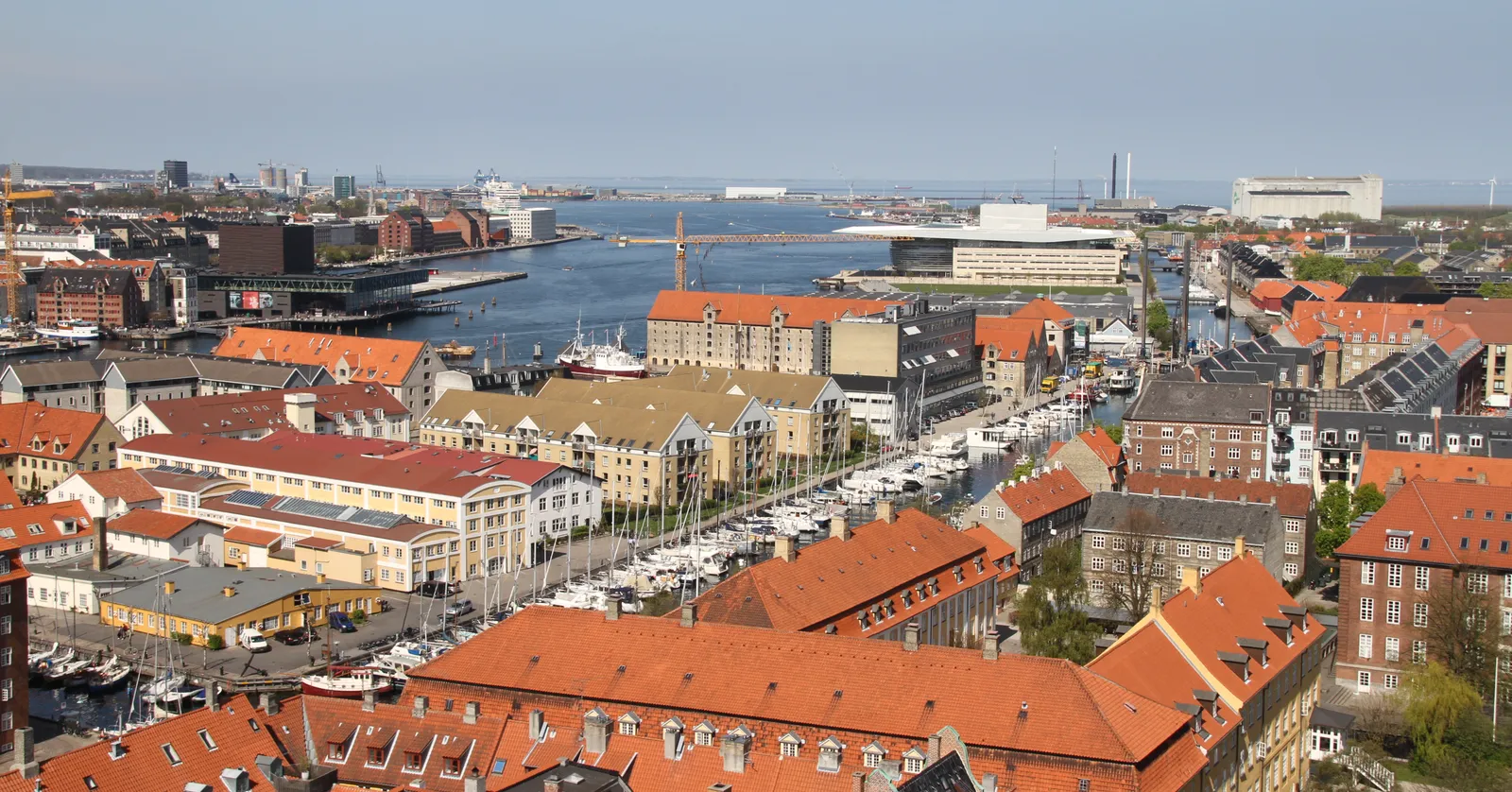
Christianshavn puts a Dutch-style canal, the self-governing Freetown Christiania and a twelve-bastion rampart walk within a kilometre of each other on the Amager side of Copenhagen’s harbour, and none of the three charges anything.
Christianshavn’s canal and the boats moored along it
Christian IV founded Christianshavn in 1639 on reclaimed ground between Copenhagen and Amager, as a fortified merchant town modelled on the Dutch cities he admired, and the plan he imposed is still the plan. One canal runs north to south through the middle of it. One street, Torvegade, crosses east to west. They meet at Christianshavns Torv, and everything else in the district hangs off that cross.
The canal is what people come for. It is lined on both sides with quays at water level rather than behind railings, and moored along it are houseboats, converted barges and small wooden craft, some of them lived in year-round. The competition with Copenhagen proper was over by 1674, when the town was absorbed into the city, which is roughly why it kept its street plan while the rest of the centre kept being rebuilt.
Freetown Christiania on the old Bådsmandsstræde barracks
On 26 September 1971 a group of squatters walked into an abandoned naval barracks on the eastern edge of Christianshavn and did not leave. Christiania has been there ever since, self-governing, between 850 and 1,000 people living in a mix of converted barrack blocks and houses built by hand, and it takes something like half a million visitors a year.
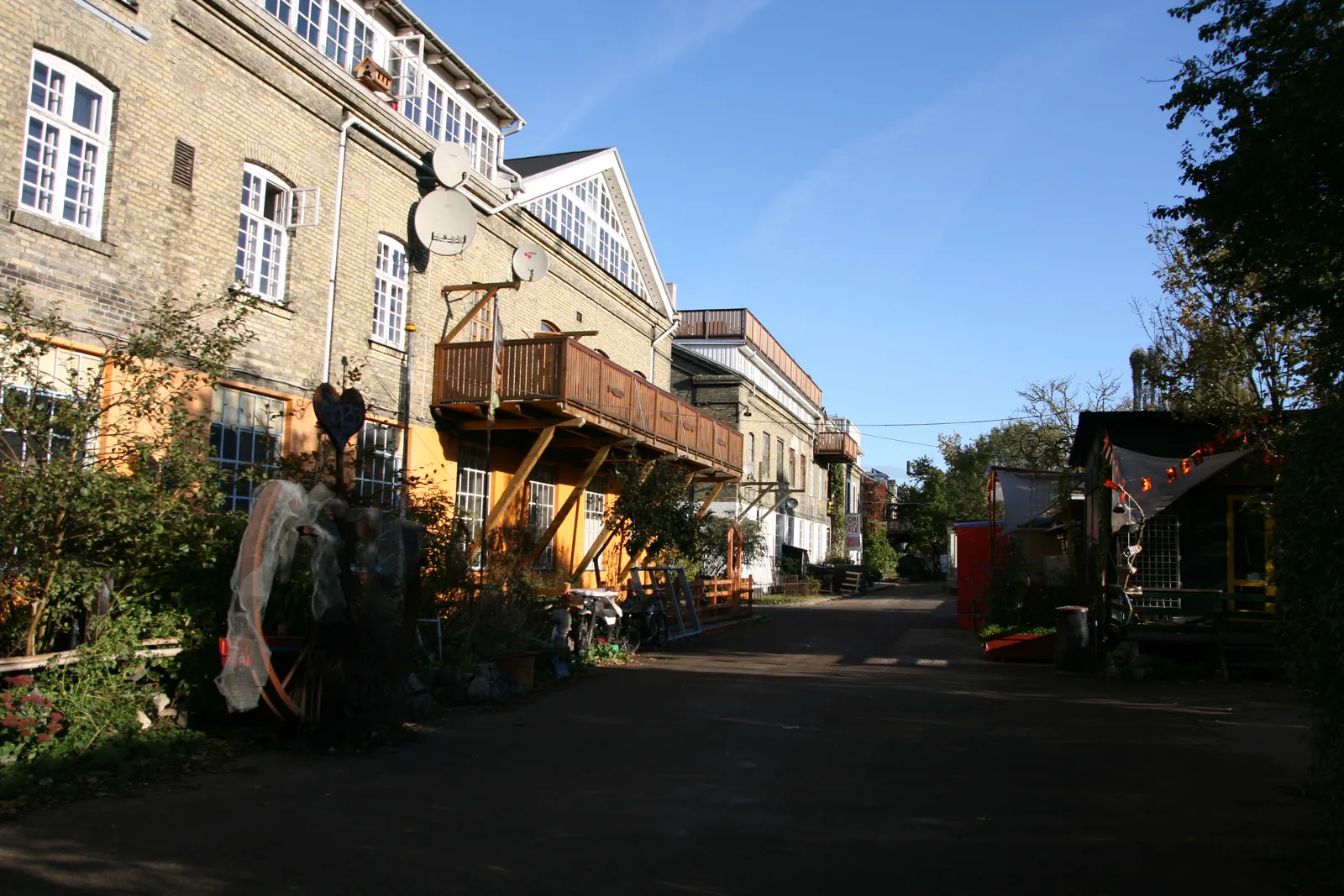
The rules are posted at the entrance and are short: no cars, no weapons, no bulletproof vests, no hard drugs, no stealing. The hash trade that most outsiders associated with the place ran on one street, and in April 2024 the residents themselves dug that street up, pulling the cobbles out by hand and handing them out as souvenirs, after years of shootings connected to it. What is left is a village of self-built timber houses, workshops, a bakery and Den Grå Hal, an 1891 army riding hall that has been the freetown’s concert venue since the beginning and has had Bob Dylan and Metallica on its stage.
No cars means no cars: everything inside moves on foot or on a Christiania trike, and the lanes are unsurfaced, unlit after dark and heavily rutted, so a wheeled suitcase gets carried rather than pulled from the gate onwards.
The wooden footbridge onto Christianshavn’s ramparts
Christianshavns Vold runs the length of the island’s eastern edge, an earth rampart of the 17th century with twelve bastions strung along it and the broad moat of Stadsgraven outside, which is now what separates Christianshavn from the rest of Amager. The guns are gone and the earthworks are the district’s main park.
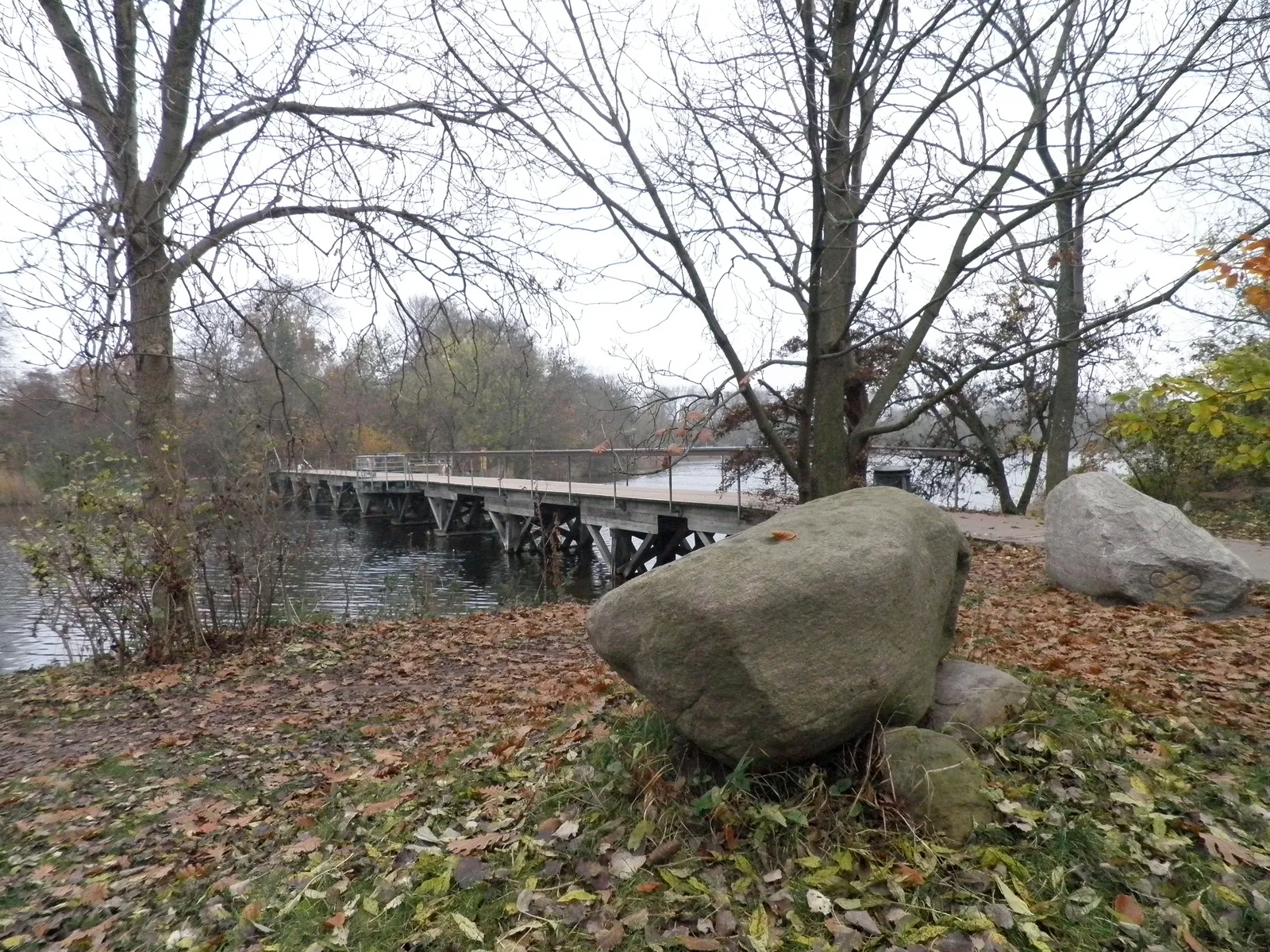
The northern half of the rampart, known as Dyssen, falls inside Christiania, and a narrow wooden footbridge called Dyssebroen crosses the moat to reach it. What is on the other side is the quietest stretch of ground within two kilometres of central Copenhagen. Old chestnuts, a gravel path following the bastions, the water on one side, and crooked owner-built houses set back among the trees. Most visitors to the freetown never cross the bridge, which is the reason to.
The gold-leaf ceiling in the Opera House on Holmen
The Opera House stands on Holmen, on the northern tip of the naval islands, directly across the inner harbour from Amalienborg and lined up on the palace’s axis, which is not an accident. Henning Larsen designed it, the A.P. Møller foundation paid the roughly 2.5 billion kroner it cost and handed it to the state, and it opened on 15 January 2005.
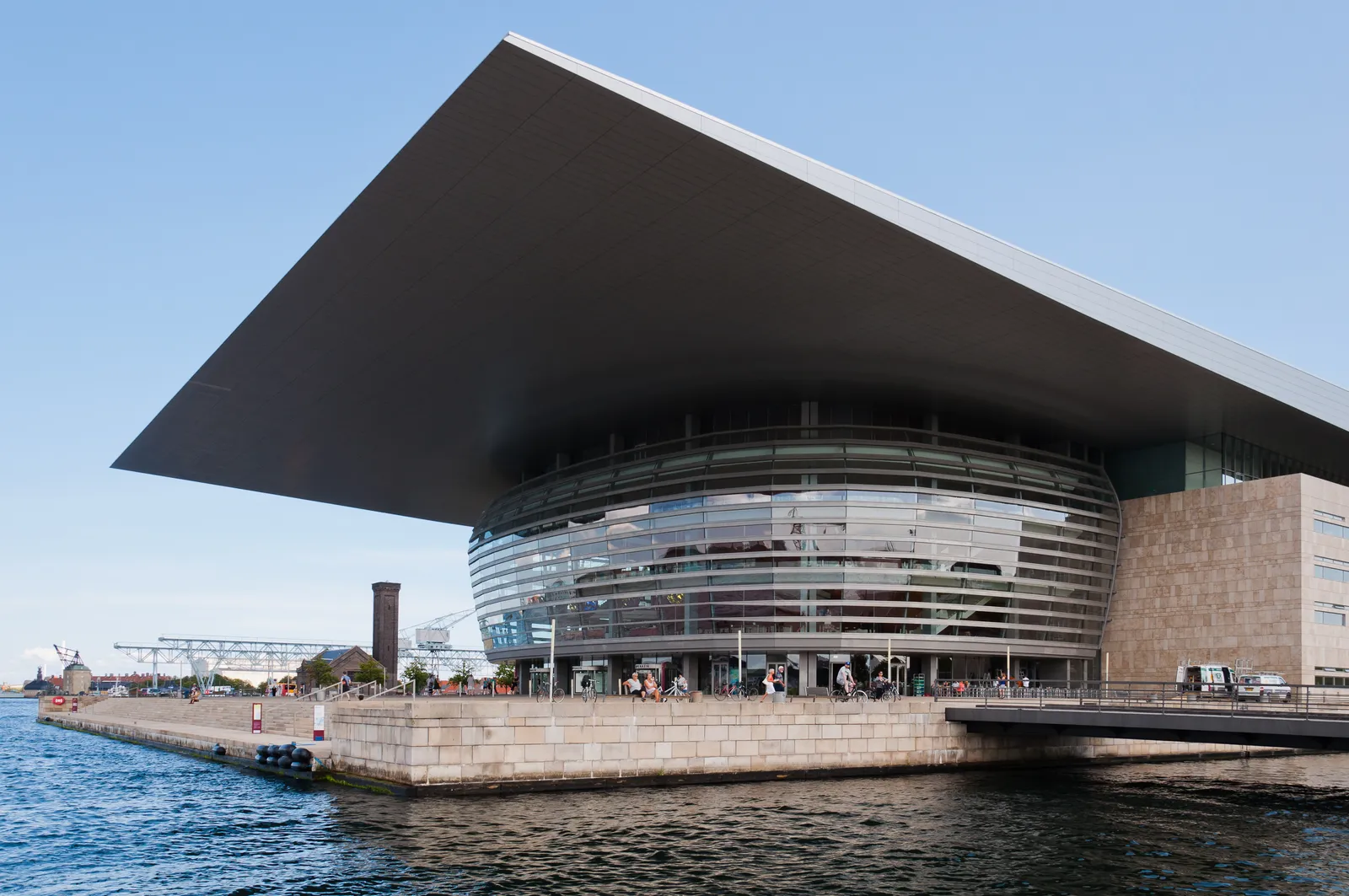
The flat roof cantilevers a long way out over the water, well past the glass front beneath it, which is the thing you see from the far bank and the thing that makes the building read as a single gesture rather than a box. Inside, the auditorium seats around 1,500 under a ceiling laid with some 105,000 sheets of near-pure gold leaf, and three spherical glass chandeliers by Olafur Eliasson hang in the foyer, each one built to let part of the light through and reflect the rest. Guided tours cover the auditorium and backstage on a published schedule. Getting across is a harbour bus, which is ordinary public transport at a bus fare rather than a sightseeing boat.
The airport metro leaves from Christianshavns Torv
Christianshavn station is directly under the square where Torvegade crosses the canal, and it is about eleven minutes from Copenhagen Airport, Kastrup with nothing to change. Both the M1 and the M2 serve the platforms; the M2 is the one that continues out to the airport’s own station at Terminal 3. It is driverless and runs 24 hours a day, every two to four minutes in the daytime and every fifteen to twenty minutes overnight, on a three-zone ticket at 30 kroner.
Two or three minutes at the far end covers the walk from the Terminal 3 platforms into Terminal 2, so the figure from Christianshavns Torv to a check-in desk is nearer 20 minutes than 11. Working back from a flight, an hour and a half from here is comfortable.
A loop of the canal, the freetown and the rampart takes about three hours at a walking pace, and none of it needs a ticket or a booking, which is the opposite of how the far side of the harbour works. The main Copenhagen guide covers that side, where most of the towers and the paid interiors are, and it also picks up the church on Sankt Annæ Gade whose spire stands over this district.
Frequently asked questions
What are the rules inside Christiania, and can you take photographs?
The standing rules are posted at the entrances and have not changed in decades: no cars, no weapons, no bulletproof vests, no hard drugs and no stealing. The separate signs asking visitors not to photograph and not to run belonged specifically to the open hash trade on Pusher Street, and residents dug that street up in April 2024 to end it. Elsewhere in the freetown, ordinary courtesy applies rather than a ban, which mainly means not photographing people's front doors and gardens as though they were exhibits.
Is Christianshavn walkable in bad weather?
The canal, Torvegade and the rampart path are all flat and take about a kilometre end to end, but almost none of it is under cover, and the lanes inside Christiania are unpaved and turn to mud after rain. The indoor options here are limited: the church on Sankt Annæ Gade, and the Opera House foyer across the water when there is something on. In heavy weather the honest move is to cross Knippelsbro and spend the time on the other side of the harbour instead.
Can you get inside the Opera House without a ticket for a performance?
Only on a guided tour, which covers the auditorium and the backstage areas and runs on a published schedule rather than on demand. The foyer opens for ticket holders before performances, so an unplanned wander in is not usually possible. The building is worth the crossing regardless: the view from the water, or from Amalienborg directly opposite, is the point of it as much as the inside is.
How long does it take to reach the airport from Christianshavn?
About eleven minutes on the metro, with no change. Christianshavn station sits under Christianshavns Torv where Torvegade crosses the canal, and both the M1 and the M2 stop there; it is the M2 that carries on to Copenhagen Airport's station at Terminal 3. It runs 24 hours a day, every two to four minutes in the daytime, and the fare is three zones at 30 kroner. Add two or three minutes at the far end for the walk from the Terminal 3 platforms into Terminal 2.