Amalienborg Layover: Copenhagen's Palaces
Part of the full Copenhagen Layover: Nyhavn and Tivoli From CPH
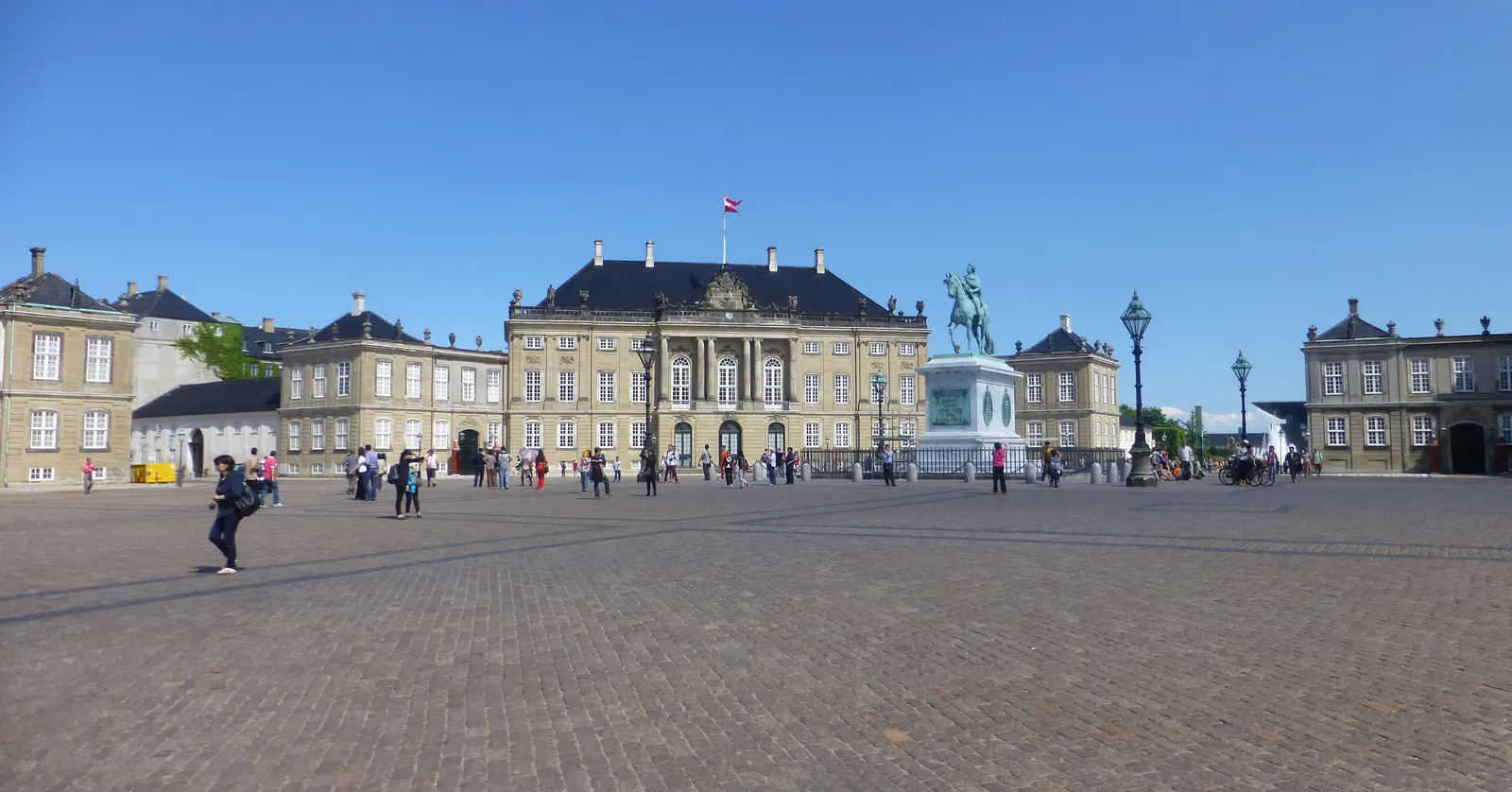
Amalienborg is the royal quarter on Copenhagen’s harbour front, four matching rococo palaces around an octagonal cobbled square, with the Marble Church’s copper dome at one end of its axis and the star-shaped Kastellet fortress fifteen minutes north. The square itself has no gate and no ticket.
The four palaces around Amalienborg’s octagonal square
Nicolai Eigtved laid out the whole district, Frederiksstaden, from 1749, and built these four palaces between 1750 and 1760 for four noble families rather than for the king. They are identical from the outside and quite different behind the doors. The crown only moved in by accident: Christiansborg burned down in 1794, the royal family bought the first of the four as an emergency measure, and never left. King Frederik X and Queen Mary live here now.
In the middle stands Jacques Saly’s equestrian statue of Frederik V, unveiled in 1771. What the square is really built around, though, is a sight line: stand at the statue and Frederiksgade runs west to the dome of the Marble Church and east across the water to the Opera House on Holmen, which was deliberately placed on the same axis 250 years later.
The Royal Life Guards change at noon, having marched down from Rosenborg Castle at half past eleven, and the crowd for it packs into a courtyard with palace fronts on all four sides and nowhere to spill out to. A guided visit arranged ahead is the way to see the interiors, since only two of the four palaces open to the public and not on a fixed daily schedule. Standing in that crowd holding a suitcase for twenty minutes is a poor use of both the suitcase and the twenty minutes.
The green copper dome of Frederik’s Church
Frederiksgade runs one block west from Amalienborg and ends at a portico with a dome behind it, which is the church everyone in Copenhagen calls the Marble Church instead of its actual name. Frederik V laid the foundation stone on 31 October 1749. It was not finished until 1894.
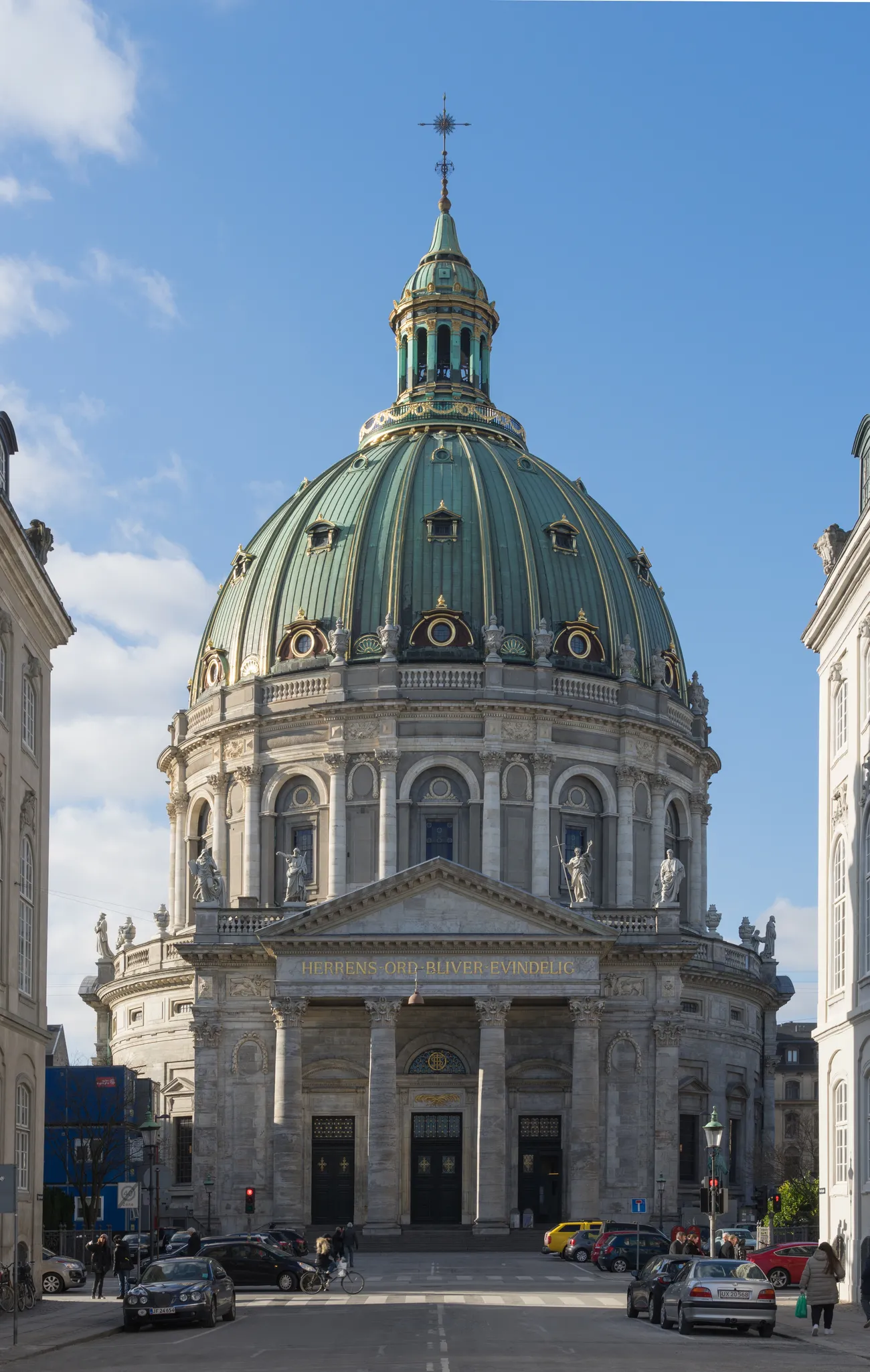
That gap of 145 years is the interesting part. Eigtved drew the first design, Nicolas-Henri Jardin redrew it in 1756, the money ran out and the half-built church stood unfinished on the site for generations before Ferdinand Meldahl completed it in the form you see. The dome that resulted is 31 metres across and rests on twelve columns, and from directly below, the ring of round windows around its base is the thing worth standing still for. Walking in costs nothing.
Kastellet, a five-bastion star fort still in use
Kastellet sits at the northern end of the harbour front, and it has kept its full shape: a pentagon of earth ramparts with five bastions, named for the King, the Queen, the Count, the Princess and the Prince, and water in the ditch all the way round. Christian IV started it in 1626 with a single redoubt; the Dutch engineer Henrik Rüse rebuilt it into what stands now after the Swedish siege of 1658 to 1660.
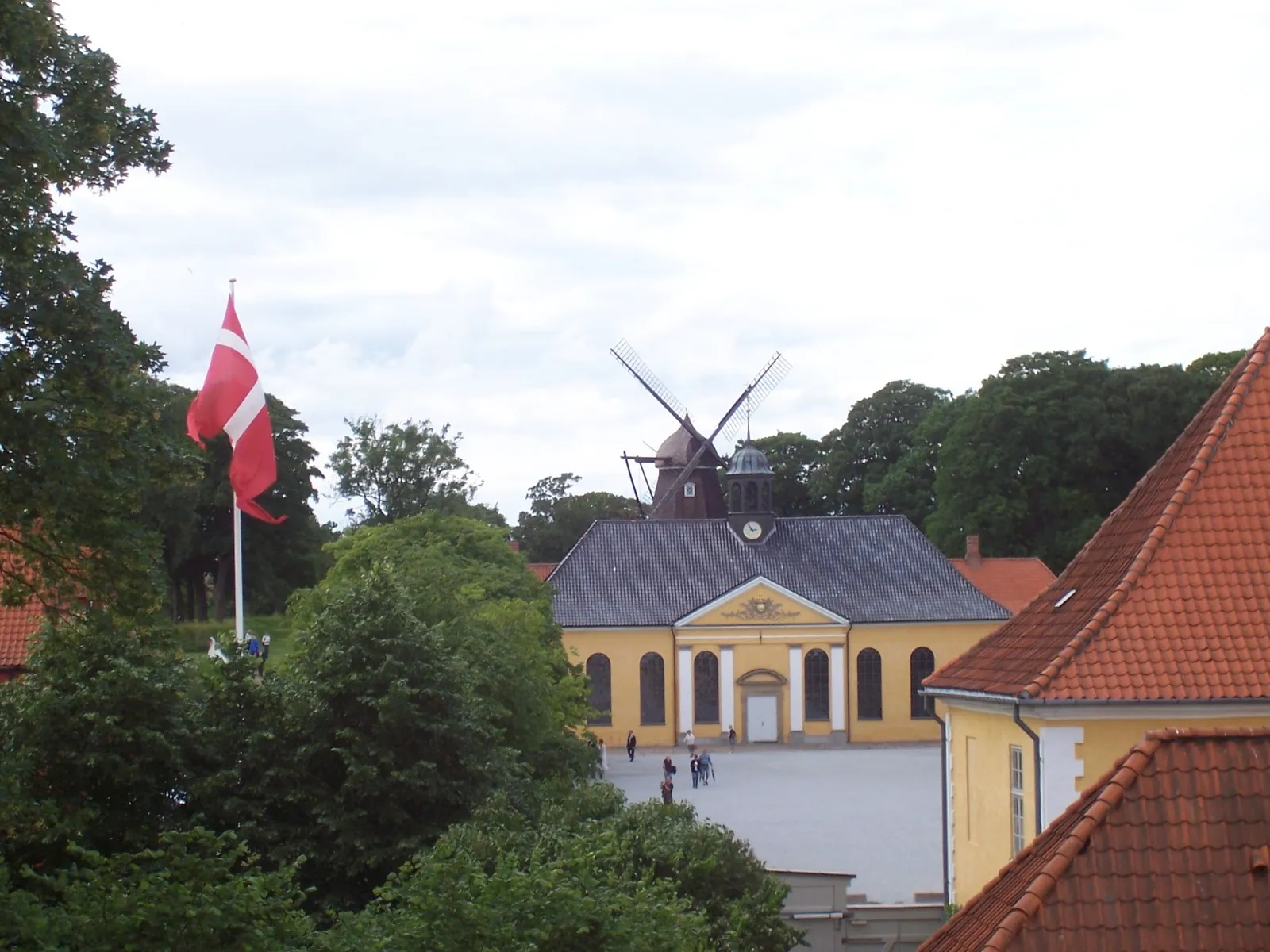
Inside the ramparts are long rows of ochre barracks, a commander’s house of 1725, a powder magazine, a prison, a church from 1703 and a black wooden windmill put up in 1847 on the King’s Bastion. The Danish military still uses the place, which is the odd part: soldiers walk to work past people jogging the ramparts. The full circuit of the top of the walls is about twenty minutes at a stroll, with the water on one side and the parade ground below on the other, and none of it costs anything.
No metro station at Amalienborg
The nearest metro is Kongens Nytorv, about ten minutes southwest along Bredgade or the harbour, and from there the M2 reaches Copenhagen Airport, Kastrup and its station at Terminal 3 in 13 minutes. One three-zone ticket at 30 kroner covers it, the line is driverless and runs around the clock, and trains come every two to four minutes through the day.
Counting the walk, the ride and the two or three minutes from the Terminal 3 platforms into Terminal 2, budget 40 minutes from the square to a check-in desk, and an hour and a half in total on a flight day.
Two hours does the square, the church and the fort at a reasonable pace, and the whole route is flat and paved apart from the grass on top of Kastellet’s ramparts. It is also the most formal stretch of the city, all straight lines and matching facades, which is the opposite of what the main Copenhagen guide covers a few hundred metres south, where the streets bend and the buildings stopped matching each other several centuries ago.
Frequently asked questions
What time is the changing of the guard at Amalienborg?
The Royal Life Guards leave Rosenborg Castle at 11.30am and reach Amalienborg at noon, every day of the year. The scale of it depends on who is at home: with the monarch in residence you get the full ceremony with the band, and without, a smaller detail changes over. Either way the square fills up from about a quarter to twelve, so arriving at five to noon means watching over other people's heads.
Can you get inside the Marble Church, and up its dome?
The church itself is free and open 10am to 5pm Monday to Thursday and Saturday, and from noon on Friday and Sunday. The dome is a separate guided climb at 1pm on Saturdays and Sundays, 35 kroner for adults and 20 for under-18s, capped at fifteen people and sold on the door rather than in advance. It is called off during services and concerts and in bad weather, so it is a bonus rather than something to plan a layover around.
Is Kastellet free to walk into?
Yes, and it is still a working military installation while you do it. The grounds are open as a public park, so you can walk the full circuit of the grass ramparts, past the 1847 windmill and the yellow church of 1703, without a ticket or a gate. The two small museums inside keep short hours; everything outdoors is open whenever the causeways are.
How long is the walk from Amalienborg to Kastellet?
Fifteen minutes at a normal pace, north along the harbour past Amaliehaven and Nordre Toldbod, and it is flat and paved the whole way. Doing the square, the Marble Church and a full circuit of Kastellet's ramparts is about two hours including the walking, which is the natural size of this trip. The only unpaved surface on it is the grass on top of the ramparts.