Nørreport Layover: Copenhagen's Market Halls
Part of the full Copenhagen Layover: Nyhavn and Tivoli From CPH
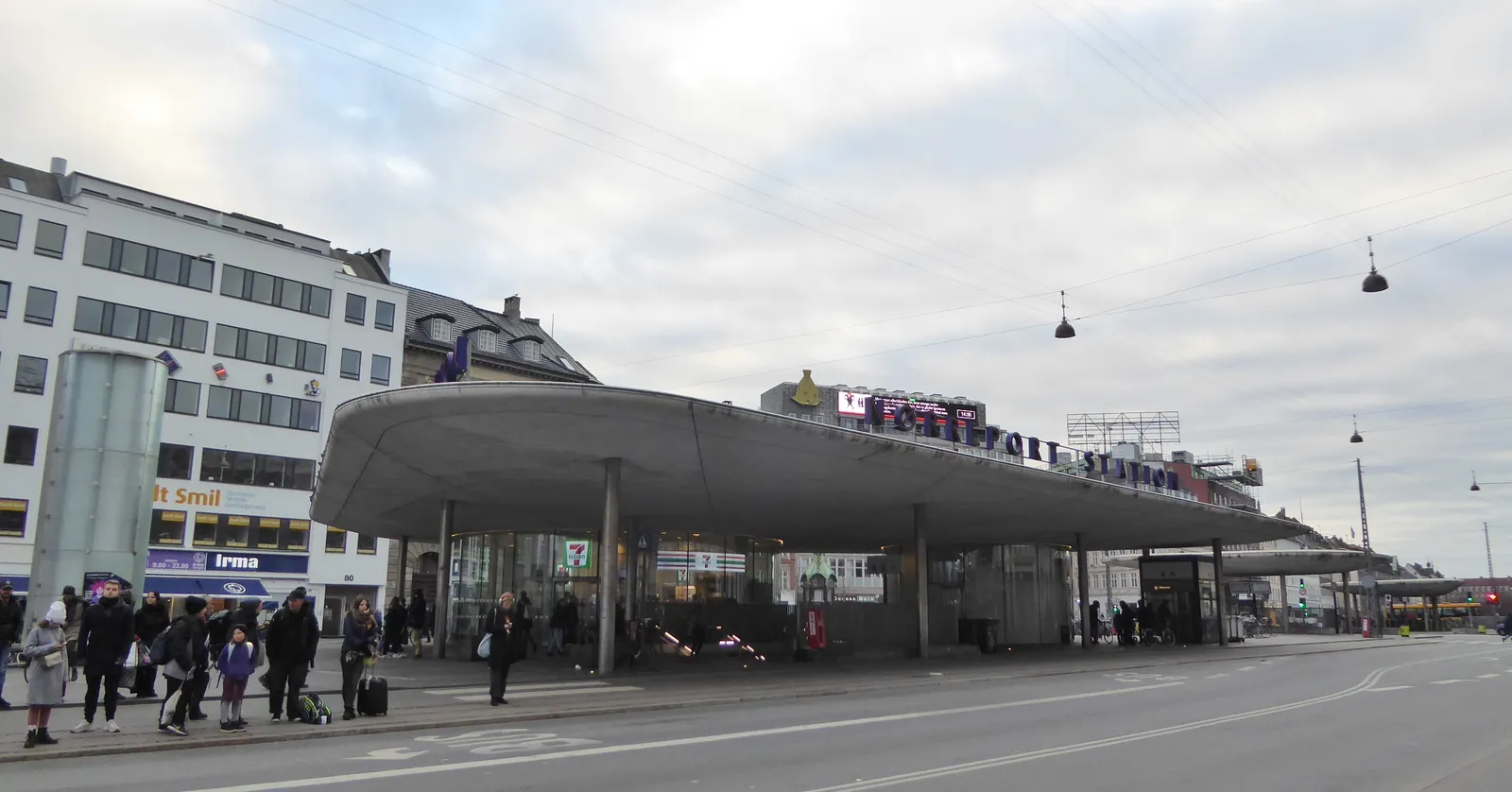
Copenhagen’s Nørreport station opens onto Torvehallerne’s two glass market halls, the granite deck of Israels Plads and the Botanical Garden’s cast-iron palm house of 1874, all inside a five-minute walk, and the garden costs nothing.
Torvehallerne’s two glass halls at Israels Plads
A vegetable market called Grønttorvet opened on this ground on 26 April 1889 and traded here until the mid-20th century, after which the site spent decades as a car park. Torvehallerne, which replaced it in 2011, is Hans Peter Hagens’s attempt to put the market back: two halls of dark steel and glass, each 50 metres long and 24 metres wide, standing 23 metres apart with an open-air strip of stalls running between them.
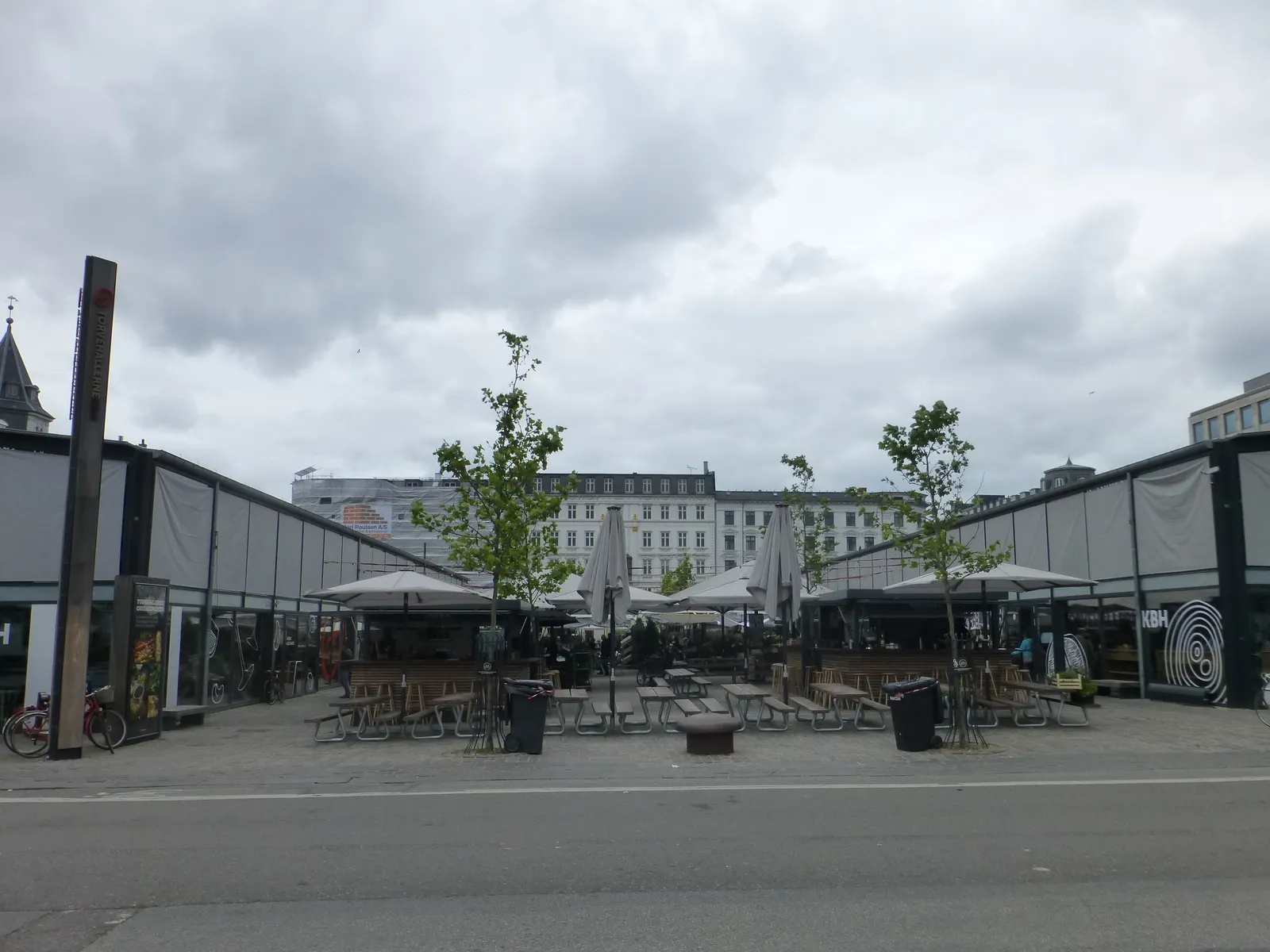
Inside are around sixty permanent stalls over roughly 2,500 square metres, on raw concrete walls and oak counters, with the glazed roofs there for the simple reason that Danish daylight in December is in short supply. One hall leans towards ingredients and the other towards things you eat standing up: fish and cheese and bread and coffee on one side, smørrebrød, oysters, porridge and pastries on the other. It opens at 10am daily, closes at 7pm on weekdays and 6pm at weekends, and costs nothing to walk through if you only want to look.
The 2,500 sunken bike beds outside Nørreport station
Heinrich Wenck built the first station here in 1918, seven years after he finished Copenhagen Central Station down the road, and Knud Tanggaard Seest rebuilt it in 1934 for the S-trains. What you arrive into now is neither: Cobe and Gottlieb Paludan won the competition for it in 2009, work started in 2012, and the result opened in mid-2015.
Above ground it is a set of rounded roofs floating on glass pavilions, with the platforms and the metro underneath. The forecourt is given over to bicycles, in recessed “beds” holding 2,500 of them, sunk 40 centimetres below the level of the pavement so the parked bikes sit below eye line and are lit from underneath after dark. It works, and it also means the walking surface between the stair heads and the market halls is narrower than the width of the square suggests, with cycle traffic crossing it at the busiest station in Denmark. A wheeled suitcase spends that stretch being lifted rather than rolled.
Getting out from here is the easy part of the day. The M2 leaves the underground platforms and runs to Copenhagen Airport, Kastrup in about fifteen minutes, through Kongens Nytorv and out across Amager, with no change anywhere on the route. It is driverless, it runs 24 hours a day, and the gap between trains is two to four minutes in the daytime and fifteen to twenty overnight. One three-zone ticket at 30 kroner covers it, and the same ticket works on the S-trains and regional services from the platforms alongside. Allow two or three minutes at the far end for the walk from the Terminal 3 platforms into Terminal 2, so the honest figure from the station entrance to a check-in desk is closer to 25 minutes than 15.
Israels Plads, a granite deck laid over a car park
The square immediately west of the market halls was outside Copenhagen’s fortifications until the 19th century, became part of the vegetable market, and was renamed on 11 October 1968, the twenty-fifth anniversary of the Nazi persecution of Denmark’s Jews and of the rescue that got most of them to Sweden.
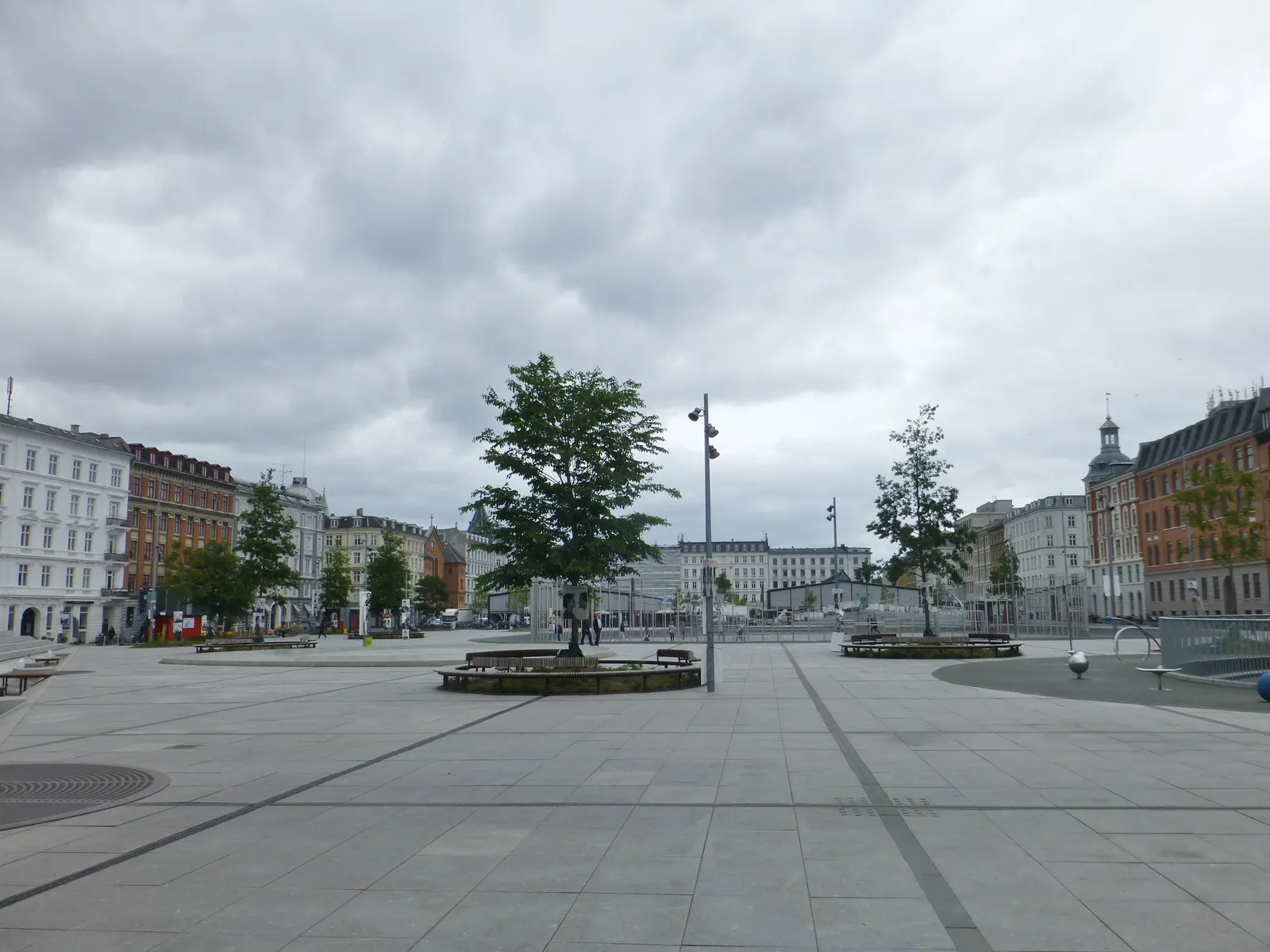
Cobe and Sweco rebuilt the southern half in 2014 as a single pale granite surface that lifts clear of the street and settles back down again, hiding an underground car park beneath it and turning the raised edges into tribune seating. Shapes are cut out of the deck rather than built on it: a streetball cage, a skateboarding area, a playground for small children, a run of trees and a thin artificial watercourse pointing towards Ørsted Park next door. Nothing here is ticketed or gated, which makes it the easiest place in this part of the city to sit down for twenty minutes without buying anything.
The 1874 palm house in the Botanical Garden
Gothersgade runs along the southern edge of the university’s botanical garden, ten hectares of it, laid out on this site in 1870 on ground that had been the city’s ramparts. Admission is free and the gates open at 8.30am, which is earlier than anything else worth walking to from here.
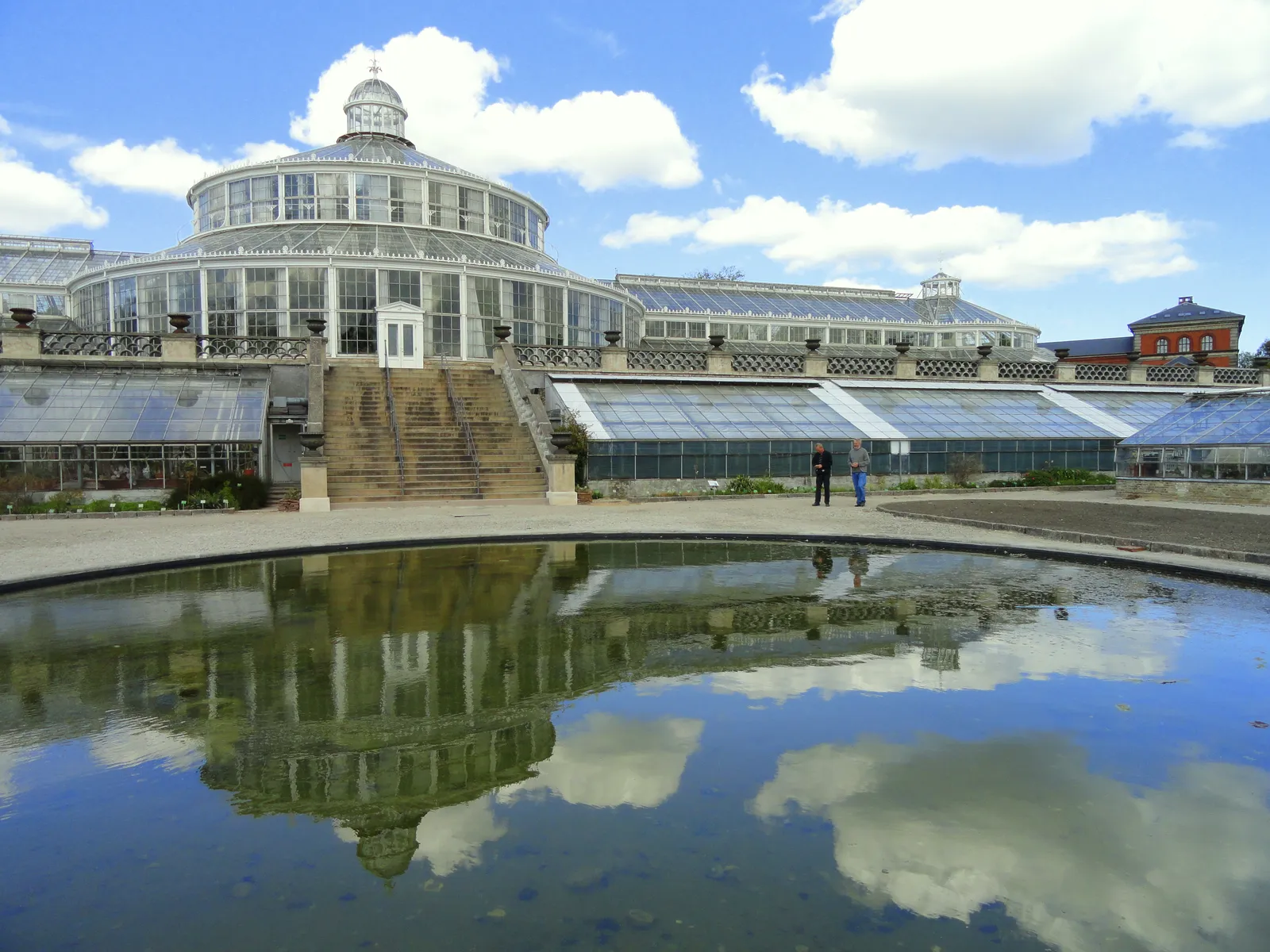
The Palm House stands on the rise at the middle of it, a cast-iron and glass structure of 1874 by Peter Christian Bønecke, with a domed centre and long low wings running off either side down to the pond. Inside are the tropical and subtropical collections and a butterfly room where the insects are loose around you. Entry is 70 kroner, and during 2026 parts of the house have been shut for restoration, so check what is open before treating it as the reason for the walk. The Natural History Museum of Denmark occupies the corner of the same grounds on a separate 115-kroner ticket.
Two hours around Nørreport covers the market, the square and a slow circuit of the garden without hurrying any of them. Beyond that the city gets more interesting further south, and the main Copenhagen guide picks up the canals, the towers and Nyhavn from a different starting point.
Frequently asked questions
When is Torvehallerne open, and what do the stalls actually sell?
Ten in the morning until seven in the evening Monday to Friday, and until six at weekends. Roughly sixty permanent stalls fill the two halls, split between raw ingredients on one side, fish, meat, cheese, bread, coffee beans, and ready-to-eat counters on the other, smørrebrød, porridge, tacos, oysters, pastries. Individual traders keep their own hours inside those, so the fish counters wind down earlier than the bars do.
Is Copenhagen's Botanical Garden free to walk into?
The garden is, all ten hectares of it, every day from 8.30am, closing at 6pm from March to late October and at 4pm through the winter. The two things inside it that charge are the Palm House at 70 kroner, which includes the butterfly room, and the Natural History Museum of Denmark in the corner of the grounds at 115. Parts of the Palm House have been closed for restoration work during 2026, so it is worth a look at the museum's site before you make it the reason for coming.
Is there anything at Nørreport for children?
Israels Plads, two minutes west of the station. The granite deck has a ball cage, a skateboarding area and a small playground punched out of it as separate sunken shapes, all free and all open at any hour, with steps around them that work as seating for whoever is not playing. It is the only stop on this list a child can be turned loose in.
What is open around Nørreport early in the morning?
The Botanical Garden, from 8.30am, which is well before anything else on this walk. Torvehallerne does not lift its shutters until 10am and the Palm House opens at the same time, so an early arrival is a garden circuit followed by breakfast rather than the other way round. Israels Plads has no hours at all, and neither do the metro platforms underneath the station, which run through the night.