Nørrebro Layover: Copenhagen's Cemetery Park
Part of the full Copenhagen Layover: Nyhavn and Tivoli From CPH
Nørrebro is the district northwest of Copenhagen’s lakes, and its three reasons to come out here are a cemetery that doubles as the local park, a 750-metre stretch of public space furnished with objects shipped in from around the world, and one narrow street of bakeries and workshops. None of them charges anything.
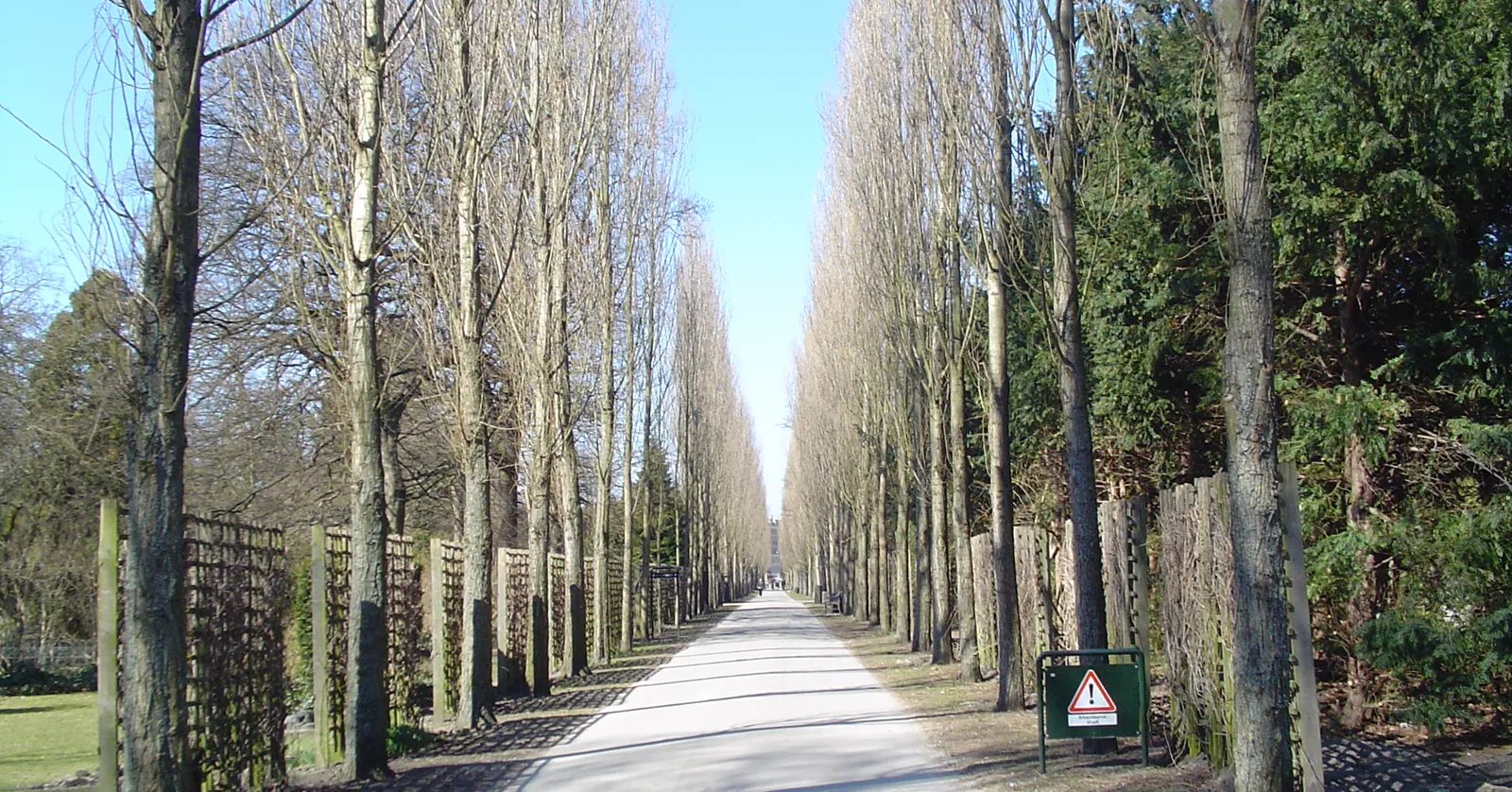
The poplar avenue through Assistens Cemetery
Assistens opened in 1760 on ground outside the old city walls, as an overflow burial place for the inner-city churches, and it started as a cemetery for the poor before the wealthy decided they wanted in as well. It is laid out in the Romantic style, with rare and very old trees and a straight parkway of poplars running its whole length, and it sits behind a yellow wall that the metro station on its corner borrowed the colour of for its ceramic panels.
Three graves account for most of the visitors: Hans Christian Andersen, Søren Kierkegaard, and Niels Bohr with his family. They are in different sections and finding all three takes a while, which is not a bad thing given what the walk between them is like.
What makes the place worth an hour, though, is what Copenhageners do with it. This is Nørrebro’s park. People read on the grass, walk dogs down the poplar avenue, eat lunch on the benches between the plots and sunbathe in June, in an active cemetery, without any of it seeming odd. It is free and it has no gate to queue at.
Superkilen, a park furnished with 108 imported objects
Superkilen opened in June 2012 on a wedge of ground about 750 metres long, running north from the top of the district alongside a cycle track, and it was designed jointly by the artists’ group Superflex, Bjarke Ingels Group and the German landscape practice Topotek 1. It splits into three: a red square of hard surfacing for sport and noise, a black market with a fountain and grills as the middle ground, and a green park of low grass hills at the far end.
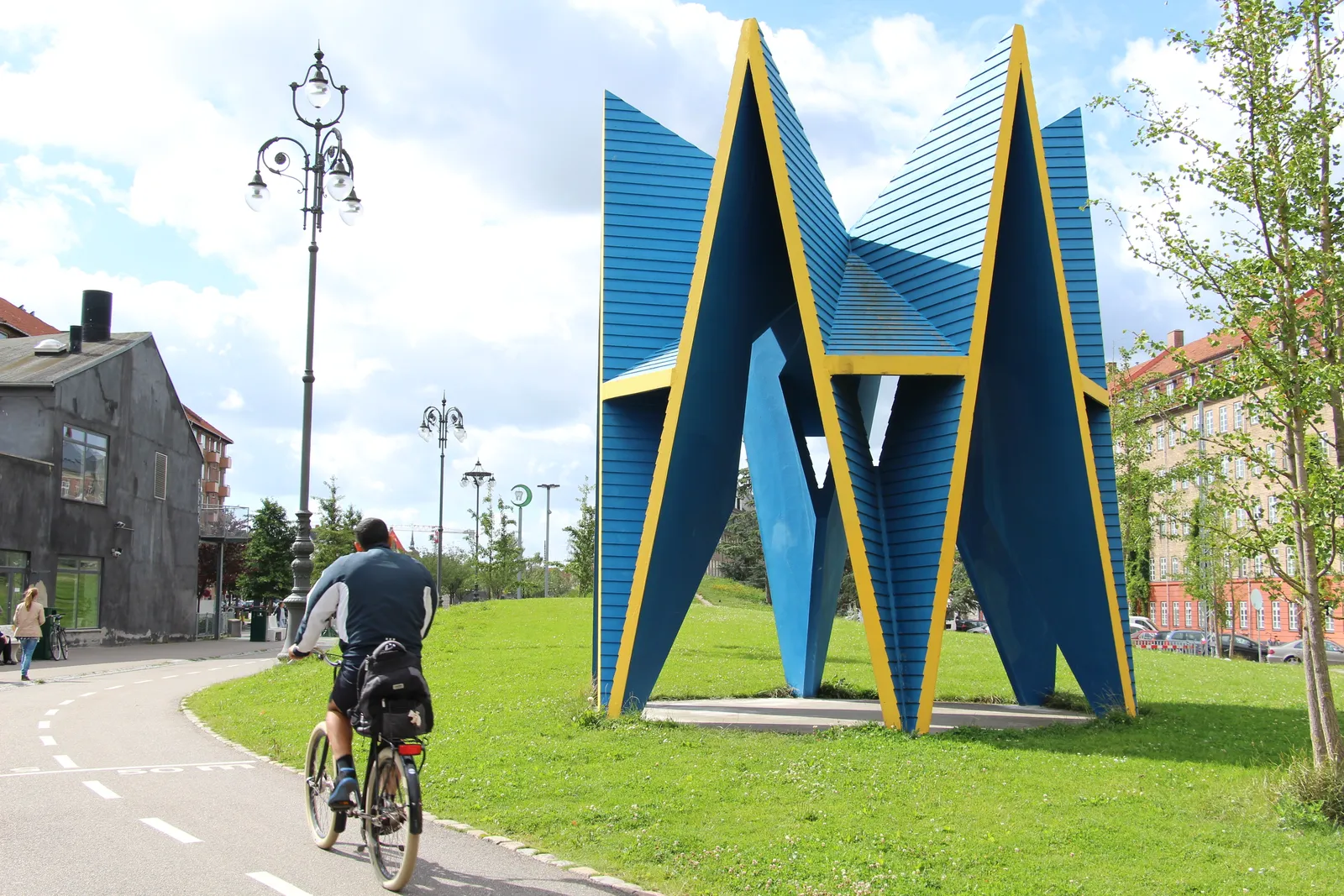
The idea underneath it is the reason to walk it rather than look at photographs. Nørrebro is the most mixed district in the city, so instead of designing new street furniture the team collected 108 real objects from the countries its residents came from and installed them: swings from Iraq, benches from Brazil, a Soviet-era bus stop, a fountain from Morocco, litter bins from England, manhole covers from Zanzibar and Poland. Nothing is labelled as art and nothing is fenced off. It is open at any hour and costs nothing.
The shops along Jægersborggade
Jægersborggade runs one block off the western side of the cemetery, a narrow street of five-storey blocks that spent most of the 20th century as one of the addresses the rest of Copenhagen avoided. What is in the ground floors now is bakeries, a ceramics workshop, coffee bars, small kitchens and a couple of wine shops, mostly one-room premises run by the people behind the counter.
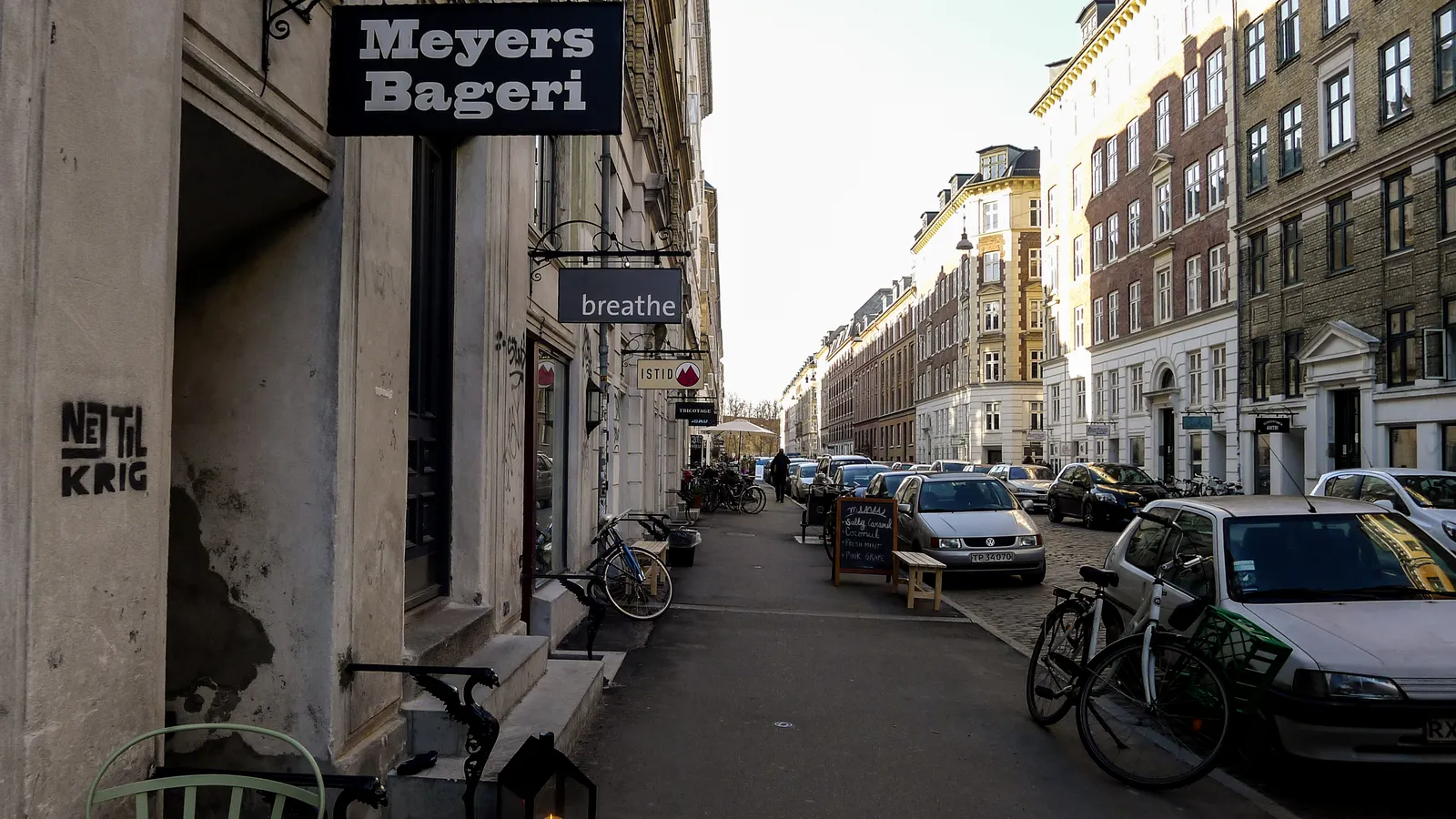
It takes ten minutes to walk end to end and is the obvious place out here to eat, since the cemetery has nothing and Superkilen is a park rather than a market. The wider point about Nørrebro is the distance: the three stops on this list are strung along about two kilometres of Nørrebrogade rather than clustered, the cemetery paths between them are gravel, and covering the lot on foot is close to an hour of walking. That is a different proposition with a suitcase behind you than a compact old-town loop is.
No direct metro from Nørrebro to the airport
Nørrebros Runddel station sits under the corner of Nørrebrogade and Jagtvej, at the northeastern edge of the cemetery, and it opened with the M3 city ring line on 29 September 2019. Its platform walls are lined in yellow ceramic, picked to match the cemetery wall above it.
The M3 does not go to the airport. It reaches Kongens Nytorv in about seven minutes, and the M2 continues from the same station out to Copenhagen Airport, Kastrup in 13. Both are driverless and both run 24 hours a day, so the change costs a couple of minutes at any hour. It is three zones, 30 kroner, one ticket for both legs, and about 25 minutes of travelling in total before the walk from the Terminal 3 platforms into Terminal 2.
A couple of hours covers the cemetery and one of the other two comfortably, and rather less comfortably all three. If what you actually want is the postcard version of the city, the main Copenhagen guide has the canals, the towers and Nyhavn inside a much tighter radius, and this district is the trade you make against it: no monuments, no tickets, and the city as the people who live in it use it.
Frequently asked questions
Is it acceptable to sit and eat in Assistens Cemetery?
Yes, and it is what the place is for as much as burial is. Assistens is a working cemetery and a public park at the same time, and Copenhageners read, walk dogs and sunbathe on the lawns between the plots without anyone minding. The unwritten limits are the obvious ones: keep off the graves themselves, keep the noise down, and give funeral parties a wide berth. There is no charge and no ticket office.
Is there anything in Nørrebro you have to pay to get into?
Almost nothing. The cemetery, Superkilen and the streets are all free and open, so a few hours here costs whatever you decide to eat and nothing else. That also makes it the part of Copenhagen least affected by opening hours: nothing on this walk shuts at five, and nothing sells out.
How far apart are Nørrebro's stops?
Further than the map suggests. The district runs roughly two kilometres northwest along Nørrebrogade, and its three draws are strung along that line rather than clustered: the cemetery in the middle, Jægersborggade off its western side, Superkilen about fifteen minutes further north. Walking the whole thing end to end is close to an hour, and the paths through the cemetery are gravel rather than paving.
Which part of Nørrebro is worth it if you only have an hour?
The cemetery, and specifically its southwestern end, where Jægersborggade runs off one side and the poplar avenue starts. That corner gets you the graves, the trees and somewhere to eat inside a fifteen-minute radius, and it puts you back on the metro at Nørrebros Runddel without a detour. Superkilen is the one to drop on a short stop: it is a further fifteen minutes north and it is a place to spend time in rather than look at.