Bogotá Layover: La Candelaria From BOG
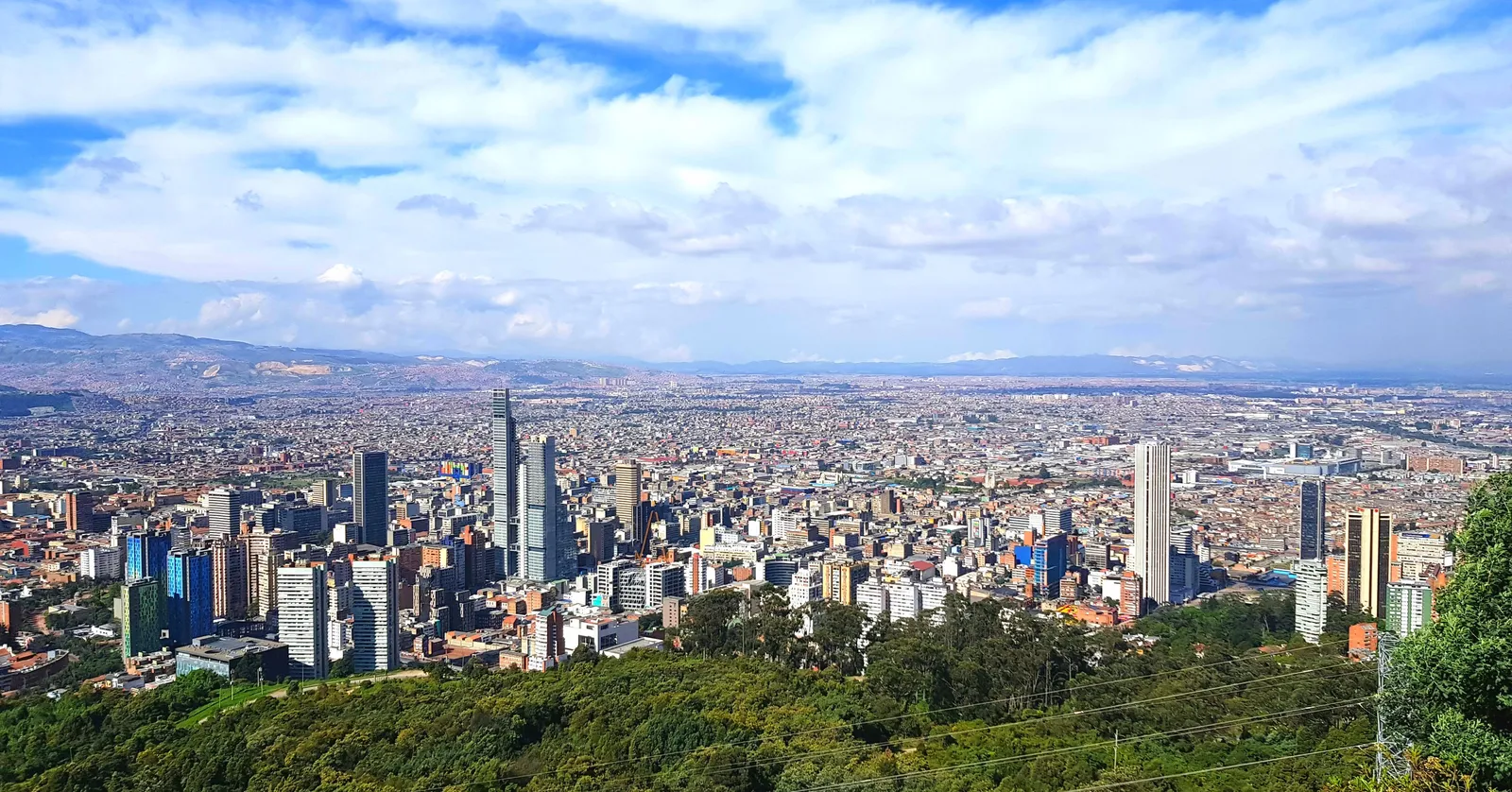
Bogotá’s historic quarter, La Candelaria, holds the Museo del Oro, the free Botero collection and Plaza de Bolívar inside about six blocks of each other, and the green ridge directly behind it carries a cable car up to the church on Monserrate.
Monserrate’s sanctuary church at 3,152 metres
The summit of Monserrate stands about 500 metres above Bogotá’s streets, at the eastern edge of the city where the savanna runs into the Andes. A seventeenth-century church sits on top of it, built around the shrine of El Señor Caído, and pilgrims have been climbing to it since long before the cable car existed.
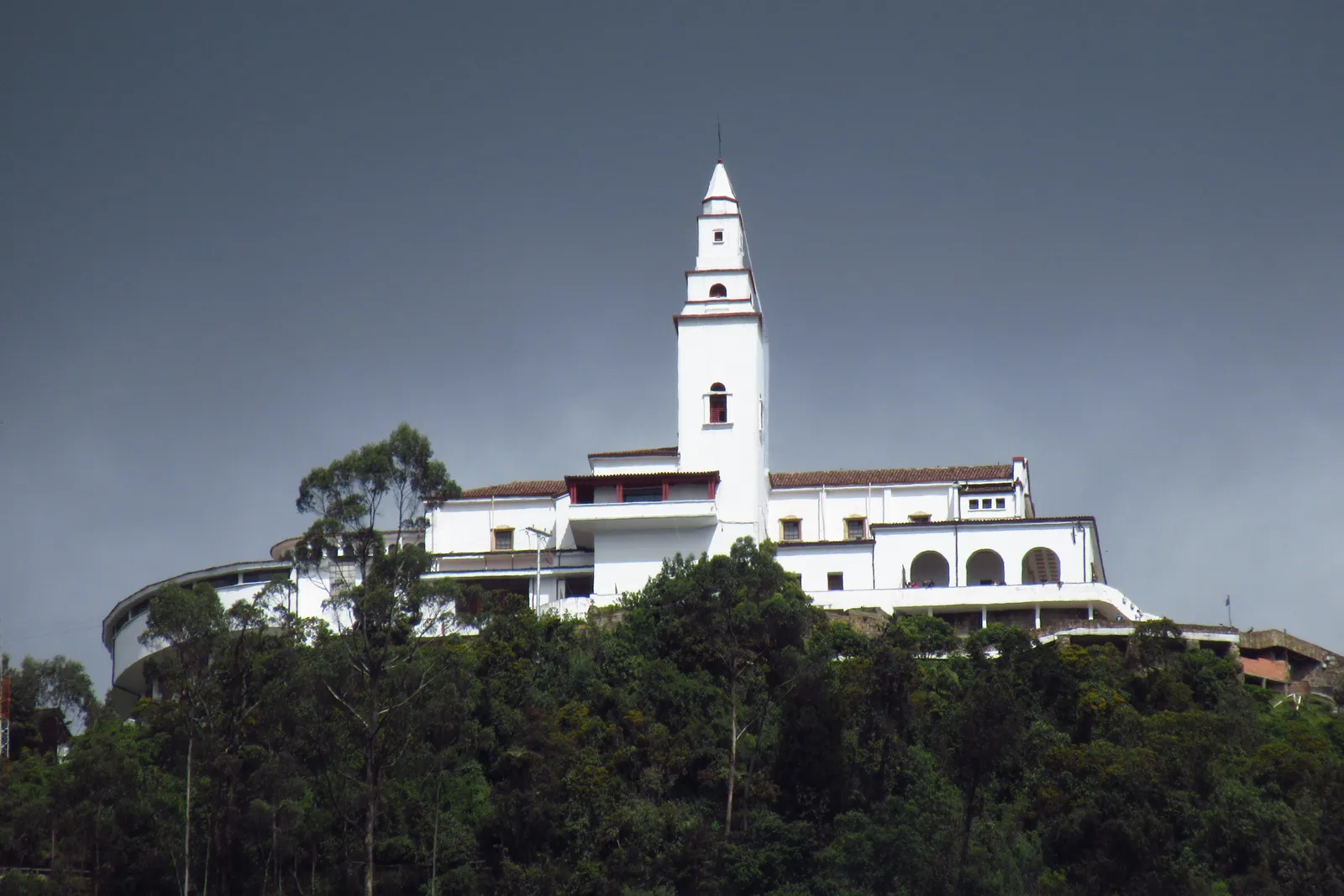
Two systems run from the foot of the hill: a funicular through a tunnel in the rock and a cable car alongside it. A round trip is 35,000 pesos Monday to Saturday and drops to 21,000 on Sundays at the physical ticket window, and a round-trip ticket bought ahead skips the queue at the booth, which is the part that swells on weekends. Service starts at 6:30am Monday to Saturday and runs to 10pm, with Sundays a shorter 5:30am to 5pm. There is also a footpath, 2.4 kilometres long and 600 metres of climb, free to walk and patrolled by police, but it takes between 50 minutes and three hours and is not a flight-day errand. Allow about two hours for the whole excursion, ride included.
The Muisca raft in the Museo del Oro
The Museo del Oro stands on Parque Santander at Carrera 6, and its collection runs to some 55,000 pieces of worked gold and tumbaga, roughly 6,000 of which are out on display at any time. It opened on 22 December 1939 and spent a decade being rebuilt around that collection, reopening in its current form in October 2008.
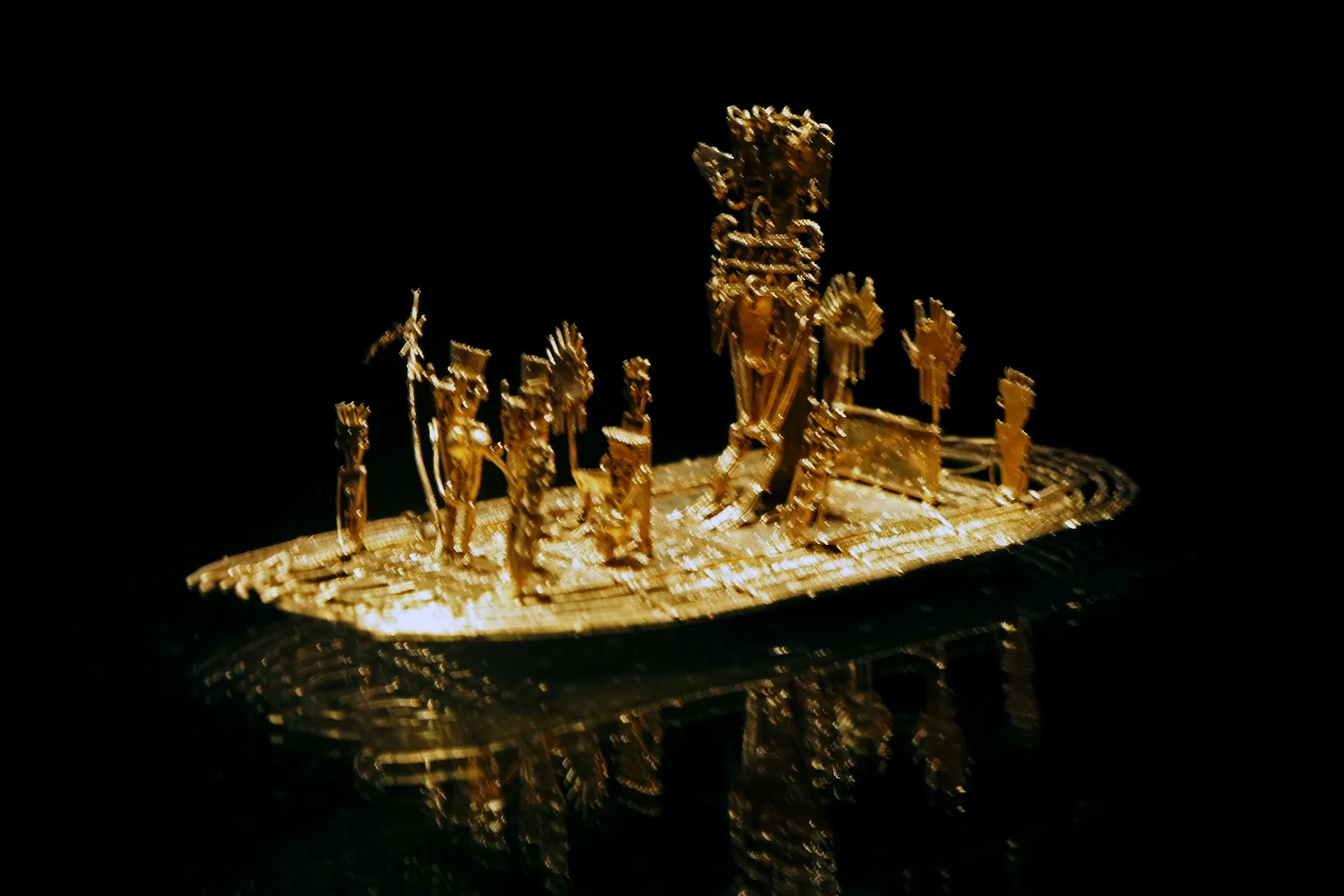
The object everyone comes for is the Muisca raft, found in a cave near Pasca in 1969 and displayed in the Offering Room on the third floor: a palm-sized gold vessel carrying a central figure ringed by attendants, cast in a single piece, and the object the El Dorado legend was built on. Entry is 5,000 pesos, free on Sundays, and the museum closes Mondays. The half-dozen blocks south from here to Plaza de Bolívar are old paving at 2,640 metres, where a wheeled suitcase stops being worth the effort.
Plaza de Bolívar’s cathedral, capitol and courts
Plaza de Bolívar covers roughly 13,900 square metres and puts four institutions on four sides of one square. Congress meets in the Capitolio Nacional along the south, a building that took from 1846 to 1926 to finish because the country kept interrupting itself. The Palace of Justice fills the north side, in its third incarnation: the 1921 original burned in the Bogotazo riots of 1948, its replacement was destroyed in the 1985 siege, and the current building dates from 1998.
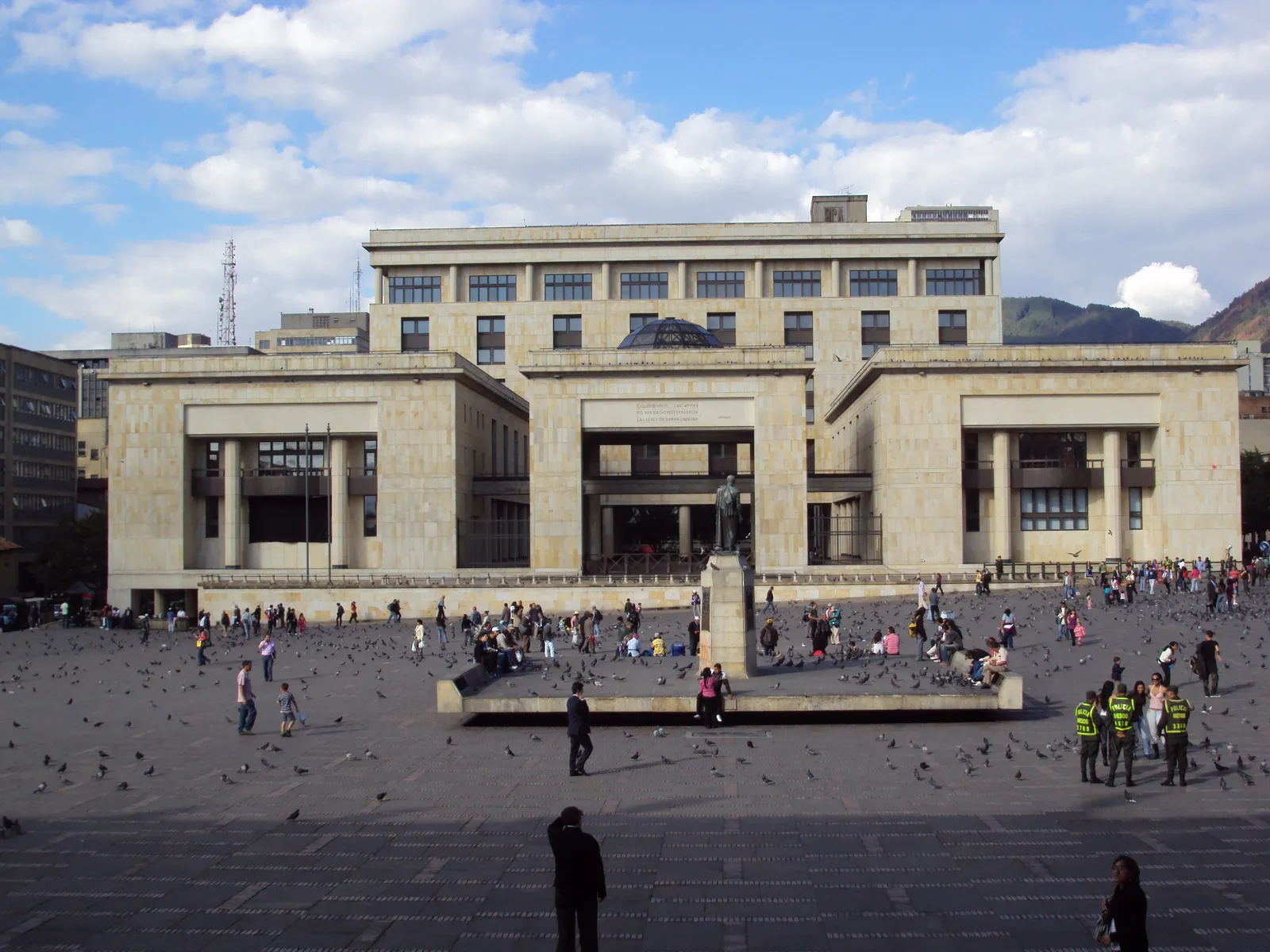
The Primatial Cathedral takes the east side, begun in 1807 under the architect Domingo de Petres and finished in 1823, and the French-styled Liévano Palace on the west has housed the mayor since 1974. In the middle stands Pietro Tenerani’s bronze Bolívar, unveiled in 1846 and the first public monument the city ever put up. Walking in costs nothing and the square is open at all hours, which is the main reason it works as a layover stop regardless of what day you land.
The Museo Botero’s 208 donated works on Calle 11
Colombia’s central bank received the donation in 2000: 123 pieces by Fernando Botero himself and 85 by other artists, a list running through Picasso, Monet, Degas and Giacometti. All of it has been free to see since the museum opened that November, in a colonial house on Calle 11 with an arcaded patio at its centre.
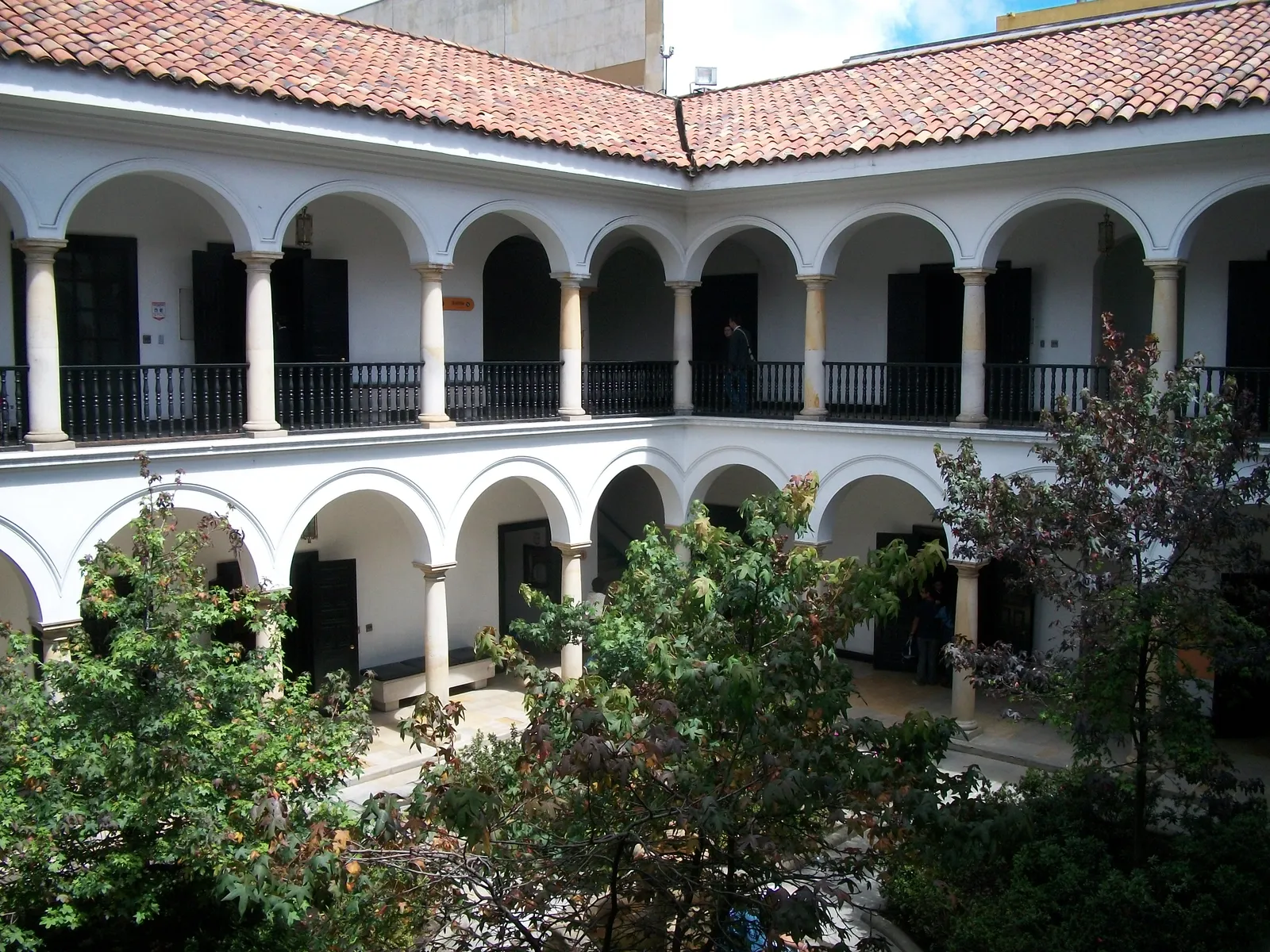
The museum closes on Tuesdays and otherwise runs 9am to 7pm, 10am to 5pm on Sundays. Half a block along the same street is the Biblioteca Luis Ángel Arango, Colombia’s largest library and one of the busiest in the world at close to 5,000 visitors a day; entry is free, and the top floor opens onto a roof garden that looks back at Monserrate. Between this museum, the library, Plaza de Bolívar and the Museo del Oro’s free Sunday, a Bogotá layover can cost nothing beyond the fare in and out.
The Museo Nacional in a converted panopticon
The Museo Nacional occupies a building that was designed to hold prisoners, not paintings. Thomas Reed, a Danish architect, drew it as a radial panopticon in 1850; it was built in 1872 and served as Colombia’s largest prison until 1946, when the inmates moved to La Picota. The opening as a museum was set for 9 April 1948 and had to be postponed, because that was the day Jorge Eliécer Gaitán was shot and the city tore itself apart; it finally opened on 2 May.
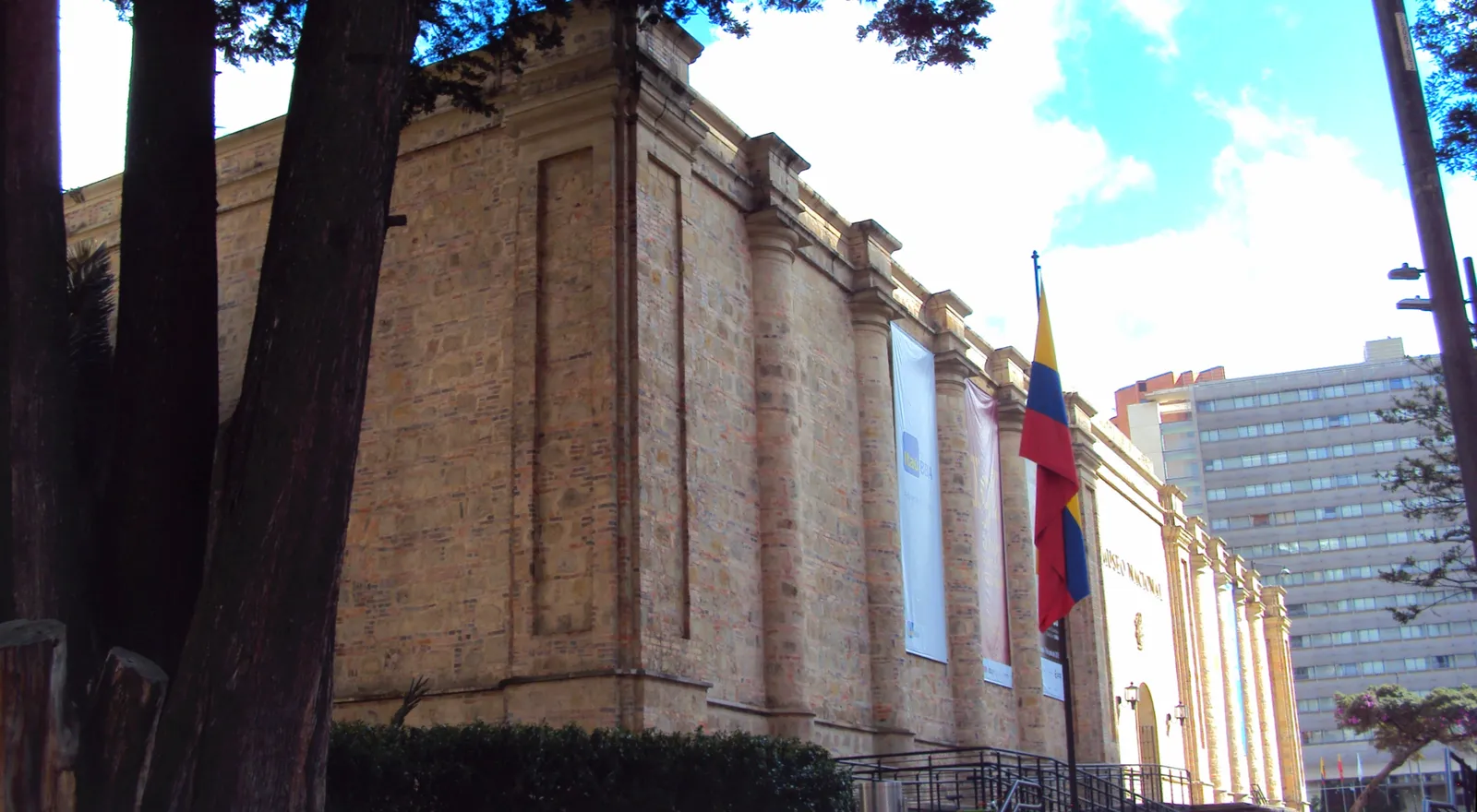
It sits on Carrera Séptima at Calle 28, and getting there from Plaza de Bolívar is the good part: Carrera Séptima is closed to cars through the historic centre, running north from the square past Calle 19 as a pedestrian corridor of buskers, food carts and living statues. The walk is about two kilometres and takes half an hour at Bogotá pace. With five hours you will have done Monserrate and one museum; seven gets you this one as well. On Sundays and public holidays the same street joins the ciclovía, when well over a hundred kilometres of Bogotá road shut to traffic from 7am to 2pm and fill with cyclists instead.
The K86 bus runs from Carrera Séptima to the airport door
El Dorado International Airport is about 15 kilometres west of the historic centre, and one bus covers that without a change: TransMilenio’s K86, which boards at Museo Nacional station on Carrera Séptima and ends at the terminal. Reckon on 45 minutes to an hour, longer in the evening peak. The fare is 3,550 pesos in 2026 and no driver takes cash; you need a TuLlave card, sold at station kiosks and at a desk inside the airport. The K86 runs 5:30am to 11pm on weekdays, from 6am on Saturdays, and 7am to 10pm on Sundays and holidays; after that, the feeder route from Portal El Dorado keeps going until roughly 12:20am.
A taxi from the prepaid desk in the arrivals hall is the other way, around 30,000 to 40,000 pesos depending on the hour, and it is what the same trip costs in reverse from a rank in town. Most domestic departures out of here land in Medellín, where the equivalent guide deals with an airport an hour out of the city rather than fifteen minutes. Leaving the suitcase in La Candelaria is what makes the rest of it work, since the cable car queue, the museum cloakrooms and the uphill blocks between them are all places you would be carrying it rather than rolling it.
Frequently asked questions
What should I do during a layover in Bogotá?
Ride the cable car or funicular up Monserrate first, since that one stop eats about two hours and the summit is 3,152 metres up with the whole city laid out below it. Back at street level, the Museo del Oro at Parque Santander holds the Muisca raft and around 6,000 objects on display, and the Museo Botero on Calle 11 costs nothing and is six blocks further south, past Plaza de Bolívar. The Museo Nacional, in a converted panopticon prison on Carrera Séptima, is the one to add when five hours turns into seven. Monserrate is the piece to drop if the clock is tight; everything else sits inside a walkable stretch of the old centre.
Does Bogotá's altitude change what you can fit in?
Bogotá sits at 2,640 metres, which makes it the third highest capital in the world, and Monserrate's summit adds another 500 metres on top of that. Nothing in La Candelaria is a hard climb, but the blocks rise steadily east toward the mountains and the same walk costs more breath than it would at sea level, so budget a slower pace rather than a shorter route. The cable car and funicular do the real climbing for you, which is why most people ride up and walk very little at the top. The footpath alternative gains 600 metres over 2.4 kilometres and takes anywhere from 50 minutes to three hours, which is not a layover proposition.
Which Bogotá museums are closed on the day I land?
The Museo del Oro closes on Mondays and opens Tuesday to Saturday from 9am to 6pm, Sunday 10am to 4pm. The Museo Botero closes on Tuesdays instead, and runs 9am to 7pm the rest of the week except Sunday, when it is 10am to 5pm. So a Monday layover loses the gold and a Tuesday layover loses the Botero collection, and neither day loses both. Plaza de Bolívar, the Carrera Séptima pedestrian corridor and Monserrate are open regardless.
What happens to this walk when it rains in Bogotá?
Rain here is seasonal rather than constant: the wetter stretches run roughly April to May and October to November, and showers tend to arrive in the afternoon rather than the morning. Daytime highs sit near 19°C all year and nights drop to around 9°C, so the issue is water rather than cold. The three museums and the Primatial Cathedral are all indoors and absorb a wet afternoon easily. Monserrate is the stop that suffers, since cloud can close over the ridge and take the view with it, which argues for going up first thing.
Is the bus or a taxi better for getting back to El Dorado?
The K86 bus is the cheap option and the only one that runs straight from the historic centre to the terminal without a change, boarding at Museo Nacional station on Carrera Séptima. A single fare is 3,550 pesos in 2026 and there is no cash: you need a TuLlave card, sold at station kiosks and at the airport for a few thousand pesos more. It runs from 5:30am to 11pm on weekdays, from 6am on Saturdays and 7am to 10pm on Sundays and holidays. A taxi booked at the prepaid desk in the arrivals hall runs roughly 30,000 to 40,000 pesos for the 15 kilometres, more at night, and is the better call with a suitcase or after the buses stop.