Bogotá's El Dorado Airport: Fontibón Plaza
Part of the full Bogotá Layover: La Candelaria From BOG
Fontibón’s founding plaza sits four kilometres south of Bogotá’s El Dorado airport, with a seventeenth-century church on its northeastern corner, an old railway station a few streets away, and enough in it to fill the two hours a connection actually frees up.
The Catedral de Santiago Apóstol on Fontibón’s plaza
The church stands at Carrera 99 with Calle 18, on the northeastern corner of Fontibón’s main square. It is a Jesuit basilical plan, one long nave with a transept, begun in 1608 and finished by 1617, burned out in 1619, rebuilt between 1621 and 1632 and restored again in the years after 1948.
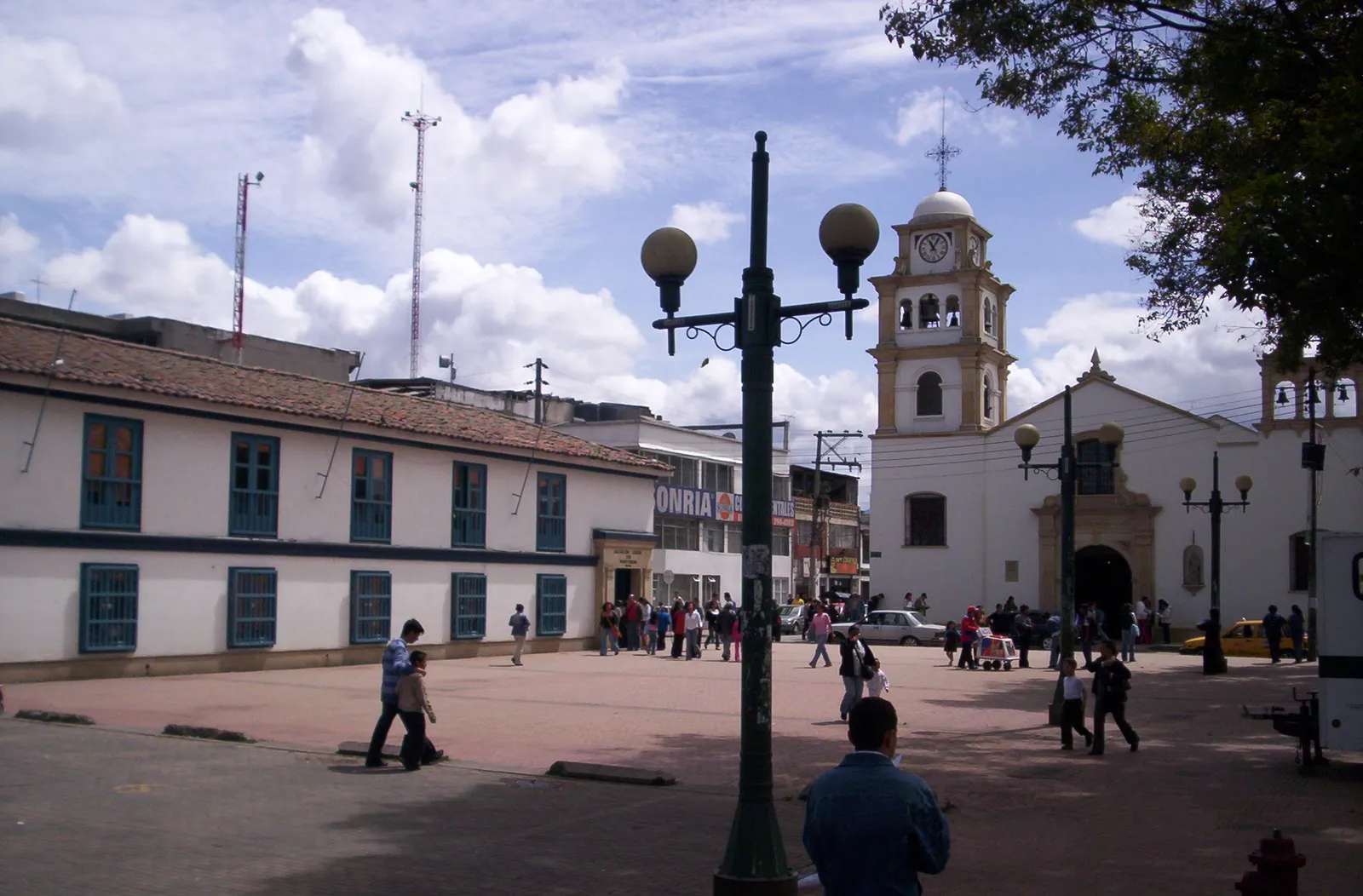
What survived all that is the reason to walk in: a retablo behind the altar in five sections and four tiers, entirely under gold leaf, with Santiago Matamoros at its centre, and a triangular vault over the nave studded with gilded wooden stars. It is a national monument, and since 2003 it has been a cathedral rather than a parish church, seat of the Diocese of Fontibón. Entry costs nothing and it is usually near empty on a weekday morning.
Bogotá absorbed Fontibón in 1954, along with five other municipalities on its edges, and the square outside is the piece of evidence that it used to run itself. Low two-storey buildings with tiled roofs and painted shopfronts line one side, the church takes a corner, and the traffic crossing it is local rather than touristic, which is most of the appeal. Nobody is selling anything to visitors here.
The old Fontibón railway station
Three streets off the plaza stands a white block with a square tower and a platform edge still running along the street, which is what is left of Fontibón’s railway station.
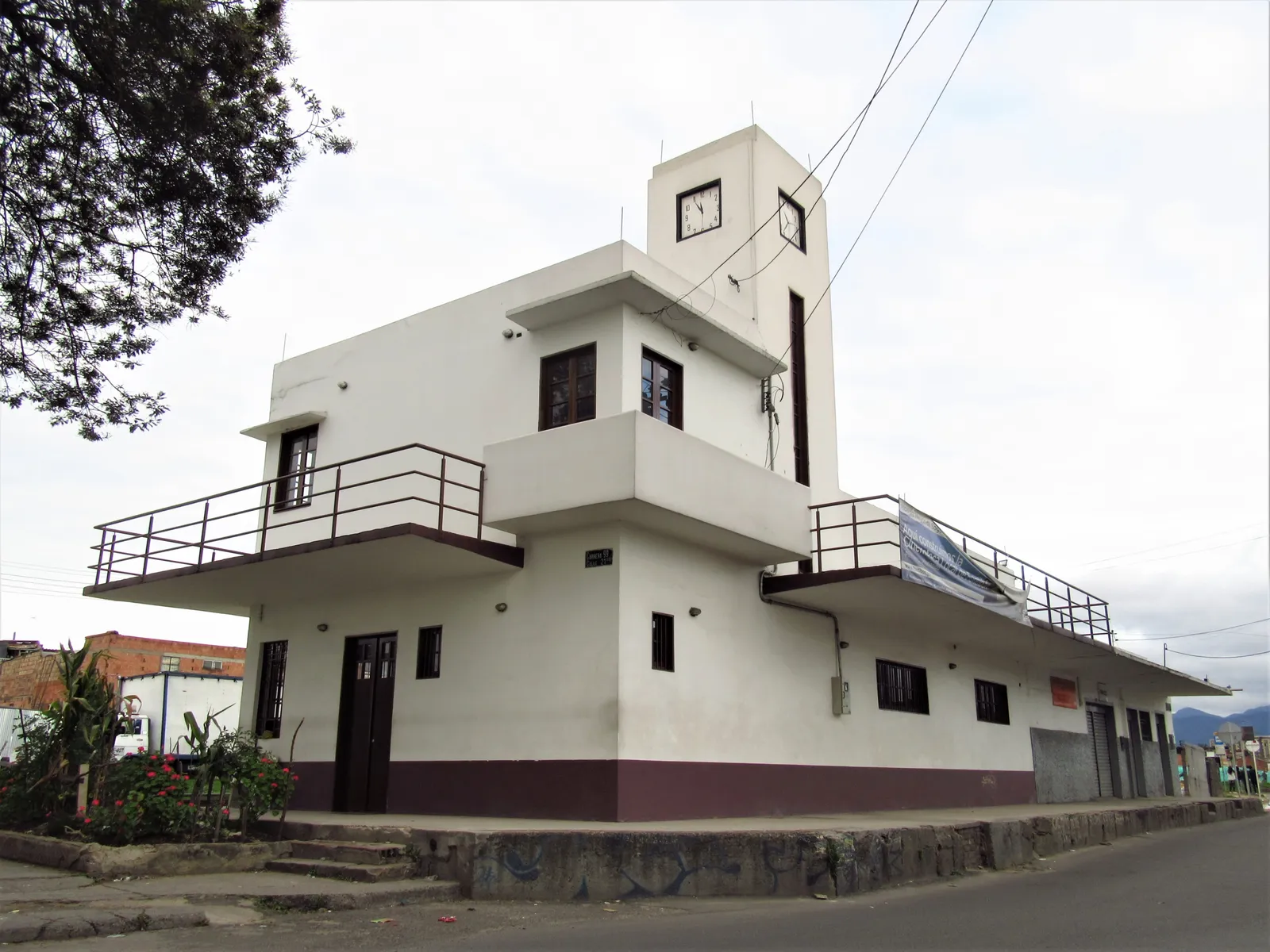
Trains reached here on the Cundinamarca line once the rails between Bogotá and Facatativá were joined through Fontibón in 1908, and for decades this was the point at which people arrived into the city, long before anything landed where the runways are now. It sits inside the national listing covering Colombia’s surviving station buildings. Getting out to any of this costs two boardings before the bus even starts moving, a shuttle and then a transfer, and each one takes longer with a bag in hand.
Terminal 2 has been the quiet one since 2018
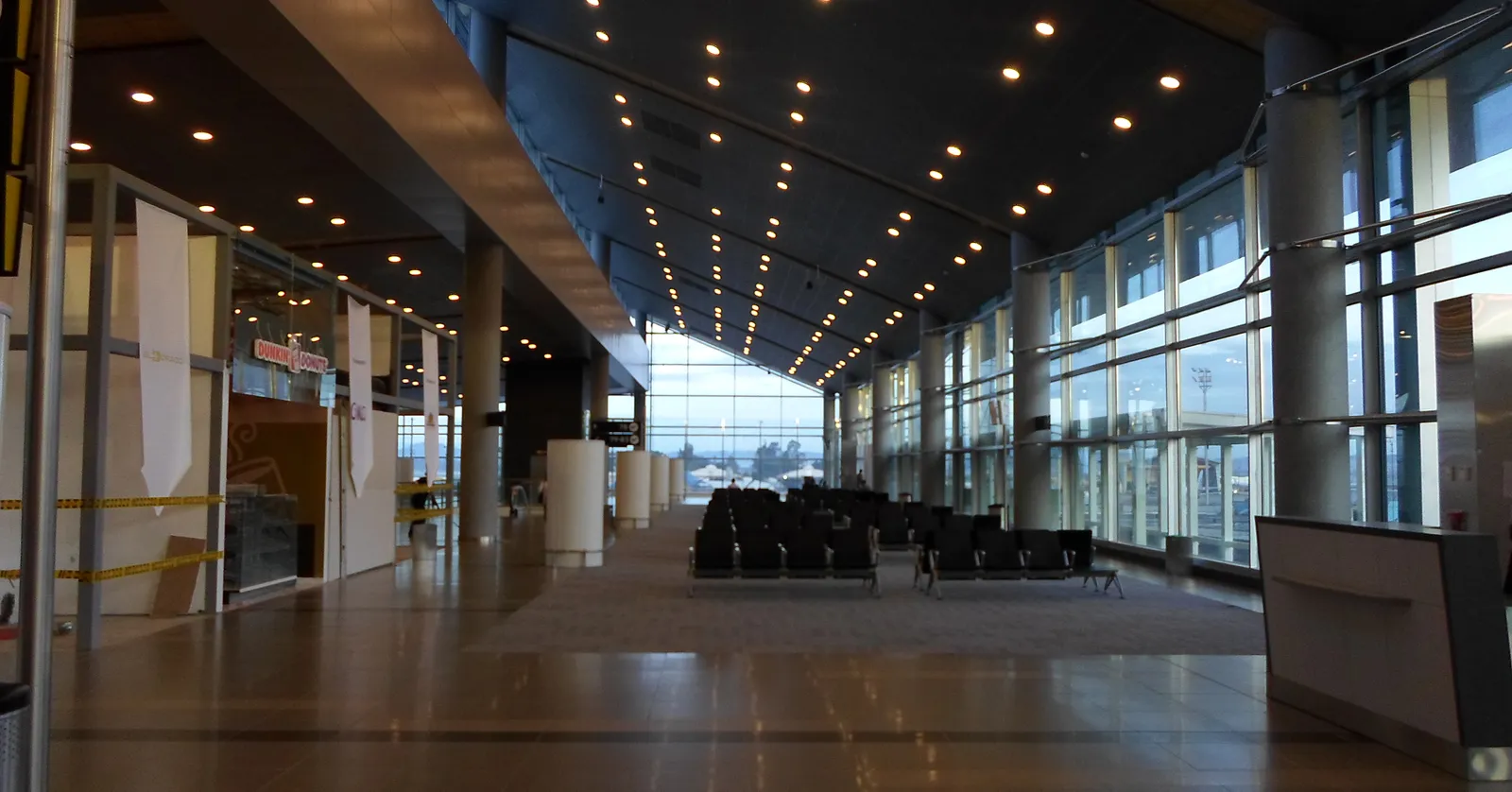
El Dorado handled 45.8 million passengers in 2024, and almost all of them pass through Terminal 1, which has 32 gates and a landside hall open to anyone. Terminal 2, still called the Puente Aéreo by most people in Bogotá, has carried only regional airlines since Avianca shifted its domestic flights into Terminal 1 in April 2018, which makes it the calmer place to wait out a gap if your carrier uses it.
Storage counters run around the clock in both, in the public hall in front of gate 11 in Terminal 1 and gate 2 in Terminal 2, at 20,000 and 10,000 pesos per 12 hours respectively. The airport opened on 10 December 1959 and its two parallel runways are 3,800 metres each, which is what 2,548 metres of altitude asks for.
The bus back into Fontibón runs later than the trunk service
Local buses toward Fontibón leave from the terminal road every fifteen minutes or so through the day, and the feeder service on this side of the city keeps running until roughly 12:20am, later than the trunk route into the centre. A taxi from the prepaid desk in arrivals is the faster call: ten to fifteen minutes each way outside the peaks.
Leaving the suitcase behind is what turns a three-hour gap into a real errand, since the plaza is a standing-around place rather than a sitting-down one, and the church has no cloakroom. If the gap is nearer six hours, ignore all of this and take the bus east instead: the guide to central Bogotá covers the gold, the Botero rooms and the square where Congress sits, none of which Fontibón pretends to compete with.
Frequently asked questions
What should I do during a layover near El Dorado airport in Bogotá?
Go to Fontibón's founding plaza, four kilometres south of the runways, and walk into the Catedral de Santiago Apóstol on its northeastern corner for the gilded altarpiece and the star-painted vault. The old railway station a few streets away is the other thing here worth the detour, and both are free. Three hours covers the round trip with time to sit in the square; under that, staying in the terminal is the honest answer. Nothing in Fontibón needs booking, so the only thing to check is the traffic on Avenida El Dorado.
How long does the round trip from the terminal to Fontibón take?
The plaza is about four kilometres by road. A taxi takes ten to fifteen minutes in normal traffic and longer during the morning and evening peaks on Avenida El Dorado. On public transport it is closer to half an hour each way: a local bus toward Fontibón drops you near Carrera 103 at Calle 19, a few blocks short of the square. Budget two hours for the whole excursion and you will not be watching the clock in the church.
Where can you leave a bag at El Dorado?
The airport runs an attended storage counter rather than self-service lockers, open 24 hours in both terminals: in Terminal 1 it is in the public hall in front of gate 11, and in Terminal 2 in the public hall in front of gate 2. The published rate is 20,000 pesos per 12 hours or part thereof in Terminal 1 and 10,000 in Terminal 2, which also wraps bags. Counters in the city tend to be cheaper per day, so the terminal desk is the convenient option rather than the economical one.
Is three hours enough to get into central Bogotá instead?
Not comfortably. The centre is about 15 kilometres east and the bus takes 45 minutes to an hour each way, so three hours leaves you roughly thirty minutes on the ground before you have to turn around. Five hours or more is where the historic-centre itinerary starts to make sense, with the Museo del Oro and Plaza de Bolívar inside a few blocks of each other. Fontibón exists as an option precisely because it does not need that much time.
What is the altitude at the airport itself?
The runways sit at 2,548 metres, about a hundred metres below the city centre and high enough that takeoff rolls here are noticeably long: both parallel runways are 3,800 metres. For a passenger the practical effect is mild, some shortness of breath on stairs and a faster onset of dehydration, and Fontibón is flat, so the walk around the plaza is not where altitude bites. Save the puffing for the hills on the eastern side of the city.