Medellín Layover Guide: Comuna 13 From MDE
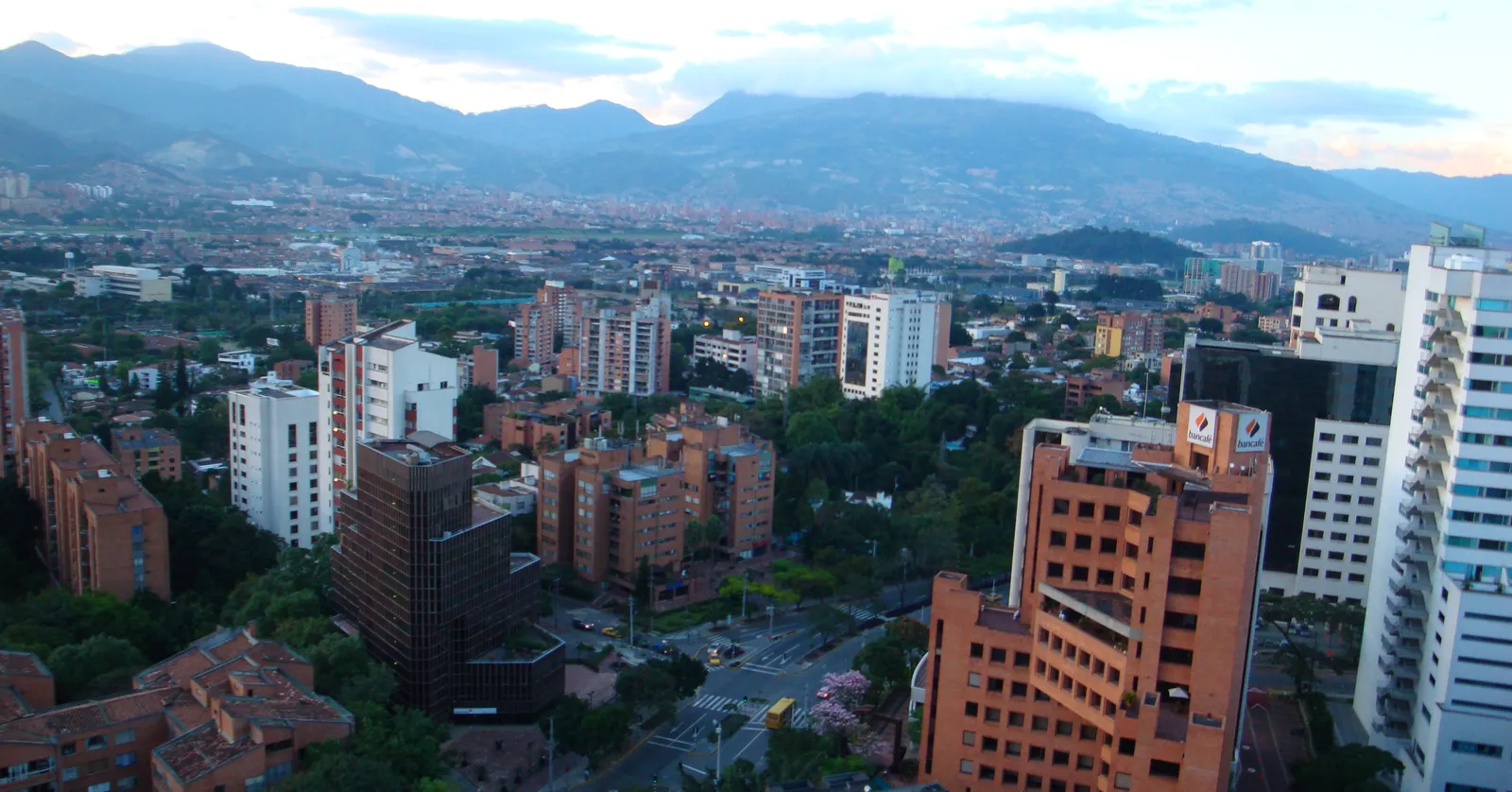
Medellín’s layover itinerary runs through two very different parts of the city: the graffiti-covered hillside escalators of Comuna 13, on the west side, and the free bronze sculptures crowding Plaza Botero downtown.
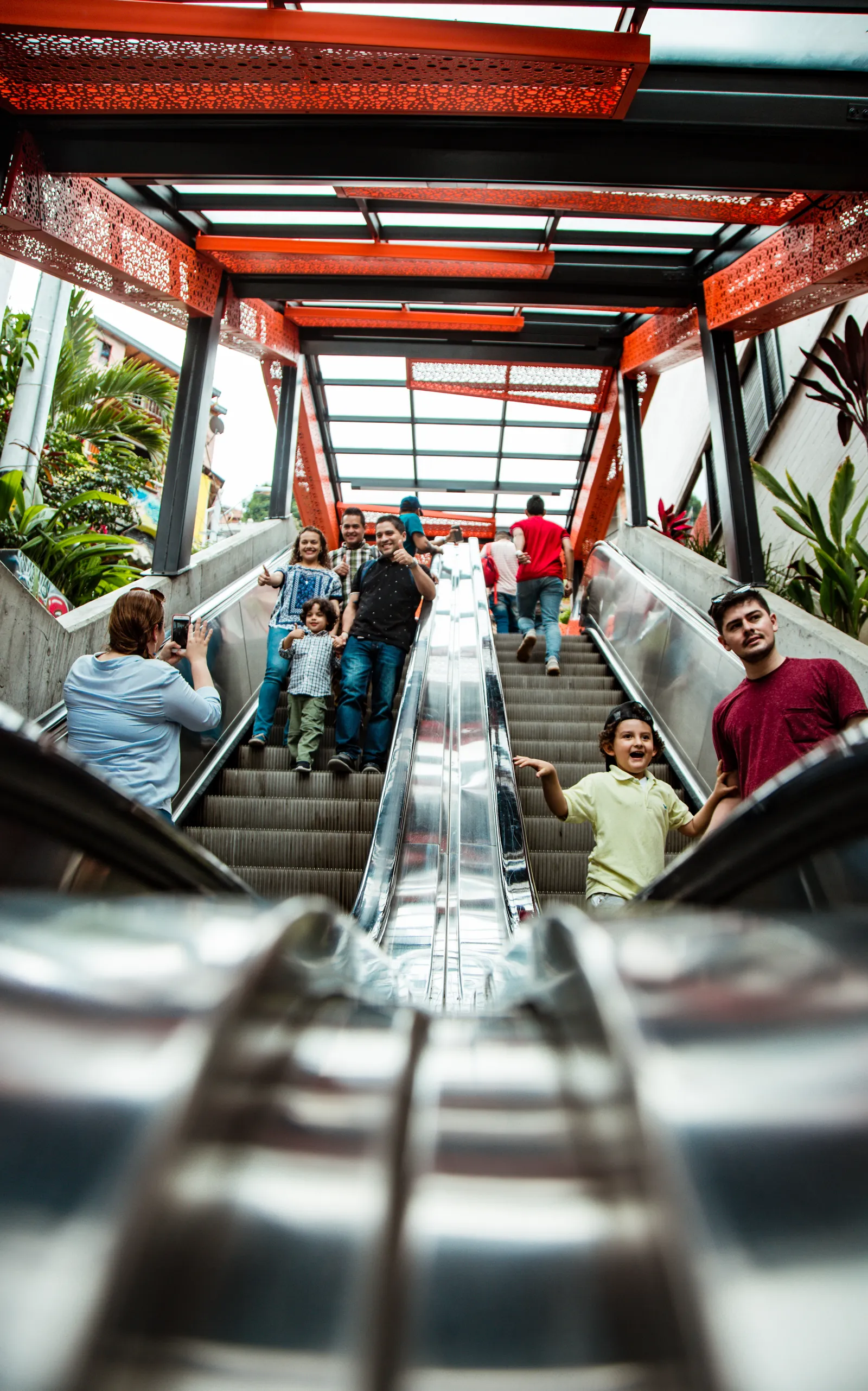
Six orange escalators climb Comuna 13’s hillside
Six covered escalators, painted bright orange, climb the steepest part of Comuna 13’s 20 de Julio hillside, replacing roughly 350 concrete steps that used to take about 25 minutes to climb. The ride up now takes about six minutes, though at midmorning it usually runs slower: locals ride it as a normal part of getting home, and it shares the space with a steady flow of visitors stopping to photograph the murals lining the route.
The murals are the other half of the draw. Painted over more than a decade by local artists, they trace the neighborhood’s turn from one of the most violent parts of the city in the 1990s and early 2000s into what’s now one of Medellín’s most visited stops, and several of the artists who started painting here still work and sell prints along the same route.
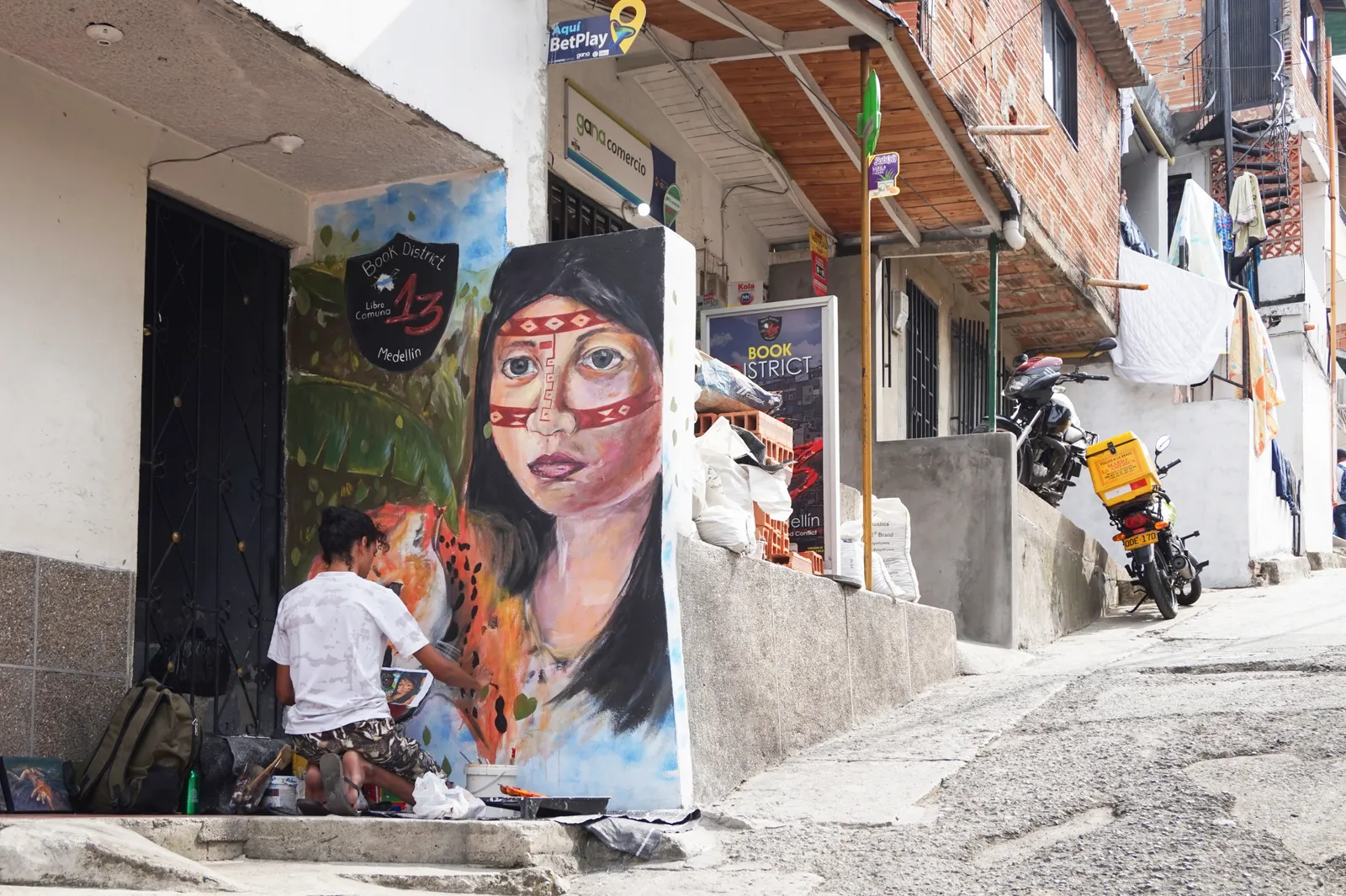
Both the escalators and the murals are free to walk through on your own during the day. A guided walking tour costs more but adds the history behind specific murals that isn’t posted anywhere on the wall itself. The escalators run single file, and a suitcase doesn’t fit well alongside a tour group waiting its turn to board.
Plaza Botero’s 23 bronze sculptures
Fernando Botero donated 23 bronze sculptures to the city in 2002, installed permanently in the plaza that now carries his name in the middle of El Centro. Each is cast in his signature rounded, exaggerated style, applied here to a cat, a horse, a reclining nude and several Colombian historical figures, and none of it costs anything to walk up and look at. The plaza sits a few steps from Parque Berrío station.
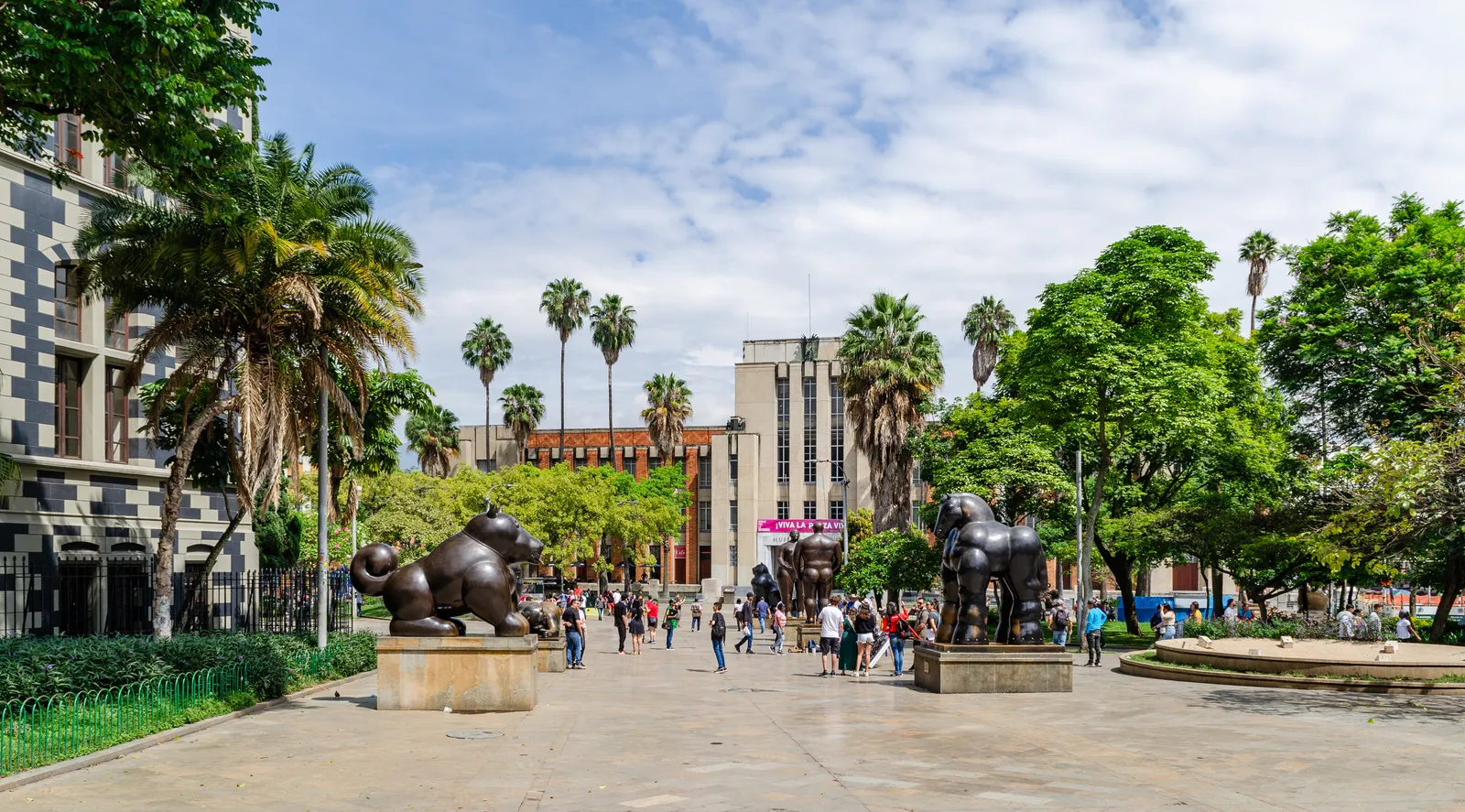
The Museo de Antioquia runs along the plaza’s north side and holds another hundred or so Botero works inside, along with pieces by Pedro Nel Gómez and a rotating contemporary program. Admission for a foreign visitor runs about 18,000 pesos, and the museum closes an hour earlier on Sundays than the rest of the week.
The black-and-white towers of the Palacio de la Cultura
Facing Plaza Botero, the Palacio de la Cultura Rafael Uribe Uribe pairs black stone with white plasterwork on a Gothic Revival facade designed by the Belgian architect Agustín Goovaerts in the 1920s. Only about a quarter of his original design was ever built, and the building still reads as unfinished in places if you look for it, an asymmetric roofline here, a tower that stops short there. It was declared a national monument in 1982 and renamed for the Colombian general Rafael Uribe Uribe five years later.
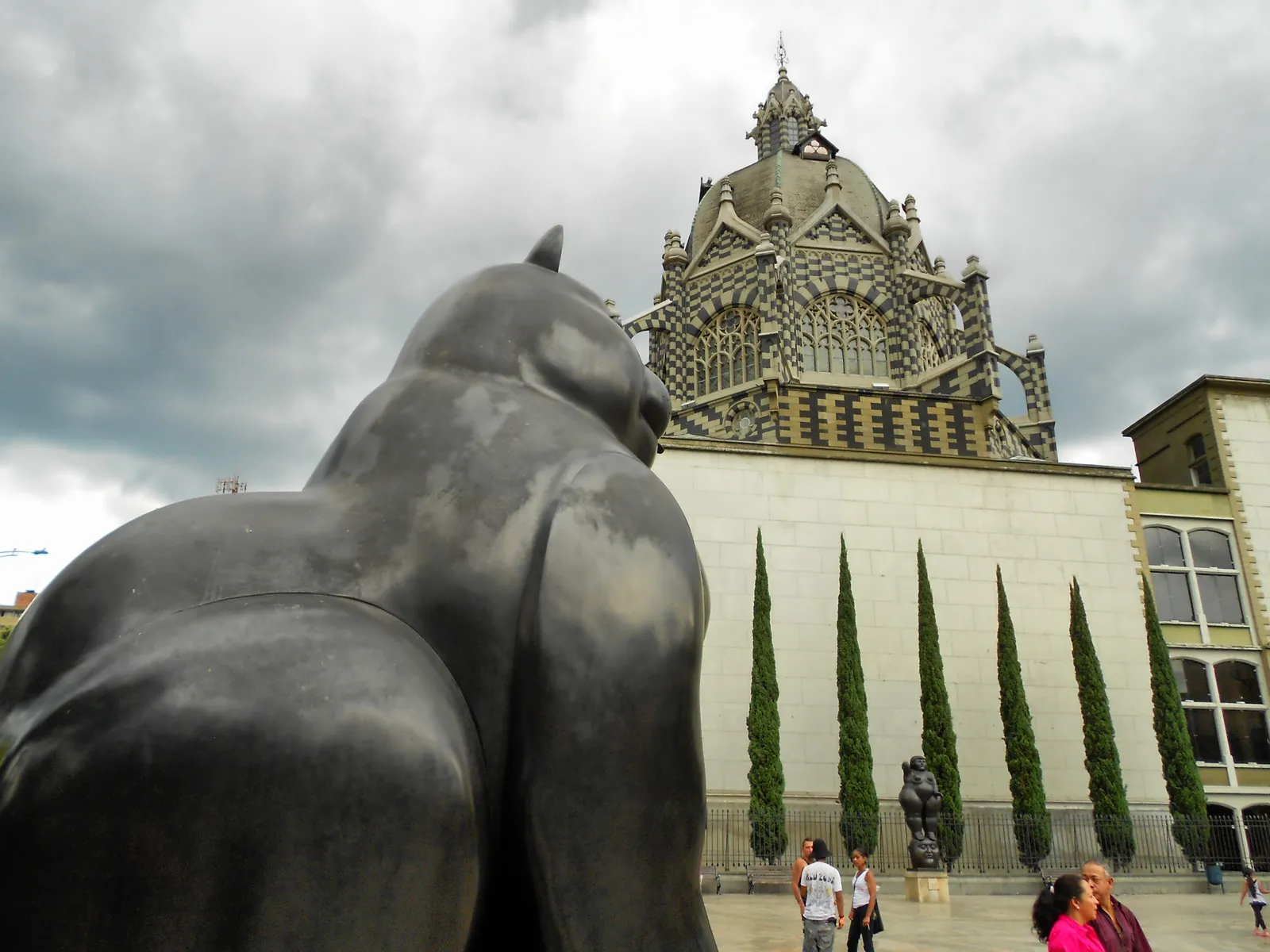
Walking inside costs nothing. The ground floor holds a courtyard with a fountain and rotating art exhibitions, plus a small cinema that shows free films on some weekday afternoons; bring a passport or photo ID for the security check at the door. It’s open Monday to Saturday and closed on Sundays and public holidays.
Prado, a neighborhood of 1920s mansions
With more time, Prado is a fifteen-minute walk northeast of Plaza Botero: a residential grid of mansions built in the 1920s and 1930s by the city’s industrialists, done up in a mix of Swiss chalet, art deco and neoclassical styles that has little to do with the colonial look most Medellín guides lead with. The city declared 261 of its buildings a protected heritage sector in 2009, and a fair number of them are faded rather than restored, which is part of what makes the walk worth it instead of a single photo stop.
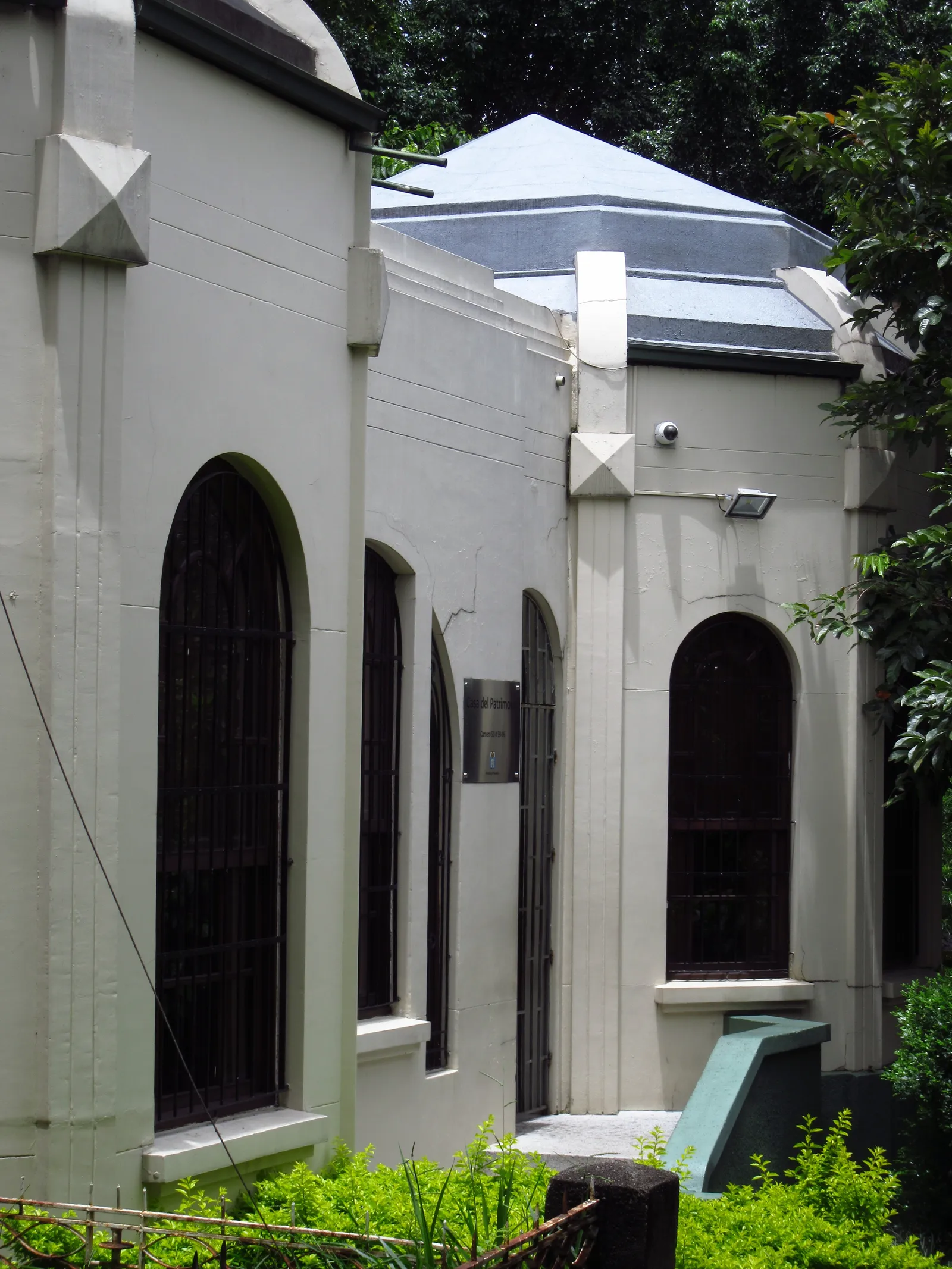
There’s no single ticketed attraction here, just streets to walk. Prado station, one stop north of Parque Berrío, is the nearest way back to the metro if the walk already used up the afternoon.
A direct bus through the Túnel de Oriente
The fastest route back to José María Córdova is a Combuses bus that leaves the north end of Exposiciones metro station every 20 minutes, runs around the clock, and doesn’t stop again until the airport, on the far side of the Túnel de Oriente. It’s paid with the metro’s Cívica card or a QR code from its app, and the fare is 14,000 pesos. Combuses quotes the ride itself at about 35 minutes; count on nearer an hour once the wait for a bus and the trip out to Exposiciones from wherever you’ve spent the day are added in.
A taxi or rideshare covers the same tunnel route door to door, running anywhere from 45 minutes in light traffic to closer to 90 minutes at rush hour. Before the tunnel opened in 2019, the old mountain road out of Rionegro could take well over two hours each way, so even the slower end of today’s range is a real improvement. Either way, build in at least two hours from wherever you are in the city to wheels up, since check-in and security still come after the ride.
None of the day needs a suitcase riding along for the drive back over the tunnel. Leaving it downtown near Plaza Botero is what makes the escalators, the plaza and Prado’s mansions fit into the same day without doubling back for it. If the next flight connects through Miami, the Miami layover guide has its own hands-free route through downtown for the same kind of gap.
Frequently asked questions
What should I do during a layover in Medellín?
Split the time between Comuna 13's escalators and murals on the west side and the free Plaza Botero sculptures downtown, adding the Palacio de la Cultura's exhibitions and Prado's 1920s mansions if there's more than a few hours to spare. The escalators, the murals and the plaza cost nothing to walk through; a guided tour of Comuna 13 is worth booking if the history behind specific murals matters to you, and the Museo de Antioquia beside the plaza is the one paid stop worth the ticket. Everything sits within a short metro ride of Parque Berrío station, so any of it can be dropped without breaking the rest.
Why does it take so long to get to and from the airport?
José María Córdova sits up on a plateau near the town of Rionegro, on the far side of a mountain ridge from the city itself. The Túnel de Oriente, opened in 2019, cut the drive down substantially, and a taxi now covers it in as little as 45 minutes in light traffic. But door to door, once you add the wait for a bus or a car and the traffic on either end, an hour to an hour and a half each way is normal, not an exception. Combuses runs a direct bus from Exposiciones metro station around the clock for 14,000 pesos if you'd rather not drive.
Is Comuna 13 safe to visit without a guide?
During the day, yes. It's a normal, working neighborhood with a steady flow of visitors, and walking the escalators and the main mural route on your own costs nothing beyond a metro fare and a short bus or taxi ride to the bottom of the stairs. A guide adds context you won't get from the walls themselves, who painted what and why, but isn't required for the visit to feel safe.
Is the Plaza Botero area easy to manage with a stroller or a wheelchair?
The plaza itself is a flat, paved square with no steps between the sculptures, and Parque Berrío station has elevator access. The Palacio de la Cultura's ground-floor courtyard is step-free, though some of the upper galleries are only reachable by stairs. Comuna 13's escalators are step-free by design, but the mural route beyond the top of the last escalator includes some uneven, sloped street sections.
What if my layover lands during Medellín's rainy season?
The wetter stretches run April into May and September into November, and the rain itself tends to arrive as a short, hard shower in the mid to late afternoon rather than an all-day washout. Doing the outdoor half of the day, Comuna 13's murals, the walk around Plaza Botero, before early afternoon avoids most of it; the Museo de Antioquia and the Palacio de la Cultura's covered corridors are the fallback if a shower catches you out.