Cartagena Layover: The Walled City From CTG
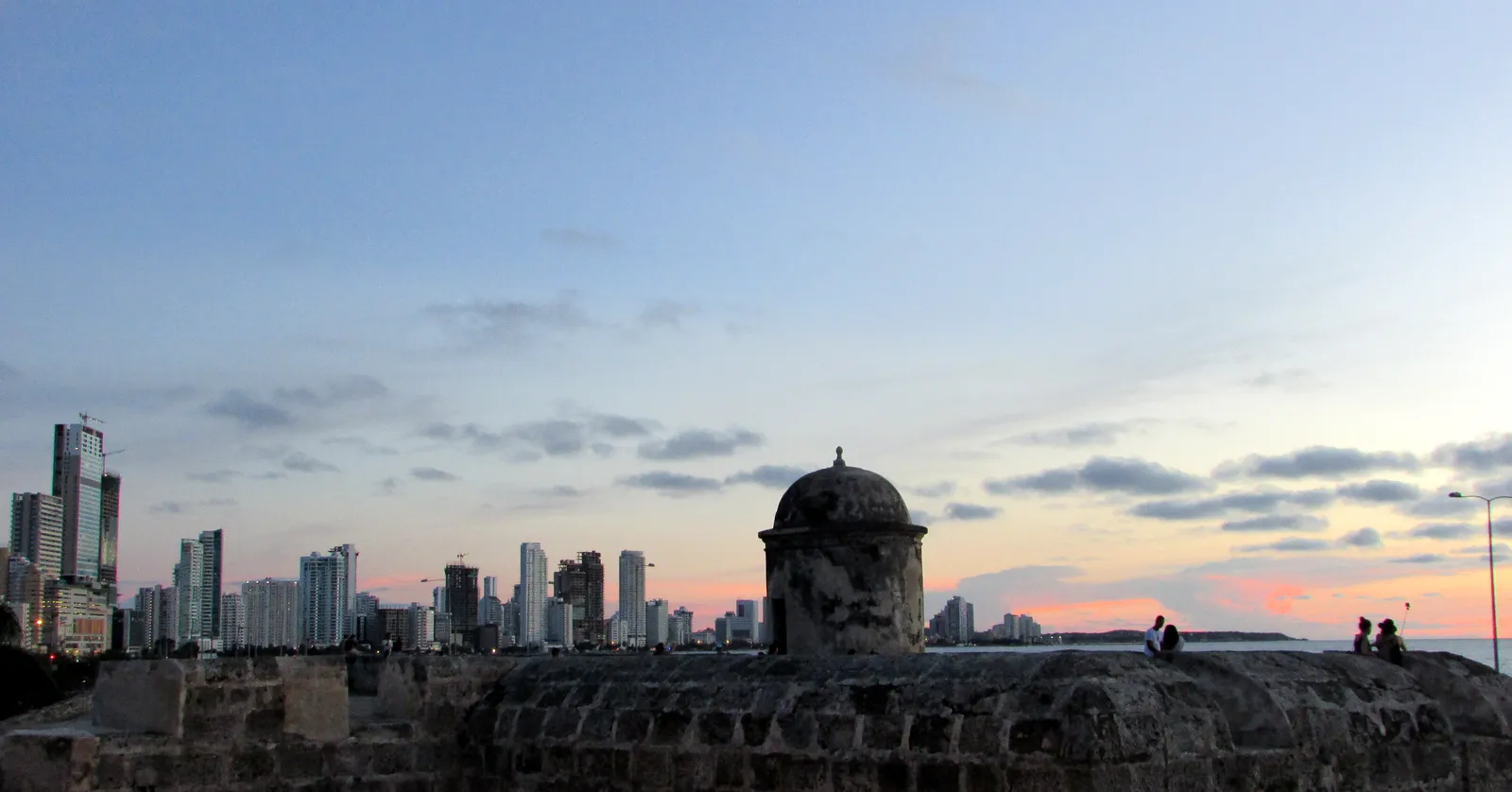
Cartagena’s Walled City centers on a Spanish stone fortress that outlasted an eighteenth-century siege, a colonial gate crowned with a clock tower, and dungeons turned souvenir stalls, close enough together to see without much backtracking.
The fortress that outlasted a 186-ship siege
San Felipe de Barajas went up on the Hill of San Lázaro starting in 1657 and grew over the following century into a set of terraced batteries connected inside the rock by a network of tunnels. In March 1741, a British fleet of roughly 186 ships and 28,000 men under Admiral Edward Vernon laid siege to the city; Vernon was confident enough beforehand that he had commemorative medals struck showing the Spanish governor surrendering. Six weeks later he withdrew, held off by Admiral Blas de Lezo’s outnumbered garrison, and the fortress never did fall.
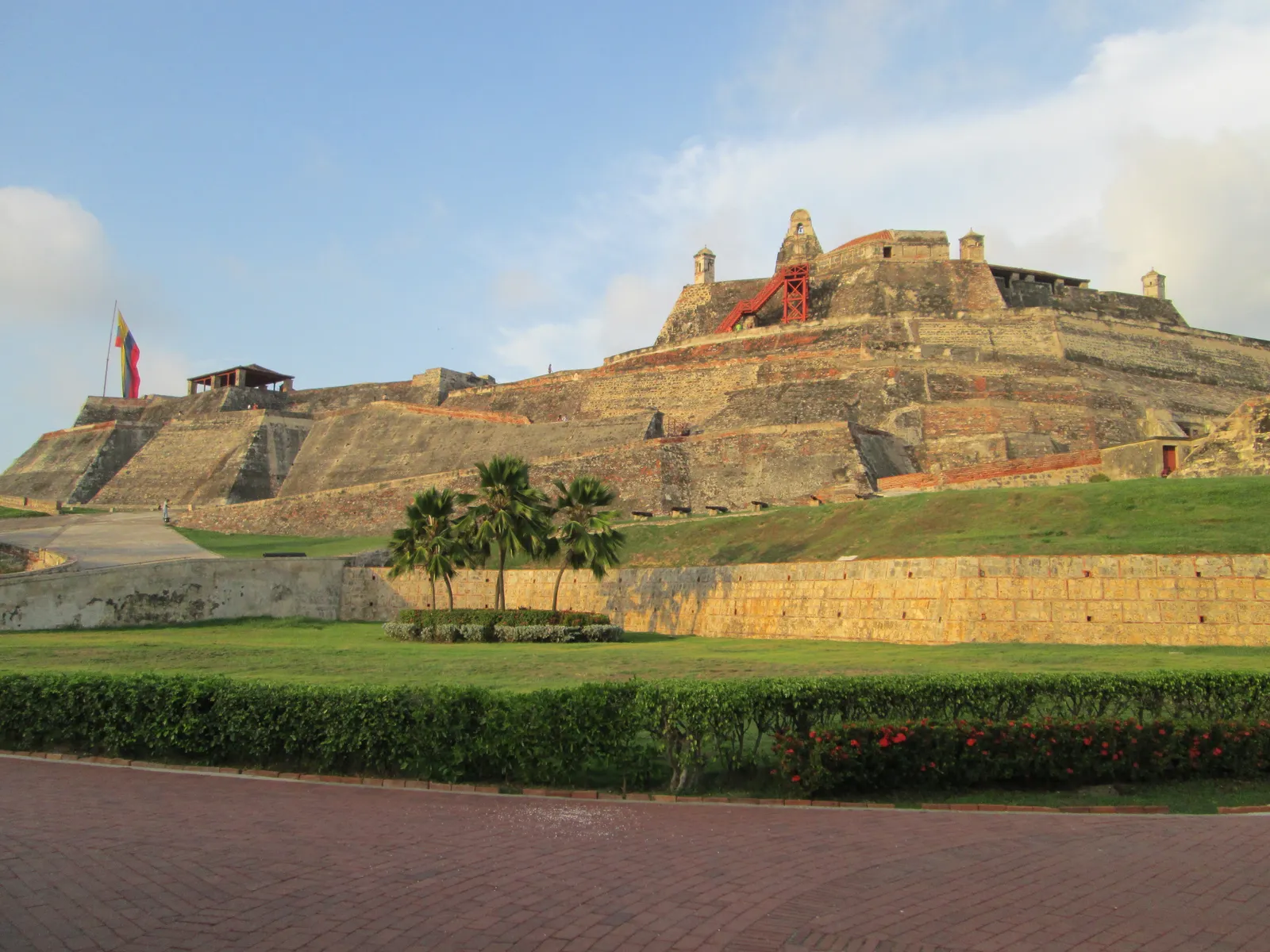
The tunnels are worth the climb on their own. They were cut with acoustics precise enough that a whisper or a footstep carries the length of a passage, so a sentry at one end could hear someone approaching from the other before they came into view. Admission runs about COP 38,000 for foreign visitors and is free for children under six; the fortress is open 8am to 6pm daily, last entry at 5pm, with free entry on the last Sunday of most months.
Torre del Reloj, the gate that took thirty years to finish
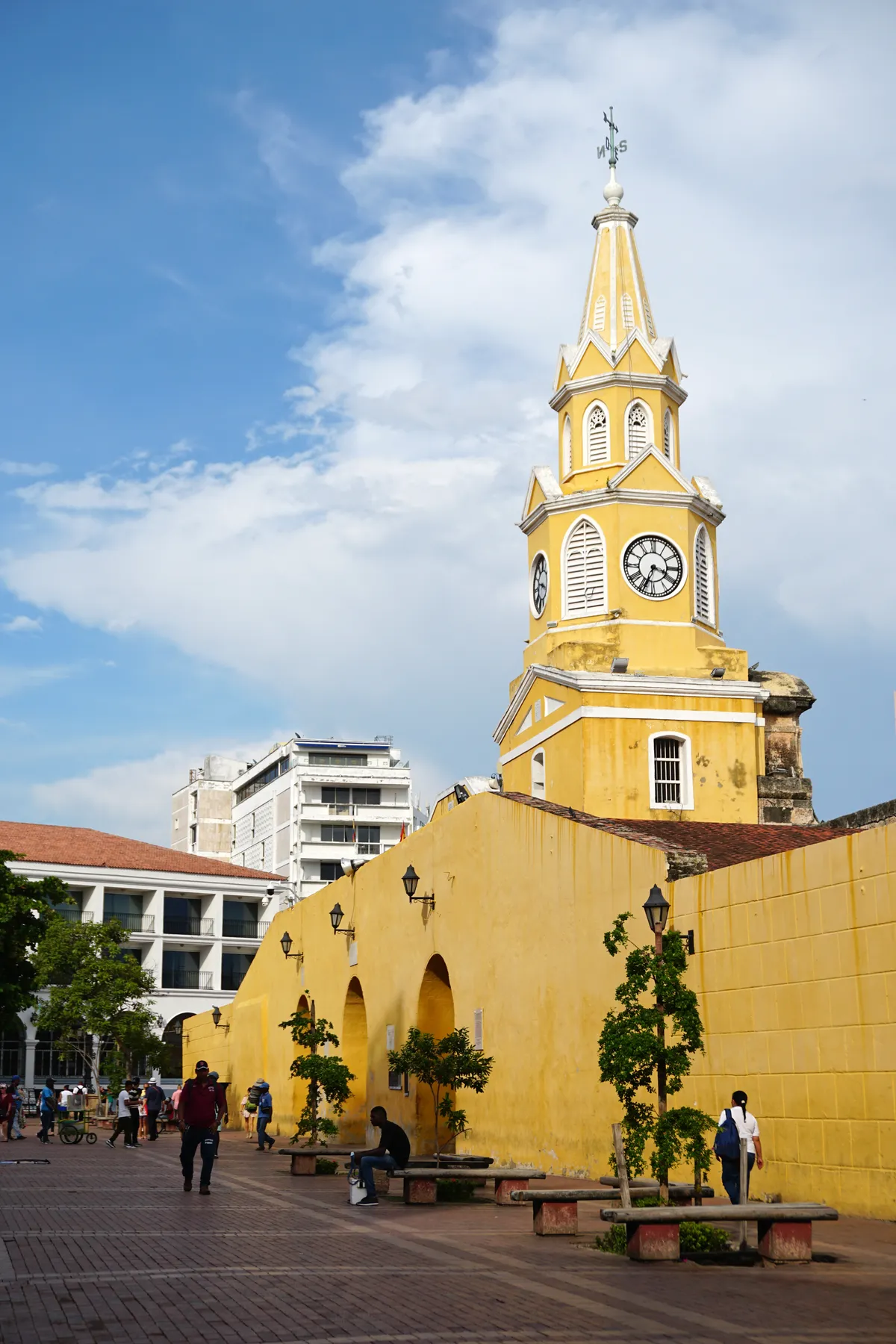
Torre del Reloj is the Walled City’s main gate, built in stages from 1601 to 1631 across the moat that once separated the old town from the mainland, with the clock tower itself added at the start of the 1700s. It’s the entrance most people use coming from Getsemaní, and it costs nothing to walk through or photograph at any hour.
A two-hour bike tour loops through the plazas and side streets past the gate, for anyone who’d rather pedal the core than walk it. The streets themselves are original colonial cobblestone almost everywhere inside these walls, uneven enough that a wheeled suitcase has to be dragged rather than rolled.
The Inquisition tribunal’s palace, now a history museum
The Palacio de la Inquisición went up in 1770 as the seat of the Spanish Inquisition’s tribunal for the whole Caribbean coast, behind a Baroque stone doorway that’s one of the best preserved in the Walled City. It’s been the Museo Histórico de Cartagena since 1953, and the ground floor still displays the tribunal’s own instruments alongside exhibits on the city’s colonial and independence history.
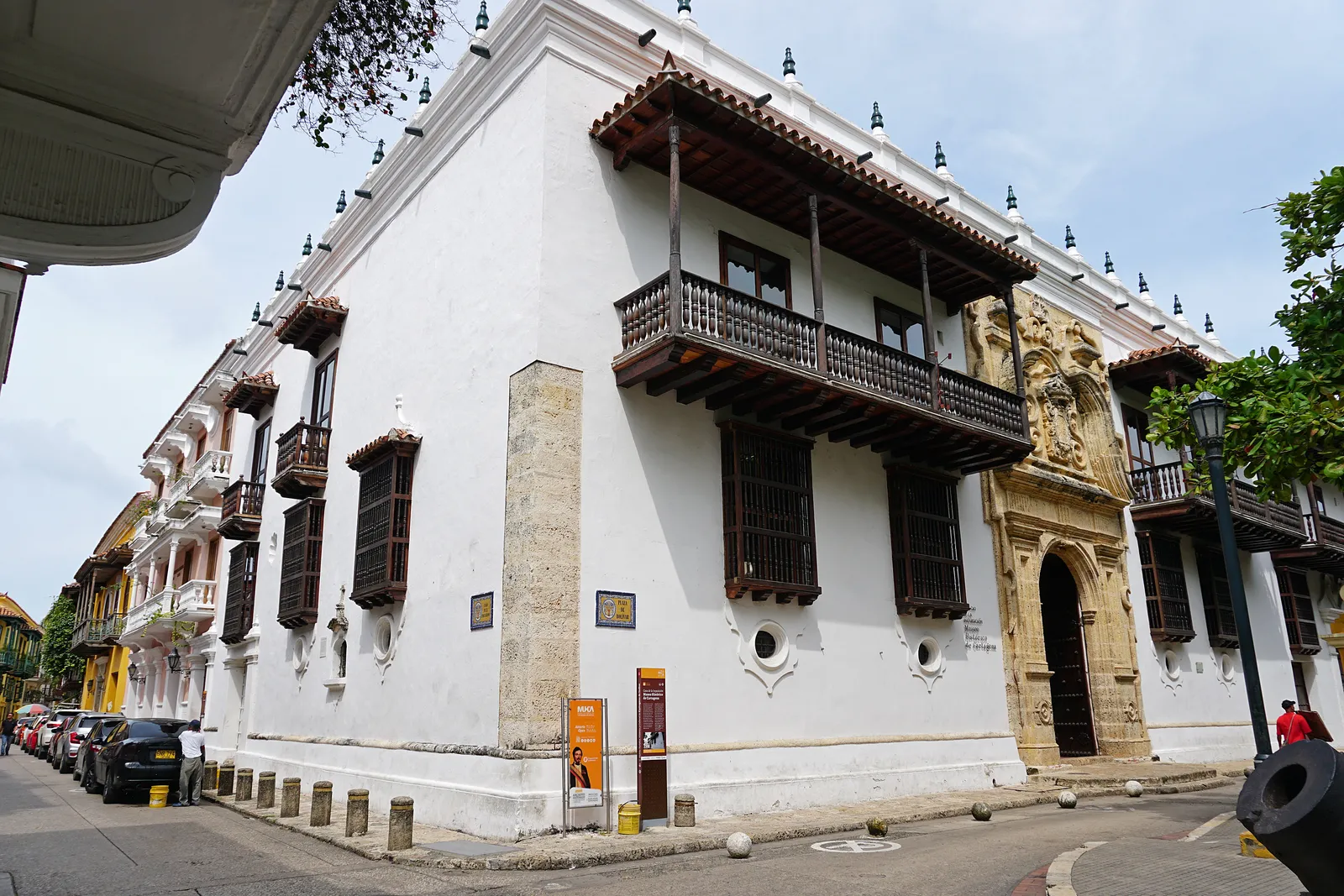
Admission is about COP 22,000 for adults, with free entry on the last Sunday of the month; the museum opens at 9am and closes at 6pm.
Las Bóvedas, 23 vaults built for gunpowder, not gift shops
Built into the city wall between 1789 and 1795 to Antonio de Arévalo’s design, Las Bóvedas started as ammunition storage and was later pressed into use as a military prison; at high tide, inmates reportedly stood knee-deep in seawater that seeped in through the wall. The 23 vaulted cells now hold souvenir shops selling hammocks, straw hats and local crafts, open roughly 9am to 7pm.
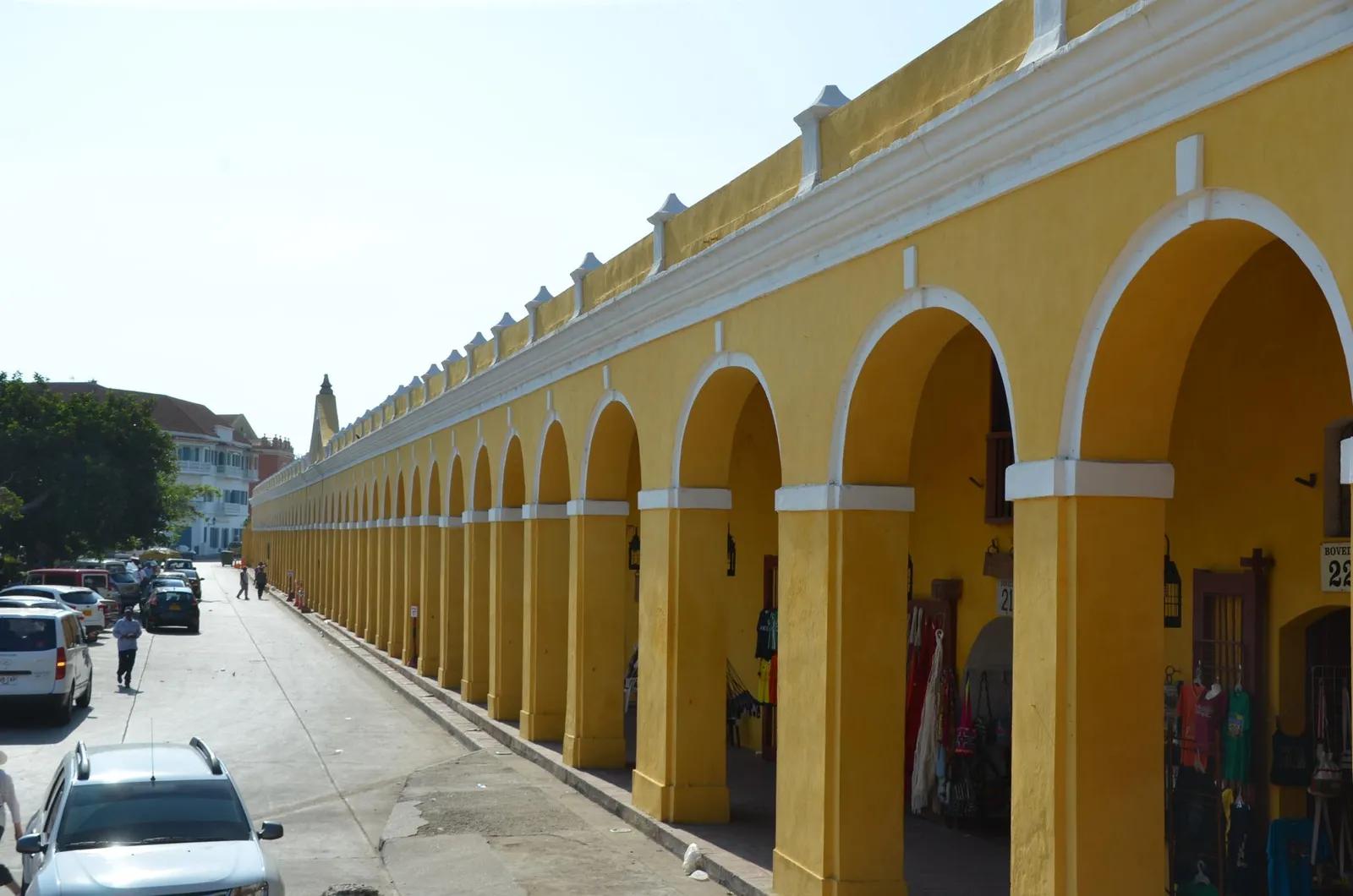
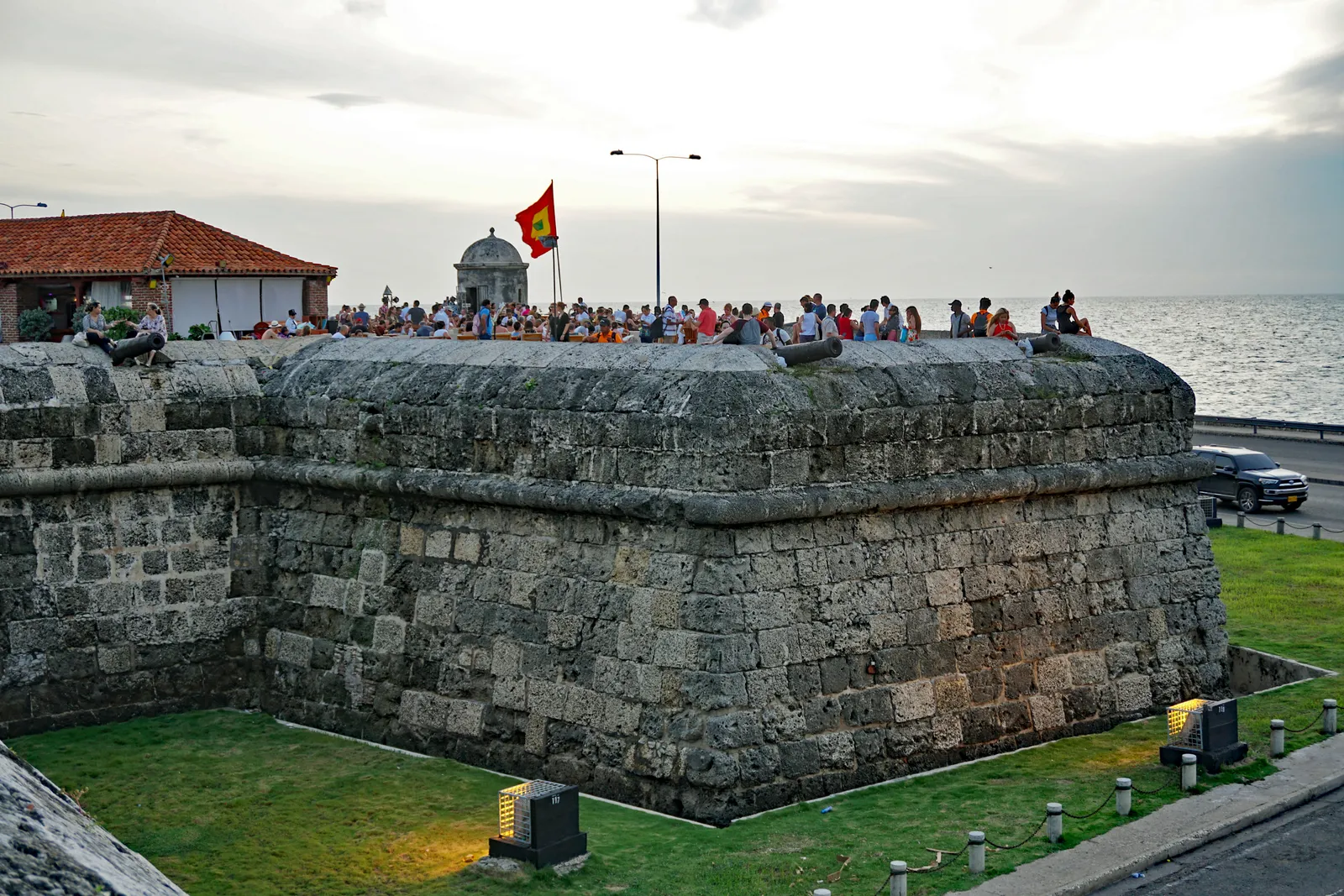
A free sunset from Baluarte de Santo Domingo
Baluarte de Santo Domingo, the bastion at the Walled City’s southwest corner, has open, uncrowded stretches of rampart with a straight view over the Caribbean, and there’s no ticket to walk up onto the wall itself. Café del Mar sits right on this stretch of wall and charges bar prices for the same view; sitting on the stone a few metres either side of it costs nothing and loses nothing of the sunset.
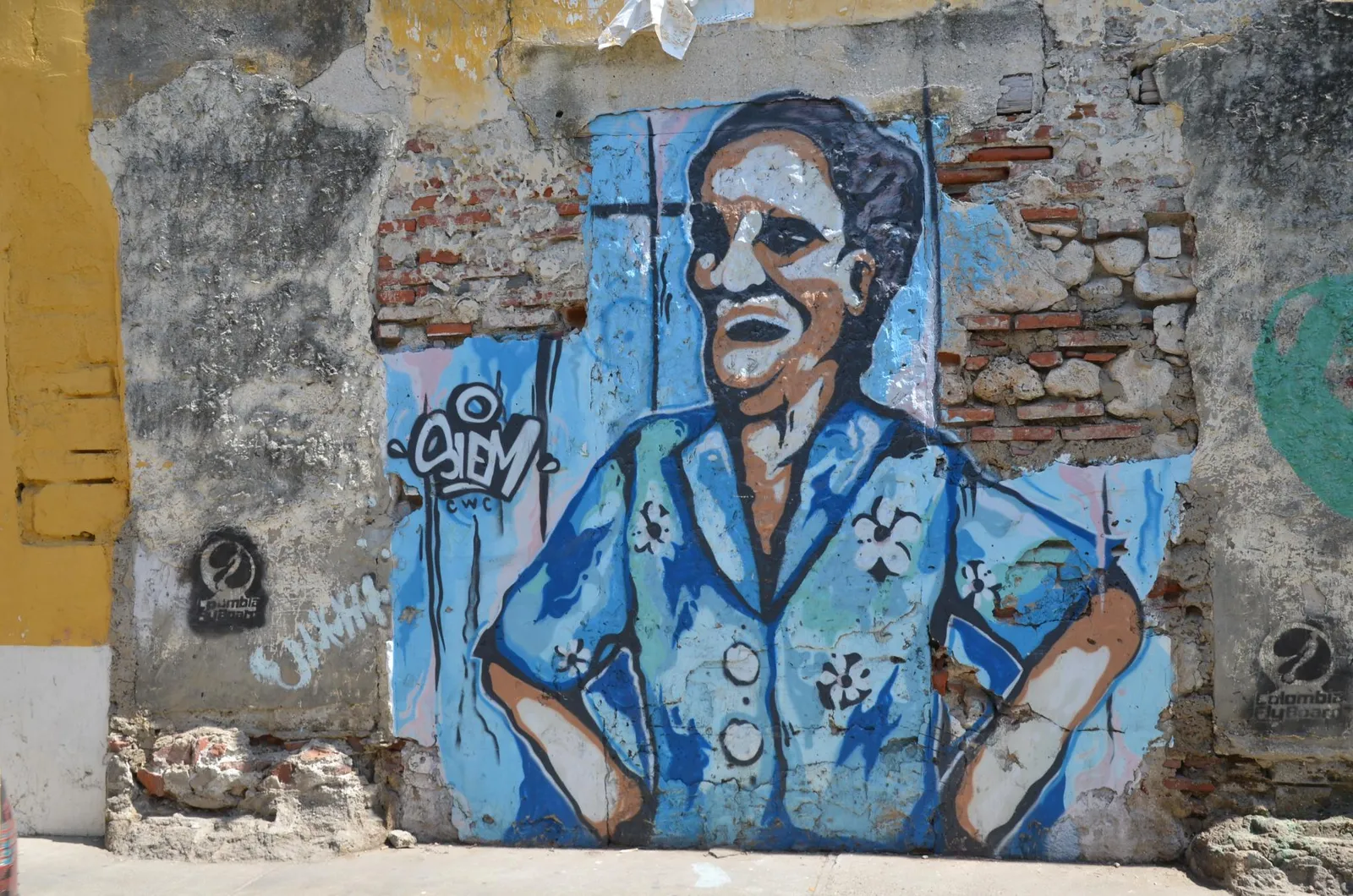
The murals of Getsemaní
Getsemaní, just outside the Walled City’s gates, has turned its own walls into a rotating open-air gallery: murals covering entire building facades along Calle de la Sierpe and around Plaza de la Trinidad, mixing political commentary, portraiture and pure color. None of it is fenced off or charges admission, so an hour of wandering here costs nothing but the walk.
For a break from the heat, Ábaco Libros y Café, a bookstore and coffee shop that’s operated inside the Walled City since 2002, keeps Gabriel García Márquez’s own titles on its shelves among the fiction; it draws more local readers than tourists and serves coffee at an ordinary café price rather than a plaza markup.
Getsemaní isn’t Colombia’s only open-air gallery: Medellín’s Comuna 13 turned its own hillside into one, with outdoor escalators built into the murals instead of a flat street grid.
Between the fortress, the two museums and the walk along the wall, most of what’s worth seeing here sits within about a kilometer of the gate you came through, easier to reach without a suitcase bouncing over the cobblestones behind you the whole way.
No metro in Cartagena, just a taxi from the gate
Rafael Núñez International Airport (CTG) sits about 6 kilometres from the Walled City, close enough that a taxi from the gate to the terminal runs 15 to 20 minutes outside of rush hour. Cartagena has no metro or train system: a taxi booth just past arrivals prints a fixed-fare receipt, typically the equivalent of USD 5 to 7 to reach the Walled City or Getsemaní, and rideshare apps including Uber, Cabify and DiDi also operate here. A public bus, route T102 along Avenida Santander, runs to the airport too, but it takes a rechargeable fare card that a one-day visitor is unlikely to be carrying, which makes the taxi the simpler choice with a flight to catch.
Frequently asked questions
What should I do during a layover in Cartagena?
Stay inside or right around the Walled City: San Felipe de Barajas fortress, the Torre del Reloj gate, the Palacio de la Inquisición museum and the souvenir stalls at Las Bóvedas all sit within about a kilometer of each other, with the airport roughly 15 to 20 minutes away by taxi. The fortress and the Inquisición museum both charge modest admission and are worth planning around if crowds are heavy; the gate, the ramparts and Getsemaní's murals cost nothing. With five hours or more, Getsemaní's street art and a stop at a quiet café add a slower half hour without breaking the rest of the route.
Is Cartagena's Walled City good for a layover on a budget?
Yes. The Torre del Reloj gate, the walk along the ramparts, Las Bóvedas' shops and Getsemaní's murals all cost nothing to see. San Felipe de Barajas and the Palacio de la Inquisición each charge modest foreign-visitor admission, and both waive it on the last Sunday of most months. For the sunset view from Baluarte de Santo Domingo, sitting on the wall itself a few metres from Café del Mar gets the same view without the bar's markup.
Is Cartagena's Walled City stroller or wheelchair friendly?
Not especially. The streets inside the walls are original colonial cobblestone almost throughout, uneven enough to slow a stroller or a manual wheelchair, and San Felipe de Barajas is a hillside fortress reached by ramps and stairs with no elevator. The smoothest stretch is the paved walkway along the top of the rampart near Baluarte de Santo Domingo, and the Torre del Reloj gate and the plaza just past it are wide, flat and easiest to cross.
What if it rains during my Cartagena layover?
Cartagena's rainy season runs roughly May through November, and afternoon downpours tend to be short and heavy rather than day-long. The Palacio de la Inquisición museum and the arcaded shops at Las Bóvedas are the two easiest covered stops on this route; San Felipe de Barajas has almost no shelter on its open terraces, so it's the one to shift earlier or later around a forecast rather than visit mid-downpour.
When's the best time of day to walk Cartagena's Walled City?
Late morning through mid-afternoon, roughly 11am to 4pm, is the hottest and most humid stretch of the day, and San Felipe de Barajas has almost no shade on its upper terraces. Starting at the fortress before 10am, or saving the Walled City's streets for after 4pm when the Baluarte de Santo Domingo sunset walk is also at its best, avoids the worst of the heat.