Cartagena Layover at San Felipe Castle
Part of the full Cartagena Layover: The Walled City From CTG
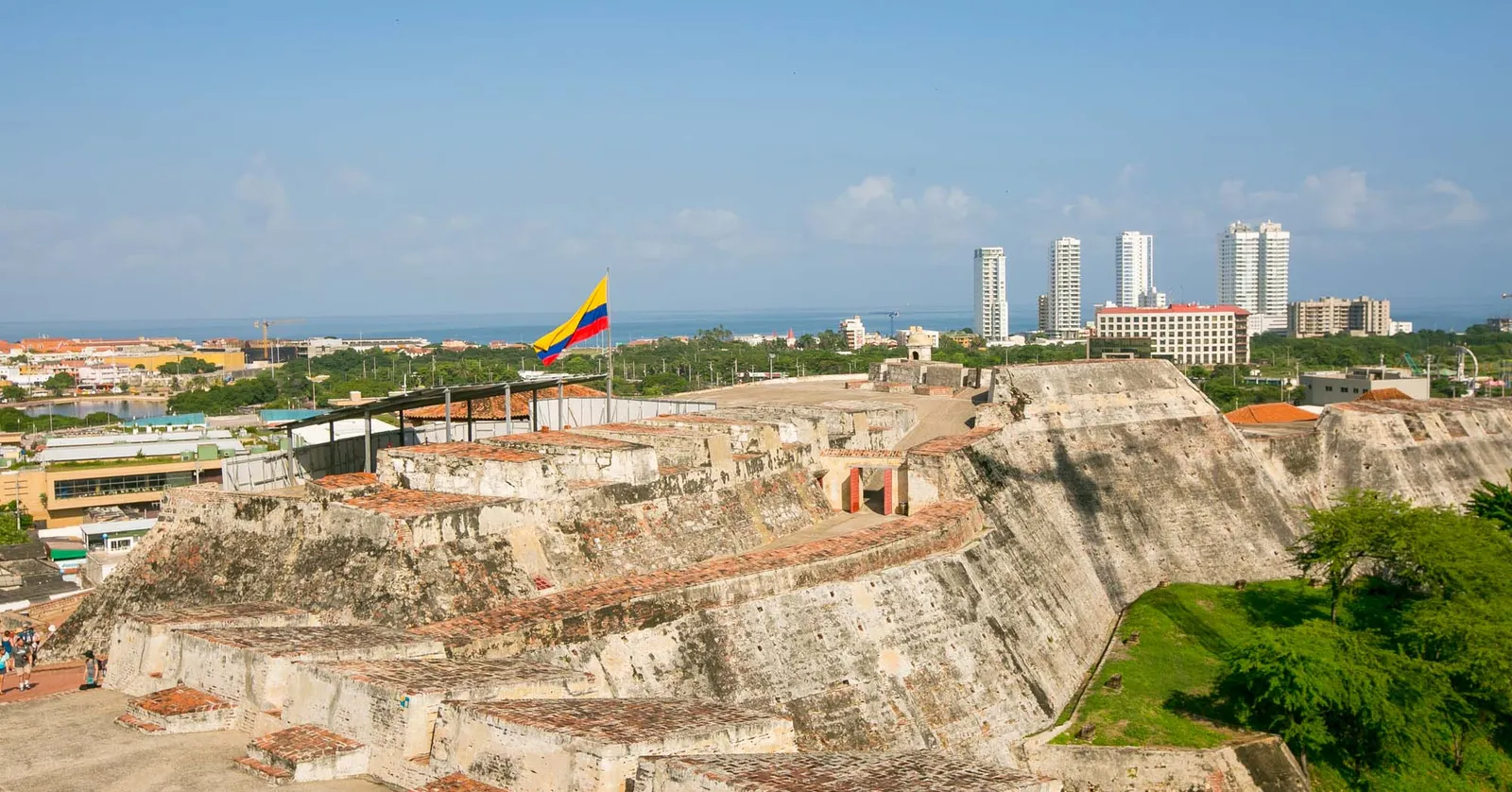
Castillo San Felipe de Barajas rises on its own hill outside Cartagena’s Walled City, with five artillery batteries, a network of listening tunnels and a summit view over Bocagrande substantial enough to treat as a stop in its own right rather than a quick detour on the way somewhere else.
Five batteries from a 1762 expansion
The fortress that stands today is largely the work of Antonio de Arévalo, the military engineer who enlarged it between 1762 and 1779 with a set of named batteries ringing the original core: Santa Bárbara, San Carlos y los Apóstoles, Hornabeque, de la Cruz, de la Redención and San Lázaro. De la Redención carried the heaviest firepower of the six, thirteen cannons trained on the approach from the bay.
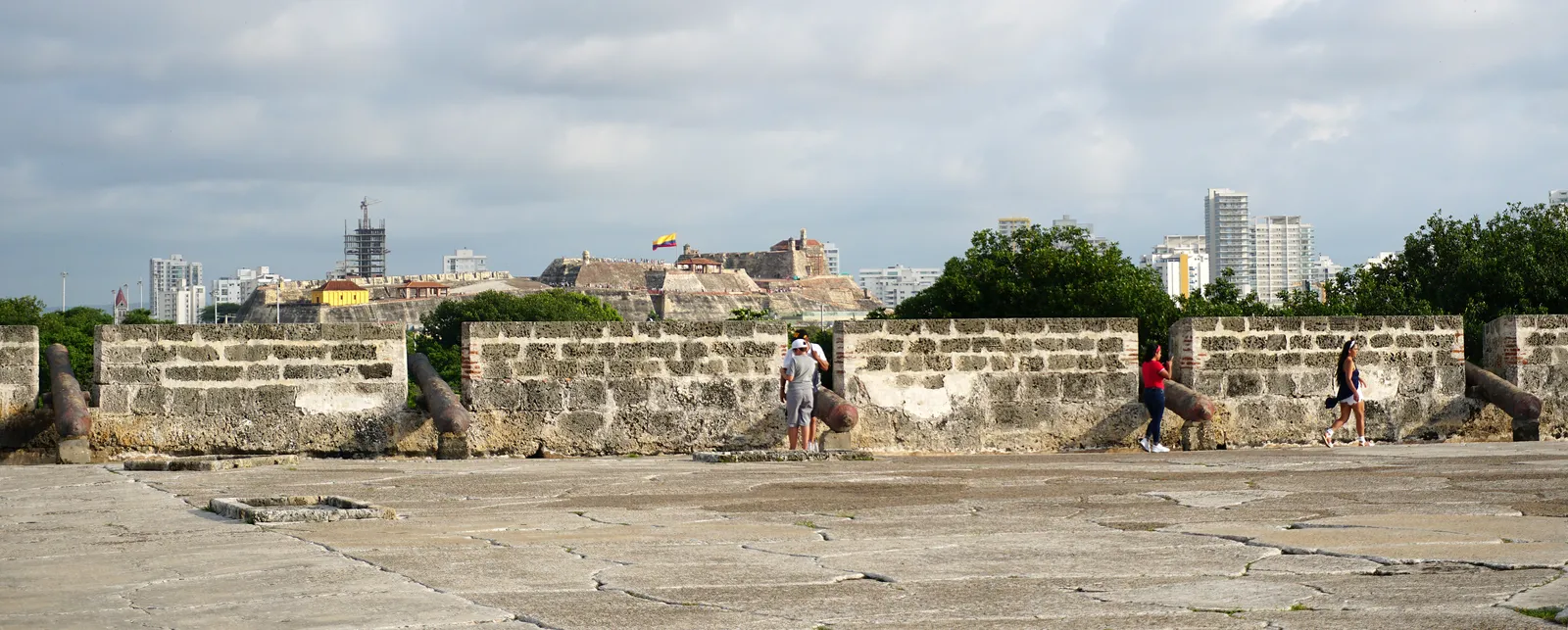
Arévalo went on to design Las Bóvedas inside the Walled City’s own walls three decades later, the dungeon-turned-souvenir-arcade that’s now one of the city’s better-known stops; the batteries here are the earlier, larger-scale version of the same engineer’s work.
Tunnels cut to carry a whisper, and reach water
The tunnel network connecting the batteries was engineered with acoustics precise enough that a whisper or a footstep carried the full length of a passage, giving defenders warning of anyone approaching from the other end. One shaft descends roughly 30 metres straight down to the water table, dug so a long siege couldn’t force a surrender by cutting off drinking water.
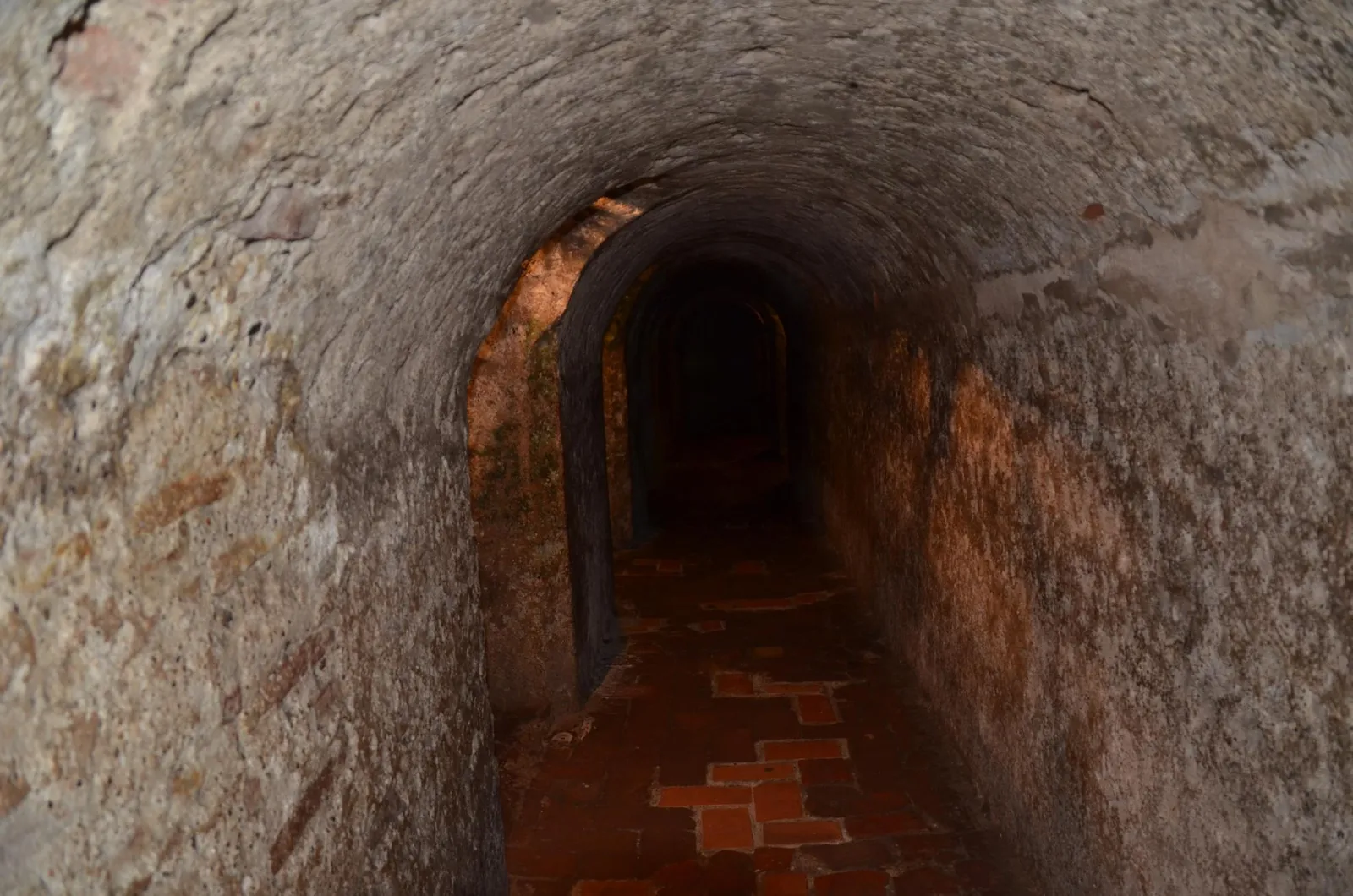
Getting through them means stone ramps, low openings and uneven brick underfoot the whole way, with no elevator between levels, minutes added for anyone dragging a bag rather than carrying it.
Foreign admission runs around COP 38,000, with the fortress open 8am to 6pm daily, last entry at 5pm, and free on the last Sunday of most months.
The summit view over Bocagrande
The climb to the fortress’s highest terraces ends at the best vantage point most visitors reach anywhere in Cartagena: the high-rises of Bocagrande on one side, the Walled City’s rooftops on the other, and the bay stretching out between them. Almost none of the upper terraces have shade, which is the main argument for going early or late rather than at midday.
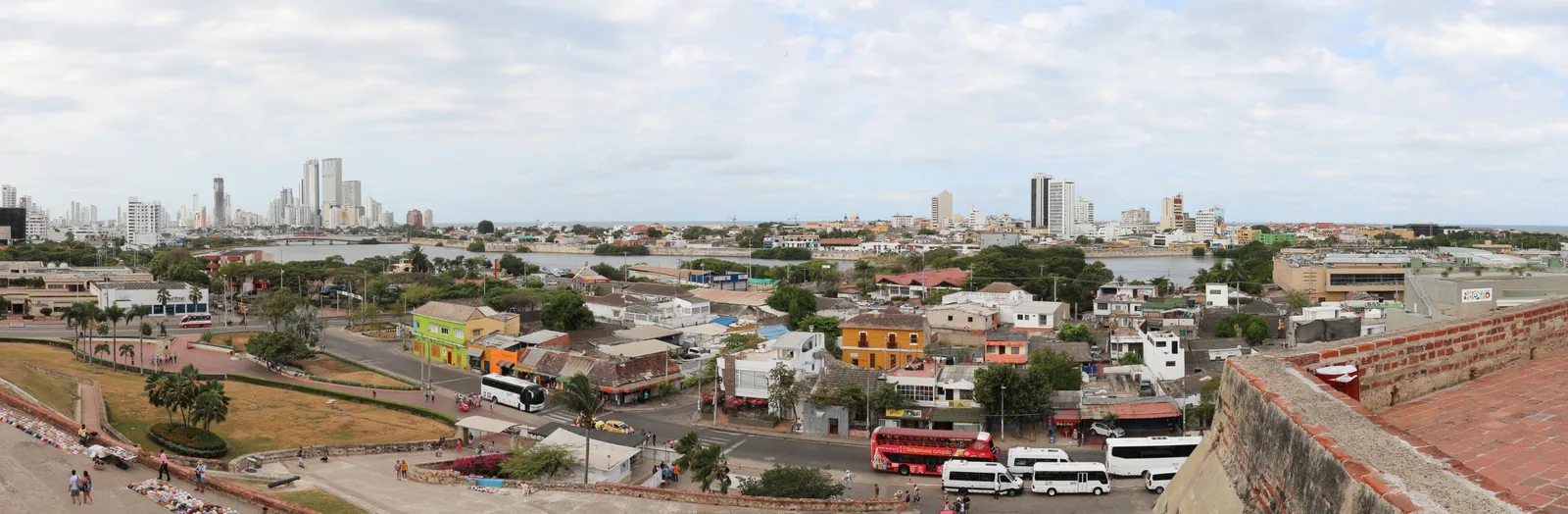
Between the batteries, the tunnels and the view from the top, the fortress fills a couple of hours on its own terms, without needing the Walled City’s plazas and museums to round it out.
Getting back to the airport from the castle
Rafael Núñez International Airport (CTG) is about 5 kilometres from the fortress, close enough for a 15 to 20 minute taxi ride outside rush hour, similar to the trip from the Walled City itself. There’s no taxi stand at the fortress gate the way there is at the airport terminal, so a rideshare app or a call ahead works better than expecting to flag one down on the road outside.
Frequently asked questions
What should I do during a layover at San Felipe Castle in Cartagena?
Treat the castle as one substantial stop rather than a quick detour: the five batteries from its 1762 expansion, the tunnel network, and the summit view over Bocagrande are enough on their own to fill two to three hours. Foreign admission runs around COP 38,000, the fortress is open 8am to 6pm with last entry at 5pm, and it's free on the last Sunday of most months. Go before 10am or after 4pm if the heat is a concern, since the upper terraces have almost no shade.
Are the tunnels at San Felipe Castle safe to explore alone?
Yes, the main tunnel routes are lit and well-trodden, with staff and other visitors around during opening hours. Lighting is deliberately kept low in places to preserve the original atmosphere, and the brick floors are uneven in spots, so sturdy shoes matter more than a guide. Signage marks which branches are open to walk and which are roped off.
Is San Felipe Castle wheelchair accessible?
Only partly. Portable ramps cover some of the steeper transitions and the main exhibition spaces near the entrance are level and open, but the upper batteries and the tunnel network involve stone stairs, slopes and uneven ground with no elevator. Anyone using a wheelchair or with limited mobility can still see a meaningful part of the fortress from the lower terraces without attempting the full climb.
Is San Felipe Castle worth the extra taxi ride from the Walled City?
If military history or the view is the draw, yes: nothing inside the Walled City itself matches the scale of the batteries or the summit vantage point here. If the layover is under two hours once the taxi there and back is counted, the Walled City's own sights, reachable on foot from its gates, make better use of the time.