Bogotá's Las Aguas Station: Chorro de Quevedo
Part of the full Bogotá Layover: La Candelaria From BOG
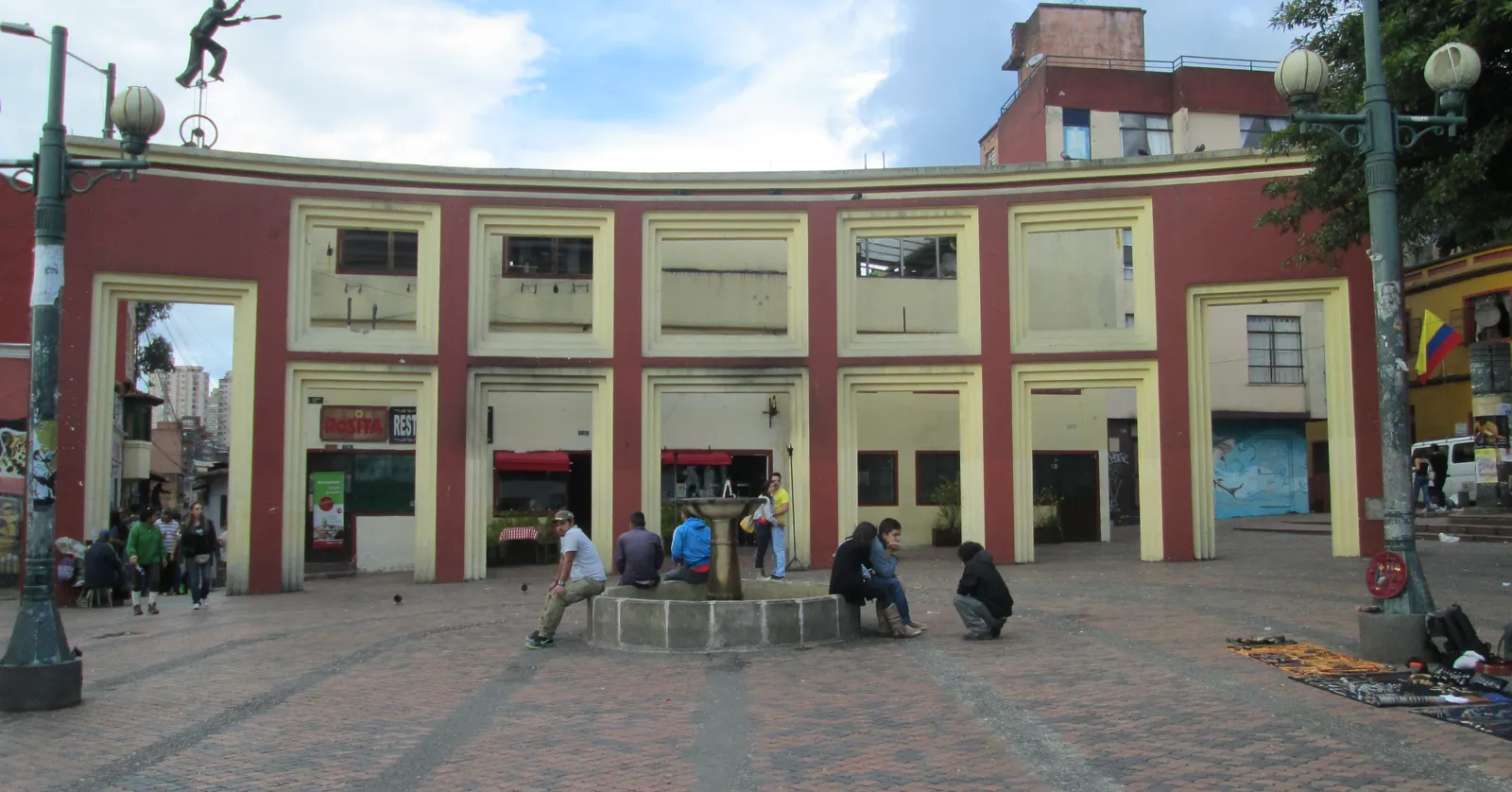
Las Aguas is the last station in central Bogotá before the ground tips up into the mountains, and Simón Bolívar’s country house, the square where the Spanish founded the city and the cobbled Calle del Embudo are all within ten minutes’ walk of it.
The house Colombia gave Bolívar in 1820
The Quinta de Bolívar stands at Calle 21 No. 4A-30 Este, in a garden at the bottom of the slope, and the site has been built on since the 1670s. The government of the new republic made the house a gift to Simón Bolívar in 1820 for his part in the independence war. He used it for a total of 423 days.
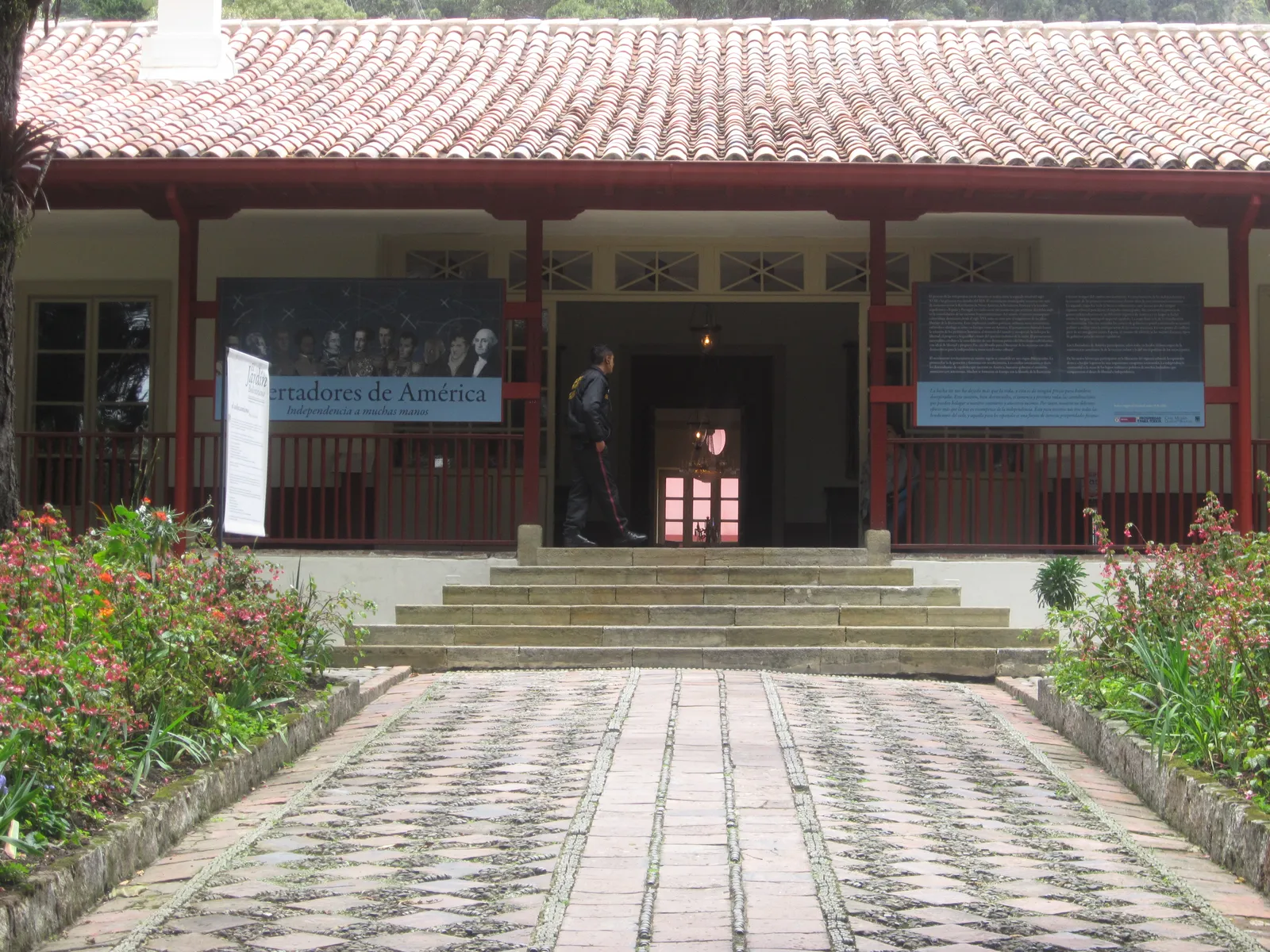
It is a low white house with red posts along a tiled veranda, furnished as it would have been, with his sword and travelling trunk among the things on display. Entry is 3,000 pesos and free to everyone on Sundays, plus Wednesday afternoons between 3pm and 5pm; it opens Tuesday to Sunday, 9am to 5pm. A few hundred metres further up the same road is the lower station for the Monserrate funicular and cable car, which is the nearest any part of the old town gets to the mountain, and a round-trip ticket bought in advance is the difference between walking on and standing in a queue.
Chorro de Quevedo, where Bogotá was founded in 1538
Tradition puts the founding of Bogotá on this small square on 6 August 1538, when Gonzalo Jiménez de Quesada arrived at a Muisca site called Teusaquillo. The formal ceremony came the following April, down at what is now Plaza de Bolívar, so this plaza is the sentimental first address rather than the legal one. The Muisca had used the ground as a meeting place long before either date, and the Zipa is said to have looked out over the savanna from here.
The name comes later: an Augustinian friar called Quevedo put a public water spout here in 1832, and it ran until a building collapse cut the supply in 1896. What is left is a paved rectangle with a fountain, a curved row of shopfronts along one side and, most afternoons, a crowd of students. Nothing here is ticketed, and everything around it is reached on foot: buses and pedestrians have the avenue below to themselves, and the lanes above it are cobbled, so a cab puts you down at the edge of all this rather than at any particular door.
The cobbled lane running off the square is the Calle del Embudo, funnel street, which narrows as it goes and takes its name from that. It was never planned; it is what happened when houses went up along a path.
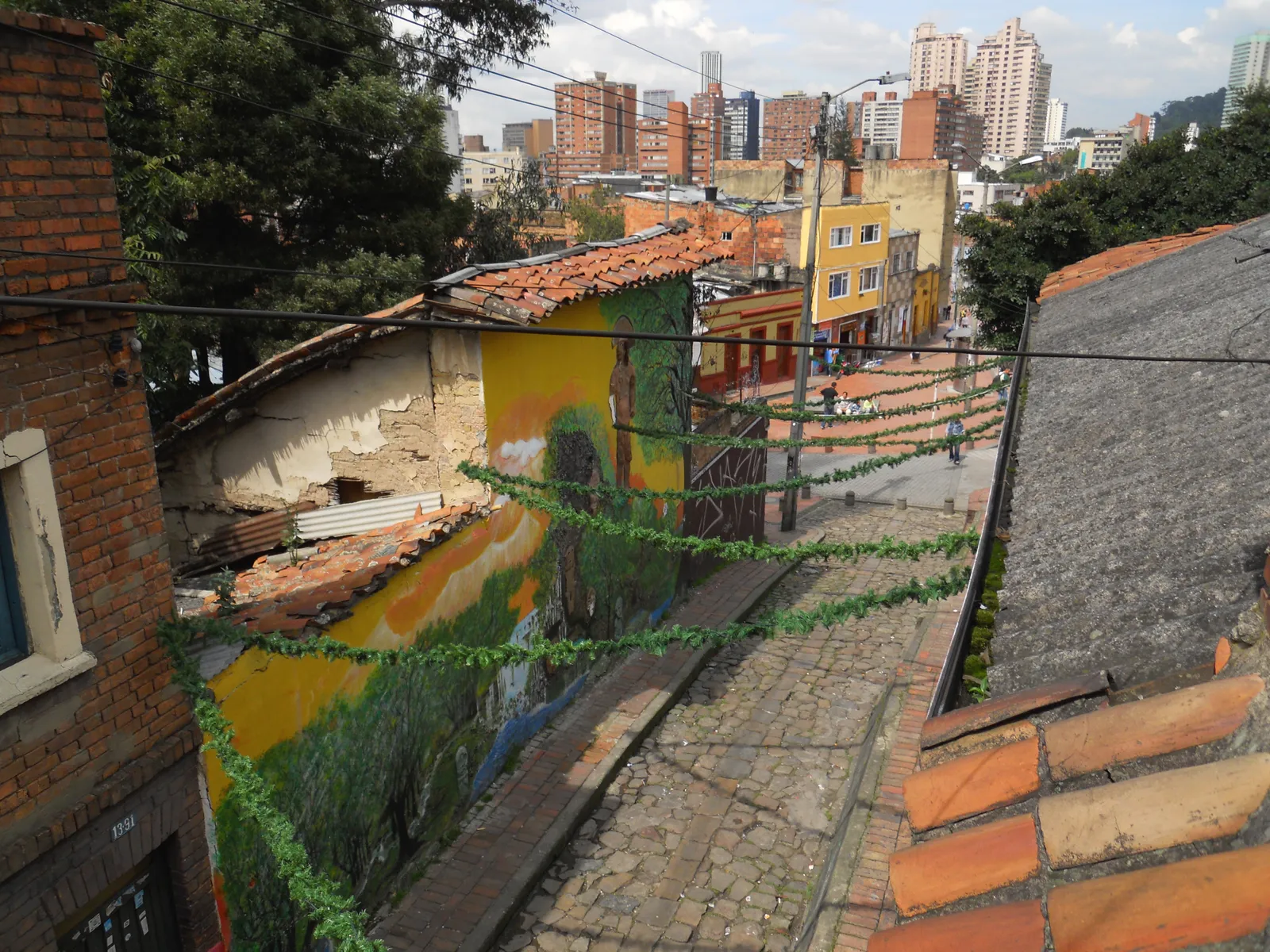
Low houses in strong colours line both sides, with murals over most of the available wall, and the businesses in them sell chicha, the fermented maize drink the Muisca were making here long before the Spanish arrived, along with fritanga by the plate. It is busiest in the late afternoon and on weekends. Looking downhill from the top of it, the lane’s tiled roofs stack up directly against the glass towers of the modern centre, four hundred years of the city in one frame.
No bus from Las Aguas reaches El Dorado without a change
The K86, the one service that runs to the terminal without a transfer, boards at Museo Nacional station on Carrera Séptima, roughly a kilometre and a half north; otherwise it is a transfer onto the Calle 26 corridor, free within 110 minutes of tapping in, at 3,550 pesos on a TuLlave card. Allow an hour for the ride itself in the evening peak.
Everything on this side of the centre involves the slope in one direction or the other, which is the argument for dropping a suitcase before you start. If you would rather spend the time on collections than on cobbles, the museums are downhill and west: the central Bogotá guide covers the gold, the Botero donation and Plaza de Bolívar, none of which need a climb.
Frequently asked questions
What should I do during a layover near Las Aguas station in Bogotá?
Walk up to the Quinta de Bolívar on Calle 21, the country house the new republic handed Simón Bolívar in 1820, which charges 3,000 pesos and nothing at all on Sundays. Then drop south to the Chorro de Quevedo, the small square where the Spanish are said to have founded the city in 1538, and take the cobbled Calle del Embudo running off it. Four hours covers all three at a walking pace with time to sit down. The house museum shuts on Mondays, so a Monday layover is the square and the lane only.
What is the chicha they sell on the Calle del Embudo?
A fermented maize drink the Muisca were making on this ground long before the Spanish arrived, and the lane running off the Chorro de Quevedo is where central Bogotá still sells it, usually alongside plates of fritanga. It is mildly alcoholic and served by the cup rather than the bottle. The stalls get going in the afternoon and the weekend crowd is student-heavy, so a late-morning visit gets you the street without the queue, which is the version that fits a layover.
Can you get to Monserrate from here on foot?
The lower station for the funicular and the cable car sits a few hundred metres further up the same road as the Quinta de Bolívar, which makes this the closest any part of the old town gets to it. A round-trip ticket bought ahead saves the queue at the booth. The walking path up the mountain is a different proposition: 2.4 kilometres, 600 metres of climb, and anywhere from 50 minutes to three hours.
Is the walk up from the station steep?
Steeper than anything else in the old town, yes. Las Aguas is the last stop before the ground turns into the mountain, and La Candelaria's lanes rise the whole way east from it: the Calle del Embudo is cobbled and stepped in places, and the streets around it are laid in river stone. At 2,640 metres that registers more than the gradient suggests. The flat alternative is to stay on the avenue below and work west instead.