Bogotá's Museo Nacional Station: Colpatria
Part of the full Bogotá Layover: La Candelaria From BOG
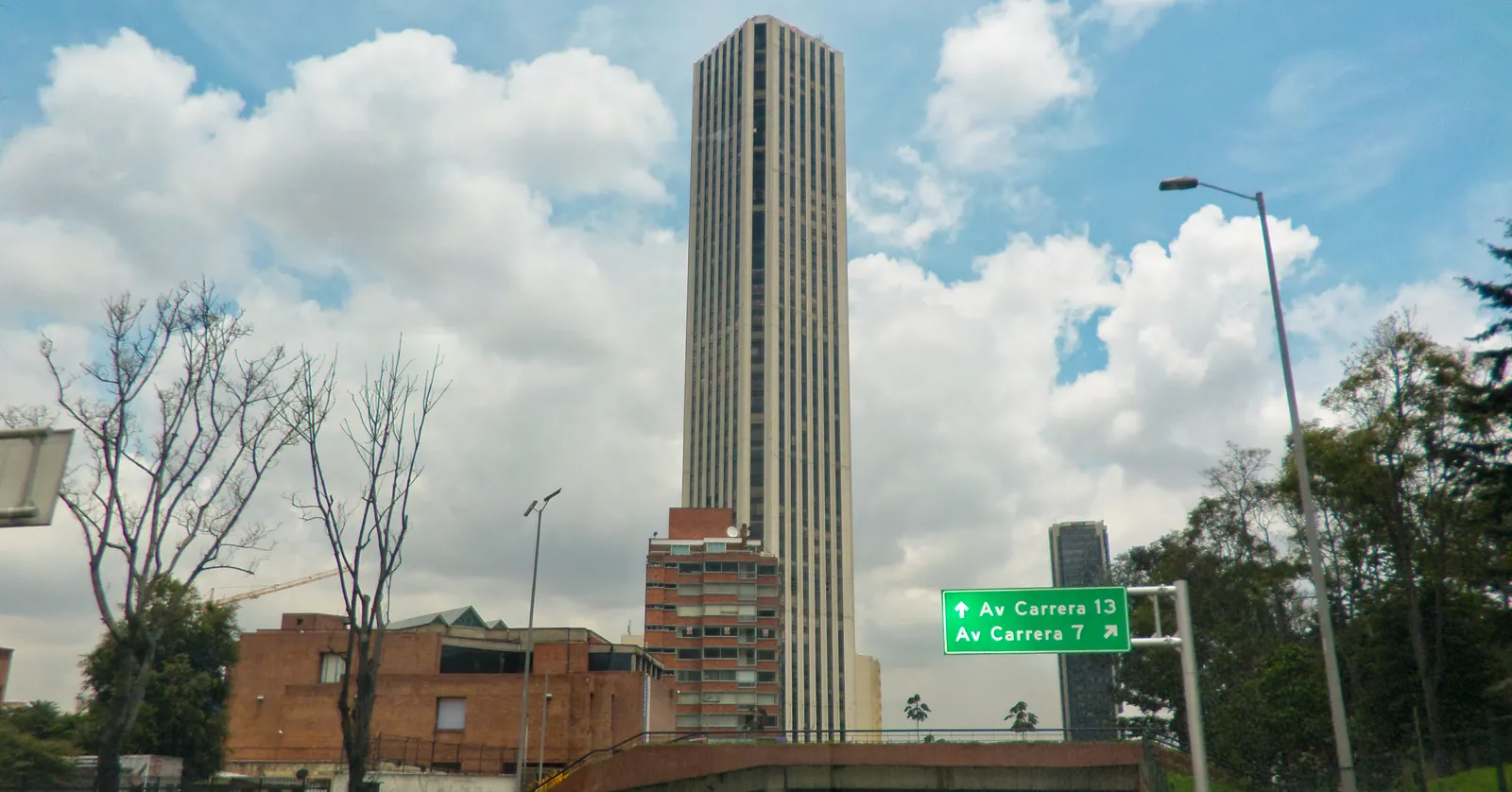
Bogotá’s Museo Nacional station sits at the top of Carrera Séptima where the old town gives way to office towers, with the Torre Colpatria’s public viewing deck, the brick front of the Santamaría bullring and the wax palms of the Parque de la Independencia all within a few blocks of it.
Torre Colpatria’s viewing deck opens only at weekends
Torre Colpatria rises 196 metres over Carrera Séptima across more than fifty floors, and for years it was the tallest building in Colombia. The deck at the top is open to the public, and unlike the view from Monserrate it puts you directly over the centre rather than looking at it from the mountainside.
The catch is the schedule. It runs Friday from 5pm, Saturday from midday, and Sunday and public holidays from late morning, closing somewhere between 5pm and 9pm depending on which day you turn up. Published prices sit between roughly 12,000 and 18,000 pesos, sold at the building rather than in advance. From Monday to Thursday it is an office block and nothing more, so a midweek layover here means planning around its absence rather than around its view.
The one bus to El Dorado without a change boards here
The K86 starts and ends at this station, which makes it the only point in the centre with a direct connection to El Dorado International Airport. The ride takes 45 minutes to an hour depending on the peak, the fare is 3,550 pesos in 2026, and there is no cash option: a TuLlave card is the only way to tap in, sold at station kiosks and at a desk in the terminal. Service runs 5:30am to 11pm on weekdays, from 6am on Saturdays, and 7am to 10pm on Sundays and holidays.
South of the station Carrera Séptima closes to cars and runs as a pedestrian corridor all the way down to Plaza de Bolívar, about two kilometres of buskers and food carts, which is the walk most people do in the opposite direction from here.
The neo-Mudéjar brick arch of the Santamaría bullring
The Santamaría went up between 1928 and 1931 on land in the San Diego sector donated by Ignacio Sanz de Santamaría, to designs by Adonai Martínez and Eduardo Lazcano, and it was the first reinforced-concrete structure in the city. It opened on 8 February 1931 with the president in attendance.
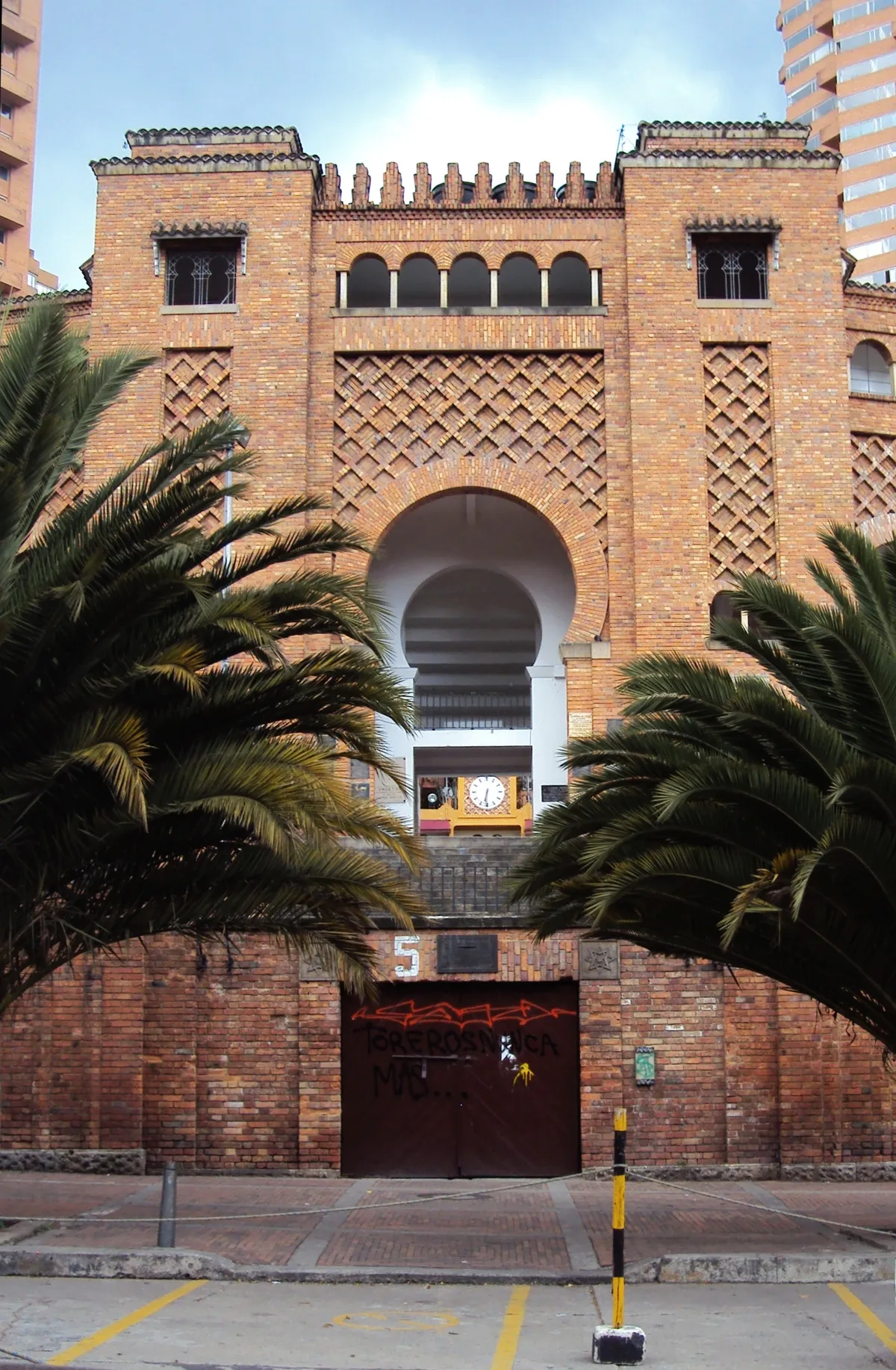
The face it shows the street came later: in the 1940s the Spanish architect Santiago Mora wrapped it in a neo-Mudéjar skin of horseshoe arches, crenellations and brick laid in open diamond lattices, the geometric patterning Moorish builders used in Spain. Colombia declared it a national monument in 1984. Bullfighting stopped here in 2012 when the city closed the ring, and it has operated mostly as a concert and events venue since, so what you can count on is the architecture rather than the programme.
The 1910 wax palms in the Parque de la Independencia
The Parque de la Independencia was laid out for the Industrial and Agricultural Exhibition of 1910, staged for the centenary of Colombia’s declaration of independence, on ground that had opened three years earlier under a different name. The design copied late nineteenth-century Parisian parks, and much of that layout is still legible in the paths.
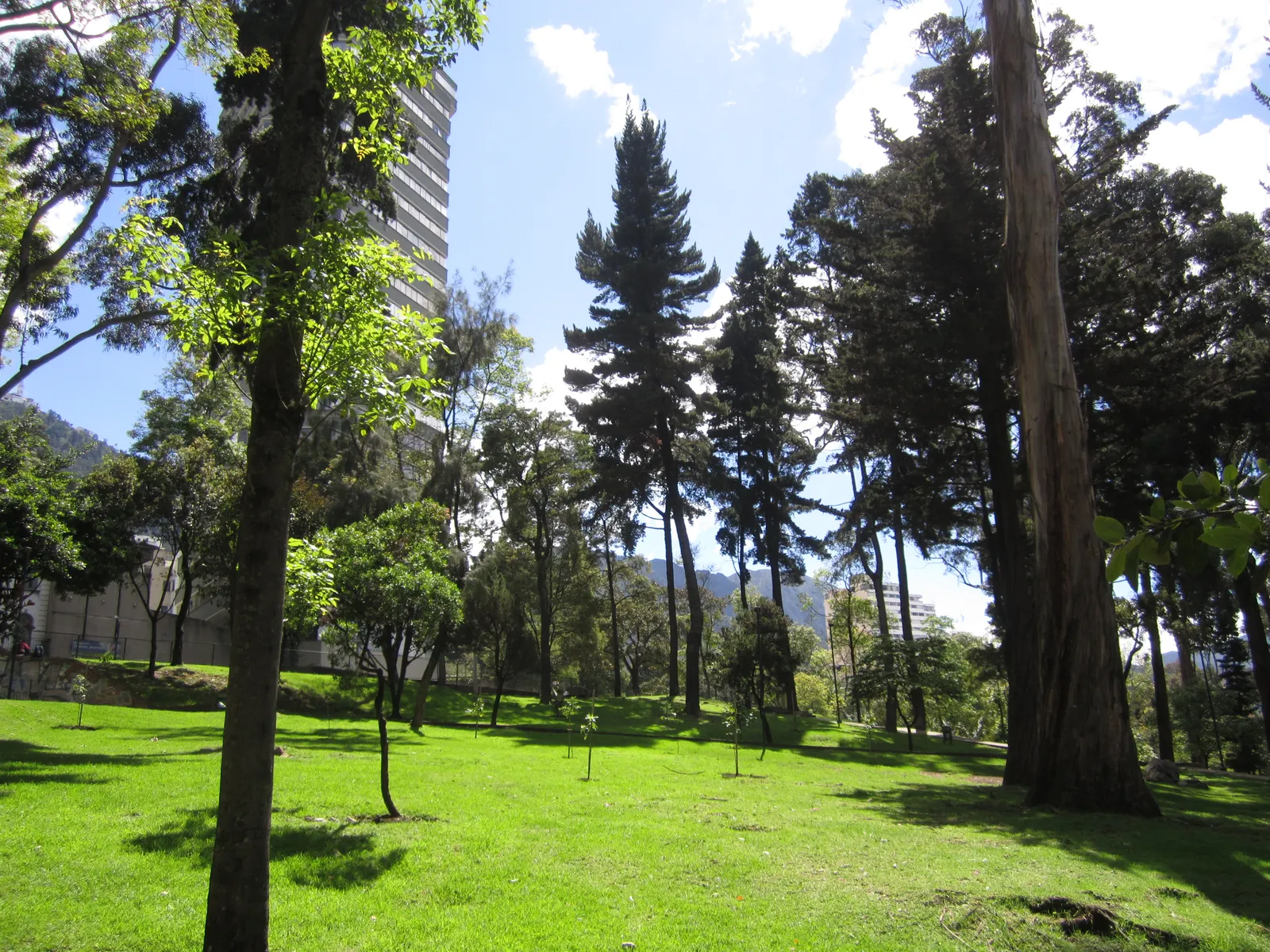
Wax palms were planted for the centenary as the national tree, and a stretch of them was cut down decades later when Avenida 26 was driven through. Twenty-one heritage trees survive in the park, most of them those palms, and the species is protected now. It is a small park hemmed in by traffic on three sides, but the dark conifers, the palms and the mountains rising directly behind them make it worth the ten minutes. Most people who stop here are mid-transfer rather than staying nearby, which means walking these blocks with everything they are carrying and no room to put it down.
Frequently asked questions
What should I do during a layover near Museo Nacional station in Bogotá?
If it is a Friday evening, a Saturday or a Sunday, go up the Torre Colpatria: the viewing deck on a 196-metre tower is the only public high vantage point in this part of the city and it opens on those days only. The Santamaría bullring two blocks away is worth seeing for its brick front alone, a lattice-work neo-Mudéjar facade grafted onto the city's first reinforced-concrete building. The Parque de la Independencia between them still has the wax palms planted for the 1910 centenary. Three hours covers all three; on a weekday, drop the tower and you are down to about ninety minutes.
When is Torre Colpatria's viewing deck actually open?
Weekends only, and not all day: Friday from 5pm, Saturday from midday and Sunday and public holidays from late morning, with closing between 5pm and 9pm depending on the day. Published ticket prices vary between roughly 12,000 and 18,000 pesos, bought at the building rather than online, so check the board in the lobby before you plan around it. Monday to Thursday the tower is an office building and the deck is shut.
Can you still see a bullfight at the Santamaría?
Not reliably, and that is not really why it is worth walking past. The ring was closed to bullfighting by the city in 2012 and has spent much of the time since running as a concert and events venue under the name Plaza Cultural la Santamaría, with the schedule shifting from one administration to the next. The building itself is the constant: inaugurated on 8 February 1931 and declared a national monument in 1984.
Is this a good place to wait if you arrive on the airport bus?
It is the natural one, because the K86 from El Dorado ends here rather than in the old town, so you step off with everything you are carrying and no hotel to drop it at. The walk from this station down to Plaza de Bolívar is about two kilometres along a pedestrianised stretch of Carrera Séptima, or around half an hour. If that is the trip you actually want, the central Bogotá itinerary covers what is at the other end of it.