Bogotá's Salitre Station: Simón Bolívar Park
Part of the full Bogotá Layover: La Candelaria From BOG
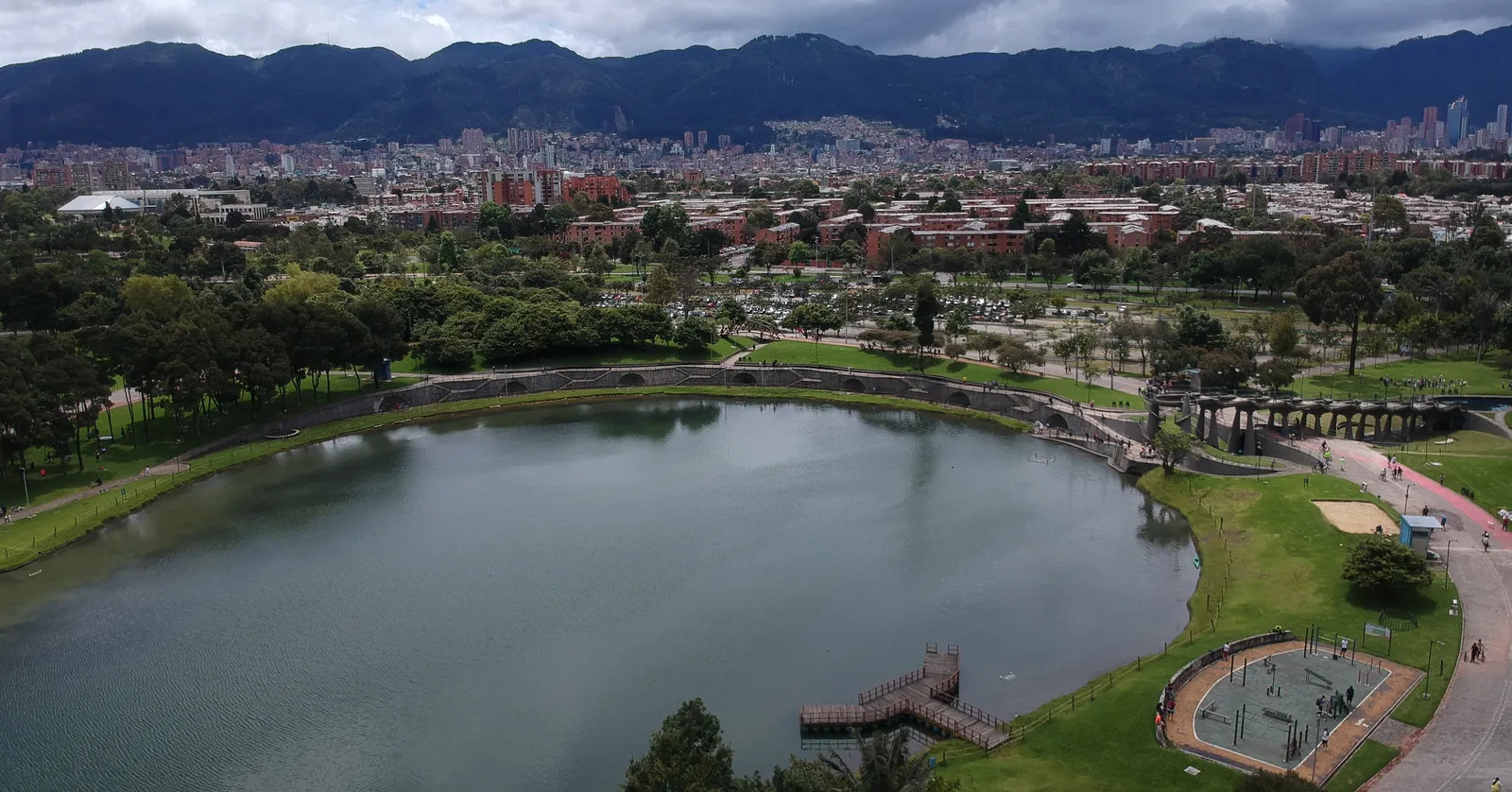
North of Bogotá’s Salitre El Greco station, Simón Bolívar park spreads across nearly four square kilometres of flat ground around a boating lake, with the city’s botanical garden and the circular brick Virgilio Barco library at its edges.
The Tropicario’s glass domes at the botanical garden
Bogotá’s botanical garden is named for José Celestino Mutis, the botanist who ran the Royal Botanical Expedition through New Granada in the eighteenth century, and it sits a little under two kilometres north of Avenida El Dorado. The collections are organised by Colombian ecosystem, which for a city at 2,640 metres means a good deal of high-altitude páramo planting alongside the tropical material.
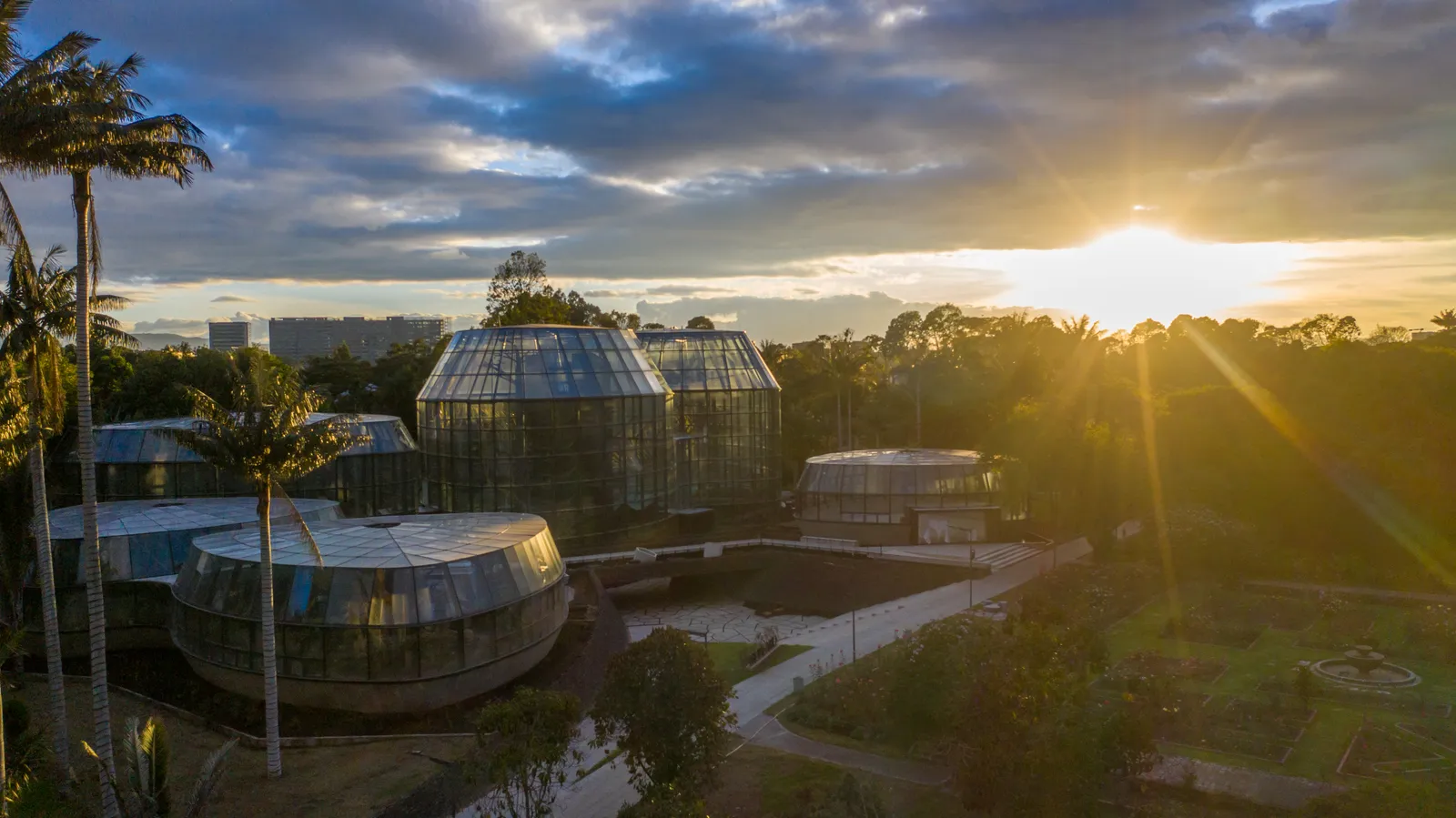
The Tropicario is the part worth the ticket: a set of linked glass domes holding the tropical collections, and since mid-2026 it comes inside the single entry price rather than needing a second one. Foreigners pay 38,000 pesos and Colombian nationals 16,000. Doors open at 8am Tuesday to Friday and 9am at weekends and on holidays, closing at 5pm, and the whole garden shuts on Mondays for maintenance.
Rogelio Salmona’s circular brick library in the park
The Biblioteca Pública Virgilio Barco opened on 21 December 2001 on the eastern side of Simón Bolívar park, carrying the name of the Colombian president who left office in 1990. Rogelio Salmona designed it: three storeys of Colombian brick laid in a curve, reached by ramps that run both inside and outside the building, with shallow channels of water carried around the whole perimeter.
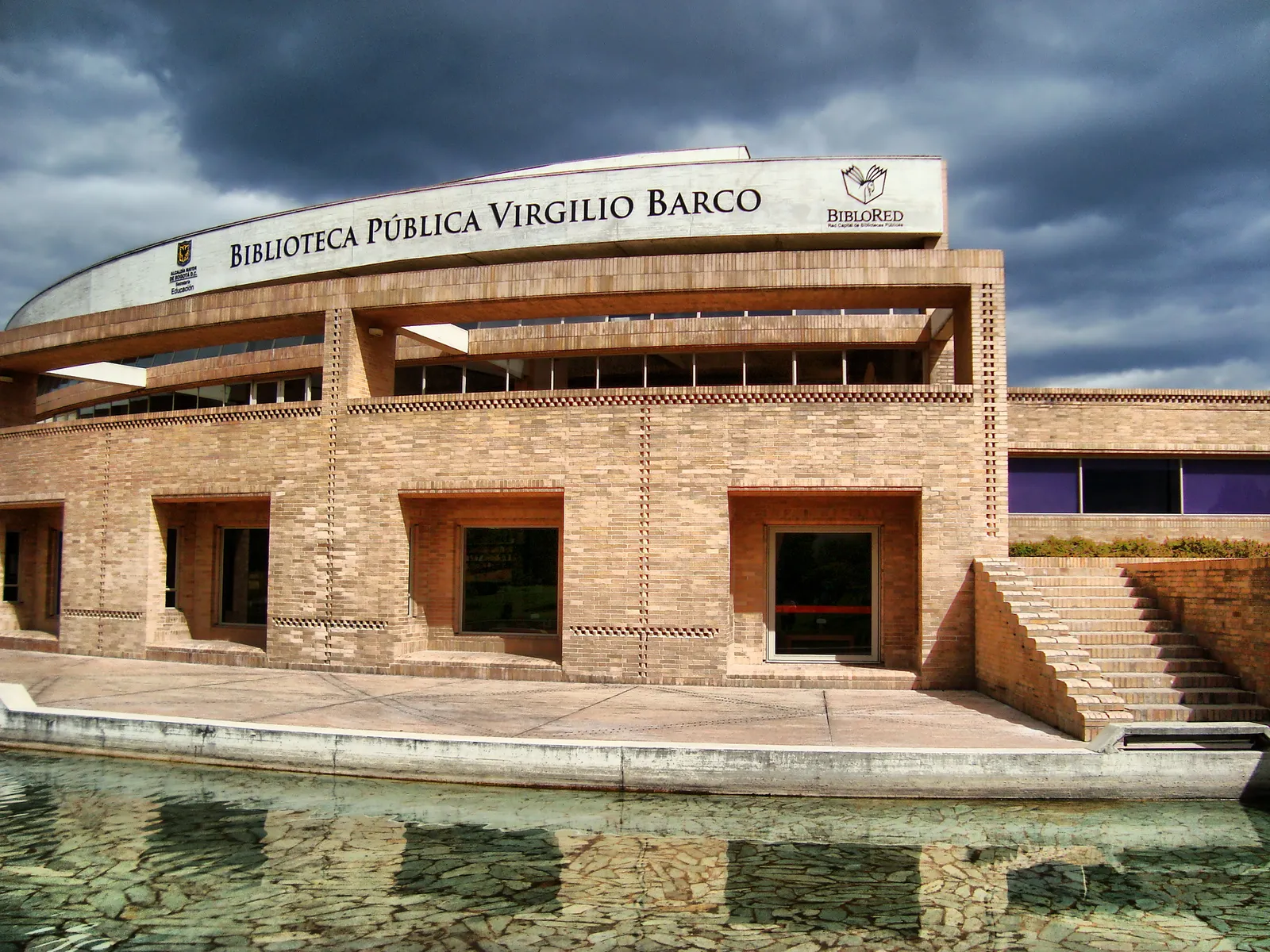
Up on the roof the paths run between angled brick volumes cut with lines that point at the sky, a reference to the amphorae of the pre-Columbian Quimbaya. Nobody checks a ticket at the door. It is a working public library rather than a monument, so there are schoolchildren in it on a weekday afternoon, and the reading rooms look out over the water and the grass.
No transfer needed between this station and El Dorado
Salitre El Greco sits on the same trunk corridor as the airport, Avenida El Dorado, which means the westbound trunk services and the K86 both run from here to the terminal without a change. Reckon on twenty to twenty-five minutes outside the peaks, and a fare of 3,550 pesos in 2026 on a TuLlave card, since no driver on the system takes cash.
The station’s only street access is the pedestrian bridge at Carrera 66, so every arrival and departure here goes up and over the avenue rather than straight across it. If the whole point of your stop is museums rather than lawns, take the eastbound bus instead: the central Bogotá itinerary covers the gold collection, the Botero rooms and Plaza de Bolívar, all of them in the opposite direction and all of them uphill.
Rock al Parque and the pedal boats on the lake
Simón Bolívar park was named in 1979 for the bicentenary of Bolívar’s birth, though work on the ground started in 1966, and it now runs to nearly four square kilometres between Avenida 68 and the streets east of it. The boating lake is the middle of it, with pedal boats for hire and a flat circuit around the water that takes about twenty minutes at a walk.
The events plaza on the same ground holds up to 140,000 people and is where Rock al Parque happens, along with most of the large concerts that come through the city; Metallica played to something like 100,000 here. On an ordinary weekday it is an empty expanse of paving, which is its own kind of strange. The gates funnel everyone through a handful of entrances on event days and on Sundays, and that is the one time a suitcase turns the walk in from the pavement into a slow shuffle.
Frequently asked questions
What should I do during a layover near Salitre El Greco station in Bogotá?
Walk north to Simón Bolívar park, about fifteen minutes from the station, and take the paths around the boating lake, which is the middle of nearly four square kilometres of open ground. The Virgilio Barco library on the park's eastern side is free and worth going into for the building itself, a circular brick thing by Rogelio Salmona with water running around it. The botanical garden is a little under two kilometres north and is the one stop that charges, so it is the piece to drop if four hours turns into three. None of it involves a climb, which is the point of coming here instead of the old town.
How much does the botanical garden cost, and is it worth it?
Foreign visitors pay 38,000 pesos against 16,000 for Colombian nationals, and both now include the Tropicario, the domed glasshouse complex that used to be a separate ticket. Whether that lands as fair depends on how much you want to see the Tropicario specifically, since the outdoor collections alone are pleasant rather than exceptional. It opens Tuesday to Friday from 8am to 5pm and from 9am at weekends and on holidays, and closes on Mondays for maintenance, which catches a lot of people out.
How far is the walk from the station into the park?
The station sits on Avenida El Dorado between carreras 66 and 66C, and you leave it by the pedestrian bridge at Carrera 66. From there the nearest park entrance is around 1.3 kilometres, a fifteen to eighteen minute walk on flat pavement, and the lake is a few minutes further in. The library adds roughly another kilometre east across the park. Add it up and a full loop of all three stops is around six kilometres on foot, which is why four hours is the sensible floor here.
Is Simón Bolívar park a good stop with kids?
Better than most of central Bogotá, yes. The paths are flat and wide enough for a stroller, pedal boats go out on the lake, and the library has its own children's floor with no ticket needed. The sports complex next door has public pools. The caveat is Sunday and event days, when the events plaza can take 140,000 people and the gates back everyone up, so a weekday morning is calmer by a wide margin.