Toronto Layover: CN Tower and Old Town, YYZ
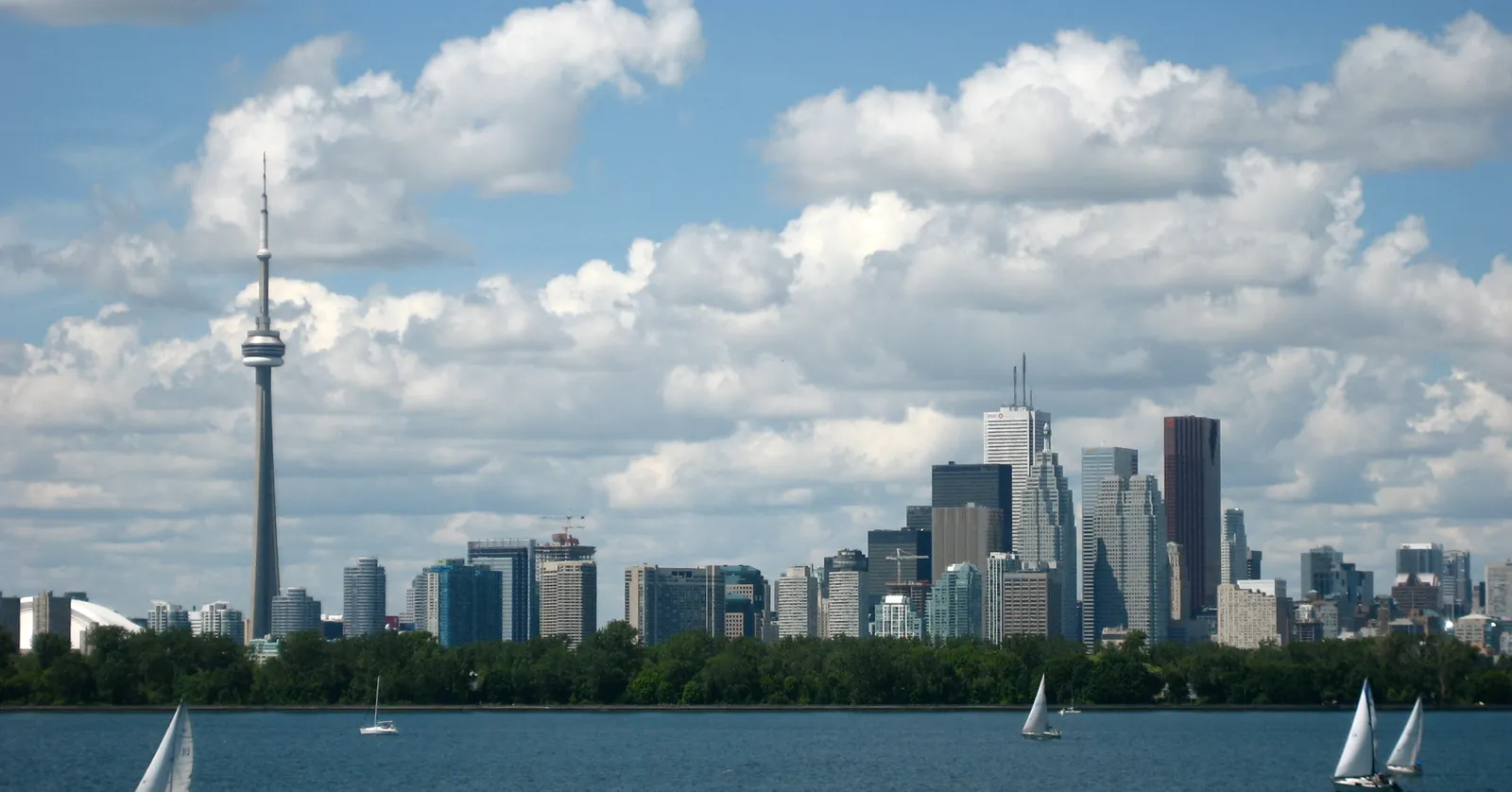
Central Toronto puts a 553-metre tower with a glass floor near the top, an aquarium holding 5.7 million litres of water, a market hall that served as the city’s town hall until 1899 and a whole quarter of Victorian distillery buildings within about two kilometres of each other.
The glass floor 342 metres up the CN Tower
The CN Tower is a concrete broadcast and observation tower standing over the rail corridor at the south edge of downtown Toronto, 553.3 metres to the tip of its mast, finished in 1976. It held the record for the tallest free-standing structure in the world for 32 years, until the Burj Khalifa passed it in 2007.
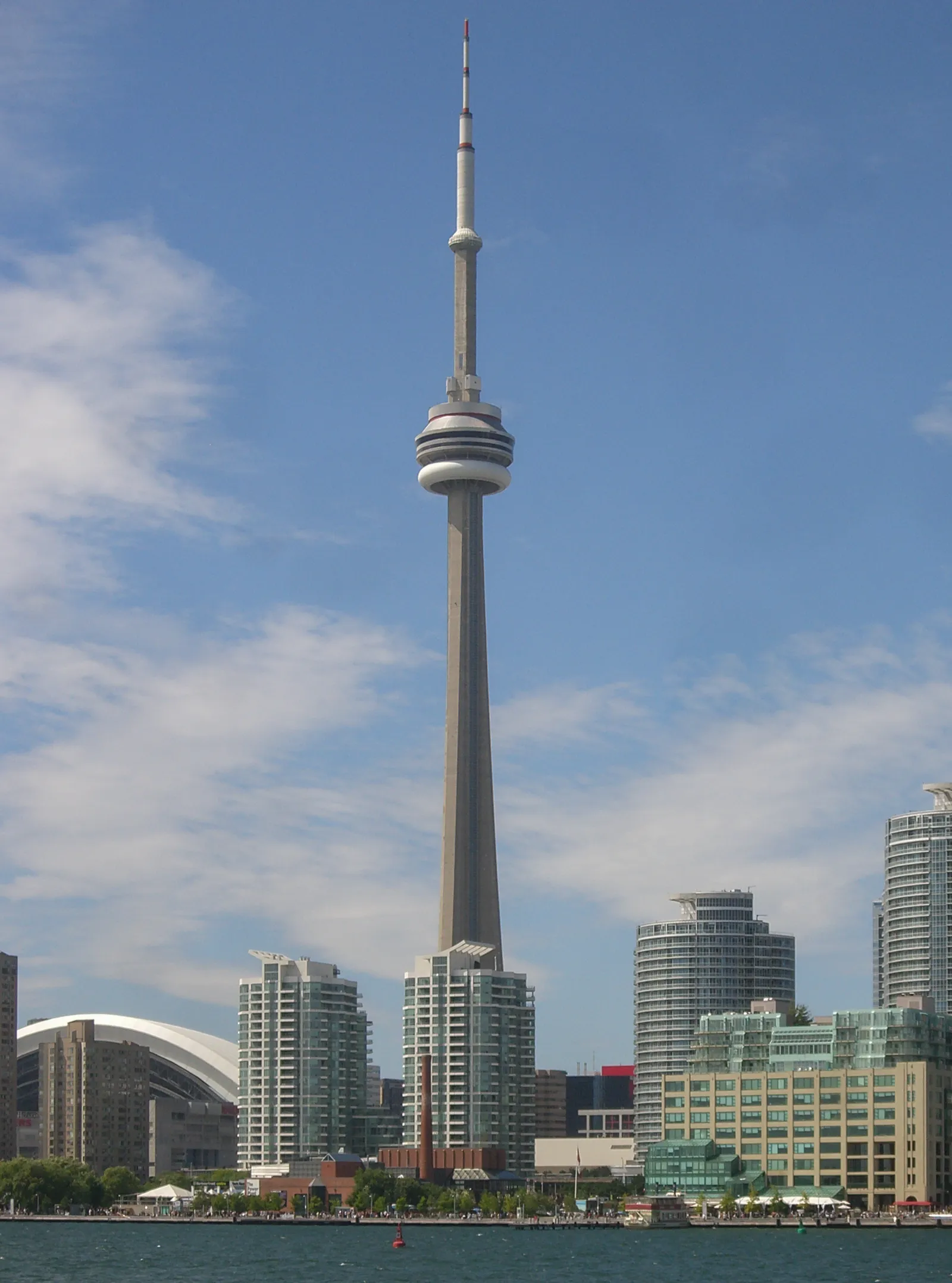
What the ticket buys is the pod. The lower observation level sits at 342 metres and a section of its floor is glass, so you can stand on it and look straight down at the tracks and the street; the main deck is four metres above that, glazed from floor to ceiling on all sides. Adult admission starts around CA$45, a couple of dollars less booked online, and every ticket carries a timed entry slot, so booking the slot before you land through a tours and activities platform saves the walk-up queue. The doors run daily from 9am, with the last lift up at 10pm. Security screens every bag at the base and nothing larger than 53 by 23 by 38 centimetres comes through the door, and there are no lockers inside.
The shark tunnel at Ripley’s Aquarium runs on a moving walkway
Ripley’s Aquarium of Canada opened at 288 Bremner Boulevard in October 2013 and holds 5.7 million litres of water across its tanks. The one people come for is the Dangerous Lagoon: a glass tunnel driven through the largest tank with a conveyor belt set into the floor, so you travel under sand tiger sharks, sawfish and green sea turtles without taking a step.
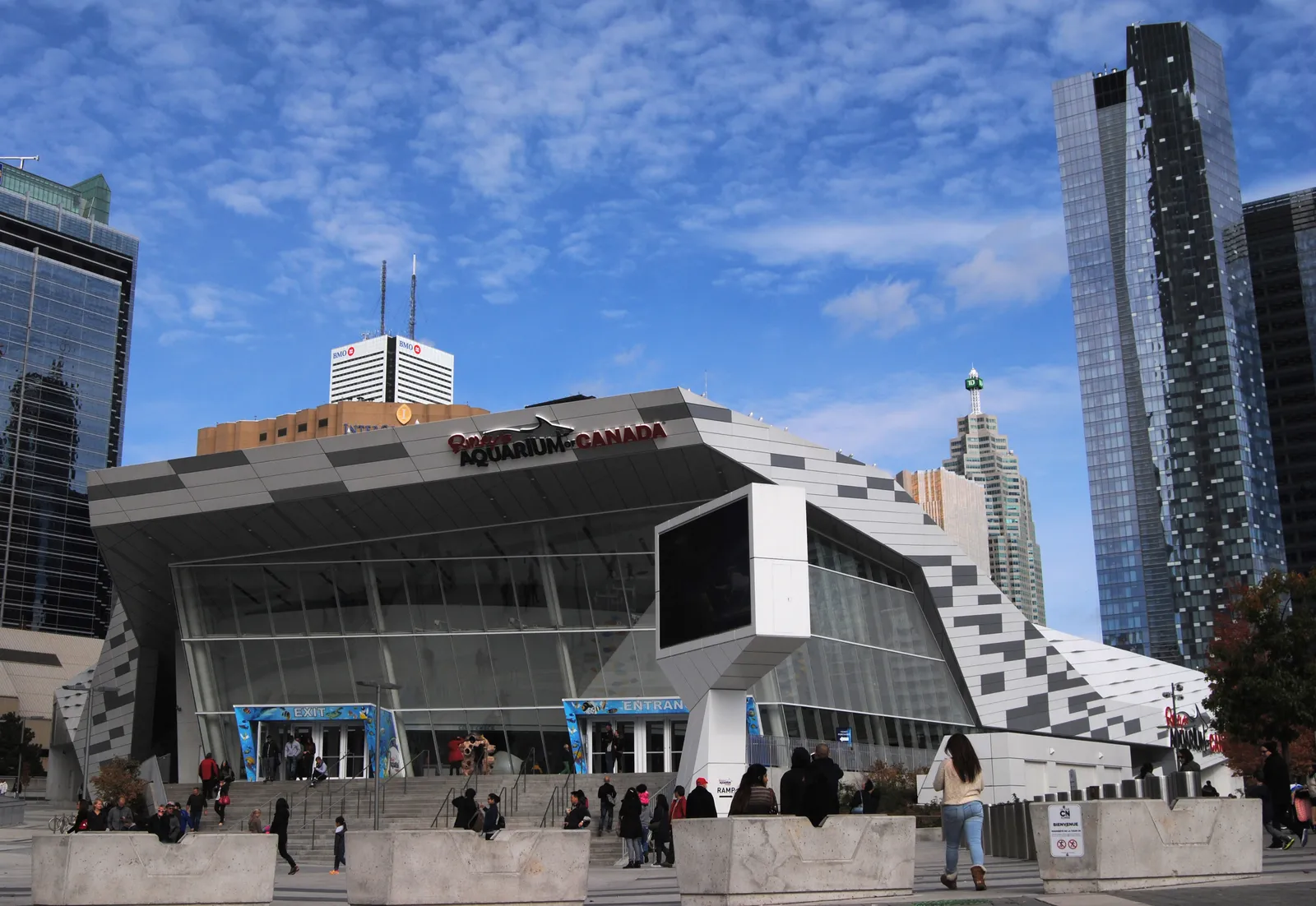
Prices move with the day and the hour here, so a weekday afternoon costs noticeably less than a Saturday one, and a dated entry ticket bought in advance through a tours and activities platform is both cheaper and faster than the door. Doors open at 9am; an evening session starts at 5pm with the last entry just before 8pm, which is the one that suits a flight later the same night.
St. Lawrence Market’s hall was Toronto’s city hall until 1899
Front Street East at Jarvis carries a long red-brick hall with ST LAWRENCE MARKET spelled out along its roofline. The building began in 1845 as Toronto’s City Hall, the council sat in it until the city moved up to Queen and Bay in 1899, and a section of that original structure was built into the replacement that went up in 1904.
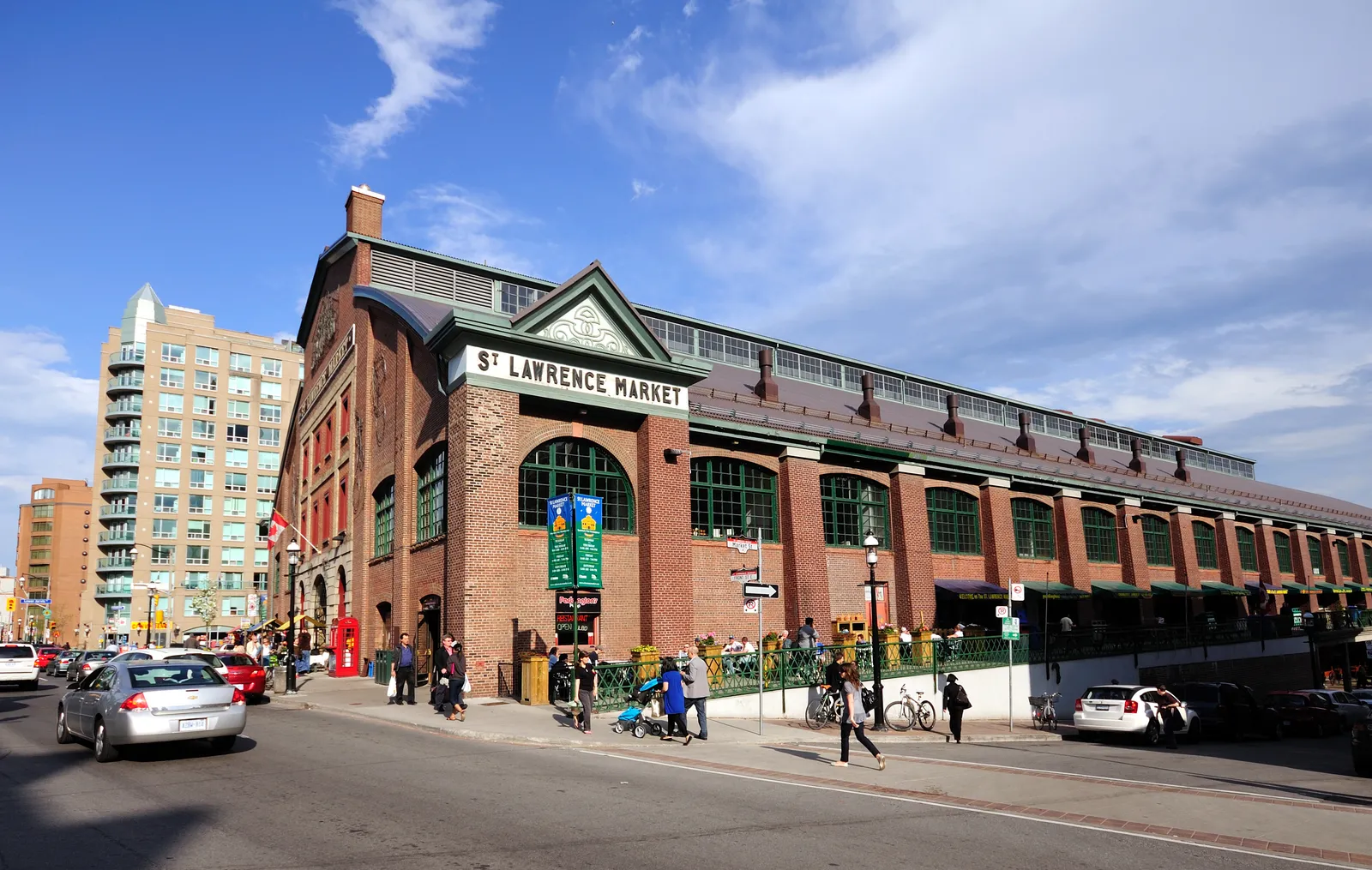
The old council chamber upstairs is now the Market Gallery, hanging paintings, photographs and documents out of the city’s own collection. The floor below is a working food market: butchers, fishmongers, cheese counters, and the peameal bacon sandwich, cured pork loin rolled in cornmeal and griddled, that Toronto treats as its own invention. Walking in costs nothing. The south hall trades Tuesday to Friday 9am to 7pm, Saturday from 7am to 5pm and Sunday 10am to 5pm, and shuts on Mondays. A few minutes west along Front Street, Berczy Park has a cast-iron fountain ringed by 27 life-size dogs, every one of them staring up at a gilded bone on top of it; a single cat sits with its back turned, watching two birds on a lamppost instead. It went in when the park was rebuilt in 2017 and is a better two minutes than its size suggests.
The Distillery District’s forty Victorian industrial buildings
Gooderham and Worts began milling and distilling east of the old town in 1832 and grew into the largest distillery in the British Empire. Thirteen acres of the works survive: more than forty heritage buildings along ten brick-paved lanes, designated a national historic site in 1988 and reopened to the public as a pedestrian quarter on 22 May 2003.
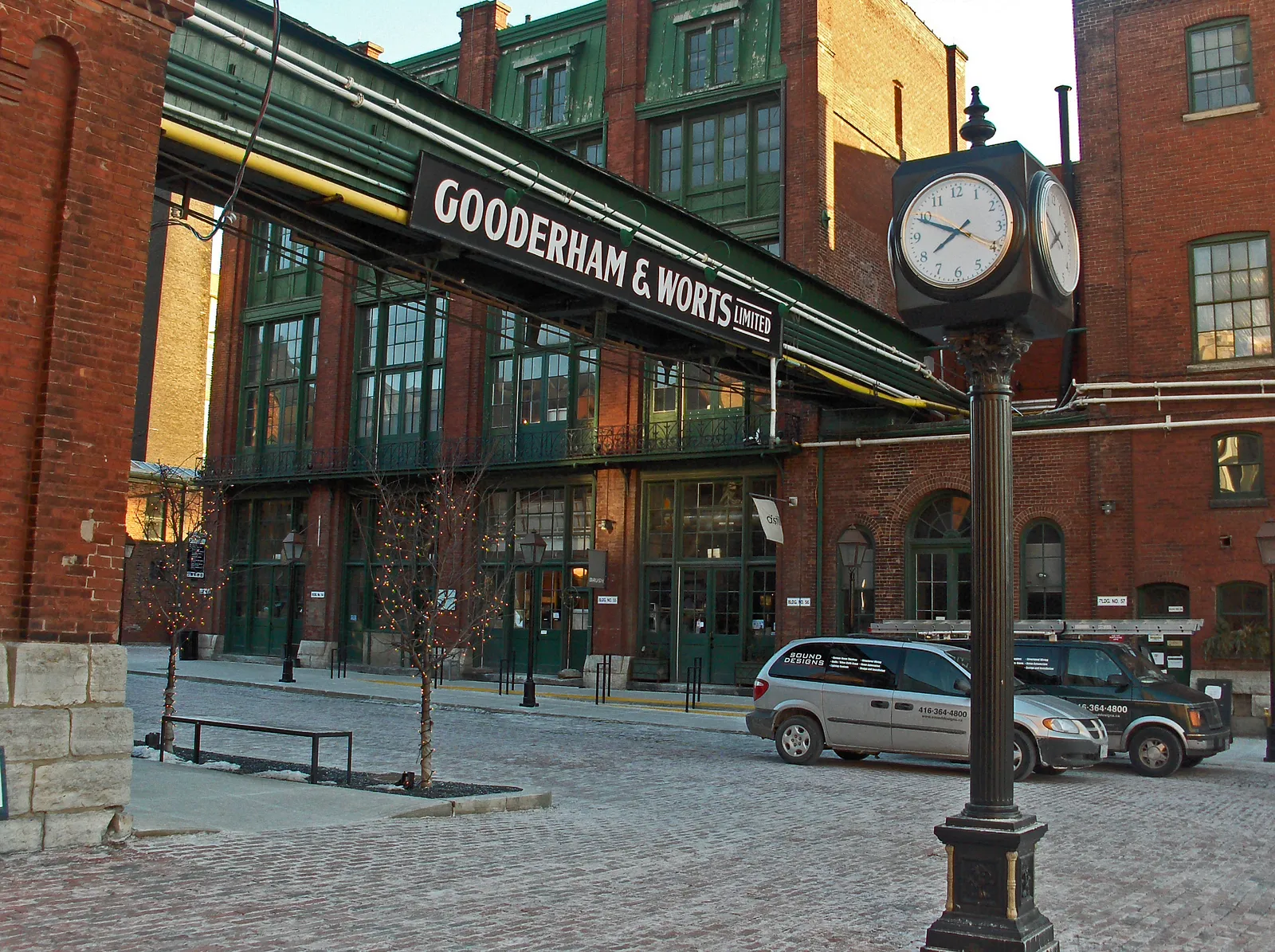
Cars are kept to the outer edges, so the lanes between the brick warehouses belong to people on foot and on bikes. The buildings now hold galleries, coffee roasters, small theatres and distillers who have moved back in, and none of it charges anything to walk through. The place is at its best on a clear evening, when the lamps come on between the warehouse walls and the lanes are quieter than the daytime market crowd.
A fifteen-minute ferry crossing to the Toronto Islands
The Jack Layton Ferry Terminal sits at the foot of Bay Street on the harbour, and three routes leave from it: Centre Island, Ward’s Island and Hanlan’s Point. All three run on the summer timetable from mid-May to mid-September, and through the winter the Ward’s Island boat is the one that keeps going. A ticket is CA$9.57 for an adult, CA$6.15 for students and seniors, CA$4.51 under 14 and free under two, and the price covers the trip back.
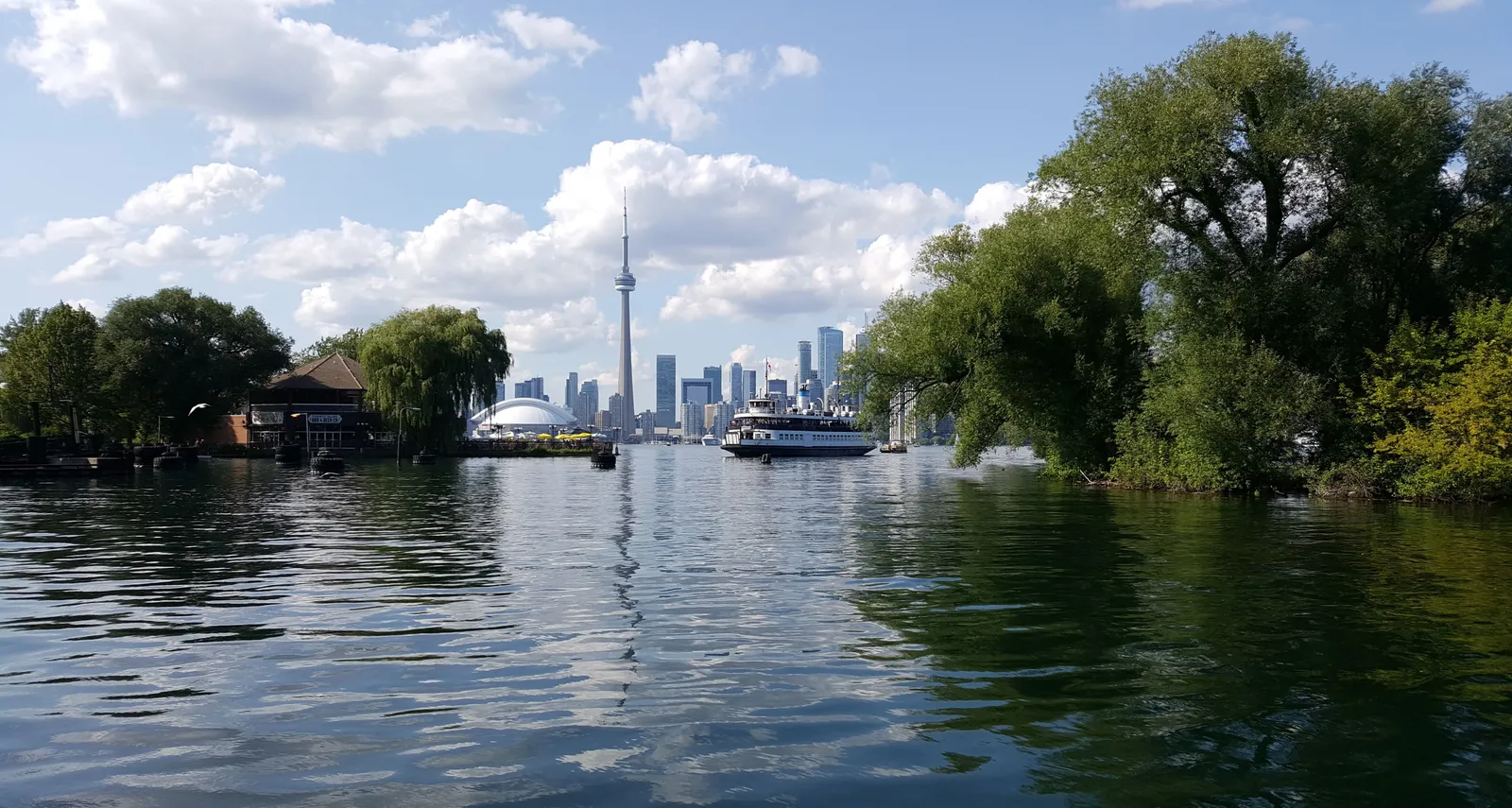
With five hours or more to spend this is the addition worth making. The islands are flat, wooded and almost entirely car-free, laid out around lagoons and willow-lined channels, with beaches on the lake side and a boardwalk running between them. The view back across the harbour is the flat front-on one most photographs of Toronto are taken from, and it costs nothing beyond the fare. Check the return departure before you settle anywhere, because the timetable thins out sharply once the afternoon boats stop.
Trains to Pearson leave Union Station every fifteen minutes
The UP Express covers Union Station to Toronto Pearson International Airport (YYZ) in 25 to 28 minutes, calling at Bloor, Mount Dennis and Weston on the way, seven days a week from roughly 5am to 1am. An adult one-way ticket is CA$12.35, or CA$9.25 tapped with a Presto card, and children under 12 travel free.
That is the time on the train. The platform is at Terminal 1, so Terminal 3 needs the free Terminal Link train at the far end, and with the walk through Union and a wait for the next departure the honest door-to-door figure from central Toronto is closer to 45 minutes. For an international departure, leave your last stop about three hours before the flight. The cheap alternative is the 900 Airport Express bus at CA$3.30, every ten minutes or better from 6am to 1am Monday to Saturday and from 8am on Sundays, but it starts from Kipling station at the western end of Line 2, so the subway leg out there usually eats the saving. Union Station is also where the market, the tower and the ferry terminal all converge, which is the argument for leaving your suitcase at a storage point around Front Street rather than carrying it back across town. If this stop is one end of a longer hop across the country, the Vancouver layover guide covers the other.
Frequently asked questions
What should I do during a layover in Toronto?
Keep to the strip between the waterfront and Front Street and you can do most of it on foot. The glass floor at 342 metres in the CN Tower and the tunnel through the shark tank at the aquarium next door are the two paid stops, and both sell timed tickets, so book them before you arrive rather than queueing twice. St. Lawrence Market and the Distillery District cost nothing and need no planning beyond the market's Monday closure. With five hours or more, the ferry out to the Toronto Islands is the addition worth making; on a tighter stop it is the first thing to drop.
Can you cross central Toronto without going outside?
Most of it, yes, which matters between December and March. The PATH is a network of more than 30 kilometres of underground walkway linking Union Station to the Eaton Centre and six subway stations, and Guinness World Records listed it as the largest underground shopping complex in the world in 2016. Above ground, the SkyWalk has connected Union Station to the CN Tower and the Rogers Centre under a curved glass roof since 1989, about a ten-minute walk. St. Lawrence Market and the Distillery District are the two stops that need real coats.
What is shut in Toronto on a Monday?
The south hall at St. Lawrence Market, which is the one that holds the permanent food stalls, closes every Monday, and so does the Art Gallery of Ontario. The CN Tower, Ripley's Aquarium and the Distillery District all open seven days a week, and the Royal Ontario Museum runs daily as well. If your free afternoon falls on a Monday, run the tower and the aquarium first and put the Distillery District where the market would have gone.
Do the Toronto Islands ferries run outside the summer?
Yes. The city runs the boats from the Jack Layton Ferry Terminal year round, though only the Ward's Island route keeps going through the winter. All three routes, Centre Island, Ward's Island and Hanlan's Point, run on the summer timetable from mid-May to mid-September, which is the stretch with frequent enough departures to make a short visit worth it. The crossing is about fifteen minutes each way whichever route you take.
Is the train or the bus better for getting back to Pearson?
The train, unless you are already on Line 2. The UP Express leaves Union Station every fifteen minutes from about 5am to 1am and reaches Toronto Pearson International Airport (YYZ) in 25 to 28 minutes, calling at Bloor, Mount Dennis and Weston, for CA$12.35 one way or CA$9.25 tapped with a Presto card. The 900 Airport Express bus costs CA$3.30 and takes 20 to 25 minutes, but it starts at Kipling station at the western end of Line 2, so the subway ride out there usually cancels the saving in time. Both stop at Terminal 1, and Terminal 3 needs the free Terminal Link train from there.