Toronto Layover: Kensington Market Shops
Part of the full Toronto Layover: CN Tower and Old Town, YYZ
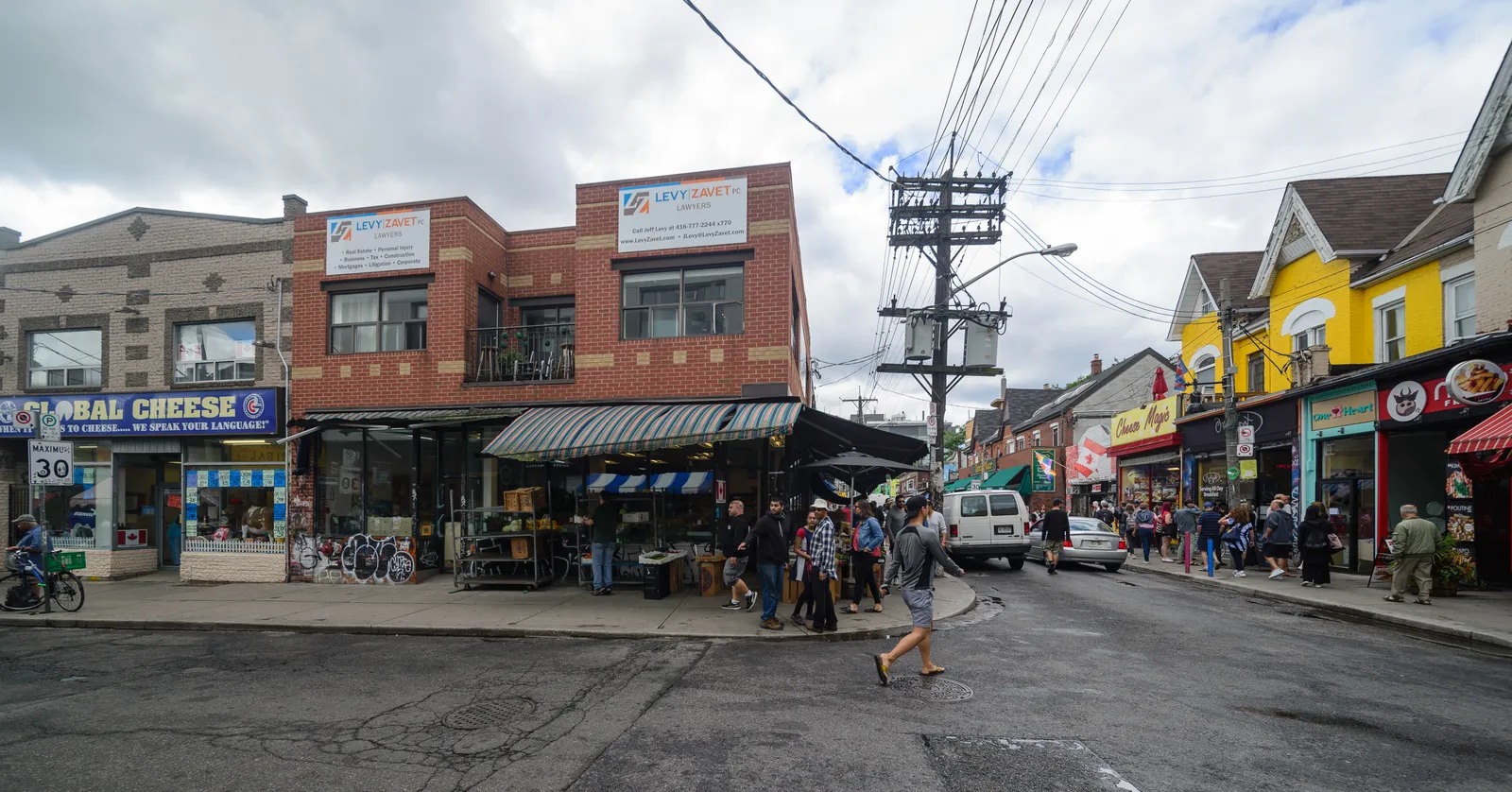
Kensington Market is a few blocks of Victorian houses west of Toronto’s Chinatown with their ground floors cut open into produce shops, cheese counters and vintage stores, and on the last Sunday of each summer month the streets belong to people rather than cars.
Kensington Market’s houses were opened up into shops
The market sits inside the square made by College Street, Spadina Avenue, Dundas Street West and Bathurst Street, and the two streets to walk are Augusta and Kensington Avenue. Irish and Scottish labourers built the houses in the 1880s. By the 1920s this was the centre of Toronto’s Jewish community, some 60,000 people with more than thirty synagogues, selling from stalls in front of their own homes; Portuguese families followed after the war, then Caribbean, Central American and East Asian ones, and each wave left its shops behind. Canada listed the whole neighbourhood as a national historic site in November 2006.
What that history left is a streetscape of narrow Victorian fronts painted every colour, with fruit crates on the pavement, fishmongers and cheesemongers next to record shops and racks of second-hand coats. Eating here is done standing up and in pieces rather than at a table, which suits a few spare hours; if you would rather have it organised, a guided food walk through these streets books through a tours and activities platform. The aisles inside the shops are about a person wide and the stock spills out through the doors, so a wheeled bag does not fit through most of them.
The streets close to cars on the last Sunday of the month
Music, stalls and street theatre fill the road from noon until 7pm, and the closure on Augusta Avenue holds until about 10pm. The season runs from May through October, once a month. It is the liveliest the market gets and the slowest to move through, so it is worth knowing which kind of afternoon you are walking into before you pick the day.
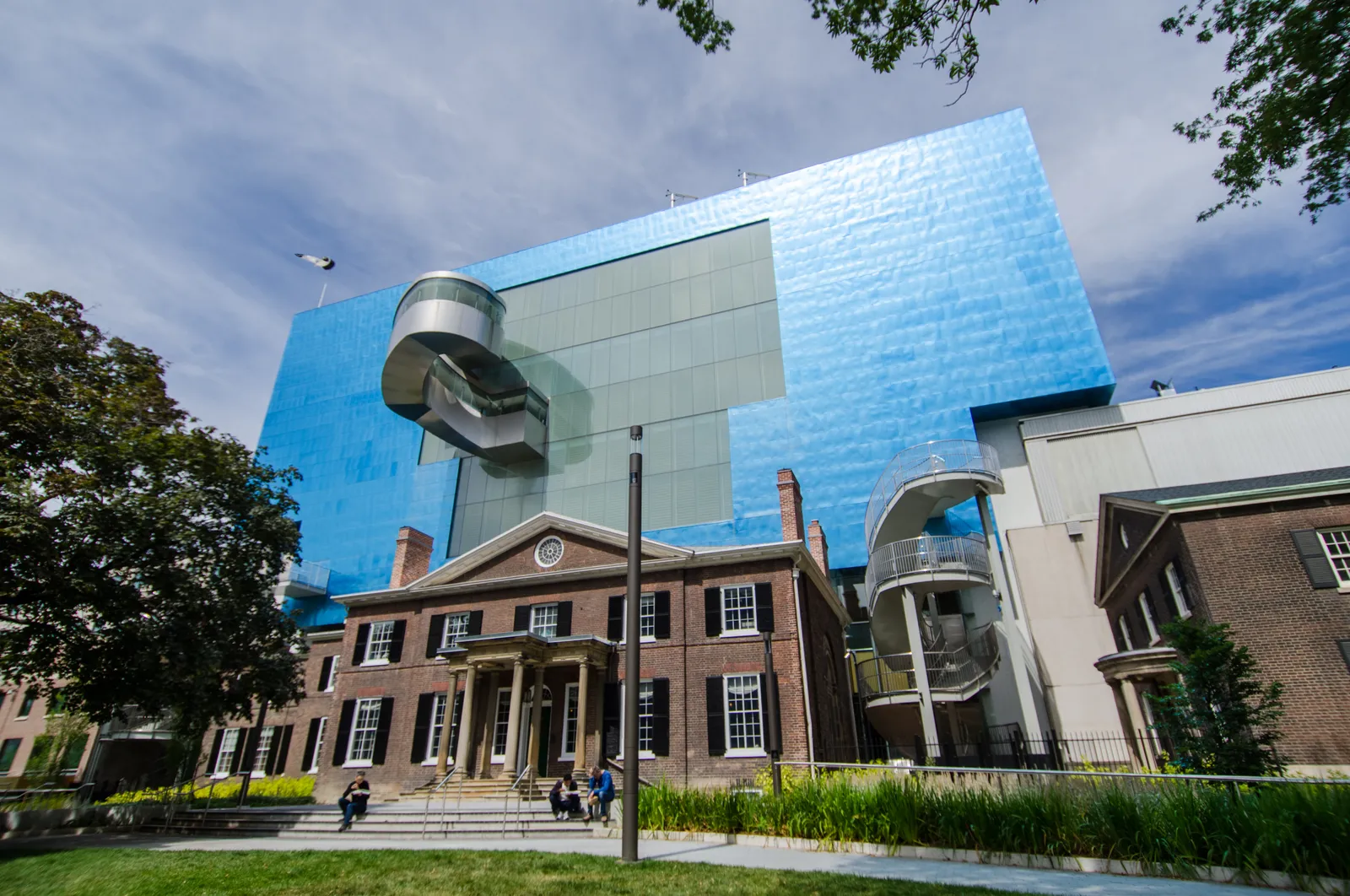
Frank Gehry’s blue box over the Art Gallery of Ontario
Dundas Street West carries the Art Gallery of Ontario ten minutes east of the market, and the building is the first thing to look at: Frank Gehry, who grew up a few streets from here, wrapped the south side in a blue titanium box cantilevered straight over the Grange, the Georgian brick house of 1817 the gallery grew out of, with a glass staircase spiralling down the outside.
Inside are more than 120,000 works, strongest on Canadian and Indigenous art, with a European collection behind it. Adult admission is CA$30 and timed entry tickets are sold through a tours and activities platform; the doors open at 10:30am, stay open to 9pm on Wednesdays and Fridays, and stay shut all day Monday. Two hours covers it without hurrying, which is the reason it only fits a longer gap.
Chinatown’s shops and streetcars on Spadina Avenue
Spadina Avenue runs along the eastern edge of the market and is twice the width of the streets behind it, with red streetcars down the middle and a canopy of overhead wire above them. Herbalists, barbecue counters, bakeries and grocers line both sides, signed in Chinese and English, and the produce tables reach nearly to the kerb.
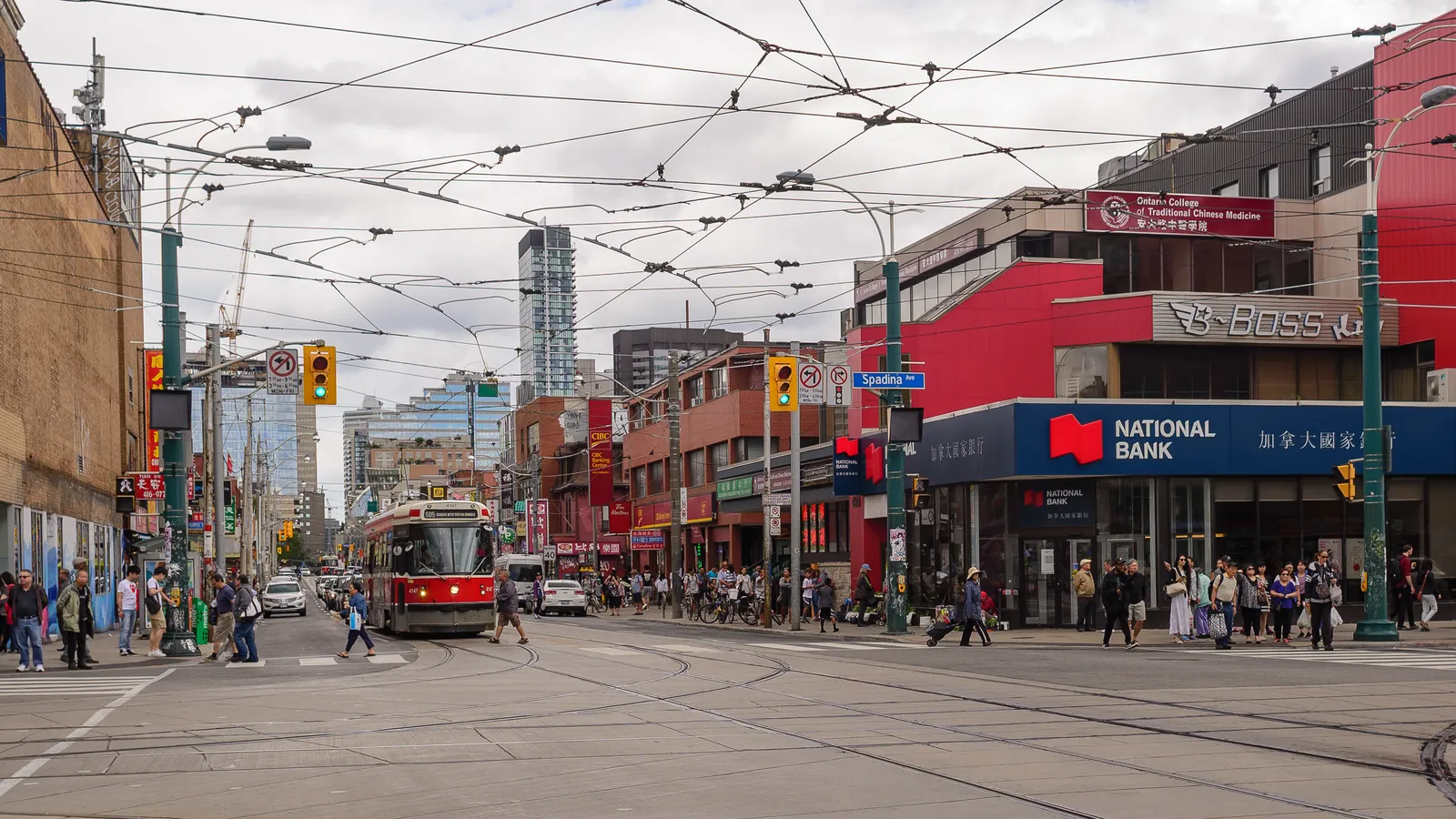
The two neighbourhoods run into each other without a boundary worth naming, which is why they work as one walk rather than two. Nothing here costs anything until you buy something, and the whole stretch stays open later than the market does: the grocers on Spadina keep going into the evening long after the Kensington fruit stalls have packed up.
No rail line reaches Kensington Market
Getting out to Toronto Pearson International Airport (YYZ) from here starts with a streetcar east or south to Union Station, about fifteen minutes on Spadina, and the airport train after that. The UP Express leaves every fifteen minutes from around 5am to 1am and takes 25 to 28 minutes for CA$12.35, or CA$9.25 tapped with a Presto card. Budget an hour and a half from the market to the terminal door rather than the 40 minutes the two legs add up to on paper.
That two-step makes this a stop for the middle of a long gap rather than the end of one. The central Toronto itinerary covers the waterfront and the old town, which sit on the right side of the city for the airport train and are the better choice if your flight is close.
Frequently asked questions
What should I do during a layover in Kensington Market in Toronto?
Three to four hours is the right size for this. Walk Augusta and Kensington Avenues for the produce shops, cheese counters and vintage racks built into old houses, then eat somewhere on foot rather than sitting down for a full meal. Spadina Avenue's Chinatown starts at the eastern edge of the market and the Art Gallery of Ontario is ten minutes beyond it, which is the one stop here that charges and the one worth booking if you want it. On a shorter gap, keep to the market itself and skip the gallery entirely.
When does Kensington Market close to cars?
On the last Sunday of every month from May through October, between noon and 7pm, when the streets fill with music and stalls instead of traffic. The closure on Augusta Avenue between College and Oxford Streets runs later, to about 10pm. It is the best day to be here and the worst day to be here in a hurry, because the crowds are heavy and moving through them takes twice as long. Every other day the streets are open and the market is quieter.
Is the Art Gallery of Ontario ever free to get into?
Yes, on the first Wednesday night of each month between 6pm and 9pm, and you have to book those tickets online rather than turn up; they are released at 10am on the Monday before. General admission is otherwise CA$30 for an adult, and anyone aged 14 to 25 can get a free annual pass instead. The gallery is shut on Mondays, opens at 10:30am the rest of the week and runs to 9pm on Wednesdays and Fridays.
How do you reach Kensington Market from central Toronto?
Streetcars run along all three of the streets that bound the market, Spadina Avenue on the east, College Street on the north and Dundas Street West on the south, so almost any approach puts you a block or two from the produce stalls. From the main rail station it is about fifteen minutes on the streetcar up Spadina, or a flat half-hour walk if the weather is good. The market itself has no transit inside it: the streets are too narrow, which is much of the point.