YYZ Layover: Toronto Pearson Terminal 1 Art
Part of the full Toronto Layover: CN Tower and Old Town, YYZ
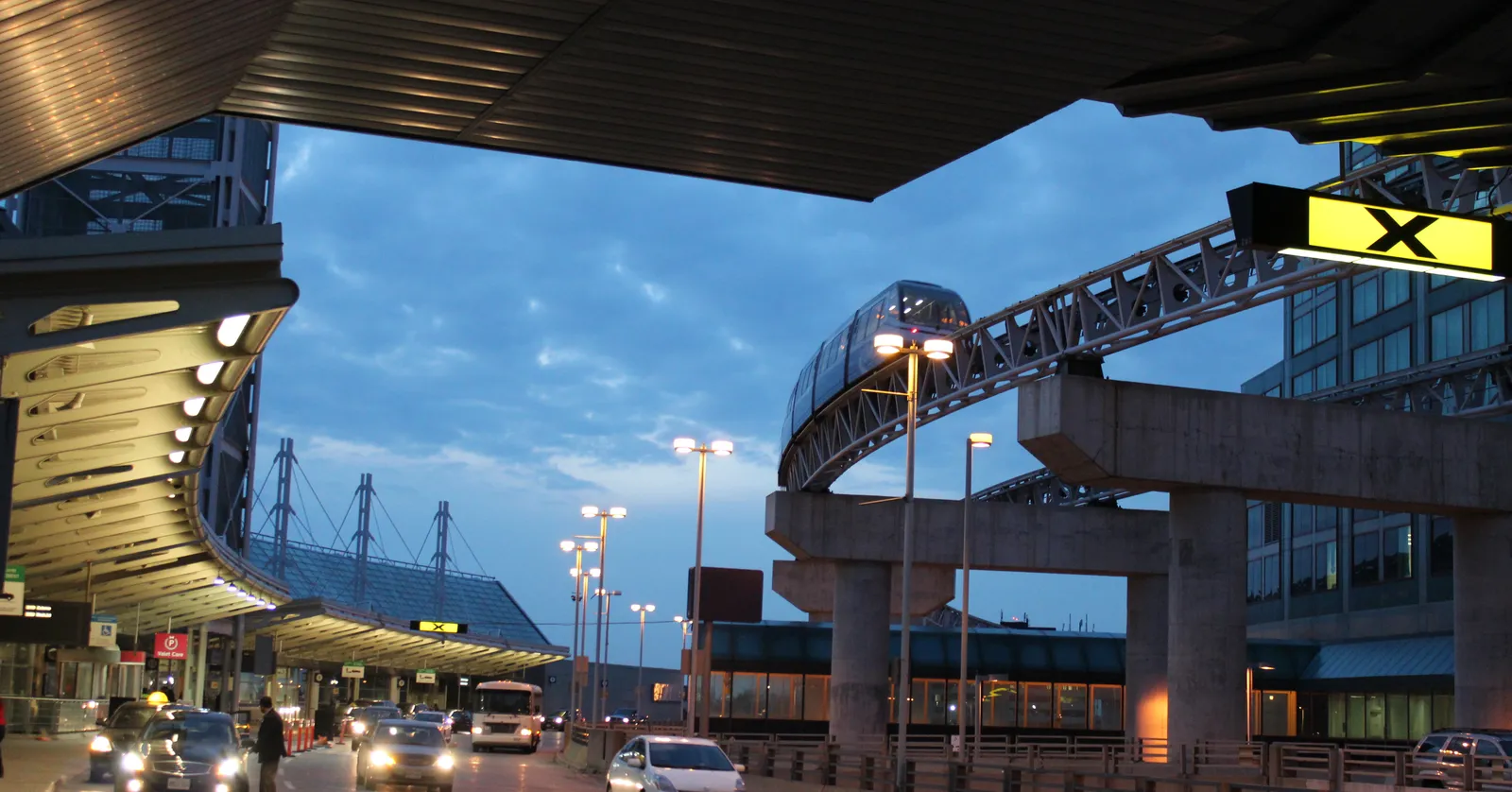
Three stone figures carved by the Inuit artist Kiakshuk in 1964 stand on the departures curb outside Terminal 1 at Toronto Pearson, a free automated train runs between the two terminals around the clock, and a viewing platform four kilometres away points binoculars back at the runways.
Kiakshuk’s stone figures outside the Terminal 1 doors
Kiakshuk was an elder from Cape Dorset in what is now Nunavut and a member of the West Baffin Eskimo Co-operative, and the federal government bought his group of three stone figures for the airport in 1963. They have stood on the curb outside the Terminal 1 departures entrance since 2002, in the open air, on the public side of every security line. Their presence here has been argued over: builders and Inuit commentators have pointed out that the figures are inunnguat, human-shaped markers, rather than the navigational inuksuit the airport’s own signage calls them, and one of the men involved has said the commission was meant to be a single large marker rather than three.
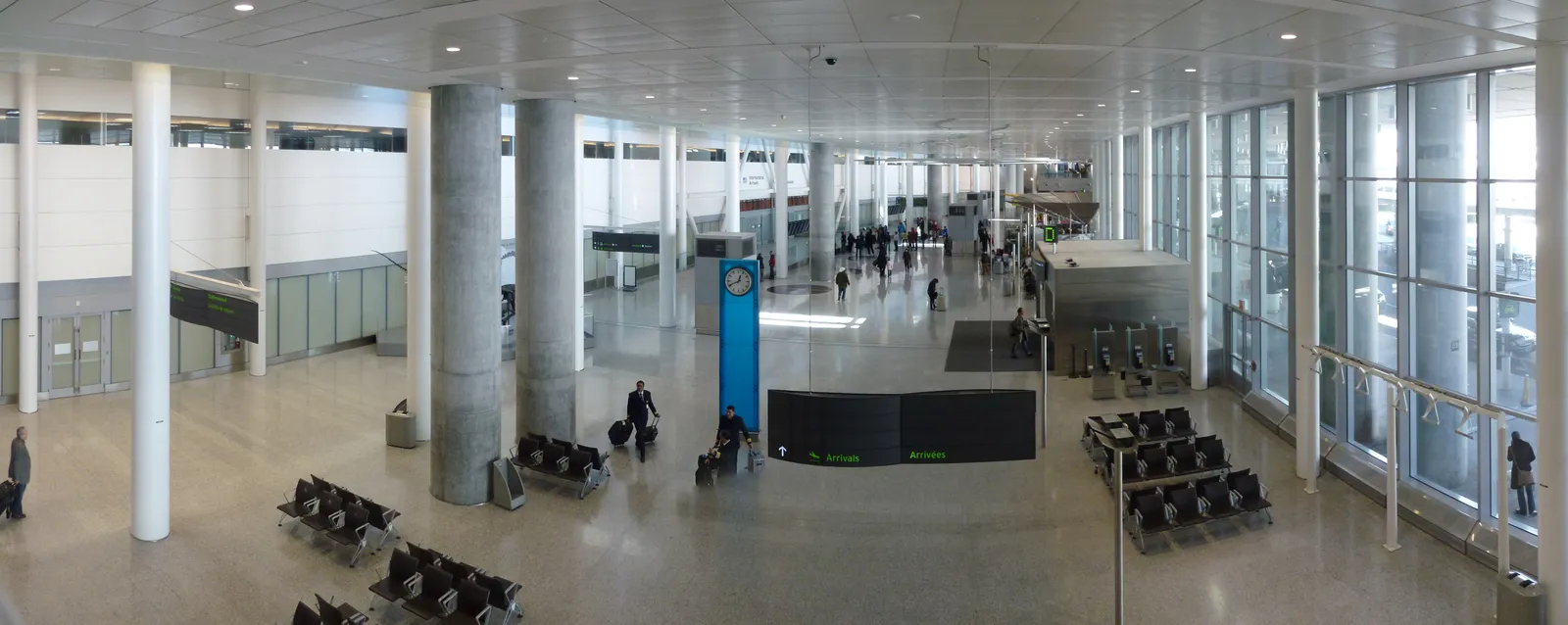
Inside, the mezzanine carries Robert Charles Coyle’s Flight Song, a run of paper aeroplane forms laid out across the level in a sequence timed to the daylight that comes through the glass wall. The airport has been buying art since the 1960s, and the collection runs to Sol LeWitt, Jonathan Borofsky and Richard Serra. The catch is where the best of it lives: Serra’s Tilted Spheres, four curved steel fins nearly twelve metres long, sits in Pier F, past security, so only passengers boarding an international flight from that pier ever walk between them.
The Link train runs between the terminals all night
Terminal 1 and Terminal 3 stand far enough apart that walking between them is not an option, and the connection is an automated train on an elevated concrete guideway, free, with no ticket or tap involved. It runs 24 hours a day, every four minutes at busy times and every eight off-peak, and the ride itself takes about four minutes.
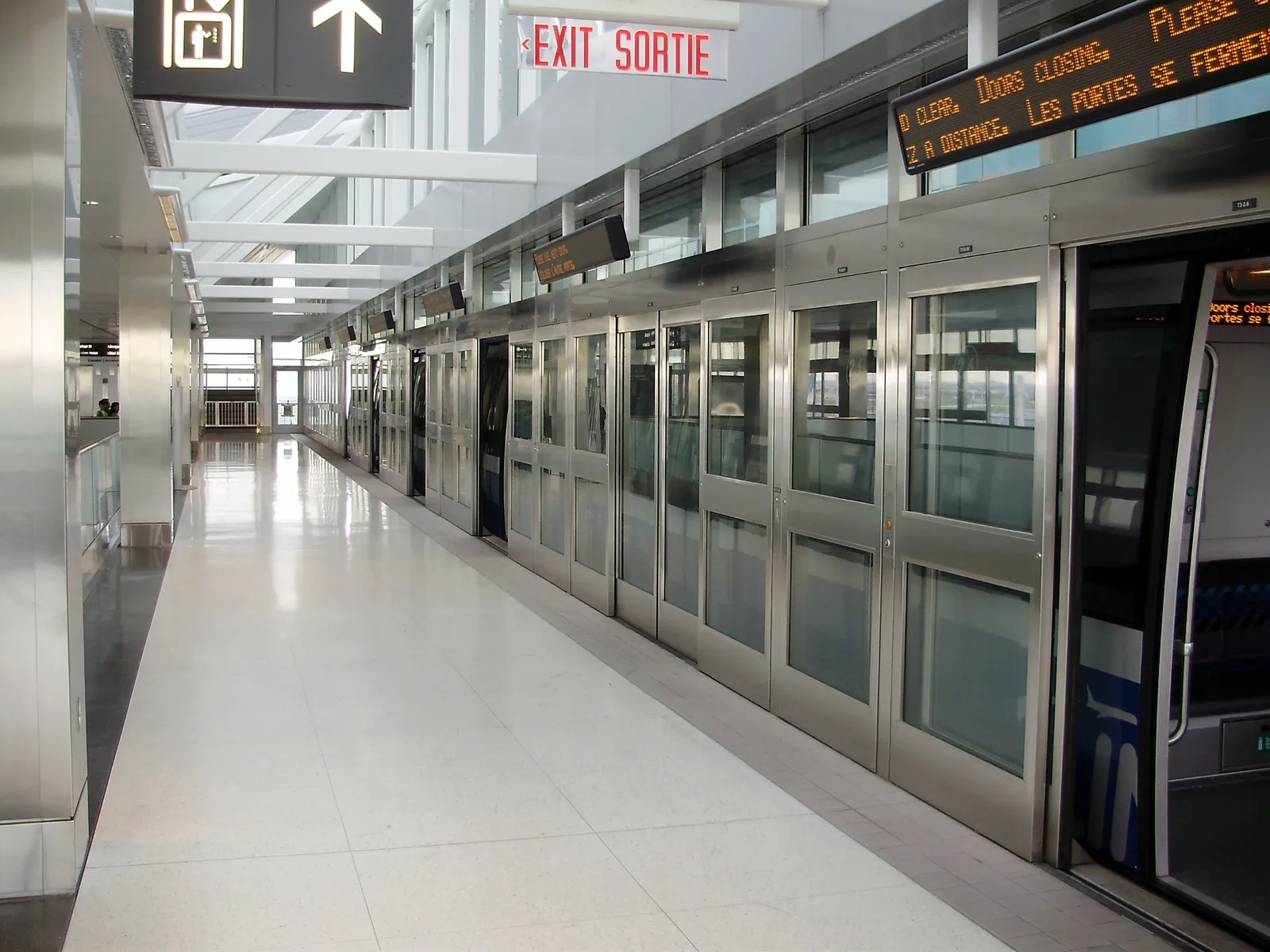
Four minutes is the train, not the trip. Add the walk from your gate area down to the platform at one end and back up at the other and 10 to 15 minutes is the honest figure for terminal to terminal. The third stop, Viscount station, serves the long-term parking lots and a drop-off point on Viscount Road, so it is only useful if someone is collecting you. The guideway crosses over the departures roadway on its way, which is the one stretch of this airport with a view worth looking up from.
Danville Park’s viewing platform and its free binoculars
Kennedy Road meets Courtneypark Drive East in Mississauga about four kilometres north-east of the runways, and the park on the south-east corner was built with plane watchers in mind. Toronto Pearson put around $300,000 into it. A steel canopy shaped like a wing stands on the high point of the site, 25 metres above the ground around it, with the paving underneath marked out in runway stripes.
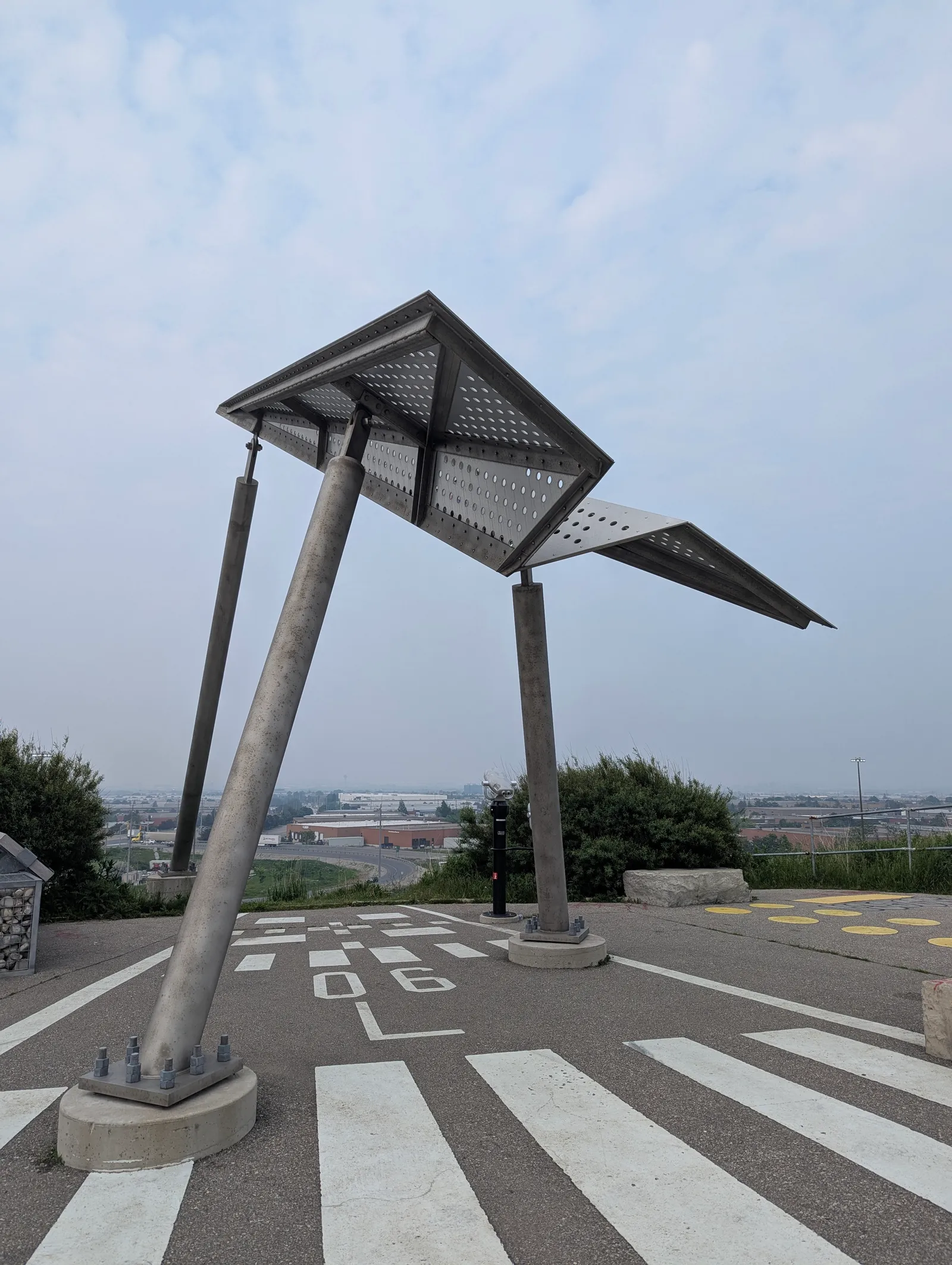
Two sets of high-powered binoculars are fixed to the platform at different heights, one of them low enough for children, and neither takes coins. The rest of the park is a cricket ground and a toboggan hill, so the platform is the reason to come. It is a taxi or rideshare trip from either terminal, which puts it in range of a four-hour connection and out of range of a two-hour one. Plane spotters who would rather stand at the fence line use the gravel pull-off on Convair Drive, on the bend near the south runway, or the sidewalk along Airport Road under the approach.
Union Station is 25 minutes away on the airport train
The UP Express runs from the station at Terminal 1 into Union Station downtown in 25 to 28 minutes, every fifteen minutes from roughly 5am to 1am, for CA$12.35 one way or CA$9.25 tapped with a Presto card. Five hours between flights is the point where that starts to make sense; below it, the platform walks and the wait at each end eat most of what you have.
If you do go in, the central Toronto itinerary covers what is worth the ride. For a fixed, timed alternative that hands the planning over, an express highlights tour of the city books through a tours and activities platform, and for an evening connection a night tour that includes the tower ticket is the version that suits a late departure. Whichever you pick, the bag is the question first: the terminals have staffed baggage counters rather than lockers, and they keep fixed hours, 05:00 to 23:00 on the Terminal 1 arrivals level and 05:00 to 22:00 on the Terminal 3 departures level, so an overnight connection can land on the wrong side of both.
None of this needs a long gap. The stone figures and the paper planes are ten minutes apiece, the train ride between the terminals is four, and the only stop here that asks for real time is the one four kilometres away with the binoculars on it.
Frequently asked questions
What should I do during a layover near Toronto Pearson International Airport (YYZ) in Toronto?
With two to four hours, stay on the airport grounds. The three stone figures on the Terminal 1 departures curb and the paper-plane installation hanging over the mezzanine cost nothing and need no boarding pass, and the free Link train between Terminal 1 and Terminal 3 is a ride worth taking for its own sake if you have never seen the guideway. With four hours or more, a taxi out to the viewing platform at Danville Park puts you 25 metres up with binoculars pointed back at the runways. Anything downtown needs five hours at minimum, and on a tighter connection it is the first thing to drop.
Where can you leave a bag at Toronto Pearson between flights?
There are staffed baggage counters in both terminals, not lockers. The Terminal 1 counter is on the Arrivals level and runs 05:00 to 23:00, and the Terminal 3 counter is on the Departures level and runs 05:00 to 22:00. You pay per bag and the rate goes by size, and both take walk-ups as well as advance bookings. The hours are the thing to watch on a late connection: a bag dropped at Terminal 3 in the afternoon cannot be collected there after 10pm.
Is the Link train between the Pearson terminals free?
Yes, and there is no ticket or tap involved at all. It runs 24 hours a day between Terminal 1, Terminal 3 and Viscount station, every four minutes at busy times and every eight off-peak, and the ride itself is about four minutes. Allow 10 to 15 minutes door to door once you add the walk through each terminal to the platform. Viscount station is the stop for the long-term parking lots rather than anything worth visiting.
Can you see Richard Serra's Tilted Spheres without a boarding pass?
No, and that catches people out. The four curved steel fins sit in Pier F, past security in the international departures area, so only passengers boarding an international flight from that pier walk through them. The art that anyone can reach is on the public side: the stone figures on the Terminal 1 departures curb, the paper-plane installation over the mezzanine, and the pieces along the walkways on the Arrivals level.
Is a Toronto layover worth leaving the airport for on a short connection?
Not under five hours. The airport train reaches Union Station in 25 to 28 minutes, but with the walk to the platform, the wait, the trip back and the time you need on the return side, a four-hour gap leaves almost nothing in between. At five hours or more it starts to work, and the central Toronto itinerary is built around the same train.