Royal Ontario Museum Layover in Toronto
Part of the full Toronto Layover: CN Tower and Old Town, YYZ
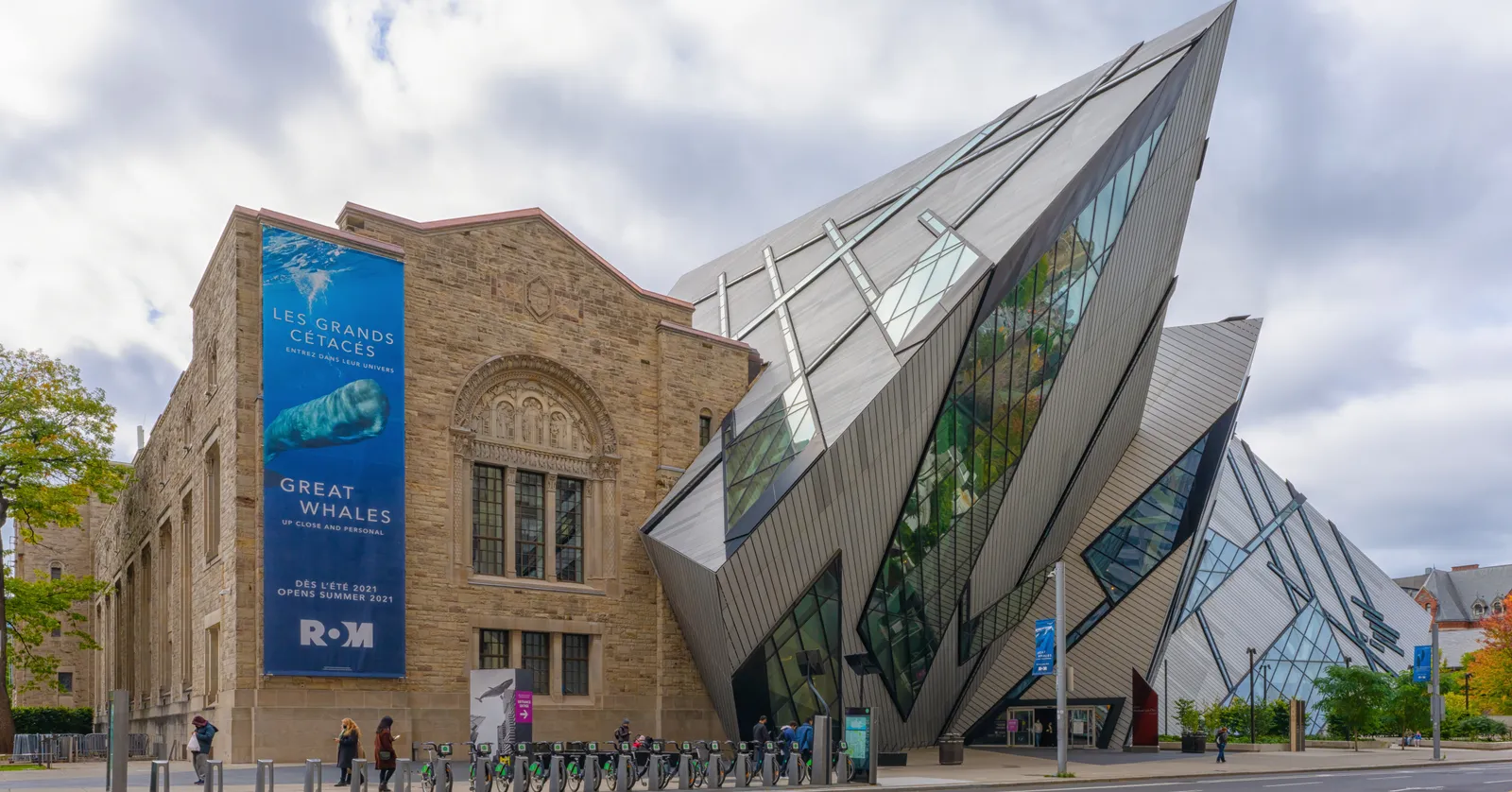
The Royal Ontario Museum stands at the top of Toronto’s Queen’s Park with a jagged aluminium crystal cut into its 1914 stone facade, and the blocks around it hold a museum of 12,500 pairs of shoes, a ravine footpath and a billion-year-old rock hauled down from cottage country.
Daniel Libeskind’s crystal cuts into the Royal Ontario Museum
Canada’s largest museum opened at 100 Queen’s Park in March 1914, in a building by the Toronto architects Frank Darling and John A. Pearson that mixed Italianate and Romanesque in heavy stone. What everybody photographs now is what was bolted onto the front of it in June 2007: Daniel Libeskind’s Michael Lee-Chin Crystal, a set of interlocking prisms a quarter glass and three quarters aluminium, sitting on a steel frame and leaning out over the pavement.
The collection behind both facades runs to more than 18 million objects across forty galleries, from dinosaur skeletons to Chinese temple art to a bat cave you walk through. Two hours is the minimum that does it justice and four would not be wasted. A timed entry ticket booked through a tours and activities platform saves standing in the queue at the Bloor Street doors, which is where the line forms on a wet afternoon. The third Tuesday night of every month is free for everyone between 4pm and 8:30pm, pre-booked online, and it is the only regular evening the galleries stay open late.
A shoebox-shaped museum of 12,500 pairs on Bloor Street
The corner of Bloor Street West and St George Street carries a pale limestone block whose roof overhangs the walls at an angle, because Raymond Moriyama designed the Bata Shoe Museum in 1995 as an open shoe box with the lid left ajar. The joke is only visible from across the street, which is the right distance to look at it from anyway.
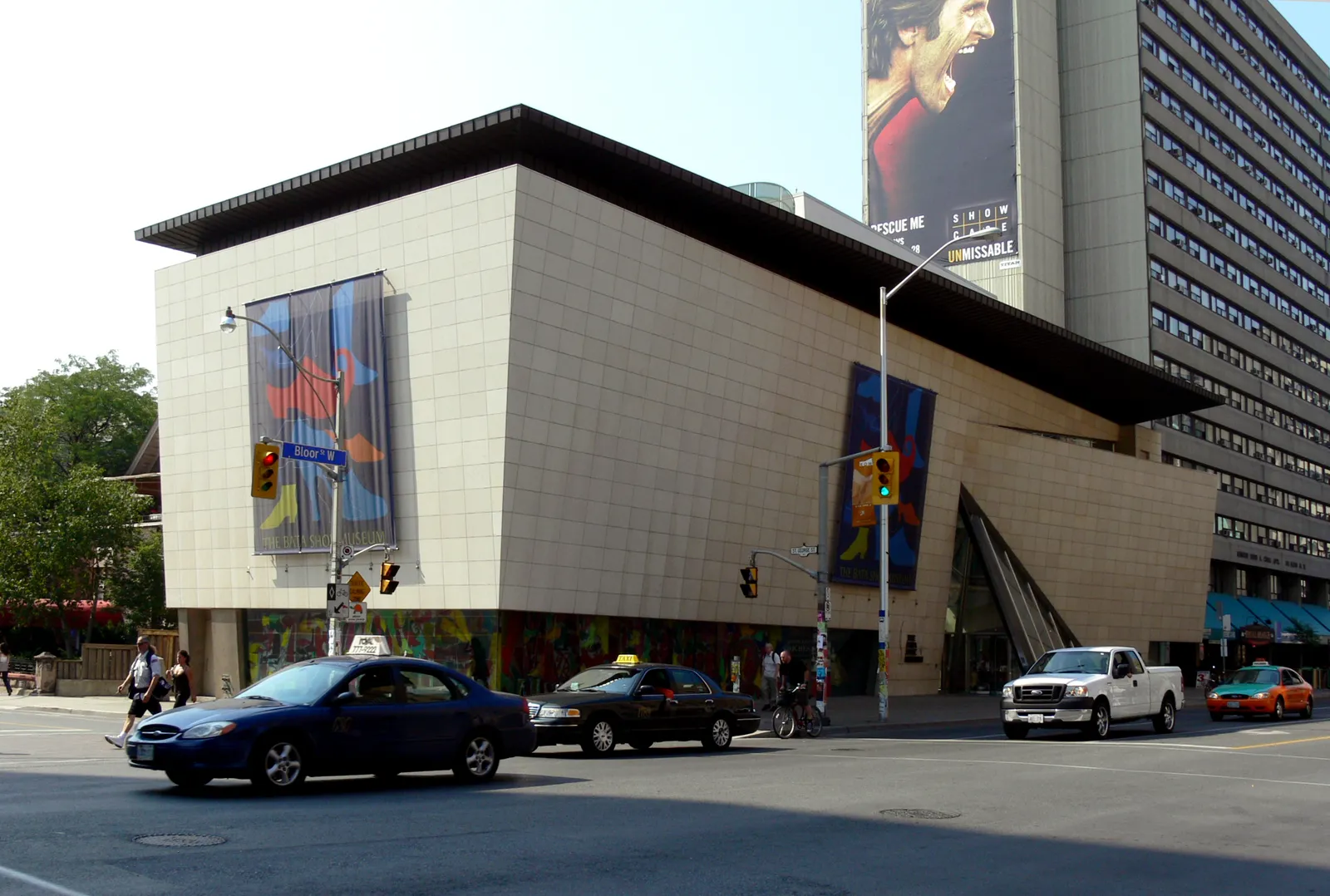
Inside are more than 12,500 pairs covering 4,500 years, from Egyptian sandals to Elton John’s platform boots, which sounds like a novelty and turns out to be a serious social history told through what people put on their feet. Adult admission is CA$14, it is free to everyone on Sundays from noon to 5pm, and Thursday evenings between 5pm and 8pm you pay what you want. An hour covers it.
Philosopher’s Walk follows a buried creek behind the museum
A shallow wooded ravine runs south from Bloor Street between the museum grounds and the University of Toronto’s music and law faculties, and the footpath along the bottom of it is Philosopher’s Walk. The dip in the ground is not landscaping: a creek ran down this line until the 19th century, when the city buried it, and the path took over the channel it left behind.
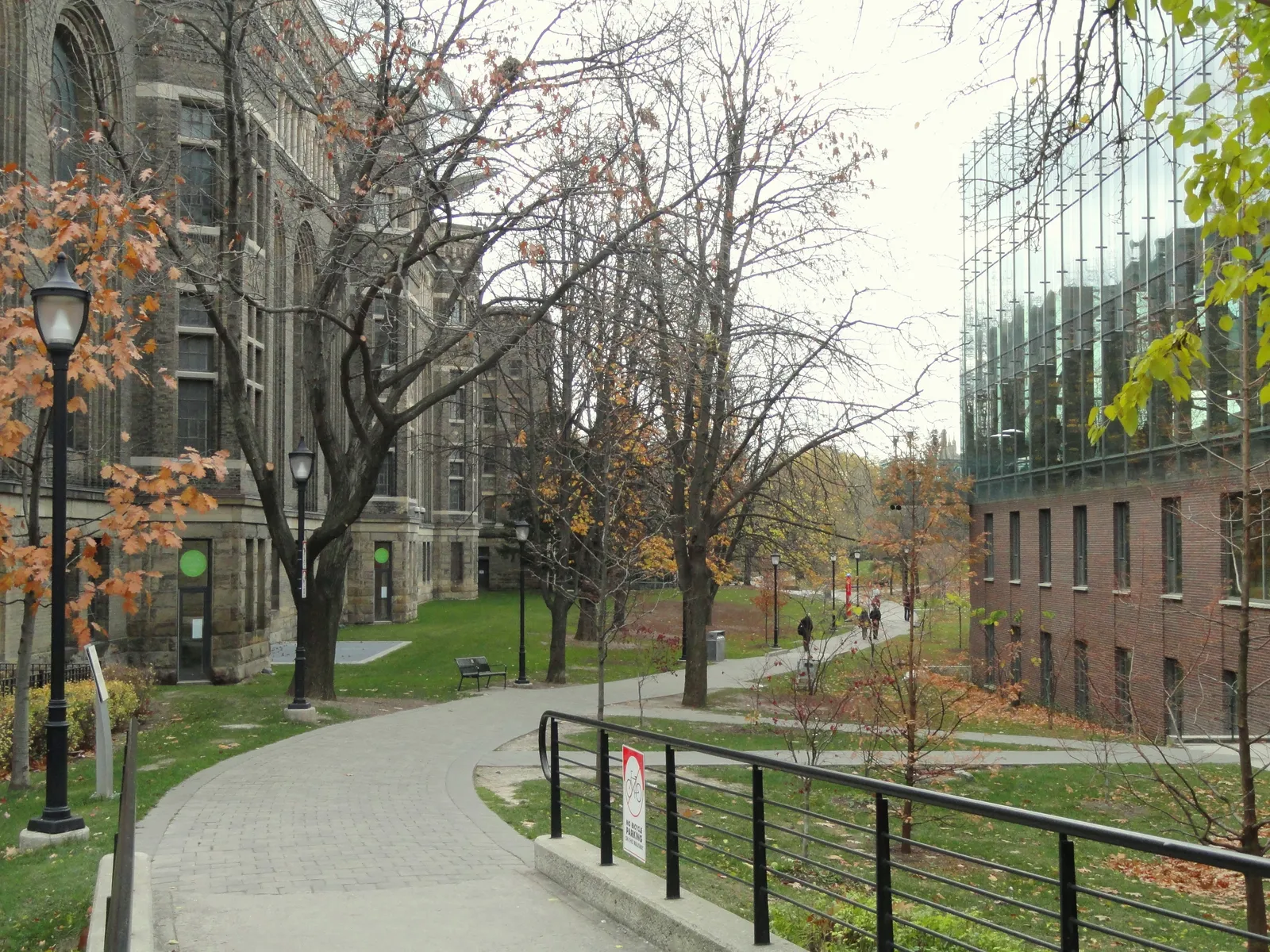
It is about ten minutes end to end, paved, and quiet in a way nowhere else in this part of the city manages, with the backs of Victorian university buildings on one side and a glass conservatory wall on the other. On a warm day you can hear people practising through the music faculty’s windows.
A 650-tonne slab of the Canadian Shield sits in Yorkville
Cumberland Street, two blocks north of the museum, runs along a strip park made of pieces of Ontario laid end to end: a pine grove, a prairie planting, a marsh, an orchard, an alder wood. The one everybody stops at is the rock. It is granite from the Canadian Shield, roughly a billion years old, cut out of a farm in Muskoka in sections, brought south on twenty flatbed trailers and fitted back together here so the joints almost disappear.
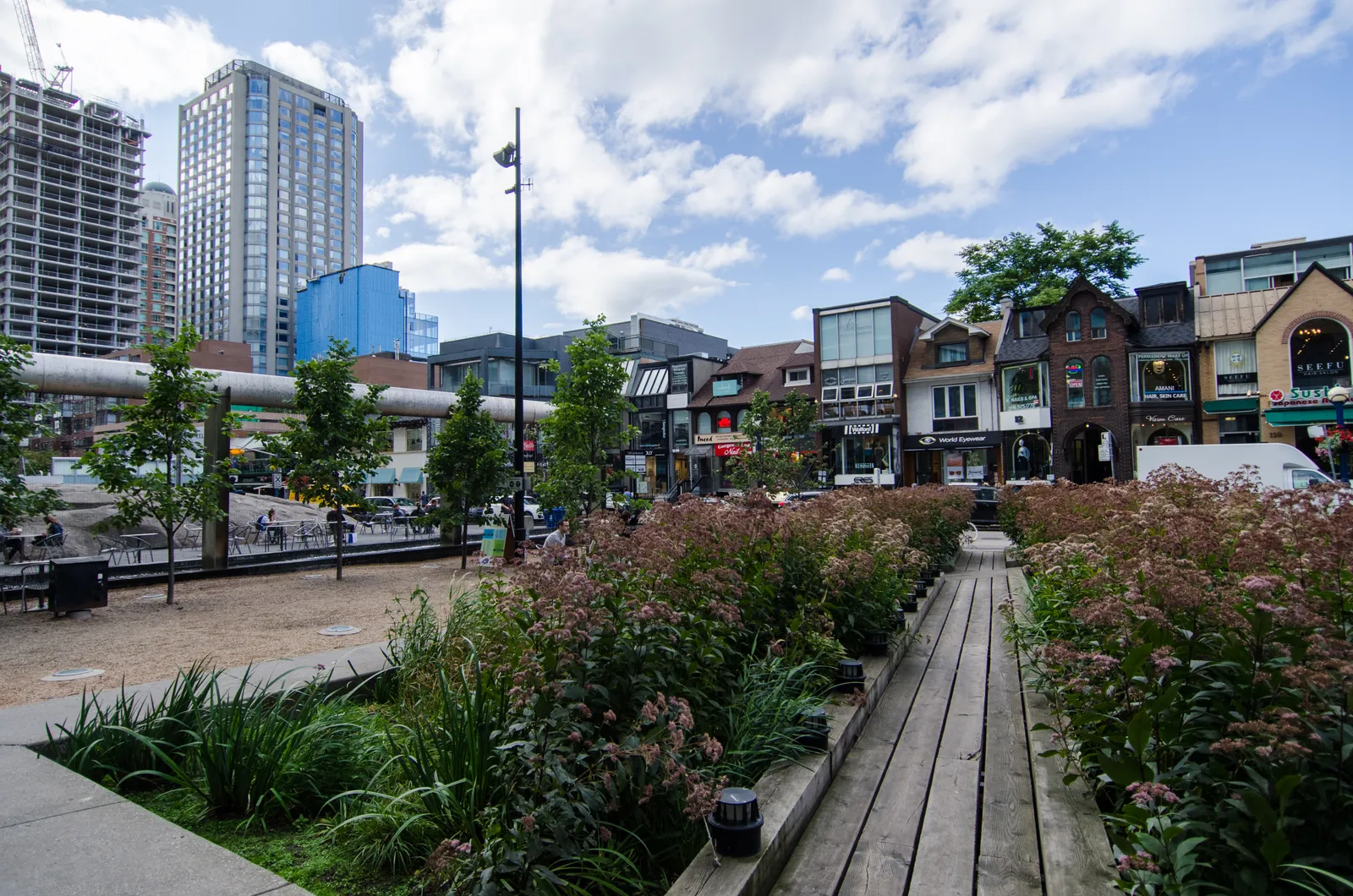
People sit on it, which is the point, and the seam lines make it obvious the thing was reassembled rather than always here. The Victorian shopfronts across the road are what is left of Yorkville’s village high street, now occupied mostly by galleries and expensive shops. The stops worth making up here are strung out along more than a kilometre of Bloor Street and the blocks off it, with no cloakroom between any of them that will take a suitcase.
The airport train stops on Bloor Street, not only at Union
Bloor station is the UP Express stop west along Bloor Street, next to Dundas West subway station, and it turns the run out to Toronto Pearson International Airport (YYZ) into roughly twenty minutes rather than the 25 to 28 it takes from downtown. The fare is lower from here as well, since UP charges by distance rather than a flat airport rate, and trains call every fifteen minutes from about 5am to 1am.
The catch is the transfer: the subway station and the airport-train platform are a five-minute walk apart, outdoors, along Bloor and Dundas Streets, though a tunnel between the two has been under construction, so follow the signage when you arrive. Budget an hour from the museum door to the terminal. If your flight leaves from the other side of the day and you would rather be down by the water, the central Toronto itinerary covers the harbour and the old town instead.
Frequently asked questions
What should I do during a layover near the Royal Ontario Museum in Toronto?
Four to five hours, in daylight, is what this corner of Toronto wants. The museum itself takes two hours at a brisk pace and is worth booking a timed ticket for; the shoe museum along Bloor Street is a smaller and cheaper second stop. Philosopher's Walk and the Village of Yorkville Park cost nothing and fill the gap between them. Everything here shuts in the early evening, so a late-night gap is better spent somewhere else in the city.
Is the Royal Ontario Museum ever free to get into?
Yes, on the third Tuesday night of each month, from 4pm to 8:30pm, free for everyone. You have to pre-book a timed slot online rather than turn up at the door, and special exhibitions are not included in it. Those evenings are also the only ones when the galleries stay open past the usual closing time, so they suit a flight later that night better than a normal afternoon visit does.
What costs nothing near Bloor Street and Queen's Park?
Philosopher's Walk, the footpath running in a shallow ravine behind the museum, and the Village of Yorkville Park with its slab of Canadian Shield granite are both free and open all the time. The shoe museum at 327 Bloor Street West charges CA$14 for an adult but opens free to everyone on Sundays from noon to 5pm, and takes whatever you want to pay on Thursday evenings from 5pm to 8pm. On a budget day, those two Sundays-and-Thursdays windows are what decides when to come.
Can you reach the airport from Bloor Street without going through Union Station?
Yes, and it is usually faster. The UP Express calls at its own Bloor station, west along Bloor Street from the museum and next to Dundas West subway station, and from there the run out to Toronto Pearson International Airport (YYZ) is roughly twenty minutes rather than the 25 to 28 from Union. The fare is lower too, because UP prices by distance. The transfer between the subway and the airport train is a five-minute walk outdoors along Bloor and Dundas Streets; a tunnel linking the two has been under construction, so check the signs when you arrive.