Vancouver Layover Guide: Stanley Park, YVR
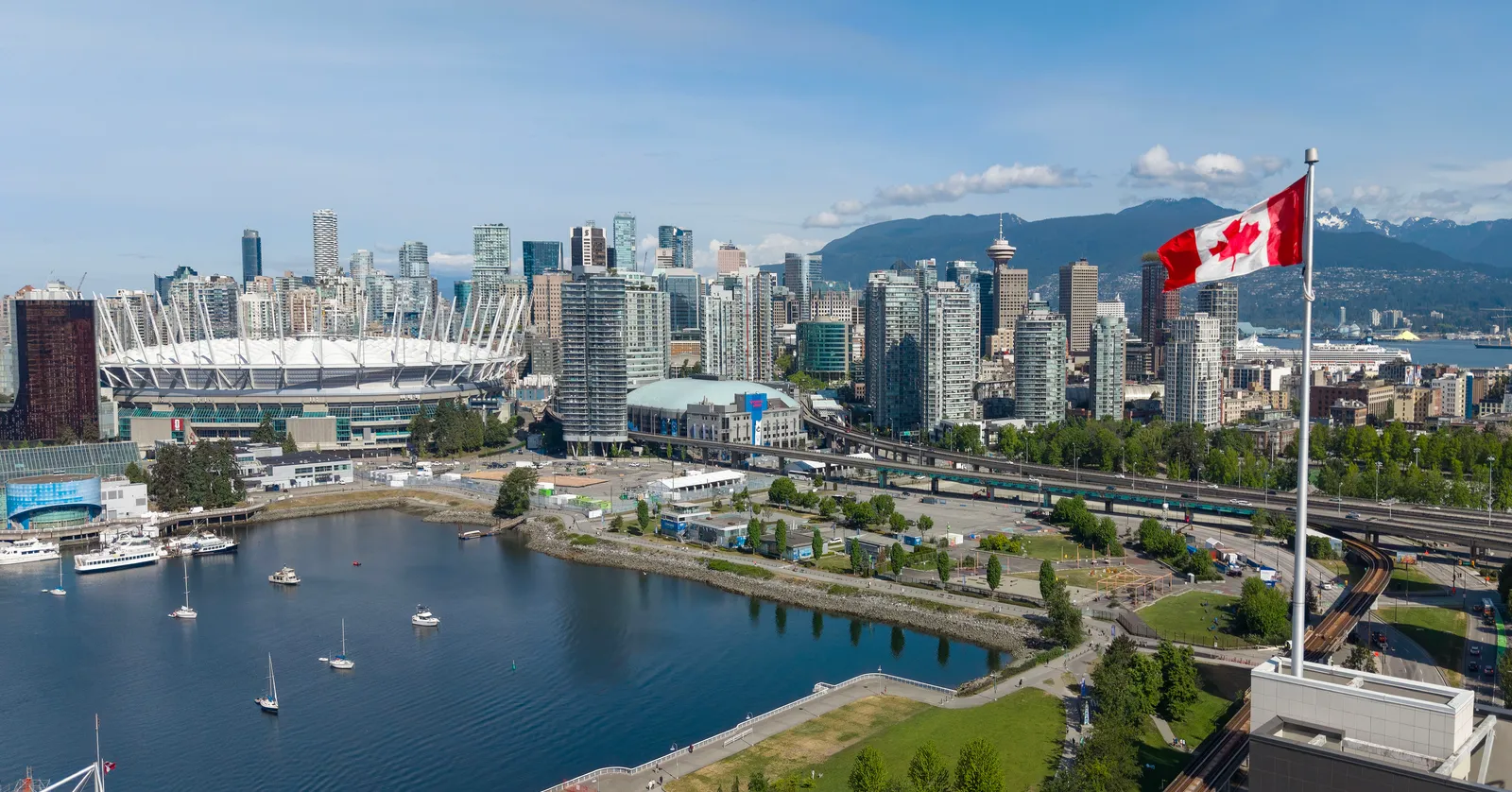
Downtown Vancouver sits on a peninsula, and a flat waterfront path runs from the Canada Place cruise terminal all the way around Stanley Park, past the totem poles at Brockton Point and out under the Lions Gate Bridge.
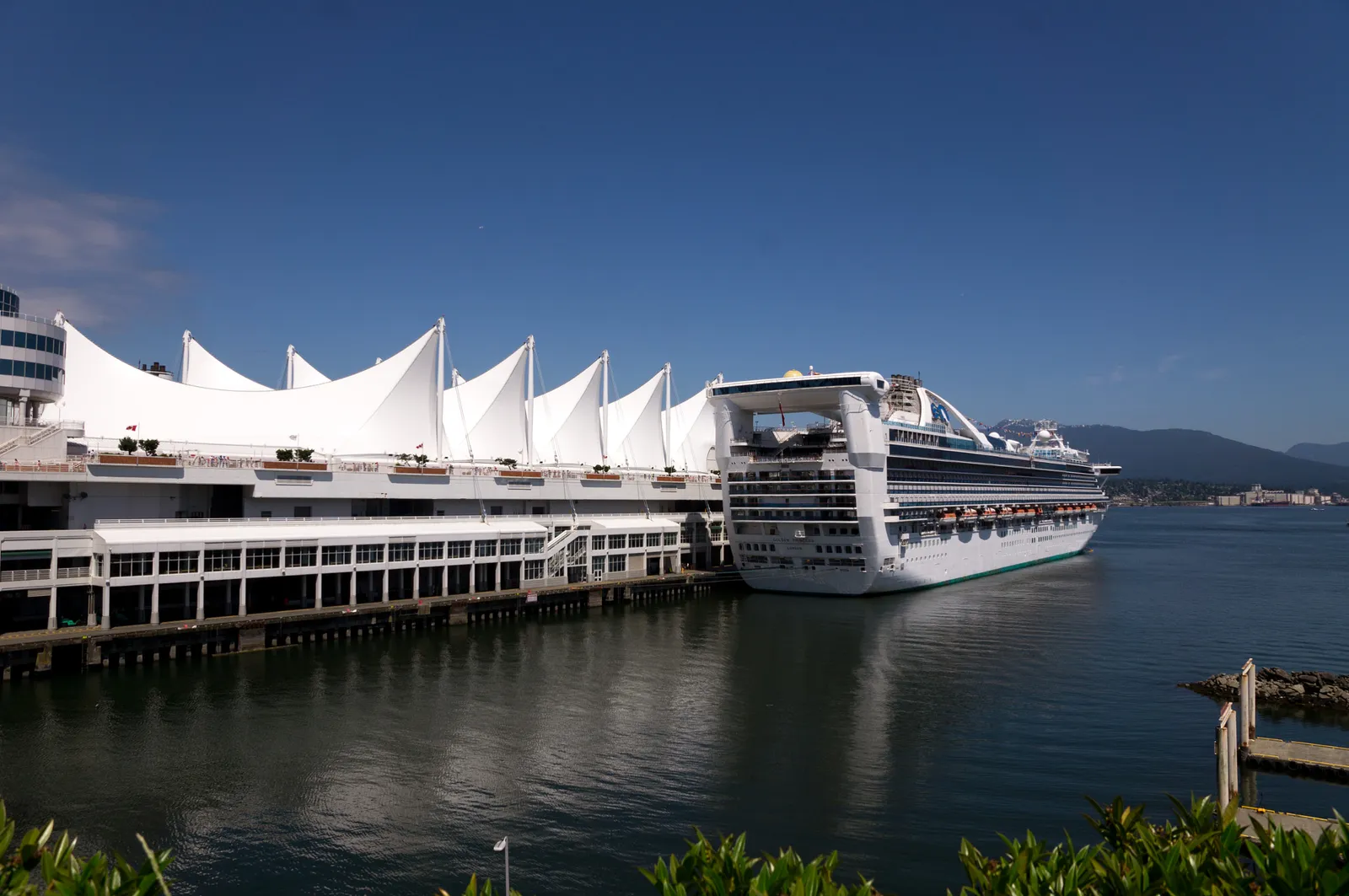
The five sails over the Canada Place cruise piers
Expo 86 left Vancouver a cruise terminal shaped like a ship, pushed out into Burrard Inlet at the foot of Howe Street, and the fabric sails over its roof have been on the city’s skyline ever since. A public promenade wraps the whole structure at deck level, free and open at any hour, with float planes landing on the water below it and the North Shore mountains directly behind them.
Inside, a former IMAX theatre now houses a flight-simulator ride: you hang with your feet loose in front of a 19-metre spherical screen while wind, mist and scent are cued to aerial footage of the country. The whole thing lasts about ten minutes, start to finish, so it costs you a fraction of an afternoon, and it runs on timed slots you can book ahead of time.
Three blocks up Burrard Street at number 355, the Marine Building’s lobby is worth five minutes if you happen to pass it on a weekday. It was finished in 1930 as the tallest building in the city, and the entrance is carved with sea snails, crabs, seahorses and steamships, with the zodiac laid into the floor and twelve local hardwoods inlaid around the brass elevator doors. It is a working office building rather than an attraction, so the lobby is as far as visitors go, and there is no charge and nobody to ask.
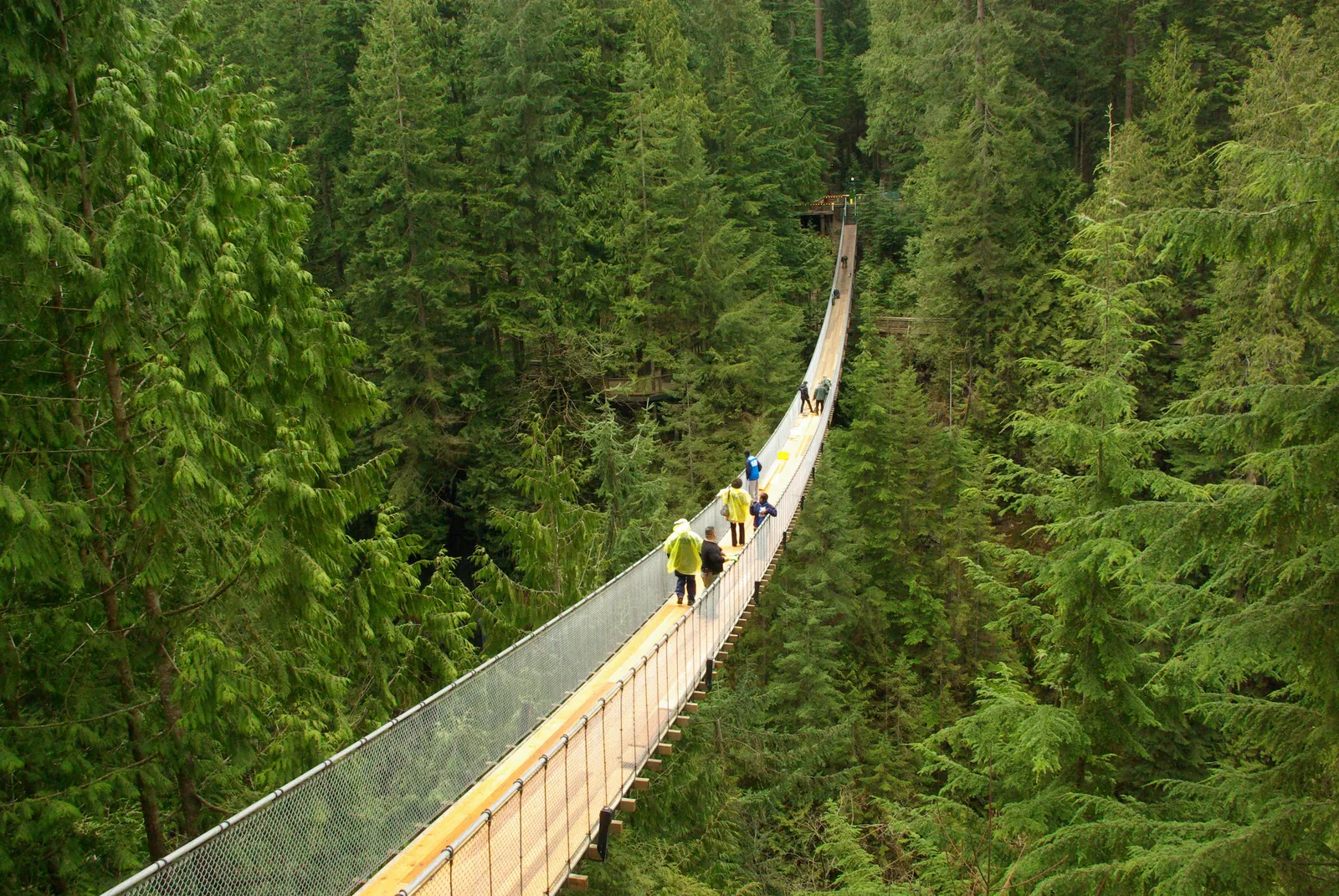
The Capilano Suspension Bridge, 140 metres across a canyon
A cedar-plank deck hangs 70 metres above the Capilano River in North Vancouver, 140 metres from one bank to the other, and it moves under you the entire way across. The same ticket covers Treetops Adventure, seven smaller bridges strung between living Douglas firs as high as 33 metres off the forest floor, and the Cliffwalk, a walkway pinned to the granite above the river. Tickets are sold for the day rather than a single entry, and you can buy them before you go.
Getting there is the part that decides whether it fits. A shuttle runs from outside Canada Place, free for ticket holders, about 20 minutes each way and roughly every 15 minutes at peak times; the first leaves downtown at 8:30am. Park hours move a long way with the season, from an 8pm close in high summer to 5pm in the first half of November, so look up the day you are actually there.
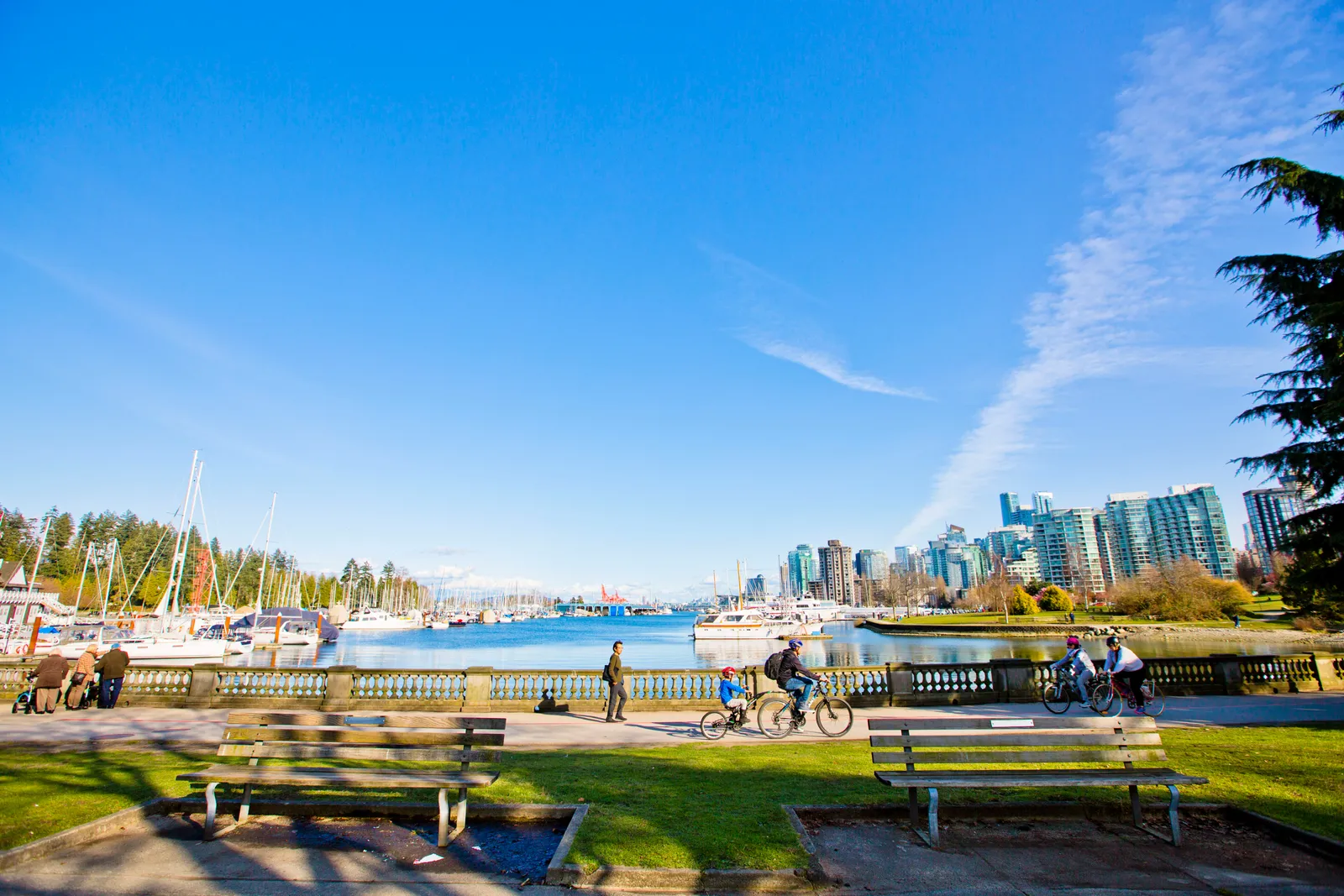
Stanley Park’s seawall and the totem poles at Brockton Point
Stanley Park occupies the whole northwestern end of the downtown peninsula: 405 hectares holding roughly half a million trees, the tallest of them around 76 metres. The seawall runs 8.8 kilometres around its edge, paved and flat, with walkers and cyclists given separate lanes. You do not have to do the full loop: the stretch from Canada Place to Brockton Point and back is a comfortable hour and gives you the whole harbour.
Brockton Point itself holds nine totem poles, carved by Squamish, Haida and Kwakwaka’wakw artists. The oldest of them arrived from Alert Bay in 1924 and stood at Lumbermen’s Arch until a road project moved the whole group here in 1962; what stands now is mostly replacements and replicas, the originals having gone to museums or, in the case of the Skedans mortuary pole, home to Haida Gwaii. It costs nothing to walk among them. A few minutes west, a naval cannon cast at Woolwich in 1816 has stood at the water’s edge since the 1890s and still goes off at nine every evening.
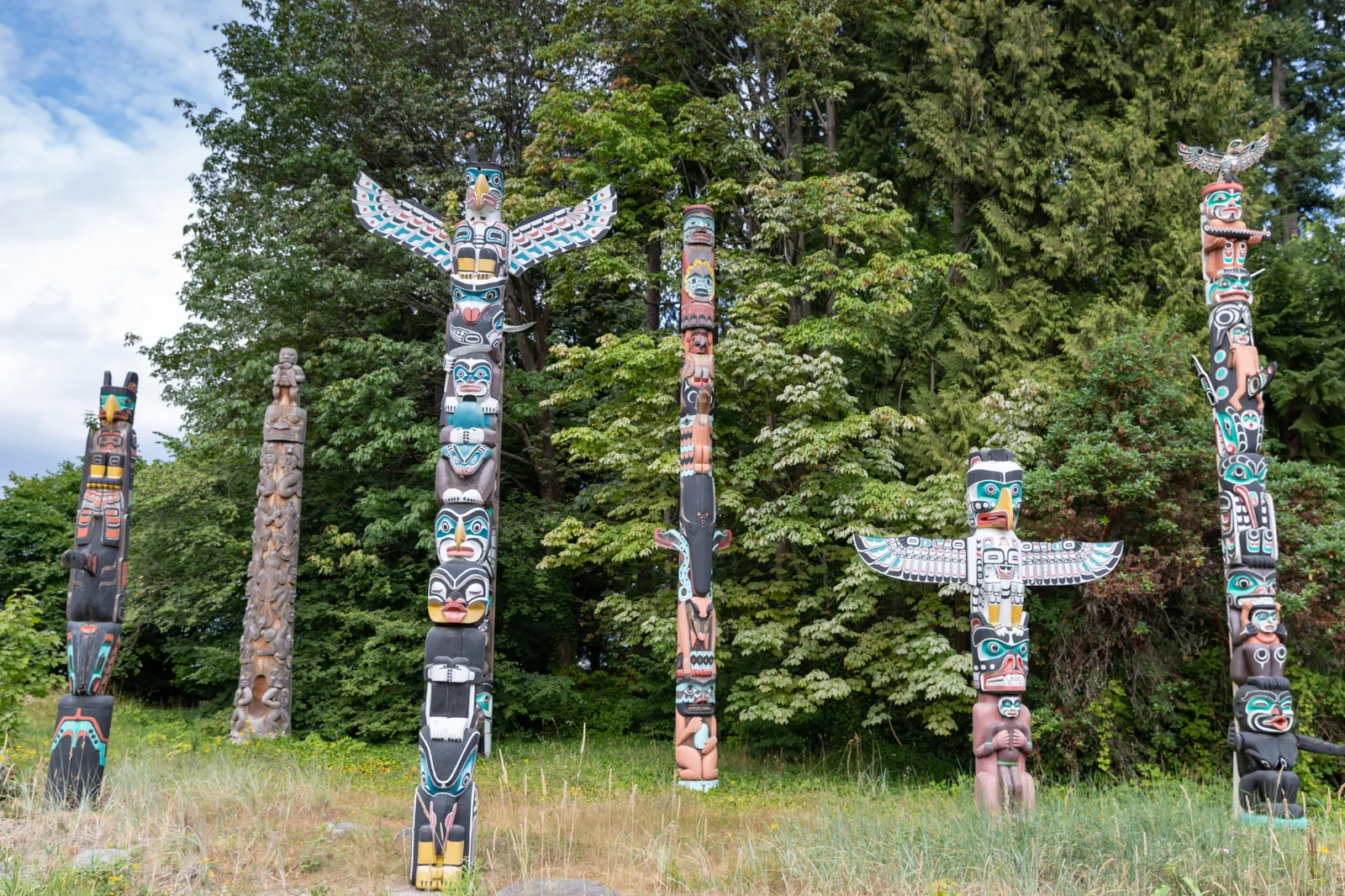
The seawall is a loop with no shortcut back across the park, so whatever you set out with, you carry for the full distance.
Granville Island Public Market, open since 1979
Fifty thousand square feet of produce stalls, fishmongers, bakeries and food counters sit under one timber-trussed roof on Granville Island, a wedge of former factory land beneath the south end of the Granville Street Bridge. It trades from 9am to 6pm, free to walk through, and the only dates it is properly shut are 25 and 26 December, 1 January, and Mondays through January while the building gets its yearly maintenance.
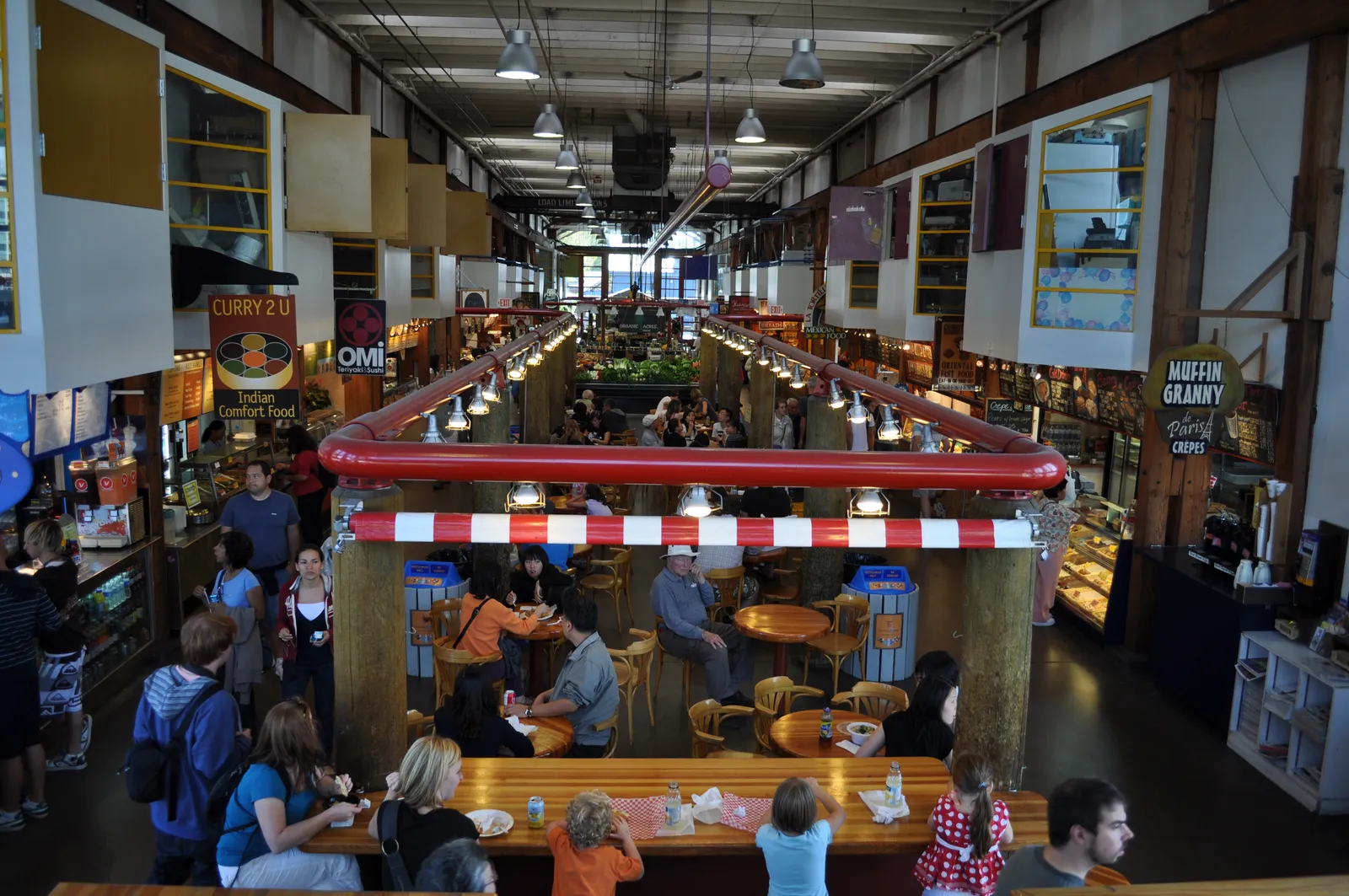
The crossing is by water. Small passenger ferries leave the Hornby Street dock at the bottom of downtown and cross False Creek in about five minutes for around $5, every fifteen minutes or so, from 7am to 11pm. They are privately run, so a transit fare does not cover them, and the older boats in the fleet are small open craft you step down into from the dock.
The Gastown steam clock at Water and Cambie
Raymond Saunders, a horologist, built the Gastown clock in 1977, and the plaque on its base claims it as the world’s first steam-powered clock. Half of that holds up. Steam does come up from the same underground district heating mains that warm the buildings around it, and the whistles play the Westminster Quarters every fifteen minutes with a longer performance on the hour, but the mechanism that drives the hands has been an electric motor since 1986, after the original steam engine proved too loud and too inaccurate to leave in charge.
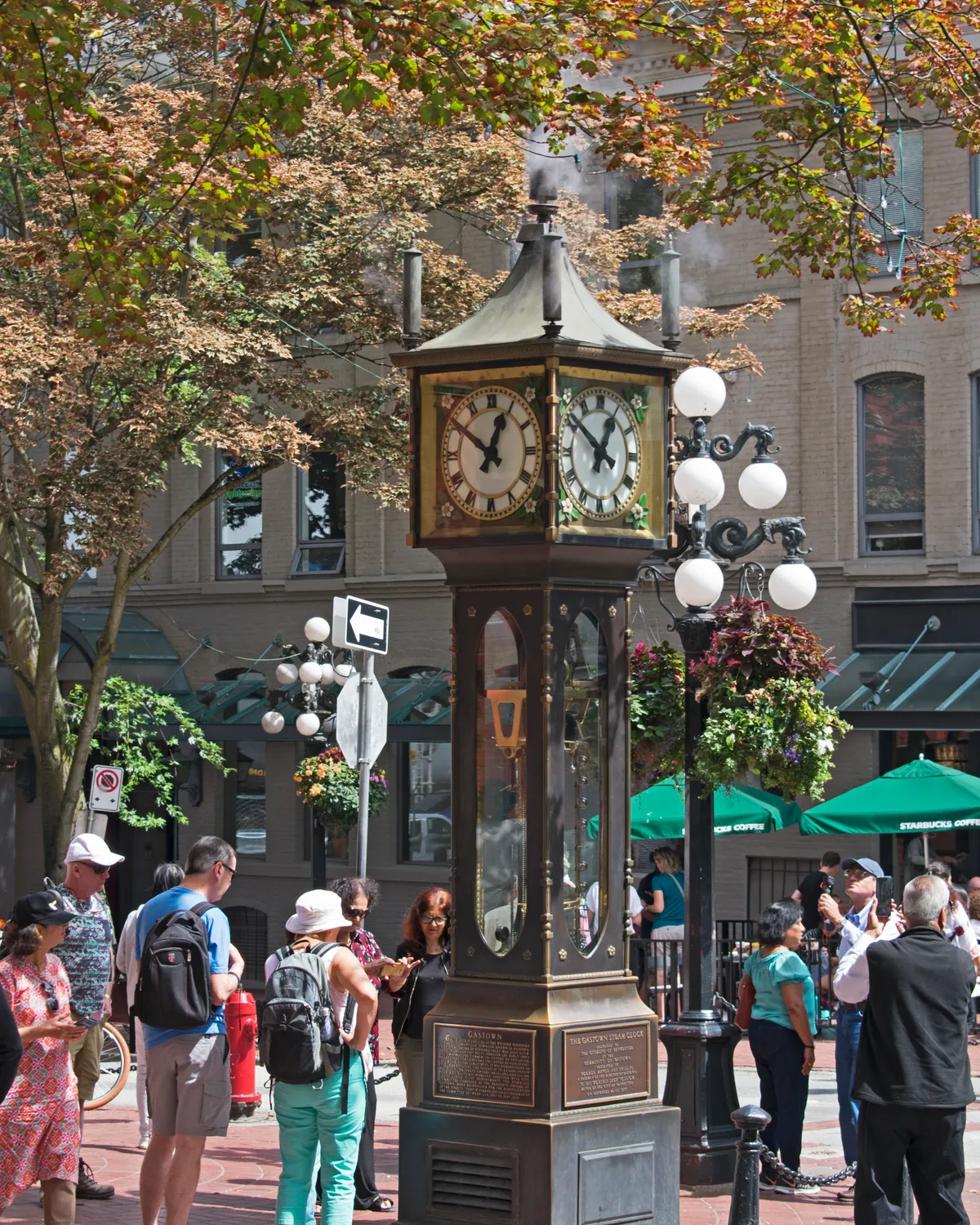
With more than five hours to spend, keep going east into Chinatown, ten minutes on from the clock. The Dr. Sun Yat-Sen Classical Chinese Garden at 578 Carrall Street opened in 1986 as the first Chinese garden built outside Asia; the walled garden charges admission, and the park beside it, sharing the same pond and much of the same planting, does not. Pacific Central Station is a ten-minute walk further southeast, and the train from there runs down the coast to Seattle in about four hours, which is worth knowing if your onward leg turns out not to be a flight.
Canada Line trains reach the airport in 26 minutes
The airport surcharge on Vancouver transit runs one way only. A $6.50 AddFare is charged on journeys starting at the three Sea Island stations, and nothing at all is added to journeys ending there, so the ride out to Vancouver International Airport is the cheap direction. From downtown it is a two-zone trip: $4.20 on a loaded Compass Card, $5.10 tapping a credit card, on a weekday before 6:30pm. After 6:30pm on weekdays, and all day at weekends, the whole system drops to a flat one-zone fare of $2.85, or $3.50 contactless.
Trains leave Waterfront Station, the downtown terminus a block from the cruise piers, every 6 minutes at peak, 8 minutes midday, 12 in the evening and 15 late at night, and the last one of the day goes at 1:08am. YVR-Airport station sits between the domestic and international terminals with covered walkways into both, so allow about 40 minutes door to door once you have added the walk in and the wait on the platform.
Everything on the downtown half of this list is within walking distance of that station, which is the argument for leaving your suitcase in the city centre rather than towing it around the seawall: collect it on the way through and you are already at the platform.
Frequently asked questions
What should I do during a layover in Vancouver?
Follow the seawall from the Canada Place cruise piers into Stanley Park, which is flat the whole way and free, and stop at the nine totem poles at Brockton Point. Gastown and its steam clock are ten minutes inland from the same waterfront, and small passenger ferries cross False Creek to the Granville Island Public Market in about five minutes. With five hours or more, the Capilano Suspension Bridge in North Vancouver is reachable on a shuttle that picks up outside Canada Place. Capilano and the flight-simulator ride at Canada Place both sell timed tickets worth booking before you set off; the seawall, the poles and the market you can simply walk into.
Can I fit the Capilano Suspension Bridge into a layover?
The shuttle takes about 20 minutes each way and runs roughly every 15 minutes at peak times, so the round trip alone is about 40 minutes on the road plus whatever you wait. Allowing an hour to an hour and a half in the park itself, budget two and a half to three hours from the moment you leave downtown. The first shuttle leaves Canada Place at 8:30am and the last one leaves the park at 8:30pm, but the park's own closing time moves with the season, from 8pm in high summer down to 5pm in early November, so check the day's hours before you commit the afternoon to it.
Where does this Vancouver route go when it rains?
Three of these stops are under a roof. The Granville Island Public Market is entirely indoors, the flight-simulator ride at Canada Place runs the same in any weather, and the 1930 lobby of the Marine Building at 355 Burrard Street is free to walk into on a weekday. Capilano is the one to think twice about, since the bridge, the Treetops walkways and the Cliffwalk are all open to the sky. The seawall stays walkable in rain and the path drains well, but there is very little shelter on the Stanley Park stretch once you are past Coal Harbour.
Does anything on this route close in January?
The Granville Island Public Market shuts on Mondays through January for its annual maintenance, and closes on 25 and 26 December and 1 January as well; the rest of the year it trades daily from 9am. Capilano Suspension Bridge Park stays open through the winter but on short hours, around 11am to 9pm from late November into early January and 10am to 5pm in the weeks before that. Stanley Park, the seawall and the steam clock are outdoors and open whatever the date.
How do I pay for a few transit trips in Vancouver without a Compass Card?
Tap a contactless credit or debit card, or a phone wallet, straight on the fare gate or the card reader; it is charged as a single ticket at the contactless rate, which is $3.50 for one zone and $5.10 for two rather than the $2.85 and $4.20 a loaded Compass Card pays. A Compass Card itself costs a $6 refundable deposit, which is rarely worth it for one day. If you expect four or more rides, the $12.55 all-zone DayPass from a vending machine in any train or ferry terminal is the cheaper option. Buses do not take cash at all.