Montevideo Layover: The Old City From MVD
Montevideo’s old city fits a 1928 tower that was briefly the tallest building in Latin America, an 1856 theatre whose guided tour costs nothing on Wednesdays, and an iron market hall shipped over from Liverpool in 1868, all inside about a kilometre of flat streets between Plaza Independencia and the port.
Palacio Salvo’s top-floor lookout over the Río de la Plata
Palacio Salvo stands on the eastern corner of Plaza Independencia, the square that divides Montevideo’s old city from the newer centre. Mario Palanti, an Italian architect working out of Buenos Aires, finished it in 1928: 27 storeys, 105 metres, briefly the tallest building in Latin America and, when it topped out, the tallest reinforced concrete structure anywhere. The style is a pile-up of Renaissance, Gothic and neoclassical parts that resolves into a turreted tower, and Uruguay listed it as a national historic monument in 1996.
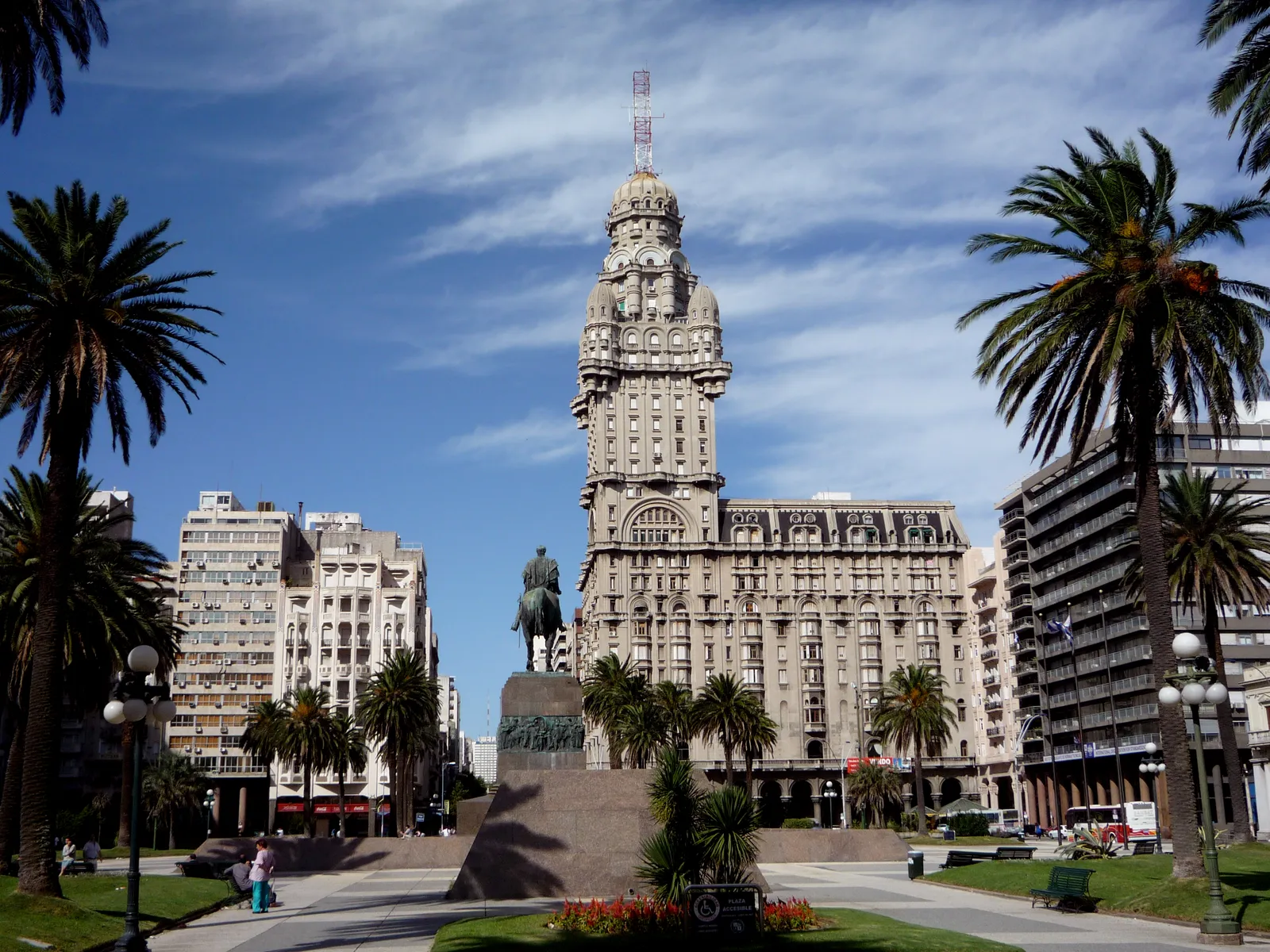
Palanti built a near-twin for it on the other side of the river, the Palacio Barolo on Buenos Aires’ Avenida de Mayo, five metres shorter; his idea was that a beam of light from each would meet over the water. Guided tours of the Montevideo one leave from the entrance on Plaza Independencia, run somewhere between 45 minutes and an hour, and end on the open terrace on the 11th floor and then in the enclosed lookout at the very top, which takes in the port, the square and the river. Tickets are in the region of 400 Uruguayan pesos, about ten US dollars, and the visit includes the tango museum downstairs: the bar that stood on this corner before the tower, La Giralda, is where Gerardo Matos Rodríguez first had “La Cumparsita” played in 1917. Tour times move around, so check them on the day.
The square itself costs nothing. Angelo Zanelli’s bronze of José Gervasio Artigas on horseback has stood at its centre since 1923, 17 metres of it on a granite base, and two wide granite staircases drop out of the paving into the mausoleum finished underneath in 1977, where Artigas is buried under a permanent honour guard. At the western end, the Puerta de la Ciudadela is the one surviving gate of the Spanish citadel that used to shut the old city off from everything east of it. If you would rather have these blocks explained as you walk them, a guided walking tour of the main sights can be booked ahead.
Teatro Solís gives its guided tour away free on Wednesdays
Montevideo’s oldest theatre opened on Buenos Aires street in 1856, about 1,500 seats behind a colonnaded front that faces its own small paved square a couple of minutes from Plaza Independencia. Carlo Zucchi drew the original design and Francisco Xavier Garmendia and Víctor Rabú saw it built. The city closed it in 1998 for a rebuild that ran six years, put two columns designed by Philippe Starck inside it, and reopened it in August 2004.
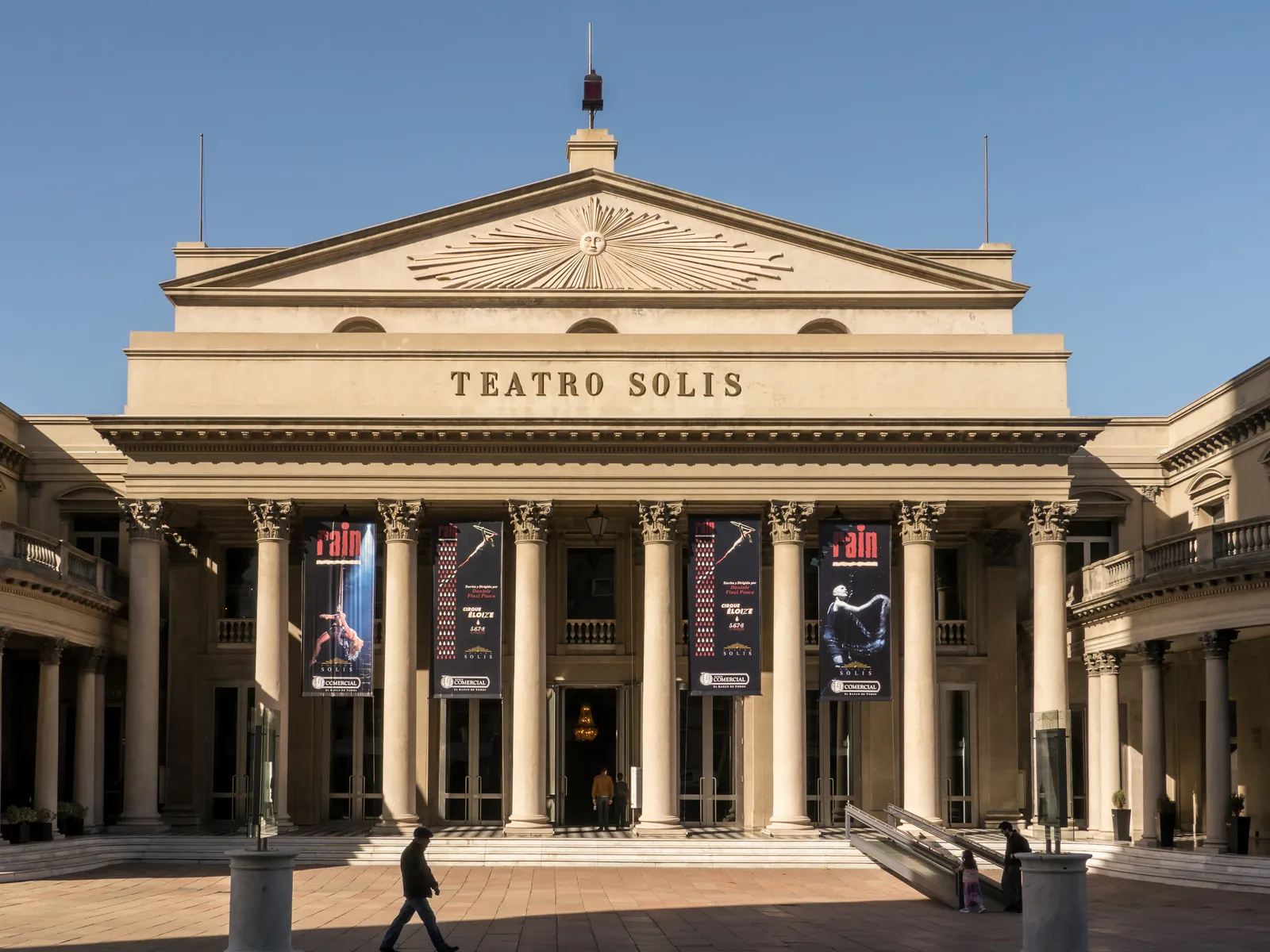
A guided tour is the only way into the auditorium when nothing is on. Tours run Tuesday to Friday at 11:00, 12:00 and 16:00, and at 15:00 and 16:00 on Saturdays and Sundays, in Spanish, English and Portuguese. Foreign visitors pay 400 pesos and Uruguayans 200, except on Wednesdays, when everyone goes in for nothing. This day is made of separate stops rather than one long walk, and a suitcase costs you a few minutes at each change rather than all at once.
Uruguay won the first World Cup in the Estadio Centenario
The Estadio Centenario went up in Parque Batlle in about nine months across 1929 and 1930, built for the first World Cup and finished days after the tournament had already started. Uruguay beat Argentina 4-2 in the final there on 30 July 1930, in front of 68,346 people. FIFA declared it the first Historical Monument of World Football on 18 July 1983, and no other building has been given that designation since. The bowl holds 60,235 now, and the opening match of the 2030 World Cup is booked for it.
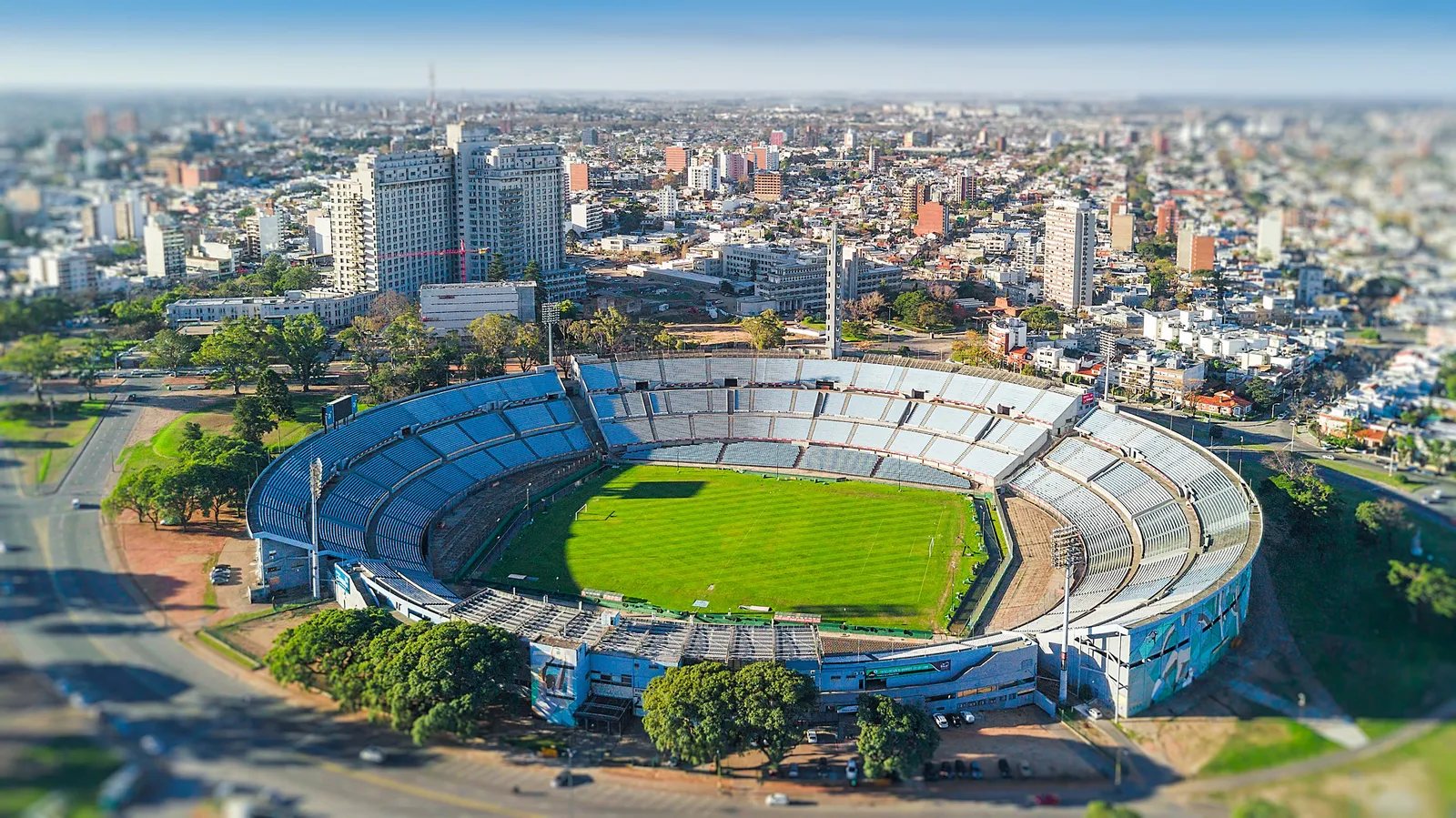
The Museo del Fútbol has been under the Olympic grandstand since 1975, and it is the reason to come on a day with no match: the furniture from the Uruguayan football association’s first committee room, the shirts, and the material from 1930 itself. It opens Monday to Saturday from 10:00 to 17:00 and Sunday from 11:00 to 15:00, and costs 400 pesos for foreign visitors, 200 for Uruguayans, nothing for under-12s. Above the same stand is the Torre de los Homenajes, a narrow concrete tower that got a panoramic lift in 2004. The ground sits about 4.5 kilometres east of the old city, and about fifteen minutes on foot from Tres Cruces, the long-distance bus terminal at the far end of Avenida 18 de Julio.
The Mercado del Puerto’s iron frame was cast in Liverpool
The Mercado del Puerto opened on 10 October 1868, a block back from the harbour at the bottom of the old city, with President Lorenzo Batlle y Grau and his ministers there for it. British engineers designed the building, the Union Foundry in Liverpool made the wrought iron, and the whole frame crossed the Atlantic by ship with blacksmiths sent along to put it together, which is how a glass-roofed Victorian market hall ended up in a South American port. It stopped selling produce a long time ago.
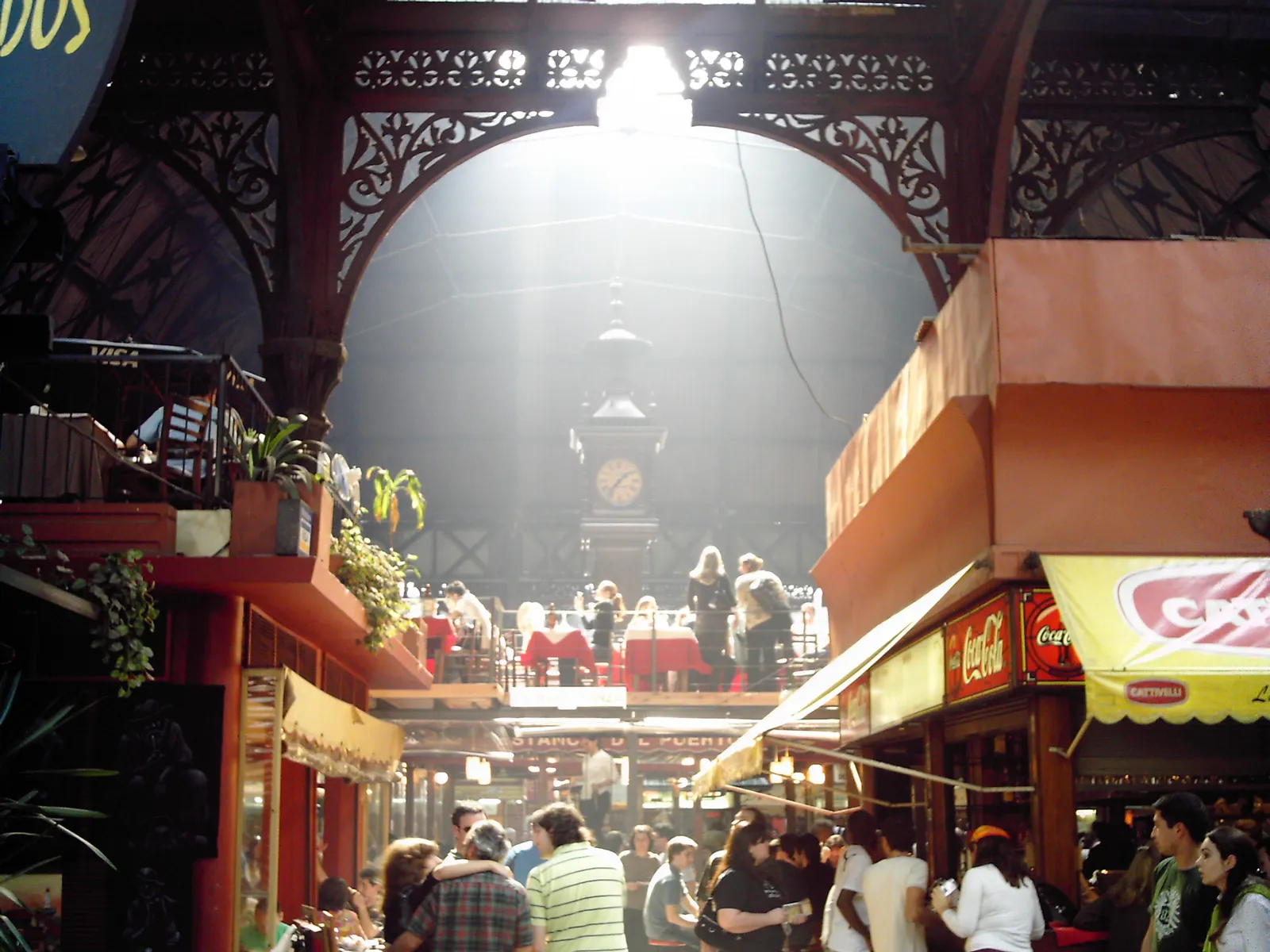
What fills it now is parrillas, open charcoal grills running the length of the hall, most of them going from late morning through the afternoon. Weekend lunch is when it is busiest and when live music is most likely to be on. Walking in costs nothing, and the ironwork and the clock over the central aisle are worth a look whether or not you eat. A few blocks inland, at Ituzaingó 1447, Café Brasilero has been open since 1877 and was the first café Montevideo’s city government listed as being of cultural interest; Eduardo Galeano wrote there for more than twenty years and the menu still carries a coffee named after him, and Juan Carlos Onetti is said to have started “El pozo” at one of its tables. It shuts on Sundays.
The seafront Rambla and the Punta Carretas lighthouse
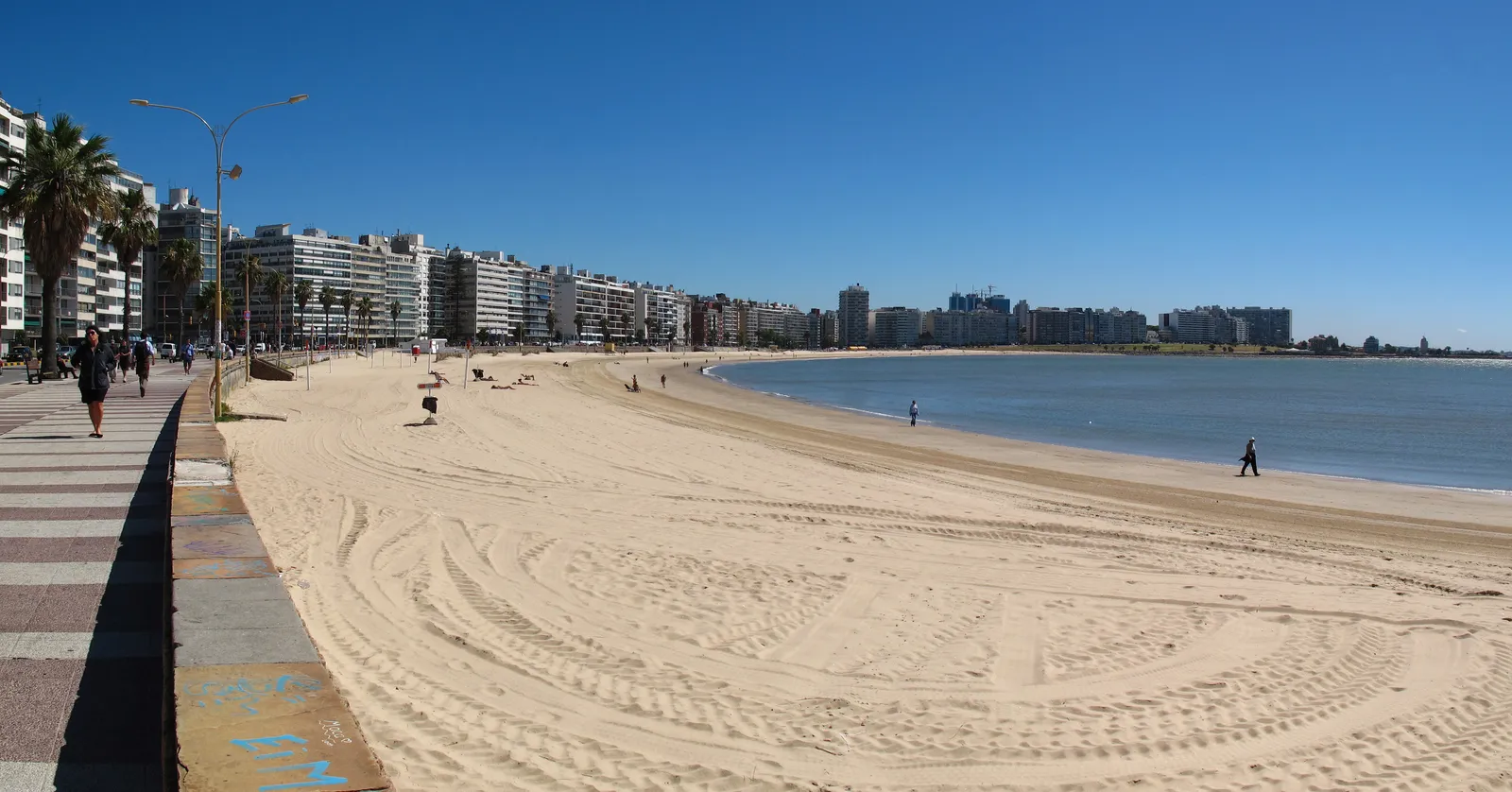
With more than six hours before your flight, the coast is the part worth adding. The Rambla, Montevideo’s seafront road and promenade, runs over 22 uninterrupted kilometres along the Río de la Plata, from the bay beside the old city round through Barrio Sur, Parque Rodó, Punta Carretas, Pocitos, Buceo and Malvín to Punta Gorda. It is flat the whole way, and the beaches along it are state-owned with building on them restricted, so the sand stays public rather than ending up behind hotel frontage.
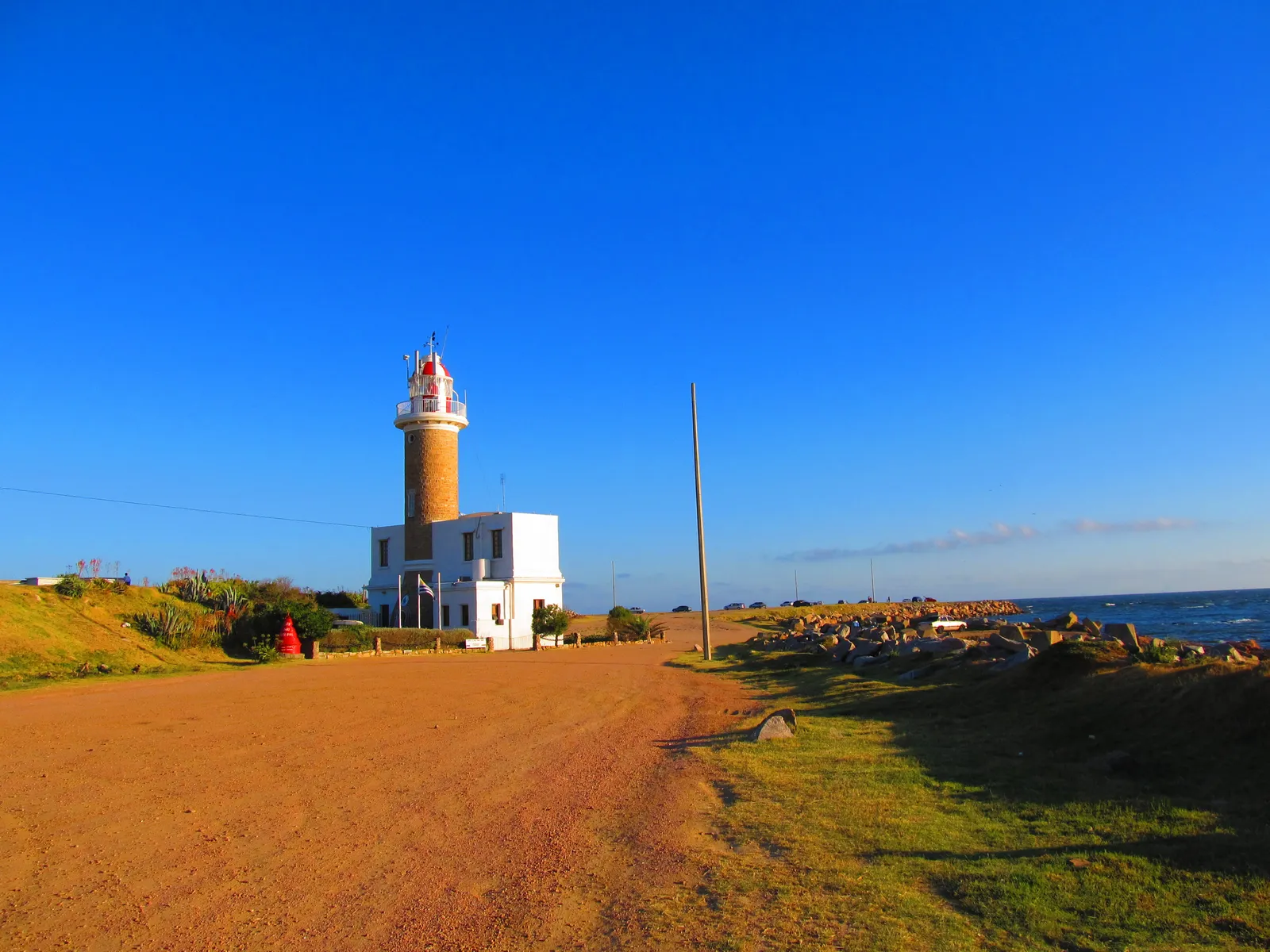
The lighthouse at Punta Brava marks the headland at Punta Carretas where the shoreline turns from the sheltered water in front of the city towards the open river, and the rocks under it are where people fish. Pocitos, the next bay east, is a long crescent of sand backed by a solid wall of apartment towers, about twenty minutes from the centre by bus.
No rail link to Carrasco airport, just a coach
Carrasco International Airport (MVD) sits about 19 kilometres east of downtown Montevideo and no train goes anywhere near it. COT runs coaches between the airport and the Tres Cruces terminal every 15 to 30 minutes for roughly 100 to 160 pesos, and that leg takes 25 to 30 minutes. Tres Cruces is about two and a half kilometres up Avenida 18 de Julio from Plaza Independencia, though, and a city bus down the avenue adds about twenty minutes, so budget closer to an hour door to door than the half hour the coach leg alone suggests.
The other public option is the DM1, a local bus line worked jointly by CUTCSA and Copsa that runs from the airport through the city out to Punta Carretas. It comes every 10 to 15 minutes through the day and roughly every half hour overnight, and it saves you the change at Tres Cruces, but it stops constantly and takes 45 minutes to an hour. A taxi or a ride-hailing car does the same distance in 25 to 30 minutes and collects you wherever the day ends.
Leave the old city at least two and a half hours before an international departure. That covers a slow run out on the coach and still leaves an hour and a half at the airport.
The day is built out of separate stops with a bus ride or a ten-minute walk between each one, which is exactly the shape of day a suitcase makes worse. Leave it at a luggage storage point in the old city in the morning and pick it up on the way out.
Frequently asked questions
What should I do during a layover in Montevideo?
Start at Plaza Independencia, the square between the old city and the newer centre: the bronze of José Gervasio Artigas stands at its centre, his mausoleum is directly underneath it, and Palacio Salvo, the 27-storey tower of 1928 on one corner, runs guided tours up to a terrace and an enclosed lookout at the top. Teatro Solís, two minutes away, opened in 1856 and shows its auditorium on a guided tour that costs nothing on Wednesdays. Walk down through the old city to the Mercado del Puerto, an 1868 market hall whose ironwork was cast in Liverpool and which is now a hall full of charcoal grills. Five hours covers those three comfortably once the ride in and out is allowed for; the football museum at the Estadio Centenario and the seafront need a longer stop, and the theatre tour is the one piece with fixed times worth checking first.
What is shut in Montevideo on a Sunday?
Enough to change the plan. The Andes 1972 museum on Rincón in the old city is closed all day Sunday, and Café Brasilero on Ituzaingó, open since 1877, is closed too. The football museum under the Olympic grandstand at the Estadio Centenario cuts back to 11:00 until 15:00 on Sundays instead of 10:00 until 17:00. Teatro Solís still runs guided tours, but only at 15:00 and 16:00, and the free Wednesday tour obviously does not apply. The Mercado del Puerto goes the other way: weekend lunch is when its grills are busiest and when live music is most likely to be on.
What does this Montevideo route cost if you pay for everything?
Under 1,500 Uruguayan pesos a head, which is roughly 35 to 40 US dollars. The Palacio Salvo tour is about 400 pesos, the Teatro Solís tour 400 for foreign visitors and free on Wednesdays, the football museum at the Estadio Centenario 400 for foreign visitors with under-12s free, and the Andes 1972 museum 300. Plaza Independencia, the Artigas mausoleum beneath it, the Mercado del Puerto and the whole seafront cost nothing, so a layover here can also be done for the price of the bus fares alone.
Can I pay in US dollars in Montevideo?
In the places on this route, often yes. The Palacio Salvo tour lists a US dollar and a Brazilian real price alongside the peso one and takes cards, and the Andes 1972 museum states the same. Cards are widely accepted in the old city. It is still worth having some pesos for bus fares and for the smaller places in the Mercado del Puerto, and change from a dollar note will come back in pesos at whatever rate the seller is using.
Is the coach or a taxi better for getting back to Carrasco International Airport?
The coach if you are near the Tres Cruces terminal, a car if you are not. No train serves Carrasco International Airport (MVD). COT runs coaches between Tres Cruces and the airport every 15 to 30 minutes for roughly 100 to 160 pesos, and the ride is 25 to 30 minutes, but Tres Cruces is about two and a half kilometres up Avenida 18 de Julio from Plaza Independencia, so getting to it adds about twenty minutes on a city bus. The DM1 line runs from the old city out to the airport every 10 to 15 minutes through the day, which saves the change, but it stops constantly and takes 45 minutes to an hour. A taxi or a ride-hailing car covers the 19 kilometres in 25 to 30 minutes and picks you up wherever the day ends, which is usually the better call for an evening flight.