Montevideo Ferry Terminal to Plaza Zabala
Part of the full Montevideo Layover: The Old City From MVD
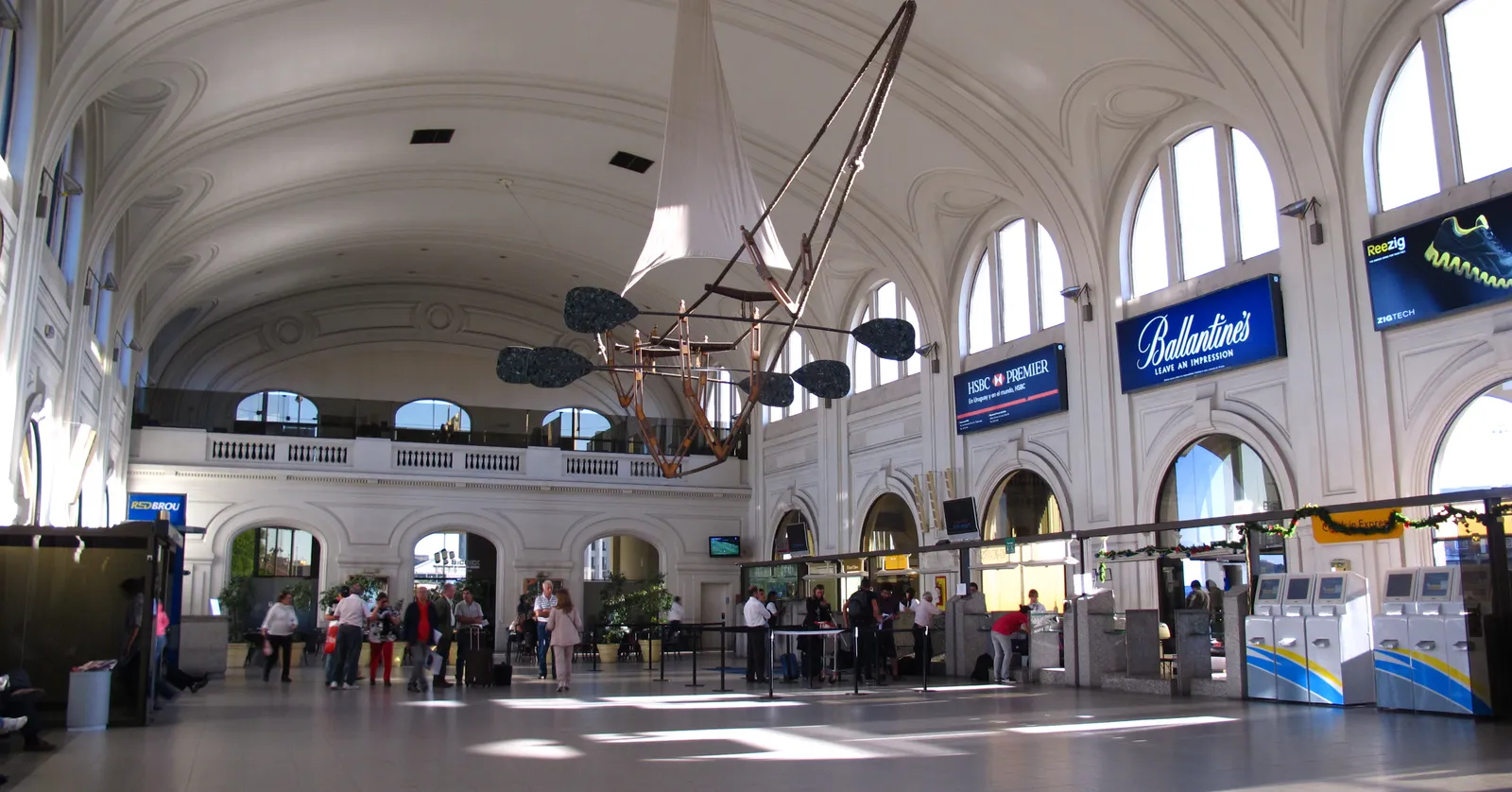
Montevideo’s ferry terminal on the Rambla puts the arcaded front of the Mercado del Puerto two minutes from the gangway and the equestrian statue in Plaza Zabala, with the free rooms of the Palacio Taranco behind it, about seven minutes further on foot.
A 1920s river hall recycled for the fast catamaran
The building the Buquebus ferry from Buenos Aires actually docks at started life in the early 20th century as a different kind of river terminal and was recycled decades later into the current departures hall: one long nave with a mezzanine gallery at each end, stretched further by a glazed addition of the same width tacked onto the water side. The Argentine capital sits 146 nautical miles across the Río de la Plata, and the direct catamaran covers it in a little over two hours, several times a day. Only that direct sailing lands here: the cheaper combined ferry-and-bus option that routes through Colonia del Sacramento instead drops its passengers at the Tres Cruces bus terminal on the other side of the old city, so which terminal you arrive at already tells you which service you were on.
Argentina and Uruguay run a joint border post on this crossing, so a passenger sailing back to Buenos Aires clears both Uruguayan exit and Argentine entry stamps in this same hall before boarding, not on the other side of the water. Check-in for that sailing opens two hours out and closes twenty minutes before departure, a shorter window than most flights allow, and the immigration queue behind it can eat more of that margin than the twenty minutes on its own suggests, so a bag that needs its own scan at the checkpoint is worth clearing from your hands well before the cutoff.
Mercado del Puerto’s arcade is the first thing past the gates
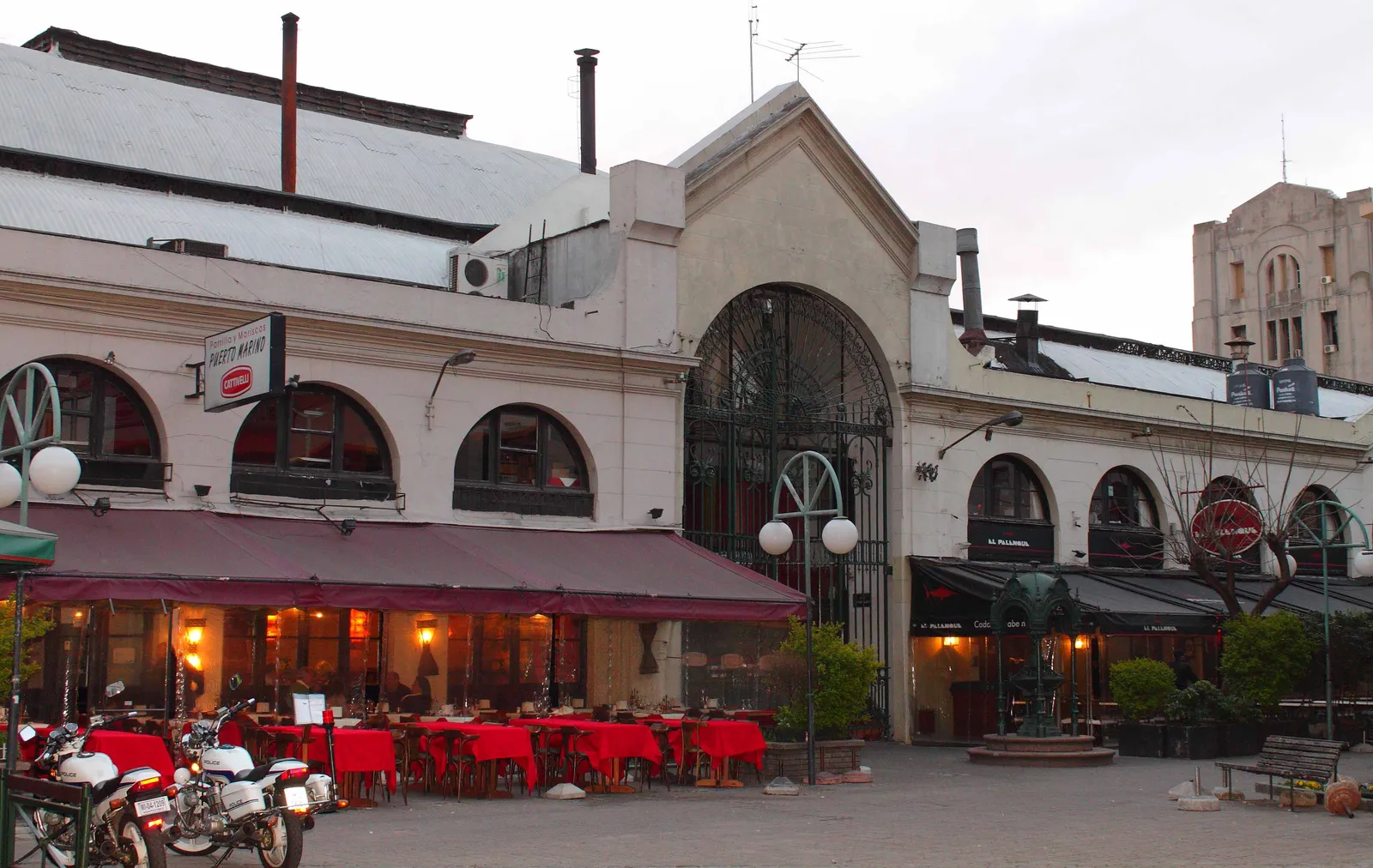
Walk out of the terminal and the arched, cream-coloured front of the Mercado del Puerto is already in view, a couple of minutes up the Rambla at the edge of Ciudad Vieja. The building itself, its ironwork cast in Liverpool in 1868, and the grills that now fill it are covered at length on the main Montevideo guide: what matters here is that it’s the closest thing to the gangway worth a stop, open for a coffee or a full lunch depending on how much time the sailing or the flight afterward leaves you.
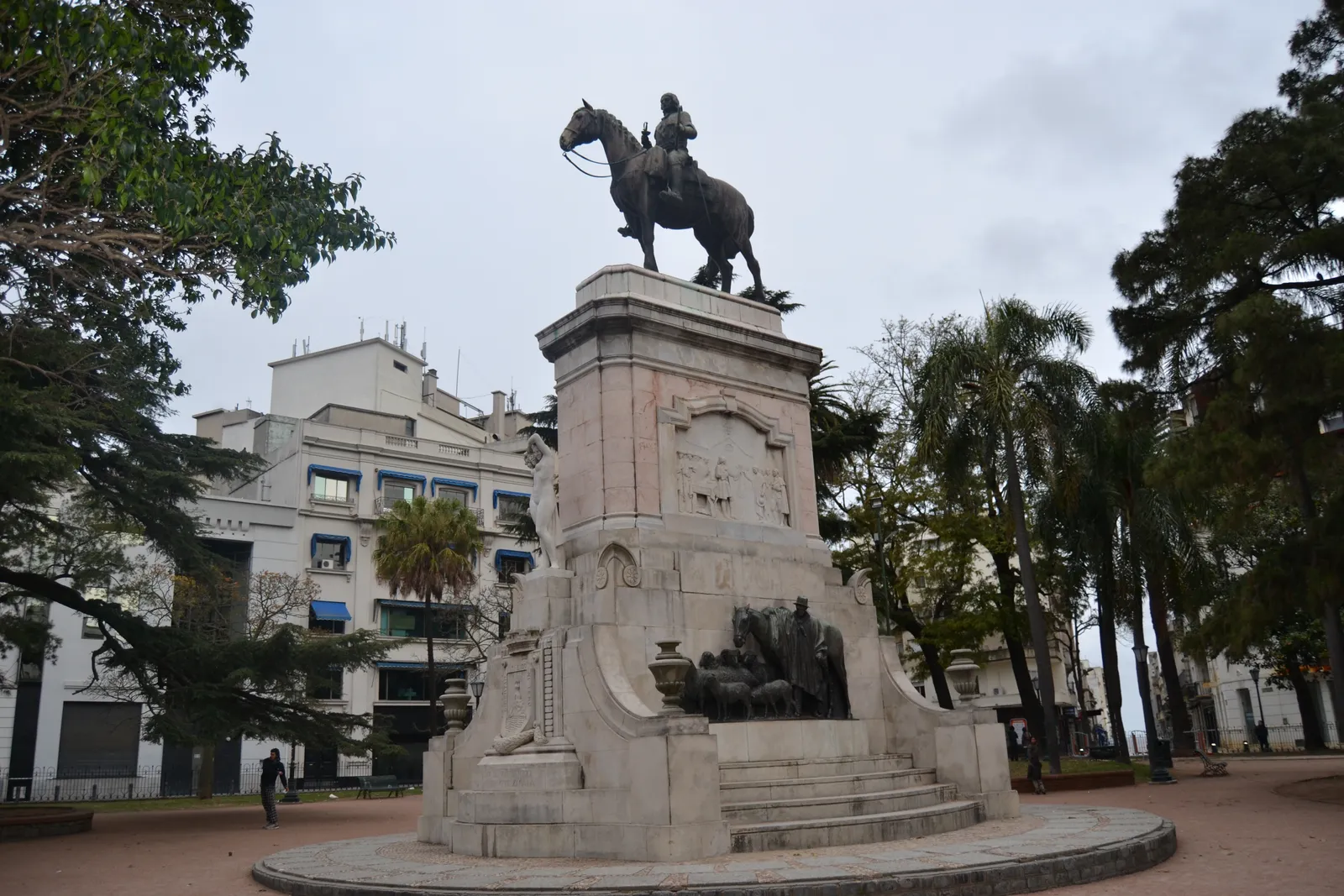
Plaza Zabala’s founder on horseback, and the free palace behind him
Five to seven minutes further into Ciudad Vieja, Plaza Zabala opened in 1890 around what would become one of the neighbourhood’s best-known monuments: an equestrian bronze of Bruno Mauricio de Zabala, the Basque governor who founded Montevideo between 1724 and 1730, sculpted by Lorenzo Coullaut Valera with the architect Pedro Muguruza and inaugurated in 1931. The pedestal carries reliefs on three sides, including a scene of the founding itself, and the whole thing costs nothing to walk up to at any hour.
Facing the square, the Palacio Taranco was built as a private mansion by the French architect Charles Louis Girault, who also designed the Petit Palais in Paris, for the Ortiz de Taranco family; the state took it over in the 1940s and it now holds the Museo de Artes Decorativas, two floors of period rooms and an archaeology collection in the basement, all free to enter, Tuesday to Saturday from 11:00 to 18:00. If you’d rather have this stretch of Ciudad Vieja narrated instead of self-guided, a guided walking tour of the old city’s main sights starts nearby and covers this ground and more.
No direct bus out to Carrasco airport
Nothing runs straight from the port terminal to Carrasco International Airport (MVD); a taxi or ride-hailing car is the direct option, covering the roughly 20 kilometres in 25 to 30 minutes. The cheaper route is a short walk or bus ride up to Tres Cruces and the COT coach from there, which departs every 15 to 30 minutes for a further 25 to 30 minutes, so a door-to-door trip either way runs close to an hour once the first leg is added in.
Whichever way this stop ends, it’s a walk to the market, a longer walk into the old city, and then a bus ride or a taxi to the airport, three different pieces of pavement for a suitcase to be dragged over. Left at a storage point by the terminal, the whole loop is easier without it.
Frequently asked questions
What should I do during a layover near the Montevideo port passenger terminal?
Walk two minutes to the Mercado del Puerto, the 1868 iron market hall right outside the gates, then continue another five to seven minutes into Ciudad Vieja to Plaza Zabala, where an equestrian statue of the city's founder stands, and into the free rooms of the Palacio Taranco behind it. Two hours covers the market front and the plaza comfortably; add an hour if the museum's Tuesday-to-Saturday hours line up with your arrival. Keep the terminal's own check-in cutoff in mind if you're catching a return sailing rather than a flight.
How long before the ferry does check-in close at Montevideo's terminal?
Check-in opens two hours before departure and closes twenty minutes before it, which is a tighter window than most flight check-ins. Both Uruguayan exit and Argentine entry immigration are processed in this same building before boarding, and the queue for that can run longer than the twenty minutes check-in itself allows for, so arriving with over an hour in hand is the safer plan for a same-day return crossing.
Does this terminal handle immigration for both Uruguay and Argentina?
Yes. Argentina and Uruguay run a joint border-control system on the river crossing, so a passenger sailing from Montevideo to Buenos Aires clears Uruguayan exit and Argentine entry stamps in the same hall here before boarding, rather than doing the Argentine side on arrival. It's the reverse of what happens flying: there's no second immigration queue waiting on the other side of the water.
Is the Museo de Artes Decorativas in Palacio Taranco free?
Yes, entry is free. It's open Tuesday to Saturday from 11:00 to 18:00, in the former Ortiz de Taranco family mansion facing Plaza Zabala, with two floors of period rooms and an archaeology collection in the basement. It doesn't open Sundays, so a Sunday arrival narrows this stop down to the statue and the plaza itself, both viewable at any hour.
How do I get from the port terminal to Carrasco International Airport?
There's no direct bus. A taxi or ride-hailing car covers the roughly 20 kilometres in 25 to 30 minutes. The cheaper route is a ten-minute walk or short bus ride up to the Tres Cruces terminal and the COT coach from there, which runs to the airport every 15 to 30 minutes for 25 to 30 minutes more, so budget close to an hour door to door either way once the first leg is counted.