Montevideo Layover Near Tres Cruces Terminal
Part of the full Montevideo Layover: The Old City From MVD
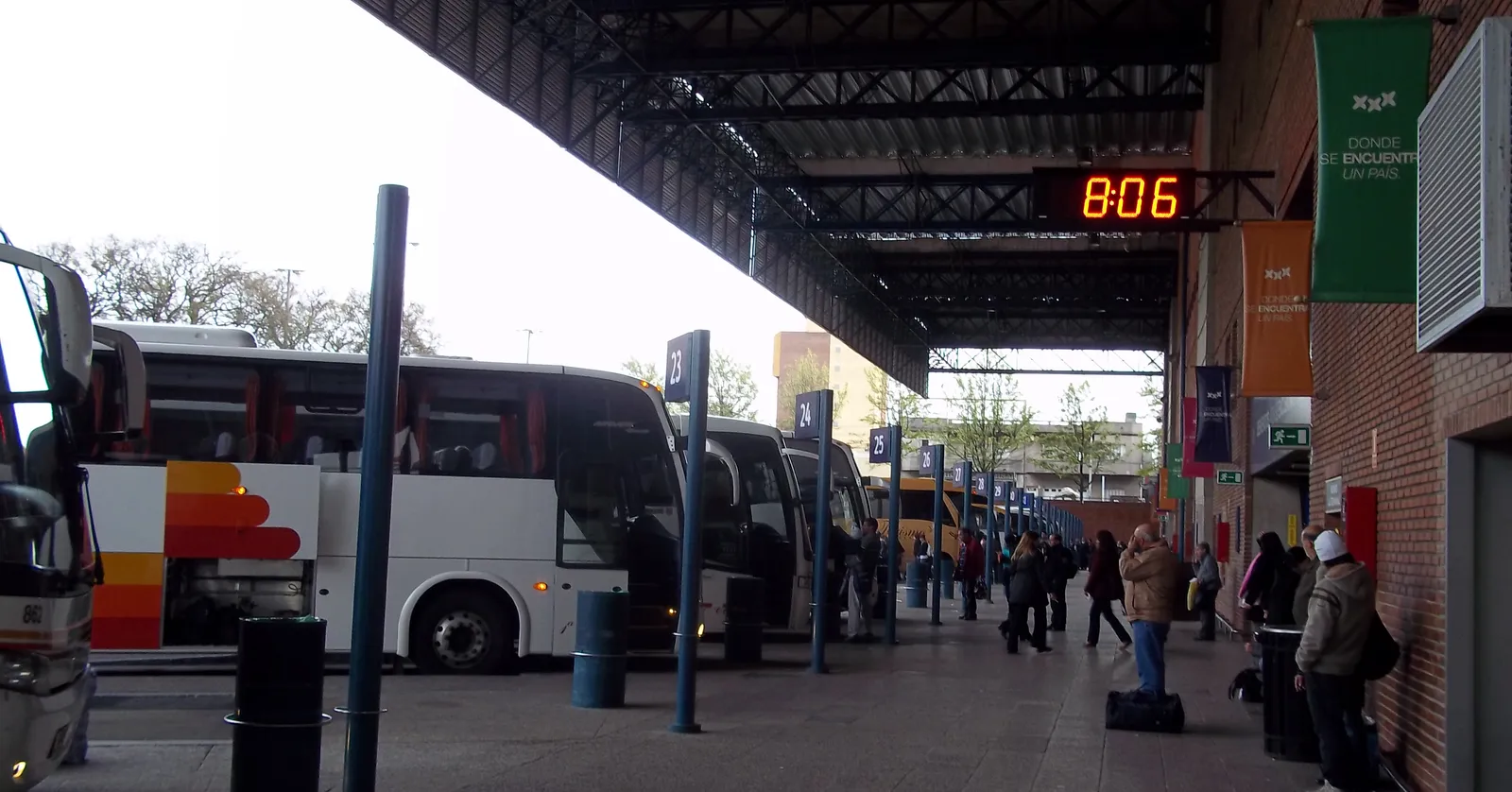
Montevideo’s Tres Cruces bus terminal stands at the top end of Avenida 18 de Julio, five minutes from a 40-metre granite obelisk and a short walk further from Parque Batlle, where a bronze team of oxen has been hauling a covered wagon up a grass bank since 1934.
The obelisk to Uruguay’s 1830 constitution, at Bulevar Artigas
A tapering shaft of pink granite stands on the island where Avenida 18 de Julio runs into Bulevar Artigas, about five minutes south of the terminal doors. It is 40 metres tall, it was inaugurated in 1938, and it commemorates the men of the constituent assembly that wrote Uruguay’s first constitution in 1830. José Luis Zorrilla de San Martín, the Uruguayan sculptor who made it, set three bronze figures against the base representing Law, Liberty and Force, and fountains play in the basin in front of them.
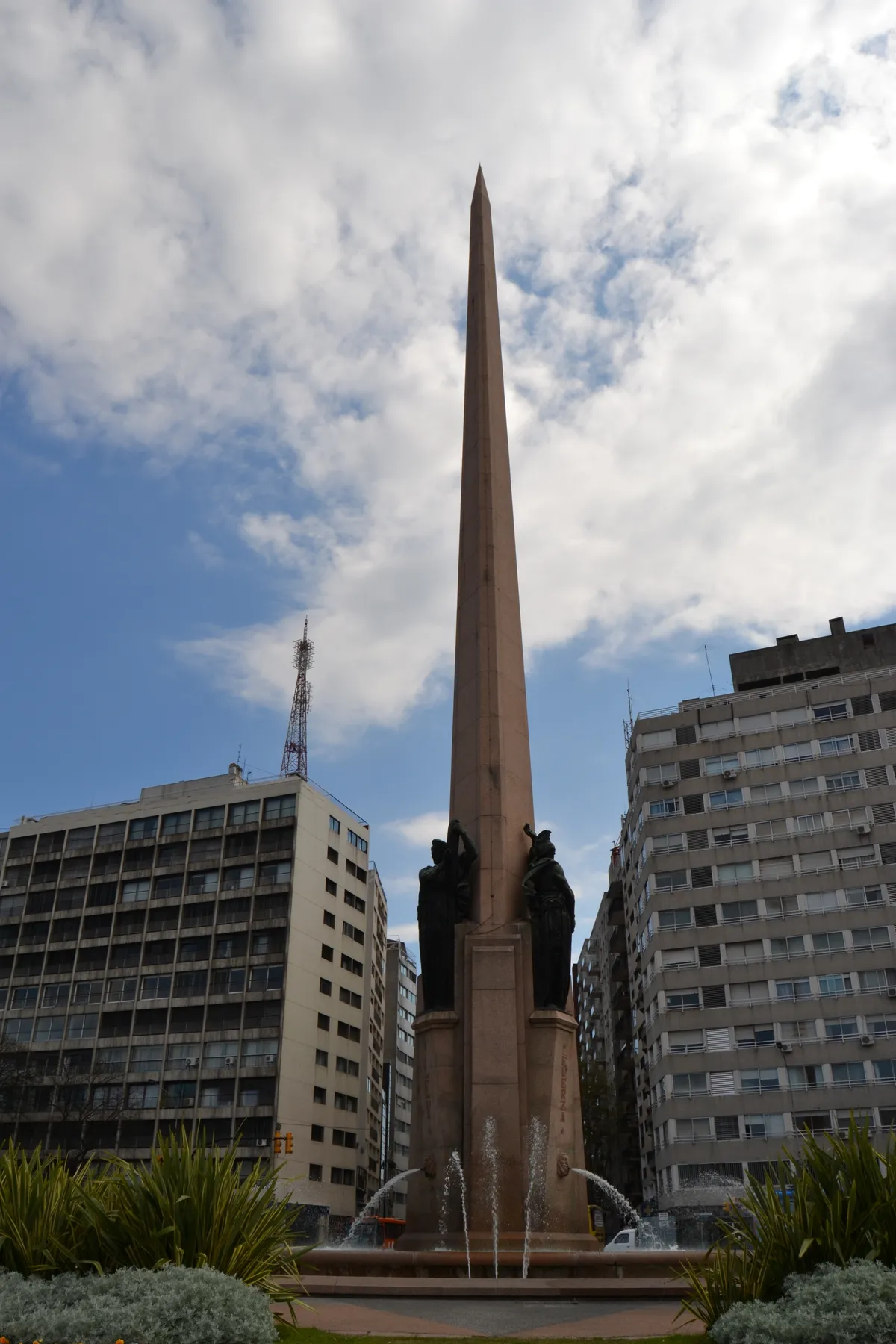
Standing at the foot of it is also the clearest way to see how the city is laid out: Avenida 18 de Julio runs dead straight from here to Plaza Independencia and the old city about two and a half kilometres west, and Parque Batlle opens out to the east. That western half, with the 1856 theatre and the 1868 port market, is the full Montevideo route, and it needs a good deal longer than a stop at the terminal allows.
La Carreta, a bronze ox team hauling a wagon in Parque Batlle
Parque Batlle covers about 60 hectares east of Bulevar Artigas. The French landscape architect Carlos Thays designed it and planting started in 1911, on ground that a law of 1907 had set aside as the city’s central park; what has grown out of that is a park of heavy old trees, ponds, running tracks and monuments, with the national stadium sitting in the middle of it.
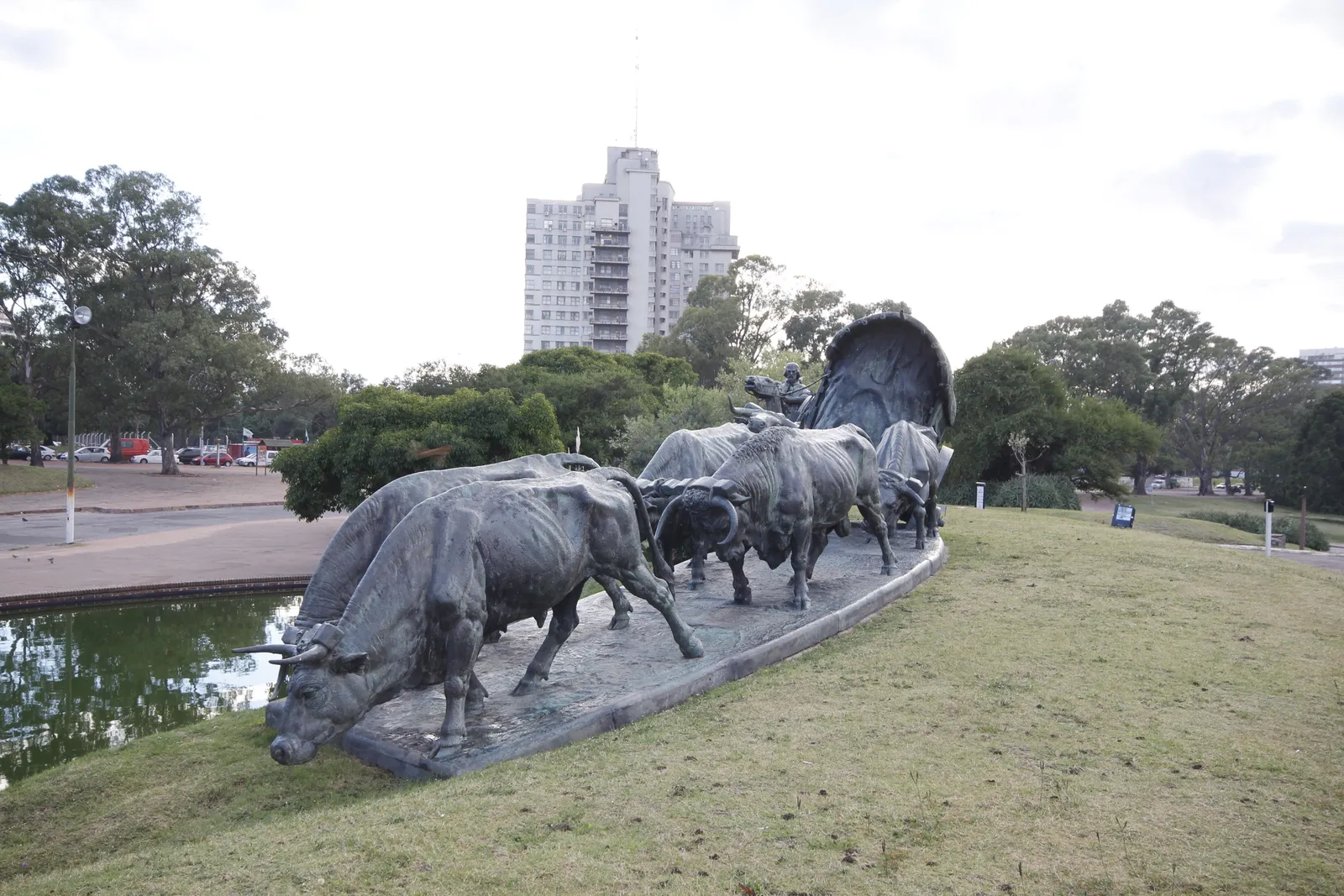
The best of the monuments is La Carreta, which José Belloni finished in 1934: three pairs of yoked oxen leaning into the traces to drag a covered wagon up a bank, the driver riding on top, all of it in bronze and set above a small pond so the whole group is reflected. Belloni cast the animals at working scale rather than heroic scale, which is why it reads as a piece of hard labour rather than a statue of one. It costs nothing and there is no gate, so the time of day is up to you. The Estadio Centenario, where the 1930 World Cup final was played, is about fifteen minutes further on through the park, and its football museum shuts at 17:00 on weekdays and Saturdays and at 15:00 on Sundays.
Tres Cruces stacks a shopping centre on top of its bus platforms
Uruguay’s long-distance coach network converges on one building at Bulevar Artigas 1825, which opened on 16 November 1994 and took the country’s intercity departures off Plaza Cagancha downtown. Guillermo Gómez Platero’s studio designed it with Enrique Cohe and Roberto Alberti, in brick, with a control tower and a run of skylights over the concourse. It has 49 gates, something like 12 million passengers a year pass through it, and the two levels above the platforms are a shopping centre with a food court, a cinema and a supermarket, which is why the building stays useful when the weather turns. The escalators and the gate line back up when several coaches load at once, and it is a slower squeeze with a suitcase than without one.
The airport coaches load at Tres Cruces itself
COT runs the coaches to Carrasco International Airport (MVD) from this terminal every 15 to 30 minutes, for roughly 100 to 160 Uruguayan pesos, and the 19-kilometre run takes 25 to 30 minutes with no change along the way. That is the whole advantage of filling a few hours here rather than downtown: there is no second leg to build a margin around, so two hours before an international departure is a comfortable time to be back on the platforms.
The DM1, a local bus line worked jointly by CUTCSA and Copsa, also calls at Tres Cruces on its way between the city and the airport, at intervals of 10 to 15 minutes through the day. It stops constantly and takes closer to three quarters of an hour, so it is the fallback rather than the choice. A taxi or a ride-hailing car does the same distance in 25 to 30 minutes.
Everything here is close enough together that the walking is trivial and the bag is the only awkward part: the obelisk, the park and the monument are all within about a kilometre of the platforms, and a storage point lets you do that loop empty-handed and collect the suitcase on the way through.
Frequently asked questions
What should I do during a layover near Tres Cruces terminal in Montevideo?
Walk five minutes south to the obelisk where Avenida 18 de Julio meets Bulevar Artigas: 40 metres of pink granite with three bronze figures at its base, put up in 1938 for the men who wrote Uruguay's first constitution. Parque Batlle starts just beyond it, 60 hectares of trees laid out from 1911, and the La Carreta monument inside it is a bronze team of oxen dragging a covered wagon up a bank, unveiled in 1934. Three hours covers both at a walking pace with time to spare at the platforms. Add the football museum at the Estadio Centenario, about fifteen minutes' walk further into the park, if you have five hours or more, and check its closing time before setting off.
How long is the walk from Tres Cruces to the Estadio Centenario?
About fifteen minutes, or a little over twenty at a slow pace, almost all of it through Parque Batlle rather than along a main road. The stadium stands in the middle of the park with Avenida Dr. Américo Ricaldoni running past the museum entrance. City buses also run from the avenues around the terminal and drop you at the Ricaldoni corner, which is worth doing in heavy rain or heat but saves little time otherwise. The football museum under the Olympic grandstand opens Monday to Saturday from 10:00 to 17:00 and Sunday from 11:00 to 15:00, so a late-afternoon arrival at the terminal will not make it.
Is there anything to do at Tres Cruces in the rain?
Yes, without leaving the building. The terminal's platforms sit under a full steel canopy and the two floors above them are an enclosed shopping centre with a food court, a cinema, a pharmacy and a supermarket, all open long after the shops in the old city have shut. The obelisk and Parque Batlle are both entirely outdoors and there is no shelter at either, so a wet layover is the one where staying put genuinely is the better plan.
How early should I leave Tres Cruces for a flight from Carrasco International Airport?
Two hours before an international departure is a comfortable margin from this terminal, because you are already standing where the airport coaches leave from. COT runs them between Tres Cruces and Carrasco International Airport (MVD) every 15 to 30 minutes for roughly 100 to 160 pesos, and the ride is 25 to 30 minutes with no change on the way. The DM1 local line also calls here and reaches the airport, but it stops constantly and takes closer to three quarters of an hour. A taxi or a ride-hailing car covers the 19 kilometres in 25 to 30 minutes.