Montevideo Layover at Carrasco Airport, MVD
Part of the full Montevideo Layover: The Old City From MVD
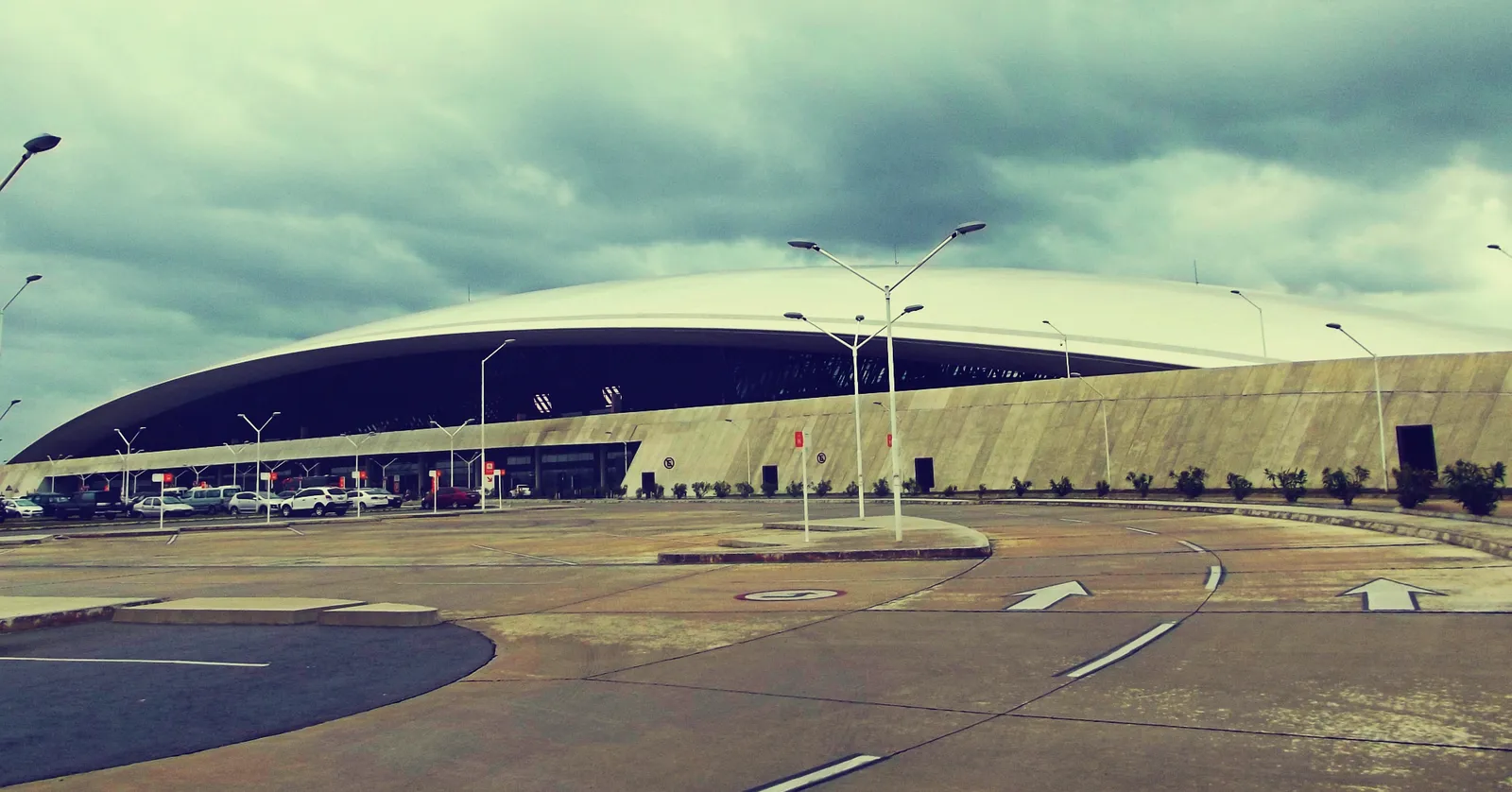
Montevideo’s Carrasco International Airport keeps a free public terrace on the floor above its departures hall, under a single curved roof 365 metres long, and the 1921 Hotel Carrasco and the beach below it are ten minutes west by bus.
The terminal’s public terrace looks out over the runway
Rafael Viñoly, the Uruguayan architect, put everything at Carrasco under one roof: a shallow arc of concrete running more than 365 metres end to end, with arrivals and departures stacked on separate floors beneath it. His office described the curve as borrowed from the dune line along the Uruguayan coast, and from the forecourt that reading holds up. The building started operating at the end of December 2009 and handles a bit over two million passengers a year, which is small enough that it rarely feels pressed.
The terrace is the part worth knowing about. It sits on the level above departures, outdoors, planted rather than tiled, and it looks straight across the aircraft stands to the runway, which makes an hour there pass faster than the same hour in a gate lounge. It is also landside, so you can use it before clearing security and come back down. The old terminal, opened on 21 November 1953 with a control tower and a second-floor restaurant, still stands on the airfield out of use; the government has been tendering it for a new occupant rather than pulling it down.
The 1921 Hotel Carrasco on the seafront
Seven kilometres west of the airport, where Avenida Arocena meets the coast road, a pale stone hotel with a domed corner tower has stood since 29 January 1921. Gastón Mallet and Jacques Dunant designed it as a European-style palace hotel for the sea-bathing crowd, in a mix of neoclassical and baroque that the Uruguayan state listed as national heritage in 1975. It closed in 1997, sat empty for over a decade, and reopened in March 2013 after a restoration that began in 2009. A casino, a spa and a restaurant occupy it now.
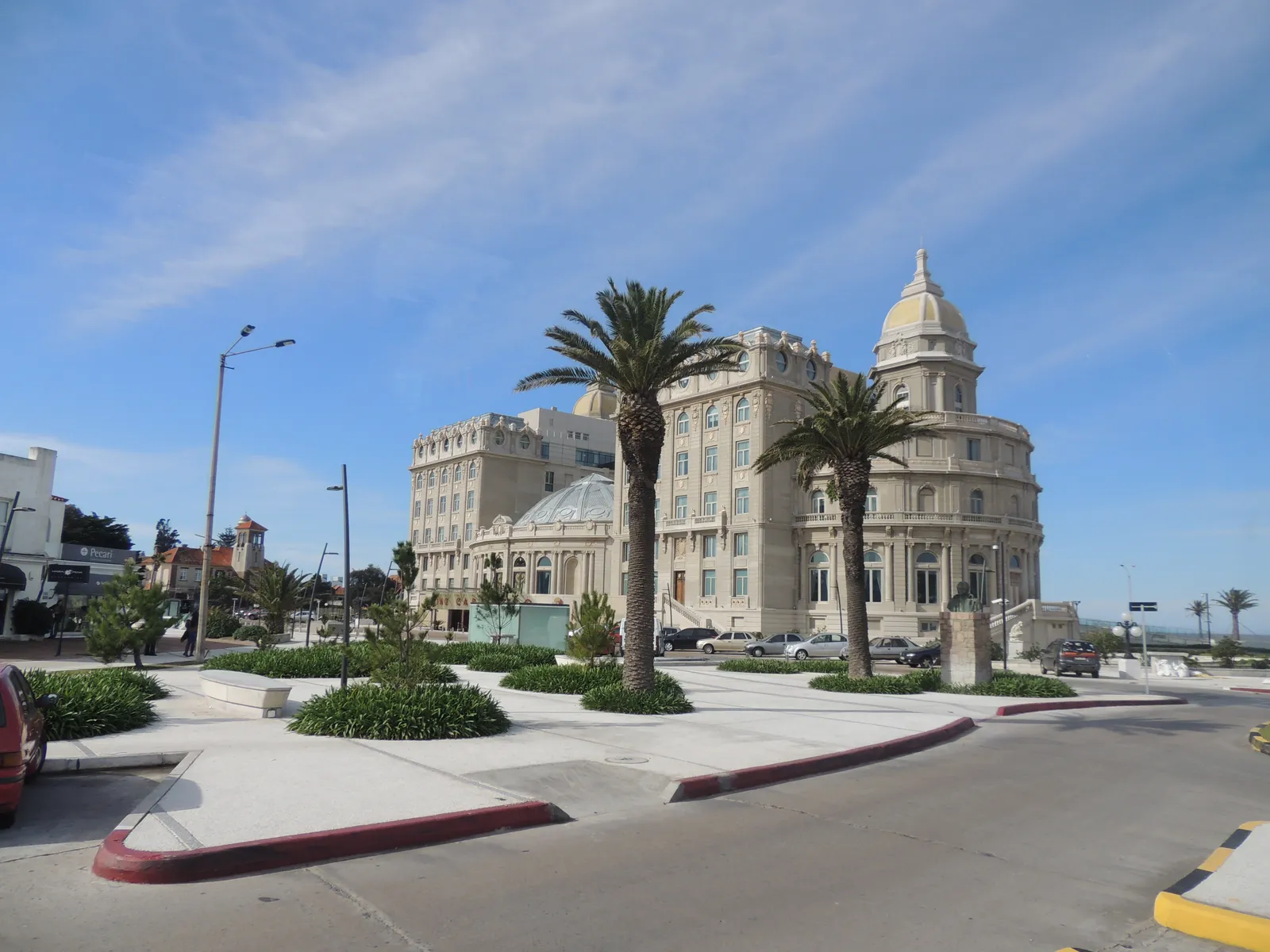
You do not have to go in. The building is the point, and the square in front of it, with its palms and its view down the Rambla, is a public space. Avenida Arocena runs inland from the hotel and is where the neighbourhood’s cafés and shops are, which is the closest thing to a high street within reach of the terminal. Which of these two halves of the day makes sense depends on the kind of wait you are having: a short connection between regional flights keeps you airside with your bag, while an evening gap long enough to reach the coast is the one where it is worth leaving the suitcase behind and travelling light.
Carrasco beach at the eastern end of Montevideo’s seafront
Montevideo’s shoreline finishes at Carrasco, where the Rambla runs out to the mouth of the Carrasco stream and the city gives way to the Canelones coast. The beach here is broader and emptier than the ones nearer the centre, backed by dunes, the coast road and the gardens of what was laid out in the early 20th century as a seaside suburb rather than a city district.
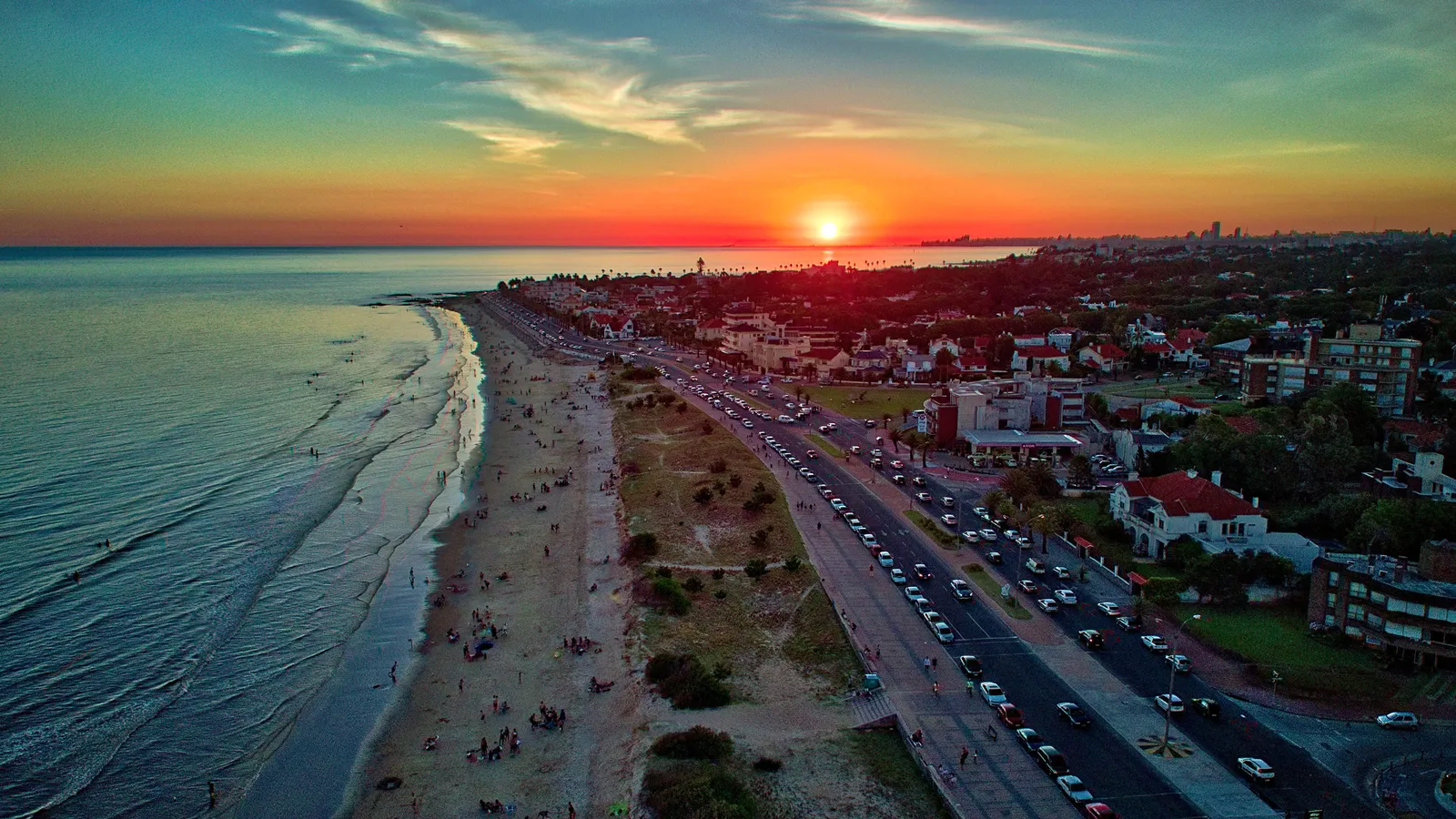
The water is the Río de la Plata rather than the Atlantic, so it is brown with sediment and calm most days, and the swimming season is roughly December to March. Outside it the draw is the walk: the promenade runs unbroken west from here for over 22 kilometres, and doing even the first kilometre of it puts the airport out of mind in a way the terrace cannot.
A bus covers the seven kilometres in about ten minutes
Copsa’s 710 runs between the terminal and the Carrasco neighbourhood roughly every twenty minutes through the day and takes about ten minutes for a standard city fare, which is the cheap way to make this trip. A taxi or a ride-hailing car does it in twelve to fifteen minutes and takes you to a specific door instead of a stop on the avenue.
Four hours on the ground is the sensible floor for going out to the coast at all: ten to fifteen minutes each way, an hour or two at the hotel and the beach, and the check-in margin still intact at the end. Anything shorter and the terrace upstairs is the better use of the time. For the city proper, the coaches run 19 kilometres west to the Tres Cruces terminal in 25 to 30 minutes, which starts to make sense from about five hours upwards.
Either way the suitcase is the thing that decides how far you get. Left at a storage point, the coast is an easy hour and a half; wheeled along the Rambla in the wind off the river, it is a different afternoon entirely.
Frequently asked questions
What should I do during a layover at Carrasco International Airport in Montevideo?
With two hours or so, stay in the building: the terrace on the level above the departures hall is open to anyone, is planted rather than paved, and looks straight out at the apron and the runway under Rafael Viñoly's single curved roof. With four hours or more, take the bus or a taxi the seven kilometres west into Carrasco itself, where the Hotel Carrasco of 1921 stands on the seafront with its dome and its casino, and the beach runs east from it to the mouth of the Carrasco stream. Both of those are free to look at; only the hotel's restaurant and casino ask for anything. Keep an eye on the check-in cut-off for your flight rather than on the clock, since international departures here want you back well before the gate closes.
How do I get from Carrasco airport to Carrasco beach?
Copsa's 710 bus runs between the airport and the Carrasco neighbourhood in about ten minutes for the price of a city fare, roughly every twenty minutes through the day, and it is the cheapest way to cover the seven kilometres. A taxi or a ride-hailing car does it in twelve to fifteen minutes and drops you at the hotel or the Rambla itself. Walking is not realistic: the road between the two runs along Avenida Italia and the airport approach with no continuous pavement worth using.
How long a layover do you need to leave Carrasco airport?
About four hours on the ground makes the coast at Carrasco worth doing, once you allow ten to fifteen minutes each way plus the check-in margin at the end. Anything under three hours and you are better off on the terrace upstairs. Central Montevideo is a different proposition altogether: it is 19 kilometres west, the coach to the Tres Cruces terminal takes 25 to 30 minutes each way before you have gone anywhere, and the old city route needs five hours or more to be worth the trip.
Is Carrasco airport's terrace any good with kids?
It is the one thing in the building that holds a child's attention for free. The terrace sits on the floor above departures, outdoors and landscaped, with an uninterrupted view of the aircraft stands and the runway beyond them, so arrivals and departures are the entertainment. It is open air, so a windy or wet day takes it off the table; the departures hall below it is enclosed and has the shops and food, but nothing to watch.