Montevideo's Mercado Agrícola in Goes
Part of the full Montevideo Layover: The Old City From MVD
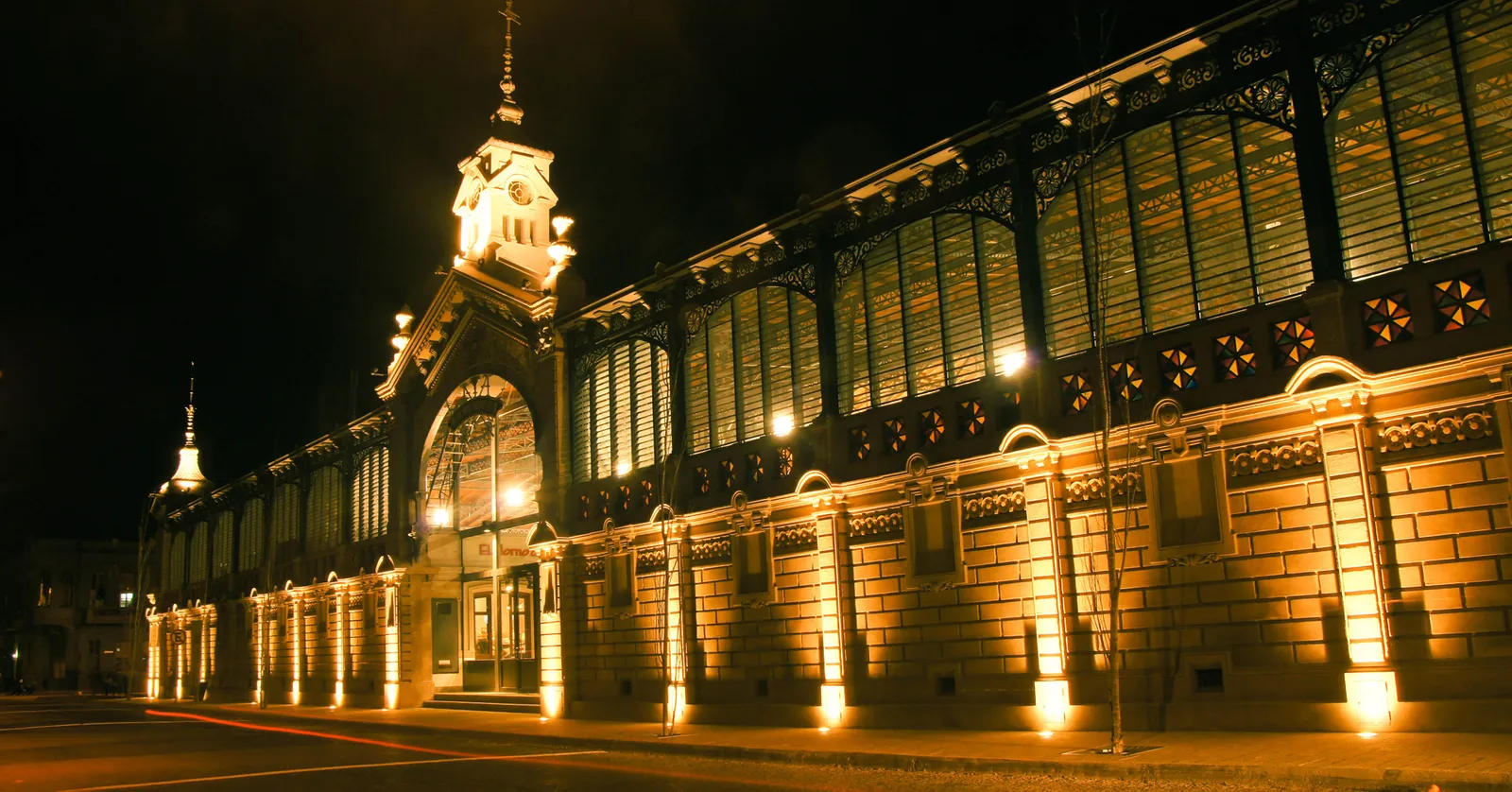
Montevideo’s Mercado Agrícola is an iron-and-glass produce hall from 1913 in Goes, a working neighbourhood most layover itineraries never reach, with the old Terminal Goes tram station, now a covered public plaza, a short walk further up Avenida General Flores.
An iron hall built between 1906 and 1913
The market’s cornerstone went down on 30 December 1906 on land donated by Carlos H. Crocker, and the architects Antonio Vázquez and Silvio Geranio designed an iron structure covering 5,867 square metres, definitively authorised in 1912 and open for business in 1913. For decades it was the main supplier of fruit and vegetables to the whole city, which is the reason Goes grew up as a working-class neighbourhood around it rather than a tourist one. The Nation’s Cultural Heritage Commission declared it a National Historic Monument in 1999, and after a renovation it reopened on 28 June 2013, its own centennial, with 107 stalls: butchers, greengrocers, specialty food shops and a handful of restaurants and cafés, with live music and orchestras turning up in the food court most weekends.
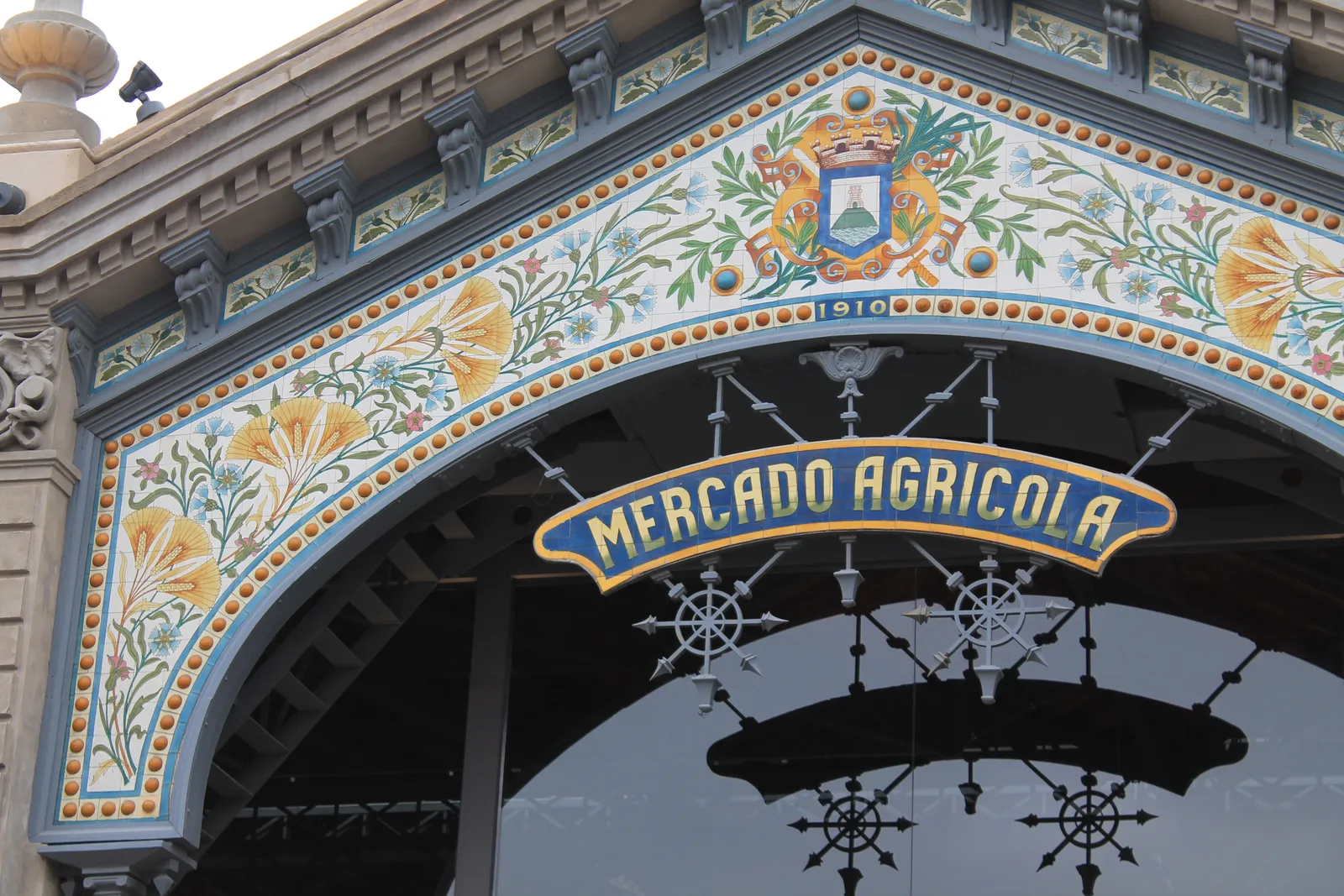
Look up at the tiled arch over the main entrance on José L. Terra and the date worked into the ironwork reads 1910, three years before the market actually opened; the tilework was made while the building was still going up and nobody went back to change it once the doors did.
A tram terminal from 1880, reopened as a plaza in 2012
A short walk up Avenida General Flores, at the corner of Domingo Aramburú, the Tranvía Oriental company opened Estación Goes in 1880 as one terminus of its horse-drawn line from the old city, part of the network that gave the neighbourhood its first real connection to central Montevideo. It stopped working as a transit stop long before public transport modernised past it, and the site sat as leftover infrastructure until the city reopened it in April 2012 as the Centro Cultural Terminal Goes, keeping the original steel-roofed shed intact and turning the platform underneath it into an open public plaza.
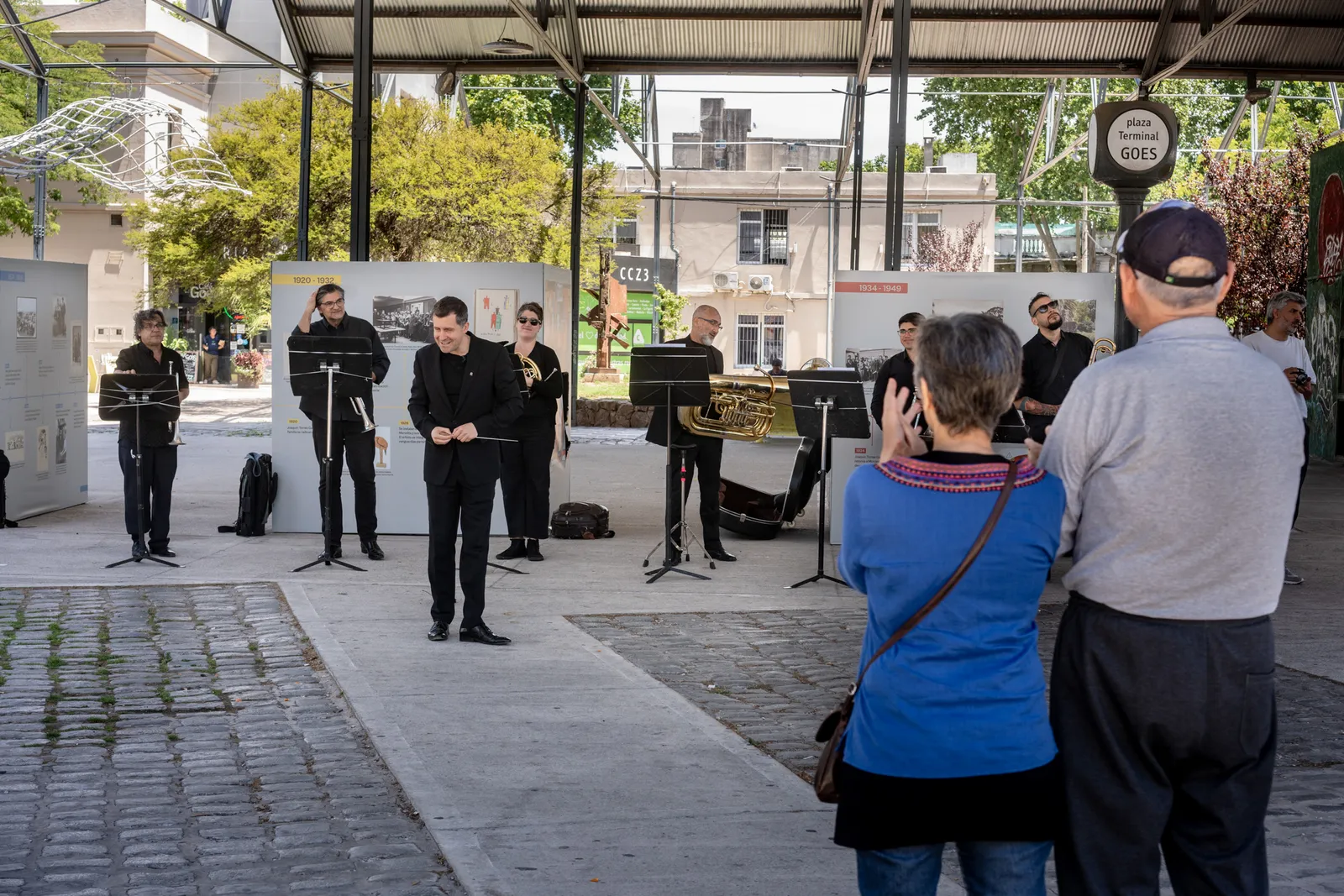
What’s there now depends on the day: sometimes a small market, sometimes a concert or a community event under the same roof that used to shelter waiting trams. Either way, it costs nothing to walk through, and it’s as far from the old city’s souvenir shops as a Montevideo layover gets without leaving the city itself.
Narrow aisles and uneven streets, not a place to roll a bag through
Between the market’s own aisles, tight with stalls and shoppers rather than laid out for tourist traffic, and the cobbled, unevenly paved streets of Goes around it, this is one of the harder stretches on the site to manage with a rolling suitcase: it catches on the stonework and gets in the way of other people’s shopping in equal measure. None of that matters if the bag isn’t there.
Getting back to Carrasco airport from Goes
A taxi or ride-hailing car covers the roughly 20 kilometres to Carrasco International Airport (MVD) in 25 to 30 minutes. By bus, routes along Avenida General Flores reach Tres Cruces terminal in about 15 minutes, and the COT coach from there runs to the airport every 15 to 30 minutes for a further 25 to 30 minutes.
This is a neighbourhood built for shopping, not for wheeling a case through it, and the full Montevideo route through the old city’s wider streets is the easier walk if a bag has to come along. Leave it at a storage point instead and Goes stays a market and a plaza rather than an obstacle course.
Frequently asked questions
What should I do during a layover near the Mercado Agrícola in Montevideo?
Walk the iron-and-glass halls of the market itself, built in 1906 to 1913 and still working rather than tourist-facing, then continue a short walk up Avenida General Flores to the old Terminal Goes, an 1880 tram station now a covered public plaza. Two hours covers the market at an easy pace; add a third for the plaza. Go on a weekday or Saturday morning, since the market closes early on Saturdays and doesn't open Sundays at all.
What are the Mercado Agrícola's opening hours?
Monday to Friday from 8:00 to 19:00, and Saturday from 9:00 to 13:00 only. It doesn't open Sundays. That's a narrower window than the tourist-facing Mercado del Puerto near the port, which is busiest on weekends; this market runs on a working produce-and-shopping schedule instead.
Why does the entrance say 1910 if the market opened in 1913?
The tilework over the main entrance was made while the building was still under construction, sometime around 1910, and it was never changed once the market's definitive authorization came through in 1912 and it opened for business in 1913. The mismatch is original, not an error added later.
What is the old Terminal Goes now used for?
It opened in 1880 as a horse-tram terminal for the Tranvía Oriental company, one of the lines connecting the old city to Goes, and closed long ago as a working transit stop. Montevideo reopened it as the Centro Cultural Terminal Goes in April 2012, keeping the original steel-roofed shed as a covered public plaza used for markets, concerts and community events.
How do I get from the Mercado Agrícola to Carrasco airport?
A taxi or ride-hailing car covers the roughly 20 kilometres in 25 to 30 minutes. By bus, city routes along Avenida General Flores reach Tres Cruces terminal in about 15 minutes, and the COT coach from there runs to the airport every 15 to 30 minutes for a further 25 to 30 minutes.