Lisbon Layover: Baixa and Alfama From LIS
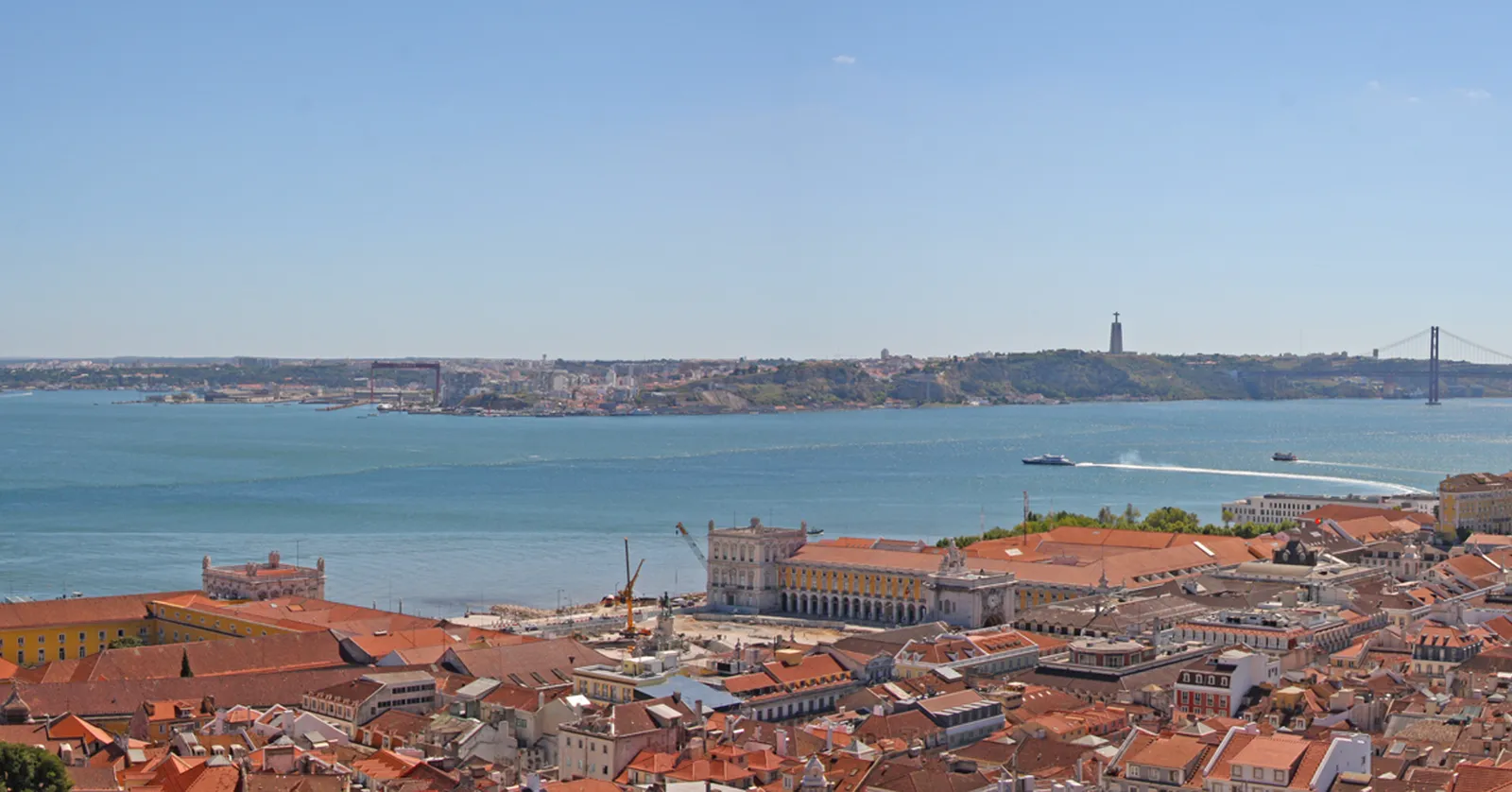
Lisbon’s flat Baixa grid puts Rua Augusta’s triumphal arch a few minutes from Rossio’s wave-pattern pavement, with Lisbon Cathedral and the Portas do Sol balcony over Alfama within a fifteen-minute walk further on.
The triumphal arch at the end of Rua Augusta
Rua Augusta runs dead straight from Rossio down to the river, and it ends under an arch that took more than a century to finish: started in 1755 as part of the rebuilding after the earthquake, completed in 1873. Walk under it and Praça do Comércio opens out ahead, a square the size of several city blocks with nothing on its fourth side but the Tagus and a set of marble steps going down into the water. Ships used to dock here. Now people sit on the steps.
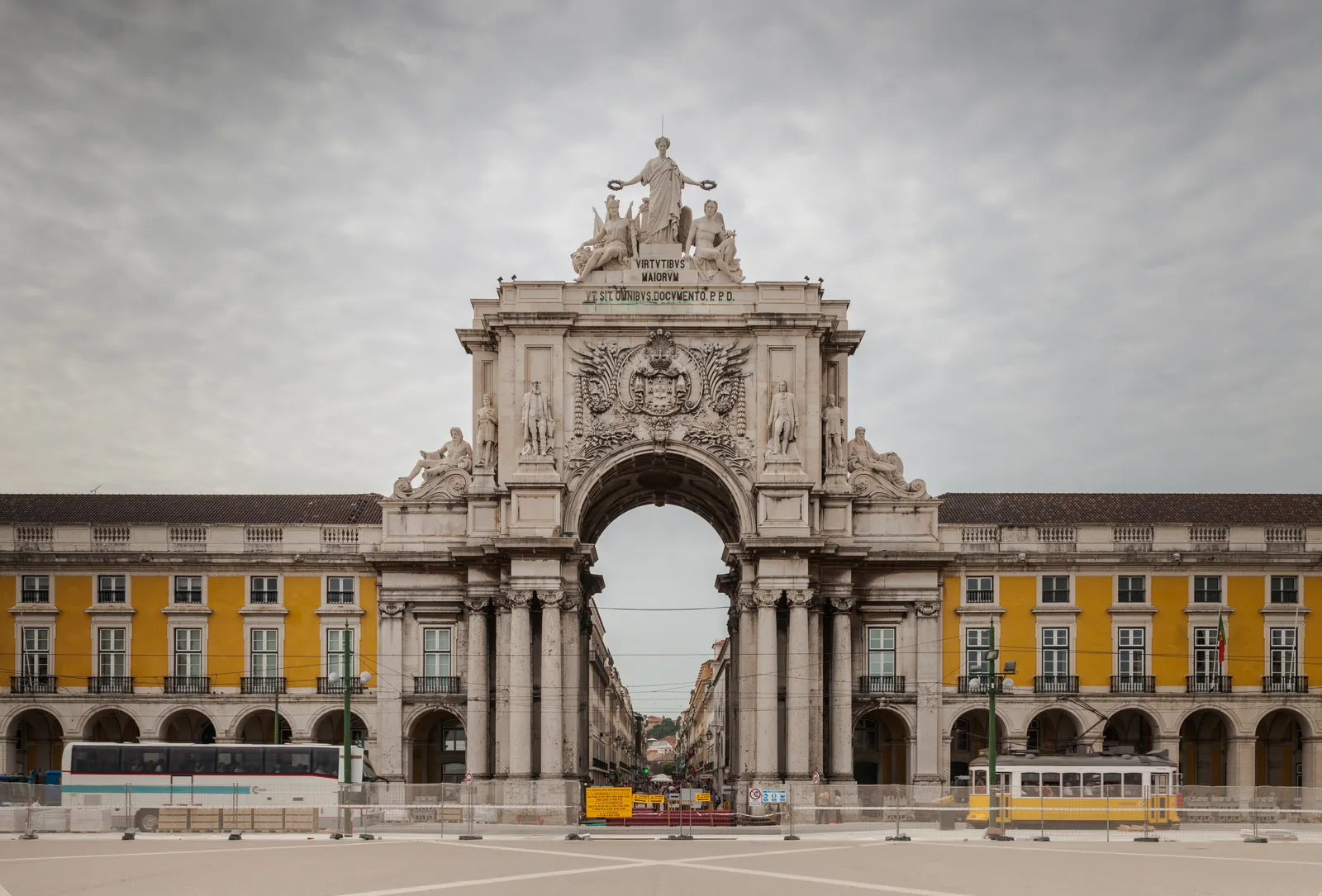
The arch has a terrace on top, 3.50 euros, reached by a lift to the clock room and then a spiral stair so narrow it runs on a traffic light to keep people from meeting halfway. Only 35 are allowed up at once, which is what makes the queue, so booking the ticket ahead is worth the two minutes; large bags are turned away at the lift either way. One street west, at Rua dos Correeiros 9, a bank sits on top of an excavated block of Roman Lisbon: fish-salting tanks, mosaics and an Iron Age kiln, dug out in the early 1990s and opened to the public for nothing, with guided visits running through the day. It shuts on Sundays and public holidays. Fifteen minutes underground is a good answer to rain, and almost nobody walking Rua Augusta above it knows it is there.
The wave pavement across Rossio square
Rossio has been Lisbon’s meeting place for six centuries, and since the 19th century it has been paved in the black-and-white limestone-and-basalt mosaic the Portuguese call calçada. The pattern here is a long rolling wave, laid the full length of the square and known as Mar Largo, the open sea. Two bronze fountains and a column carrying Dom Pedro IV stand in the middle; the national theatre closes off the north end.
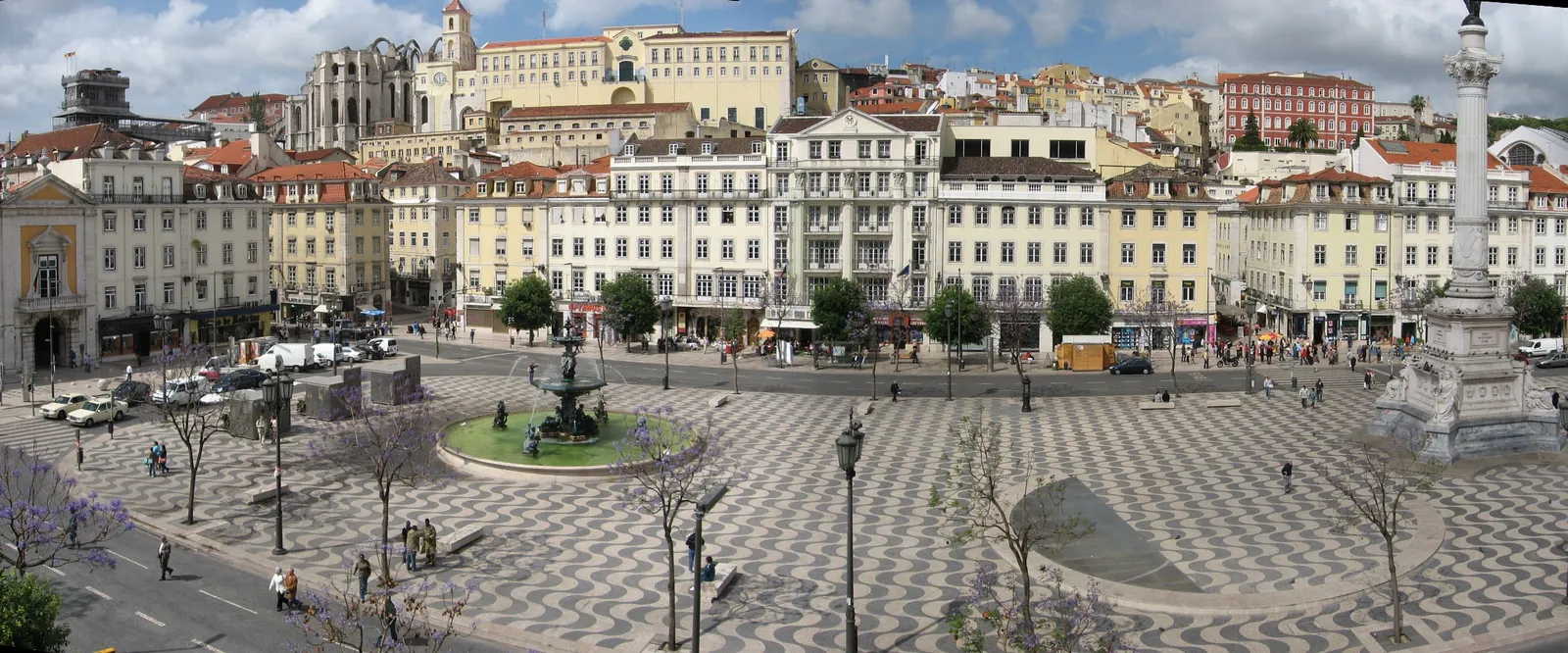
That same paving covers most of central Lisbon, and it is worn smooth, gapped where stones have gone missing, and slick when wet, so a wheeled suitcase catches on it constantly.
Lisbon Cathedral is free to walk into
Ten minutes east of Praça do Comércio the street narrows and tilts uphill, and the cathedral appears at the bend with two blunt Romanesque bell towers and a rose window, looking more like a keep than a church. It was begun in 1147, the year Lisbon was taken from the Moors, and it has been knocked about by earthquakes ever since, which is why the outside is fortress-plain. The nave is free and open from early morning; the cloister, where excavation has turned up Roman and Moorish foundations under the floor, is 2.50 euros.
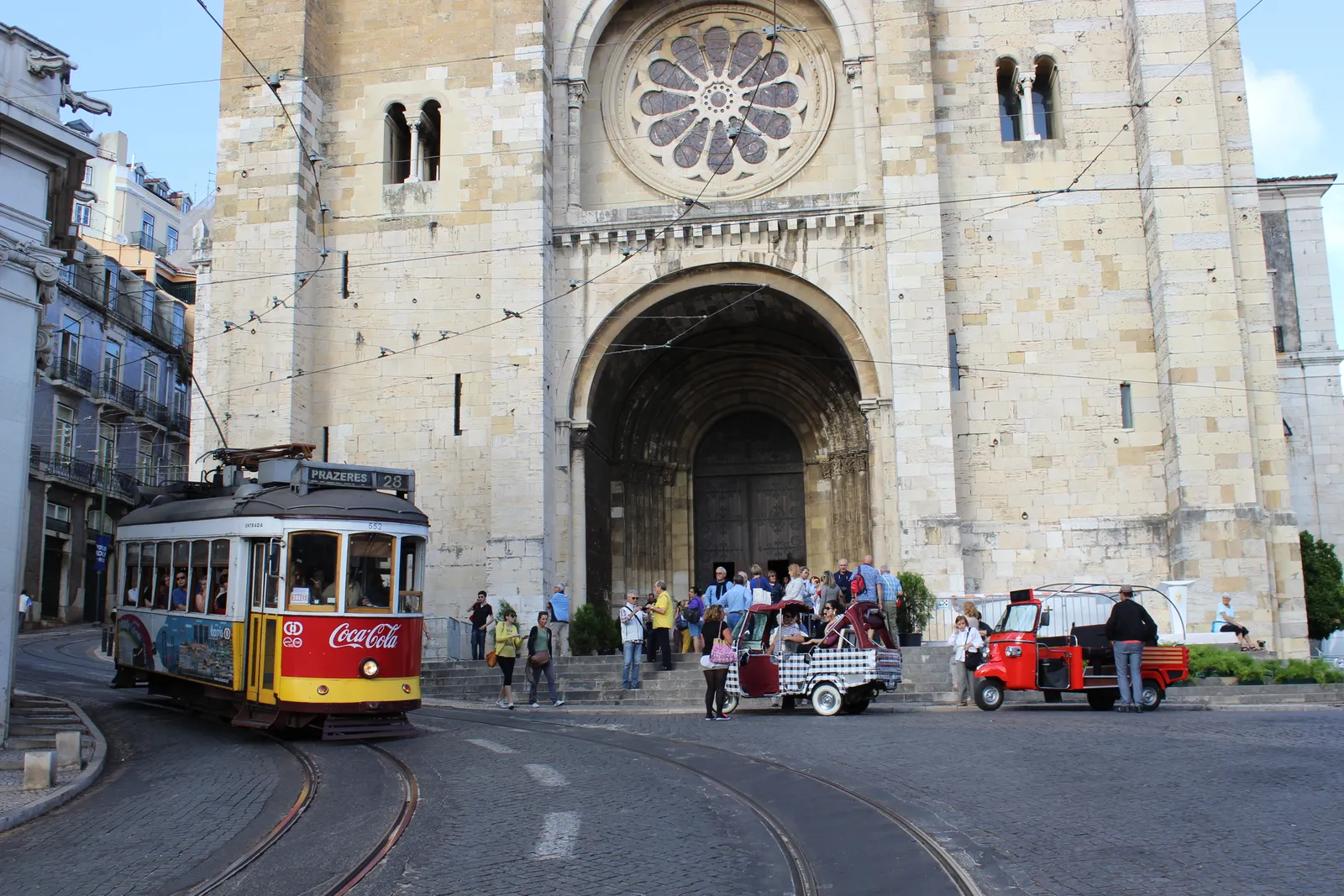
The number 28 tram grinds past the door every few minutes, which is the shot everyone stops for. Riding it is a different proposition: it covers the same ground you are already walking, and between the Martim Moniz terminus and this door in summer it is standing room only.
The balcony over Alfama at Portas do Sol
Keep climbing past the cathedral for five minutes and the street opens on the left into two terraces, one after the other. Santa Luzia comes first, a small walled garden with tiled panels and bougainvillea over a pergola. Portas do Sol is the next one along and it is the big one: a broad stone balcony hanging directly over Alfama, with the whole quarter’s tiled roofs dropping away below you, the white dome of São Vicente de Fora off to the left, and the Tagus filling the rest.
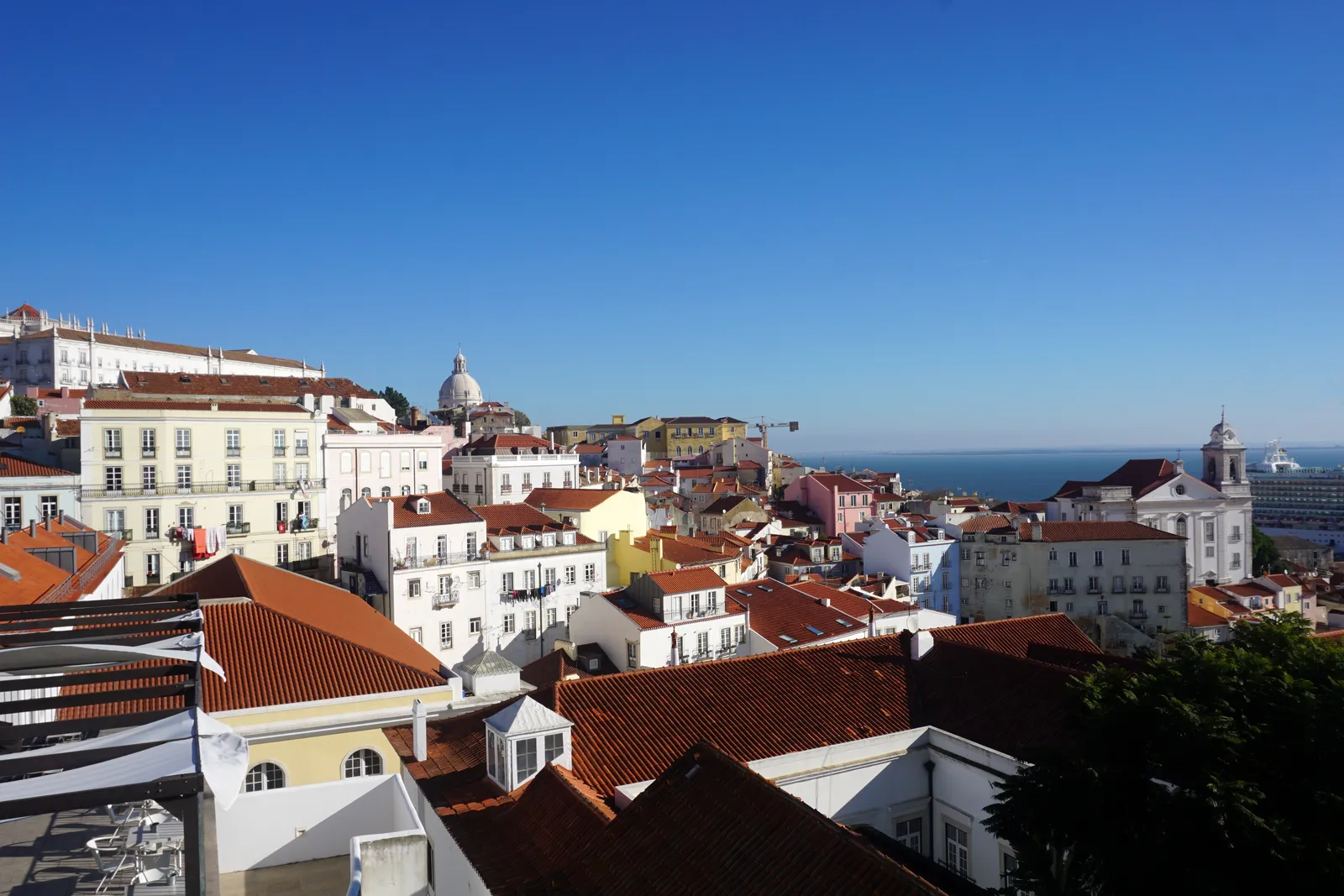
Both are free, open at all hours and never shut. Alfama below is medieval and unplanned, the one part of central Lisbon the 1755 earthquake mostly spared, and the alleys running down from here are a reliable way to lose twenty minutes and come out somewhere unexpected.
Peacocks on the ramparts of São Jorge castle
With more than four hours, the castle is the stop to add. It is ten minutes further up from Portas do Sol, on the highest ground in the old city, and admission is 17 euros: tickets are worth buying before you climb, because the queue at the gate is the part of the visit nobody budgets for. What you get is a walkable circuit of the medieval castle’s ten towers and the wall between them, a camera obscura installed in the Tower of Ulysses in 1998 that throws a live 360-degree view of the city onto a dish, and a resident flock of peacocks that roosts in the stone pines and comes down onto the ramparts.
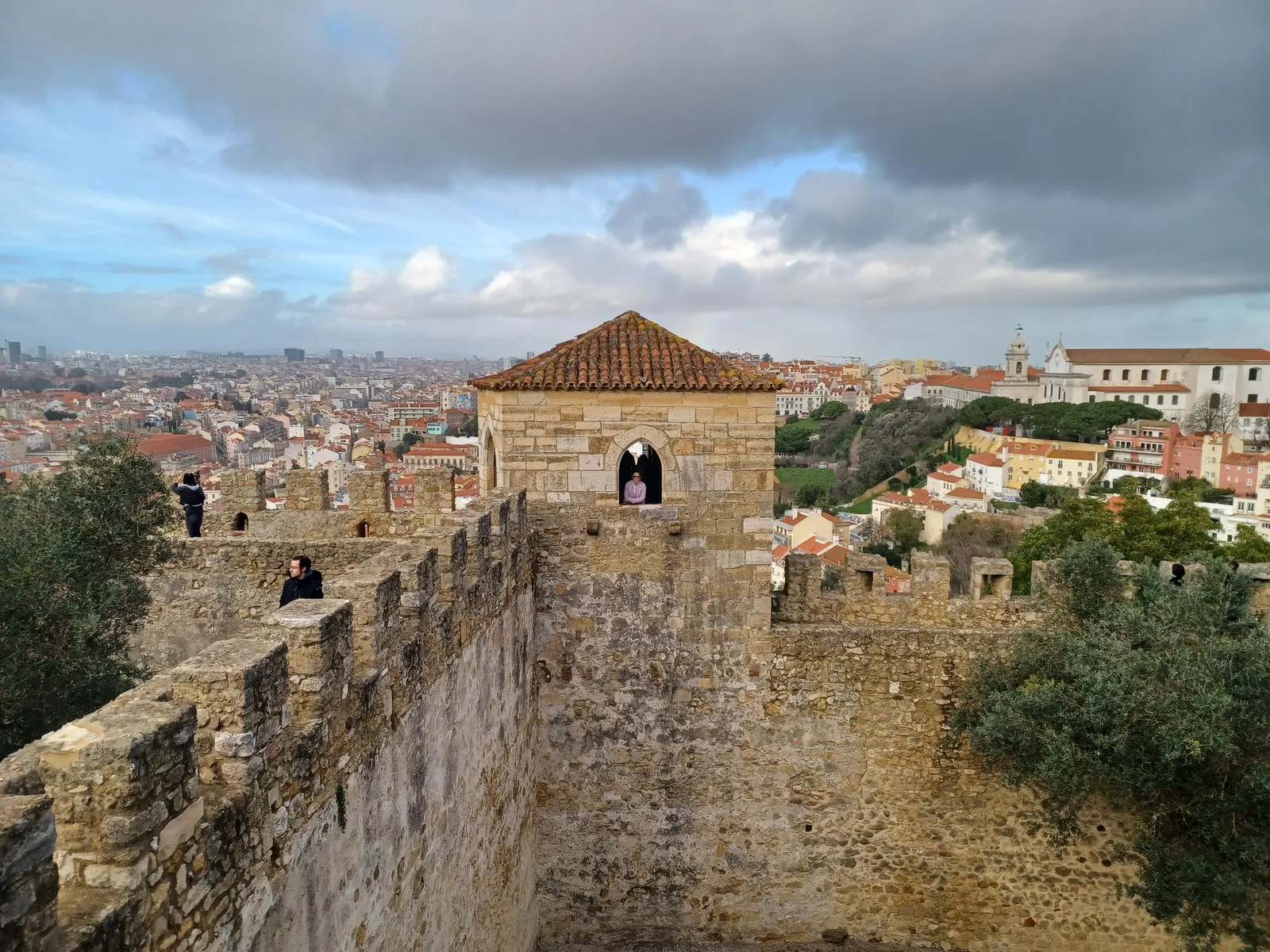
It closes at 21:00 from March through October and at 18:00 the rest of the year, with last entry half an hour before. If the 17 euros or the climb puts you off, the terraces you have already walked past give you much of the same view for nothing.
The last metro leaves before one in the morning
Going back out, the red line is the airport’s own line and Aeroporto is its terminus, so nothing gets missed at the far end. From Baixa-Chiado you take the green line to Alameda and change; the riding is about 25 minutes and the trains come every six to ten minutes, but budget nearer 40 minutes door to door once you have walked to the platform, waited twice, and walked back out into Terminal 1. The metro runs 06:30 to 01:00 every day including holidays, and there is no night service filling the gap, so a very late departure means a taxi rather than a train.
Collect your suitcase on the way through Baixa rather than at the end of the walk. Everything above the cathedral is uphill and paved in stone that a rolling bag argues with, and the whole route works better as a loop that ends where your luggage is. If your connection is out of the other end of the country instead, Porto fits the same kind of afternoon into a walk that runs downhill rather than up.
Frequently asked questions
What should I do during a layover in Lisbon?
With four to six hours, the metro from the airport reaches Baixa in about 40 minutes, from where Rua Augusta runs straight down to the river through its triumphal arch into Praça do Comércio. Head east and uphill from there to Lisbon Cathedral, free to walk into, and on to the Portas do Sol terrace looking out over Alfama's rooftops, both free and open at all hours. With more than four hours, São Jorge castle is ten minutes further up at 17 euros, with walkable ramparts and a camera obscura; skip it and the terraces already walked past give much of the same view for nothing.
How much does the metro from Lisbon airport cost?
1.90 euros, and that single fare covers the whole journey even though it involves two lines and a change at Alameda. You buy it on a reusable navegante card, which costs 50 cents once and then holds however many singles you load onto it. A tapped contactless bank card works too and costs a couple of cents more. If you expect to use a bus or a tram as well, the 7.25-euro 24-hour pass covers all of it and pays for itself on the fourth ride.
Is the walk from Baixa up into Alfama step-free?
No. Baixa itself is a flat grid, but everything above the cathedral climbs, and the paving is the loose limestone-and-basalt mosaic that gives way underfoot and turns slippery in rain. The step-free way up is the 737 bus from Praça da Figueira, which loops through Alfama and stops on Rua do Chão da Feira just below the castle gate in about eight minutes, on the same 1.90-euro ticket. Inside the castle, the entrance courtyard is level, but the ramparts and towers are uneven stone steps.
How much of this walk costs nothing?
Almost all of it. Praça do Comércio, Rua Augusta, Rossio, the nave of Lisbon Cathedral, the Santa Luzia and Portas do Sol terraces and the Roman ruins under Rua dos Correeiros are all free. The paid parts are optional and small: 3.50 euros to climb the arch at the top of Rua Augusta, 2.50 for the cathedral cloister, and 17 euros for the castle, which is the one stop worth deciding on before you set off.
Is Lisbon's number 28 tram worth riding on a short visit?
Only if riding it is the point rather than the destination. A packed carriage is the reason it is the city's most worked-over spot for pickpockets, and on foot the same climb takes about fifteen minutes and lets you stop at the viewpoints along the way. If you want the ride anyway, board partway along the route instead of at the Martim Moniz terminus, where everyone starts and the queue is longest, or take it in the quieter direction from the Campo de Ourique end.
What is open in Lisbon on a Sunday?
The cathedral, the castle and every square and viewpoint on this walk. The Roman excavation under Rua dos Correeiros is the one closure to plan around, since it shuts on Sundays and public holidays. Museums across the city tend to run shorter Sunday hours rather than closing outright, and the metro keeps its full 06:30 to 01:00 timetable seven days a week, holidays included.