Lisbon Rossio Station: Chiado and Bairro Alto
Part of the full Lisbon Layover: Baixa and Alfama From LIS
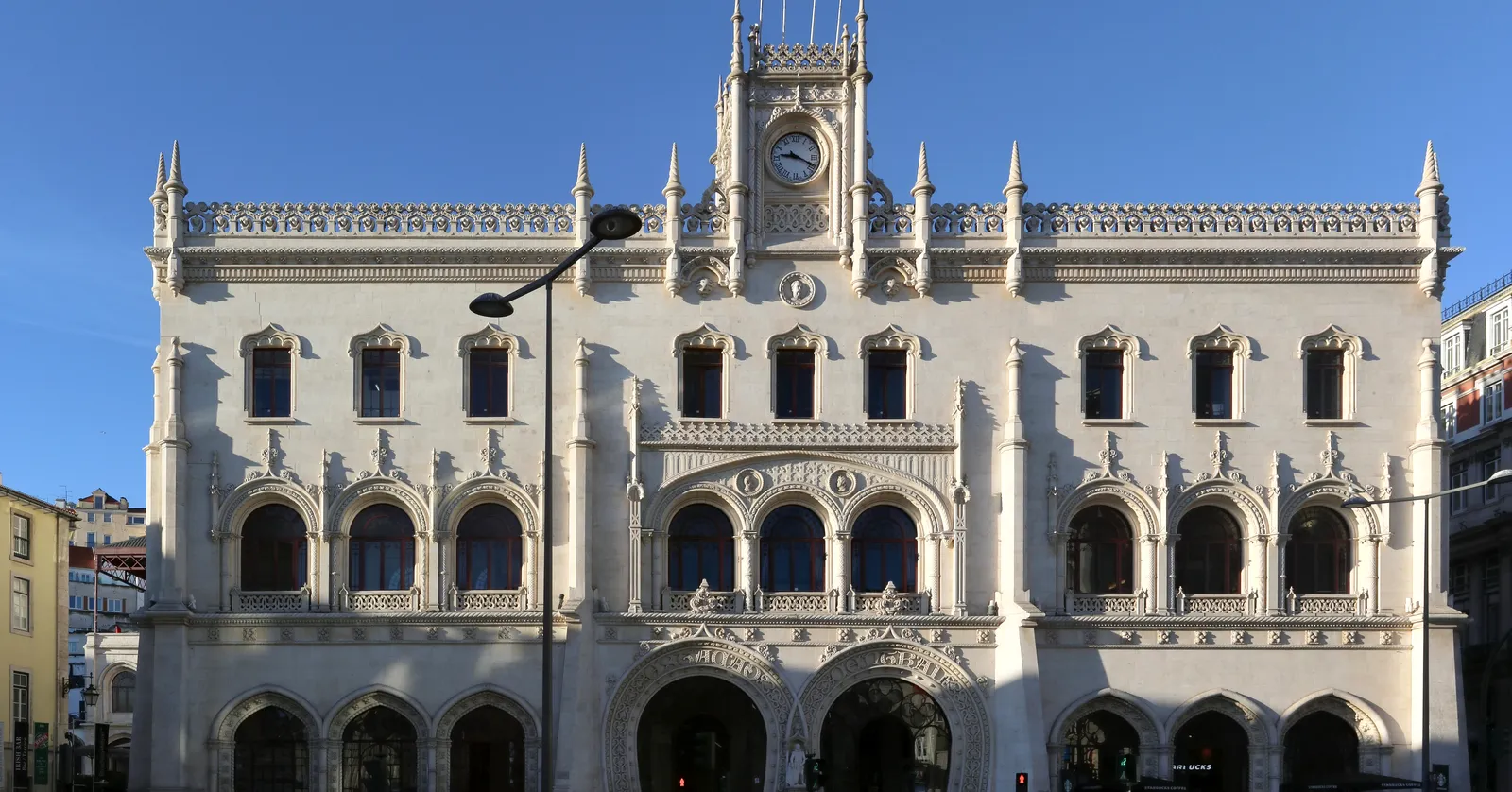
Lisbon’s Rossio station is the neo-Manueline building with the two horseshoe doorways on the west side of Rossio square, and the ground behind it climbs into Chiado and Bairro Alto: the Carmo Convent’s roofless nave, the gilded interior of São Roque, and a free terrace over the whole city, all inside about 800 metres.
The horseshoe portals on Rossio station’s front
José Luís Monteiro built this in 1886 and 1887 and it opened in 1890, at a moment when Portugal was reaching back four centuries for a national style, so the front is neo-Manueline: two interlocking horseshoe arches for doors, a clock tower, carved rope and maritime motifs copied off the real Manueline buildings out at Belém.
The other half of the trick is behind it. The platforms are around 30 metres above the entrance hall, reached by escalators and lifts, and the trains leave straight into a tunnel bored under the hill you are about to walk up, which was one of the larger Portuguese engineering jobs of the 19th century. Rossio was Lisbon’s main terminus until 1957 and now runs the Sintra line and little else.
Two metro stations sit under Rossio, on different lines
Restauradores, on the blue line, connects directly to the railway station’s own concourse; Rossio, on the green line, is a separate entrance out on the square. That matters on the way to the airport, because both routes need one change and they change in different places: green to Alameda, or blue to São Sebastião, then the red line either way. Allow around 35 to 40 minutes door to door, and remember the last metro runs at 01:00 with nothing after it.
The roofless nave at the Carmo Convent
Five minutes up from the station, the Carmo Convent’s church lost its roof in the 1755 earthquake, on All Saints’ Day, with the congregation inside. Lisbon never rebuilt it. What stands is a Gothic shell: the pointed arches of the nave open to the sky, grass and gravel where the floor was, the walls still carrying their windows.
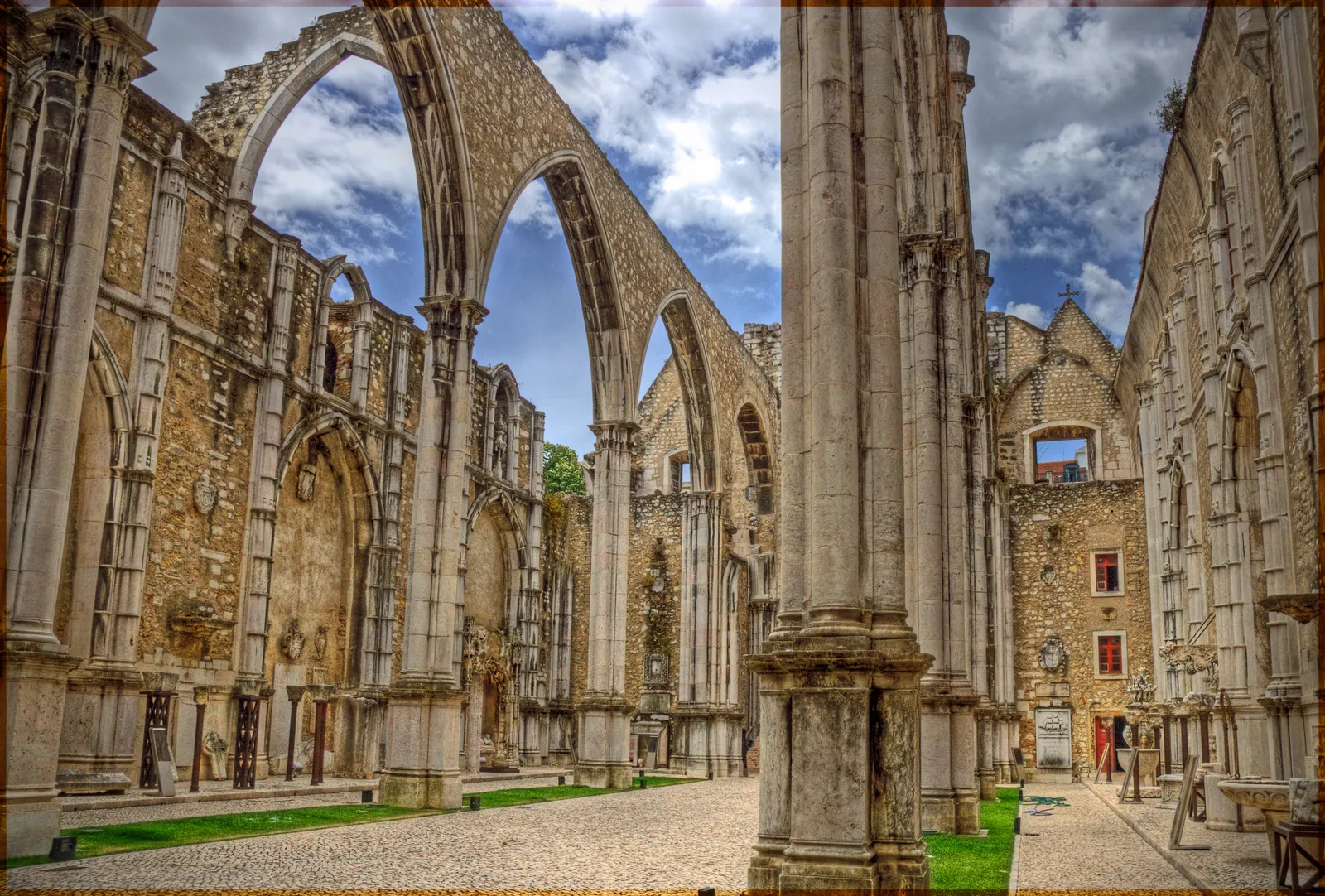
Seven euros gets you in, and the apse chapels at the far end hold an archaeological museum with medieval tombs and, oddly, two Peruvian mummies. It is closed on Sundays, which is the opposite of most of the city.
The chapel at São Roque that was built in Rome
São Roque’s front is a flat, plain wall that people walk straight past. Inside is one of the most expensive rooms in Europe: João V commissioned a chapel from Nicola Salvi and Luigi Vanvitelli in Rome, had it built there between 1742 and 1747 out of lapis lazuli, porphyry, amethyst, alabaster, gold and silver, had the Pope bless it in situ, then had it taken apart and shipped to Lisbon on three ships to be reassembled here. The mosaic panels in it are so fine they are regularly mistaken for paintings.
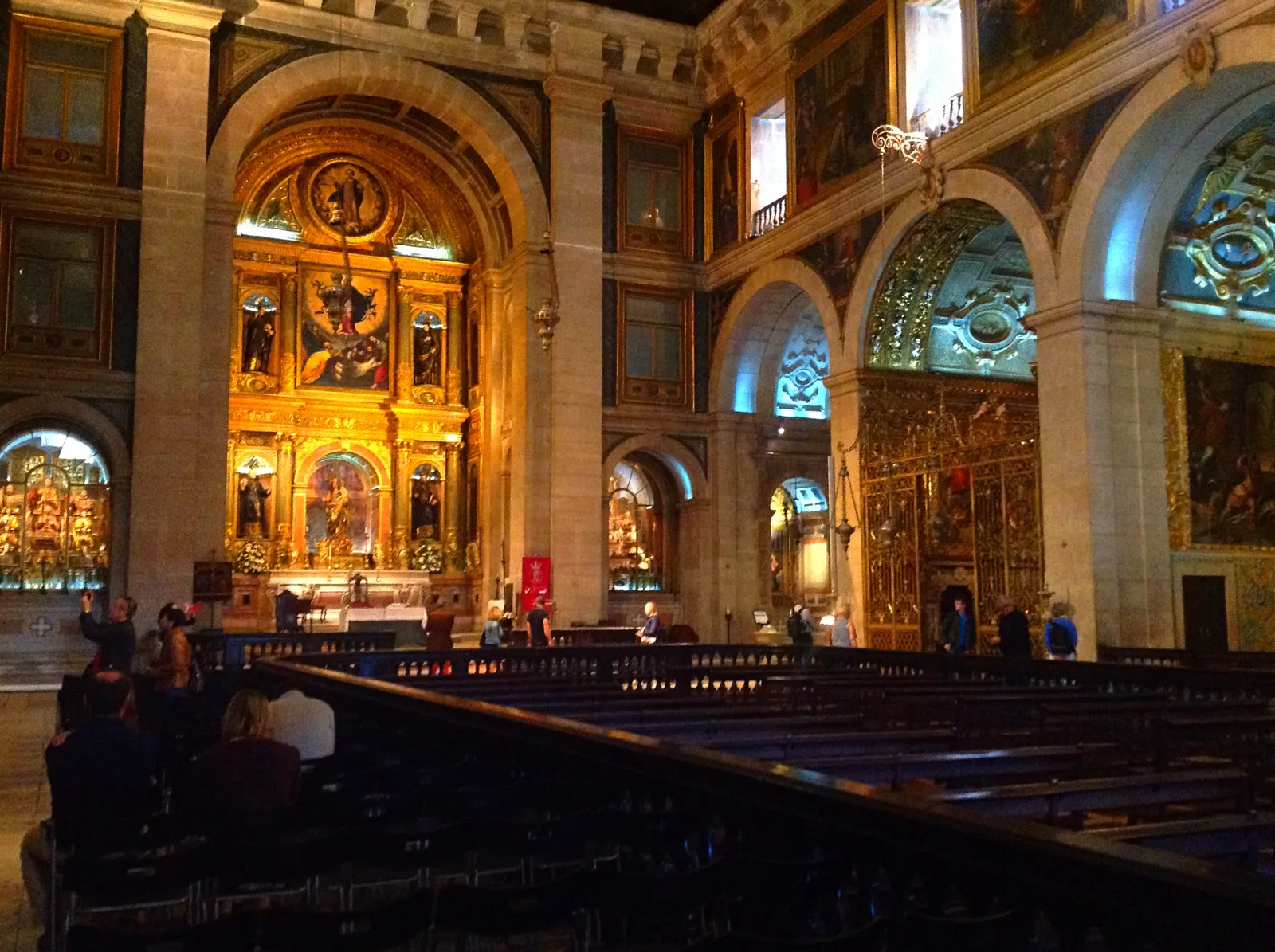
The church itself is free, open Tuesday to Sunday from 10:00 to 18:00; the museum attached to it is 2.50 euros. It is the single best value stop on this walk and takes twenty minutes.
The terrace at São Pedro de Alcântara
Two minutes from São Roque, the street opens onto a two-level belvedere with a balustrade, a fountain, patterned pavement and a terraced garden dropping away below it. The view runs east across the whole of Baixa to the castle on its hill, and unlike the Alfama terraces it faces the low afternoon sun rather than into it.
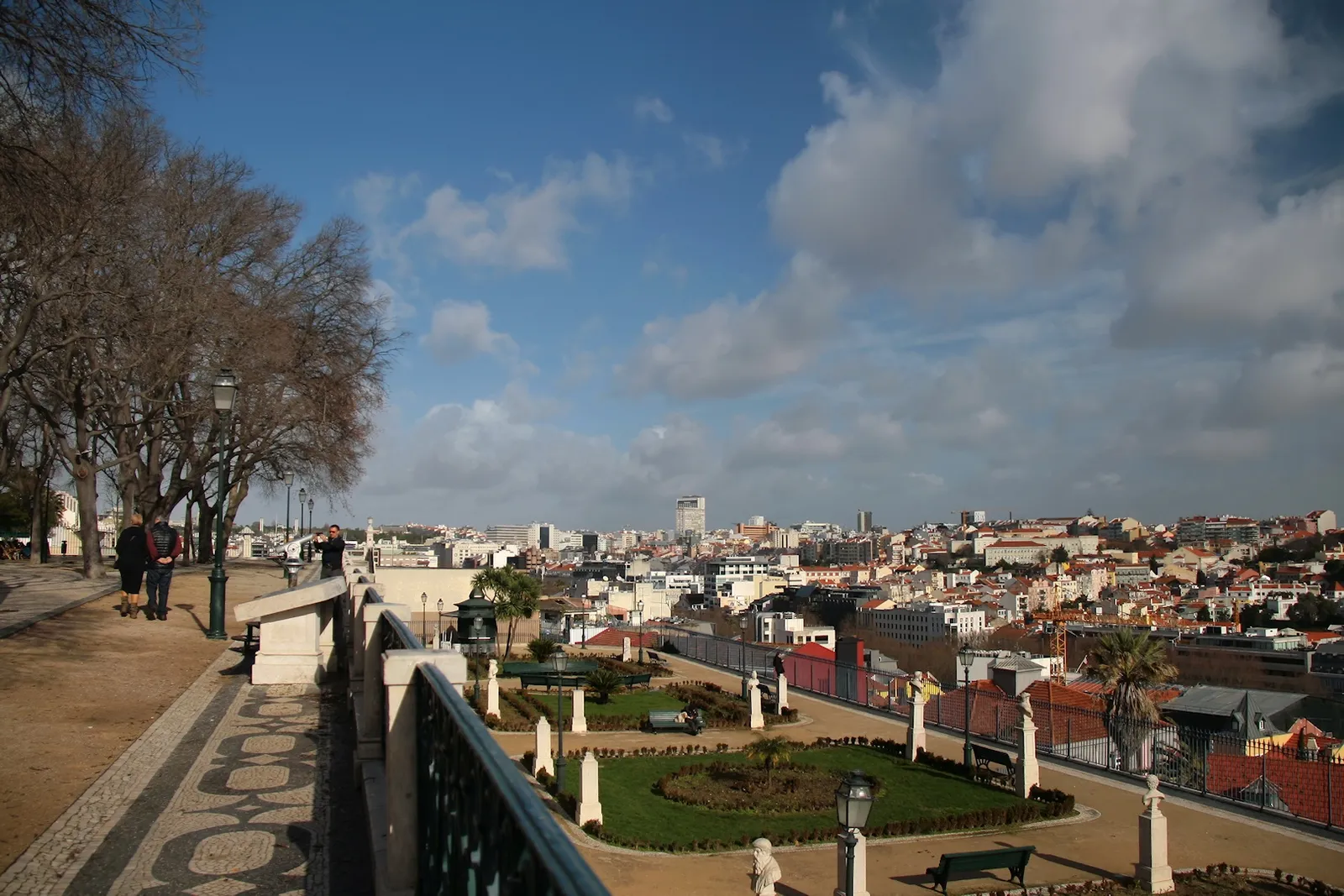
It costs nothing and never closes. Getting up here used to be a 90-second funicular ride from Restauradores, but the Glória funicular has been out of service since the derailment in September 2025 and no reopening date has been set, so there is no ride to take: every metre of this climb is now done on foot, with a suitcase or without one.
Sit on the wall for a while before you go back down. From here the whole of the walk you have just done is laid out below, and the station you started at is the small white building four streets in.
Frequently asked questions
Are Lisbon's funiculars running?
Mostly not, and it has been that way for a while. A cable failure on the Glória funicular in September 2025 killed sixteen people, and the city suspended the historic funiculars afterwards pending safety work; through the first half of 2026 the Glória, the Bica and the Lavra were all still out with no reopening date announced. The Santa Justa lift has also been shut for maintenance. Check before you count on any of them, and assume you are walking up in the meantime.
Can you fit all four of these into two hours?
Yes, comfortably, if everything is open: the whole route is about 800 metres, São Roque takes twenty minutes, the Carmo ruins forty, and the terrace as long as you feel like sitting. Opening days are the thing that breaks it rather than distance. The Carmo Convent closes on Sundays, which catches people out because almost every other museum in Lisbon takes Monday off, and São Roque is the opposite way round, shut on Mondays and open Tuesday to Sunday from 10:00 to 18:00. There is no single day when both are closed.
How long is the train from Rossio to Sintra?
About 40 minutes each way, with departures roughly every 20 minutes and a single fare around 2.50 euros. Rossio is the Sintra line's Lisbon terminus, which is most of what the station is used for now. It is not a layover trip: Sintra's palaces are spread over a wooded hillside above the town and the whole thing wants most of a day, so 80 minutes of train plus queueing is not a sensible use of a few free hours.
Is this a better few hours than the climb into Alfama?
It depends on whether you want to be inside things. This side is denser and more indoor: two churches, a ruin and a terrace inside about 800 metres, most of it under cover if the weather turns. The route east through Baixa and up into Alfama is longer, almost entirely outdoors and better if you would rather look at the city than at interiors. Both start within five minutes of each other, so it is a genuine choice rather than a ranking.