Lisbon Cais do Sodré: The Cacilhas Ferry
Part of the full Lisbon Layover: Baixa and Alfama From LIS
Lisbon’s Cais do Sodré is the city’s river station, where the metro’s green line, the Cascais trains and the Tagus ferries all end up in the same block, and the walk around it is flat: a market hall of three dozen food counters, a street painted pink, a shipyard-turned-promenade, and a ten-minute crossing to Cacilhas for the view back at Lisbon.
The food hall under the Mercado da Ribeira roof
The Mercado da Ribeira is Lisbon’s old fish, fruit and vegetable market, and since May 2014 half the hall has been a single enormous food court instead: around 36 counters and kiosks picked by the city magazine’s own critics, eight bars, communal tables down the middle, one iron roof over all of it. Doors open at 10:00 and it runs to midnight most nights, to 02:00 from Thursday to Saturday.
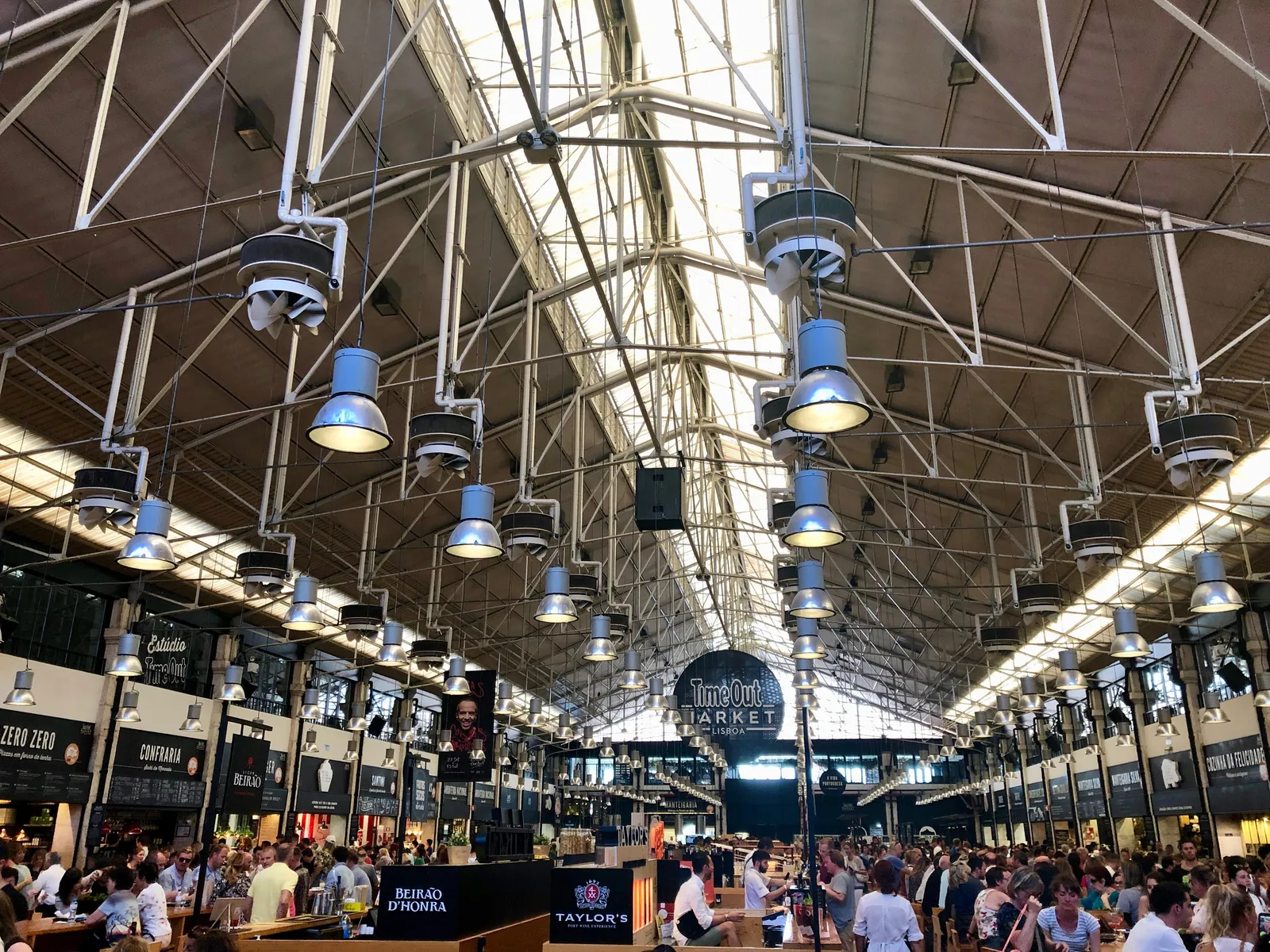
The other half still works as the original fish, fruit and vegetable market, which is worth a look on the way through and is a quieter room entirely.
Rua Nova do Carvalho, the street painted pink
Two minutes inland from the station, one short street has had its entire roadway painted bright pink, kerb to kerb, since a clean-up project that ran from 2011 to 2013. Before that it was the sailors’ quarter, a strip of brothels and late bars serving the docks, and enough of the old signage and tiled frontage survives that the street reads as both things at once.
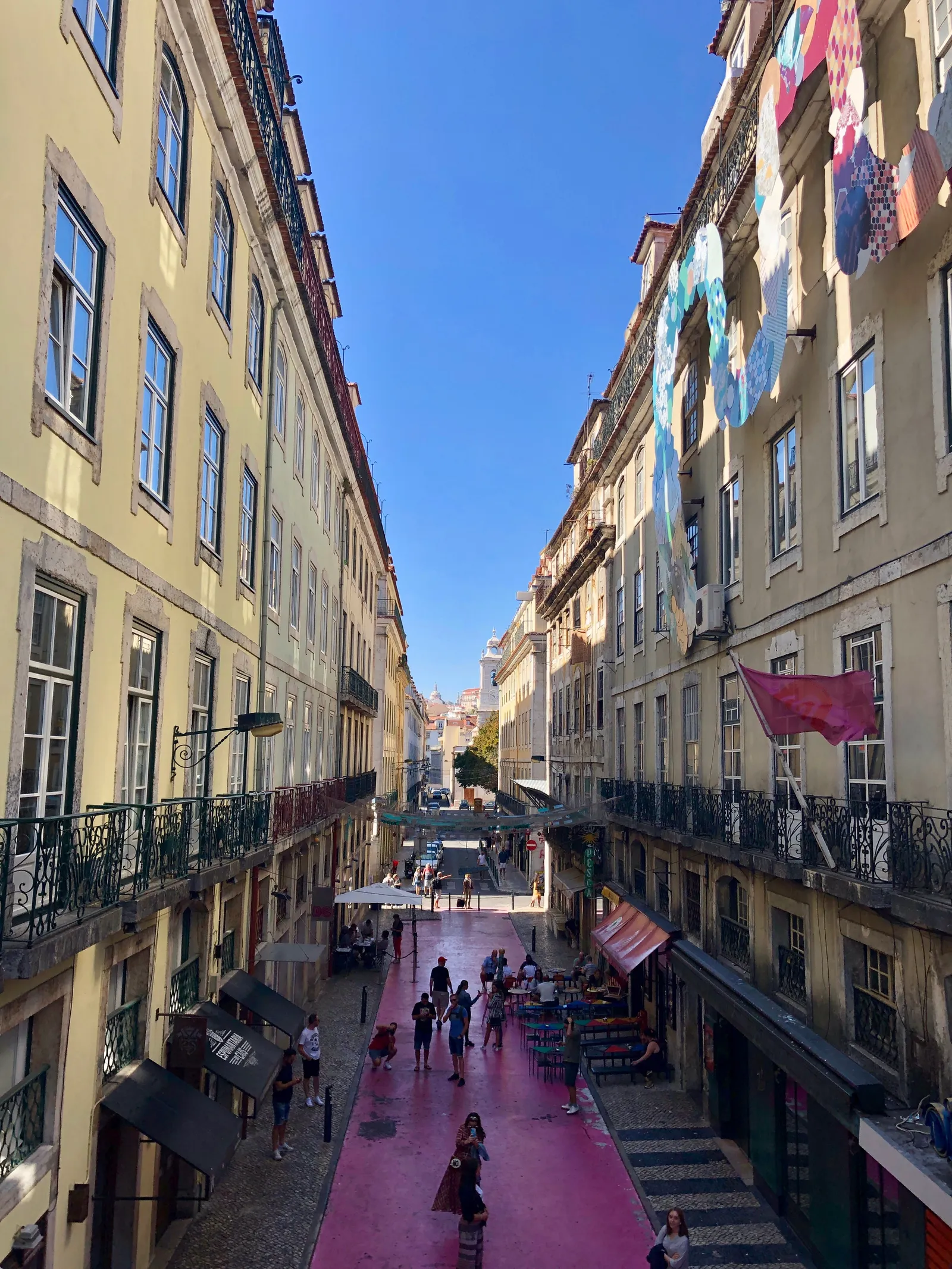
The pink is the whole attraction and it takes ten minutes; there is no queue for it and it costs nothing.
Ribeira das Naus, where the shipyards used to be
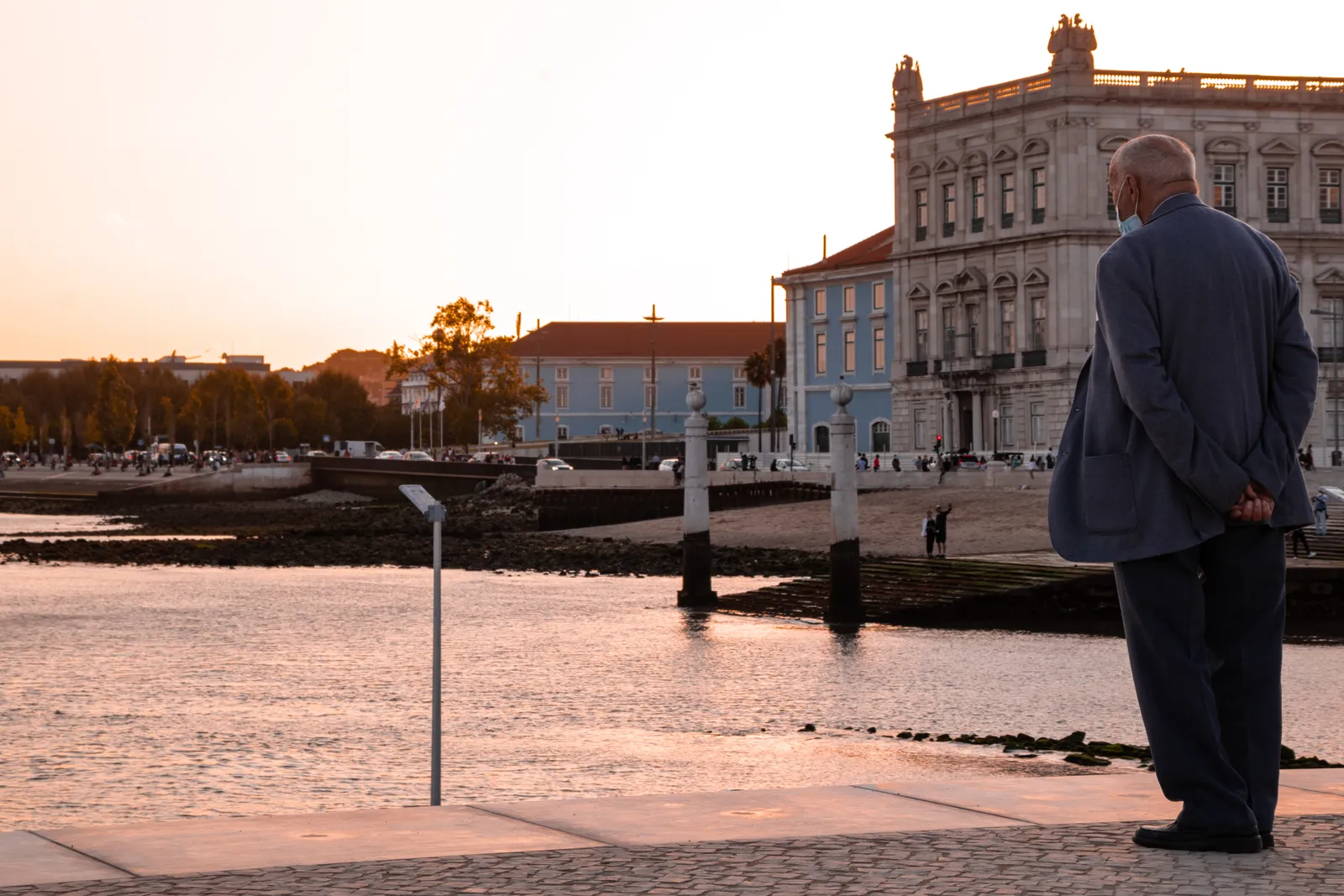
East of the station the waterfront opens into a long, low, entirely flat promenade with a stone ramp running gently down into the Tagus, and people sit on it with their feet in the water. This ground was the royal shipyard, the Ribeira das Naus, where Portugal’s ocean-going ships were built; the naval arsenal buildings still line the back of it. It reaches Praça do Comércio in about ten minutes.
Both the ferry gates and the market’s shared tables funnel a lot of people through narrow gaps at commuter hour, and neither has anywhere to set a suitcase down.
The view back at Lisbon from the Cacilhas quay
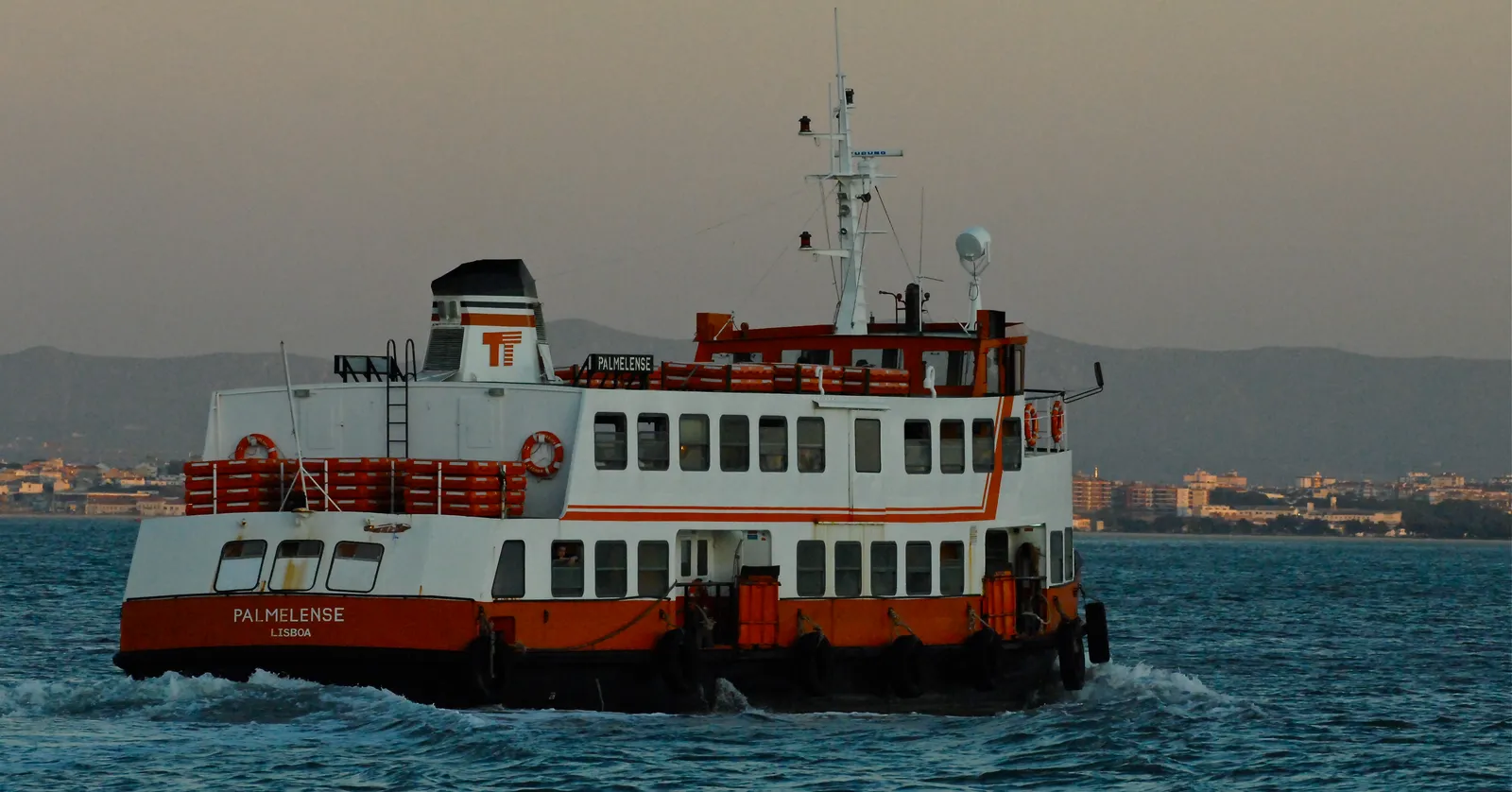
The orange-and-white boats that leave from the terminal beside the station are commuter ferries, not tour boats: 1.55 euros, ten minutes, every fifteen or twenty. Halfway across is the only place you see the whole city at once, the castle hill and Baixa and the 25 de Abril bridge lined up in one view, and it costs less than a coffee. The far side, Cacilhas, is a working quay with a row of seafood restaurants along it and a museum frigate from 1843 in dry dock.
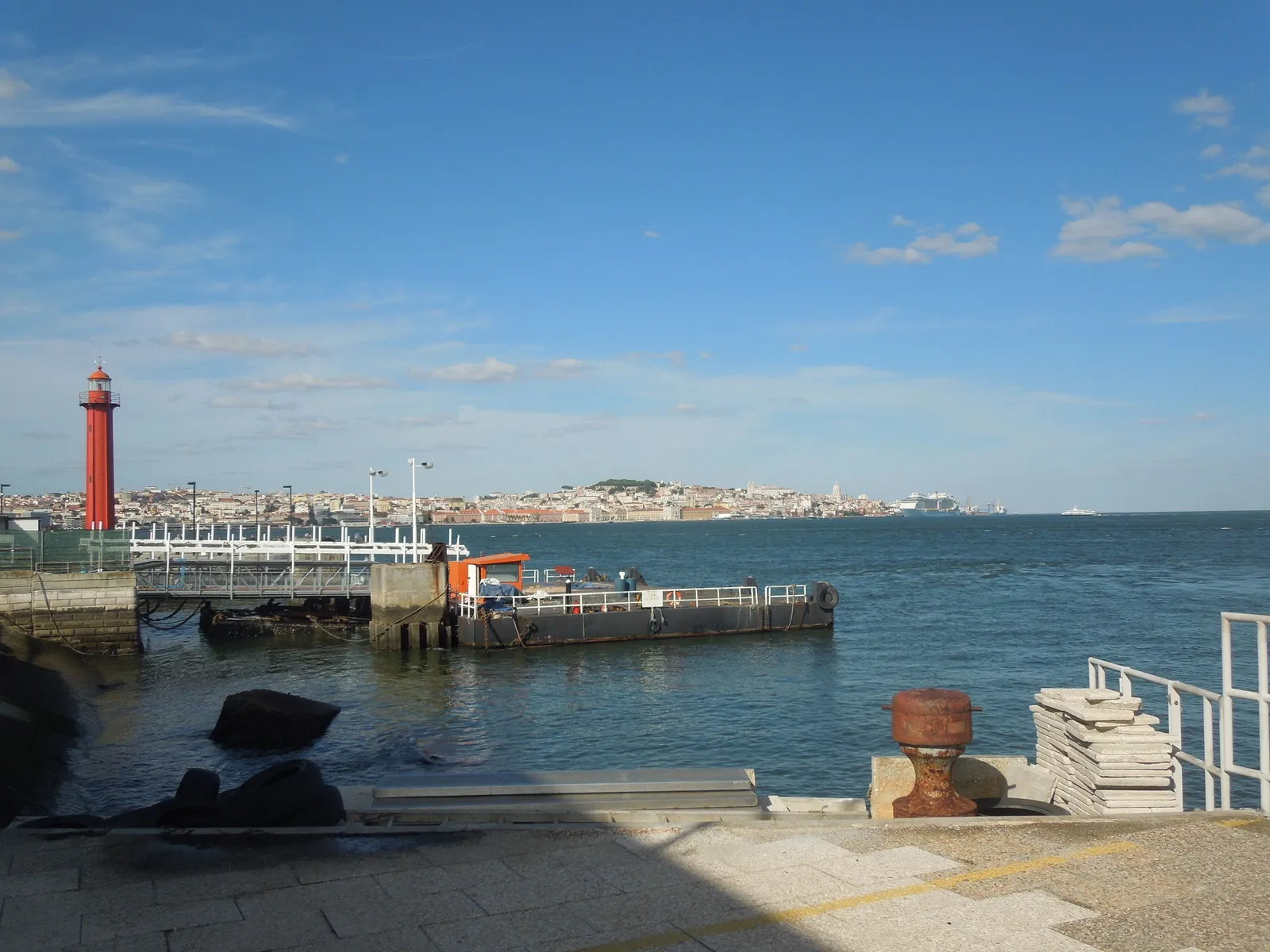
If you would rather stay on the water longer than twenty minutes, a sunset cruise on the Tagus leaves from this stretch of waterfront and is the version of the same view with a drink in it, though it needs a couple of hours rather than twenty minutes. Either way, watch the clock rather than the light: the last boat back from Cacilhas runs well after midnight, but the metro out to the airport stops at 01:00, and from here that trip means the green line to Alameda and a change onto the red.
Frequently asked questions
Does the market hall at Cais do Sodré take cash?
Plan not to need it. The counters under the Mercado da Ribeira roof are set up for cards and MBWay rather than notes and coins, and because each stall bills you separately there is no single till to fall back on if one of them turns your cash down. Prices also sit well above what you would pay in a neighbourhood tasca, which is the trade you are making for having three dozen kitchens under one roof.
Is the Cacilhas ferry covered by a metro ticket?
Not by the ticket itself, but by the same card. The river crossing is run by a different operator from the metro and costs 1.55 euros each way, which you load onto the same navegante card the metro uses, or pay contactless at the gate. Boats run every 15 to 20 minutes, take ten minutes to cross, and start at 05:35 from the Lisbon side.
Is Pink Street worth walking down in daylight?
Yes, and it is a different street from the one at night. Rua Nova do Carvalho was Lisbon's dock-side red-light quarter, and the pink paint went down between 2011 and 2013 as part of clearing it up. By day it is quiet enough to photograph without anyone in the frame and the bars are shuttered; from about ten at night it becomes one of the loudest few hundred metres in the city. Neither version takes more than ten minutes to walk.
Can you fit this and the old city into the same afternoon?
Only just, and it is better as an either-or. This side of town is flat and self-contained and takes about two hours at a walk; the climb up through Baixa into Alfama takes three or four and shares only the Praça do Comércio end with it. With five hours free you could do both by walking east along the waterfront instead of doubling back. With three, pick one.