Lisbon São Sebastião: The Gulbenkian
Part of the full Lisbon Layover: Baixa and Alfama From LIS
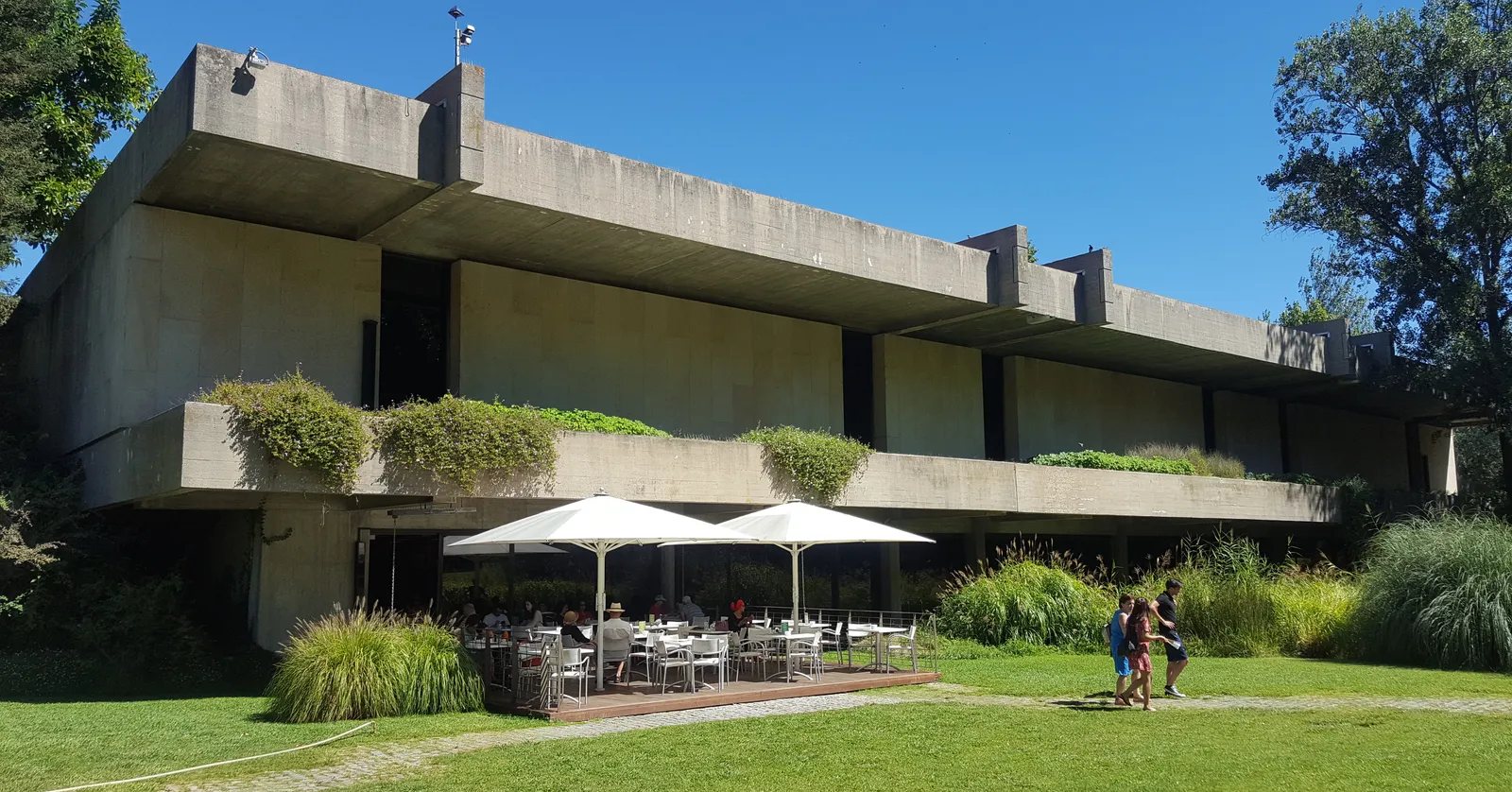
Lisbon’s São Sebastião station puts the Calouste Gulbenkian Museum five minutes away on foot, its free public garden and lake wrapped around the two museum buildings.
The Founder’s Collection at the Gulbenkian
Calouste Gulbenkian was an Armenian oil financier who spent fifty years buying art and the last thirteen of his life in Lisbon, and left everything to a foundation here. The result is about 6,000 objects covering Egyptian sculpture, Islamic ceramics, Armenian illuminated manuscripts, Chinese porcelain, Rembrandt and Rubens, and a room of René Lalique jewellery that Gulbenkian bought directly from Lalique. It is a private taste rather than a national survey, which is what makes it worth the trip.
The building is a low concrete modernist block from 1969 with planted terraces and windows onto the garden, and it reopened on 18 July 2026 after an eighteen-month renovation that put the galleries back closer to their original design. Ten euros, open Wednesday to Monday from 10:00 to 18:00, closed Tuesdays, and free on Sunday afternoons.
The lake and the wood between the two museums
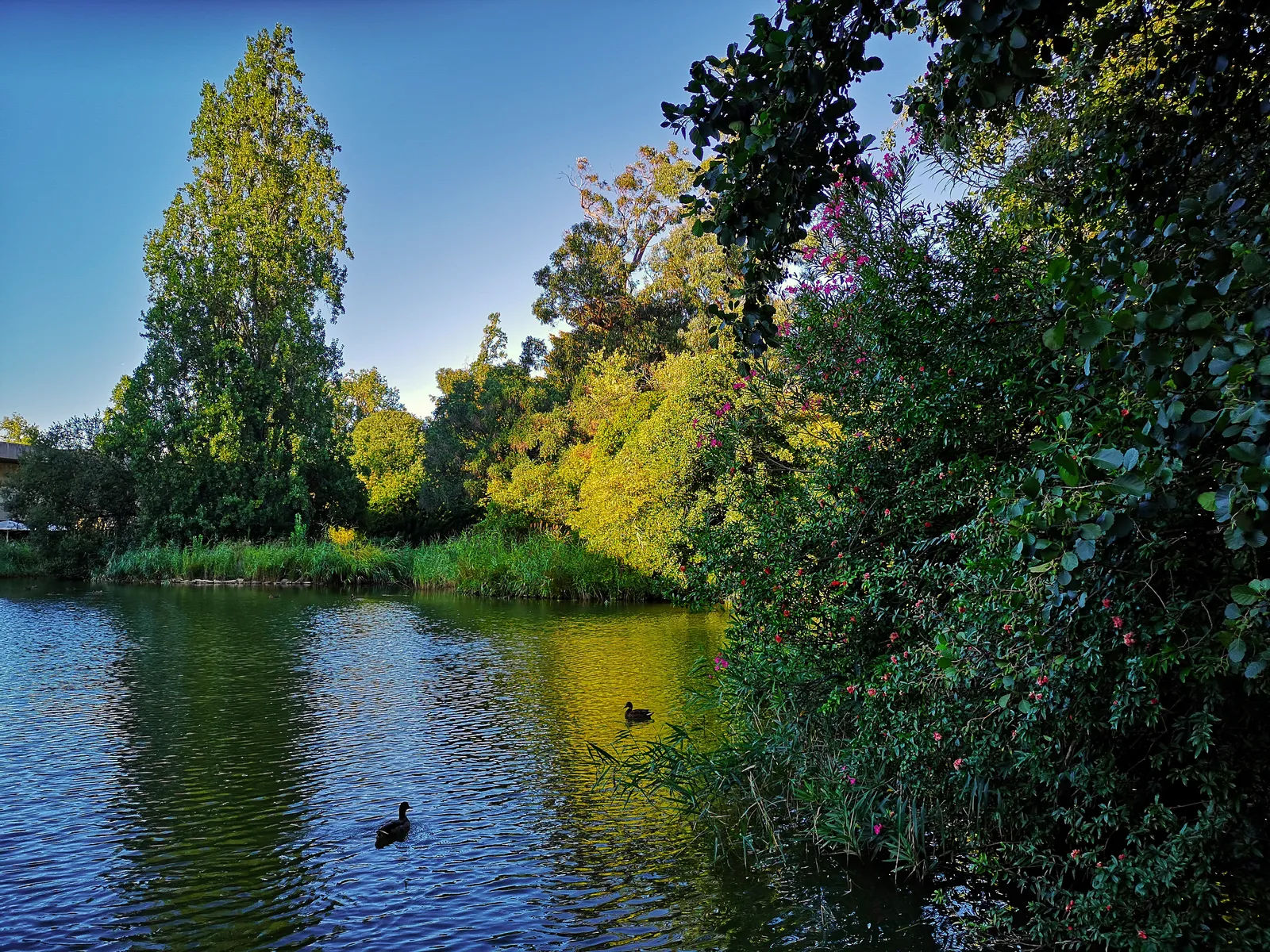
The garden is the reason to come even if you skip both museums. Seven and a half hectares of it, laid out in the 1960s as a designed landscape rather than a park: dense stands of trees, a stream, stepped concrete terraces, an amphitheatre, and a lake with ducks and the occasional night heron working the shallows. It is open every day, it costs nothing, and it is walled off enough from Avenida de Berna that the traffic disappears.
Nothing you carry comes into the galleries here: there is a free cloakroom at the door and bags go into it, which is a two-minute formality with a daypack and a longer conversation when what you are holding is the entire trip.
Paula Rego and the modern collection at CAM
Across the garden, the Centro de Arte Moderna holds the other half of the foundation’s collection: nearly 12,000 works of 20th and 21st century art, weighted toward Portuguese artists, with Paula Rego the name most visitors come for and Amadeo de Souza-Cardoso the one they leave talking about.
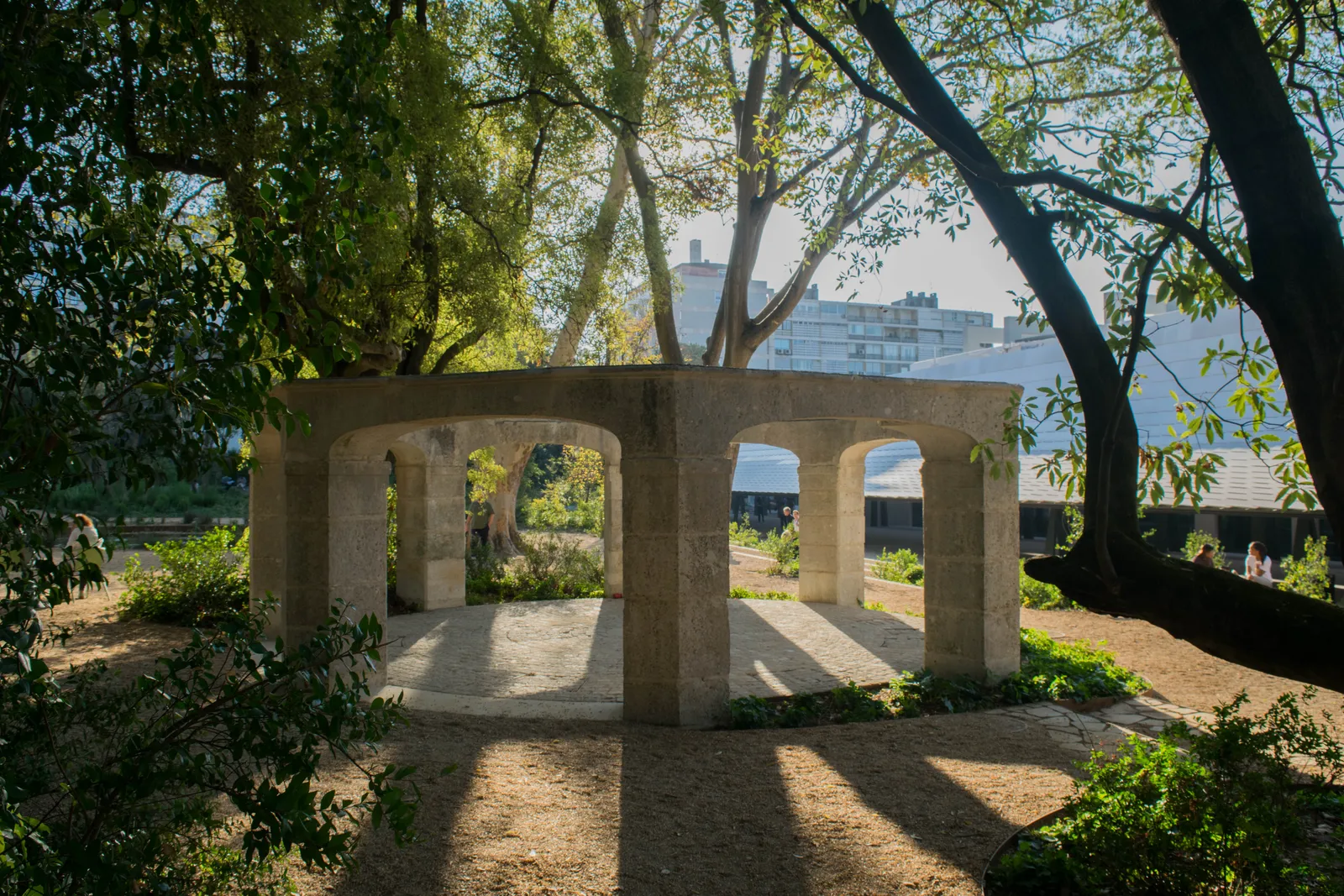
It reopened in September 2024 with a hundred-metre canopy by Kengo Kuma along its garden front, built from Portuguese ash and hand-painted ceramic tiles, and a new wood of dense planting underneath it. If your connection is tight, this is the half to skip: the walk back to São Sebastião is five minutes and the ride to the terminal is one line, but that is still 25 minutes plus whatever the airport wants from you.
Frequently asked questions
Which day is the Gulbenkian closed?
Tuesday, not Monday, which is the trap: almost every other museum in Lisbon takes Monday off and this one does the opposite. It runs Wednesday to Monday from 10:00 to 18:00. Admission is 10 euros, under-18s go free, and Sunday afternoons are free for everyone. The garden is open every day of the week regardless, including Tuesday.
Can you reach the Gulbenkian from the airport without changing metro lines?
Yes, and it is the only thing in central Lisbon you can say that about. The red line starts at Aeroporto and São Sebastião is the last stop on it, roughly 20 minutes of riding with no change and no platform hunting, then five minutes on foot. Everywhere in the old city needs a change at Alameda or here. If you have four hours or more and want the historic centre instead, the walk from Baixa up into Alfama is worth the extra 20 minutes and the connection.
Is this a good stop in the summer heat?
The garden is seven and a half hectares of dense planting with a lake in the middle of it and real shade over most of the paths, which is not something Baixa's grid or Alfama's stone offers in August, and the galleries are air-conditioned. Benches everywhere, a café on the terrace, and no queue at any point in the day.
How long does the Gulbenkian actually take?
An hour and a half is a fair pass at the Founder's Collection: it is around 6,000 objects but they are laid out in a single loop, and the building is one level. Add half an hour for the garden and another hour if you cross to the modern art centre as well. It is a hard museum to rush and an easy one to leave early, since the exit puts you straight back into the garden.