Porto Layover Guide: What to Do Before a Late Flight Out of Francisco Sá Carneiro
If you have 4-6 hours in Porto before a late flight out of Francisco Sá Carneiro, store your bag near São Bento, walk downhill through the old town to the Ribeira waterfront, and cross the Dom Luís I bridge for the view before riding the violet line E back to the airport with about 90 minutes to spare.
Can’t-miss
Porto has a useful shape for a layover: almost everything worth seeing sits on one slope, and the slope runs downhill from the station to the river. That means you can do this in one direction and never double back.
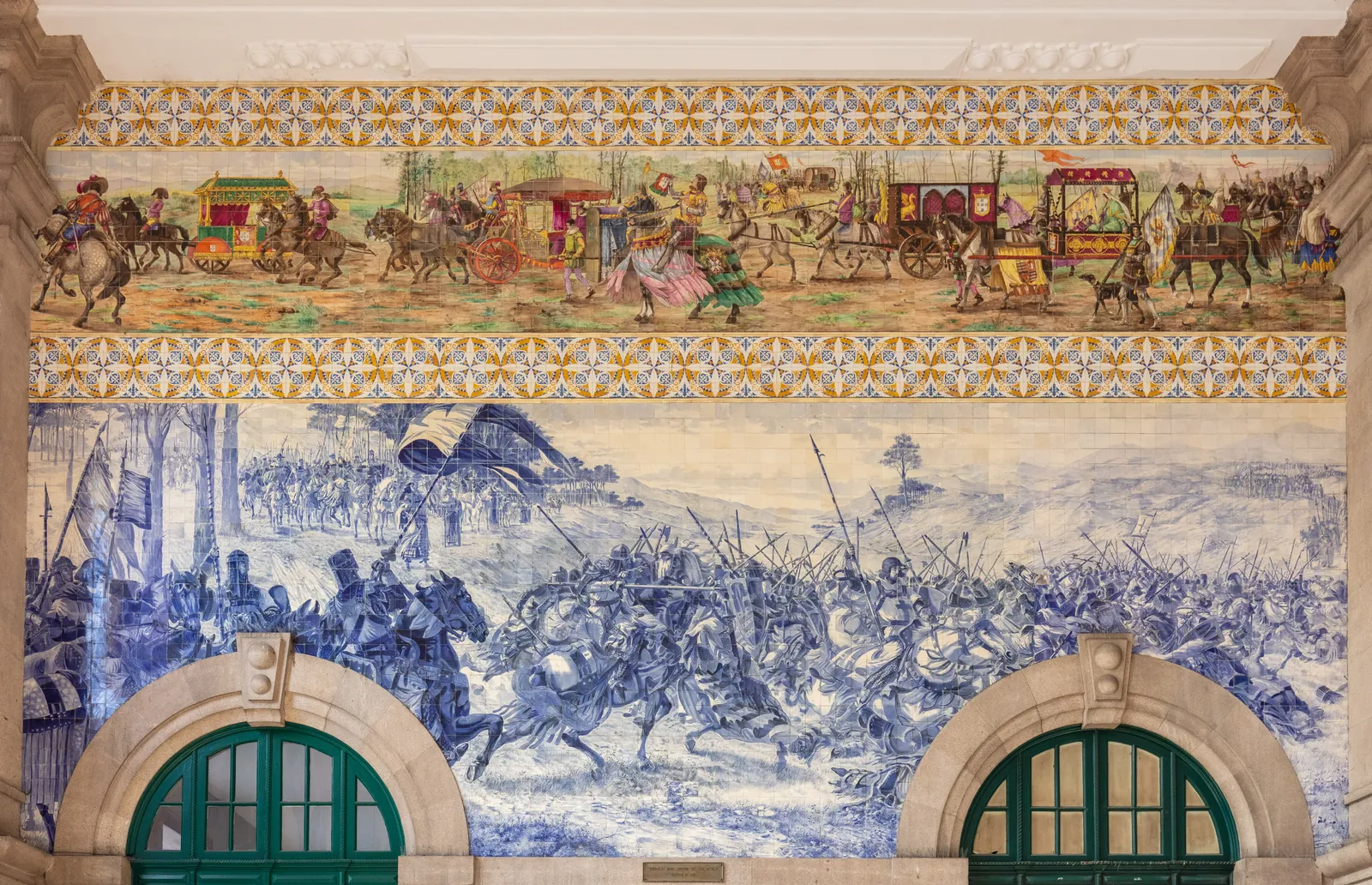
Start inside São Bento station itself, which is not a detour because you’re standing in it anyway. The entrance hall is lined with something like 20,000 blue and white azulejos, painted by Jorge Colaço over eleven years and finished in 1916. They aren’t decorative filler: the panels run through the conquest of Ceuta, royal processions, and scenes of rural life in the north, and they take about ten minutes to walk past properly.
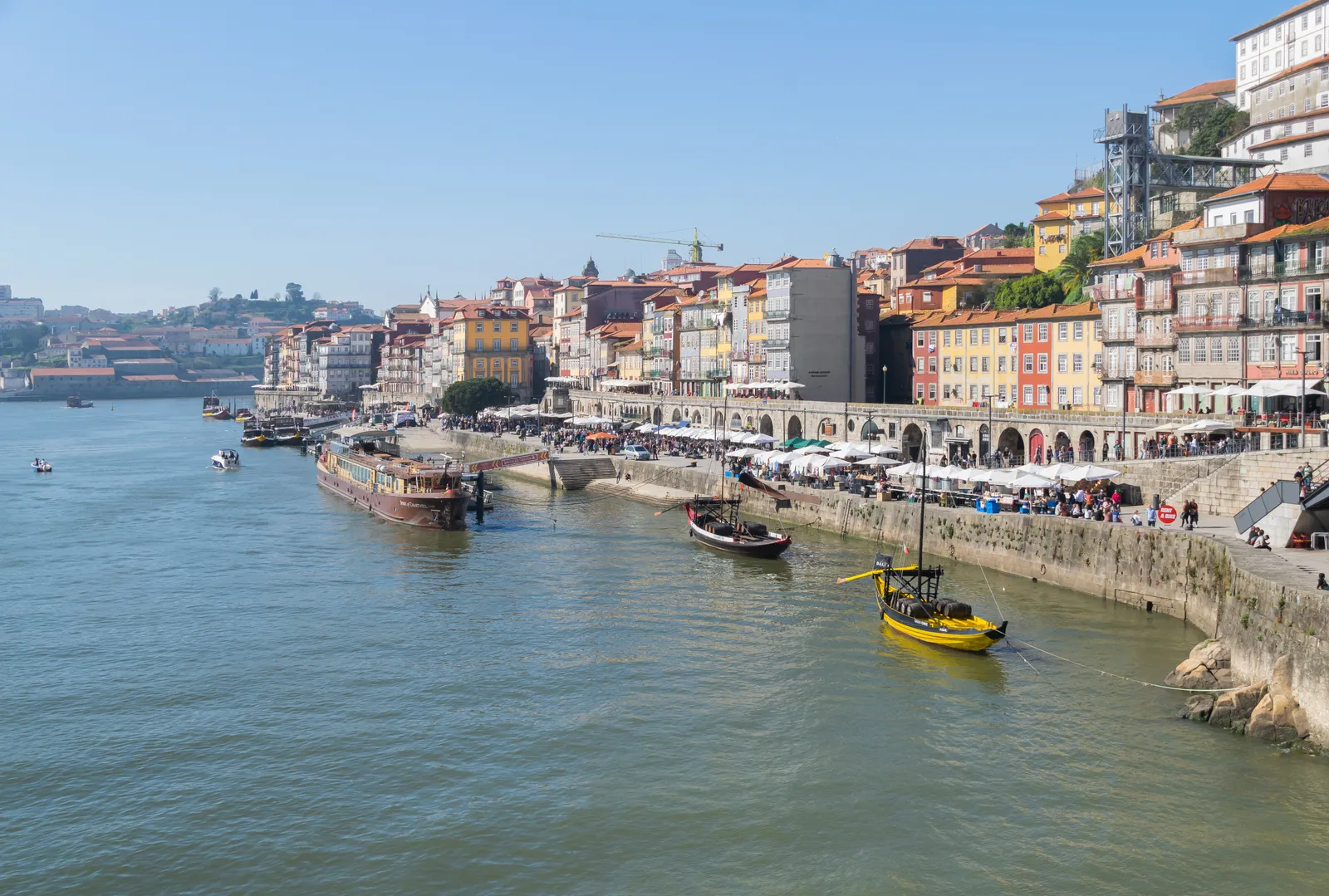
From the station doors it’s a short, steep drop through the lanes to the Ribeira, the UNESCO-listed waterfront where tall, narrow houses in mismatched paint stack up above the Douro and flat-bottomed rabelo boats sit moored along the quay. The whole quayside is cafés and terraces, and it’s the one part of Porto that looks exactly like the photographs.
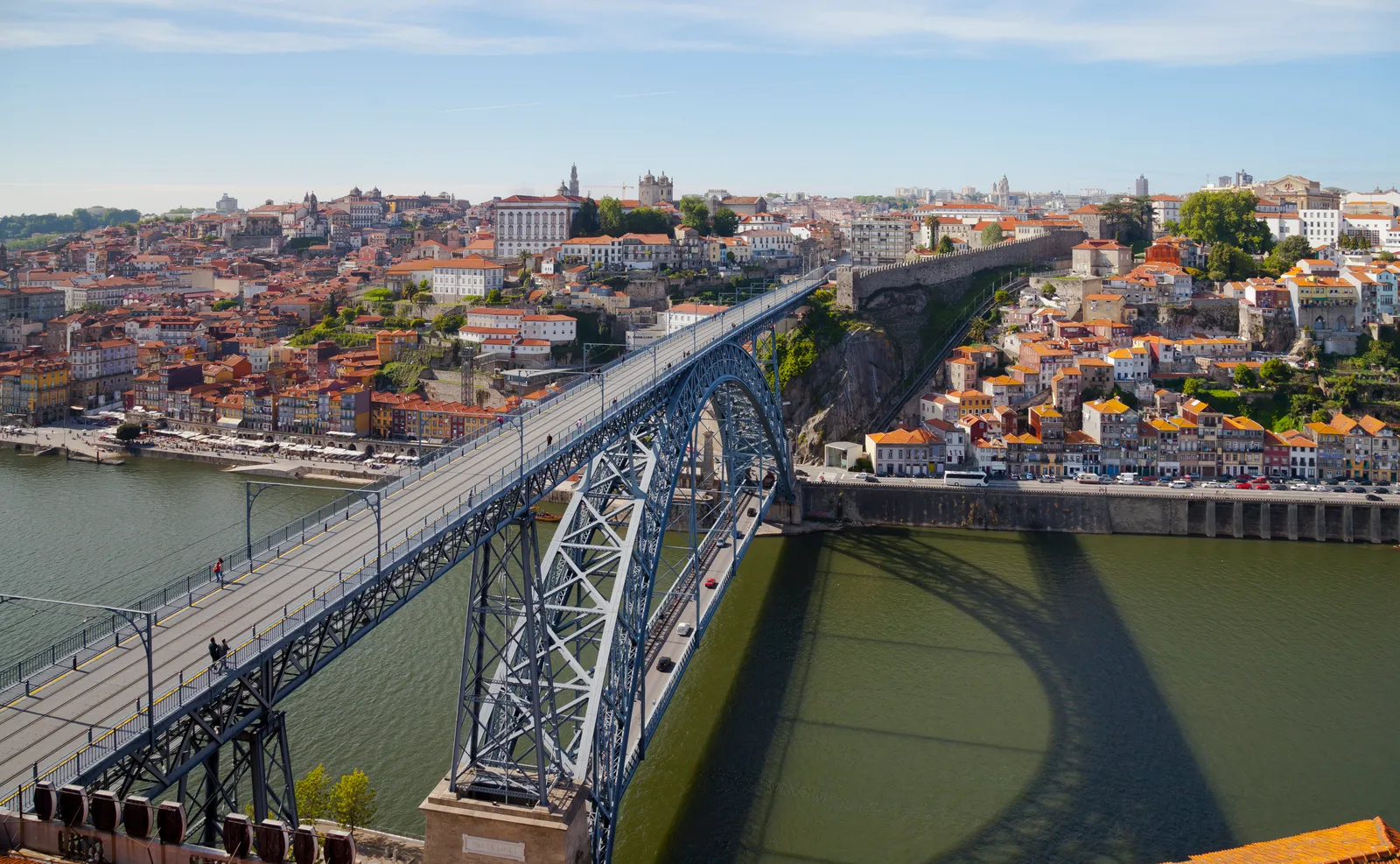
Then walk the Dom Luís I Bridge. The upper deck carries the metro and a pedestrian walkway, and crossing it puts you level with the rooftops for the widest view back over the city. The lower deck runs at river level if heights aren’t your thing, and either way the crossing takes about ten minutes and costs nothing.
Why a suitcase makes this the wrong afternoon
The descent from São Bento to the water is short but it is genuinely steep, and it’s paved in worn granite setts that have been polished smooth by a couple of centuries of feet. Several of the quickest ways down are stairs with no ramp alternative. A rolling bag on that surface is either dragging behind you or getting away from you, and the Ribeira quay itself is packed tightly enough on a warm evening that you’d spend the walk apologising. Porto is a city you go down through, and gravity is not on your luggage’s side.
If you have more time
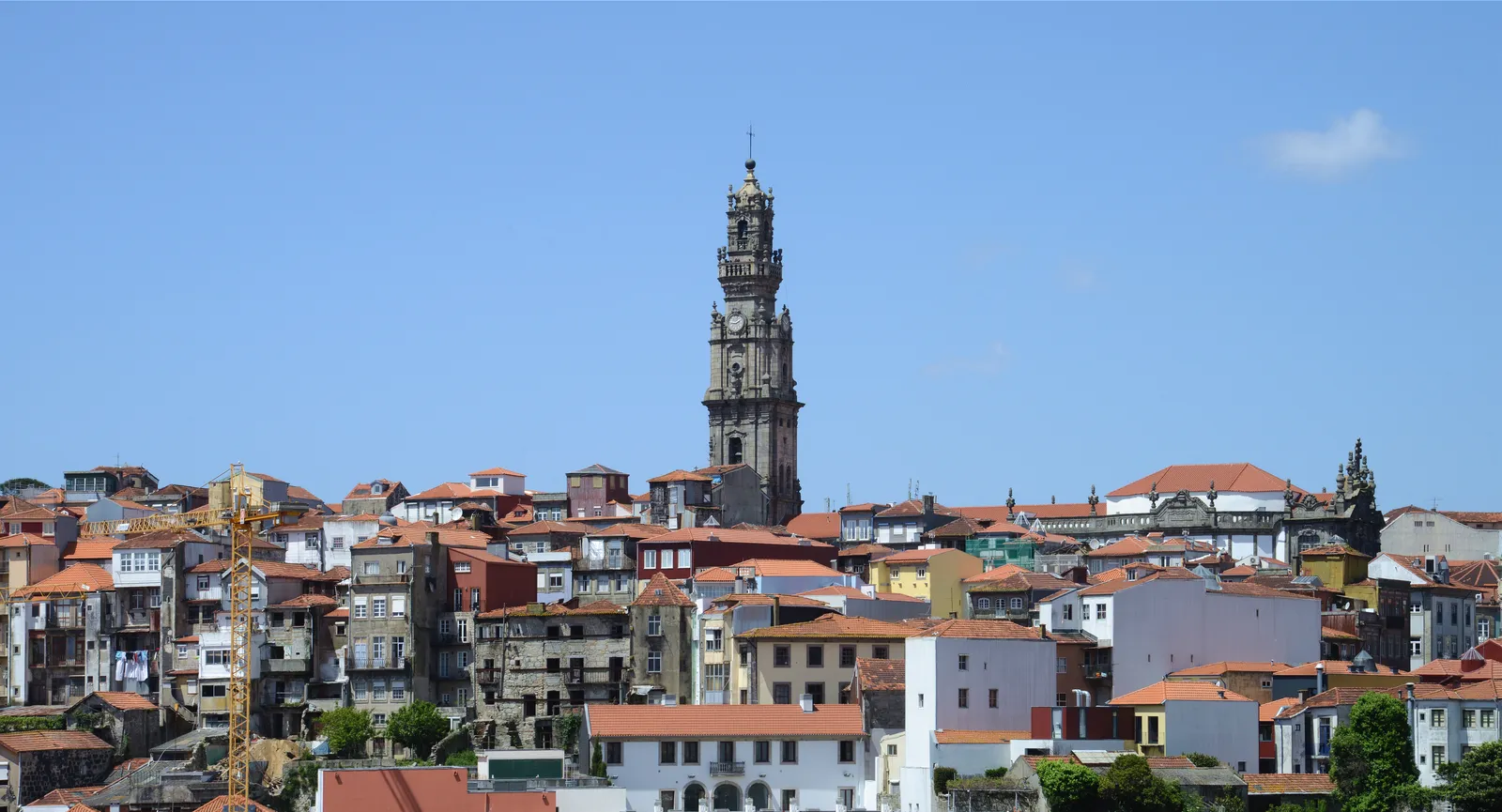
Head back uphill to the Clérigos Tower, the baroque bell tower that pins the skyline from almost anywhere in the centre. The climb up the internal staircase is tight and it’s a paid ticket, but the view takes in the whole slope down to the river.
A couple of minutes away, Livraria Lello draws long queues for its red staircase and stained glass ceiling. Worth knowing before you commit a chunk of your window to it: entry is a timed, ticketed slot, and the ticket price comes off the cost of a book if you buy one. Book ahead or skip it.
For food, Mercado do Bolhão reopened in 2022 after a four-year restoration of its 1914 iron and glass halls, and the counters inside are a far better pre-flight meal than anything waiting airside. If you want the local answer instead, a francesinha is Porto’s own invention and roughly the opposite of airline food.
With a genuine 6 hours, cross into Vila Nova de Gaia and put the time into one port cellar. The lodges sit in a row at the southern end of the bridge, and most tastings run 45 minutes to an hour.
Getting back to Francisco Sá Carneiro
Collect your bag and take the violet line E from Trindade straight to the airport. It’s a direct run of roughly 25 to 30 minutes, with trains about every 20 to 30 minutes from early morning until around 1am, and it doesn’t care about road traffic. The airport is in zone 4, so you’ll need a zone 4 Andante ticket on a reusable card, bought from the machines before you board. Leave the centre at least 90 minutes ahead of departure and the terminal is a short walk from the platform.
The best version of a few spare hours
Porto packs an unusual amount into a walkable slope, and the whole appeal of it is being able to wander down without thinking about logistics. Leaving the bag behind is what makes that possible: it’s the difference between arriving at the gate having seen the Douro from a bridge deck and arriving at the gate having wrestled a suitcase down a granite hill.
Frequently asked questions
How long does the metro take from central Porto to the airport?
Line E, the violet line, runs direct from Trindade in the centre to the airport in roughly 25 to 30 minutes, with trains about every 20 to 30 minutes from early morning until around 1am. The airport sits in zone 4, so you need a zone 4 Andante ticket loaded onto a reusable card, and the station is right outside the terminal.
Is there a size limit for bags at a luggage storage point in Porto?
Storage points in Porto generally accept bags of any size, from a cabin backpack to an oversized checked case, for one flat daily rate per item. You don't need to repack or downsize anything before dropping off.
Is this walk manageable with a stroller or limited mobility?
Only partly. The stretch from São Bento down to the river is steep and paved in worn granite setts, and several shortcuts into Ribeira are stairs only. If that's a problem, stay on the flat riverside promenade at Cais da Ribeira and use the lower deck of the bridge, which has no steps at either end.
What happens to this itinerary if it rains?
Porto's granite paving gets genuinely slippery when wet and the hill down to Ribeira is the worst place to discover that. Trade the descent for the covered halls of Mercado do Bolhão and the tiled interior of São Bento, both of which are indoors and both of which are among the better things to see here anyway.
Can I fit in a port cellar tasting in Vila Nova de Gaia?
Yes, if you have a full 6 hours. The cellars are clustered right at the far end of the Dom Luís I bridge, so the walk across is about 10 minutes, but most tours run 45 minutes to an hour, so treat it as the one thing you commit to rather than an add-on.