Porto Layover in Foz do Douro: What to Do Before a Late Flight
Part of the full Porto Layover Guide: What to Do Before a Late Flight Out of Francisco Sá Carneiro
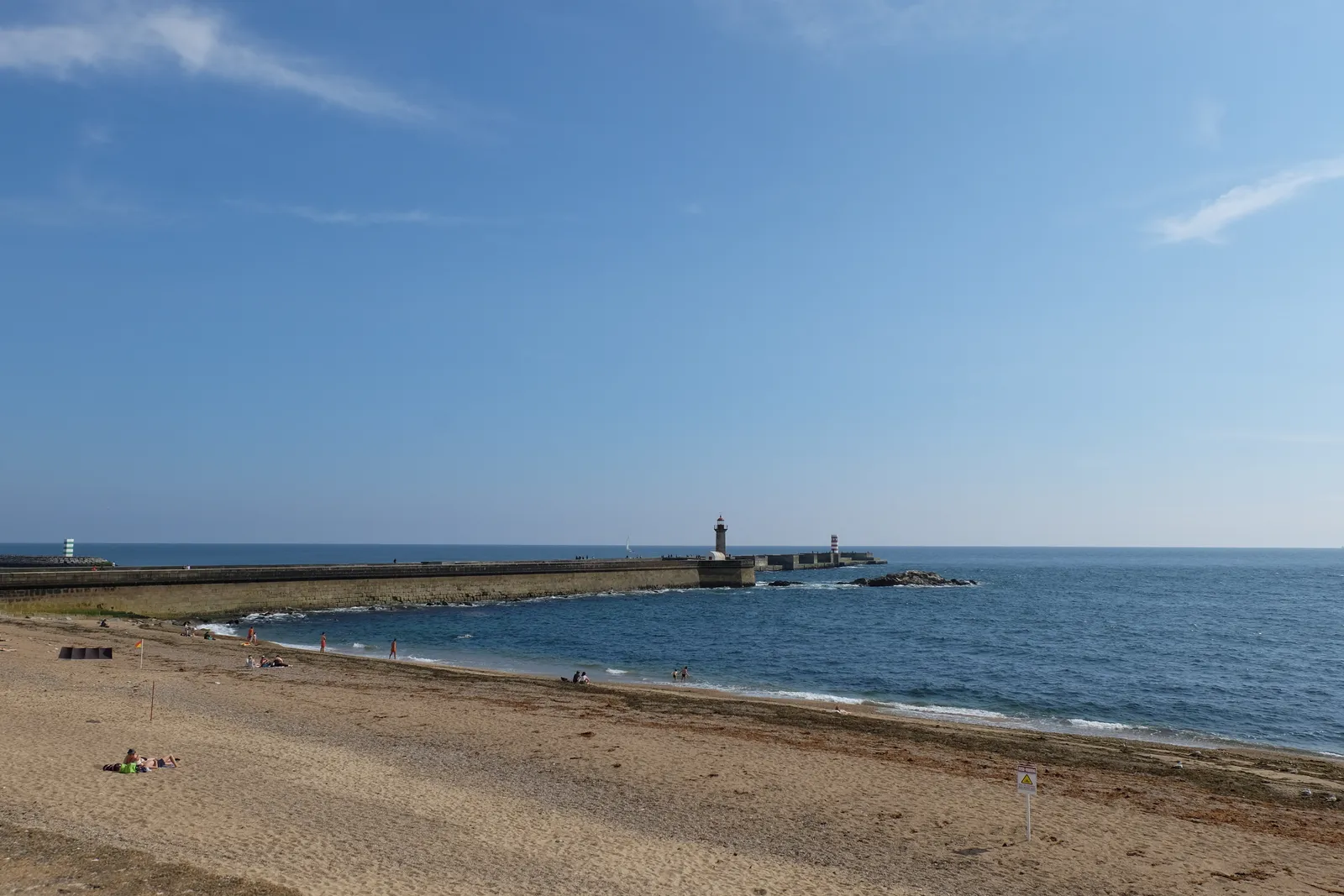
If you have 4-6 hours before a late flight out of Porto, skip the old town entirely and ride historic tram line 1 out to Foz do Douro, where the river meets the Atlantic: a flat seafront walk to the Felgueiras lighthouse, with the ride out counting as half the reason to go.
Can’t-miss
Porto’s old town is vertical, cobbled, and busy. Foz do Douro is none of those things, which is the entire argument for spending a layover out here instead. It sits where the Douro finally reaches the Atlantic, about seven kilometres downstream, and the transition from river city to seaside town happens gradually enough that the journey is worth as much as the arrival.
That journey is tram line 1, running along the north bank since 1895 in restored wooden cars with brass fittings and windows that actually open. It leaves from Infante, near Ribeira, and terminates at the Passeio Alegre garden in Foz, following the water the whole way. Roughly 20 to 30 minutes, no hills, no navigation.

At the far end, the Farolim de Felgueiras stands on a stone pier reaching into the ocean, and the promenade running north from it is flat, wide, and lined with beaches, rock pools, and terraces facing straight out to sea. On a clear evening this is where Porto goes to watch the sun go down.
Why the bag stays in town
Foz has no metro station, which shapes everything about how you handle this. You are coming back through the centre whether you like it or not, so carrying your luggage out to the coast means carrying it there and back for no gain at all. The historic trams compound the problem: they are small, popular, and boarded up steep steps with no luggage space, so arriving at the stop with a case is a good way to watch a full tram leave without you. Store it centrally and the round trip becomes a ride rather than a logistics exercise.
If you have more time
Walk north along the coast and you pass the Forte de São João Baptista, a sixteenth century fortress built to guard the river mouth, still squat and intact above the rocks. Beyond it the promenade keeps going toward Matosinhos, and with a full six hours you can follow it as far as the Castelo do Queijo and pick up the bus back from there.
The seafront terraces are the other reason people come. A plate of grilled fish or a drink facing the Atlantic is a considerably better last meal than the alternative waiting for you at the gate, and Foz has no shortage of places pointed at the water.
Trading the monuments for the ocean
Not every layover needs to be spent ticking off a cathedral. Foz offers the opposite proposition: one tram ride, one flat walk, and a horizon. It works precisely because you left the bag in the city, which turns the whole afternoon into something closer to an outing than a transfer.
Frequently asked questions
How do I get to Foz do Douro from central Porto?
Historic tram line 1 runs along the north bank of the Douro from Infante, near Ribeira, out to the Passeio Alegre garden in Foz. It takes roughly 20 to 30 minutes depending on traffic, with departures about every 20 minutes, and the ride is genuinely part of the point. The 500 bus covers similar ground more often and more cheaply.
Is there a metro station in Foz?
No, and that's the main thing to plan around. Getting back to the airport means the tram or bus into the centre first, then metro line E from Trindade. Budget roughly 90 minutes for the whole return trip and leave Foz around two and a half hours before departure.
What time does the tram stop running?
Line 1 is a daytime service, with the last departures in the early evening rather than late at night. If your flight is genuinely late, check the final return time before you commit, or plan on the 500 bus, which runs later.
Is Foz walkable with limited mobility?
The seafront promenade is flat, wide, and smoothly paved, which makes it far easier going than anywhere in the old town. The historic trams themselves are a different matter, with high steps and no level boarding, so the bus is the more accessible way out here.
Is it worth coming out here if the weather is bad?
Not really. Foz is exposed Atlantic coast and the whole appeal is the open promenade and the sea, neither of which improves in rain or wind. On a bad day the covered old town streets are the better bet.