Belém on a Lisbon Layover: Jerónimos
Part of the full Lisbon Layover: Baixa and Alfama From LIS
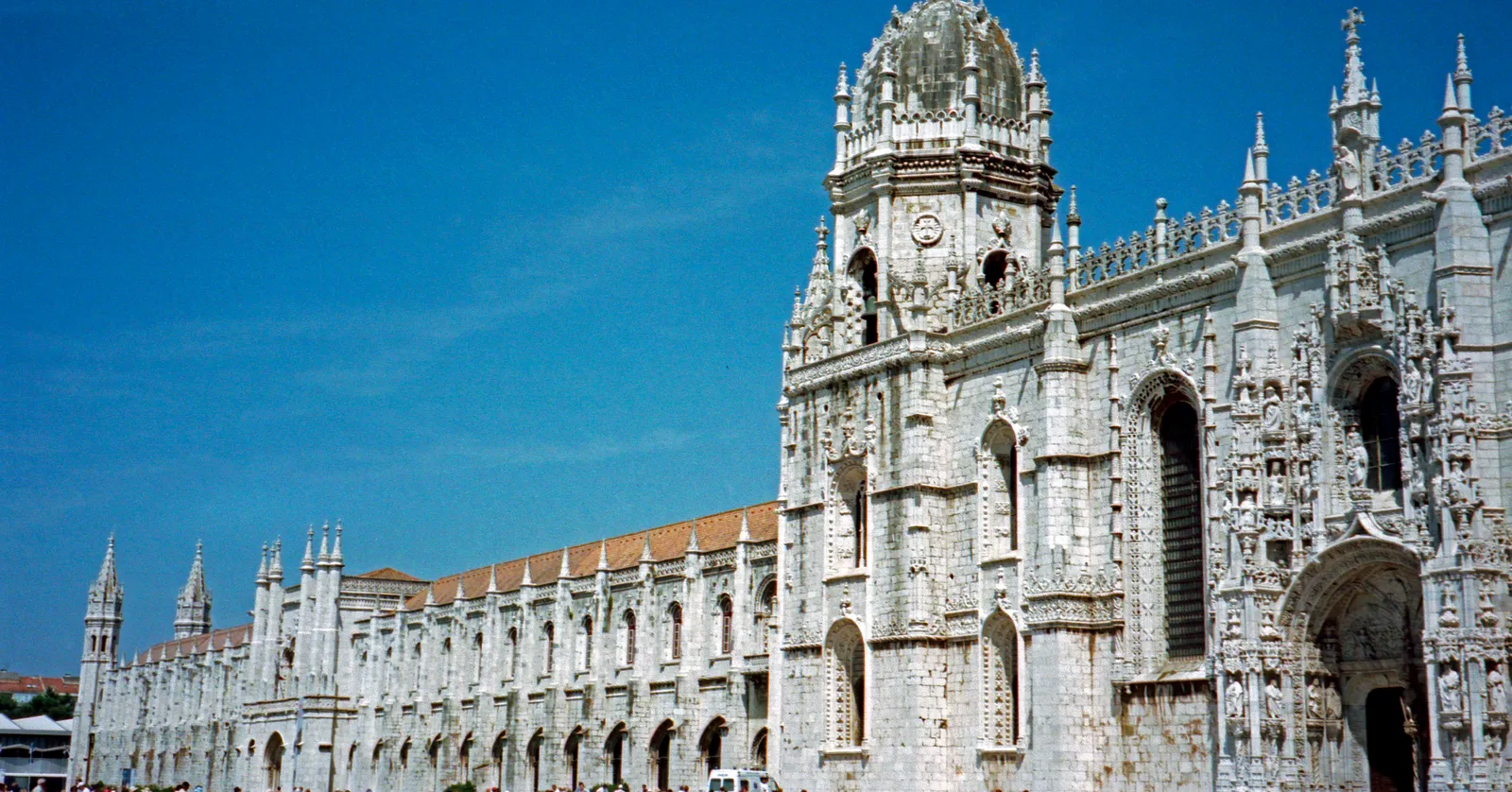
Belém sits about seven minutes west of central Lisbon on the Cascais train line, and it packs Jerónimos Monastery, Belém Tower, the National Coach Museum and the pastry shop that has been making custard tarts since 1837 into roughly one kilometre of riverbank.
Jerónimos Monastery’s church and cloister
The monastery was paid for with the pepper tax on the spice trade Vasco da Gama opened up, begun in 1501, and the result is a limestone facade the length of a city block covered in carved rope, coral, artichokes and armillary spheres: Manueline, the style Portugal invented for itself and used almost nowhere else. Vasco da Gama’s tomb is inside the church, held up by carved elephants, with the poet Luís de Camões opposite him.
The church is free. The cloister next door is 18 euros, opens Tuesday to Sunday from 9:30 to 17:30 with last entry at 17:00, and closes all day Monday; a ticket bought in advance is the difference between walking in and standing on the Praça do Império for half an hour. Two storeys of arcades, every column different, and it is the reason most people come.
Belém Tower now runs on timed entry
Ten minutes west along the water, the tower sits out in the shallows on its own spit of rock, built between 1514 and 1519 to guard the estuary and carved with the same rope motifs and the same armillary spheres as the monastery, plus a stone rhinoceros at the base of one of the turrets, carved not long after a live one arrived in Lisbon from India in 1515 and caused a sensation across Europe.
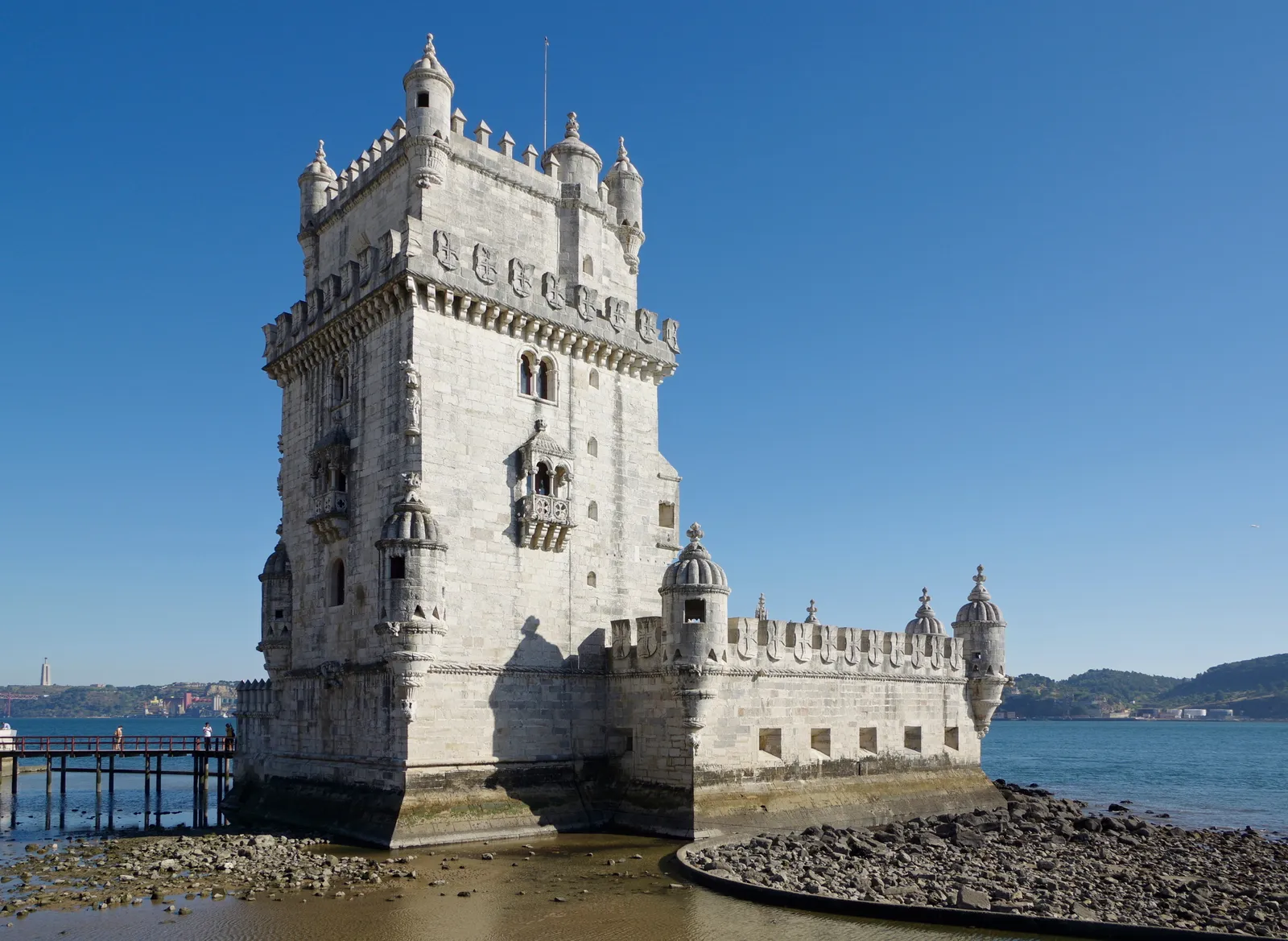
It reopened on 26 May 2026 after a year of restoration, and it now admits 60 people every 30 minutes and 900 a day on timed tickets that cost 15 euros. The exterior costs nothing and is what the photographs are of. Between the tower and the monastery, on the waterfront, the 1960 Monument to the Discoveries stands out over the river with a compass rose laid into the pavement in front of it.
The custard tarts at Pastéis de Belém
The recipe came out of the Jerónimos monastery when the religious orders were dissolved in 1834, and the shop next door has been selling the result since 1837 under a name nobody else is allowed to use: everything anywhere else in Portugal is a pastel de nata, and only these are pastéis de Belém. About 1.50 euros each, dusted at the table with cinnamon and icing sugar from shakers.
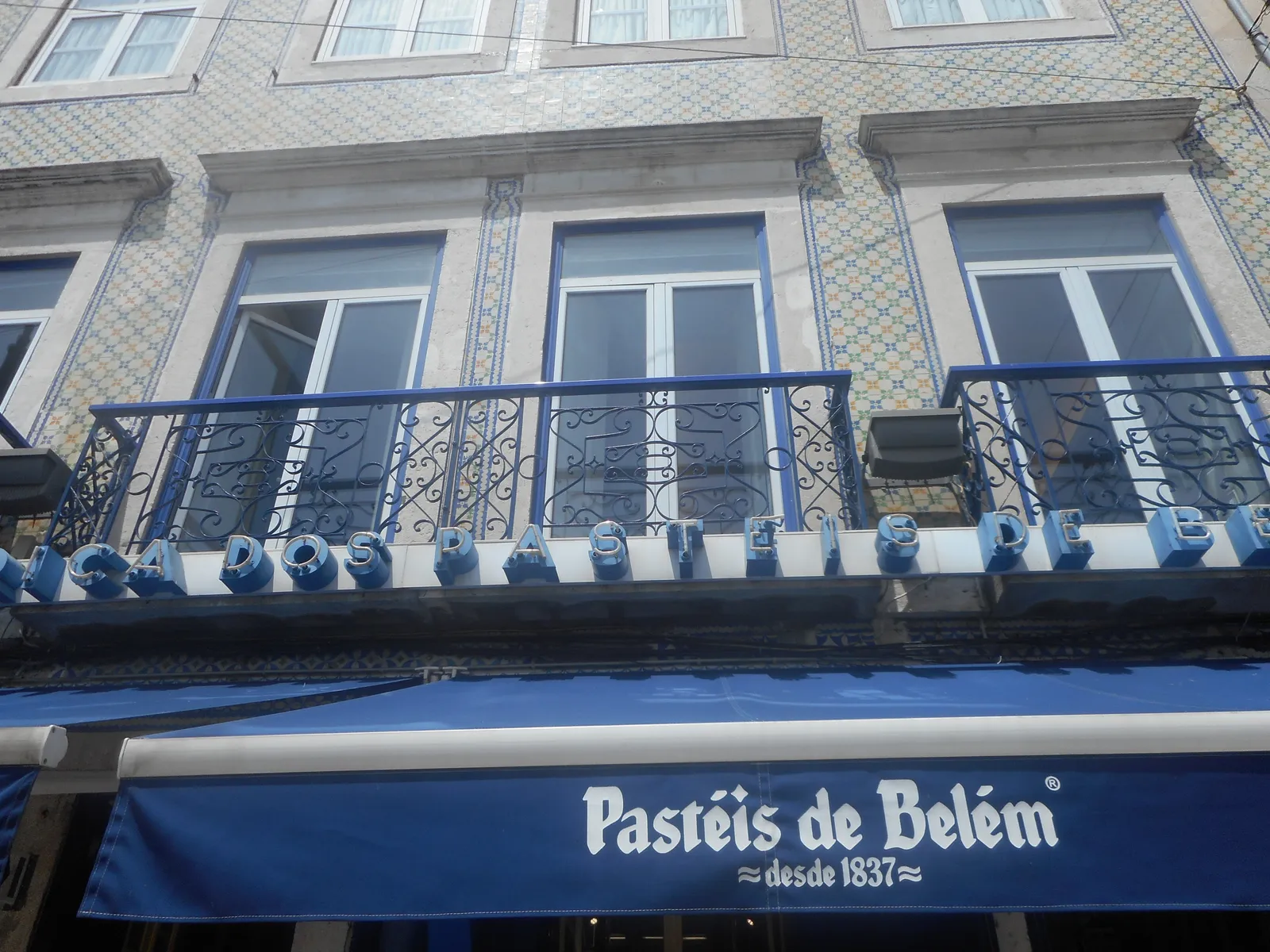
The queue outside looks worse than it is. There are two of them, one for the takeaway window and one for a table, and behind the small blue front room the shop opens into a warren of tiled dining rooms seating well over a thousand people, so the sit-down line usually moves faster than the pavement suggests. Three of the four stops out here have a queue attached, which is where the time on a layover actually goes, and none of those lines is a good place to be holding a suitcase.
The Coach Museum’s gilded state carriages
Five minutes back east, the National Coach Museum holds around seventy royal and state coaches spanning the late 16th to the 19th century, the largest collection of its kind anywhere. The three built for Portugal’s 1716 embassy to Pope Clement XI are the ones that stop people: carved, gilded, encrusted with allegorical figures the size of people, and built to be driven through Rome as an argument about how rich Portugal was.
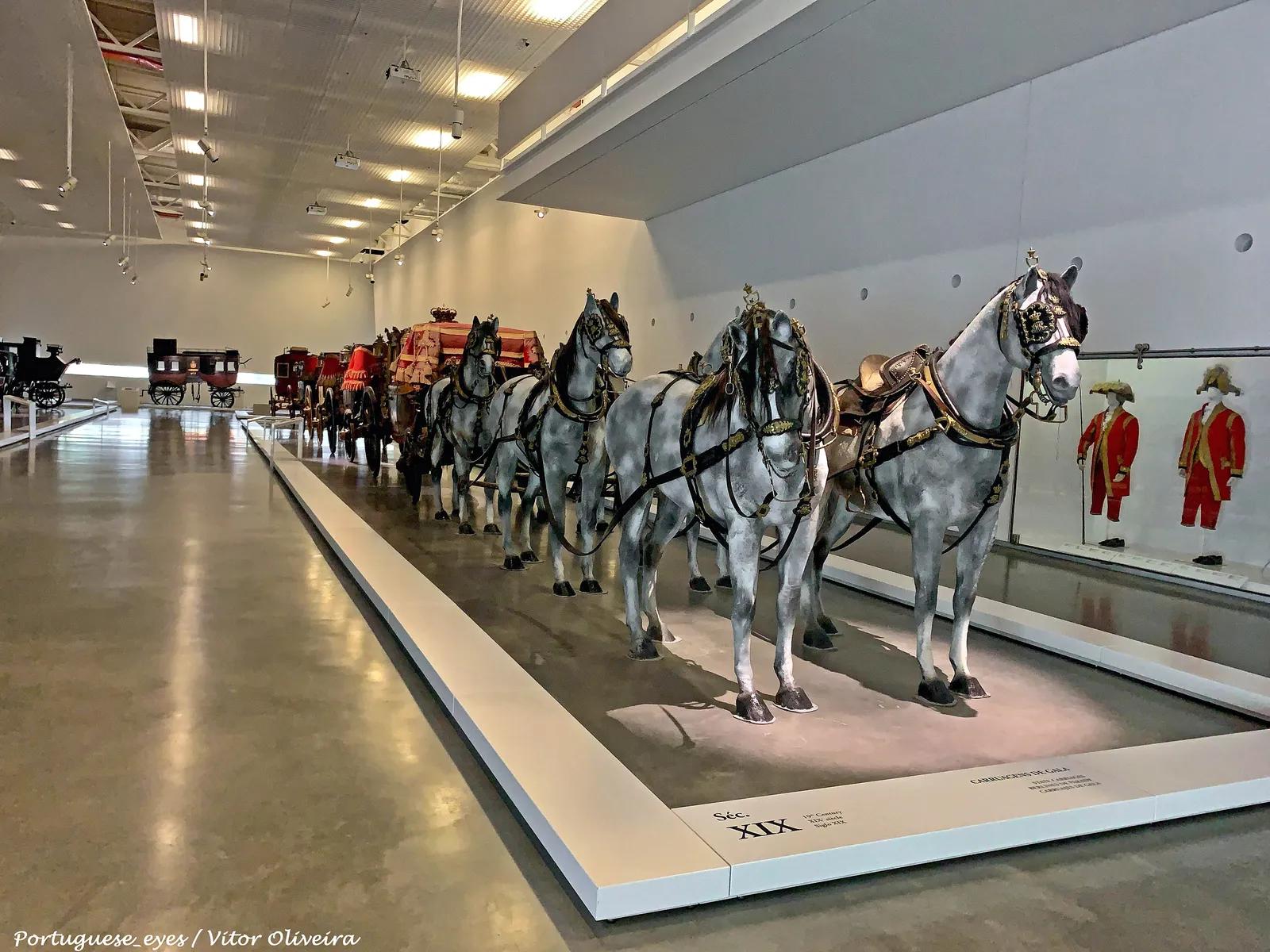
Eight euros, Tuesday to Sunday, 10:00 to 18:00 with last entry at 17:30. It is indoors, it never has the queues the other two do, and it is a five-minute walk from the station, which makes it the sensible thing to keep back for the end of the afternoon rather than the first stop you make.
Frequently asked questions
Is the church at Jerónimos free to go into?
Yes. The church of Santa Maria, where Vasco da Gama and the poet Camões lie in carved tombs on either side of the nave, is free and open Tuesday to Saturday from 10:30 to 17:00 and Sunday afternoons from 14:00. The 18-euro ticket buys the two-storey cloister next door, which is the part with the carved arcades everyone photographs. If you are short on time or money, the church alone is a real visit rather than a consolation.
Do you need to book Belém Tower ahead?
More than you used to. It reopened on 26 May 2026 after a year of restoration with timed entry: 60 people every half hour, 900 a day, and once the day's slots are gone they are gone. That is a hard cap, not a queue you can wait out, so a walk-up on a summer afternoon is a real risk. The tower is also worth seeing from outside for nothing, standing in the shallows with the tide around it, which is the view most photographs are of anyway.
What is open in Belém on a Monday?
Very little. Jerónimos, Belém Tower and the Coach Museum all close on Mondays, which takes out three of the four reasons to come. The pastry shop stays open, the riverside gardens and the Praça do Império fountain are always there, and the Jerónimos church keeps its own hours, but a Monday trip out here is a walk rather than a visit. Pick a different corner of the city that day.
Is Belém a better use of a short layover than the old city?
Not usually. Belém is one kilometre of monuments with three separate ticket queues in it, and it works best when you have four hours or more and a specific building you want to be inside. With three hours, the walk up from Baixa into Alfama gives you more to look at, costs almost nothing and does not depend on anything being open. Come out here for Jerónimos or the tower specifically, not to fill time.