Lisbon Oriente Station: Parque das Nações
Part of the full Lisbon Layover: Baixa and Alfama From LIS
Lisbon’s Oriente station anchors the Expo ‘98 district built around it: the Oceanarium, a cable car along the Tagus and a view of the Vasco da Gama bridge, flat, modern and step-free from one end to the other, which is the opposite of the old city.
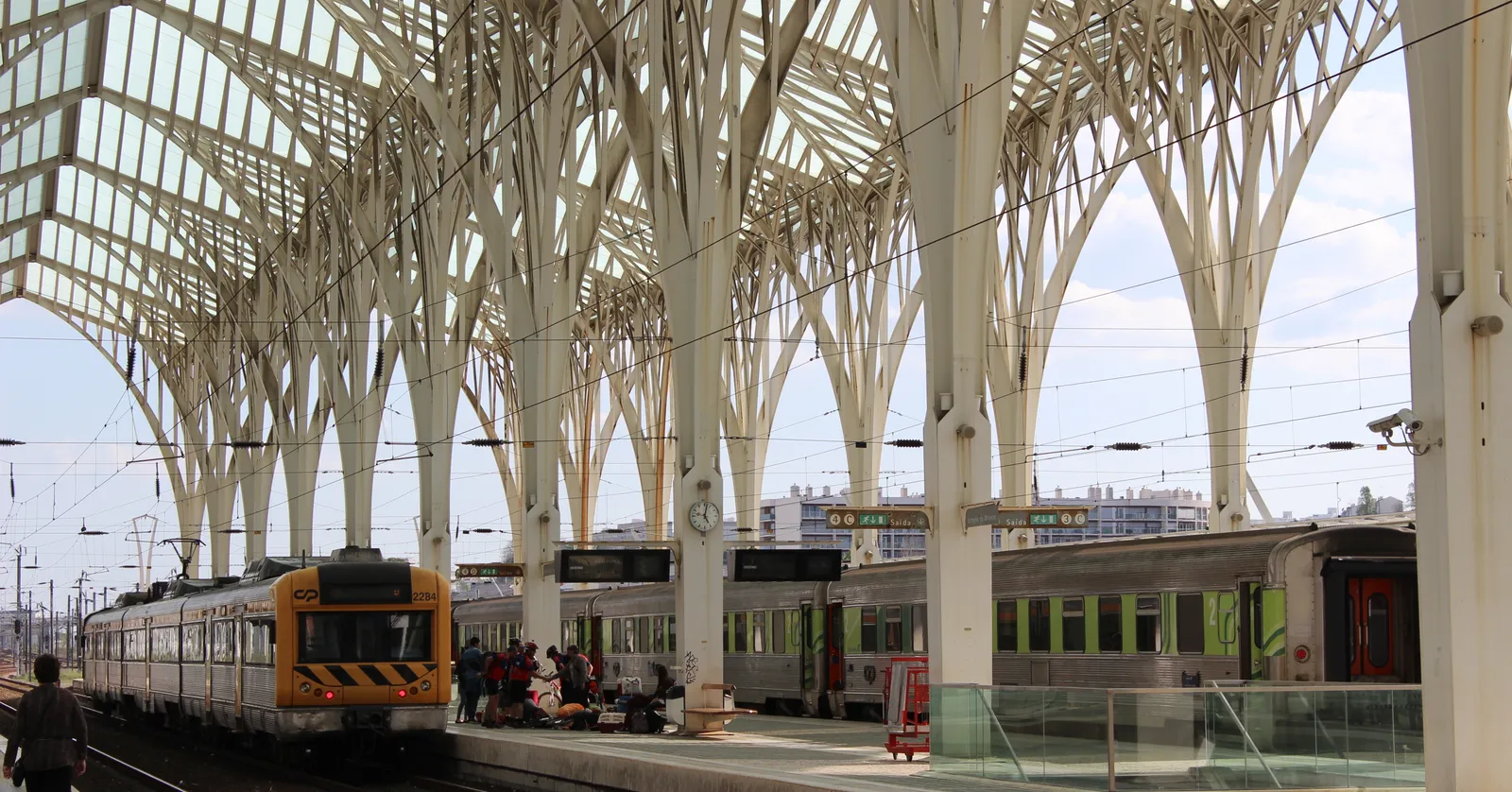
The glass canopy over Oriente’s platforms
Santiago Calatrava designed the station for Expo ‘98 and it opened on 19 May that year, a fortnight before the fair. The train platforms sit 19 metres up on a concrete deck, and above them the canopy is a lattice of white steel and glass whose columns branch near the top so the whole thing reads as a row of trees. It is worth two minutes on the platform level even if your train is elsewhere.
Downstairs in the metro hall there is something almost nobody stops for: eleven tile panels commissioned for the Expo from artists on five continents, all of them on the fair’s ocean theme. Hundertwasser, Erró, Yayoi Kusama, Sean Scully and Zao Wou-Ki are among the names. They are free, they are on the way, and they take five minutes.
Oriente stacks its levels instead of spreading them out, so a change here means finding the lifts or the escalators rather than walking across a concourse.
Sharks and rays in the Oceanarium’s central tank
Ten level minutes south of the station, the Oceanarium stands on piles in its own lagoon, a grey slab of a building that was designed to look like a ship. Inside, the whole thing is arranged around one tank of five million litres, seven metres deep, holding sharks, rays, barracuda and groupers. Four more tanks, a North Atlantic rocky coast, an Antarctic shore, a Pacific kelp forest and an Indian Ocean reef, ring the central one and are separated from it only by acrylic, so from most viewpoints it looks like a single body of water with wildly different weather in each quarter. Roughly 16,000 animals of 450 species live in it.
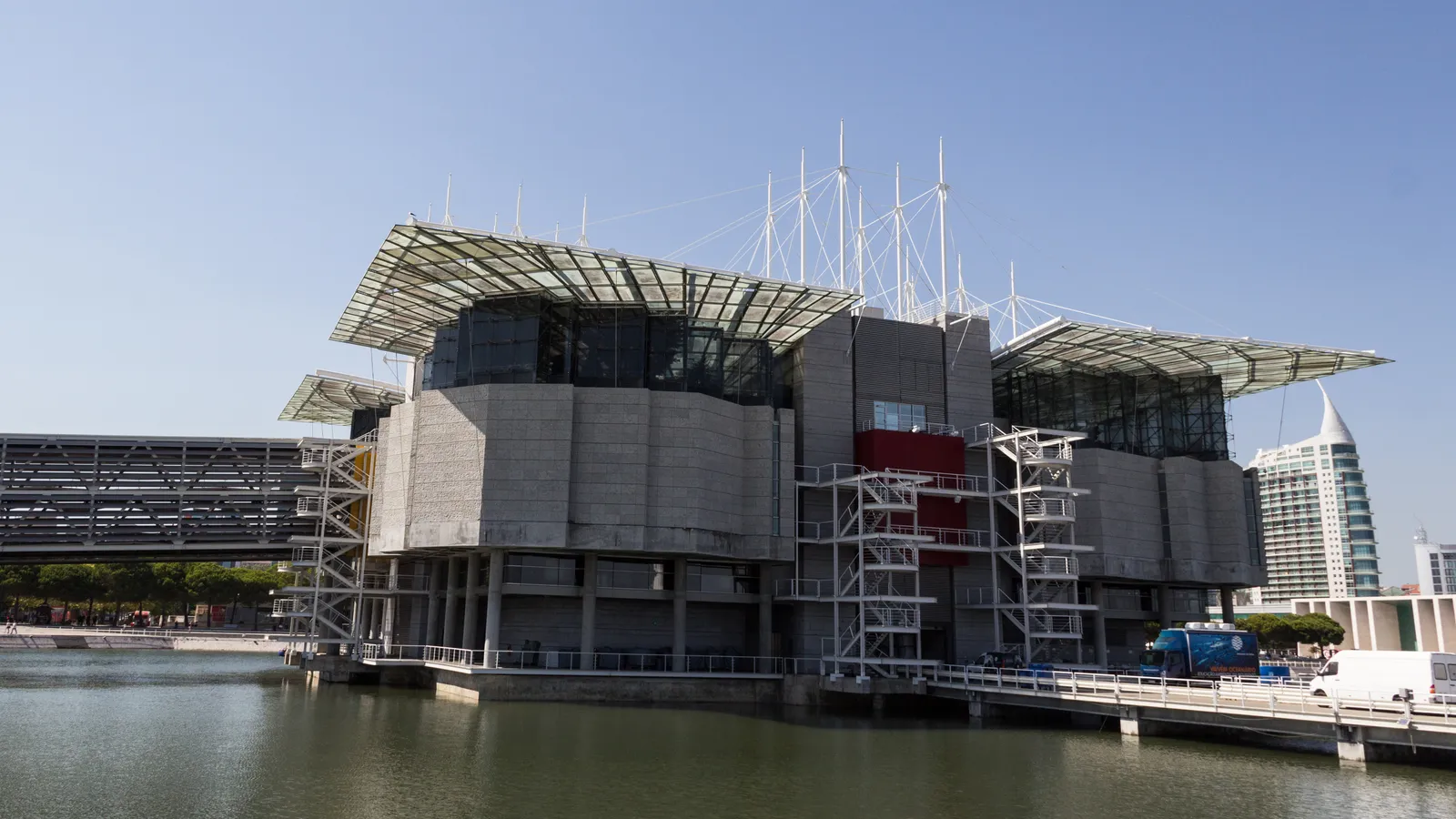
It opens at 10:00 and takes last entries at 19:00, and adult admission starts at 25 euros; a timed ticket bought ahead matters more here than at most Lisbon attractions, because the whole route through the building is one-way and a queue at the door is time you cannot make back up. Allow an hour and a quarter.
A cable car to the Vasco da Gama tower
From beside the Oceanarium a cable car runs 1.2 kilometres north along the water to the foot of the Vasco da Gama tower, the white sail-shaped structure at the top of the site. The ride is about ten minutes and costs from 7.50 euros, in glass cabins that seat eight, and it is high enough to put the whole Expo waterfront and the estuary under you at once.
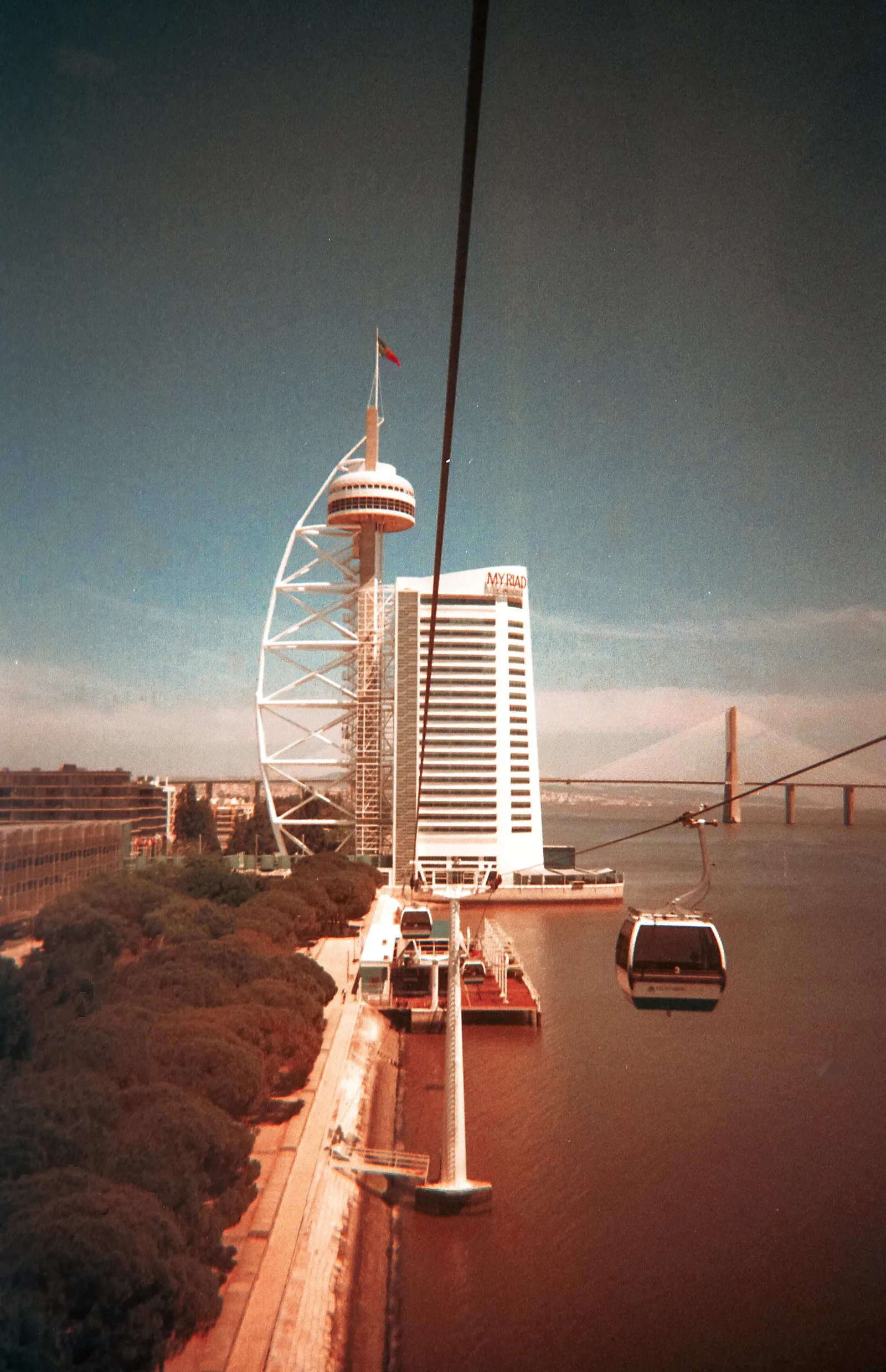
The promenade directly underneath is free, paved and about 20 minutes end to end on foot, so the cable car is a view rather than a necessity. Take it one way and walk back if you want both.
The Vasco da Gama bridge runs out of sight
From the southern end of the waterfront the Vasco da Gama bridge crosses the Tagus estuary and keeps going: 17.2 kilometres of it, the longest bridge in the European Union, opened in March 1998 for the same Expo the rest of this district was built for. The cable-stayed section is the part with towers, close to this bank; the rest is a low viaduct that thins to nothing at the horizon.
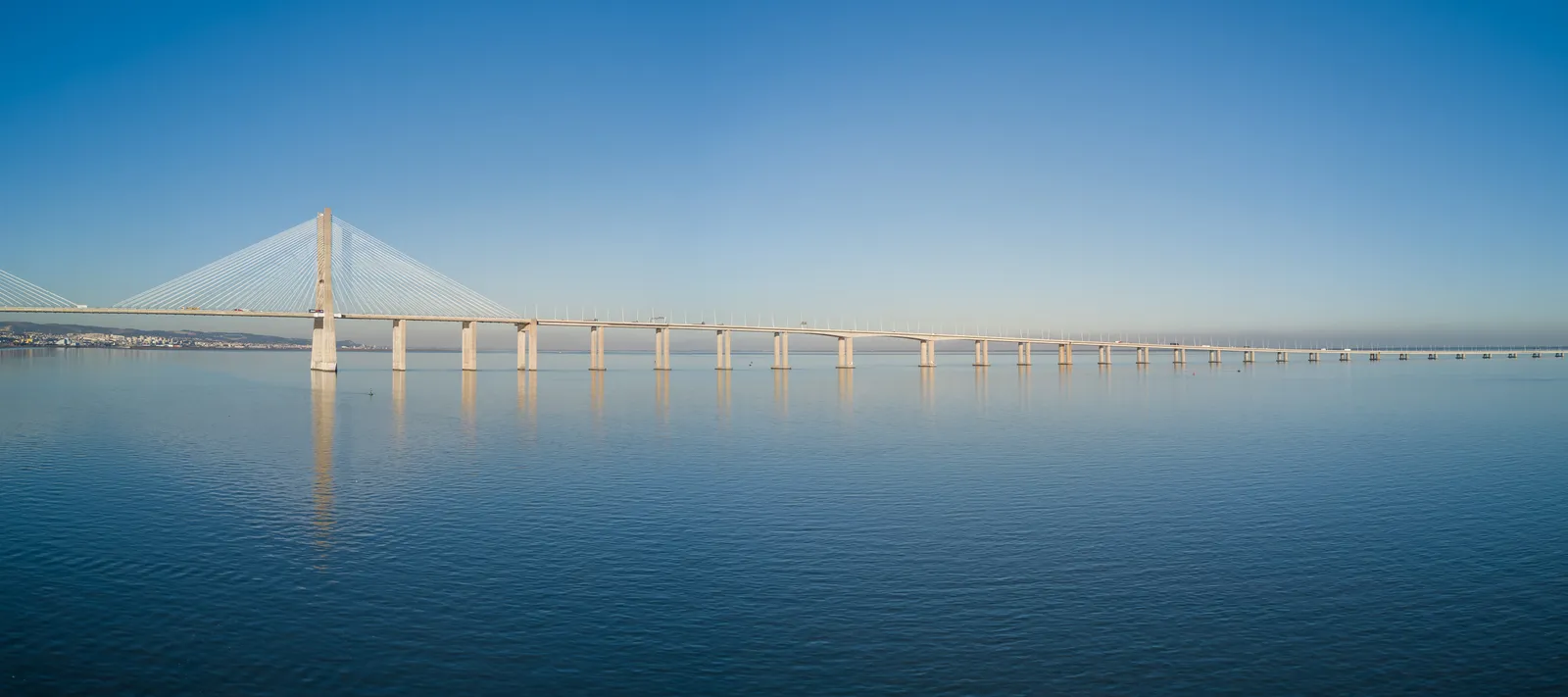
If you are taking a train south to the Algarve rather than a flight, you will cross it a few minutes after leaving Oriente, which is the better way to see it.
The airport is three stops back up the red line
Aeroporto is the terminus in that direction, so there is no wrong train and nothing to miss at the far end. Five or six minutes of riding, plus the five to seven minute walk out to Terminal 1, on the same 1.90-euro ticket you came in on. That short a hop back is also why leaving the bag behind is worth doing here even on a two-hour gap: the Oceanarium’s route through the building is single-file, and the cable car cabins are sized for eight people standing.
Frequently asked questions
Is two hours enough to leave the airport for Parque das Nações?
Yes, and this is the one part of Lisbon where it genuinely is. The metro is three stops and five to six minutes each way, the walk from Oriente to the waterfront is under ten minutes and completely level, and nothing here needs a booking. That leaves an hour on the ground even after you allow generously at both ends. If you have four hours or more, spend them on the walk through Baixa and Alfama instead: the old city is 25 minutes further down the line and is what most people actually come for.
Is Parque das Nações a good stop with children?
It is the most child-shaped corner of Lisbon, which is what the Expo site was built to be. The Oceanarium charges roughly 15 to 18 euros for ages 3 to 12 against 25 or more for adults, and under-3s go free; the cable car is free for under-2s and takes ten minutes each way, which is about the right length. The Pavilhão do Conhecimento science centre next door is hands-on and indoors, but it closes on Mondays and opens at 11:00 rather than 10:00 at weekends.
Which trains actually use Oriente rather than Santa Apolónia?
Southbound ones start here. Trains to the Algarve leave from Oriente and cross the estuary on the Vasco da Gama bridge a few minutes out. Northbound services to Coimbra, Porto and Braga begin at Santa Apolónia in the old city and then call at Oriente, so you can join them at either, and Oriente is the closer of the two to the airport by a wide margin.
What time does the cable car stop running?
20:00 in high summer and 19:00 in spring and autumn, with the first cabins at 10:30 and 11:00 respectively, so a late-evening departure will find it shut while the promenade underneath it is still open and free. Winter hours are shorter again. Check the day's schedule before you plan a one-way ride, because walking the same stretch back along the waterfront takes about 20 minutes.