Kraków Layover: Old Town and Wawel From KRK
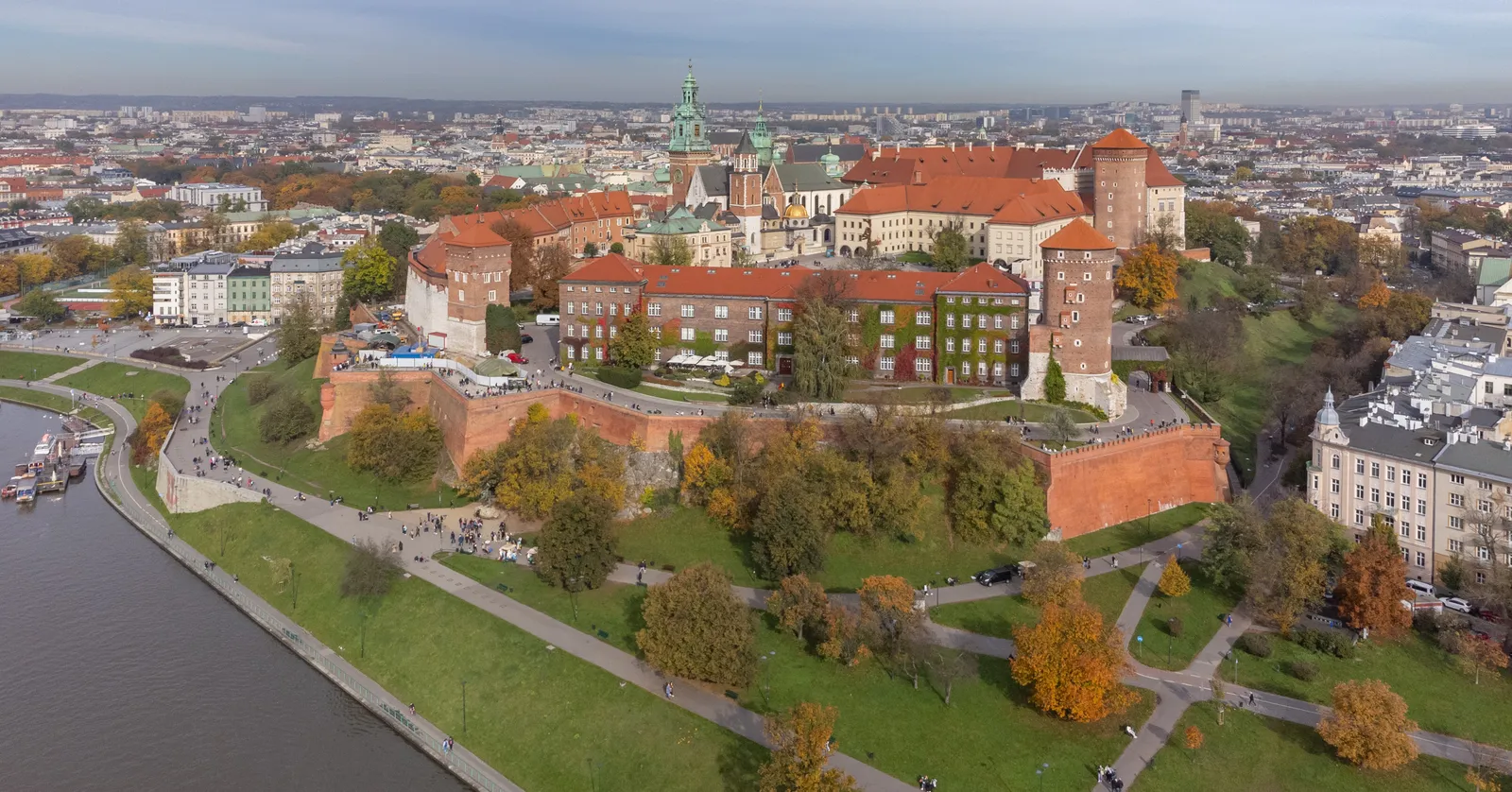
Kraków’s Old Town holds the Main Market Square, St Mary’s Basilica and Wawel Hill inside about a kilometre of flat streets, and the square, the park ring around it and the castle’s arcaded courtyard all cost nothing to walk into.
The Main Market Square and Rynek Underground, four metres beneath it
Rynek Główny, the Main Market Square, was set out in 1257 when Kraków was granted its town charter, and the grid around it has barely moved since. Each of the four sides runs a little over 200 metres, which makes about 40,000 square metres of open paving. It is free, it has no closing time, and it is roughly 1.3 kilometres from Kraków Główny, the main railway station, fifteen minutes on foot through the park ring.
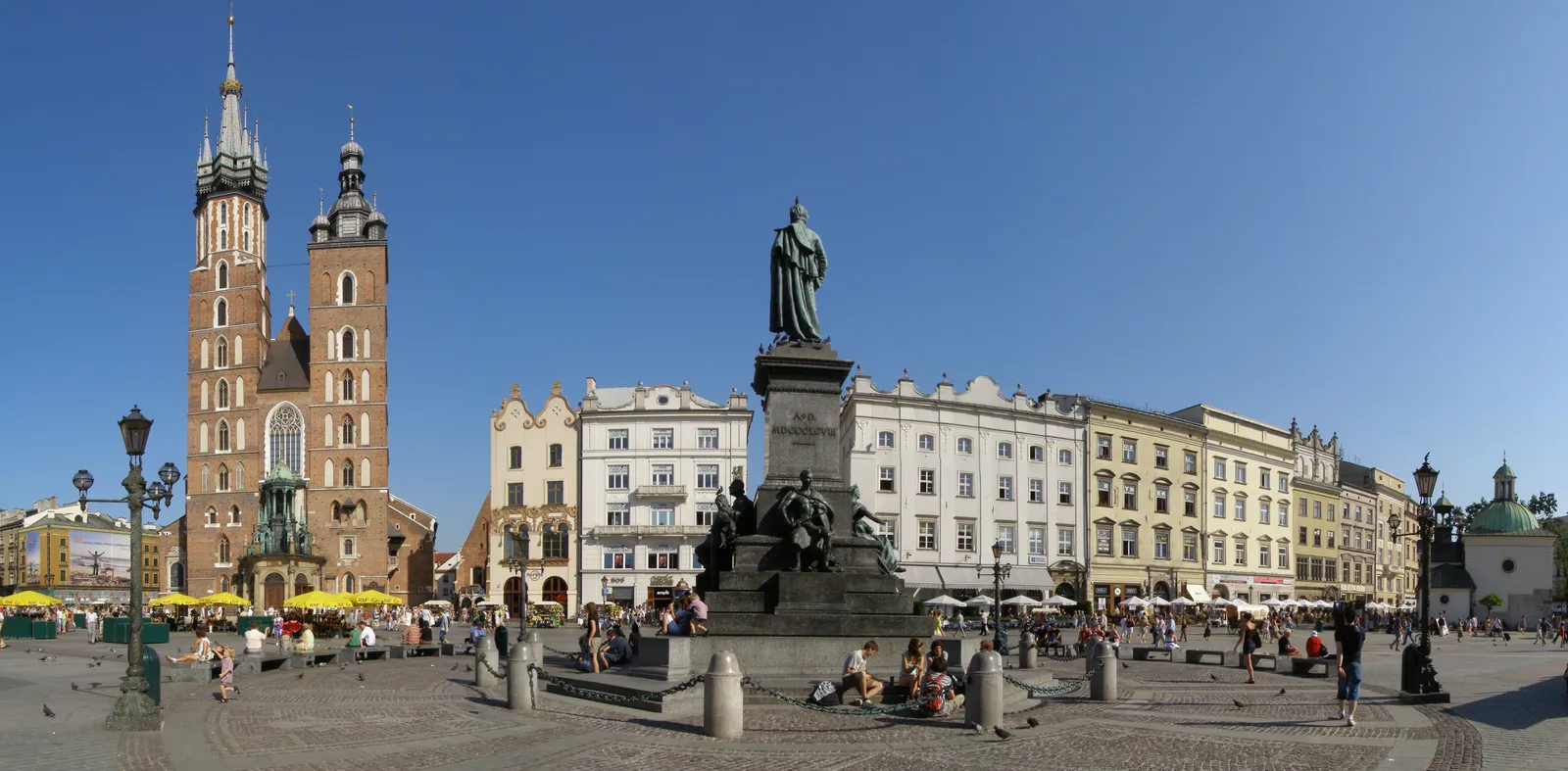
The building down the middle is the Sukiennice, the Cloth Hall, a Renaissance trading house whose ground floor is still a covered arcade of stalls, mostly amber and souvenirs now. Walking its length costs nothing and takes about two minutes, and it is the driest crossing of the square when the weather turns.
Four metres below the paving is Rynek Underground, built into the archaeological excavation that ran under the square between 2005 and 2010 and now a branch of the Museum of Kraków. What is down there is the medieval market level itself: cobbled roadway, foundations of the stalls, coins and lead seals from the trade that came through. Admission is 45 złoty, 35 reduced, opening at 10am daily and running to 7pm most days, 8pm on Friday and Saturday, with Tuesday cut short at 3pm and the second Monday of each month closed entirely. Last entry is 75 minutes before closing. Tuesday is the free day, and those tickets go at the box office on the day rather than online.
St Mary’s Basilica and the trumpet call from its taller tower
St Mary’s stands on the eastern side of the Main Market Square, a brick Gothic church whose two towers were never built to match: the taller one carries a spire under a gilded crown, the shorter a dome. The tall one is where the hejnał comes from.
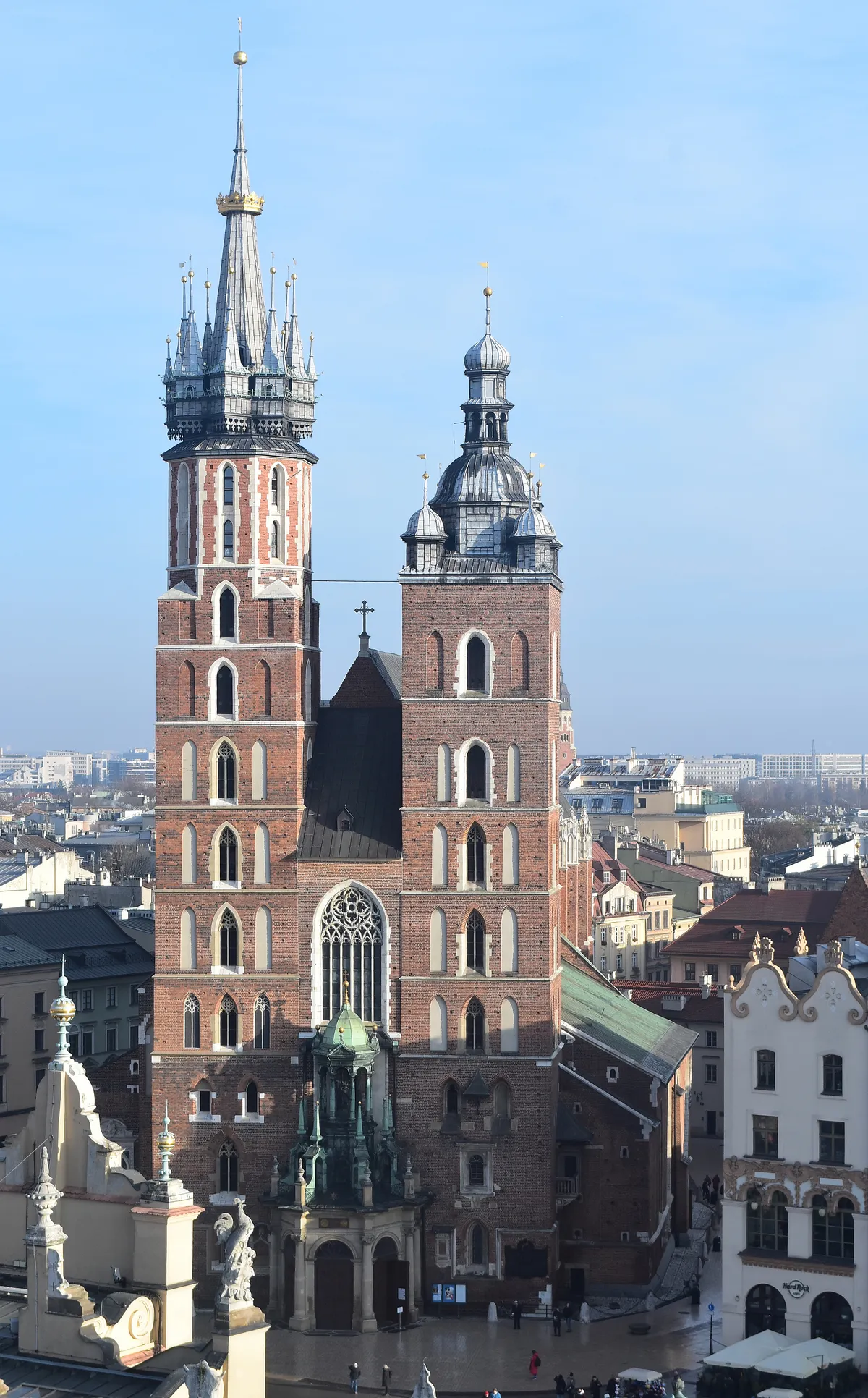
The hejnał mariacki is a five-note bugle call, first recorded in the city’s pay ledgers in 1392, played live every hour on the hour by a trumpeter at the top of the tower: four times over, once out of each window, north, south, east and west. It stops mid-note every time, a tradition kept in memory of a watchman the city’s own legend says was shot through the throat mid-call while sounding the alarm during a 13th-century raid. Polish Radio has broadcast the noon one nationwide, live, since 1927. Standing in the square to hear it costs nothing and takes about ninety seconds.
Inside, the prayer area is free. The tourist half, which is where the Veit Stoss altarpiece and the chapels are, is 20 złoty, 10 reduced, entered from the south door, open 11.30am to 6pm Monday to Saturday and 2pm to 6pm on Sundays and holidays; a ticket bought ahead saves standing in the entry line on a fixed schedule. The tower is a separate 20 złoty, in groups of fifteen every half hour, and it shuts from November through April, so for half the year the trumpeter is audible but not visitable.
The arcaded courtyard on Wawel Hill
Wawel is a limestone rise on the bank of the Vistula, about a kilometre south of the Main Market Square down Grodzka, and it carries both the royal castle and the cathedral where Polish kings were crowned and buried. Getting onto the hill is free, and in summer the gates stay open until 8pm.
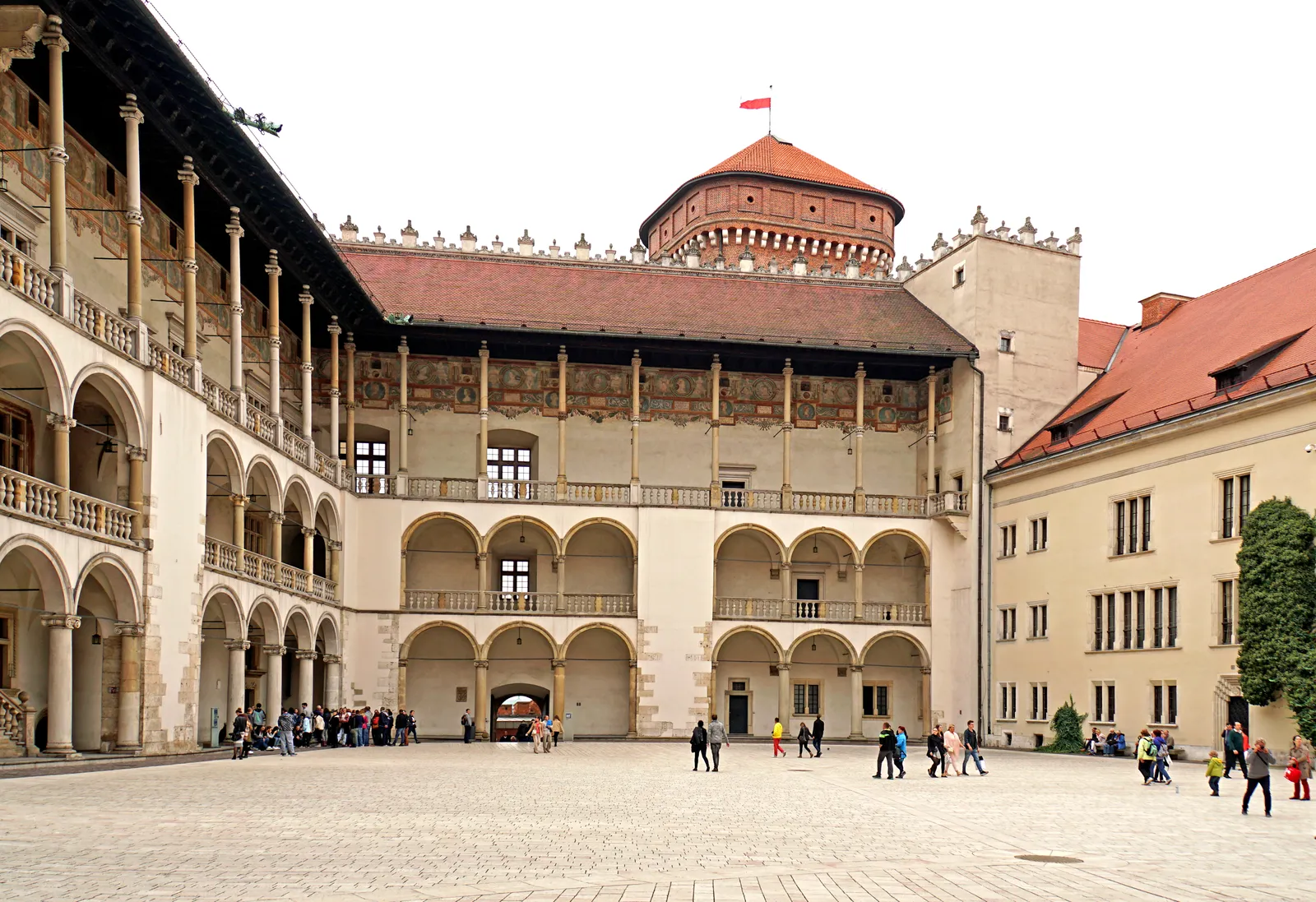
The thing to walk into is the courtyard: three storeys of Renaissance arcades on tall thin columns, built in the 1500s by Italian masons working for Sigismund I, and open to anyone on the hill without a ticket. Everything with a door off it is charged separately, and the prices are steep by Polish standards: 95 złoty for both castle floors with an audio guide, 57 for one, 47 each for the Crown Treasury and the Armoury, 19 for the viewing tower and 15 for the Dragon’s Den under the hill. Those run 9am to 5pm Tuesday to Sunday, on timed slots that genuinely sell out, so a slot arranged in advance is worth more here than at anything else on this list. On Mondays the paid exhibitions are closed and the hill is not.
Oskar Schindler’s enamel factory on Lipowa Street
The factory at ul. Lipowa 4, across the Vistula in Podgórze and about three kilometres southeast of the Main Market Square, made enamelware for the German army using forced labour from the Kraków ghetto, and its owner Oskar Schindler used that workforce to keep around 1,200 Jewish people out of the camps. It has been a branch of the Museum of Kraków since 2010.
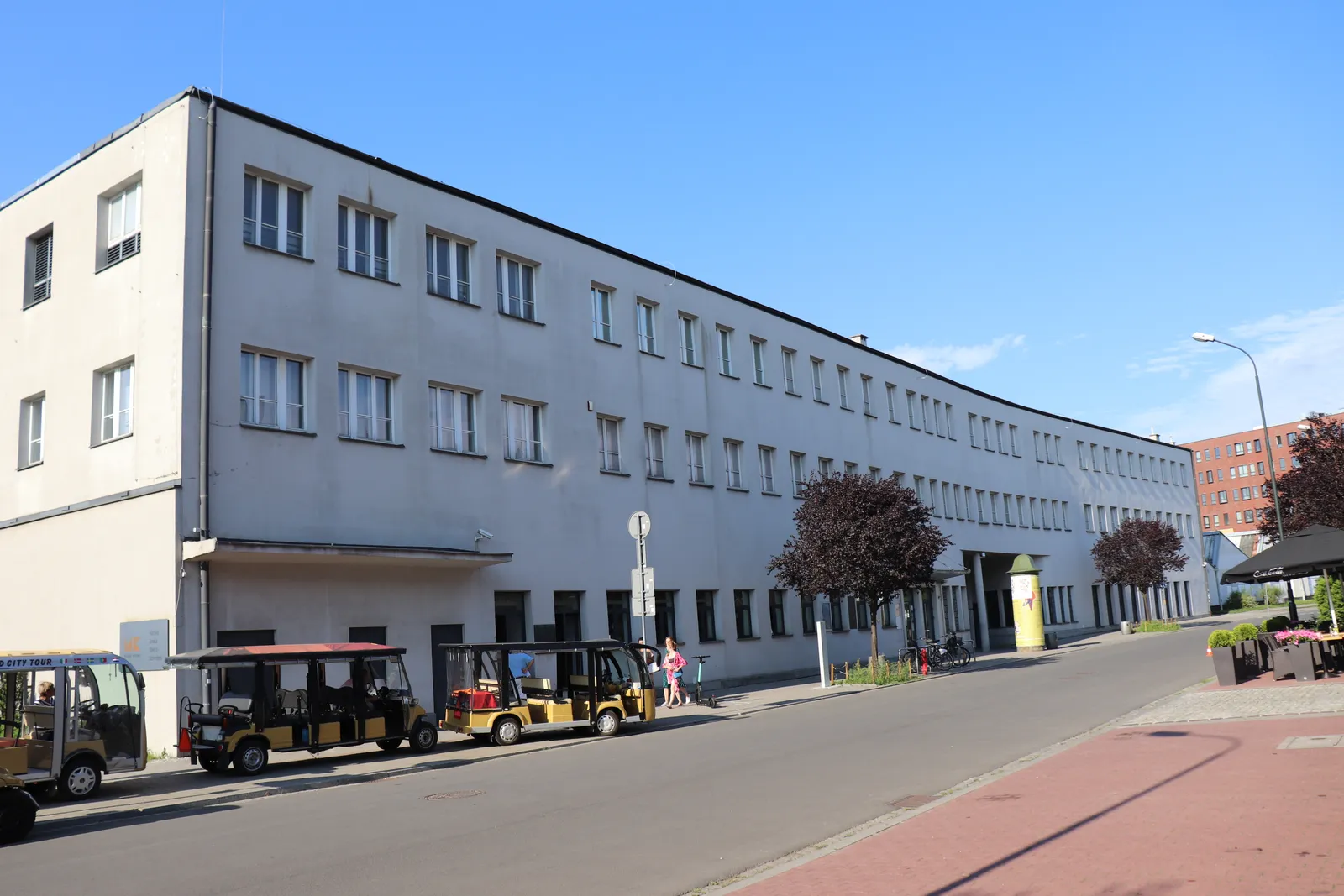
The permanent exhibition is not really about Schindler. It is about the city between 1939 and 1945, told through reconstructed streets, apartments and a tram interior, with his office and the wall of enamel pots as one room inside a much longer sequence. Admission is 60 złoty, 45 reduced, 120 for a family of four, open 10am to 3pm on Monday and 9am to 8pm Tuesday to Sunday, shut the first Tuesday of every month. Entry is by timed slot and the museum asks you to be there 15 to 20 minutes early, which is a real constraint on a flight day, so fixing the time before you land is the difference between an hour here and a locked door. Mondays are free, on the door only.
The full loop from the square down to Wawel and out to Lipowa runs about five kilometres and finishes on the far bank of the river, so a suitcase gets carried the whole way out and back rather than left anywhere on the route.
Kazimierz’s synagogues and the round market hall at its centre
Kazimierz was a separate royal town from 1335 until 1800, on the same bank as Wawel and immediately southeast of it, and it kept its own street plan when Kraków absorbed it. Seven synagogues still stand in a few blocks, more than anywhere else in Poland. The Old Synagogue on Szeroka Street is the oldest surviving one in the country, early 16th century and Gothic, and it holds the Museum of Kraków’s Jewish history exhibition. The Remuh Synagogue a few doors along is small, still in use, and backs onto a 16th-century cemetery whose perimeter wall was rebuilt from tombstone fragments smashed during the occupation.
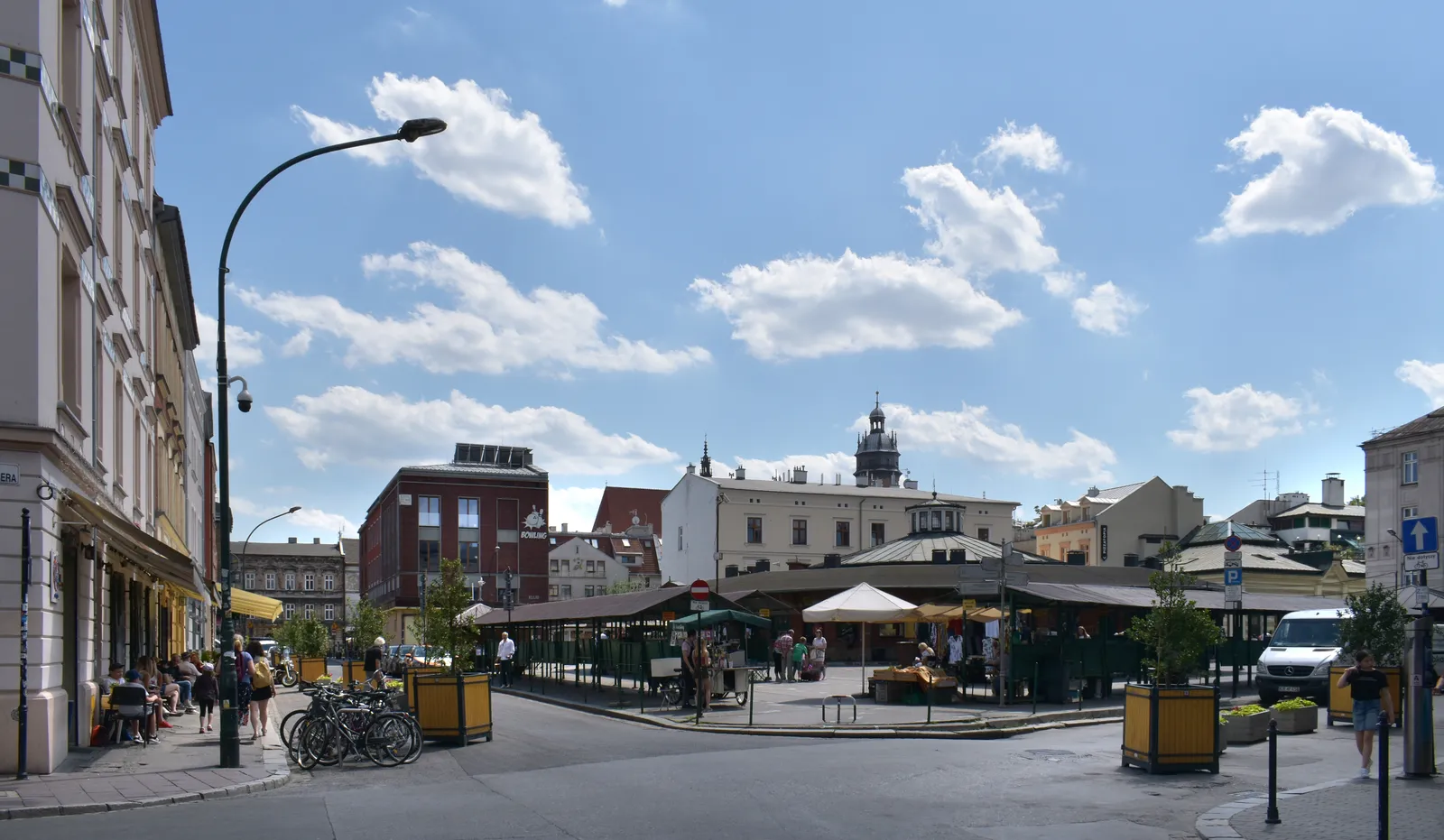
Plac Nowy, two minutes west of Szeroka, is where the district actually gathers. The round brick building alone in the middle of it went up in 1900 as a market hall and was leased from 1927 to the Jewish community as a ritual poultry slaughterhouse; the hatches cut around its outside now sell zapiekanki, a half baguette baked open with mushrooms and cheese and then loaded with whatever else you point at. They cost a few złoty, the hatches keep going late, and the square around them is where the second-hand and produce stalls set up during the day.
The Planty, the park ring where the city walls stood
The Planty is a four-kilometre band of park wrapped all the way around the Old Town, 21 hectares across thirty linked gardens, laid out from 1822 onwards on the ground the medieval walls and the filled-in moat had occupied. It is why the centre has no ring road: the fortifications came down and trees went in instead. Two pieces of the defences were kept, both at the northern end, St Florian’s Gate and the Barbican, a squat circular brick outwork that was the strong point in front of it.
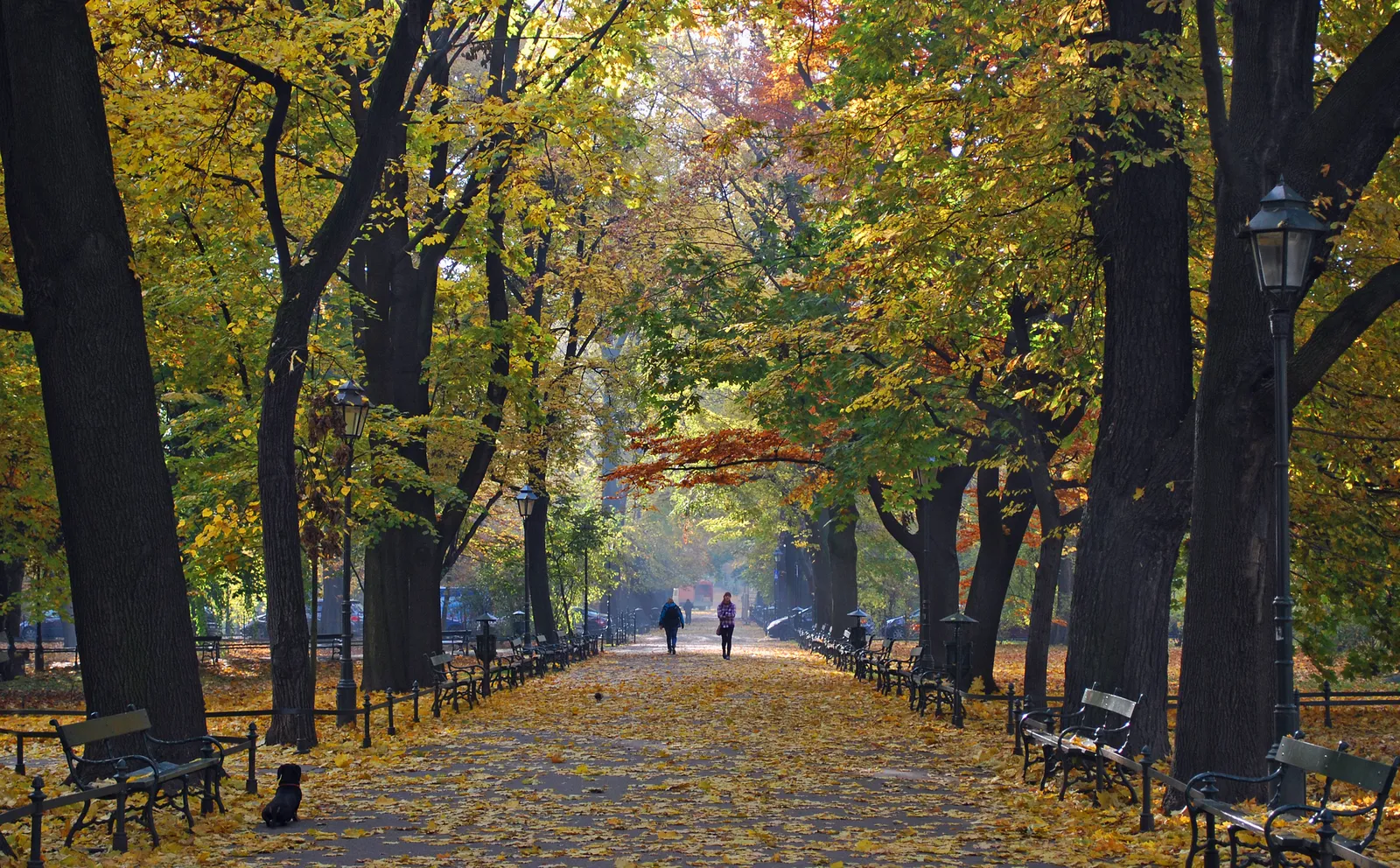
Practically, it is the flat, shaded, bench-lined way to cross between anywhere on the edge of the Old Town and anywhere else on it, and it costs nothing at any hour. Just inside its western arc, on ulica Jagiellońska, the Collegium Maius is the oldest building of the Jagiellonian University, and its Gothic courtyard is open to walk into daily from 9am to 6pm with no ticket. The mechanical clock on the courtyard wall plays at 9, 11, 1, 3 and 5, sending a procession of carved figures out across the face, a queen and two kings among them, to a 16th-century court piece by Jan of Lublin and then a few bars of Gaudeamus igitur. It takes a couple of minutes, most people in the Old Town never see it, and the museum inside is a separate ticket you do not need in order to stand in the yard.
The airport train leaves twice an hour from Kraków Główny
The SKA1 line, run by Koleje Małopolskie, links Kraków Główny with the airport’s own station in about 20 minutes for a flat 20 złoty. It goes twice an hour between roughly 6am and 10pm, hourly on either side of that, with the first departures around 4am and the last around 1am. Tickets come from the machines at the station or in the terminal, or from the conductor on board, and card is fine. The airport platform connects to the terminal by a covered footbridge of roughly 200 to 250 metres, so the honest door-to-door figure is nearer 35 to 40 minutes once the walk and the wait are in it, not 20.
Between about 1am and 4am there is no train at all. Bus 902 covers the same route from around 11.25pm, then hourly until just after 4am, for 6 złoty and about 45 minutes. A taxi runs to roughly 50 złoty and takes about as long as the train outside rush hour, which makes it a fallback rather than an upgrade.
Kraków Główny is the intercity station too, which is worth knowing if you are stringing rail legs rather than flying both ways: the daytime Eurocity to Prague leaves in the morning and takes about seven and a half hours, and there is an overnight service on the same route. Working backwards from a flight, allow around two hours from the Main Market Square: the walk or tram to the station, collecting the bag, the platform wait, the ride and check-in.
Everything above sits on one side of that station except the factory, and the factory is the one stop with a clock on it. Leaving the suitcase near Kraków Główny rather than towing it down to Wawel and over the river is what makes the far end of this route worth attempting at all, and it puts the bag back within a few minutes of the airport platform when the time comes.
Frequently asked questions
What should I do during a layover in Kraków?
The Main Market Square is the obvious target: laid out in 1257, a little over 200 metres on each side, free and open at any hour, with the Cloth Hall running down the middle of it and the tourist half of St Mary's Basilica alongside for 20 złoty. Wawel Hill is about a kilometre south down Grodzka, and the hill and its Renaissance arcaded courtyard cost nothing even though the castle interiors are ticketed. With four hours or more, Kazimierz and Oskar Schindler's former enamel factory in Podgórze add the other half of the city's history. The factory museum runs on timed entry and is the one stop worth settling before you land; everything else on this list can be decided on the day.
What can you see in Kraków without paying for anything?
Most of the walk, as it happens. The Main Market Square, the ground-floor arcade of the Cloth Hall, the Planty ring around the Old Town, the prayer half of St Mary's Basilica, Wawel Hill and its arcaded courtyard, and the Collegium Maius courtyard are all free, all day. Two museums also run free-admission days: Oskar Schindler's enamel factory on Mondays, and Rynek Underground on Tuesdays. Neither of those tickets can be booked ahead, so they go at the box office on the day and run out.
Is Oskar Schindler's factory worth booking before you land?
Yes, if it matters to you that you get in. Entry is by timed slot for a specific date and hour, the number of tickets per slot is capped, and the museum asks visitors to arrive 15 to 20 minutes before their time. A walk-up on a summer afternoon usually is not an option. Two dates to avoid on a fixed schedule: the first Tuesday of any month, when the museum is shut, and Monday, when free tickets are handed out on site only and the queue starts before the 10am opening.
Is the train or a taxi better for getting out to Kraków's airport?
The train, unless you are travelling between about 1am and 4am. The SKA1 line runs from Kraków Główny to the airport's own station in around 20 minutes for 20 złoty, twice an hour between 6am and 10pm and hourly either side of that, and the platform connects to the terminal by a covered footbridge of roughly 200 metres. A taxi is closer to 50 złoty and takes about the same time outside rush hour. Overnight there is no train: bus 902 covers the route from about 11.25pm, hourly until just after 4am, for 6 złoty and around 45 minutes.
Which day of the week is worst for a Kraków layover?
Monday and Tuesday both cost you something. On Monday the paid exhibitions at Wawel are shut and Schindler's factory only opens 10am to 3pm. On Tuesday Rynek Underground closes at 3pm instead of 7pm, and on the first Tuesday of the month the factory museum is shut altogether. St Mary's tower is the other seasonal gap: it closes from November through April, though the church itself and the trumpet call from the top of it carry on year round.