Warsaw Layover: A Rebuilt Old Town From WAW
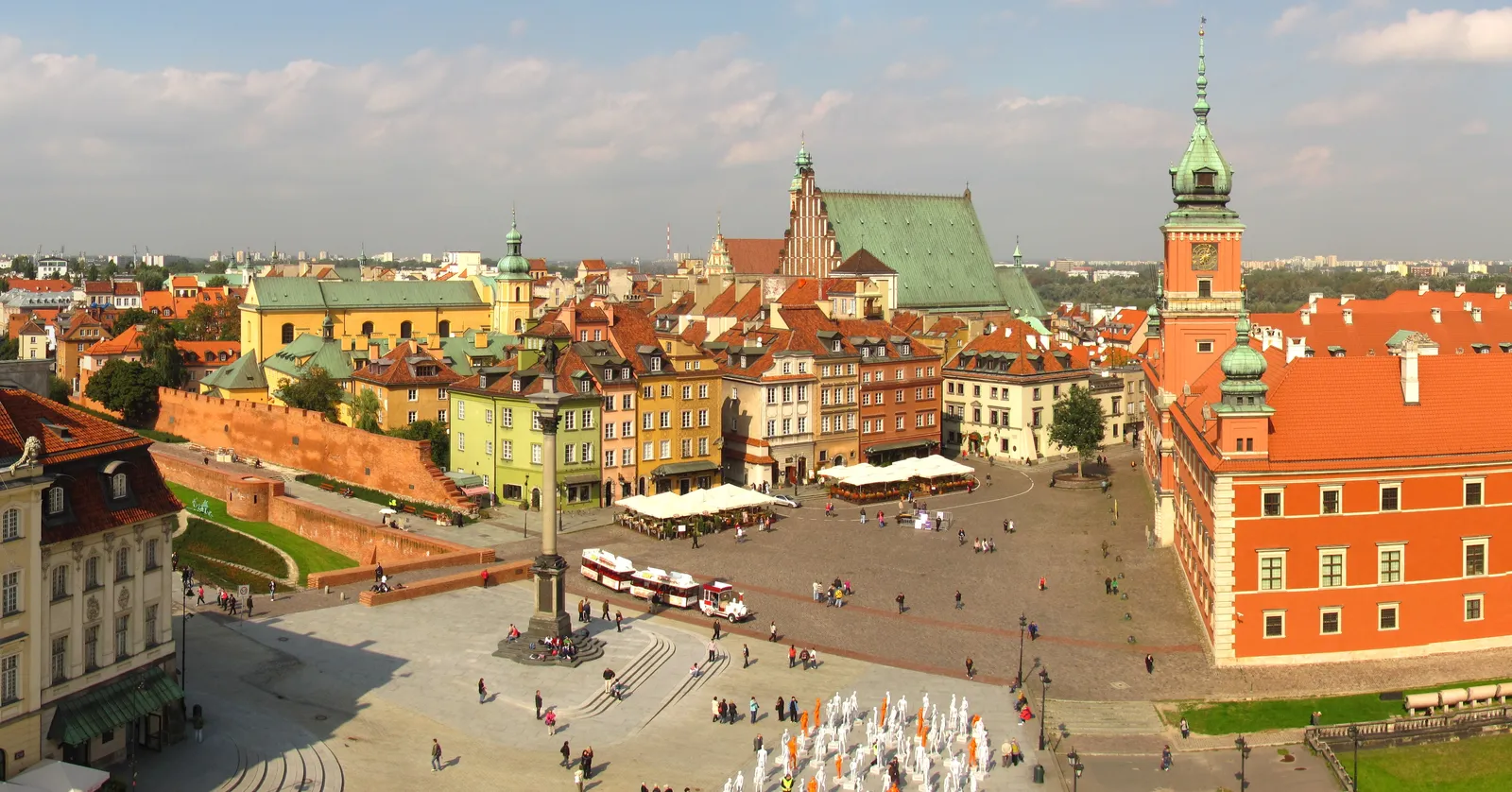
Warsaw’s Old Town was rebuilt after 1944 from 18th-century paintings of the streets it had lost, and it sits at the north end of the Royal Route, a two-kilometre boulevard through the centre that also carries Chopin’s parish church and the hourly guard change on Piłsudski Square.
The Old Town Market Square, rebuilt from 18th-century paintings
Stare Miasto, the Old Town, is a square of tall narrow townhouses on the bluff above the Vistula, and nothing standing in it is more than eighty years old. German forces levelled the district after the 1944 Uprising. The rebuild that followed, running from 1949 into the 1950s, worked partly from the cityscapes Bernardo Bellotto painted for Poland’s last king in the 1770s, canvases precise enough about cornices and window spacing to serve as working elevations. Eighteen of them hang back inside the Royal Castle on Castle Square, returned there in 1983. UNESCO added the district to the World Heritage list in 1980 on the grounds that the reconstruction itself was the thing worth protecting.
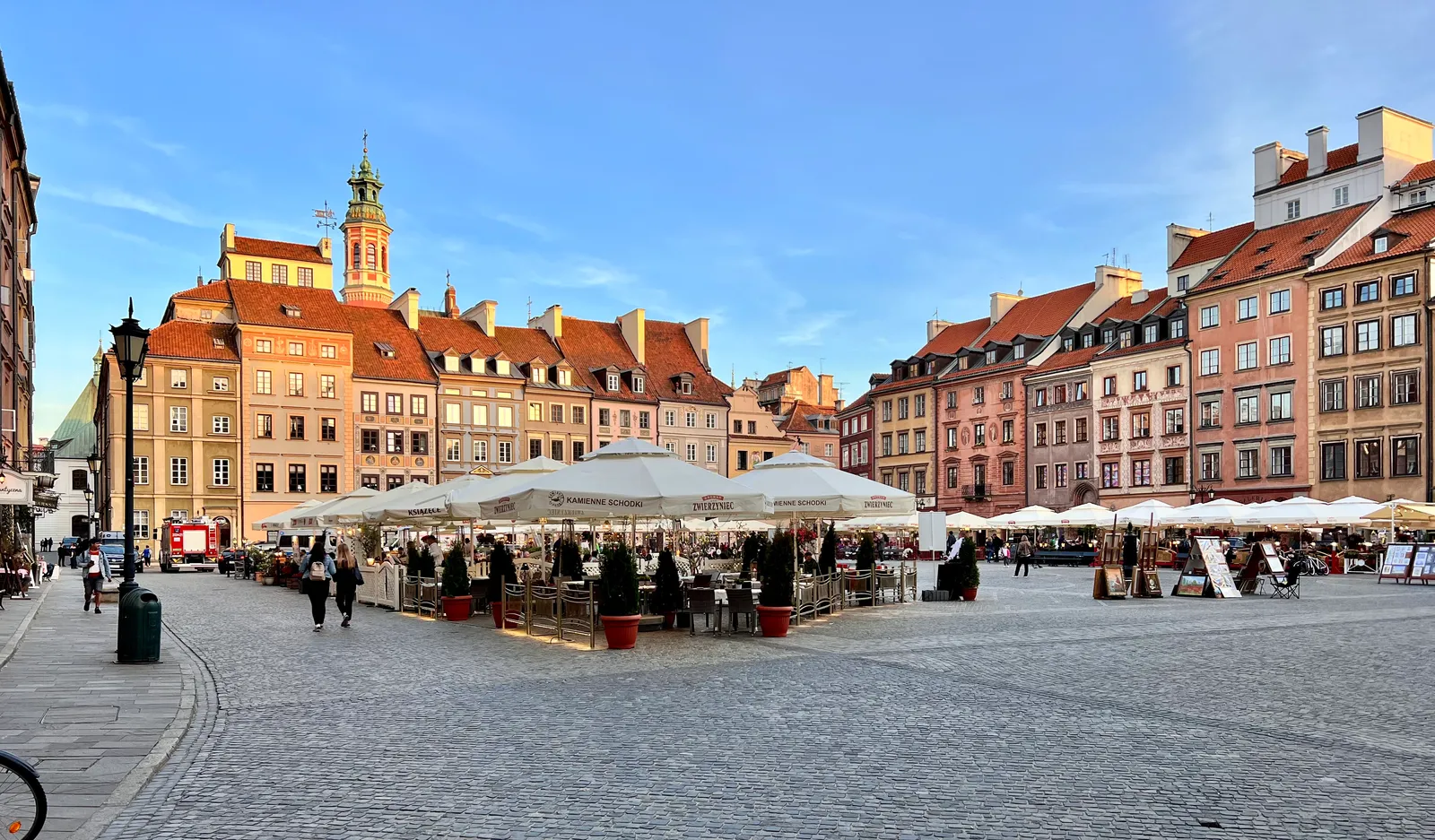
In the middle of the square stands the Mermaid, sword raised and shield out, the figure that has been on Warsaw’s coat of arms since the 14th century. The bronze there now is a 2008 copy; Konstanty Hegel’s 1855 original is a few doors away in the Museum of Warsaw. The square has no ticket and no closing time, and it is the only part of the walk where the paving is genuinely rough.
Kraków came through the war with its medieval centre intact, which is the reason the two old towns feel so different underfoot: one has been there since the 13th century, the other is a reconstruction good enough that most visitors never think to ask. Chopin recitals are staged regularly in the townhouse salons and small halls around the Old Town, and a seat booked ahead is worth having if your flight is late enough to allow one. The square and the lanes off it are laid in setts, which is slow going with a wheeled suitcase.
Chopin’s heart is sealed in a pillar of the Holy Cross Church
Krakowskie Przedmieście runs a kilometre south from Castle Square, wide and paved and closed to general traffic, lined with palaces, churches and the gates of the University of Warsaw. The Holy Cross Church stands about halfway along it behind a Baroque front with two towers, and a pillar on the left of the nave holds an urn containing Chopin’s heart.
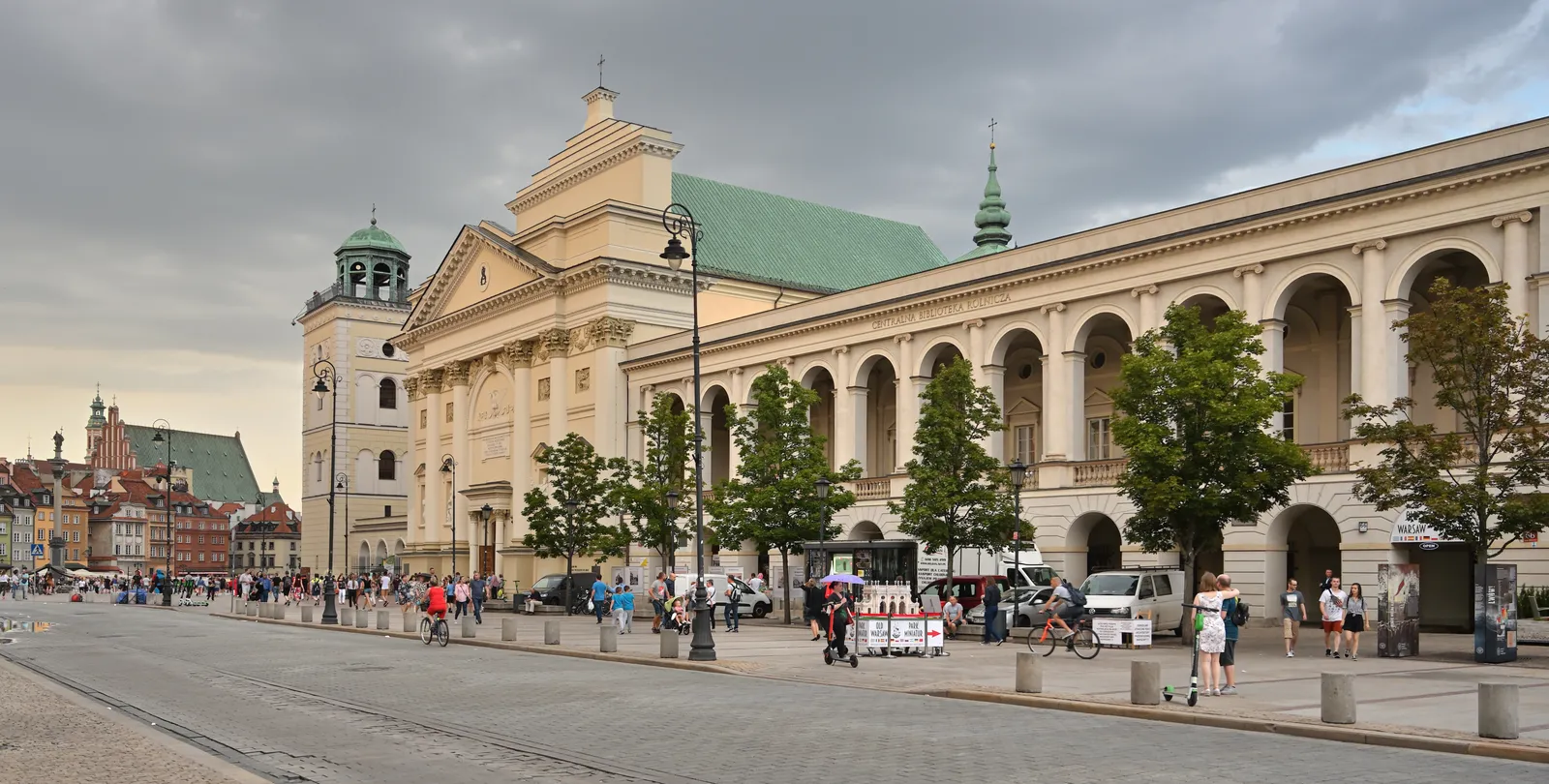
He died in Paris in 1849 and asked for the heart to come back to Warsaw; his sister carried it across Europe in a jar of alcohol, and it was eventually sealed into the pillar behind a tablet carrying his profile and a line from Matthew, where your treasure is, there will your heart be also. It was taken out again during the 1944 Uprising and hidden outside the city, then brought back the following year. The church costs nothing to walk into and the pillar is a few metres inside the door, which makes it about a five-minute stop rather than a visit.
Fifteen benches are set along this street and the squares and parks around it, each with a button that plays about thirty seconds of Chopin and a plate explaining what he did on that particular spot. They were designed by Jerzy Porębski and put in from 2019 onward, they are free, and they are the fastest available version of a Chopin pilgrimage when the clock is against you.
The guard at the Tomb of the Unknown Soldier changes every hour
Piłsudski Square is a wide paved rectangle between the Saxon Garden and Krakowskie Przedmieście, and the white arcade along its eastern side is the one piece of the Saxon Palace to survive the war. Beneath it lies the Tomb of the Unknown Soldier: a slab, two eternal flames, and black tablets set into the pillars carrying the names of the battles Polish soldiers have fought in.
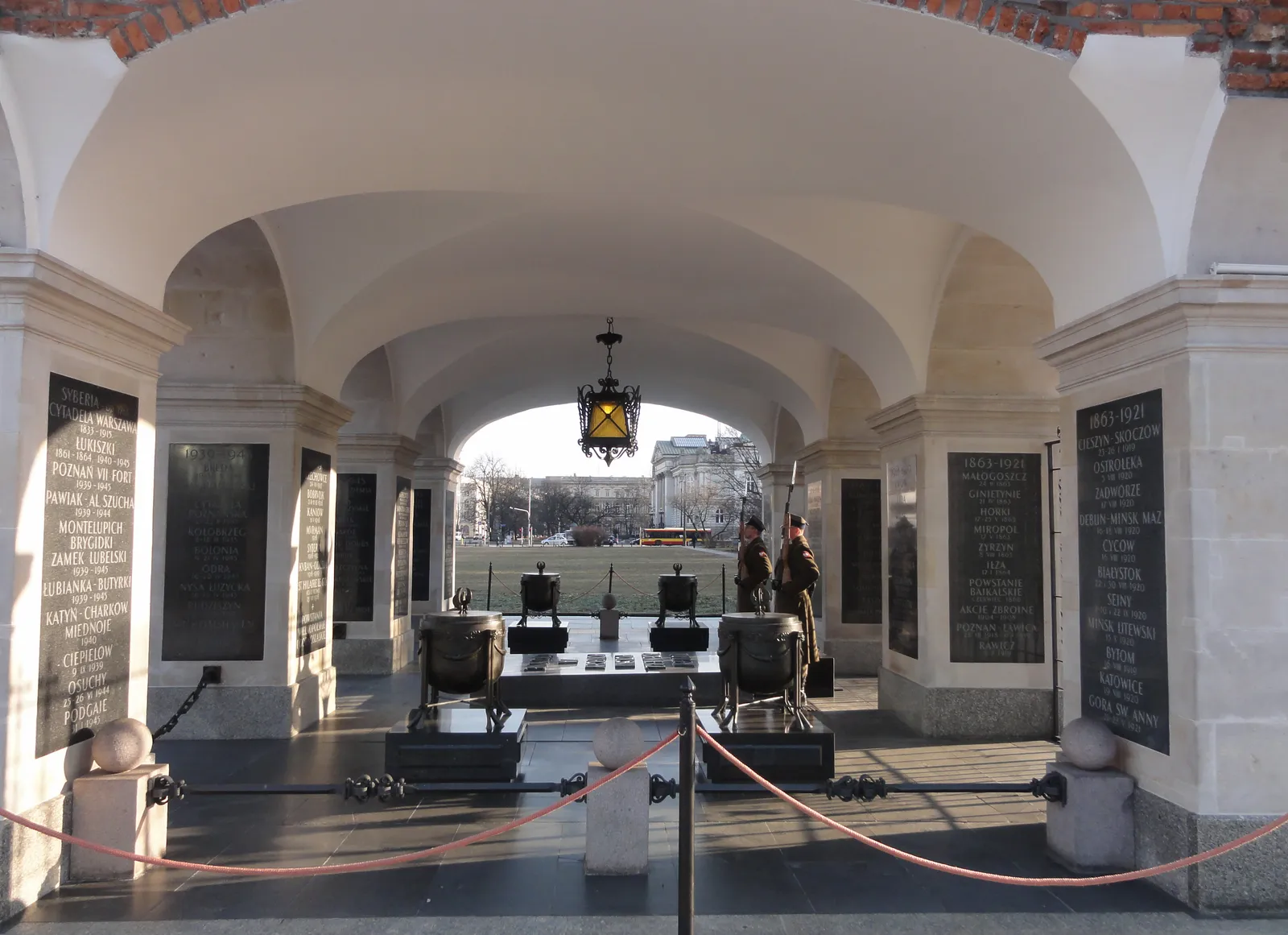
Two soldiers stand there permanently, and they are relieved every hour on the hour, all day, every day of the year, in a short marching change across the paving in front of the arcade. Sunday at noon is the ceremonial version: longer, more soldiers, usually a band. There is no ticket and no queue for either. Behind the arcade the Saxon Garden runs west, Warsaw’s oldest public park, with a fountain and a line of Baroque statues down its main avenue.
The 30th-floor terrace on the Palace of Culture and Science
The Palace of Culture and Science is the 237-metre spire-topped block in the middle of Warsaw, built between 1952 and 1955 as a gift from the Soviet Union and argued about ever since. The viewing terrace sits on the 30th floor at 114 metres, open to the air on all four sides, and it is the one place that shows you how the city is actually put together: the Old Town as a small tiled cluster to the north, the Vistula behind it, and the postwar grid running flat in every other direction.
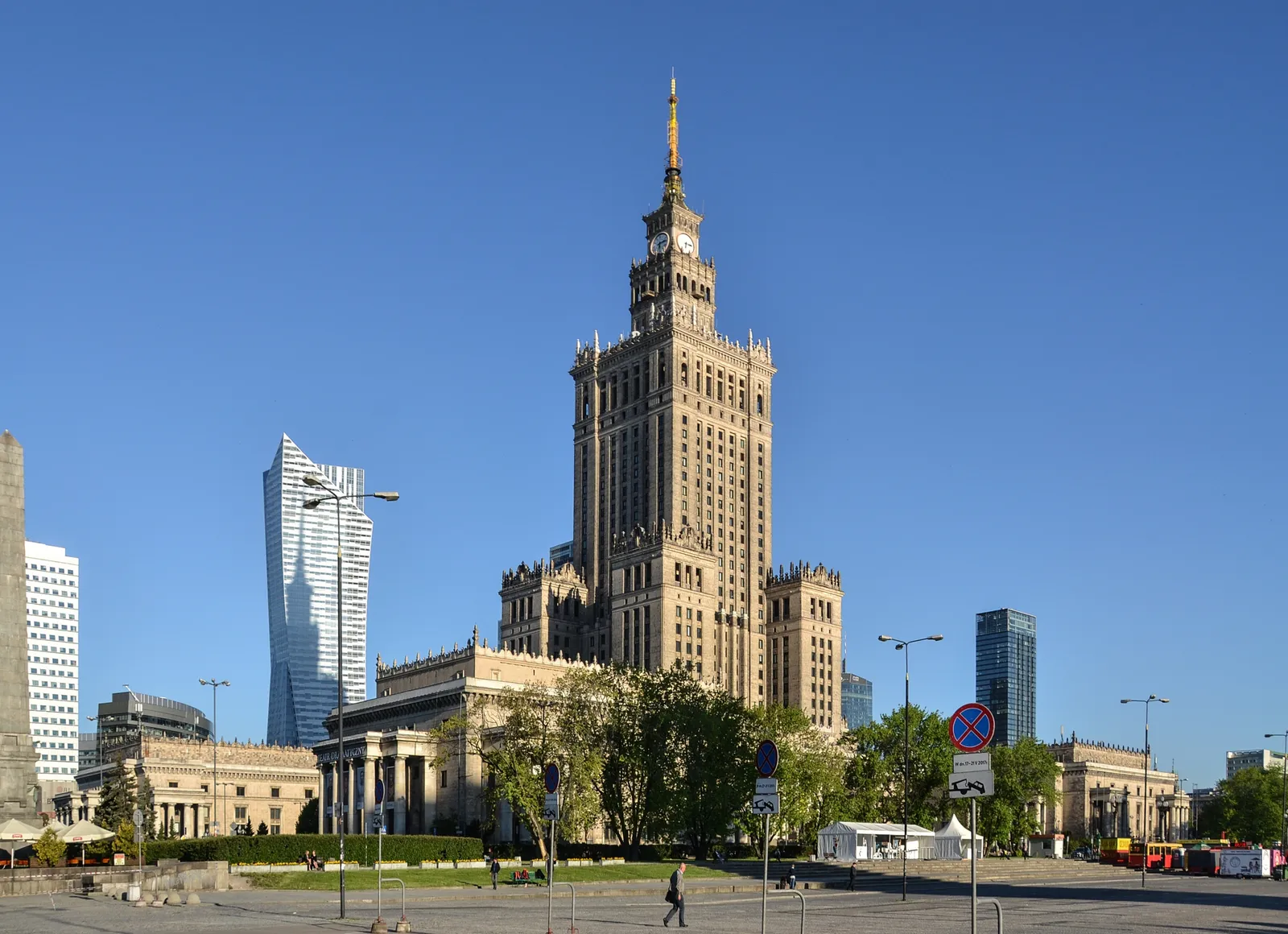
Tickets are 25 złoty, 20 reduced, and the terrace opens daily at 10am and closes at 8pm, with Friday and Saturday running to midnight through the end of September. Warszawa Centralna, the city’s main railway station, sits directly across the road from the building, and Warszawa Śródmieście is a few minutes further east, which puts the tower within sight of both platforms the airport trains use.
Free Sunday recitals at the Chopin monument in Łazienki Park
Łazienki Królewskie, the Royal Baths Park, covers 76 hectares along Ujazdów Avenue south of the city centre, with a neoclassical palace standing on an island in the middle of its lake and peacocks loose on the lawns. A bus runs down the avenue, or it is about half an hour on foot from the centre. With more than four hours before your flight this is the one addition that changes the shape of the afternoon rather than adding another facade to it.
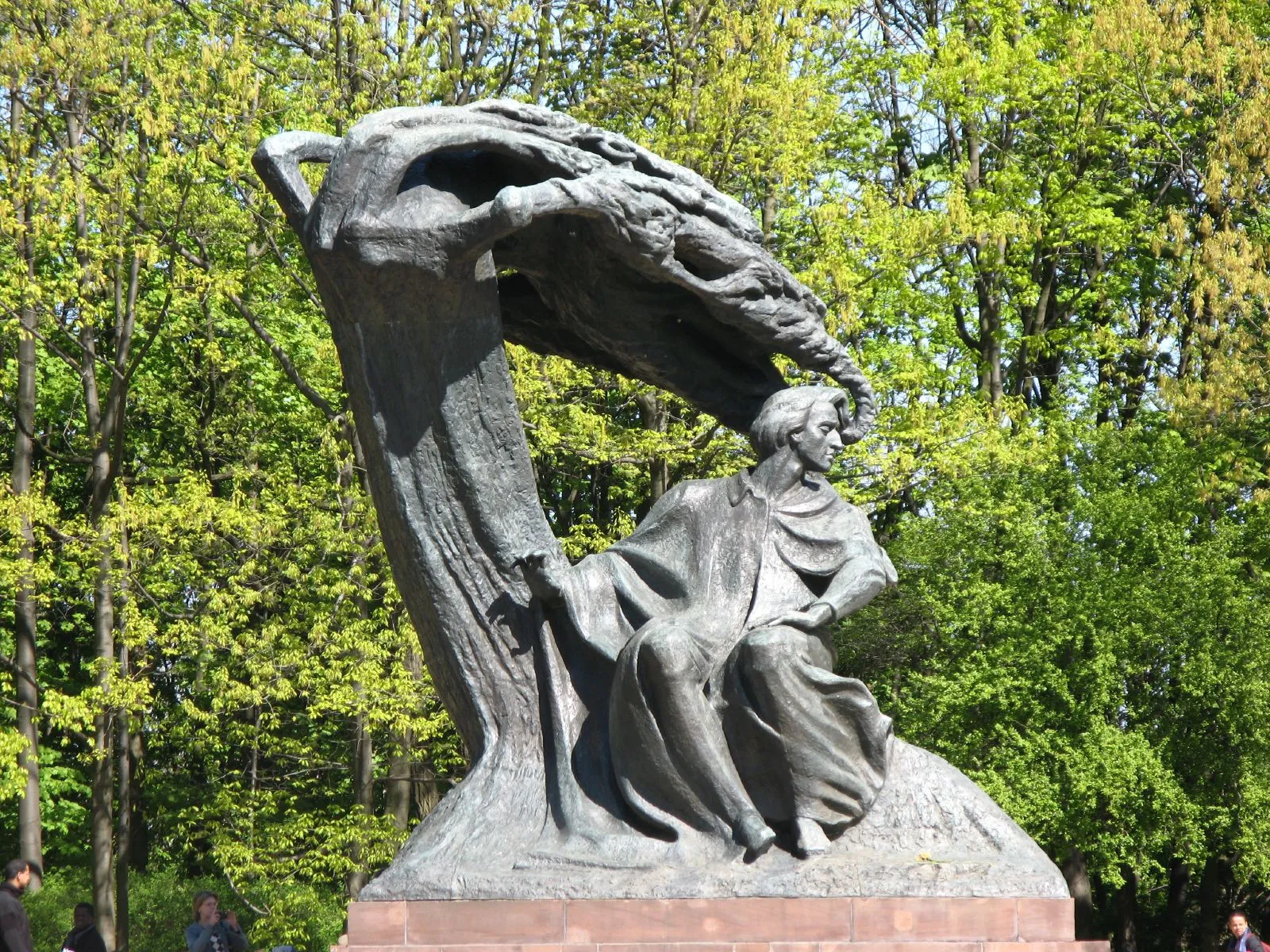
The Chopin monument stands near the park’s northern edge, the composer seated under a willow bent over by the wind. Through the summer a grand piano is wheeled out to its foot on Sundays and pianists play free open-air recitals at noon and four in the afternoon, a series that has run since 1959 and finishes in late September. The audience sits on the grass and the surrounding benches and nobody checks a ticket. The season normally opens in May, though conservation work around the monument held the 2026 one back to July.
The airport train runs on a standard city ticket
Two commuter lines, S2 and S3, run from Warszawa Śródmieście and Warszawa Centralna out to a station built under the terminal at Warsaw Chopin Airport, and between them a train leaves roughly every fifteen minutes. The ride is a little over twenty minutes. Warsaw’s transport authority treats the airport as ordinary zone 1, so the fare is the same 4.40 złoty 75-minute ticket that covers the metro, the trams and the buses, and the airport’s own advice is to buy at least that one rather than the cheaper 20-minute version. A covered passage runs from the platform straight into the terminal, so there is no shuttle leg and no second building to find.
Budget about thirty minutes from the centre rather than twenty: that is the airport’s own figure, and it is the honest one, since it counts the wait for the train and the walk at both ends. When the trains have stopped for the night a bus, the N32, covers the same ground. The drop-off points cluster around the same two central stations the airport trains leave from, so collecting the bag is on the way out rather than a detour back for it.
Frequently asked questions
What should I do during a layover in Warsaw?
Walk the Royal Route, two kilometres of traffic-free boulevard running from the middle of the city up to Castle Square. It passes the Holy Cross Church, where Chopin's heart is sealed into a pillar of the nave, and ends at the Old Town Market Square, rebuilt after 1944 from 18th-century paintings of the streets that had stood there. The guard at the Tomb of the Unknown Soldier changes every hour on the hour a short way off it. With four to six hours you can add either the 30th-floor terrace on the Palace of Culture and Science or, on a summer Sunday, the free Chopin recital in Łazienki Park; the terrace is the only part that needs a ticket, and it is sold at the door.
Is it worth going inside the Royal Castle, or is Castle Square enough?
Castle Square is free, open at any hour, and gives you the castle's brick facade, Sigismund's Column and the gate into the Old Town. Inside is a different proposition: the Royal Apartments hold eighteen Bernardo Bellotto cityscapes of 18th-century Warsaw, the paintings the postwar rebuild worked from, returned to the castle in 1983. It opens Tuesday to Sunday, 10am to 6pm with last entry at 5pm, and closes on Mondays. Wednesday admission is free on a shortened route covering the Royal Apartments and the Lanckoroński Gallery, though the porcelain, Wettin and Matejko rooms are shut that day.
Is anything in central Warsaw worth seeing after dark?
The terrace on the 30th floor of the Palace of Culture and Science stays open until midnight on Fridays and Saturdays through the end of September, with a separate night ticket at 35 złoty from 8pm. The Old Town Market Square and Krakowskie Przedmieście are both lit and stay busy late, and neither charges anything. If your flight goes out after the last train, a night bus runs between the centre and the airport.
Is the walk from the city centre to the Old Town step-free?
Mostly. Nowy Świat and Krakowskie Przedmieście are flat, paved and closed to most traffic, so the two kilometres up to Castle Square roll easily enough. The Old Town itself does not: the Market Square and the lanes off it are laid in setts, and the drop from the Old Town down to the Vistula boulevards is by steps. A bus runs the length of Krakowskie Przedmieście if you would rather not walk it, and it is a route you can turn back from at any point without losing much.
Is the train or a taxi better for getting back to Warsaw Chopin Airport?
The train, in almost every case. Lines S2 and S3 leave Warszawa Śródmieście and Warszawa Centralna for the station under the terminal roughly every fifteen minutes between them, the ride is a little over twenty minutes, and it costs 4.40 złoty on the same 75-minute city ticket that covers the metro and the trams. The airport puts the whole trip from the centre at about thirty minutes once the wait and the walk at either end are counted. Traffic on the roads south out of the centre is the variable a taxi cannot plan around.