Schindler's Factory Layover: Kraków's Podgórze
Part of the full Kraków Layover: Old Town and Wawel From KRK
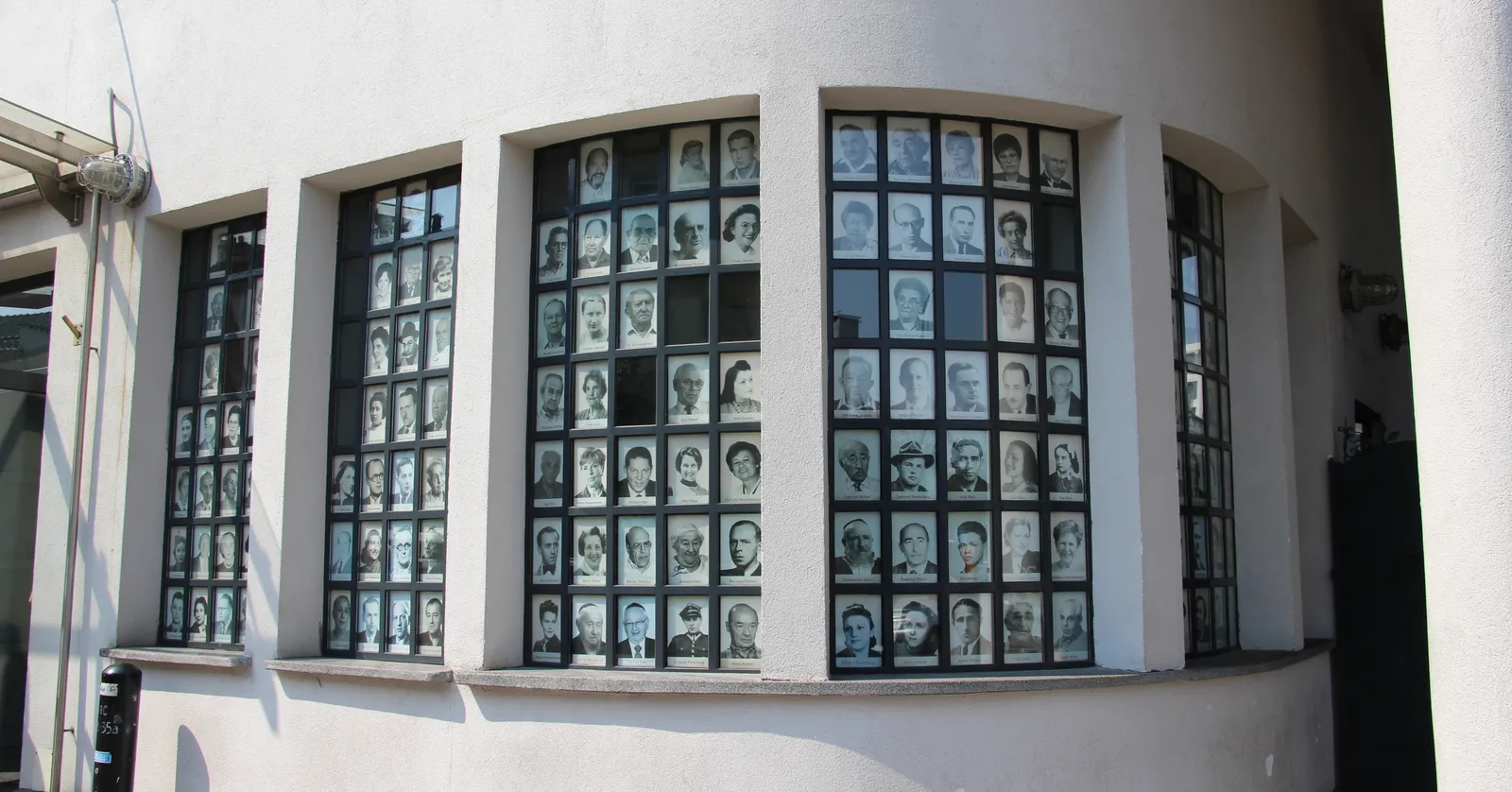
Oskar Schindler’s former enamel factory stands at ul. Lipowa 4 on the Podgórze bank in Kraków, ten minutes’ walk from the square the ghetto deportations were assembled on, a surviving stretch of the ghetto wall and a prehistoric mound above a disused quarry.
The survivors’ photographs in the factory windows on Lipowa
The exhibition inside the factory is not a Schindler biography. It runs through Kraków between 1939 and 1945 as a sequence of reconstructed spaces, a street, a tram interior, an apartment, a barber’s shop, and Schindler’s own office with its wall of enamel pots is one room inside that, not the point of it. Around 1,200 Jewish workers were kept out of the camps on his lists; the exhibition is about the city the other several hundred thousand lived in.
Admission is 60 złoty, 45 reduced, on a timed slot for a specific date and hour, and the museum asks visitors to be there 15 to 20 minutes before their time. It shuts on the first Tuesday of every month and drops to 10am until 3pm on Mondays, when entry is free but handed out on the door only. If you would rather have the ghetto sites and the museum joined up rather than worked out on your feet, a guided walk that covers both is bookable ahead and removes the timing problem.
That timing problem is the real constraint here: the factory is three kilometres from the Old Town with the river in between, and a slot that has to be met turns that walk into a deadline rather than a stroll.
The contemporary art museum in the old factory sheds
The other half of the Lipowa site is a set of low sawtooth-roofed halls built over the factory’s former workshops and opened in 2011 as Kraków’s contemporary art museum. It is a deliberate pairing: a Holocaust museum and a room of living Polish and international artists across one yard from each other, sharing an address and almost nothing else.
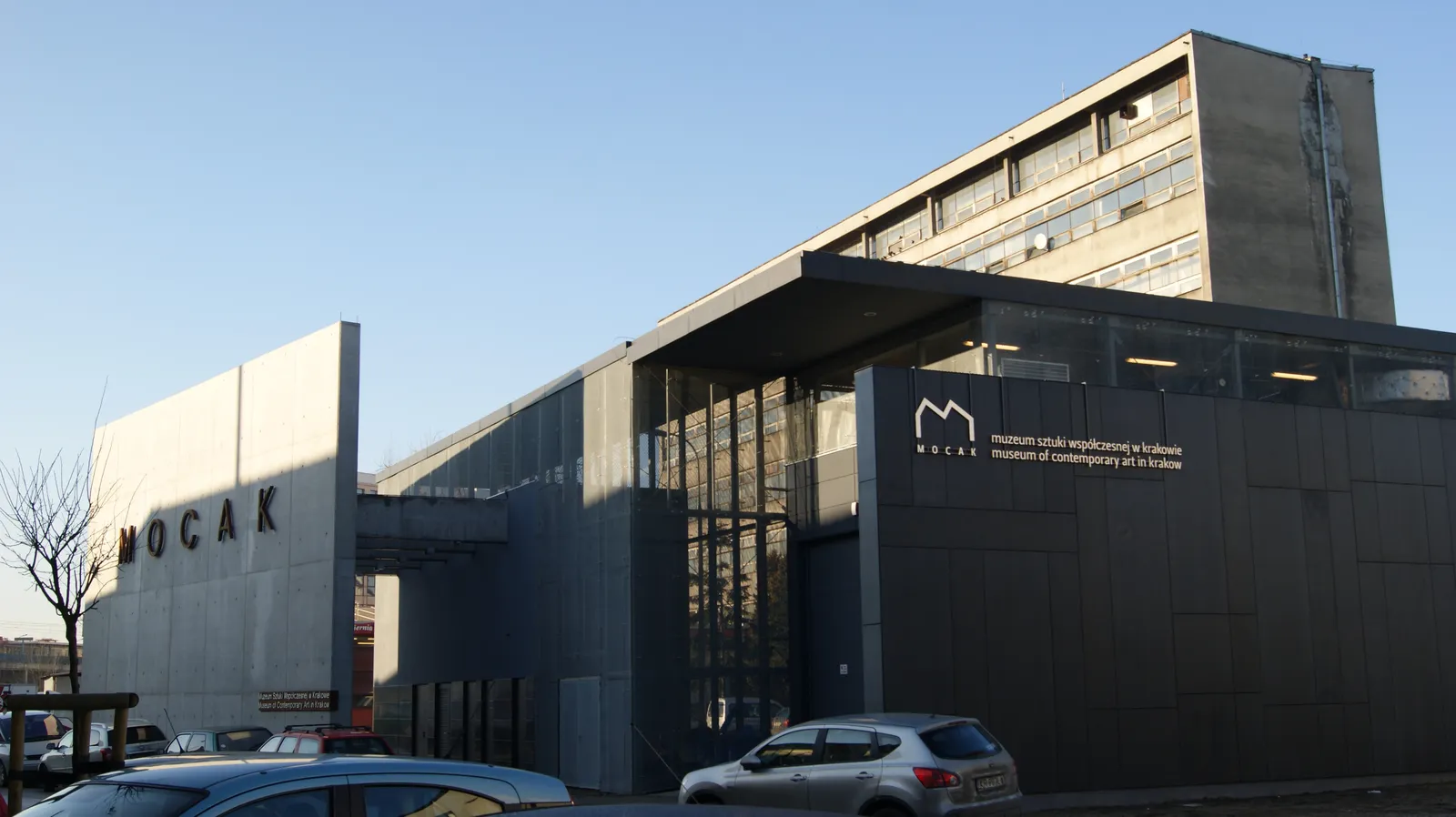
It runs Tuesday to Sunday, 11am to 7pm, closed Mondays, and Tuesday admission is free; the museum’s own collection on the lower level is free on Thursdays as well. On a day when the factory next door is sold out, this is the stop that saves the trip over the river.
The steel chairs on Ghetto Heroes Square
Plac Bohaterów Getta was called Plac Zgody when the Germans used it as the assembly point for the Kraków ghetto’s deportations in 1942 and 1943. The memorial that stands on it now, installed in 2005 to a design by the architects Piotr Lewicki and Kazimierz Łatak, is a scattering of steel chairs across the open cobbles, some of them oversized and some at ordinary sitting height. The idea came out of Tadeusz Pankiewicz’s account of furniture left out in the square after the people who owned it had gone.
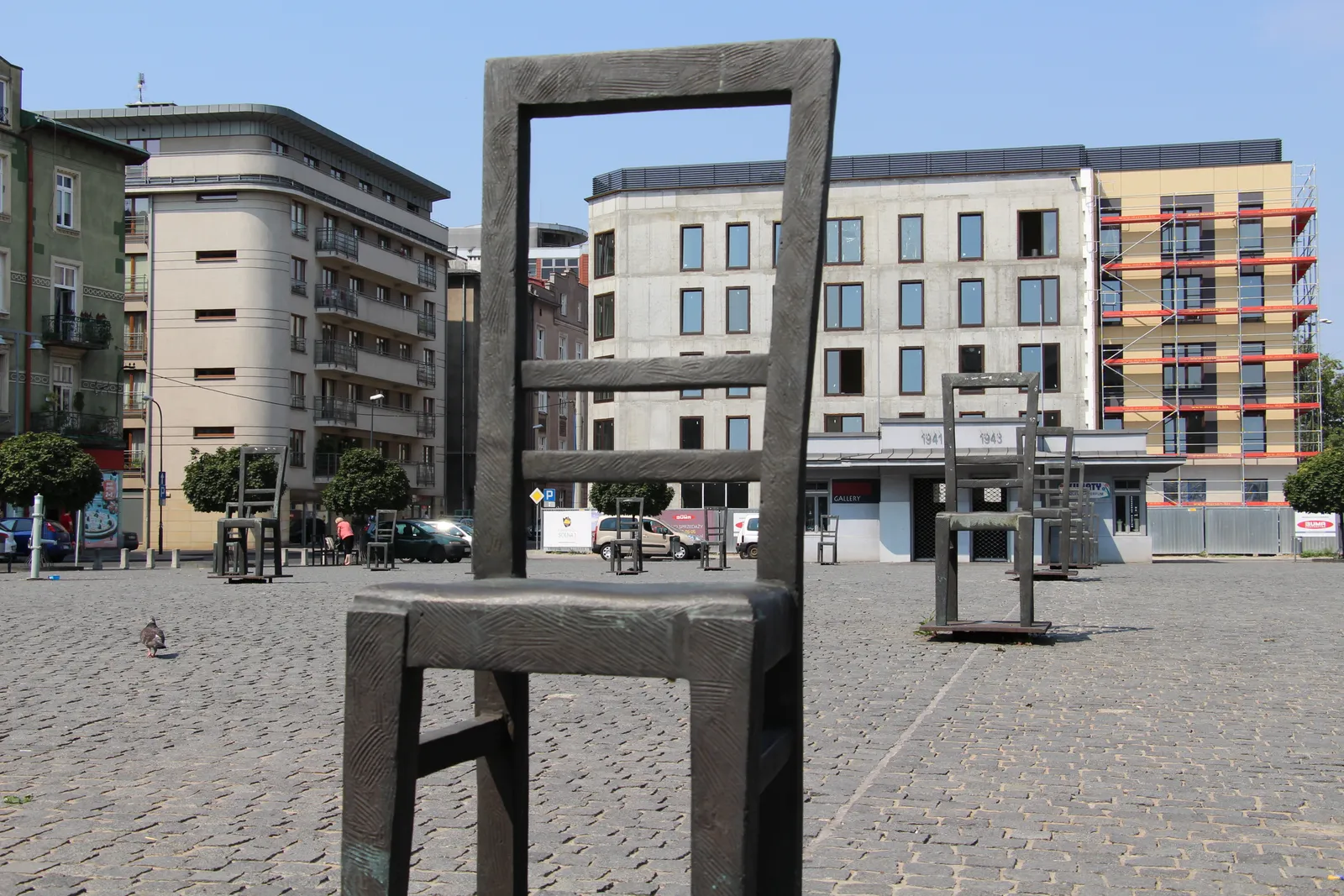
Pankiewicz ran the pharmacy at number 18 on this square, the only Polish-owned business allowed to keep trading inside the ghetto, and he stayed at it for the whole two years. The premises are a Museum of Kraków branch now, small and easily done in half an hour, open 9am to 5pm most days and 10am to 2pm on Monday, shut the second Tuesday of the month.
The ghetto wall on ulica Lwowska, built like gravestones
Two fragments of the 1941 ghetto boundary are still standing, the longer of them on Lwowska and a shorter piece near Limanowskiego. What makes them worth the five minutes is the shape: the wall was finished with rounded panel tops copying the profile of a Jewish gravestone, so the boundary put around the ghetto was built to look like a row of headstones.
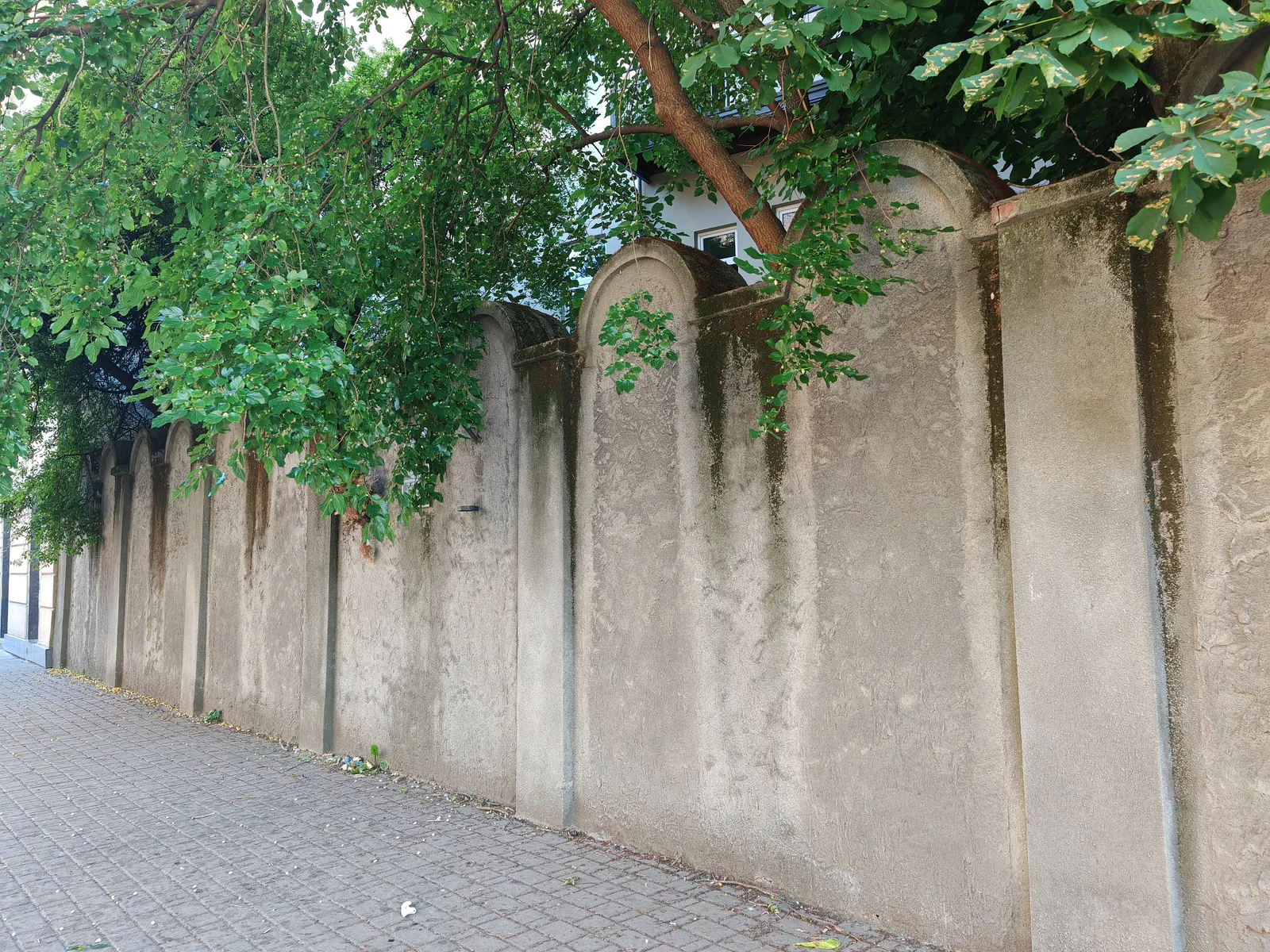
A commemorative plaque is set into the Lwowska stretch. It stands on a normal residential street with parked cars in front of it and a school behind, which is more or less the point: this is not a preserved site with a perimeter, it is a piece of wall that nobody took down.
Krakus Mound above the Liban quarry
The mound on Lasota Hill is 16 metres high and 60 across at the base, an artificial cone of packed earth that predates written records of the city and is traditionally called the grave of Krakus, Kraków’s legendary founder. No grave was found when it was excavated in the 1930s. It is free, unfenced and open at any hour, and the top gives you the Old Town, Wawel and, on a clear day, the steelworks out east in one turn.
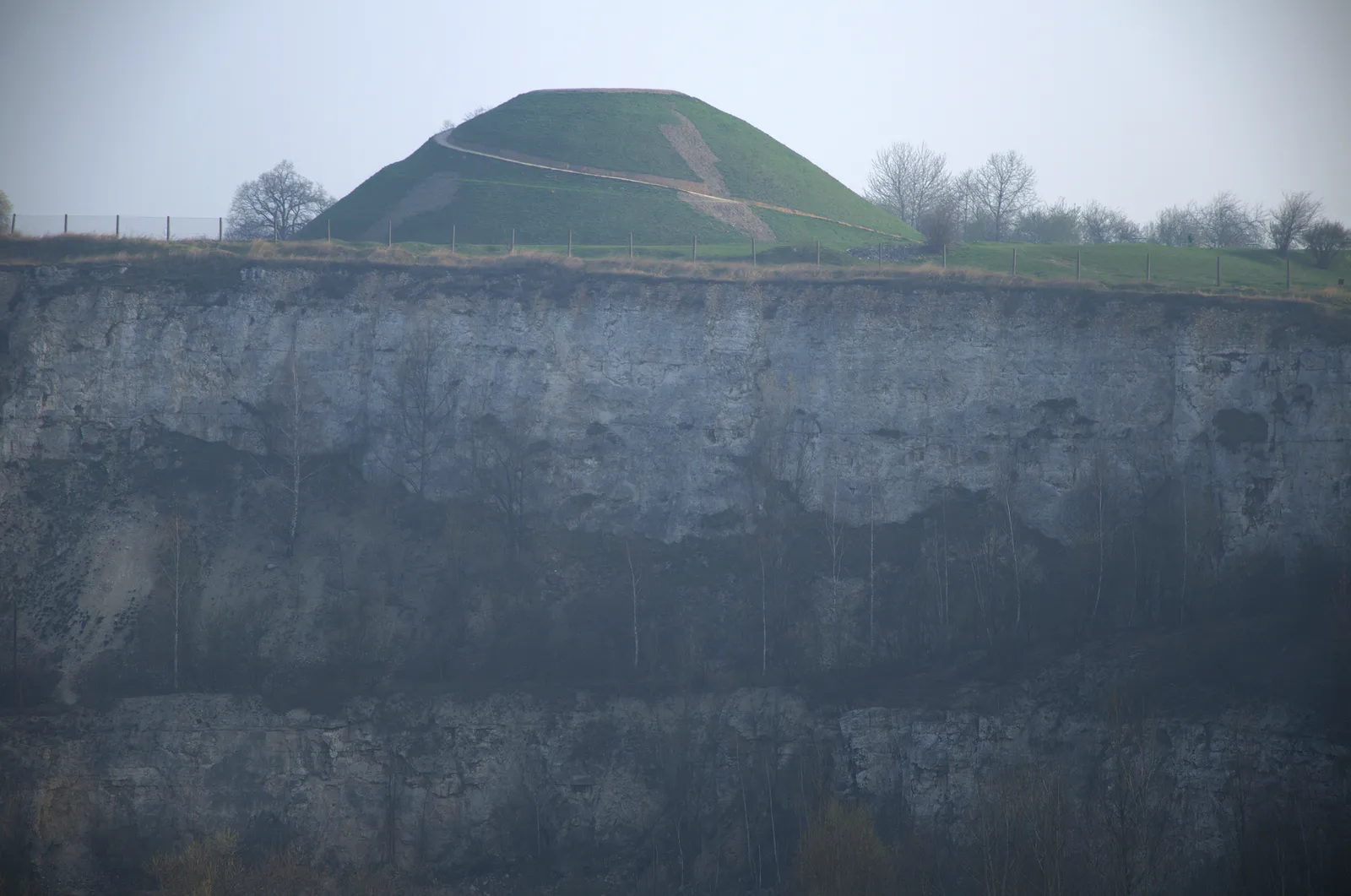
Immediately below it is the Liban quarry, worked for limestone until 1986 and left to grow over since. Steven Spielberg built his Płaszów camp set on the quarry floor for Schindler’s List and pieces of it are still down there among the birch. The real camp site is the open grassland south of the mound, holding three mass graves and two Jewish cemeteries, with an open-air exhibition laid across it in 2024. None of it charges and none of it has gates.
Podgórze is on the far bank, and the airport train is not
Kraków Główny is the station with the airport line, and from Lipowa that means a tram or about forty minutes on foot back over the river. From there the SKA1, a regional service run by Koleje Małopolskie, reaches Kraków John Paul II International Airport in around 20 minutes for a flat 20 złoty, roughly twice an hour through the day and hourly early and late. Add the 200 to 250 metre covered footbridge at the airport end and the honest figure from Podgórze is an hour and a quarter, not twenty minutes.
Between about 1am and 4am the line does not run. Bus 902 covers the route from around 11.25pm, hourly until just after 4am, for 6 złoty and about 45 minutes.
This is the least crowded few hours available within three kilometres of the Main Market Square, and also the heaviest. Nothing here is queued, most of it is outdoors and free, and the only thing on it with a clock is the factory.
Frequently asked questions
How far is Schindler's factory from Kraków's Old Town?
About three kilometres, or 35 to 40 minutes on foot across the river, and there are trams that cut it to around 20 minutes door to door. The catch is that entry runs on a timed slot and the museum asks visitors to arrive 15 to 20 minutes before it, so the walk has a deadline attached rather than being something to do at your own pace. The main Kraków route treats this as the far end of a longer afternoon; starting on this bank instead removes the return leg.
What is free in Podgórze?
Most of the district. Ghetto Heroes Square and its chairs, the ghetto wall fragments on Lwowska and Limanowskiego, Podgórze's own market square, Krakus Mound, the paths around the Liban quarry and the Płaszów camp site all cost nothing and have no opening hours. The contemporary art museum on Lipowa is free on Tuesdays, and free on Thursdays for its own collection on the lower level.
Which days are the Podgórze museums shut?
Three different ones, which is easy to get wrong. Schindler's factory closes on the first Tuesday of the month and runs short hours, 10am to 3pm, on Mondays. The Eagle Pharmacy on Ghetto Heroes Square closes on the second Tuesday and also cuts Monday to 10am until 2pm. The contemporary art museum on Lipowa closes on Mondays altogether and otherwise runs 11am to 7pm.
Can you visit the Płaszów camp site?
Yes, and it is open ground rather than a fenced attraction: a large grassed area south of Krakus Mound holding three mass graves and two Jewish cemeteries, with a memorial on the rise above it. An open-air exhibition was installed across the site in March 2024, with information boards standing where the camp buildings were. Walking in costs nothing and there are no gates, which is worth knowing before you set out expecting a ticket desk.