Kazimierz Layover: Kraków's Seven Synagogues
Part of the full Kraków Layover: Old Town and Wawel From KRK
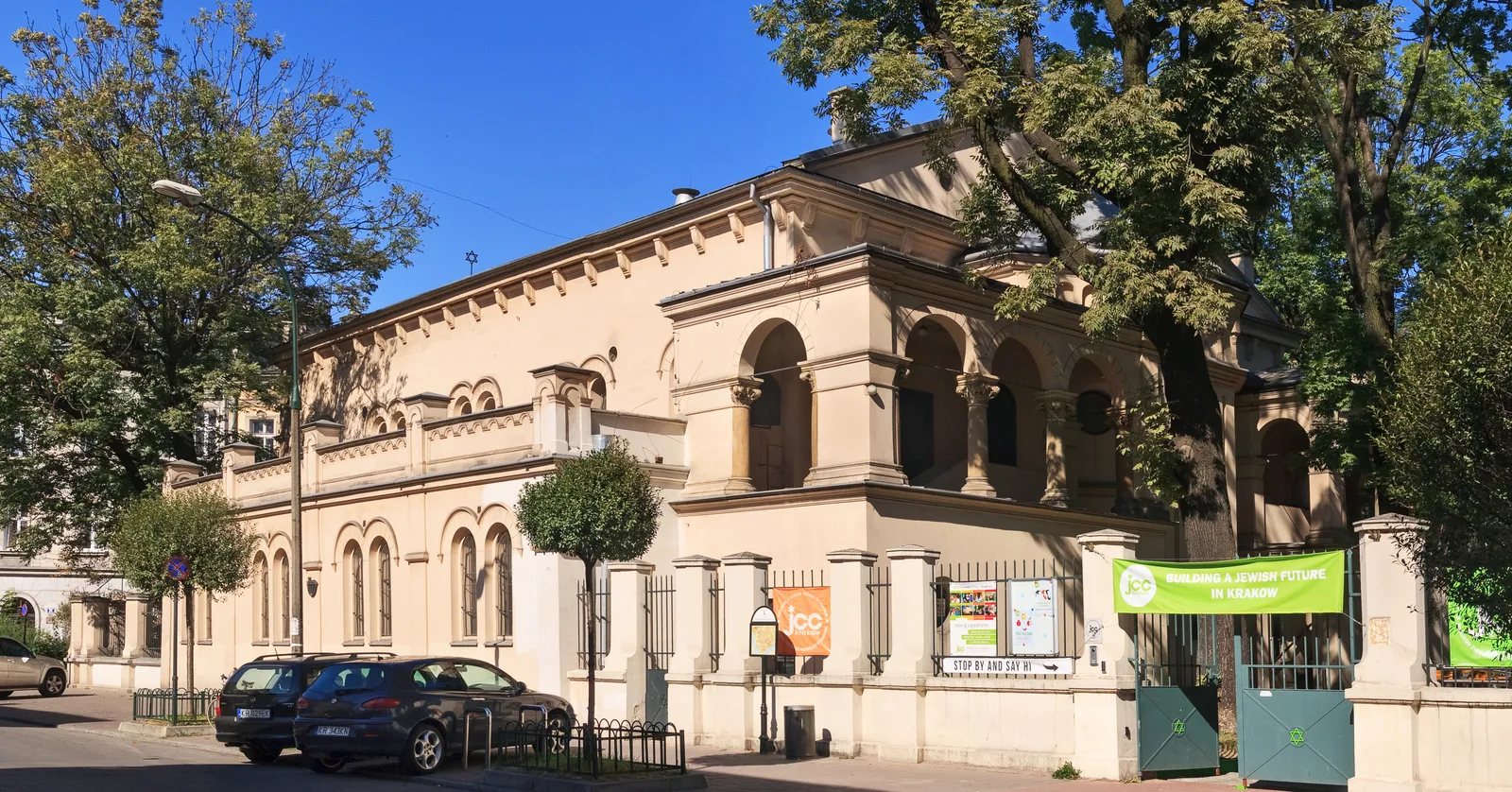
Kazimierz in Kraków has seven surviving synagogues inside a few blocks, two Jewish cemeteries and two squares, and apart from the synagogue doors themselves almost none of it charges anything.
The seven synagogues left standing in Kazimierz
Kazimierz was a royal town in its own right from 1335 until Kraków absorbed it in 1800, and Jewish Kraków was concentrated here for most of that time. What survived the occupation is seven synagogues in walking distance of each other: the Old, Remuh, High, Isaac, Popper, Kupa and Tempel. The Tempel, on Miodowa, is the newest and the most decorated, a 19th-century hall of Moorish arches with a painted and gilded interior, and it is the one most people go into.
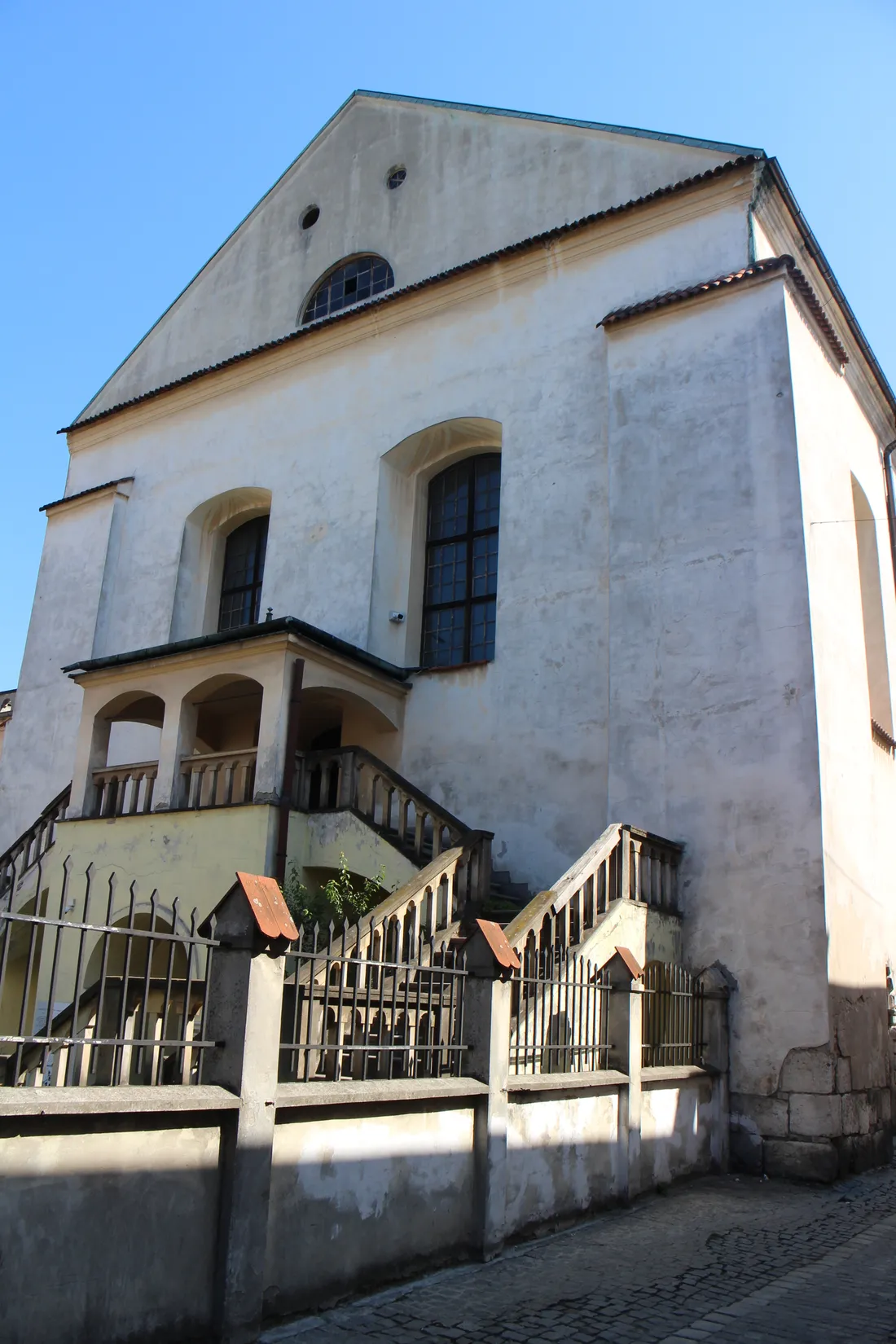
The Isaac is the biggest, given to the town in 1644 by the banker Izaak Jakubowicz, with an outside staircase running up the flank of a plain white hall. The Kupa, finished in 1643, was the last one built while Kazimierz was still a separate town, paid for by the Jewish community’s own governing council. Only the Remuh still holds regular services. Every one of them charges its own entry, all of them shut for Shabbat and Jewish holidays, and none of them is signposted in a way that makes the sequence obvious, which is the argument for a two-hour guided walk of the district if you would rather not work it out at the doors.
Kazimierz has two squares, and the smaller one is the busier
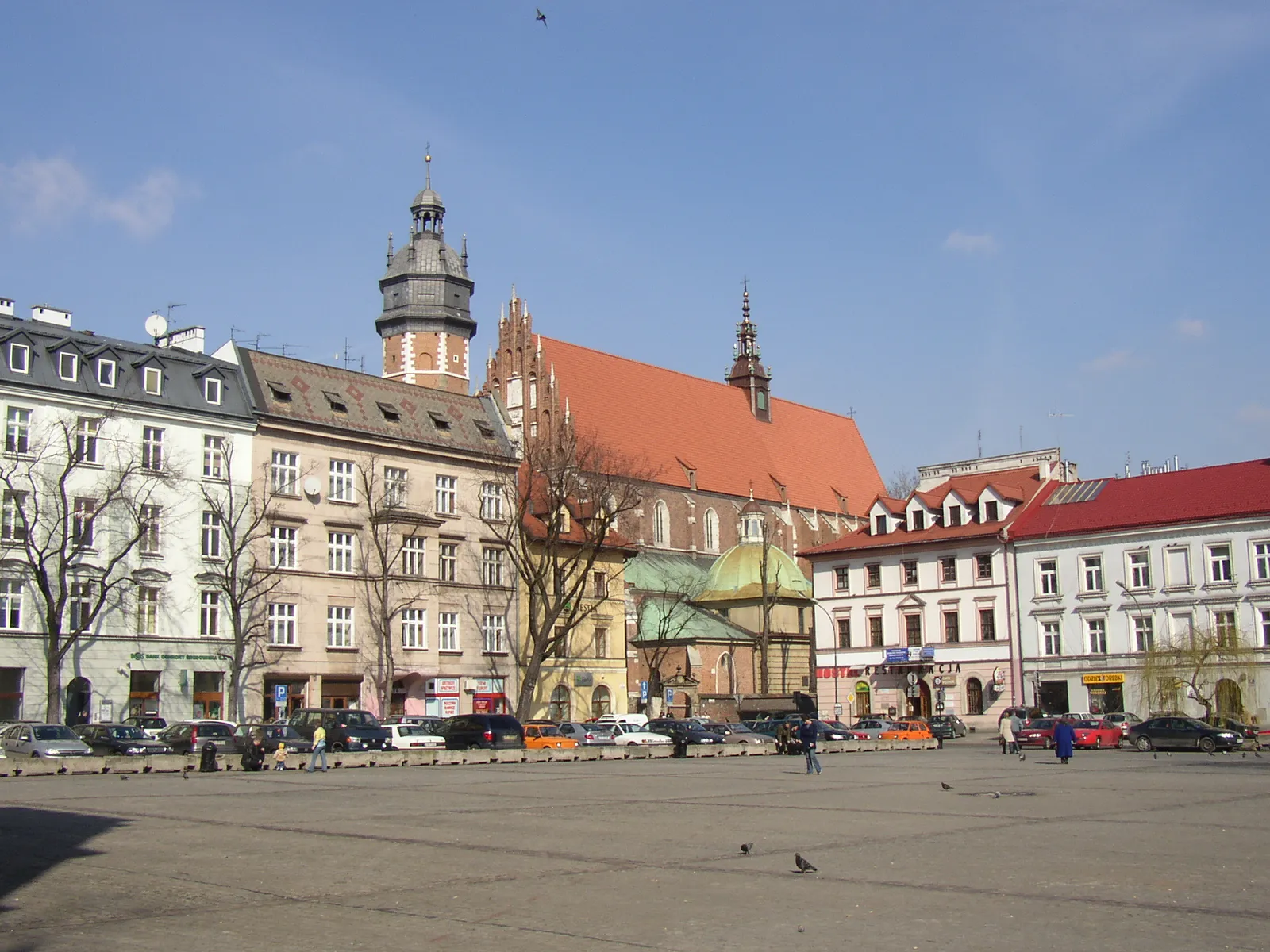
Plac Wolnica was the market square of the town of Kazimierz, laid out in 1335 at 195 metres on each side, which made it five metres short of Kraków’s own on every side. After 1800 it was steadily built over, and what is left is around a quarter of the original: an open rectangle with the old town hall on its west flank, rebuilt in neo-Renaissance style in the late 19th century and holding the Ethnographic Museum since the war.
Three minutes north, Plac Nowy is a quarter the size and carries most of the district’s traffic. The round brick hall standing alone in the middle went up between 1899 and 1900 as a covered market, still has butchers trading inside it, and has food windows cut around its outer wall. Stalls ring the building on most mornings, with antiques on Saturday and second-hand clothes on Sunday from about 8am to 3pm; the hatches keep going long after the stalls have packed up.
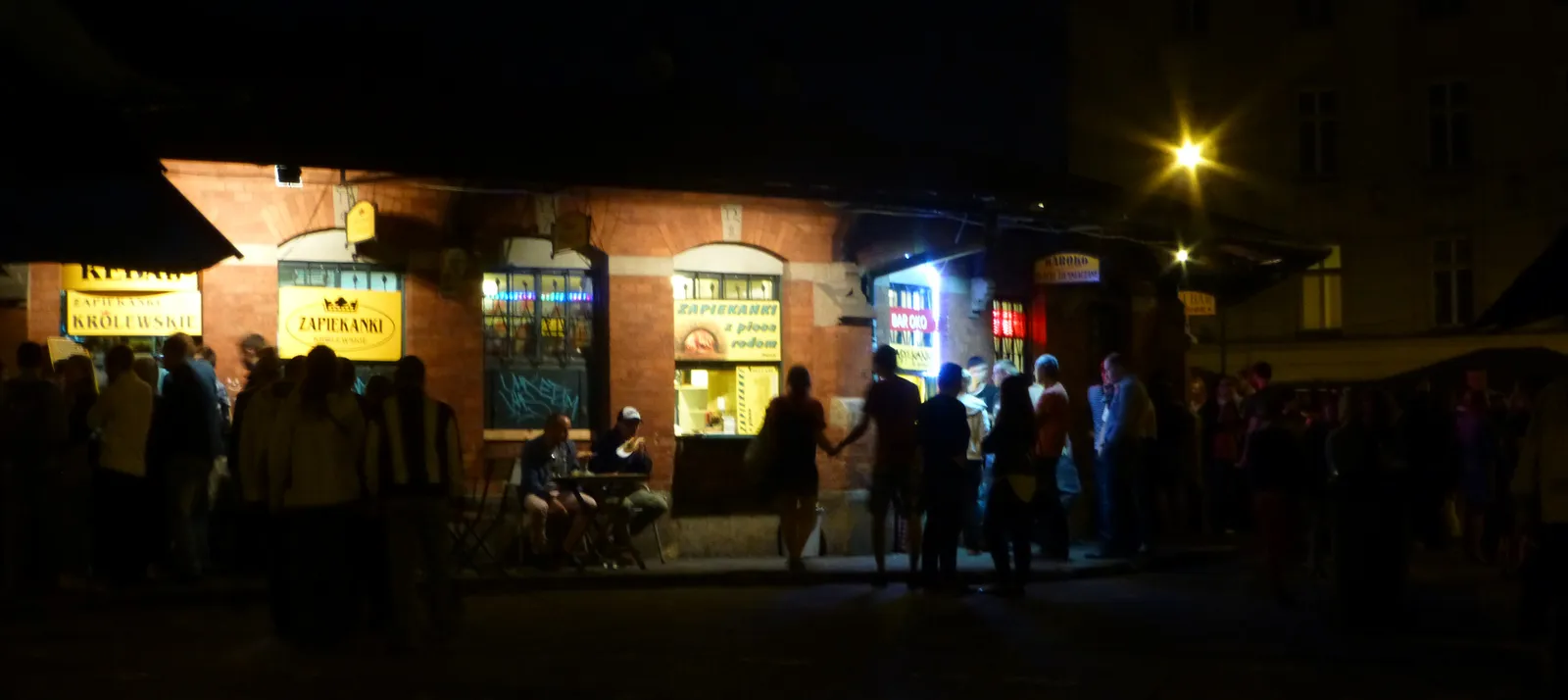
The stalls set up tight against the hall and the hatch queues form on the same narrow ring of paving, so at market hours and again late in the evening there is not much room to stand there with a suitcase.
The New Jewish Cemetery on ulica Miodowa
The burial ground at Miodowa 55 opened in 1800, when the older one beside the Remuh synagogue ran out of room, and around 10,000 headstones survive in it. The oldest is from 1809. The German occupation used the site as a dump and broke up much of what stood there; after the war the pieces that could not be matched to a grave were built into the boundary walls and into a memorial, so a good part of the cemetery is now made of its own fragments.
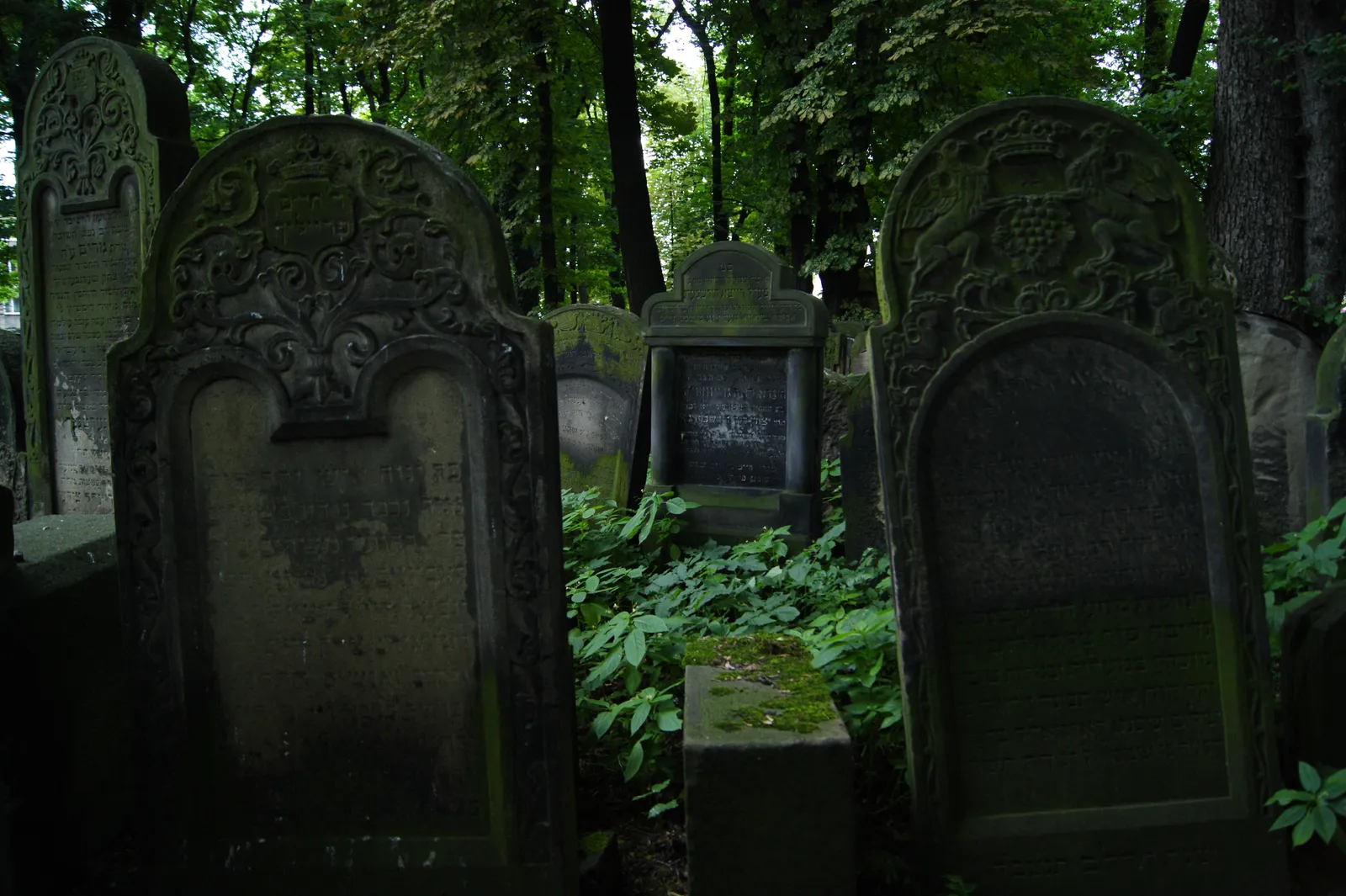
It sits behind the railway viaduct that crosses Miodowa, which is why most visitors to Kazimierz never reach it: the arch reads as the end of the district. The brick mortuary hall by the gate dates from 1903. Entry is free, hours are daytime and it closes for Shabbat like everything else here, and men are given a head covering at the gate.
Kazimierz has no station of its own
Kraków Główny is the nearest, twenty minutes on foot north through the Old Town or a few stops on a tram from Starowiślna. From there the SKA1, a regional service run by Koleje Małopolskie, reaches Kraków John Paul II International Airport in about 20 minutes for a flat 20 złoty, roughly twice an hour through the day and hourly early and late. A covered footbridge of 200 to 250 metres joins the airport platform to the terminal, so allow closer to an hour from Kazimierz door to door.
Nothing runs on that line between about 1am and 4am. Bus 902 covers the same route from around 11.25pm, hourly until just after 4am, for 6 złoty and about 45 minutes.
This is the slowest of the routes near the city centre and the one that rewards not hurrying: no queues except at the food hatches, and nothing that has to be seen in a particular order. If you would rather have the medieval core and Wawel Hill instead, the main Kraków route covers those and passes the top of this district on its way over the river.
Frequently asked questions
Are Kazimierz's synagogues and cemeteries open on Saturday?
No, and that single fact decides which day this walk works. The synagogues, the Remuh cemetery on Szeroka and the New Jewish Cemetery on Miodowa all close for Shabbat, from Friday evening to Saturday evening, and for Jewish holidays. The streets, both squares and the bars and food hatches carry on as normal, so a Saturday here is a walking-and-eating afternoon rather than a looking-inside one.
What does it cost to see the synagogues in Kazimierz?
Each one charges separately, in the region of 10 to 20 złoty, so working through all seven adds up fast. Two are worth the money ahead of the rest: the Old Synagogue on Szeroka, which is run as a museum rather than a working synagogue, and the Tempel on Miodowa for its painted and gilded interior. Everything outdoors is free, the streets, Plac Nowy, Plac Wolnica and the cemetery on Miodowa; the older burial ground beside the Remuh is covered by that synagogue's own ticket.
Which days is there a market on Plac Nowy?
Produce and general stalls set up around the round hall most days from about 8am and pack down in the early afternoon. Saturday is the junk and antiques day and Sunday is clothes, roughly 8am to 3pm. The food hatches cut into the building itself keep their own hours and run late into the night, long after the stalls have gone.
Is there anything indoors in Kazimierz when it rains?
The synagogue interiors and the Ethnographic Museum in the old town hall on Plac Wolnica, and one more at the northern edge of the district: a converted 1886 metal works on ulica Berka Joselewicza now hung with about 150 reproductions of Banksy's work across more than a thousand square metres, open daily 11am to 7pm with last entry at 6.15pm. Tickets booked ahead save queuing at the door on a wet afternoon.