Oslo Layover Guide: The Opera Roof From OSL
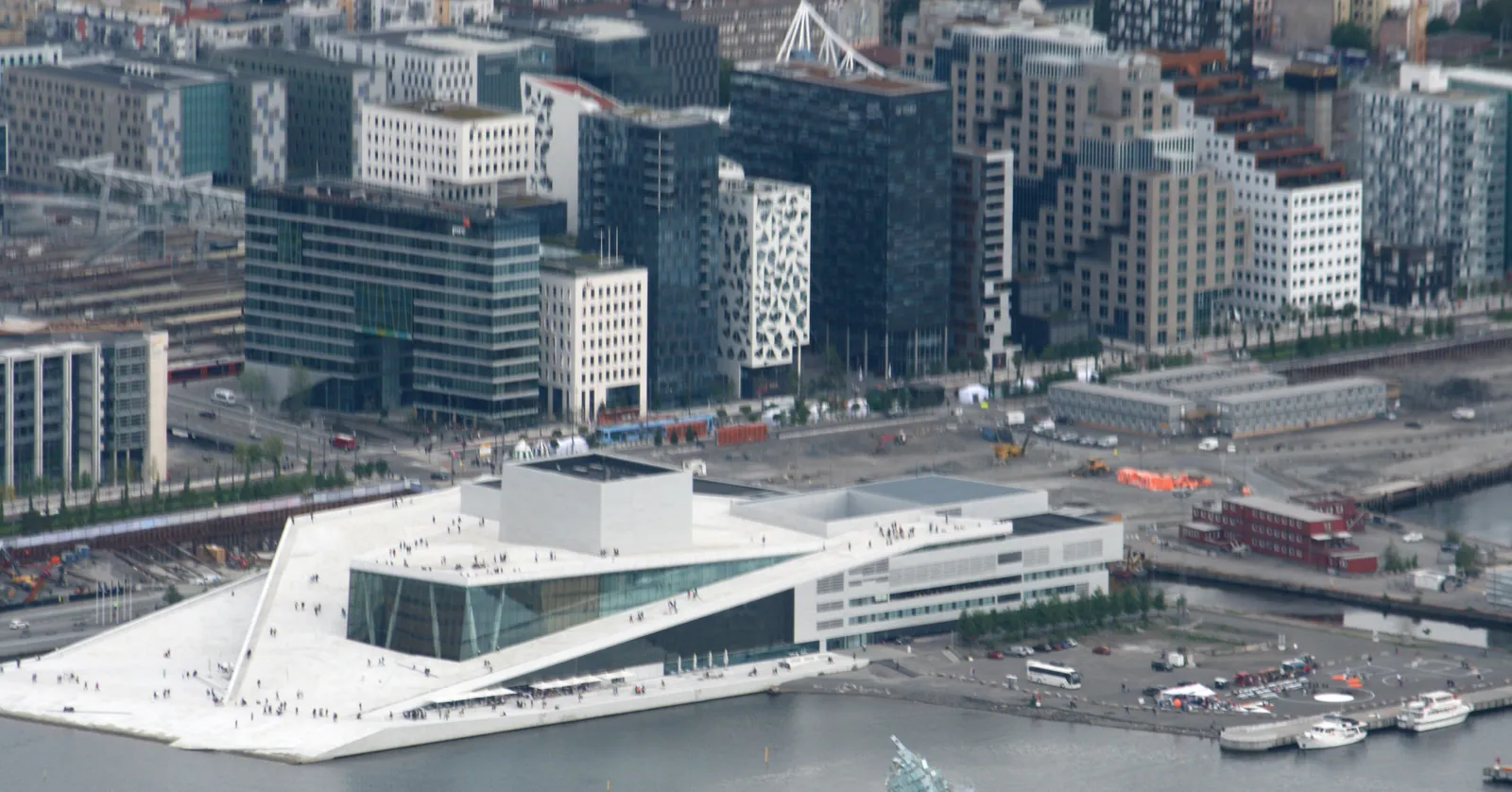
Oslo’s Opera House has a marble roof anyone can walk up, free and at any hour, and the harbour path below it links the Nobel Peace Center, Akershus Fortress and a public library with a fjord view from its top floor.
The marble roof of the Oslo Opera House
The Opera House stands in the water at Bjørvika, at the head of Oslo’s harbour, and its entire roof is a public square: no ticket desk, no closing time, and not one step between the quayside and the top. Snøhetta finished it in 2008 and clad the slope in white granite and La Facciata, an Italian Carrara marble, which is why the building reads as a pale slab tipped into the fjord rather than as a theatre.
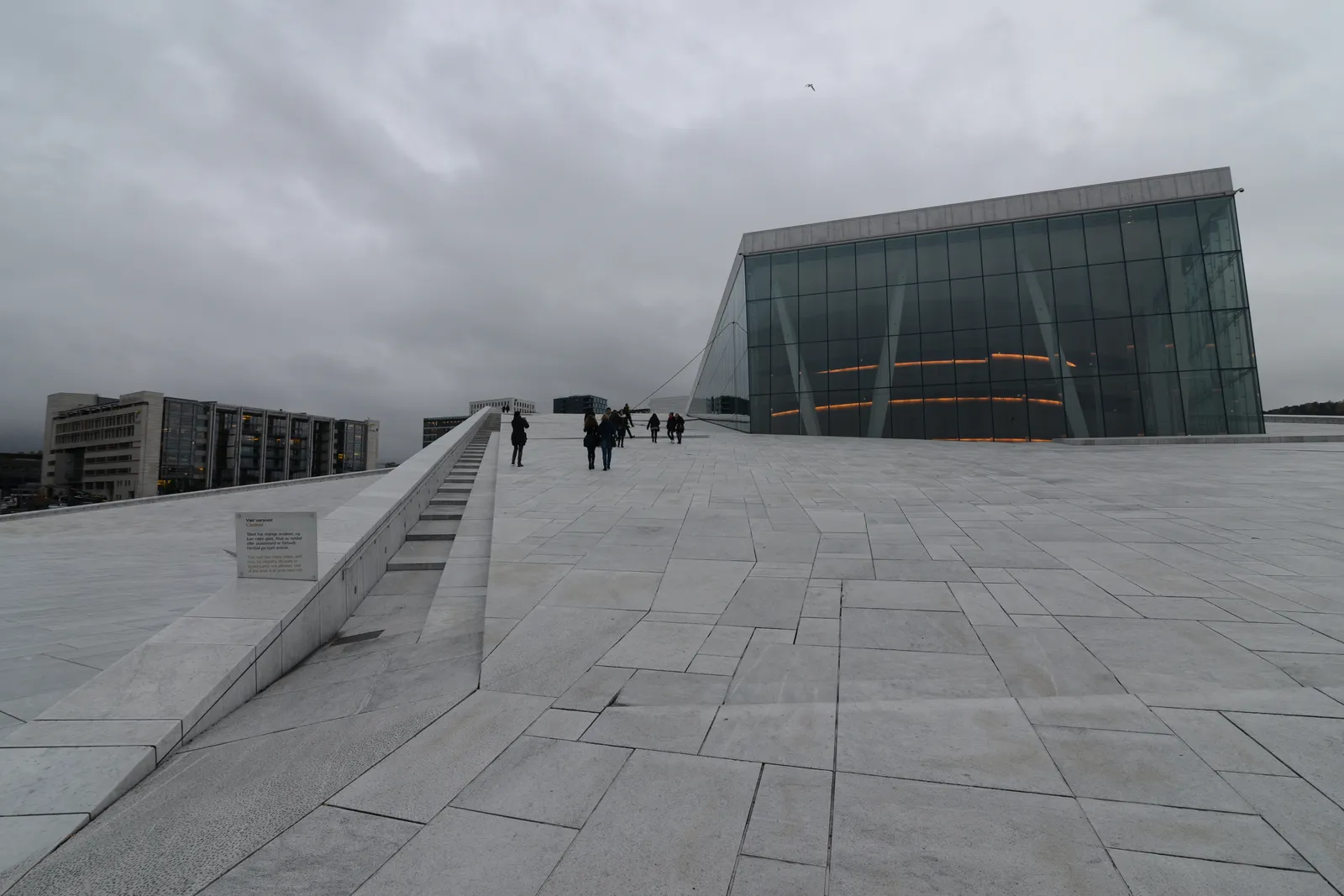
From the top you get the fjord and its islands to the south, the wooded Ekeberg ridge across the water, and the harbour running west towards the fortress. The climb takes a few minutes at a stroll and the ramp is gentle enough for prams. In rain or ice the marble is genuinely slick and parts of the roof get roped off, so this is the one stop on the list that winter can take away from you.
The foyer underneath is open too, and also free: oak-lined inside, in deliberate contrast to all that white stone outdoors, and a warm place to stand when the weather on the roof turns. The whole building is under ten minutes on foot from the central station.
The Nobel Peace Center in Oslo’s old West railway station
Georg Andreas Bull, Norway’s first railway architect, designed the yellow Italianate building on the west side of Rådhusplassen, the open square between Oslo City Hall and the harbour, and trains ran out of it from 1872 until 1989. It stood empty for years afterwards. The Nobel Peace Center opened inside it in 2005, with David Adjaye rebuilding the interiors behind the original arched facade.
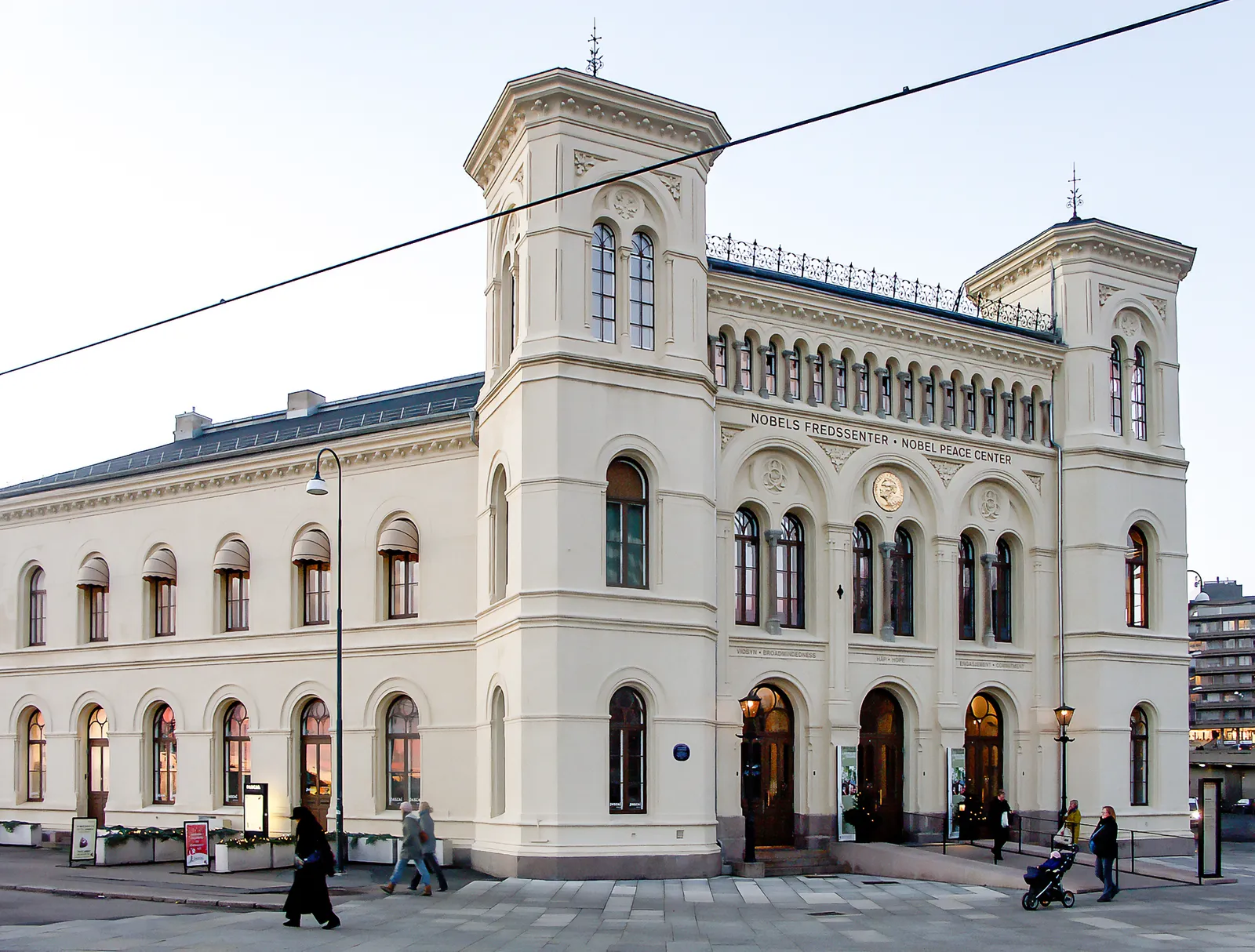
The largest gallery is still called Toghallen, the train hall, because that is what it was: the shed where the tracks ended, complete with a locomotive turntable. What fills it now is the exhibition on the laureates, alongside a show built around whoever has most recently won, which changes after each December’s ceremony across the square in the City Hall. Admission is 180 kroner, and the practical catch for a flight day is the hours rather than the price: Tuesday to Sunday, 11am to 5pm, closed Mondays. Tickets go on the door or online in advance if you would rather have it settled before you land.
The three versions of The Scream at the MUNCH museum
A painting, a drawing and a print all hang in one darkened room on the fourth floor of the MUNCH museum, behind shutters that open and close on a rotation of roughly an hour, so only ever one of them is uncovered. The reason is the materials: Munch worked on cardboard and paper that will not survive continuous light. Which of the three you get is whichever the shutters have open when you walk in.
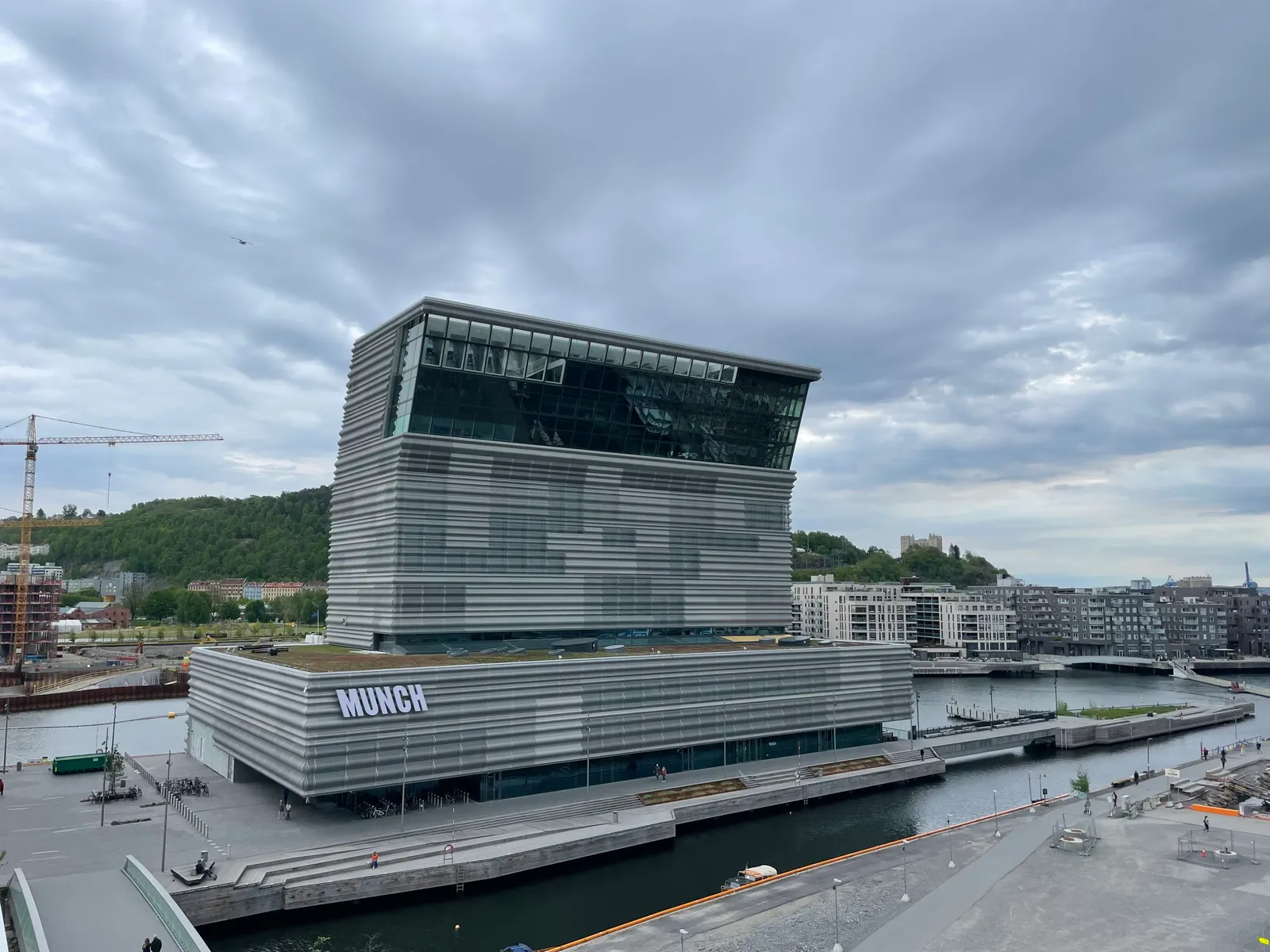
The building is the 13-storey tower on the Bjørvika waterfront whose top section leans out over the harbour, designed by Juan Herreros and opened in 2021 to hold the roughly 28,000 works Munch left to the city in his will. It is ten minutes on foot from the central station. Adult admission is 280 kroner between 10am and 6pm and 200 kroner after that, though the late slot only exists Wednesday to Saturday, when the museum runs to 9pm; Sunday to Tuesday it shuts at 6pm. Under-25s pay 100 kroner and under-18s nothing.
Munch’s own diary puts the moment behind The Scream on a road along the Ekeberg hillside, the wooded ridge visible across the water from the museum, and the sculpture park up there marked a viewpoint for it in 2013. The park is free, never closes, and is about ten minutes out by tram, which makes it a reasonable second half to an hour spent with the paintings.
Wheeled suitcases are not allowed in the galleries here, and the lobby lockers stop at 55 by 40 by 23 centimetres, which is cabin-bag size, so anything larger needs to be somewhere else before you go in.
The top floor of the Deichman Bjørvika library
Oslo’s main public library opened in 2020 on Anne-Cath. Vestlys plass, a couple of minutes’ walk from the central station, and anyone can walk in without a card, a ticket or a reason to be there. It is stacked open concrete and glass, with light dropping down the middle of the building from the roof to the ground floor.
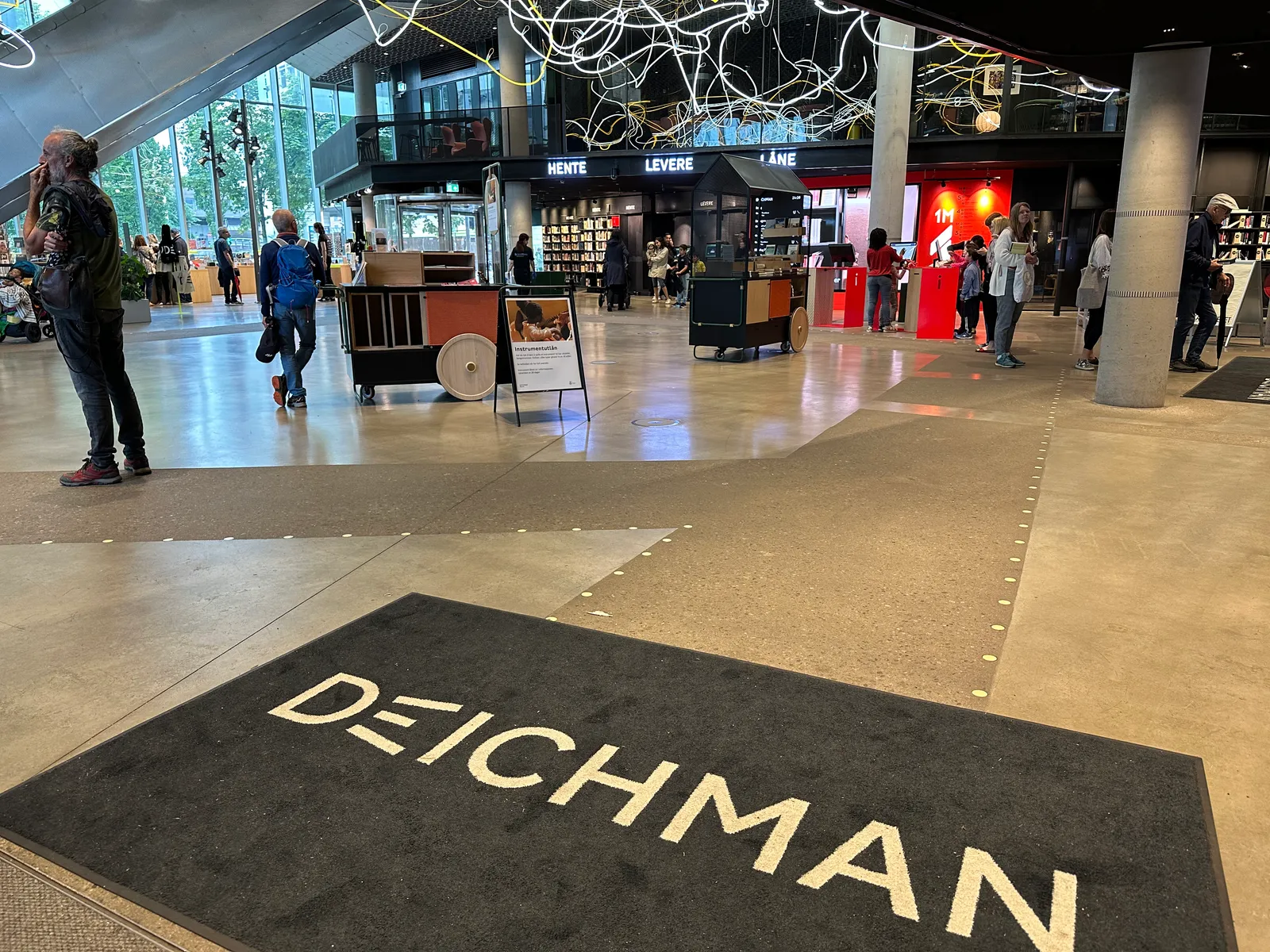
The reason to climb it is the top floor, where the reading tables face out over the harbour and the Opera roof below. Lower down there is a cinema, a games room, a café, and an open workshop whose tools and instruments are lent out for nothing like the books. It runs 8am to 10pm Monday to Friday and 10am to 6pm at weekends, which makes it the most useful room in the city for an evening flight or a wet afternoon.
Akershus Fortress above the harbour
Haakon V began the castle on the headland on the west side of Oslo’s harbour around 1300, and it never fell to a siege. Christian IV had it rebuilt as a Renaissance royal residence in the early 1600s, and the outer earthworks and bastions went up around it later; the whole site is still a working military area, which is why there are soldiers on the gates.
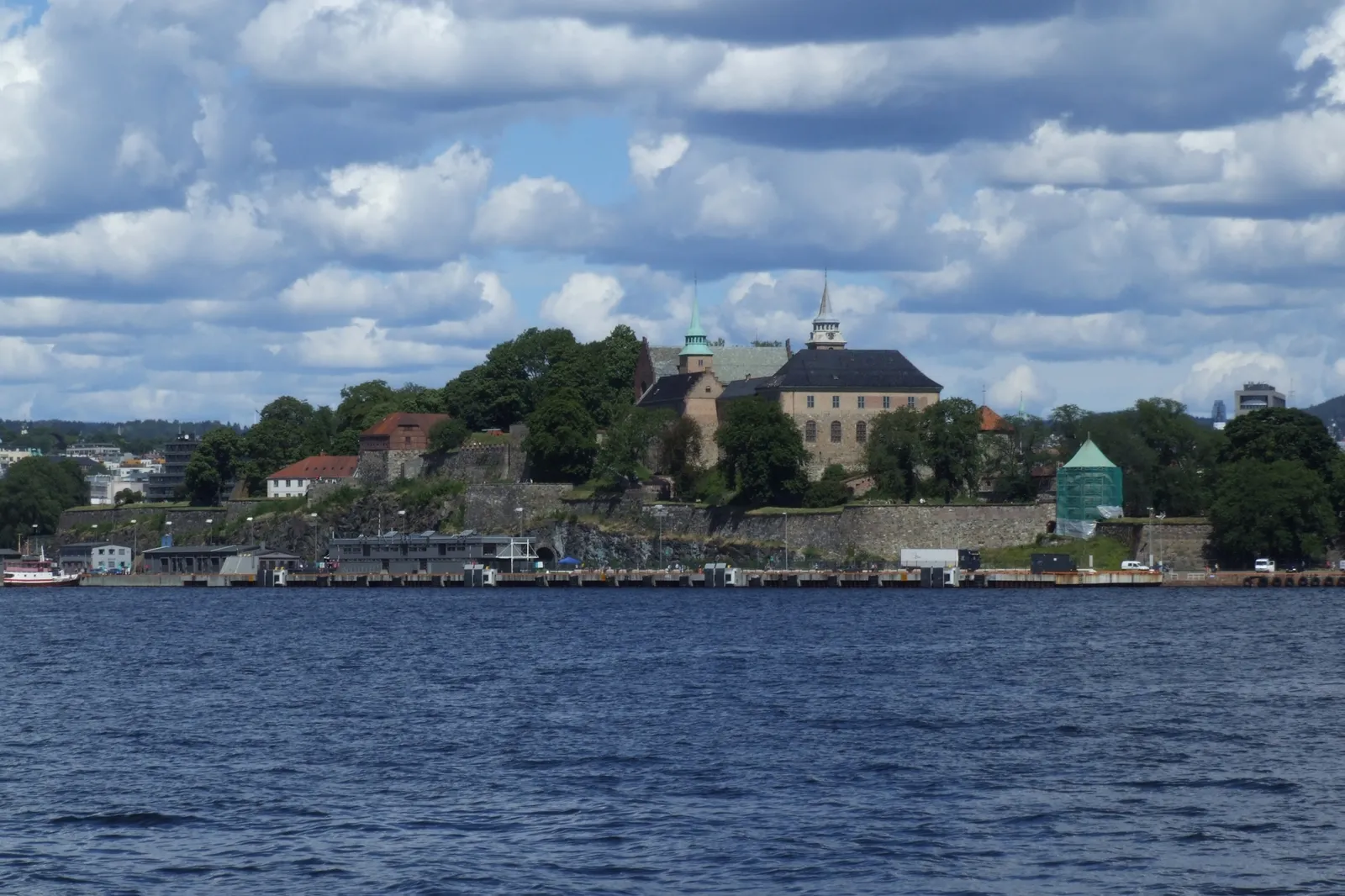
Getting in costs nothing. The main gate is open from 6am to 9pm and the grounds are yours to walk: cobbled lanes between the barracks, grass ramparts, and a view down over the quays and across to Aker Brygge that costs nothing to stand and take in. The castle interiors and the Resistance Museum are ticketed separately, and the castle itself keeps short hours, roughly 10am to 4pm daily in summer and weekends only through the winter, so the grounds are the reliable half of a visit on a flight day.
Gustav Vigeland’s 212 sculptures in Frogner Park
Frogner Park sits in Oslo’s west end and covers 45 hectares, and the sculptures run down an 850-metre axis through the middle of it: 212 figures in granite, bronze and wrought iron, every one of them by Gustav Vigeland, who worked on them from 1924 until he died in 1943. There is no gate and no fee, and the park never closes.
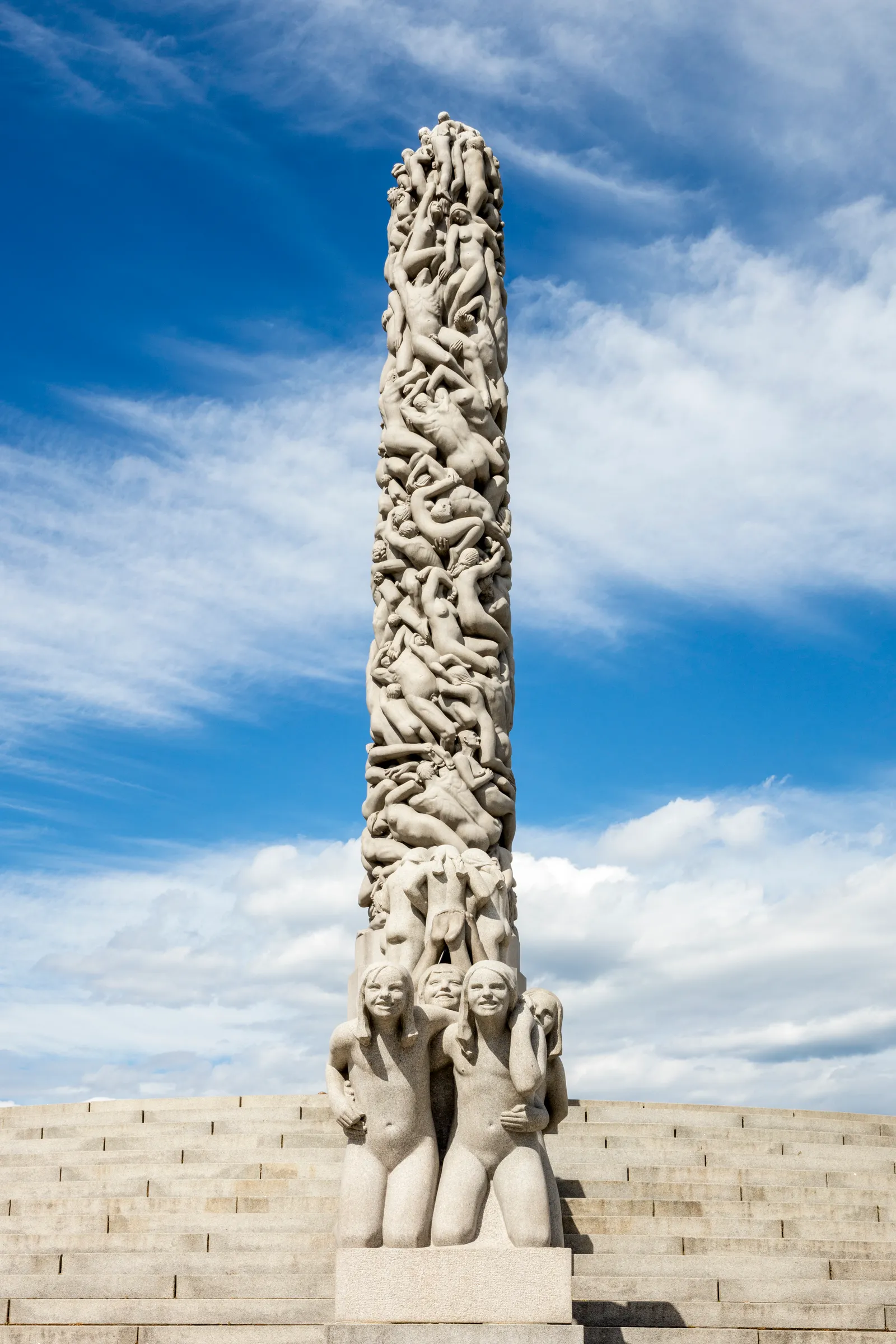
The Monolith is the thing at the top of the steps: 14.12 metres cut from one block of granite and carved with 121 human bodies climbing over each other. Three stonemasons spent fourteen years on it. The figures on the terraces around it are the part people remember, though, because they are ordinary rather than heroic, an old couple, a man throwing children about, and the small furious bronze boy on the bridge that everybody photographs.
This is the one stop here that needs a tram rather than a walk, about fifteen minutes out from the centre, so it wants four hours or more in hand. If you have that, the museum holding Vigeland’s own studio and plaster models stands on Nobels gate along the park’s southern edge, and the sculptures themselves are still there to walk among long after it has shut.
The airport express costs twice what a regular train does
Flytoget, the airport express, charges 268 kroner from Oslo S, the central station, and reaches Oslo Airport in 19 minutes, six departures an hour. Students, 16-to-20-year-olds and over-67s pay 134 with ID, and children under 16 travel free alongside an adult. The first one out of Oslo S leaves at 4.40am.
Vy’s regional trains run on the same line, from the same platforms, and take about 23 minutes for roughly half the fare. The difference between the two is four minutes and how often they leave, not a different journey, so the express earns its extra 139 kroner mainly when you are already tight for time.
Both end at the station in the terminal basement, one level below the check-in hall, with a lift and escalators up. That matters more than it sounds: at airports where the train stops short and a people mover finishes the job, the published ride time and the real door-to-door figure are twenty minutes apart. Here they are not, so 19 or 23 minutes plus a few for the escalator is the honest number to plan against. Working back from a flight, allow around two hours from anywhere in the centre: collecting the bag, the walk to the platform, the wait, the ride and check-in.
Oslo S is the long-distance station too, which is worth knowing if you are stringing rail legs together rather than flying both ways: the daytime run south to Gothenburg leaves from here and connects on towards Copenhagen.
The route above all sits on one side of that station, and it is the sort of walking, up a marble slope and around a fortress, that goes badly with a suitcase in tow. Leaving the bag near Oslo S rather than towing it along the harbour also puts it back within a few minutes of the airport platform when the time comes.
Frequently asked questions
What should I do during a layover in Oslo?
Walk up the Opera House roof first: it is a continuous marble ramp from the water's edge to the top, free, with no ticket desk and no closing time, and it is under ten minutes on foot from the central station. The waterfront path west from there reaches Akershus Fortress, whose grounds are free between 6am and 9pm, and Rådhusplassen, where the Nobel Peace Center occupies Oslo's old West railway station. If you want one interior, make it MUNCH, ten minutes the other way, where three versions of The Scream take turns behind shutters. With four hours or more, Frogner Park and its 212 Vigeland sculptures are worth the tram out west. MUNCH and the Nobel Peace Center are the two stops with opening hours worth checking before you commit to them; the Opera roof and the park have none at all.
Is MUNCH cheaper in the evening?
Yes, by 80 kroner. A daytime adult ticket between 10am and 6pm is 280 kroner; from 6pm it drops to 200. The museum only stays open that late from Wednesday to Saturday, when it runs until 9pm, and closes at 6pm from Sunday to Tuesday. Under-25s pay 100 kroner at any hour and under-18s go free. The Scream room is on the fourth floor, and since only one of the three versions is uncovered at a time, arriving with less than an hour to spare means seeing whichever one happens to be showing.
Is a winter layover in Oslo worth leaving the airport for?
It works, but the clock is different. Around the December solstice the sun sets in Oslo shortly after 3pm and there are about six hours of daylight in the whole day, so an afternoon arrival means walking the harbour in the dark. The Opera House roof is the one stop that genuinely suffers: the marble turns slippery under rain and ice, and sections of it get roped off in bad conditions. Deichman Bjørvika, MUNCH and the Nobel Peace Center are all indoors and all within about ten minutes of each other, which makes the waterfront a better winter route than the parks out west.
Is the walk along Oslo's waterfront step-free?
Mostly. The Opera House roof was built as a ramp rather than a staircase, so there are no steps between the quayside and the top, and prams and wheelchairs go up it, though the gradient is steep enough that a manual chair is hard work without a push. The harbour path from Bjørvika west past the City Hall is flat the whole way. Akershus Fortress is the exception: it sits on a headland and the approaches into it are cobbled and climb, so the ramparts are the one part of this route that a wheeled suitcase or a chair will fight.
What is open in central Oslo on a Monday?
Almost all of this route, as it happens. The Nobel Peace Center is the one closure that matters: it runs Tuesday to Sunday and shuts on Mondays. MUNCH is open, until 6pm, and so is Deichman Bjørvika until 10pm. The Opera House roof, Akershus Fortress grounds and Frogner Park are unaffected because none of them has a door. If you want a Monday interior near Rådhusplassen, the Viking Planet on Fridtjof Nansens plass is a digital Viking-age museum open every day of the week, 285 kroner for an adult, and tickets can be held in advance.
Is the airport express worth 268 kroner when a regular train costs half that?
Only if the extra ten minutes of headroom matters to you. Flytoget runs from Oslo S to Oslo Airport in 19 minutes, six times an hour, at 268 kroner for an adult and 134 for students, under-20s and over-67s, with under-16s free alongside an adult. Vy's regional trains use the same line and the same platforms, take about 23 minutes and cost roughly half. Both put you in the station in the terminal basement, one level below the check-in hall, so the ride time is close to the real door-to-door figure either way.