Aker Brygge and Tjuvholmen Layover in Oslo
Part of the full Oslo Layover Guide: The Opera Roof From OSL
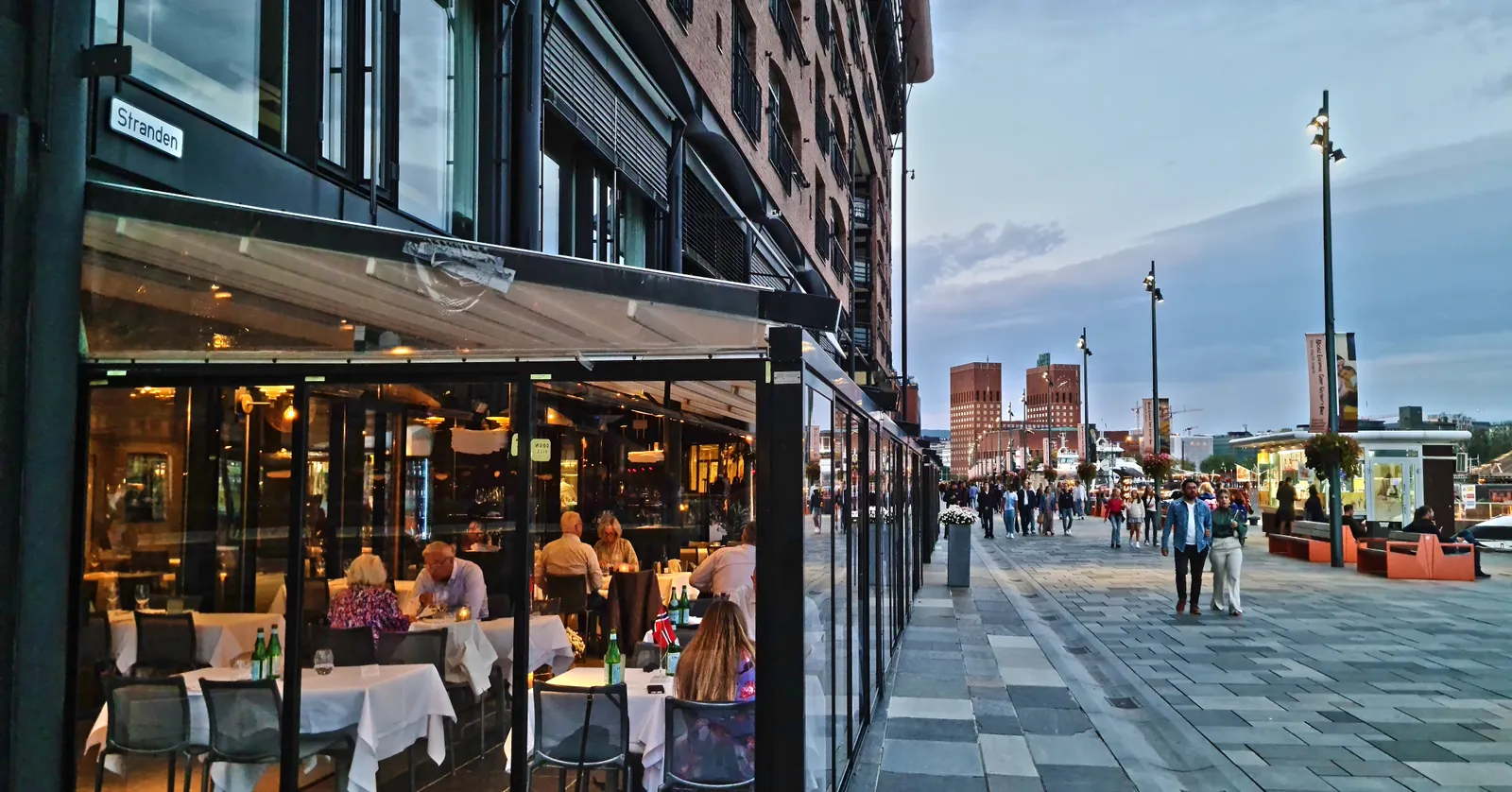
Aker Brygge is a kilometre of harbour quay on Oslo’s western waterfront, running from the head of the bay out to Tjuvholmen, where a contemporary art museum, a small public beach and the pier for the island ferries all sit within a few minutes of each other.
The shipyard quay that became the Aker Brygge boardwalk
Akers mekaniske Verksted built ships on this water from 1854, when the yard moved down from the river it was named after, and kept building them until it closed in 1982. What stands here now went up from 1986 onwards, with several of the big workshop halls kept and converted rather than cleared, which is why the frontage alternates between glass and long brick sheds with the old proportions still legible.
The result draws something like 12 million visits a year and has the restaurant terraces to match, most of them expensive. The walking is the free part, and the quay is wide, flat and continuous from end to end.
Renzo Piano’s glass sail over the Astrup Fearnley Museum
Tjuvholmen, the peninsula at the seaward end of the quay, takes its name from the thieves executed on it in the 18th century, which is a bleaker origin than the current apartment prices suggest. Renzo Piano’s museum arrived on it in 2012: three low pavilions split by a canal, held under one curved glass roof slung from steel masts so that the whole thing reads as a sail from the water.
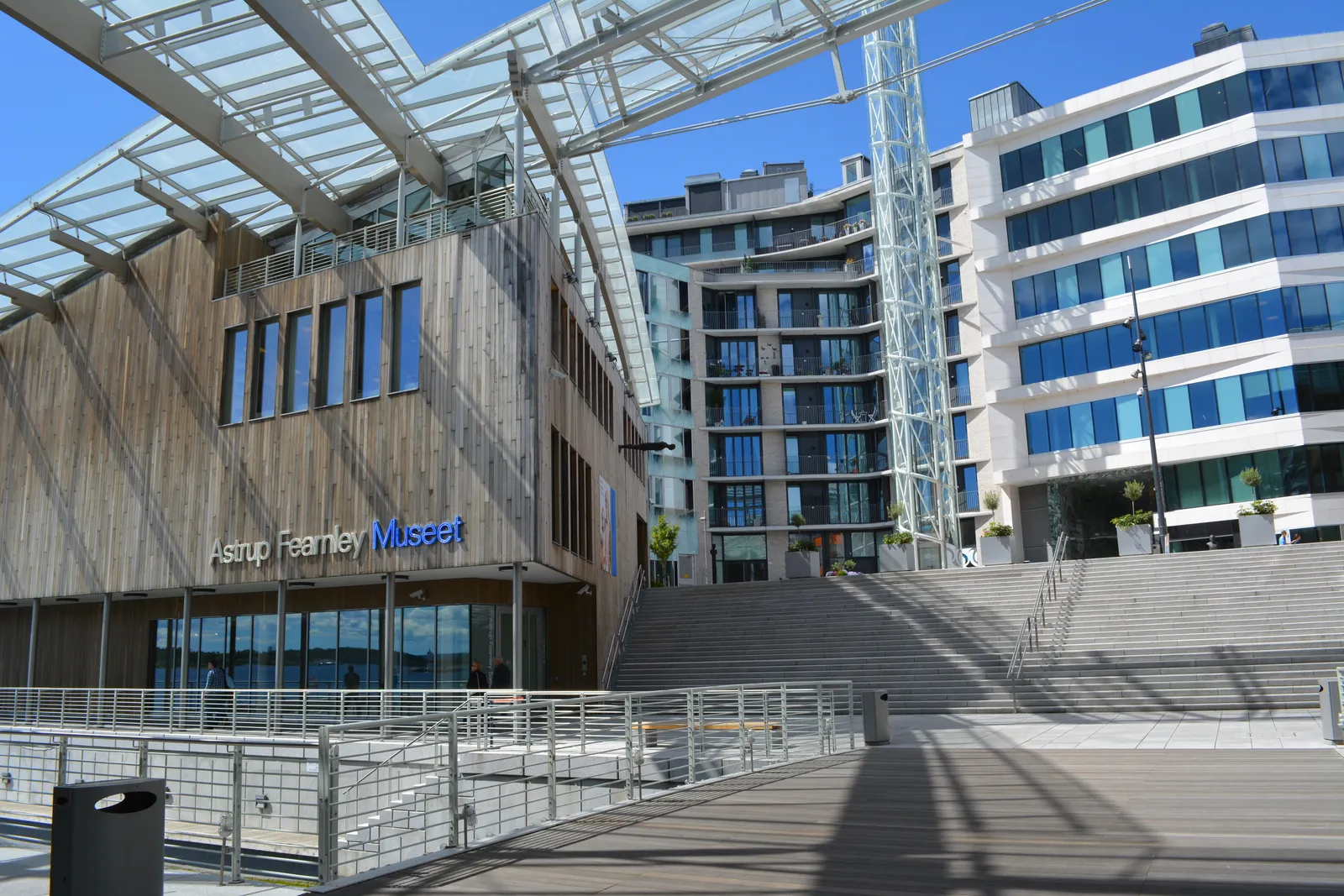
Inside is a private collection of contemporary art, heavy on the American and the large-scale. Adult entry is 180 kroner, students and over-67s 100, and anyone under 20 goes free. It shuts on Mondays and otherwise opens at noon on weekdays and 11am at weekends, running to 5pm except on Thursdays, when it stays open until 7pm.
The sand and bathing steps at the tip of Tjuvholmen
Past the museum the peninsula narrows to a point, and the last hundred metres of it are given over to a small imported beach, a run of stone bathing steps and a couple of diving spots into the fjord. There is no gate, no attendant and no charge.
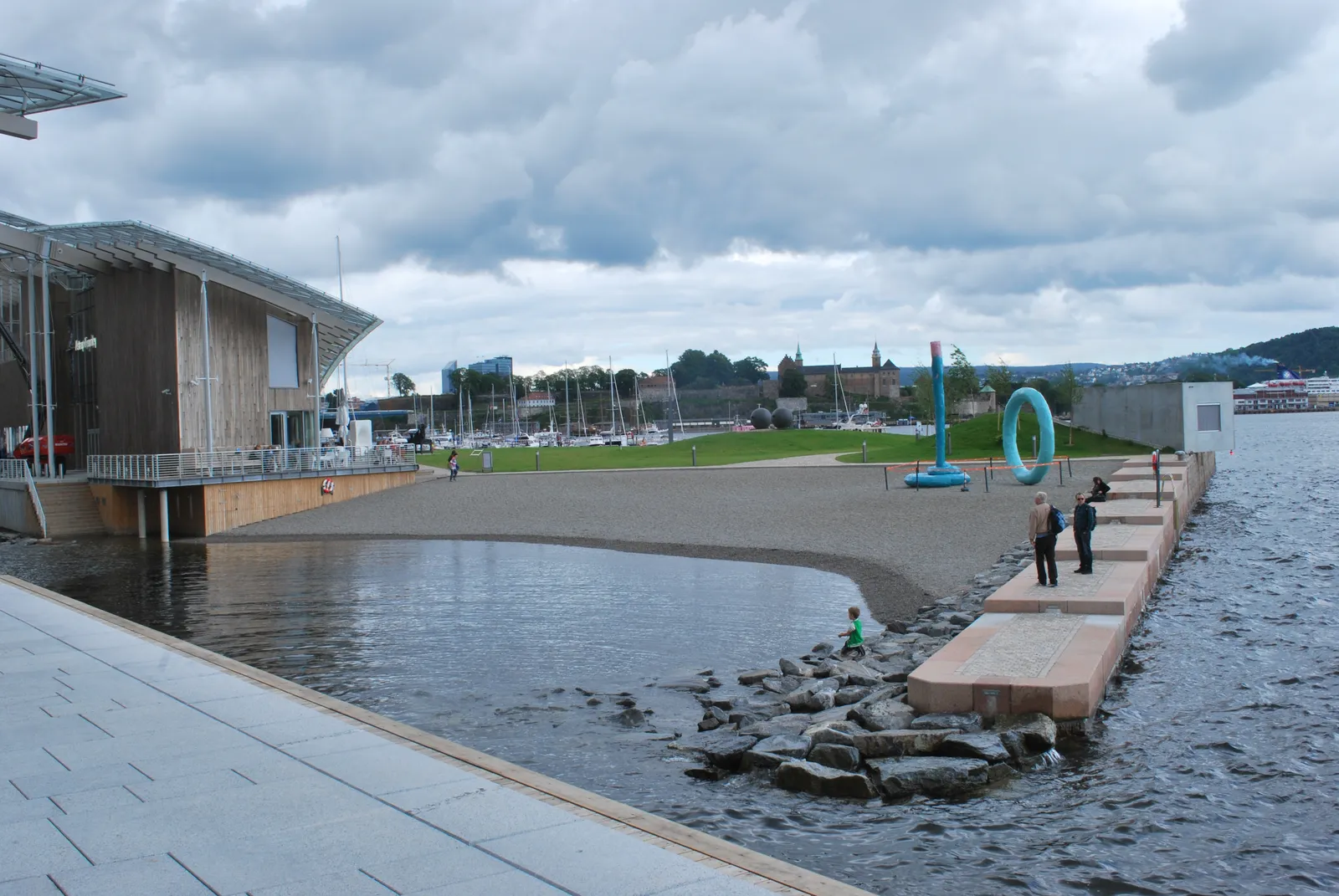
This is where the shape of the walk starts to matter. Tjuvholmen is a dead end with water on three sides, so the way back is the way you came, and anything carried out to the point gets carried the full length of the quay again on the return.
Hovedøya, a wooded island with a ruined abbey on it
The boats to the inner Oslofjord islands leave from the quay at Aker Brygge, and they are ordinary public transport rather than sightseeing craft: a standard central-zone ticket covers them, the same one a tram takes, though nothing is sold on board. Hovedøya is the nearest, roughly six minutes out.
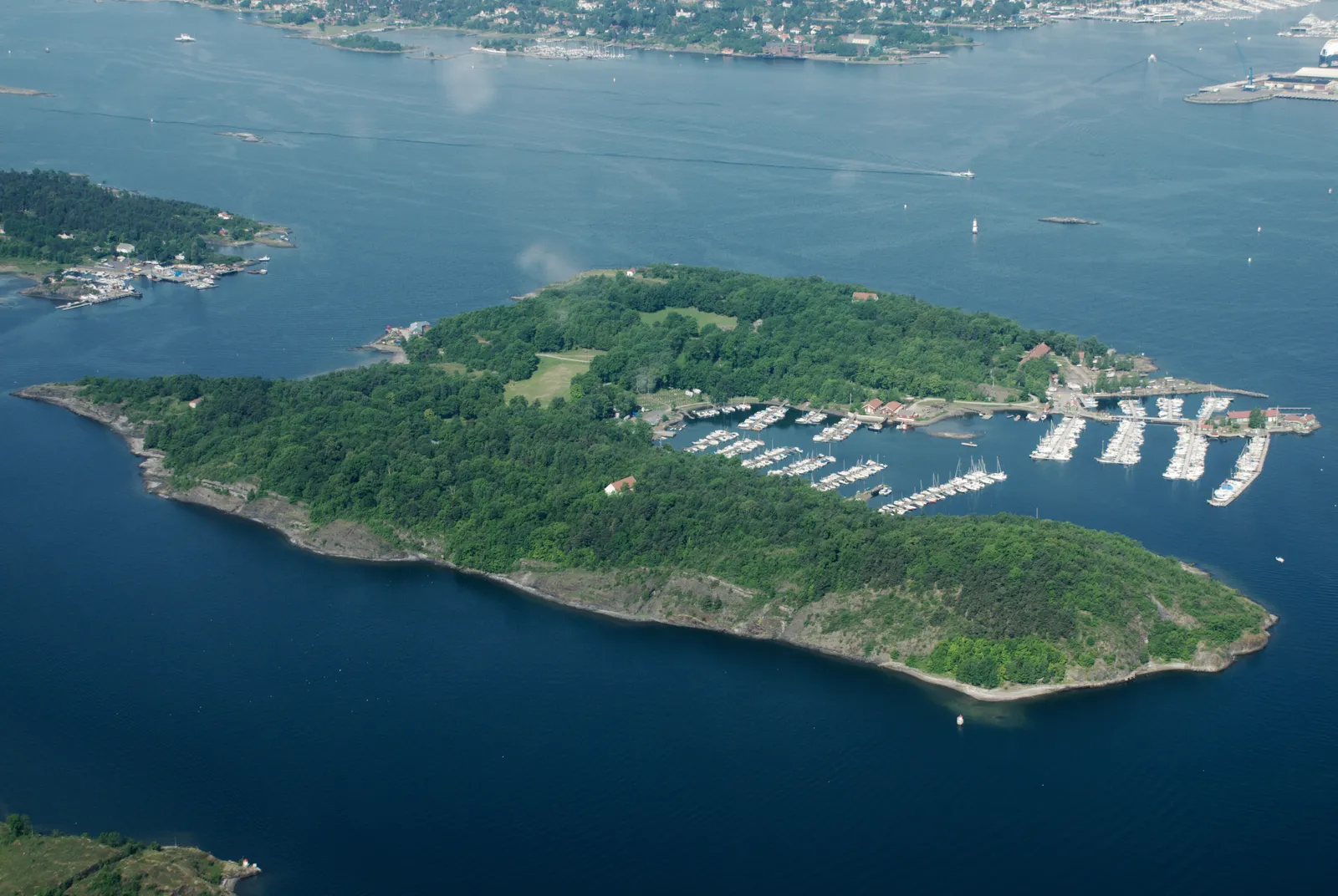
What is on it is a ruined Cistercian abbey. Monks from Kirkstead in Lincolnshire founded it on 18 May 1147 and dedicated it to the Virgin Mary and Saint Edmund; by the late medieval period it held more than 400 properties and was among the wealthiest institutions in Norway. It was looted and burned in 1532, and in the following century much of its cut stone was carried across the water to enlarge Akershus Fortress, which is the version of that fortress a visitor sees today. The ruins stand in open meadow, free to walk around, with no opening hours to work to.
If you would rather have the fjord narrated than work out the public timetable, the harbour also runs a day pass for a hop-on hop-off boat from these same piers. It costs many times the ferry fare and buys commentary and a fixed loop; the public boat buys the same water for the price of a tram ride.
The airport express also calls at Nationaltheatret
Nationaltheatret station sits about ten minutes’ walk up from the head of the quay, and Flytoget stops there on its way through, at the same 268 kroner it charges from Oslo S. From Aker Brygge that is the shorter walk of the two by a good margin, and it removes a crossing of the city centre from the end of the day.
Vy’s regional trains to Oslo Airport, Gardermoen call at Nationaltheatret as well, for roughly half the fare and a few more minutes. The platforms here are underground rather than at street level, so allow a little longer than the walking time alone suggests, and about two hours in total from the quay to the gate.
Frequently asked questions
What is there to do at Aker Brygge without spending anything?
Most of it, which is worth knowing because the boardwalk's restaurant terraces are some of the priciest tables in Oslo. Walking the quay from end to end and out onto Tjuvholmen is free, the small sand beach and the bathing steps at the far tip are free and unstaffed, and the sculpture park you pass through on the way charges nothing. The art museum is the one paid stop, at 180 kroner, and it lets anyone under 20 in for nothing. Even the fjord is cheap here rather than free: the public island ferries take the same ticket as a tram.
Can you reach the Oslofjord islands on an ordinary transit ticket?
Yes. The island boats leaving the Aker Brygge quay are ordinary public transport rather than a tour, so a standard single or day ticket for the central zone covers them, the same one buses, trams and the metro take. Hovedøya is the closest, about six minutes out, with a direct service through the summer season and the year-round circuit calling at the inner islands the rest of the time. Nothing is sold on board, so buy before you step on.
How long does the Aker Brygge and Tjuvholmen walk actually take?
Around 40 minutes at a stroll if you go to the end and come back, which is the only way to do it: Tjuvholmen is a dead end, so the return leg is the same paving as the outbound one. Add an hour for the art museum, or two and a half hours in total if you take a boat out to an island and back. It is flat the whole way, with no steps between the head of the quay and the beach at the far tip.
Which station is nearest Aker Brygge for the airport train?
Nationaltheatret, about ten minutes on foot up from the head of the quay, and the airport express calls there as well as at Oslo S for the same 268 kroner. That saves doubling back east across the centre. Vy's regional trains to Oslo Airport, Gardermoen stop there too and cost roughly half, taking a few minutes longer.