Vigeland and Frogner Park Layover in Oslo
Part of the full Oslo Layover Guide: The Opera Roof From OSL
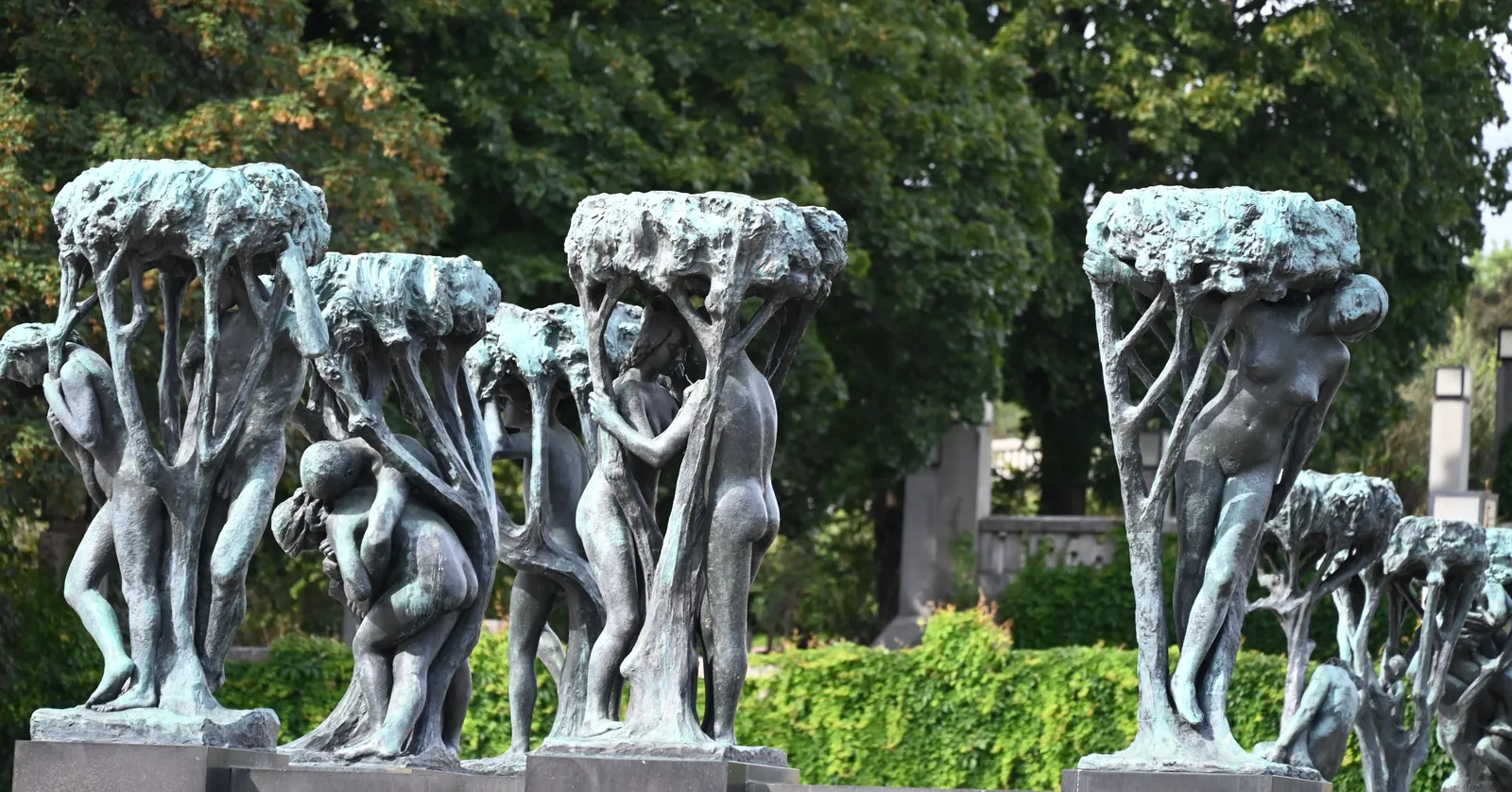
Frogner Park is Oslo’s west-end park, and besides the sculpture that fills it, it holds a bronze fountain ringed by 60 reliefs, an 18th-century manor with the city’s museum in it, and the studio Gustav Vigeland worked in for twenty years.
The fountain and its sixty bronze reliefs
Six figures hold the basin up, and around its edge run 60 separate bronze reliefs, each one a small scene, set into an apron of black and white granite mosaic covering some 1,800 square metres. Vigeland designed the whole thing for a site by the city’s parliament building, and it waited decades before it was put here instead, in 1924. The tree groups standing on plinths around it, human figures tangled in bronze branches, are part of the same composition rather than separate works, which is easier to see standing at the corner than from the axis.
Walking in costs nothing at any hour. If you would rather have the sequence explained as you go, there is a guided walk through the park that covers the fountain, the bridge and the plateau in one loop.
Frogner Manor and the city museum inside it
The south of the park is older than everything else in it. Frogner Manor went up in the 1750s as the main house of a large estate, half-timbered ranges around a courtyard with an arcade at ground level, and the park grew up around it rather than the other way about.
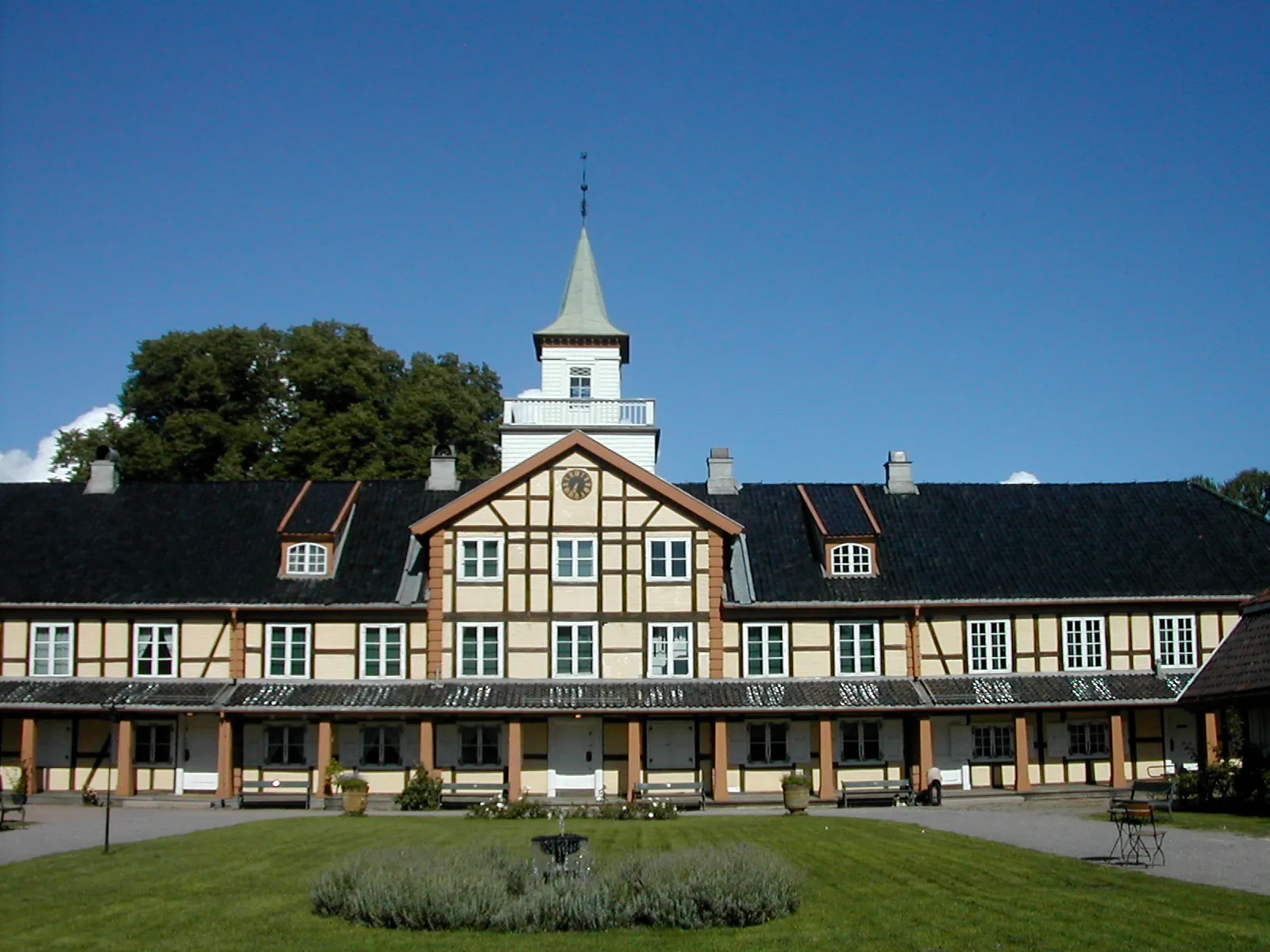
The Museum of Oslo has been in it since 1909, which makes it one of the longer-running tenancies in the city, and it covers how Oslo was built and lived in rather than its art. The interiors are worth the walk on their own: the rooms run from about 1750 to 1900 and were kept rather than restored to a single date. It opens Tuesday to Sunday from 11am, to 4pm most days and 6pm on Thursdays, and shuts on Mondays.
Gustav Vigeland’s own studio at Nobels gate
The building on Nobels gate along the park’s southern edge is not a museum that acquired Vigeland’s work; it is the workshop the city built for him. When Oslo demolished the quarter he lived and worked in, he signed a contract in 1921 handing over his entire output, finished and unfinished, in exchange for a purpose-built atelier that would become a museum after his death. He moved in in 1923, before it was finished, and worked there until he died in 1943.
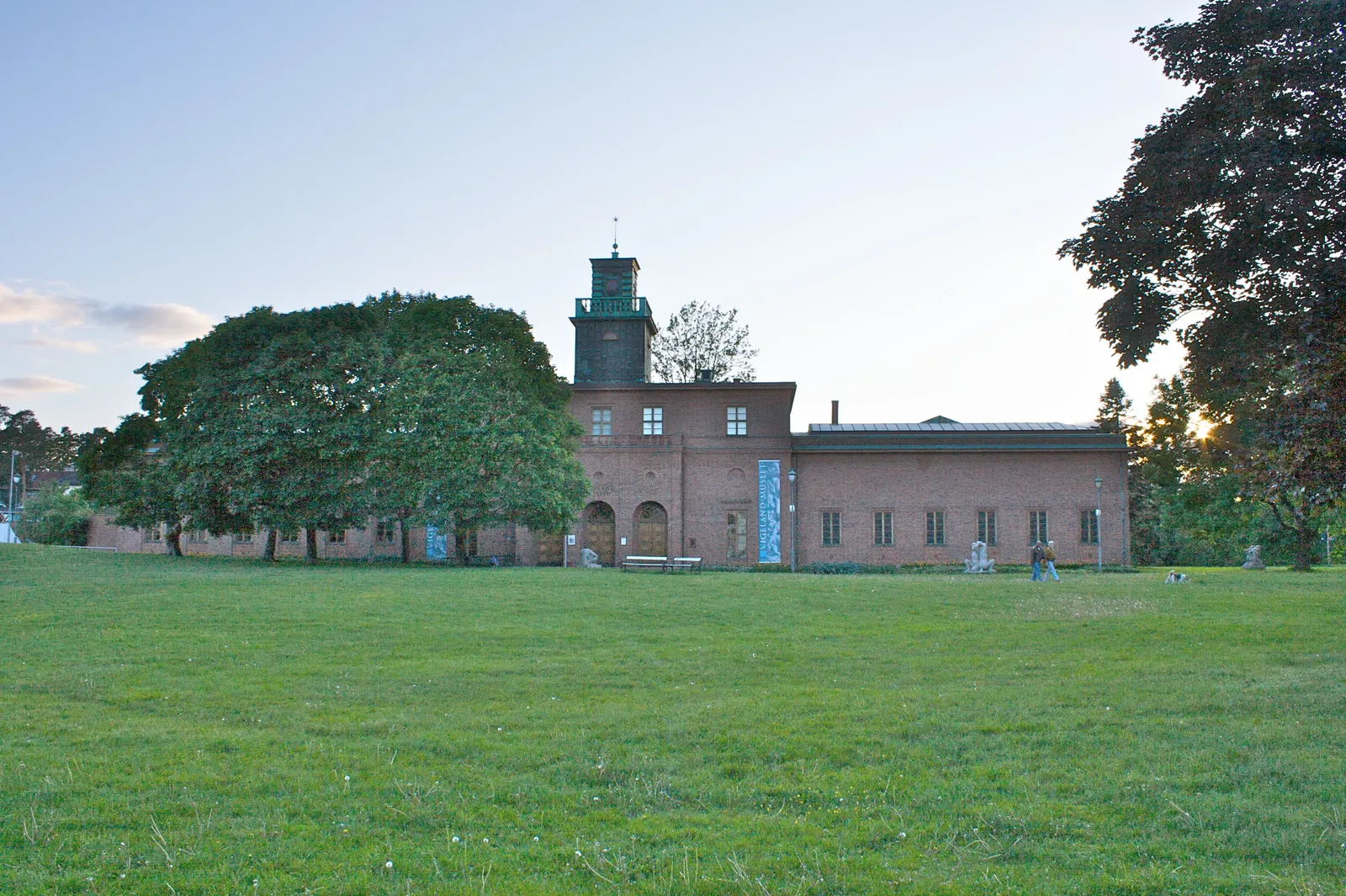
What is inside is the other half of what stands out in the park: plaster originals, woodcuts, drawings and his library, plus the second-floor apartment he lived in. His ashes are in the tower above it, in an urn he designed himself. Adult entry is 120 kroner, 70 for anyone from 18 to 25 and free below that, open Tuesday to Sunday, noon to 4pm for most of the year and 10am to 5pm through the summer.
The park’s long axis is gravel rather than paving for most of its 850 metres, and the Monolith sits on a plateau built as a flight of steps on all sides, so a wheeled suitcase is more work here than the flat ground suggests.
Emanuel Vigeland’s frescoed mausoleum at Slemdal
Gustav had a younger brother who made the stained glass in Oslo’s cathedral, and in 1926 Emanuel Vigeland built himself a windowless brick vault out at Slemdal, on the metro beyond the park, intending it from the start as both his museum and his tomb. He called it Tomba Emmanuelle.
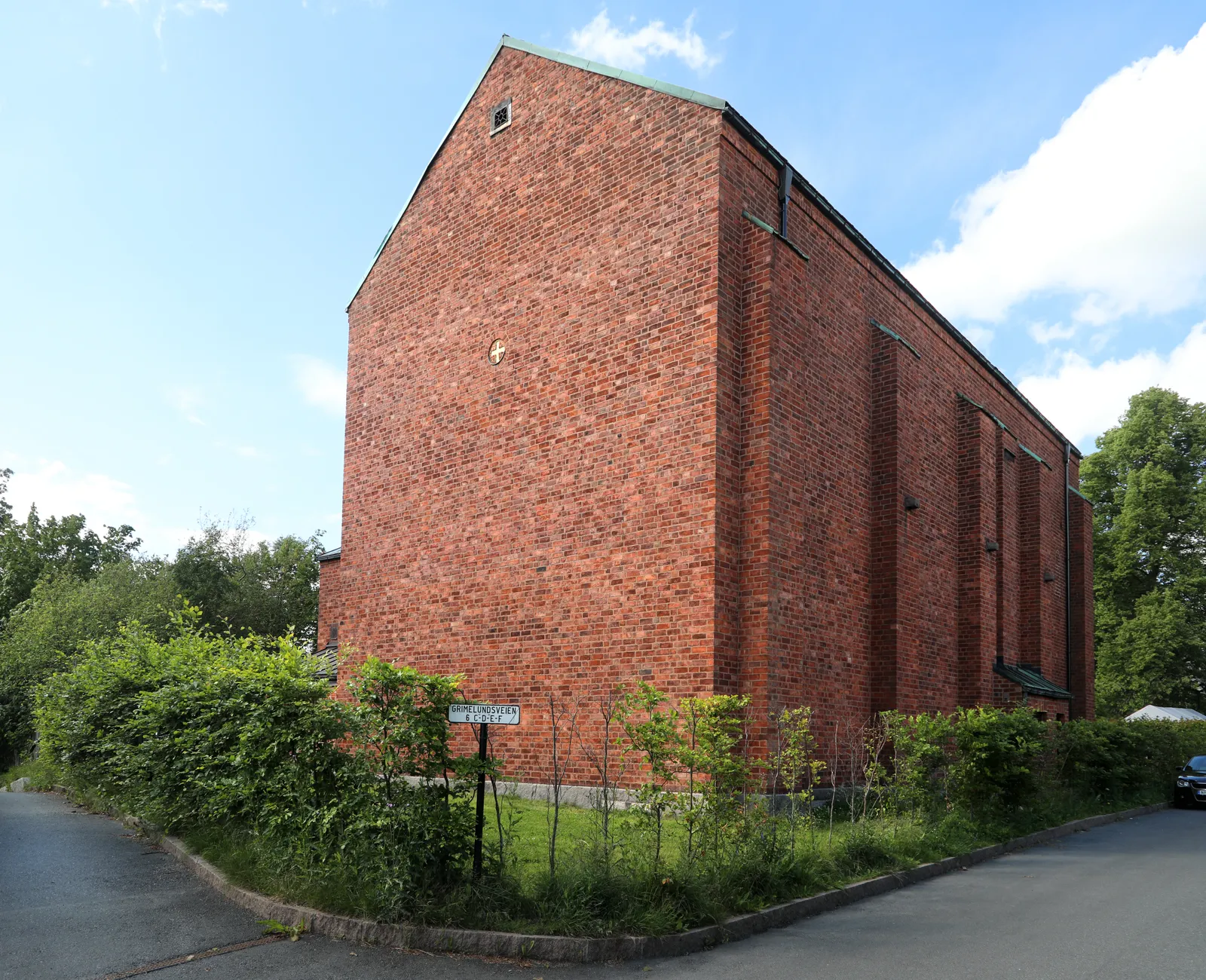
The inside is one barrel-vaulted room, dark, with 800 square metres of fresco covering every surface. The painting is called Vita and runs human life from conception to death, much of it explicitly so. The door is deliberately low, so everyone stoops going in. The acoustics are the other half of it: the vault holds a footstep for seconds, which stops most people talking without anyone asking them to. It opened to the public in 1959, eleven years after he died, and his ashes sit in an urn above the door.
It runs on Sundays, on tickets bought online beforehand rather than at the door, and the room is kept dark enough that a phone torch earns its place. That makes it a poor fit for a tight schedule and a very good one for a long Sunday layover, which is not a sentence that applies to much else in Oslo.
No airport train from Majorstuen station
Majorstuen, the interchange at the park’s eastern end, has every metro line and several tram routes through it and no airport service at all, so the trip out is two legs rather than one. The metro or a tram gets you to Nationaltheatret or Oslo S in a few minutes; Flytoget, the airport express, leaves both for Oslo Airport, Gardermoen at 268 kroner, and Vy’s regional trains run the same line for roughly half that.
Two and a half hours from the park gates covers the change, the ride and check-in without hurrying. If the day is shorter than that, the harbour end of the city is the better use of it, and the main Oslo walk stays inside a fifteen-minute radius of the water rather than sending you out west and back.
Frequently asked questions
What else is in Frogner Park besides the sculptures?
Frogner Manor sits in the southern corner of it, a country house with interiors running from about 1750 to 1900, and the Museum of Oslo has been inside it since 1909. The park also holds the country's largest rose collection, roughly 14,000 plants across 150 species, grown without chemical treatment. The park itself has no gate, no ticket and no closing time; the manor and the museums in and beside it all keep hours and all shut on Mondays.
Is Frogner Park manageable with elderly parents or a wheelchair?
The long axis through the park is level, but it is gravel rather than paving for most of its 850 metres, which is slow going for small wheels and hard work in the wet. The fountain and the bridge with its bronze figures are both reachable without steps. The Monolith is the exception: the plateau it stands on is built as a flight of granite steps on every side, so the column can be seen from below but not approached on the level. The two museums, at Nobels gate and in the manor, both have level entrances.
Can you just turn up at the Emanuel Vigeland mausoleum?
No, and this is the most common way people miss it. The museum at Slemdal opens on Sundays, tickets are booked online in advance rather than sold at the door, and the room is deliberately kept dark, so a phone torch is genuinely useful once you are inside. Set aside a full afternoon: it is out on the metro beyond the park, and the visit is short but the journey is not.
How do you get from Frogner Park to Oslo Airport?
In two legs. No airport train calls at Majorstuen, the interchange at the park's eastern end, so you take the metro or a tram in to Nationaltheatret or Oslo S first, then Flytoget, the airport express, which runs from either for 268 kroner and reaches Oslo Airport, Gardermoen in 19 to 23 minutes. Vy's regional trains cover the same stretch for roughly half. Allow two and a half hours from the park gates to the gate at the airport.