Holmenkollen Layover in Oslo: The Ski Jump
Part of the full Oslo Layover Guide: The Opera Roof From OSL
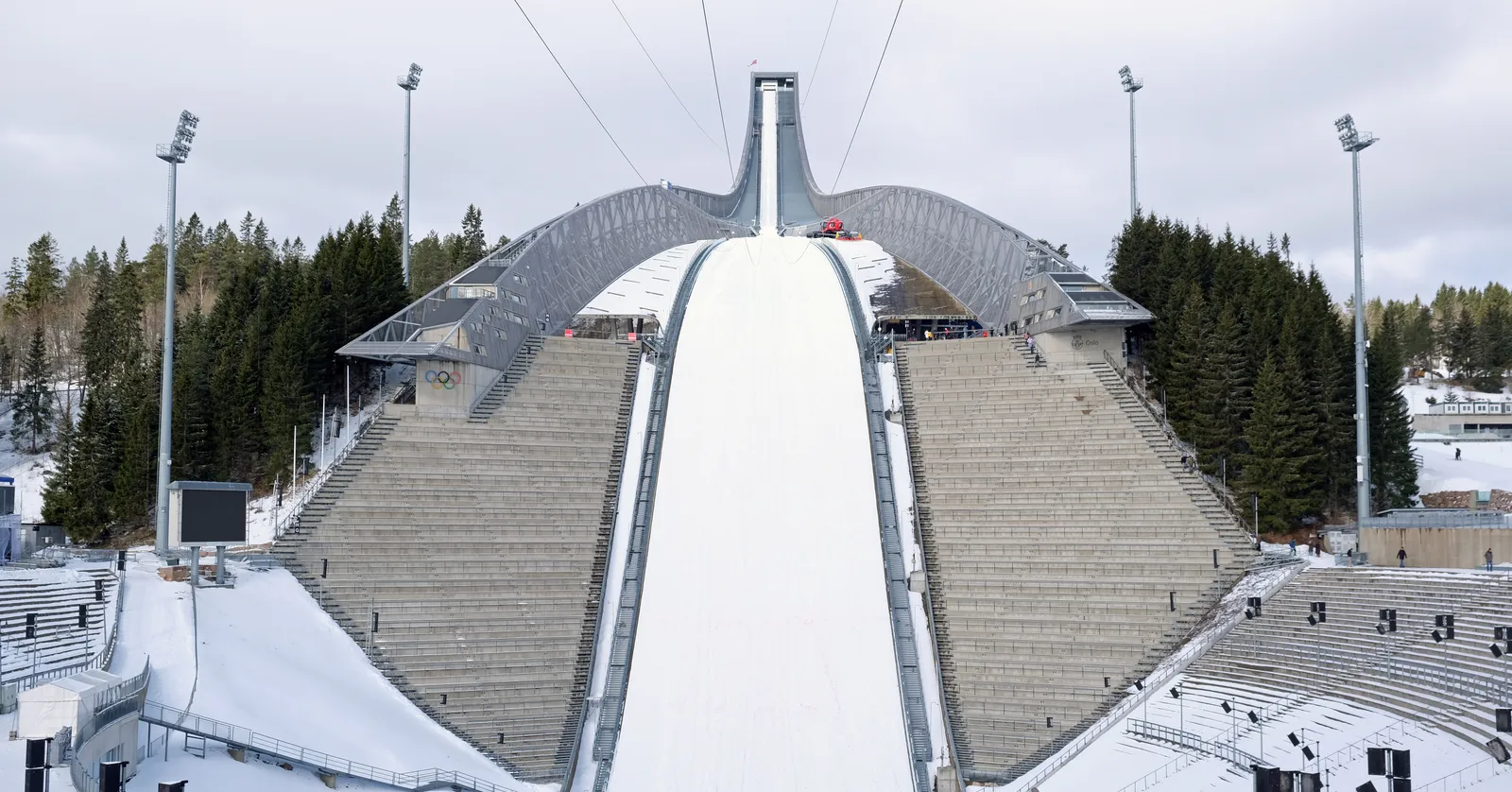
Holmenkollen is the ski jump on the forested ridge above Oslo, a little over 20 minutes out by metro, with the world’s oldest ski museum cut into the hill underneath it and a viewing platform on top of the tower that the same ticket covers.
The nineteenth version of the Holmenkollen ski jump
There has been a jump on this hill since 30 January 1892, and it has been pulled down and rebuilt 19 times since, which is roughly once every seven years: a stone take-off in 1910, an in-run superstructure in 1914, another in 1928, and so on through the century. The one standing now went up between 2008 and 2010, after the previous tower was demolished outright.
The design came out of a competition with 104 entries, won by Julien De Smedt with Florian Kosche, and the steel structure cost 715 million kroner. It is rated HS134 with a K-point at 120 metres, and the bowl below it holds 70,000 people. The arena has run the 1952 Winter Olympics and four World Championships, in 1930, 1966, 1982 and 2011, which is why a hill in a suburb has grandstands on this scale.
The world’s oldest ski museum, cut into the hill
The museum opened in 1923, before any other museum devoted to skiing anywhere, and moved to this spot in 1951 during one of the rebuilds. It is inside the hill rather than beside it, entered through a tunnel driven under the landing slope.
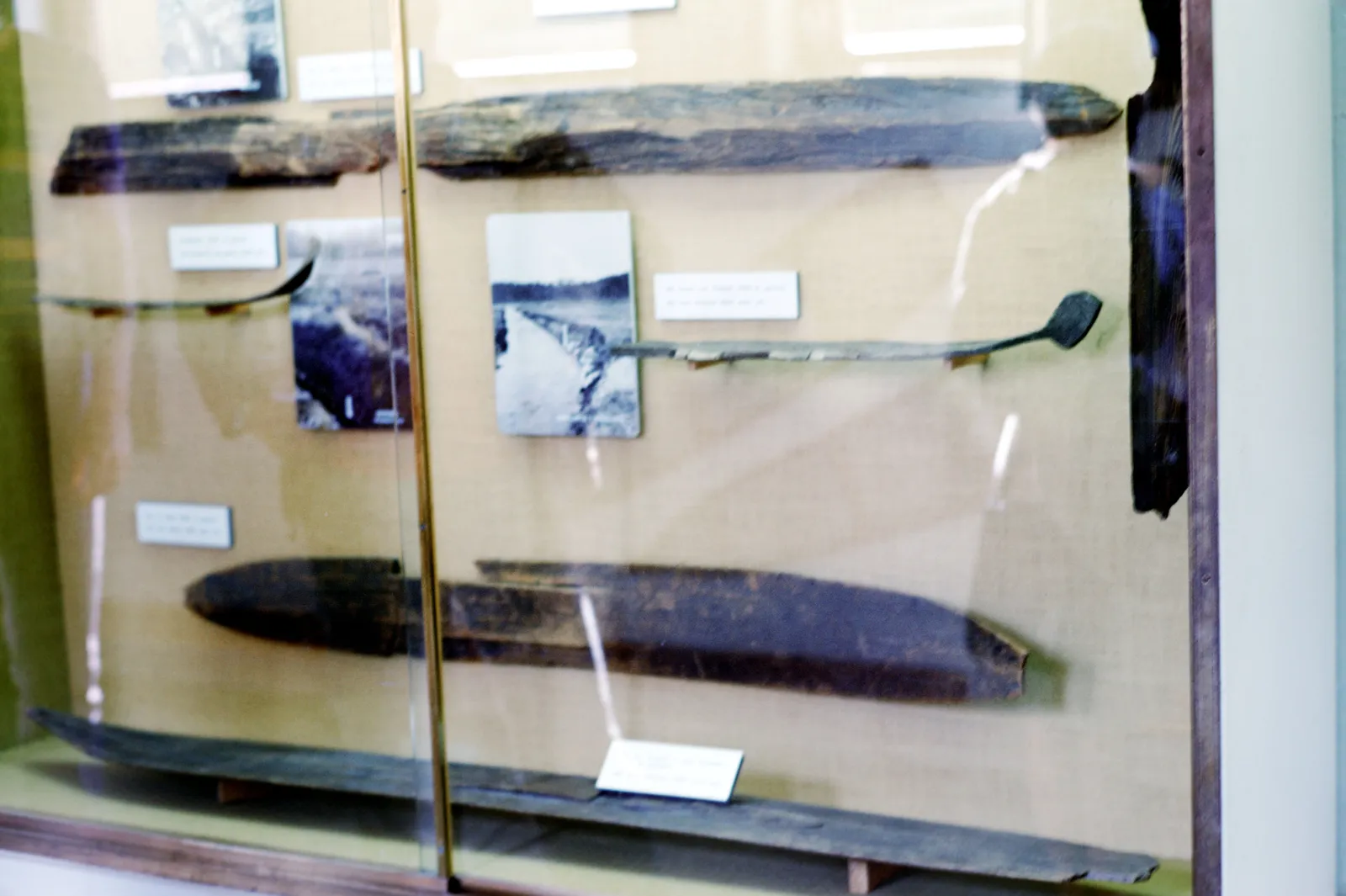
What it covers is 5,000 years of the subject, and the range is wider than the name suggests. There are Stone Age rock carvings of figures on skis, the same era as the hunting carvings on the Ekeberg ridge across the city, though these ones have skis on. There is Viking-age equipment. And there is the gear Fridtjof Nansen and Roald Amundsen took into the Arctic and Antarctic, which is the part most people are not expecting to find inside a ski jump.
One ticket covers the museum and the tower: 200 kroner for an adult, 150 under 30, 100 for children from 6 to 17 and 500 for a family of two adults and two children. It opens daily, 10am to 5pm from May to September and 10am to 4pm the rest of the year. Since the trip up also needs two metro fares, an Oslo city pass covering transport and entry together can work out cheaper here than almost anywhere else in the city, because this is the one attraction where the journey costs real money too.
The view straight down the landing hill from the tower
A lift and a short flight of steps put you on an open deck at the top of the in-run, looking down the slope ski jumpers launch from. The drop in front of you is the point: the landing hill falls away to the arena bowl, and past it the whole city and the fjord open out, because the jump is already high on the ridge before the tower adds its own height.
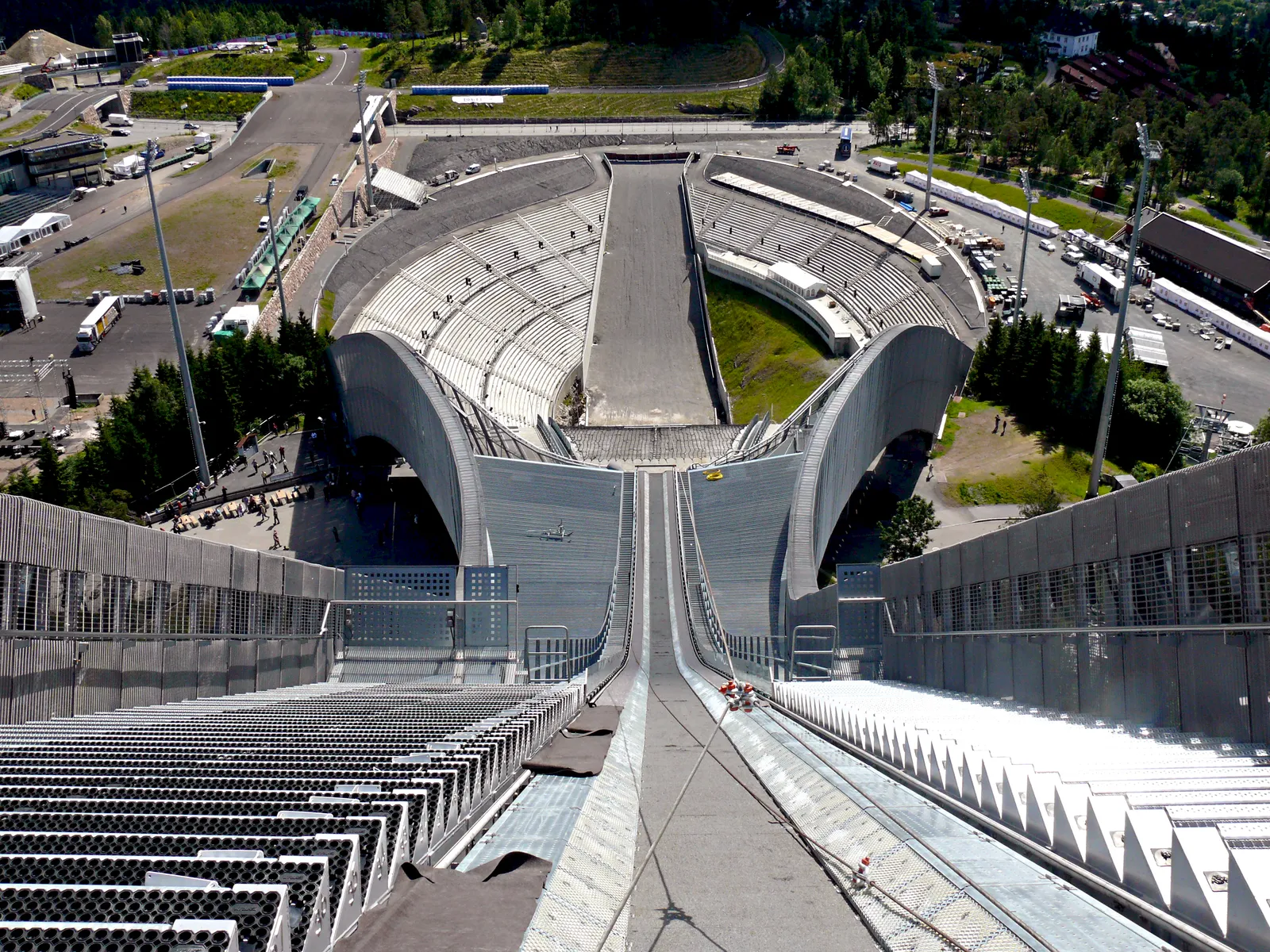
The arena at the bottom is free to walk into on any day without an event on, and it is worth the few minutes: standing at the foot of the landing hill and looking back up is the only way to get the gradient, which the view from above flattens out completely.
This is a single-destination trip rather than a walk with stops on it, and the last 300 metres from the station are steep, so a bag makes a real difference to a climb you have to do twice.
About ninety minutes from Holmenkollen to the airport
The metro runs down from Holmenkollen to Nationaltheatret and Oslo S in a little over 20 minutes, and Flytoget, the airport express, leaves both of those for Oslo Airport, Gardermoen every ten minutes, taking 19 minutes at 268 kroner. Vy’s regional trains cover the same line for roughly half the fare and a few minutes longer.
Forty minutes of that is sitting on trains; the rest is the walk down to the station and the two waits, which is why 90 minutes is the number to work with and two and a half hours the one to actually plan against. Anything tighter and the ridge is the wrong choice: the main Oslo route keeps everything within a quarter of an hour of the harbour instead of putting a mountain railway between you and check-in.
Frequently asked questions
Is Holmenkollen worth the trip during a layover?
Only if you have the hours to spend on one place rather than several. The metro from the centre takes a little over 20 minutes each way, then it is about 300 metres of steep uphill from the station, so the round trip is close to three hours once you have looked at anything. That is the whole shape of this trip: it is an excursion with a single destination, not a stop you fit between others. With four hours or more it works well, because everything is in one place at the top.
What is actually inside the ski museum?
More than skis, which is the surprise. It was founded in 1923, making it the oldest ski museum anywhere, and it runs 5,000 years of the subject: Stone Age rock carvings of people on skis, Viking-age equipment, and the gear Fridtjof Nansen and Roald Amundsen took to the poles, which is not what most visitors climb the hill expecting to find. It sits inside the hill under the landing slope, reached through a tunnel, and it moved here from Frognerseteren in 1951.
Is Holmenkollen worth it in the rain?
Half of it is. The ticket buys two things, and low cloud takes one of them away: the tower platform is an open viewing deck whose whole point is seeing Oslo and the fjord from the top of a tower on a hill that is already high above the city. The museum underneath is inside the hill and unaffected, and the arena at the foot of the jump is free to walk into whatever the weather. If the forecast is solid grey, the honest answer is to spend the day lower down instead.
How long does it take to reach Oslo Airport from Holmenkollen?
About 90 minutes of travelling, so budget two and a half hours to the gate. The metro runs from Holmenkollen down to Nationaltheatret or Oslo S in a little over 20 minutes, and Flytoget, the airport express, leaves both for Oslo Airport, Gardermoen every ten minutes, 19 minutes and 268 kroner. Vy's regional trains use the same line for roughly half the fare. The uphill walk at the start and the two waits in the middle are what turn 40 minutes of trains into an hour and a half.