Ekebergparken Layover in Oslo: Rock Carvings
Part of the full Oslo Layover Guide: The Opera Roof From OSL
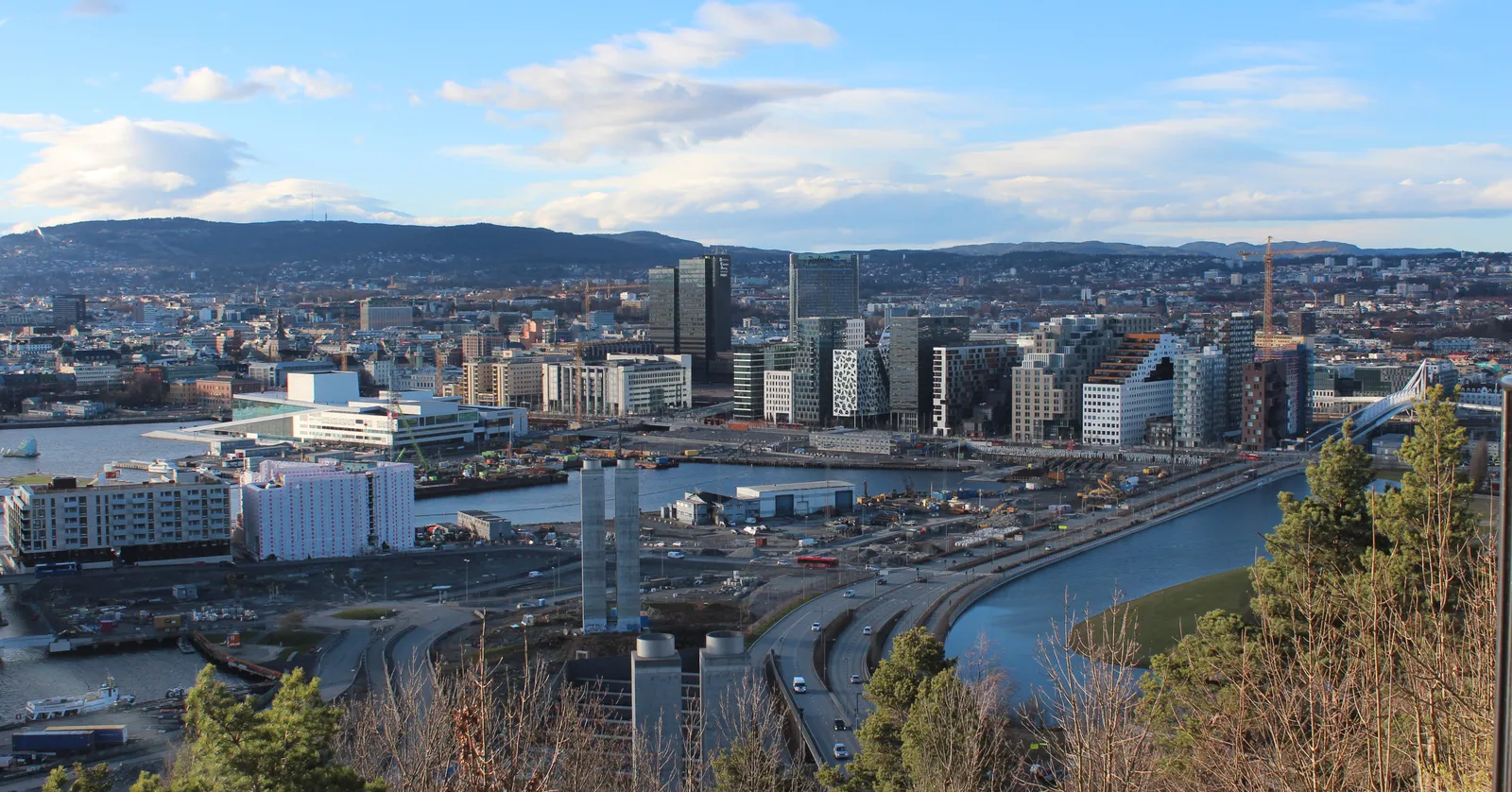
Ekebergparken is the wooded ridge on the south-east side of Oslo’s harbour, about ten minutes above the centre by tram, with rock carvings some 5,000 years old on its lower slope, a functionalist restaurant of 1929 further up, and the whole city laid out below it.
The ridge Oslo bought in 1889, and what has been added since
Oslo bought this hillside in 1889 and made it public ground, which is the part of its history that gets least attention: it was a park for the people in the tenements below long before anyone put art on it. The German occupation used the ridge for its position over the harbour and left a war cemetery on it. The sculpture park is recent by comparison, opened on 26 September 2013 across roughly ten hectares of woodland.
It exists because one man paid for it. Christian Ringnes, a property investor and collector, financed the whole thing, and the years leading up to it were noisy: formal complaints to the county governor and two government departments, protests outside the city hall, and a campaign group that went as far as pressing charges against the council. The rezoning passed anyway, in August 2011, by 57 votes to 2. The park charges nothing and never closes, which was part of the deal. If you would rather not work out the tram, the sightseeing bus that loops the city stops here as well as at the Opera House.
The other addition worth knowing about went up long before the art. Lars Backer built the restaurant at Kongsveien 15 in 1929, one of the earliest functionalist buildings in the country: flat roofs, ribbon windows, a curved corner tower with an arched entrance under it, and the plan arranged so that as many tables as possible got a window.

It spent decades as one of the city’s dancing restaurants, then went downhill through the 1980s and closed outright in 1997. A long restoration brought it back in March 2005. You do not have to eat there to use the terrace it sits on, which is where the view is anyway, and the walk up to it from the tram is the steepest part of the ridge.
The 5,000-year-old rock carvings below Kongsveien
A preparatory worker from the University’s antiquities collection was out on a Sunday walk on 12 September 1915 when he noticed marks on a rock face beside what is now Karlsborgveien. He came back the next day with the archaeologist Jan Petersen and between them they made out six or seven figures. Thirteen are known now.
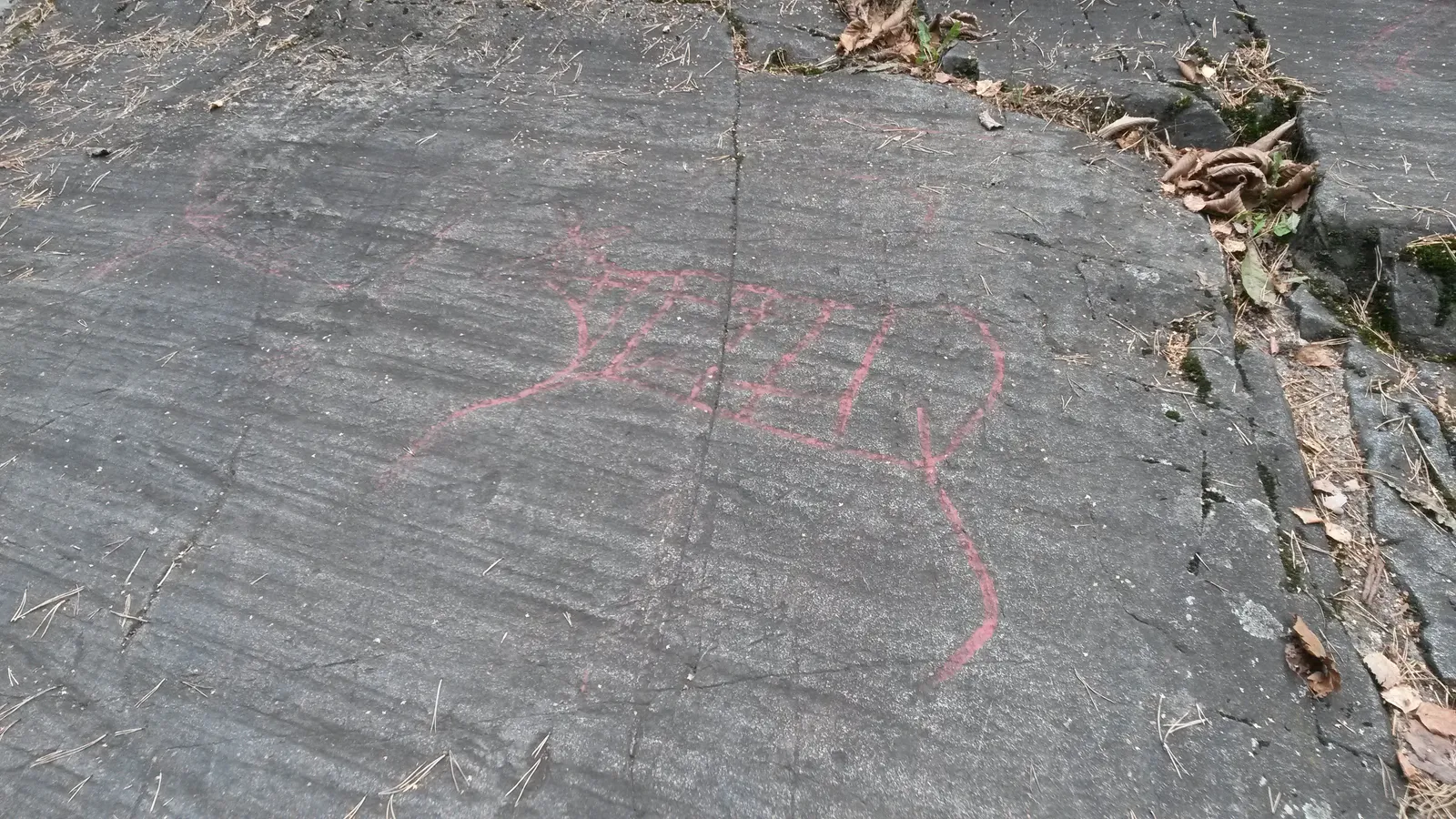
Ten of them are animals, mostly elk and deer. One reads as a human. One is a pointed oval that archaeologists generally take for a trap, and one is a bird, which suggests birds were being trapped too. The working theory is that the carvings were a kind of hunting magic, meant to steer animals down the ridge through a narrowing gap and out towards the water. They are about 5,000 years old, they sit a few metres from a tram line, and they were painted over in red in 2011 because otherwise almost nobody could see them.
The path down to them leaves the road and drops through woodland rather than pavement, which is the part of this trip that argues against carrying anything; the ridge also faces the light, so for months of the year the whole visit has to fit inside an afternoon that ends early.
About forty minutes to the airport from the top of the ridge
The tram down from the park to Oslo S takes roughly ten minutes, and Flytoget, the airport express, then covers Oslo S to Oslo Airport, Gardermoen in 19 minutes at 268 kroner, six departures an hour. Vy’s regional trains use the same line for around half the fare and a few minutes longer. Adding the wait at both ends, 40 minutes of travel is the honest figure, and two hours from the ridge to the gate is the number to plan against.
That makes this a poor choice for a tight connection and a good one for a long afternoon, since almost everything here is outdoors and free. If the schedule is tighter than that, the main Oslo route stays on the flat by the water instead of sending you up a hill and back down it.
Frequently asked questions
What is there to see in Ekebergparken apart from the sculptures?
Three things worth the climb on their own. A field of rock carvings about 5,000 years old sits on the hillside below Kongsveien. Ekebergrestauranten, a functionalist building of 1929 by Lars Backer, stands further up with the city laid out below it. And the ridge itself has been public ground since 1889, when Oslo bought it as a park for the people living in the tenements underneath, which is a century older than anything the sculpture park added.
Where exactly are the Ekeberg rock carvings?
On a rock face by Karlsborgveien, below Kongsveien and south of the restaurant, a few metres from the tram line rather than deep in the woods. There are thirteen figures: ten animals, mostly elk and deer, one that reads as a human, a pointed oval usually interpreted as a trap, and a bird. They were picked out in red paint in 2011, which is the only reason most visitors spot them at all. Nothing is fenced and nothing is charged.
Is Ekebergparken worth going up after dark?
For the view, yes; for the art, not really. The park has no gate and no closing hour, so the city spread out below with its lights on is available whenever you get there, and in midwinter that is from about half past three in the afternoon, because Oslo loses the daylight early. The sculptures are another matter, since they are scattered through woodland well off the main paths and are hard to find without light.
How long should you allow for Ekebergparken?
Two hours covers it comfortably, three if you want the restaurant terrace as well. The tram up is about ten minutes from the centre, the climb from the stop is short but steep, and the two things most people come for, the carvings and the view, are a few minutes apart once you are on the ridge. The sculpture is spread over roughly ten hectares of woodland, so seeing all of that is a longer walk than seeing the rest of the park put together.