Casablanca Layover: Hassan II Mosque, CMN
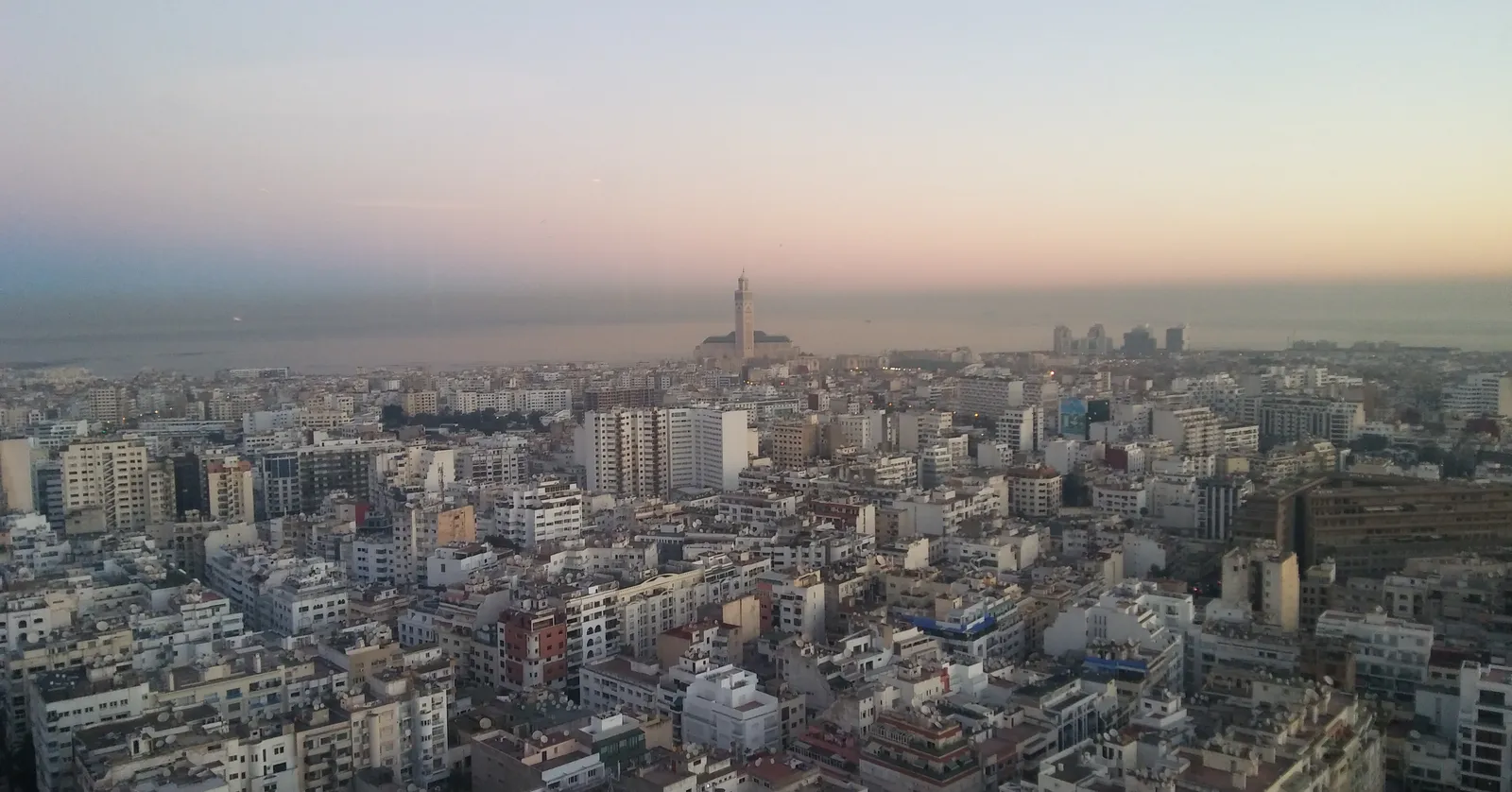
Casablanca’s Hassan II Mosque stands partly out over the Atlantic at the end of a two-kilometre walk along the shore from the port, and the walled old medina, the civic square and the market hall on Boulevard Mohammed V all sit in between.
The Hassan II Mosque stands partly out over the Atlantic
Morocco’s largest mosque occupies the western end of Casablanca’s shoreline, on a platform built out above the water so that part of the prayer hall is over the sea rather than the land. Work started in July 1986 and the building was inaugurated on 30 August 1993. The minaret runs 210 metres up, the second tallest in the world, and the halls below it hold 25,000 people, with room for 80,000 more on the esplanade outside.
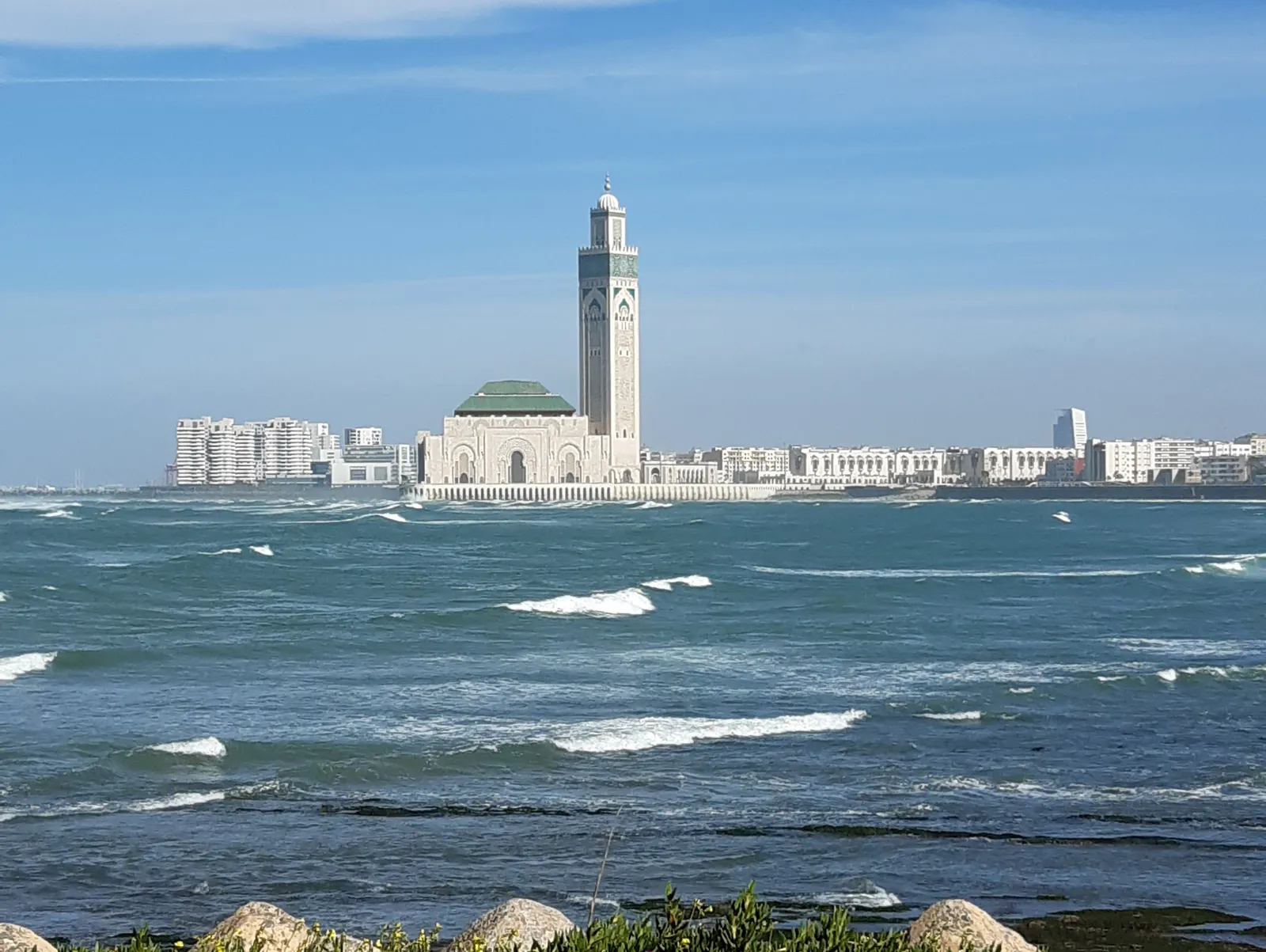
Getting inside takes planning, because this is not a building you wander into. Visitors who are not Muslim are admitted only on the mosque’s own guided tour, at set times: 9:00, 10:00, 11:00, 12:00, 15:00 and 16:00 from Saturday to Thursday, and 9:00, 10:00, 15:00 and 16:00 on Friday. A foreign adult pays 140 dirhams, the museum beside it is a separate 30, and the tour covers the prayer hall, the minaret and the ablution rooms in the basement. Shoulders and knees have to be covered, and shoes come off at the door and travel with you in a bag the staff hand out. If you would rather have a slot held than turn up and hope one is free, admission with the guided tour can be booked in advance.
One rule at the door decides what you do with your bag beforehand: suitcases and large bags are not allowed in, and go behind the ticket desk while you are on the tour.
The old medina is where Casablanca got its name
The 1755 earthquake that destroyed Lisbon also flattened Anfa, the port town that stood here. Sultan Mohammed ben Abdallah rebuilt it and called the new town ad-Dar al-Bayda, the white house, which Spanish traders working the coast turned into Casablanca. That rebuilt town is the medina you walk into from United Nations Square: an irregular walled quarter about a kilometre long and half a kilometre across, roughly sixty hectares, with three original gates, one facing the harbour, one opening onto the old grand market, one pointed south toward Marrakech.
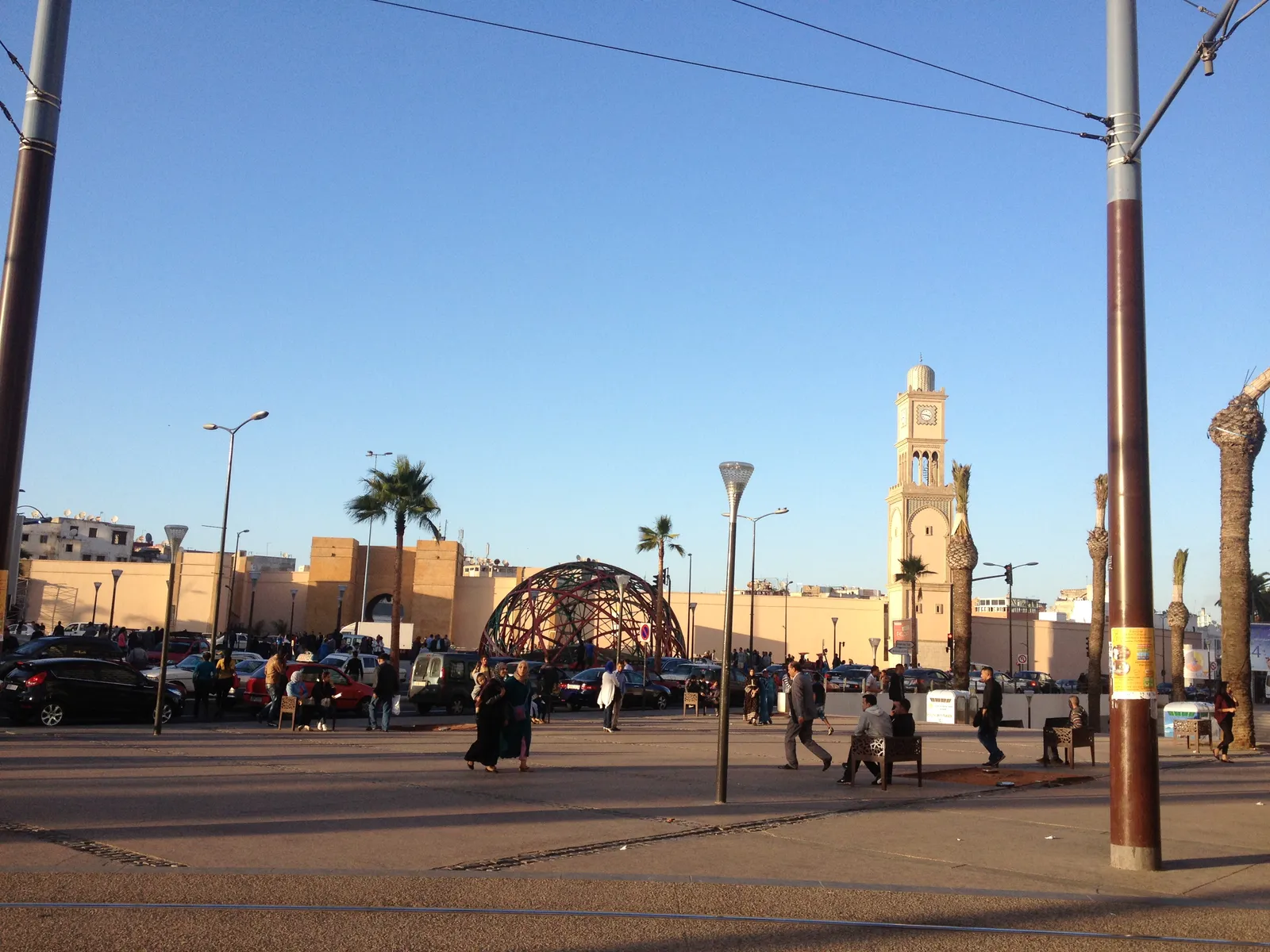
The clock tower above the wall is younger than it looks. A French officer had the original built in 1908, it was taken down forty years later because it had been put up badly, and what stands there now is a close copy raised in the 1990s. On the harbour side of the quarter, the sqala is the surviving piece of the 18th-century fortifications: a stone bastion with its cannon still lined up along the parapet, looking out over the port.
Six civic buildings frame Mohammed V Square
Mohammed V Square opens off Avenue Hassan II, and every building around it went up inside seventeen years. Clockwise from the east: the courthouse, 1923, by Joseph Marrast; the former military circle, 1925, by Marius Boyer; Bank Al-Maghrib, 1937, by Edmond Brion; the central post office, 1920, by Adrien Laforgue; the prefecture building with the clock in its tower, 1937, Boyer again; and the French consulate, 1922, by Albert Laprade. The style they share is Mauresque, which in practice means a European public building finished in Moroccan work: zellige tilework, carved stucco, geometric latticework over the windows, green tiled roofs on top.
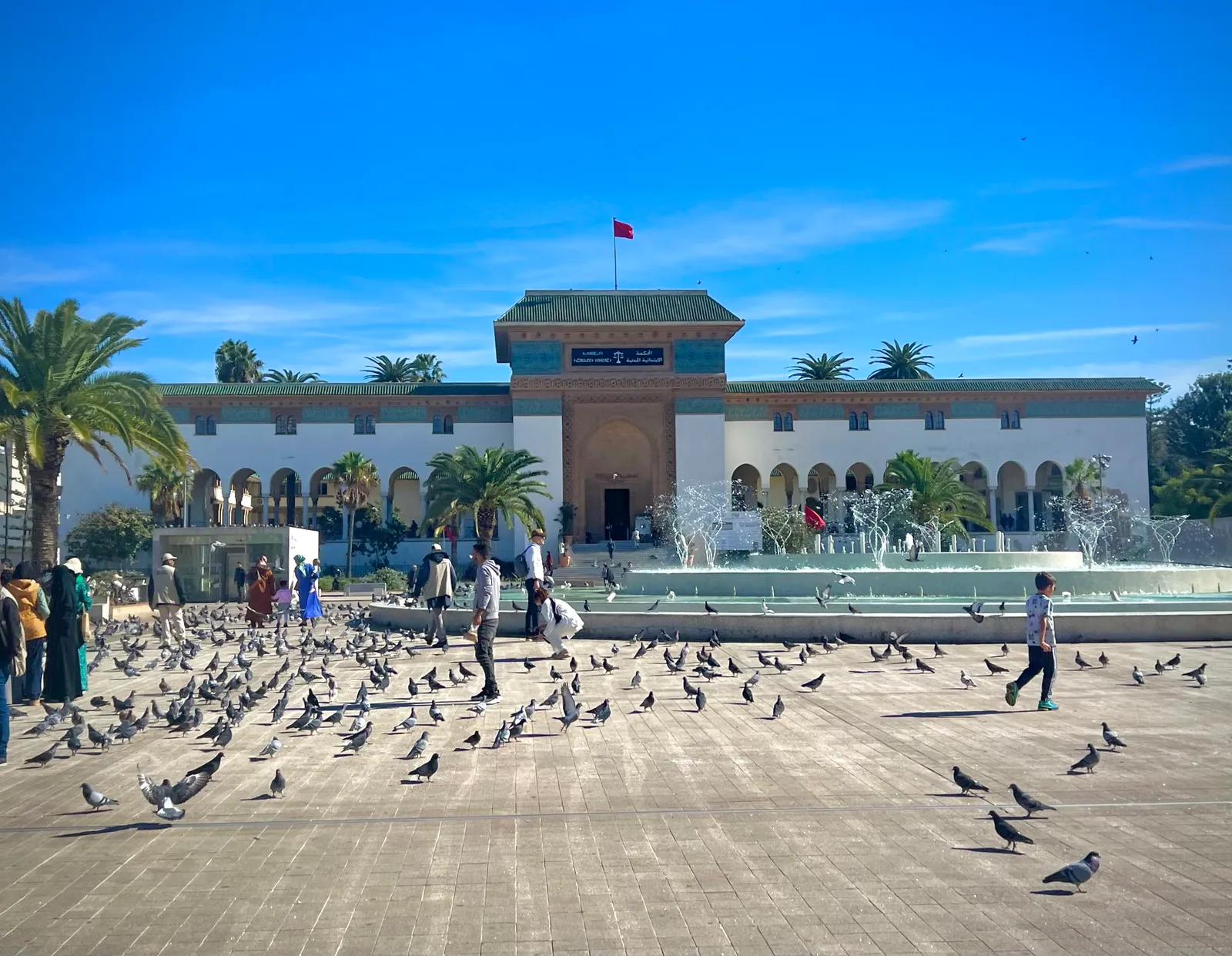
The fountain in the middle is a local fixture on its own account, the one everyone calls the pigeons’ fountain, and the birds are why. About eight minutes’ walk west, Sacré-Coeur is worth the detour if 1930s concrete interests you at all: Paul Tournon designed it in Art Deco, it lost its congregation in 1956 when Morocco became independent, and it has spent the decades since as an exhibition hall rather than a church.
The Marché Central’s fish hall under an octagonal cupola
Boulevard Mohammed V carries the city’s Art Deco frontages, arcaded ground floors and cinema facades among them, and the Marché Central sits along it behind a green-tiled Moorish gateway set into a plain white wall. Pierre Bousquet designed it and it was built between 1917 and 1920, a European market hall crossed with neo-Moorish detailing: rows of arcades, covered walkways, and an octagonal cupola over the centre.
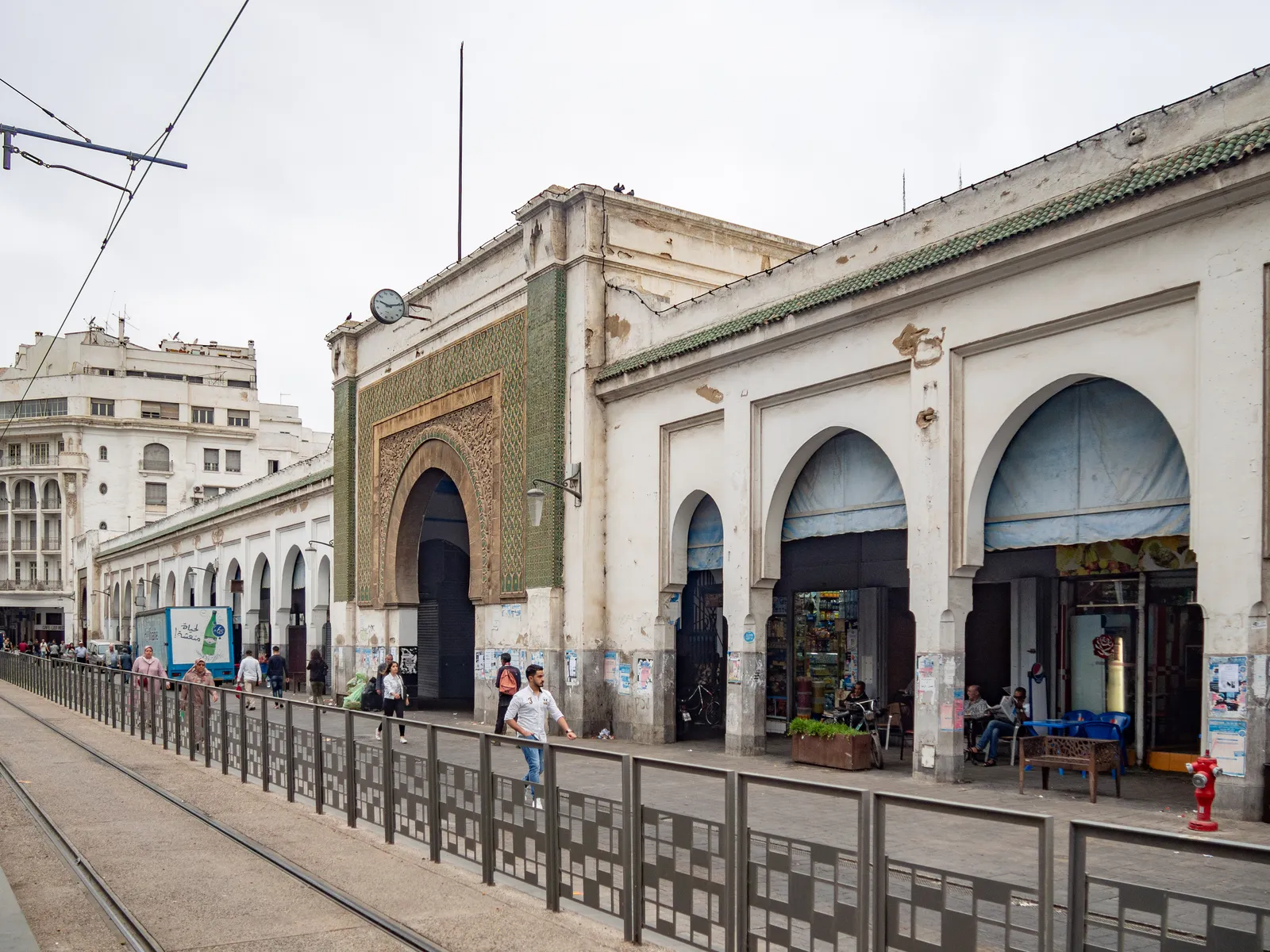
Under that cupola is the fish rotunda, and it is the reason to come in rather than walk past. Casablanca is an Atlantic port, the catch arrives daily, and the stalls in the round hall are stacked with it. Walking through costs nothing. A few hundred metres further along the boulevard, the Rialto has been standing since 1929, a streamlined white corner block with a stepped dome and its name still in red letters across the parapet; Pierre Jabin built it to seat 1,350, and Josephine Baker sang in it for American troops in 1943.
Carved cedar and zellige inside the Mahkama du Pacha
Boulevard Victor Hugo runs through the Habous quarter, about two and a half kilometres south of the port, and the Mahkama du Pacha stands on it: a long white building under green pyramidal roofs, built as a courthouse and reception palace and used over the years as a residence and a jail as well. The pasha of Casablanca commissioned it in 1930, the French architect Auguste Cadet designed it, and construction ran from 1941 to 1942, through the war, which is why it was raised brick by brick in the traditional way rather than in poured concrete: the modern materials simply were not available.
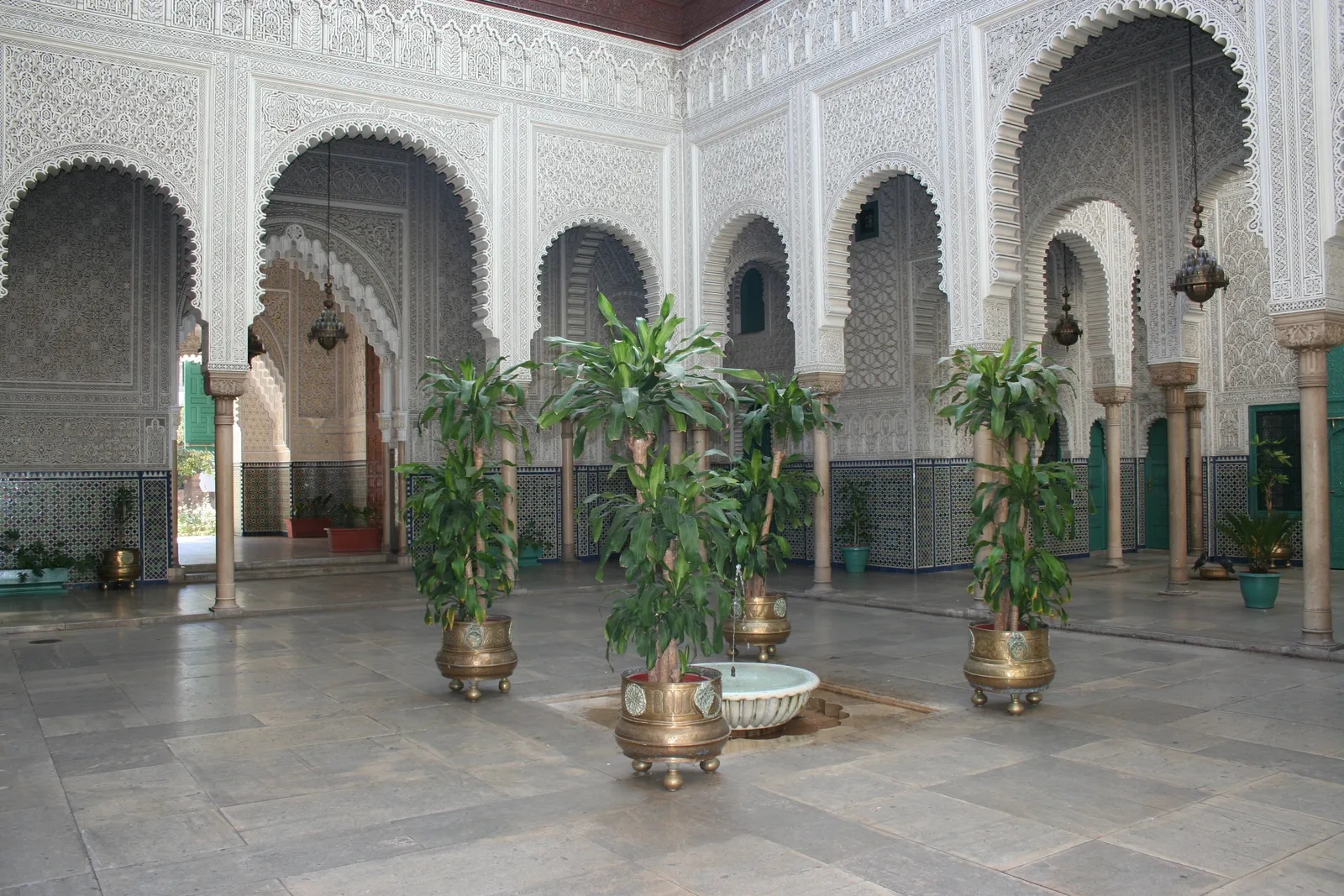
Inside it is Mauro-Andalusian throughout: horseshoe arches on carved columns, walls of white stucco fretwork, zellige along the base, cedar ceilings cut and painted by hand. The quarter around it is worth the extra hour too. The Habous was laid out in the 1930s as a planned new medina, so its lanes are arcaded and regular rather than tangled, and the shops under them run to olives, brassware and books.
The airport train leaves Casa-Port once an hour
The ONCF line out to Mohammed V International Airport (CMN) starts at Casa-Port, next to the old medina, calls at Casa-Voyageurs and Oasis on the way, and ends under the terminal. Departures come about once an hour, the first around 04:50 and the last around 22:50, and a second-class ticket runs about 50 dirhams. The ride is roughly 35 minutes from Casa-Voyageurs and closer to 45 from Casa-Port, but the number that actually matters is the hourly gap: miss a departure and you have lost an hour, not ten minutes, so work back from your boarding time with that in mind. Petits taxis and ride-hailing cars cover the same run on no timetable at all, which is what they are for when the arithmetic gets tight.
The Oasis stop on that line is worth knowing about. Eleven minutes’ walk from the platform, on Rue Chasseur Jules Gros, the Museum of Moroccan Judaism holds three rooms of ritual silver, Torah scrolls, Berber jewellery and reconstructed synagogue interiors, and it is the only museum in the Arab world devoted to Jewish life. Admission is 50 dirhams, it opens Monday to Friday and again on Sunday, and it closes on Saturdays for Shabbat, so it fits a weekday layover and not a weekend one.
Whichever way you go back, the thing you are carrying decides how much of the day you actually get. A mosque that will not take a suitcase past the desk, sixty hectares of medina lanes and a market floor you have to walk through are all easier to spend five hours on with your hands free than with a bag behind you.
Frequently asked questions
What should I do during a layover in Casablanca?
Start at the Hassan II Mosque on the Atlantic shore, the one stop here that charges and the one that has to be timed: non-Muslim visitors get in only on a scheduled guided tour, 140 dirhams for a foreign adult. The walk back east along the water passes the old medina, sixty hectares of walled lanes behind an 18th-century sea bastion, and drops into the centre at Mohammed V Square, where six civic buildings from 1920 to 1937 stand around a fountain. The Marché Central's fish hall on Boulevard Mohammed V is five minutes further on and costs nothing to walk through. Five to six hours between landing and boarding covers all of it; the Habous quarter, two and a half kilometres south, is the piece to drop if you are tight.
Can I go inside the Hassan II Mosque without a guide?
No. Visitors who are not Muslim are admitted only on one of the mosque's own scheduled guided tours, which run Saturday to Thursday at 9:00, 10:00, 11:00, 12:00, 15:00 and 16:00, and on Friday at 9:00, 10:00, 15:00 and 16:00 only. A foreign adult pays 140 dirhams, the museum next door is a separate 30, and the tour takes in the prayer hall, the minaret and the ablution rooms underneath. Land after four in the afternoon and the interior is closed to you for the day, though the laser at the top of the minaret is switched on in the evening and points toward Mecca.
Can I get Moroccan dirhams before I land?
Not in any useful quantity. The dirham is a closed currency: it is not legally traded outside Morocco, most bureaux de change abroad will not stock it, and there is a cap on how much you may carry back out of the country, so change money or draw cash after you arrive rather than before. Cards are accepted in the larger places, but the medina stalls and the small cafés around the market run on cash.
How do I get back to Mohammed V airport, and how much time should I leave?
The ONCF airport train runs from Casa-Port through Casa-Voyageurs and out to the terminal roughly once an hour, first departure around 04:50 and last around 22:50, and second class costs about 50 dirhams. Budget around 35 minutes from Casa-Voyageurs and closer to 45 from Casa-Port, and remember that the gap between departures is the real risk here: miss one and the next is a full hour away, so leave for the station an hour earlier than the ride time alone suggests. A petit taxi or a ride-hailing car covers the same distance without the timetable, which is worth paying for if your flight is tight.