Casablanca Layover Near Casa-Port Station
Part of the full Casablanca Layover: Hassan II Mosque, CMN
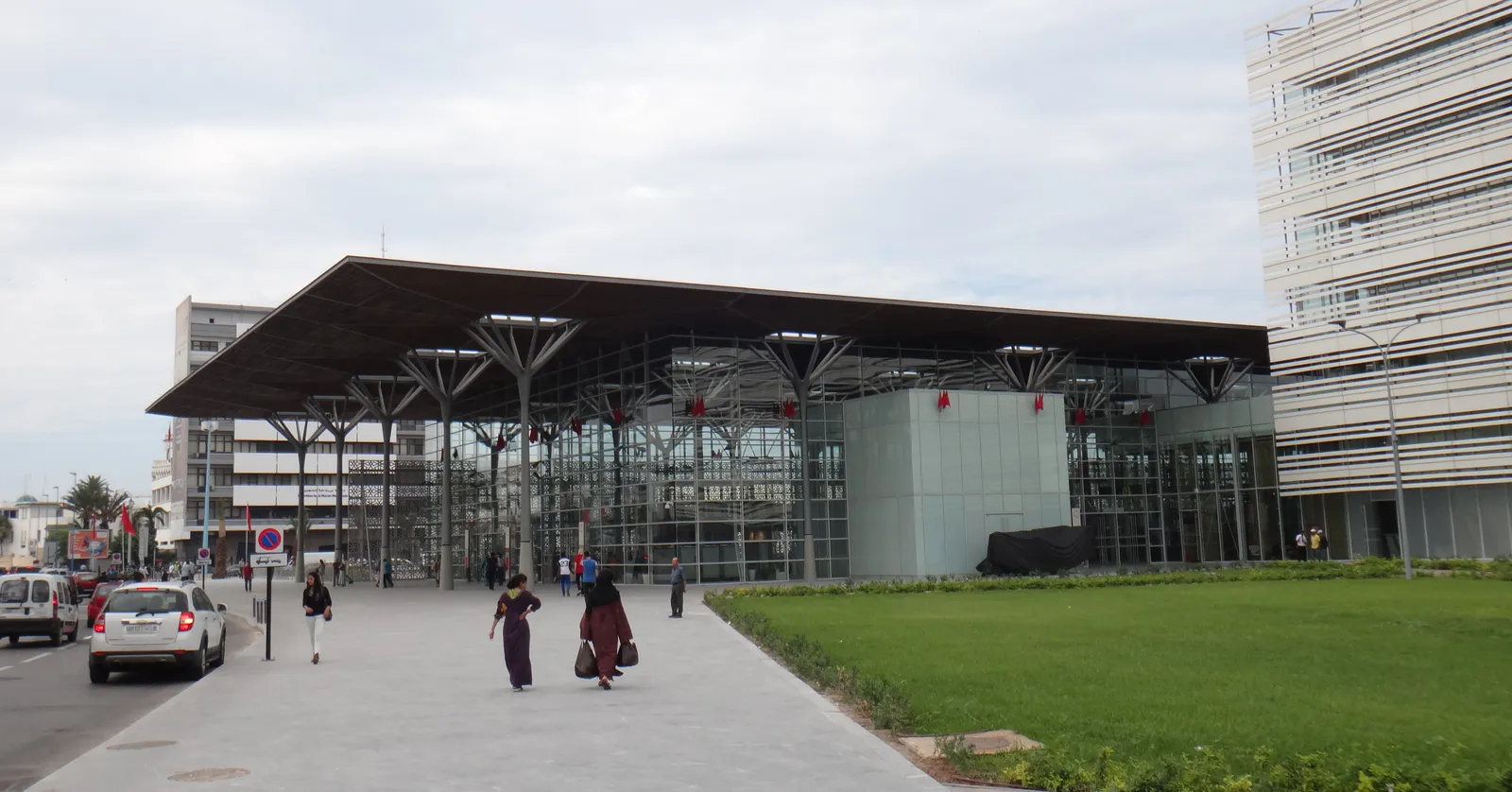
Casa-Port, the railway station on Casablanca’s harbour front, opens straight onto the seaward corner of the old medina, where the sqala’s 18th-century ramparts still carry their cannon above the fishing port and Rick’s Café stands a kilometre further along the wall.
Casa-Port’s 2014 hall stands between the old medina and the water
A glass hall under a wide flat canopy replaced the old terminus on the harbour front in 2014, designed by AREP with Groupe3 Architectes as part of a wider scheme to stitch the port district back onto the old city instead of leaving the two separated by rail yards. Shuttles up the coast to Rabat leave about every half hour on air-conditioned double-deck stock, take around an hour and ten minutes, and cost somewhere between 35 and 75 dirhams depending on class. First departures are around six in the morning; the last arrival back is close to eleven at night.
That half-hourly interval is the reason this particular station suits a short stop. Everything below is within a kilometre of the concourse doors, so a two-hour gap between trains is a genuine outing rather than a nervous shuffle.
The sqala’s cannon still point out over the fishing port
Twelve minutes on foot from the harbour front, at the seaward corner of the old medina, the sqala is what survives of Casablanca’s defences from before the French arrived. Sultan Sidi Mohammed ben Abdallah ordered a new line of coastal fortifications when he rebuilt the town in the late 1700s, on ground the Portuguese had already fortified in the 16th century, and what stands now is thick stone rampart, angled gun platforms, embrasures cut for artillery, and a row of iron cannon still sitting on their carriages above the fishing boats.
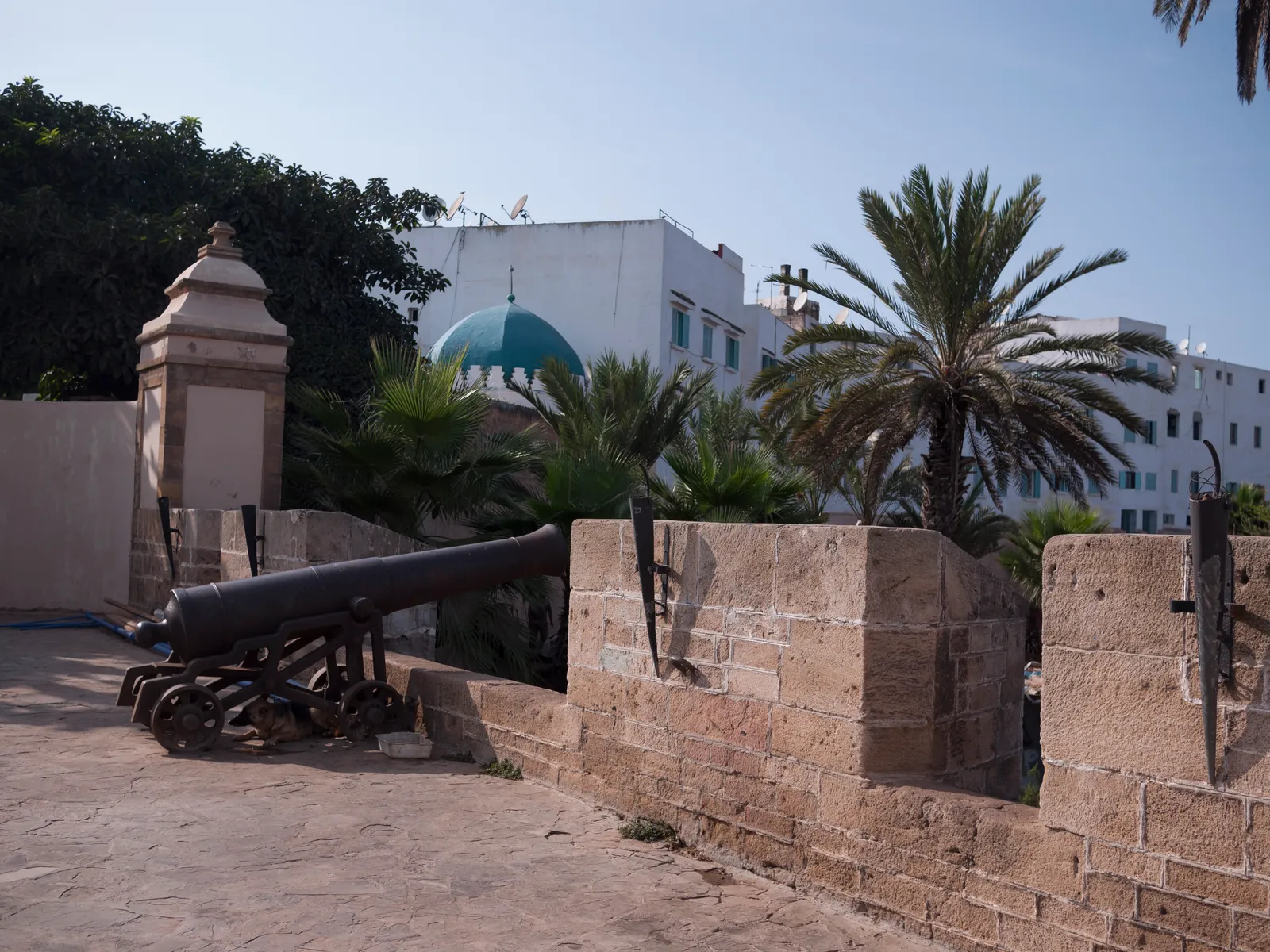
Inside the walls is the part most people miss from the street: a courtyard planted with citrus trees, tiled paths and shaded seating, with a restaurant working out of the former military compound. It serves a Moroccan breakfast in the mornings, which is a useful thing to know at an hour when most of the city’s other sit-down options have not opened yet. The building itself costs nothing to walk around whether or not you eat.
Getting up there is the catch: the lanes behind the harbour front narrow fast, the paving is uneven, and the rampart itself is reached by stone stairs with no way around them.
Rick’s Café sits in a courtyard mansion on Boulevard Sour Jdid
Number 248 Boulevard Sour Jdid is a riad built against the medina wall in 1930, and since 1 March 2004 it has been a bar built to look like a film set. Kathy Kriger, an American commercial attaché in Morocco who resigned after September 2001 to do it, spent three years on the project; the designer Bill Willis gave it curved arches, a sculpted bar, balustraded balconies and stencilled brass lamps throwing shadows across white walls.
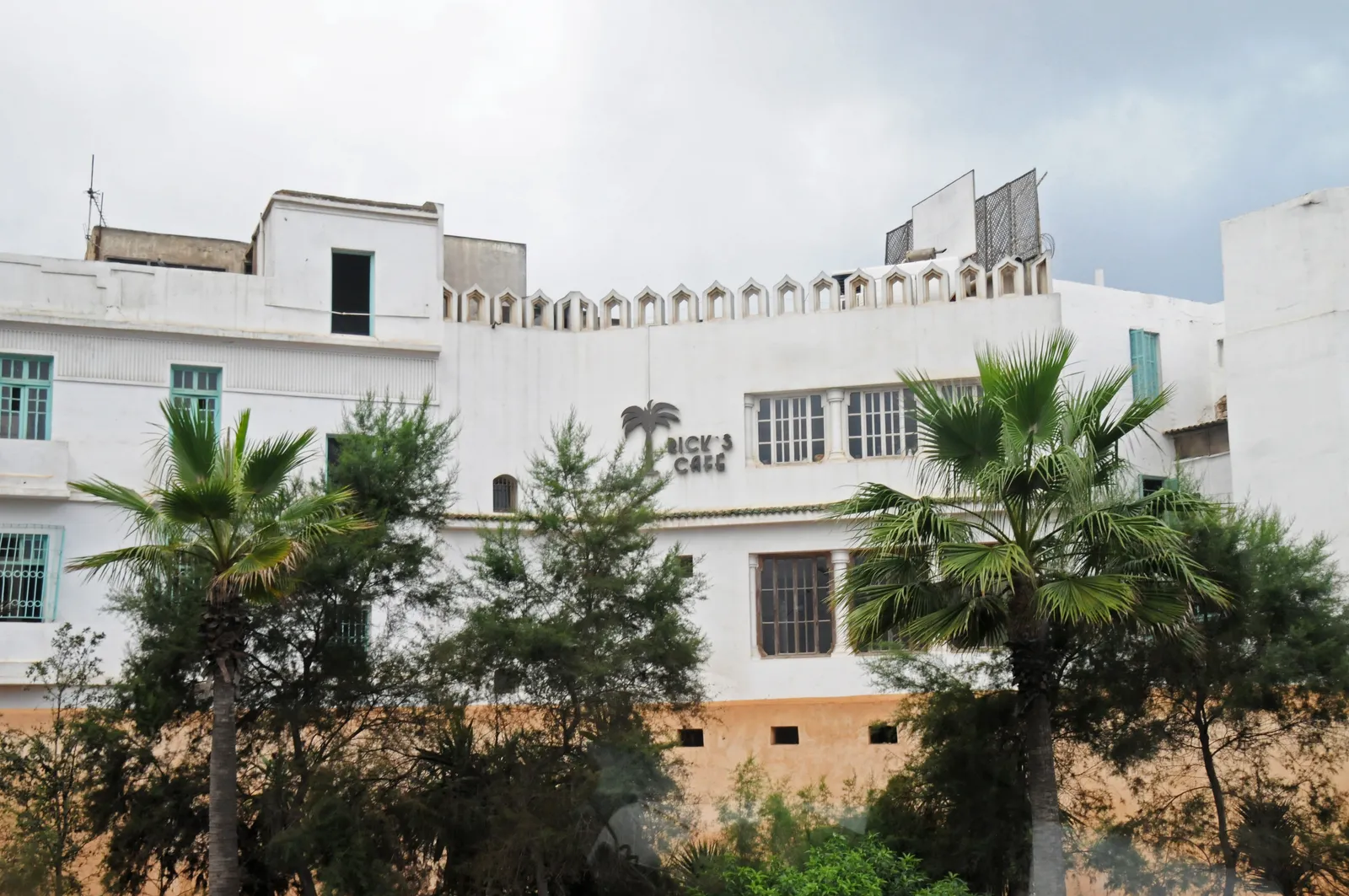
The joke underneath it is that none of the 1942 film was shot anywhere near here. Warner Brothers built the whole thing on a back lot in Burbank, California, so this is a recreation of a set that was never in Morocco to begin with, put up sixty-two years later a few hundred metres from the real medina. Whether that lands as a good joke or a slightly hollow one is a matter of taste, and either way it is an easy fifteen minutes from the platforms. For the mosque on the Atlantic shore, the civic squares and the market halls further inland, the full Casablanca itinerary covers ground this port-side loop deliberately leaves out.
The airport train starts at Casa-Port rather than Casa-Voyageurs
The ONCF service to Mohammed V International Airport (CMN) begins at these platforms, runs through Casa-Voyageurs and Oasis, and ends under the terminal, which means you board where you are rather than changing stations first. Allow about 45 minutes for the ride and around 50 dirhams in second class. Departures come roughly once an hour, so unlike the half-hourly coast shuttles, a missed train here costs a full sixty minutes: work back from your boarding time with that gap built in, or take a petit taxi and ignore the timetable.
A kilometre out and a kilometre back over uneven medina paving is the whole of the walking on this one, which is little enough to do twice in an afternoon and more than enough to regret with a suitcase behind you.
Frequently asked questions
What should I do during a layover near Casa-Port Station in Casablanca?
Everything worth doing here sits within a kilometre of the platforms, so a two or three hour gap is genuinely enough. The sqala, a bastion from the late 1700s on the harbour side of the old medina, is about twelve minutes on foot and still has its cannon lined up along the rampart above the fishing port, with a restaurant in the citrus courtyard behind the walls. Rick's Café is a quarter of an hour further along Boulevard Sour Jdid, a 1930 courtyard house fitted out in 2004 to look like the bar from the film. Neither needs booking for a look from outside, though the restaurant fills at lunch.
How often do trains run between Casa-Port and Rabat?
Roughly every half hour through the day, on air-conditioned double-deck shuttles, with the ride taking about an hour and ten minutes each way and fares in the 35 to 75 dirham range depending on class. The first departures are around six in the morning and the last arrival back into Casa-Port is close to eleven at night. That half-hourly interval is what makes a short stop here workable: missing one costs you thirty minutes, not an hour.
Is the walk from Casa-Port into the old medina step-free?
Not reliably. The boulevard along the harbour front is flat and wide, but the lanes behind it narrow quickly, the paving is uneven, and there are short flights of steps where the ground rises toward the walls. Reaching the top of the sqala's rampart means stone stairs with no alternative. If steps are a problem, stay on Boulevard des Almohades, which runs level the whole way past the medina's seaward side.
Was the film Casablanca actually shot in Casablanca?
No. Warner Brothers built the entire set on a back lot in Burbank, California, and the 1942 film was made there rather than in Morocco. Rick's Café on Boulevard Sour Jdid is a deliberate recreation rather than a location: Kathy Kriger, a former American commercial attaché in Morocco, opened it on 1 March 2004 in a courtyard mansion built against the medina wall in 1930, with the interiors designed by Bill Willis.