Casablanca Layover Near the Old Medina
Part of the full Casablanca Layover: Hassan II Mosque, CMN
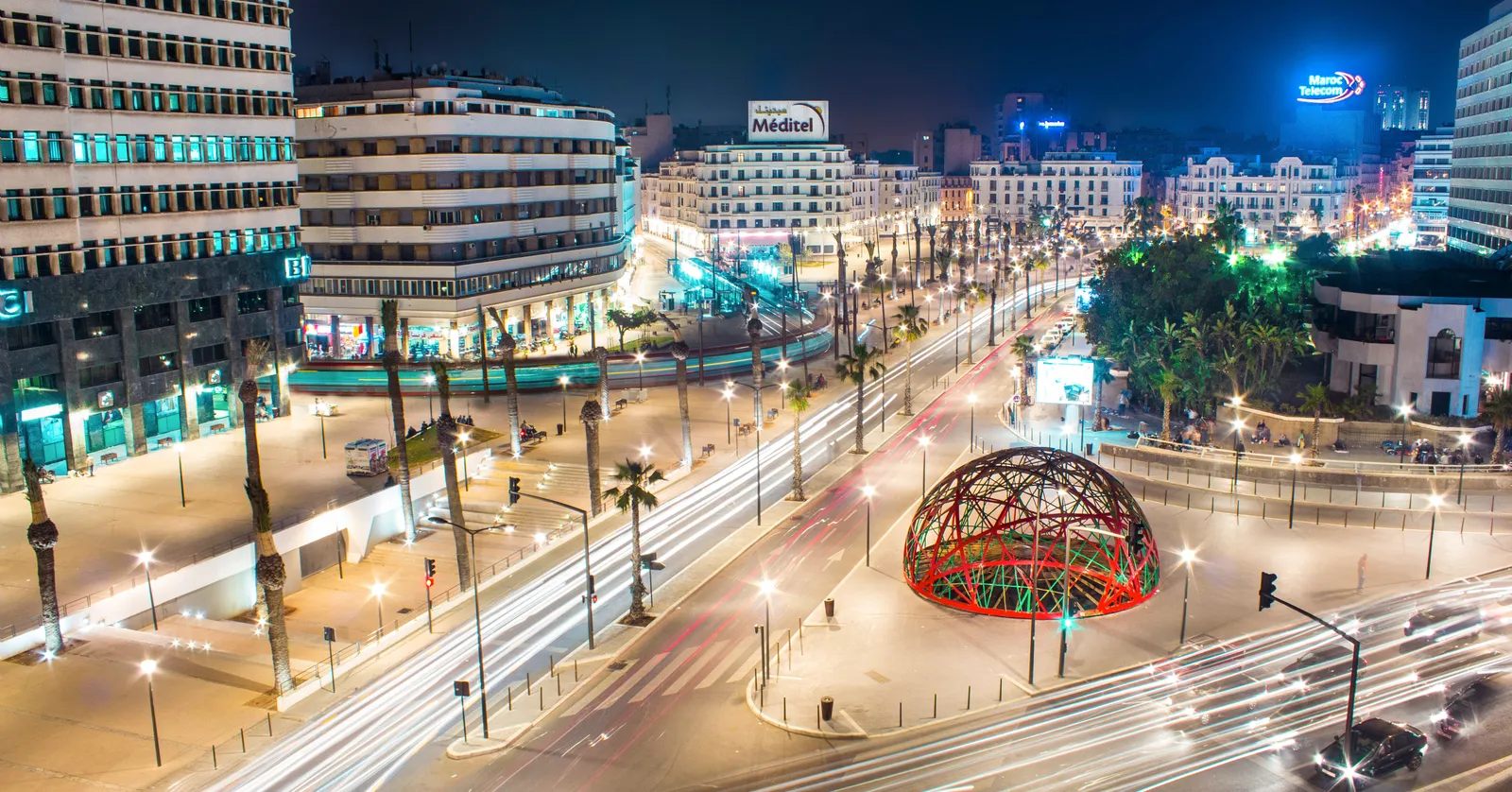
United Nations Square, the open space where Casablanca’s old medina meets the 20th-century city, puts a mosque of 1789, a rebuilt synagogue and an 1890 Spanish church within a few minutes of each other behind the walls, with the market lanes of the medina’s southern gate beyond them.
A steel lattice globe covers the underpass on United Nations Square
Jean-François Zevaco designed it in 1975, and the reason for it is underneath: the pedestrian underpass beneath the square was dark, so the lattice was put over the opening to let daylight down onto the stairs. What looks like a sculpture is a roof. Locals call it the kora ardia, the earth ball, and it is lit from inside after dark.
The square under it is older than the city around it. Before the French arrived this ground was the souq kbir, the grand market that traded outside the medina’s eastern wall; the French bombardment of 1908 cleared it, and what replaced it was a European square, Place de l’Horloge first and then Place de France, with Henri Prost planning the new city out from its edges and department stores, a bank branch and a hotel going up between 1914 and 1916. The tram arrived in 2012 and made it the interchange it is now.
A mosque, a synagogue and a church stand on the same medina block
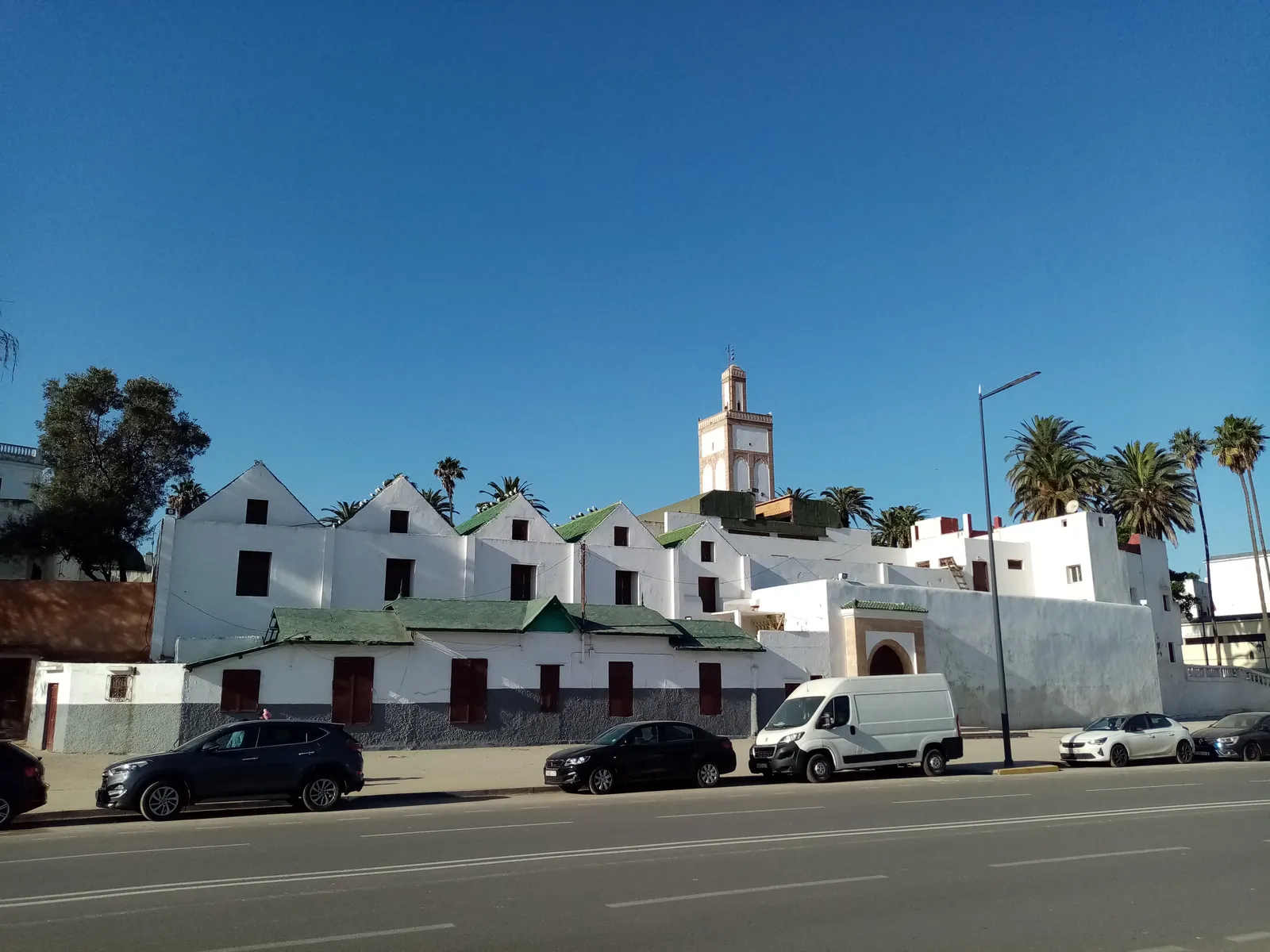
The Ould el-Hamra Mosque was put up in 1789, under the sultan Muhammad III bin Abdellah, as part of the rebuilding that followed the earthquake of 1755, and it has been worked on twice since: renovated under Sultan Hassan I in 1892, then restored from May 2010 and reopened by King Mohammed VI on 16 December 2016. It is Maghrebi in style throughout, whitewashed walls under pitched green-tiled roofs, with a prayer hall for 1,500. The prayer hall is for worshippers rather than visitors, so what you get is the street front and the minaret above it.
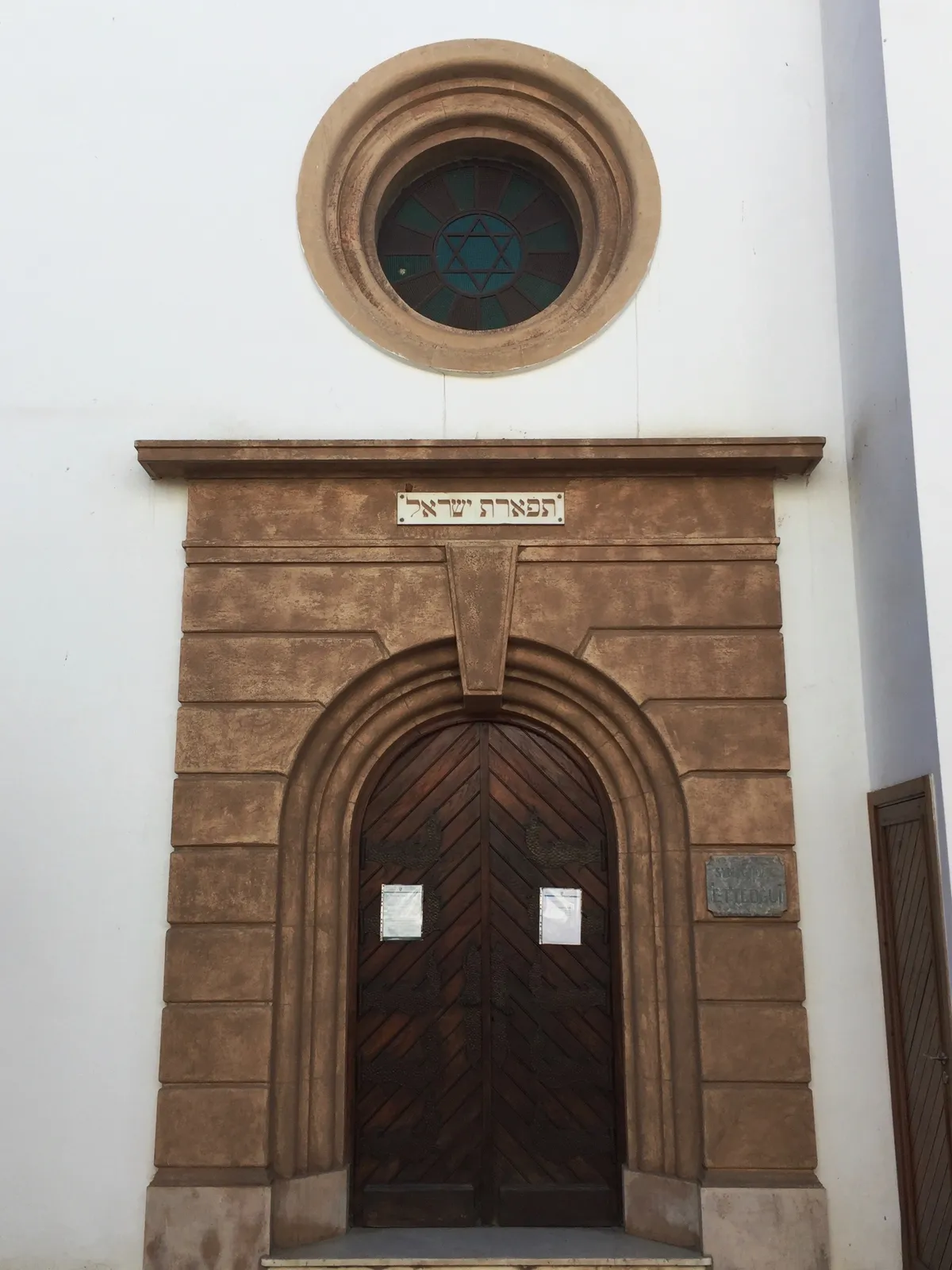
A hundred metres away is a synagogue that spent most of a lifetime as rubble. Georges Buan designed the Ettedgui, and the Allied naval bombardment of Casablanca in November 1942 destroyed it. Reconstruction did not start until 2011, ran on about 844,000 dollars of state money, and finished with King Mohammed VI rededicating the building on 20 December 2016. Next to it is the El Mellah Museum, given over to the mellah, the walled Jewish quarter that stood beside this part of the medina.
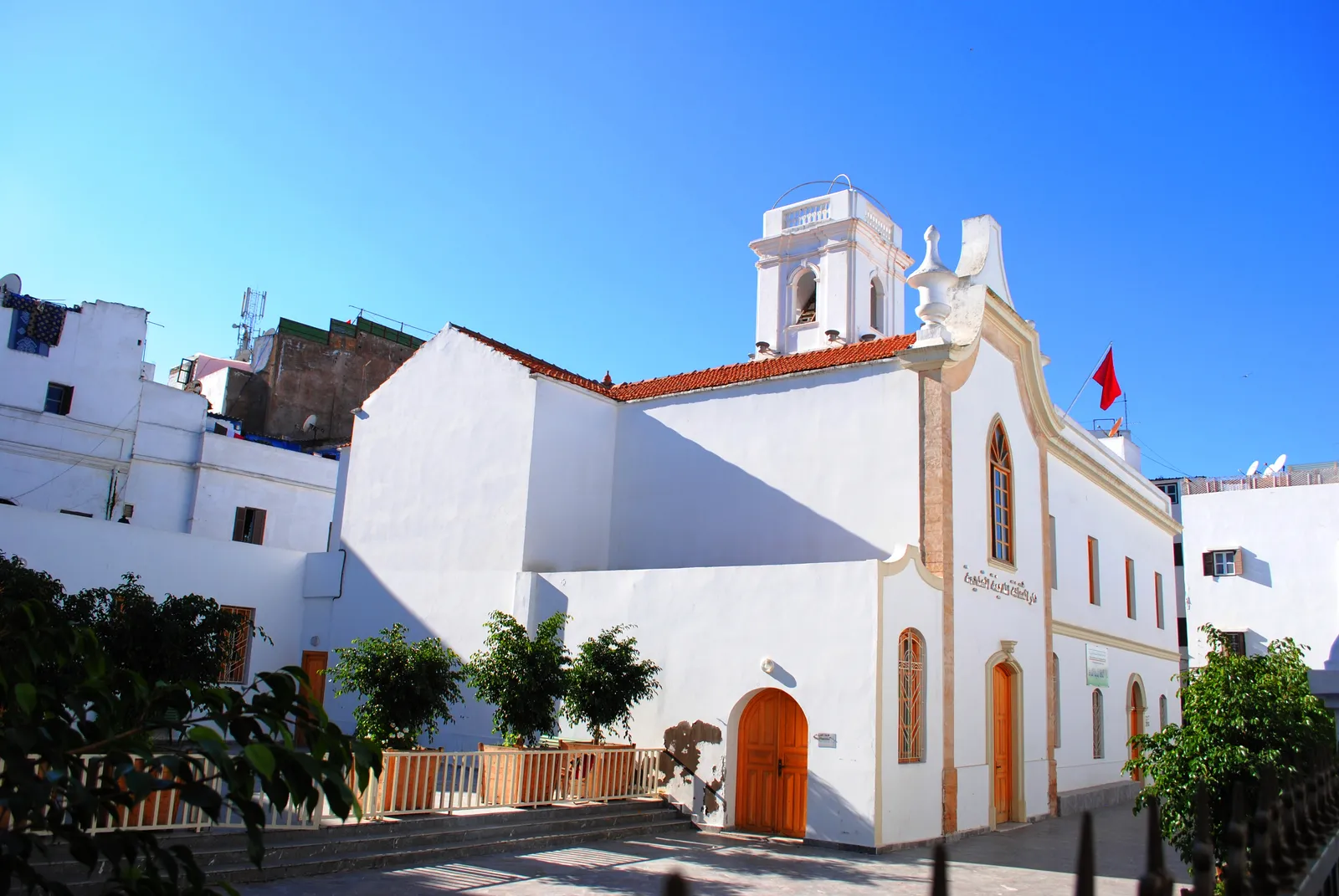
The third building is Spanish. Franciscans built the Church of San Buenaventura in 1890 on land the sultan Hassan I had granted to King Alfonso XII, and it served as the seat of the Spanish church here until services stopped in 1968. It sheltered families who needed somewhere to live after that, and its 1,250 square metres now run as a cultural centre for the quarter rather than a place of worship.
All three sit inside about 250 square metres: three religions on one corner, five minutes end to end. With four or five hours instead of three, the Hassan II Mosque, Morocco’s largest, is twenty-five minutes northwest along the water, and that mosque, the civic square and the Art Deco market halls together make up the wider Casablanca route.
Bab Marrakech, the medina’s gate toward Marrakesh
The southern wall’s gate was cut for the merchants who came up the road from Marrakesh, which is where its name comes from, and it is still the busiest way into this side of the quarter: a tall horseshoe arch carved with geometric bands, two square towers, awnings pitched against the stonework at its foot.
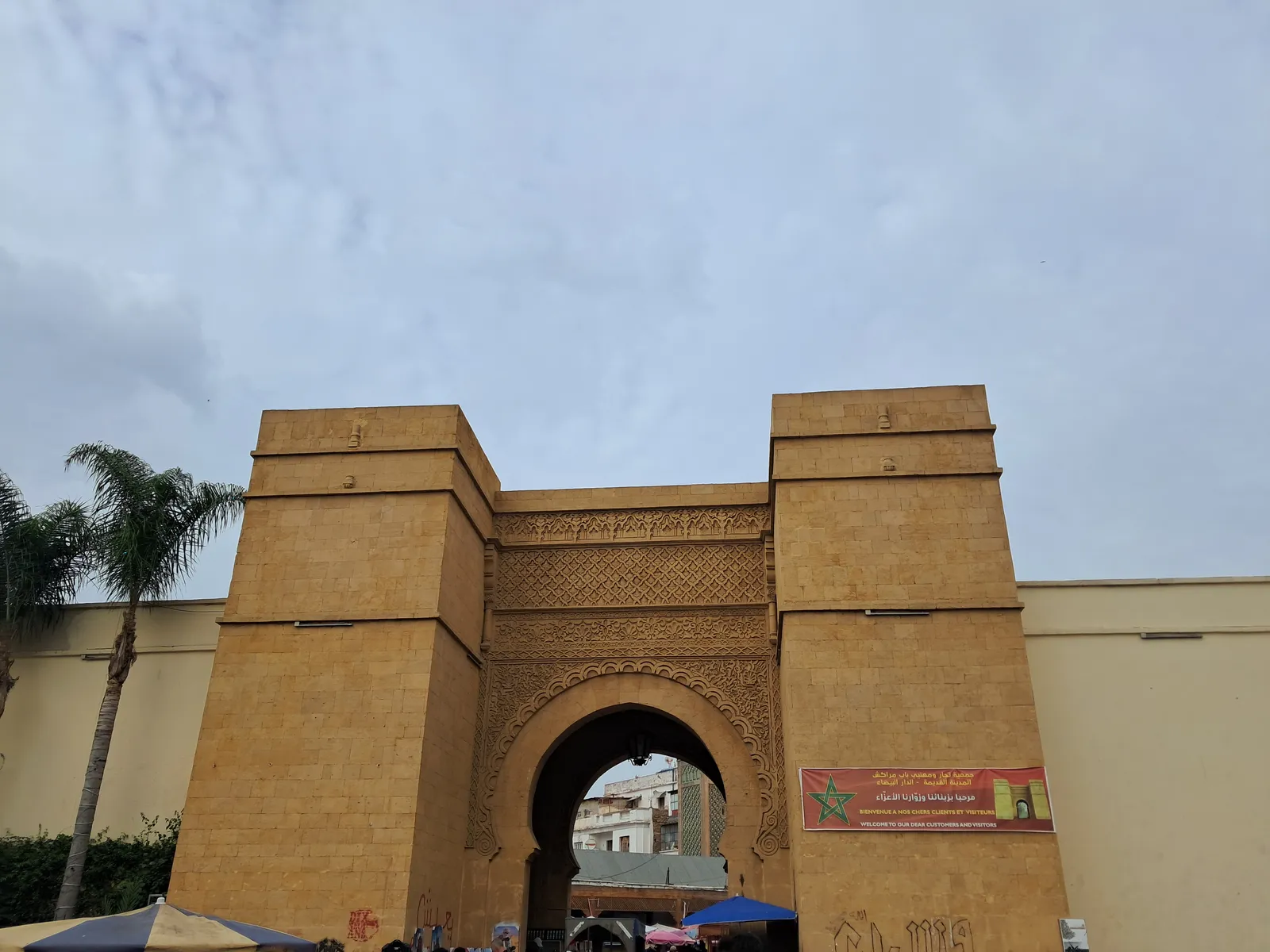
Behind it the lanes are a working market rather than a souvenir one: second-hand clothes and shoes laid out on sheets, produce, bakeries, meat and fish counters, with textiles and leather goods among them. Prices are what you negotiate and nobody charges to walk through.
They are also the tightest ground on this route. Stalls trade from both sides of alleys that narrow to a couple of metres in places, the crush builds through the morning and holds until mid-afternoon, and a wheeled bag turns those few metres into a queue behind you.
The airport train begins at Casa-Port on the harbour front
Casa-Port is about seven hundred metres north of United Nations Square, ten minutes on foot along the edge of the medina, and the ONCF service to Mohammed V International Airport (CMN) starts from its platforms: roughly 45 minutes to the terminal, around 50 dirhams in second class, about one departure an hour. Tram line T1 runs from the square out to Casa-Voyageurs instead, on a flat 8-dirham fare, and the same train calls there about ten minutes after leaving Casa-Port with roughly 35 minutes of the ride left. Either way the hourly gap is the thing to build slack around, or a petit taxi ignores it entirely for several times the price.
Everything above sits within a kilometre of the square, which is the argument for this particular corner of Casablanca on a short stop, and the medina lanes are the argument for walking it with your hands free.
Frequently asked questions
What should I do during a layover near Casablanca's old medina and United Nations Square?
Three religious buildings stand within 250 square metres of each other inside the walls, which is the reason to come in on foot rather than ride past: the Ould el-Hamra Mosque of 1789, the Ettedgui Synagogue, rebuilt from rubble after a 1942 naval bombardment and rededicated in December 2016, and the Church of San Buenaventura, put up by Spanish Franciscans in 1890 and running as a cultural centre for the quarter today. Bab Marrakech, the gate in the southern wall, has a working market behind it: second-hand stalls, produce, bread, meat and fish. Three hours covers all of it with time to sit down, and none of it is more than a kilometre from the square.
When is the market inside Bab Marrakech least crowded?
Early. The stalls trade from both sides of alleys that narrow to a couple of metres in places, and the crush builds through the morning and stays thick until the afternoon, so the first hour or two after the stalls open is the version of it you can actually walk through. Nothing here charges admission and nothing needs booking, which makes it easy to fit around whatever else you have planned.
Are the mosque, the synagogue and the church really next to each other?
Yes, and deliberately so. The three of them occupy about 250 square metres of the medina between them, and all three came out of the same run of restoration work: the Ministry of Islamic Affairs began on the Ould el-Hamra Mosque in May 2010 and King Mohammed VI reopened it on 16 December 2016, the synagogue was rebuilt from 2011 with around 844,000 dollars of state money and rededicated four days later, and the church's 1,250 square metres reopened as a cultural centre around the same time. You can walk between all three in five minutes.
What is the lattice globe on United Nations Square?
A roof, in effect. Jean-François Zevaco designed it in 1975 to cover the pedestrian underpass beneath the square, which was dark enough to need the help, so what looks like a sculpture is a steel half-globe letting daylight down onto the stairs. Locals call it the kora ardia, the earth ball. It is lit at night, and the square around it is the tram interchange between the medina and the 20th-century city centre.