Casablanca Layover Near Casa-Voyageurs Station
Part of the full Casablanca Layover: Hassan II Mosque, CMN
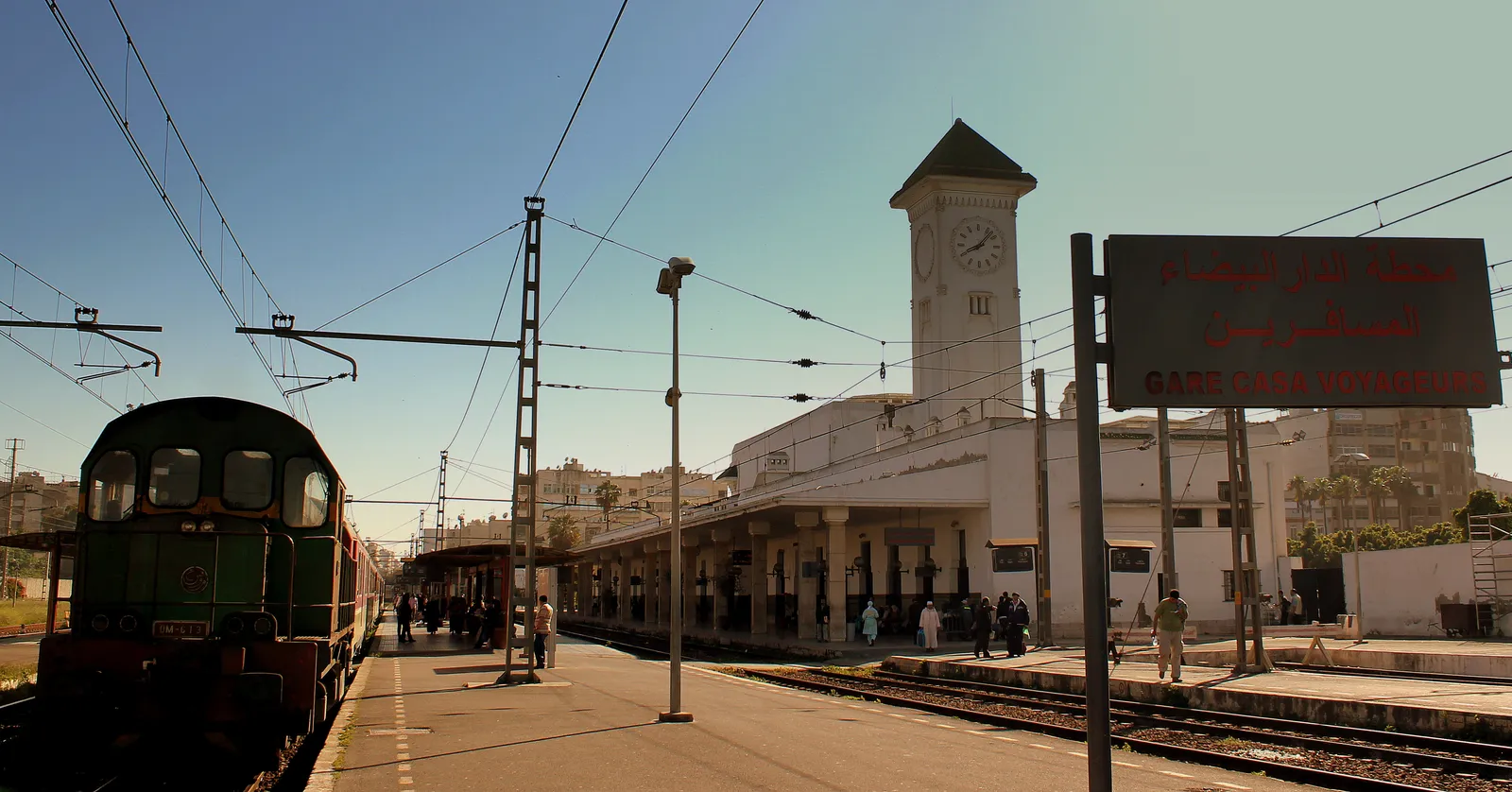
Africa’s first high-speed line ends at Casa-Voyageurs, Casablanca’s main railway station, and the Habous quarter’s mosque, a free gallery in a 1934 Art Deco villa and thirty hectares of palm avenues all sit inland of it rather than down on the seafront.
Al-Mohammadi Mosque’s minaret copies the Kutubiyya in Marrakesh
The Habous quarter lies about two kilometres southwest of Casablanca’s main railway station, and the mosque at the centre of it was built to look older than it is. Auguste Cadet drew it, the first stone went down on 30 June 1934 with Sultan Mohammed V paying for the work, and it opened on 12 June 1936: around 3,600 square metres, room for six to eight thousand worshippers, a minaret modelled on the Kutubiyya in Marrakesh and a courtyard modelled on the Qarawiyyin in Fes. If you have arrived off a train from either of those cities, the quotation is hard to miss.
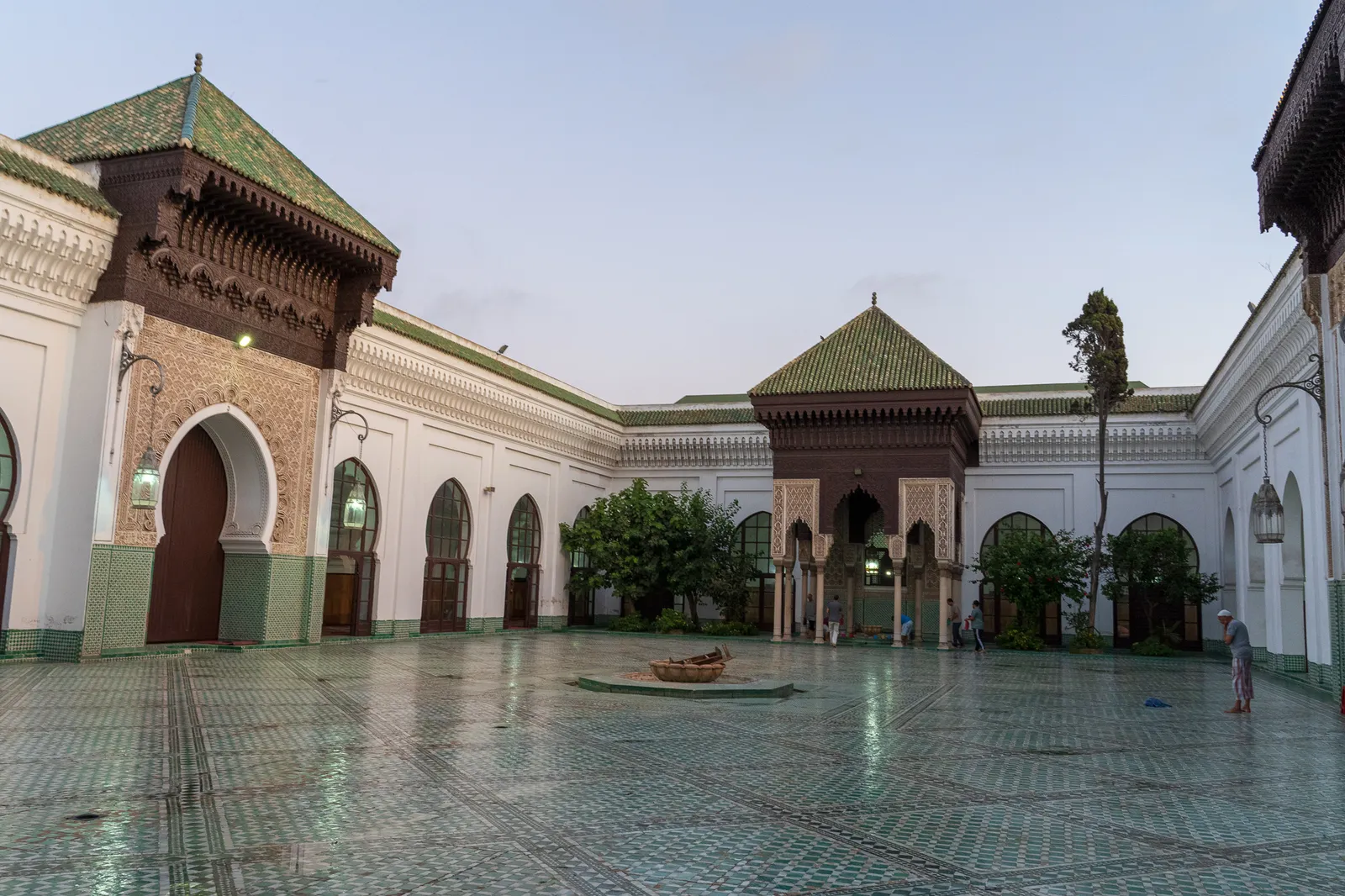
The prayer hall is for worshippers rather than sightseers, so what you get is the exterior, the gateways and the quarter itself, which is the better half anyway. The Habous was planned in the 1930s as a new medina, which means arcaded, regular lanes instead of the usual tangle: olive stalls, brassware, a run of bookshops, and enough shade to make a hot afternoon workable. The Mahkama du Pacha stands a few hundred metres away on Boulevard Victor Hugo and gets a proper look in the main Casablanca itinerary, which starts down at the port instead and picks up the seafront and the old medina.
Casa-Voyageurs is the southern end of Africa’s first high-speed railway
Morocco’s biggest railway hub opened in the Belvedere district in 1923 with eight platforms and a clock tower over the entrance hall, and it got a second life in 2018 when a new wing was added alongside the old building to handle high-speed services. Those trains cover the 323 kilometres to Tangier in about two hours and ten minutes, against four and three-quarter hours before the line opened, and they top out at 320 km/h on the northern stretch. It was the first railway of its kind anywhere in Africa, and Casa-Voyageurs is the southern end of it.
That concentration is also what makes the concourse awkward: a high-speed arrival empties several hundred people into one hall at once, and the tram stop directly outside the entrance fills in the same few minutes rather than gradually.
Villa des Arts fills a 1934 villa and charges nothing to get in
Rue Abou Kacem Achchabi, in the Gauthier district about three and a half kilometres west of the station, holds a whitewashed villa from 1934 with the rounded corners and deep balconies of Casablanca’s Art Deco decade. A non-profit foundation runs it as a gallery now, showing temporary exhibitions of contemporary Moroccan artists across the ground and first floors, and entry is free.
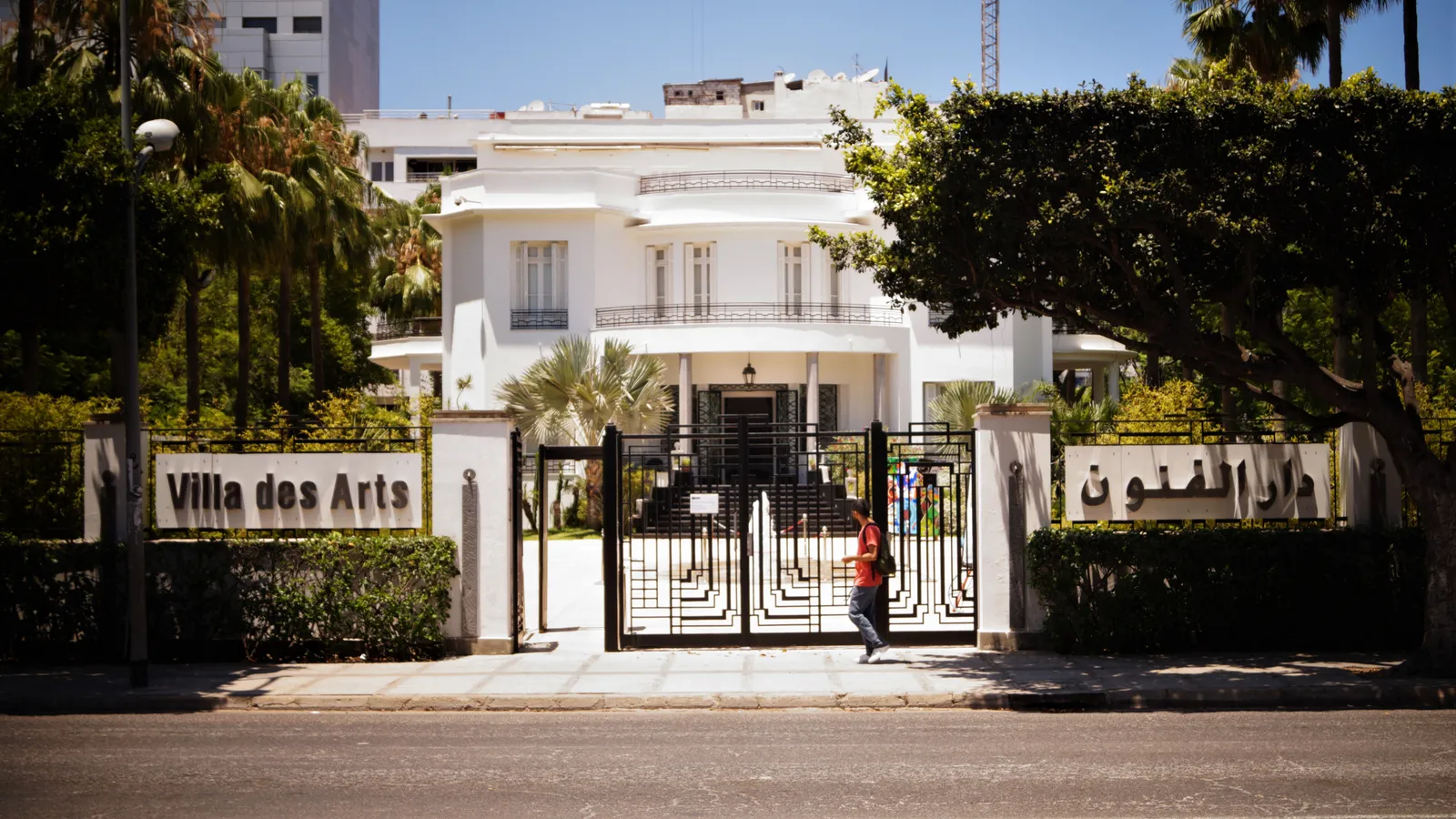
Because the programme rotates, what is on the walls on any given day is genuinely unpredictable, which is either the appeal or the reason to skip it depending on your mood. The building holds up regardless. A few streets further west, the Twin Center’s two towers stand over the Maarif shopping district at the junction of Boulevard Zerktouni and Boulevard Al Massira Al Khadra, which is the easiest landmark to steer by out here.
Palm and ficus avenues in the Arab League Park
Boulevard Moulay Youssef runs along the southern edge of the city’s largest central park, about thirty hectares of it, and the layout is the point: Albert Laprade designed it from 1916 under Henri Prost, planting went in during April 1921, and the result is long straight alignments of fan palms and ficus with promenades running between them. It opened as Parc Lyautey and was renamed for the Arab League after independence.
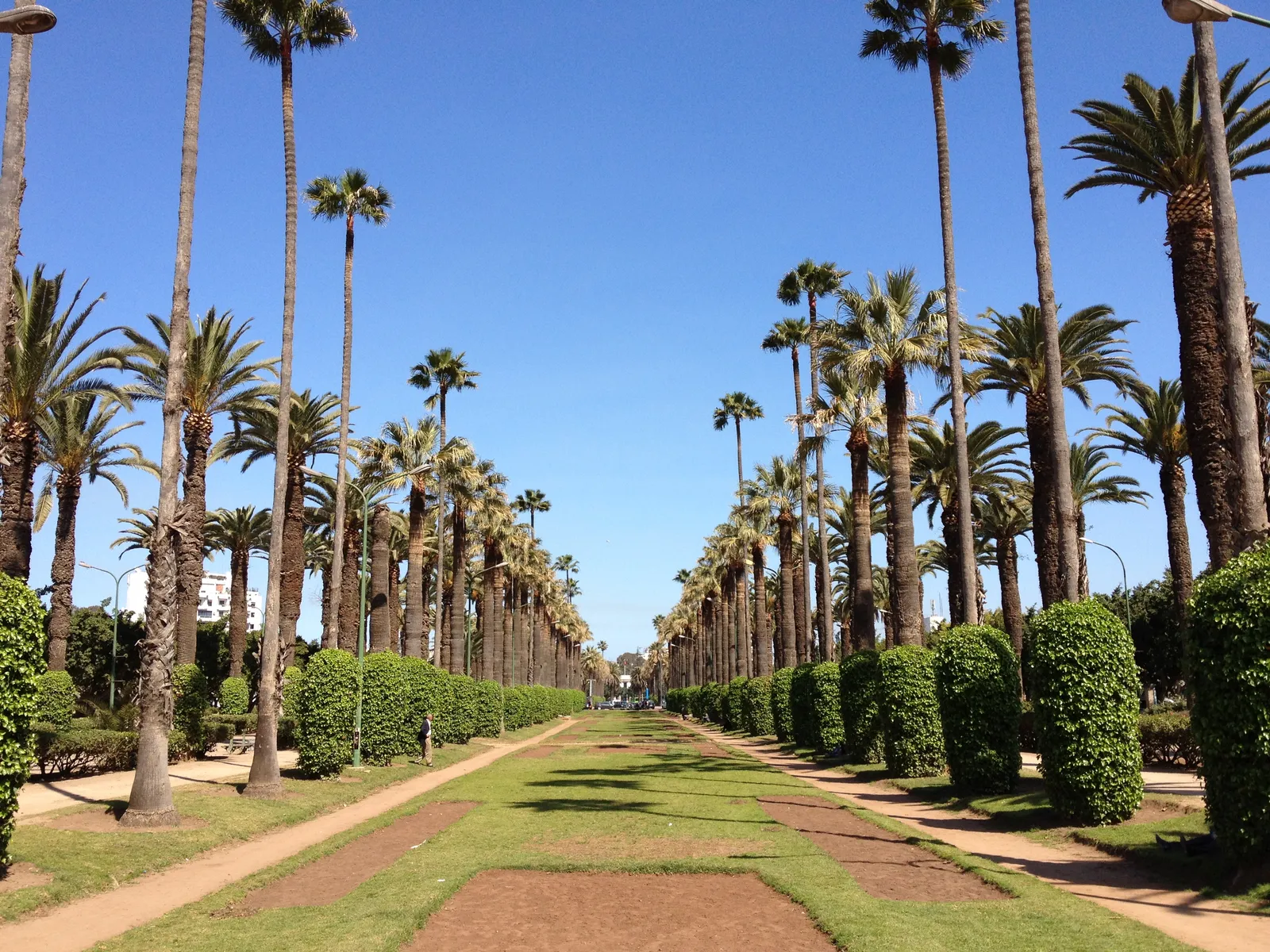
One detail here is easy to walk straight past. When the old Anfa prison was pulled down in 1916, its pillars and arches were carted into the park rather than dumped, and they still stand among the trees, a piece of masonry older than everything planted around it. In 2015 a French artist added colour to those arches for what was meant to be a one-month installation; it proved popular enough that it was rebuilt properly during the park’s 2018 overhaul and is still there. The park costs nothing and there is no gate to queue at.
The airport train uses the same platforms you arrived on
Roughly 35 minutes separates Casa-Voyageurs from the terminal, second class costs about 50 dirhams, and the last service runs around 22:50 from the airport end. The ONCF line to Mohammed V International Airport (CMN) passes through here between Casa-Port and the terminal, which spares you a station change at the end of the day. What it does not spare you is the wait: departures come only about once an hour, so allow sixty minutes of slack on top of the ride rather than trimming to it, or take a petit taxi, which costs several times more and ignores the timetable entirely.
Everything on this route sits inland of the water, which means no tram change and no long seafront leg, but it also means two kilometres of flat pavement in each direction as the minimum. That is a pleasant half hour empty-handed and a noticeably longer one otherwise.
Frequently asked questions
What should I do during a layover near Casa-Voyageurs Station in Casablanca?
Walk the two kilometres southwest into the Habous quarter, where the Al-Mohammadi Mosque was finished in 1936 with a minaret modelled on the Kutubiyya in Marrakesh, and the arcaded lanes around it sell olives, brassware and books. Further west, roughly three kilometres out, the Villa des Arts puts contemporary Moroccan work in a 1934 Art Deco villa and charges nothing, and the Arab League Park runs its palm and ficus avenues for about thirty hectares just beyond. Five to six hours on the ground covers the Habous plus one of those two, with the ride out to the airport allowed for. The park is the piece to drop first if the clock tightens.
Is the Habous quarter walkable from Casa-Voyageurs, or should I take something?
It is about two kilometres, half an hour on foot, and the ground is flat the whole way, so walking is realistic if you are not carrying anything. The tram from the stop in front of the station and the red petits taxis both cover it faster, and a taxi is the sensible choice in July and August when the afternoon sun is hard work on an unshaded pavement.
Can I go inside the Al-Mohammadi Mosque?
The prayer hall is for worshippers rather than visitors, so plan on seeing the mosque from the square and the gateways rather than from inside it. What is worth the walk is the building itself and the quarter around it: the minaret takes its form from the Kutubiyya in Marrakesh and the courtyard from the Qarawiyyin in Fes, and the surrounding lanes were laid out as arcades in the 1930s rather than as a tangled medina, so they are easier ground to cover on a short visit than a tangled medina would be.
How do I get from Casa-Voyageurs to Mohammed V airport?
The ONCF airport service calls at Casa-Voyageurs on its way between Casa-Port and the terminal, so you board on the same platforms you arrived at. Departures come about once an hour, the ride runs roughly 35 minutes, and second class costs around 50 dirhams. Because the gap between trains is a full hour rather than ten minutes, work backwards from your boarding time with an hour of slack rather than the ride time alone.